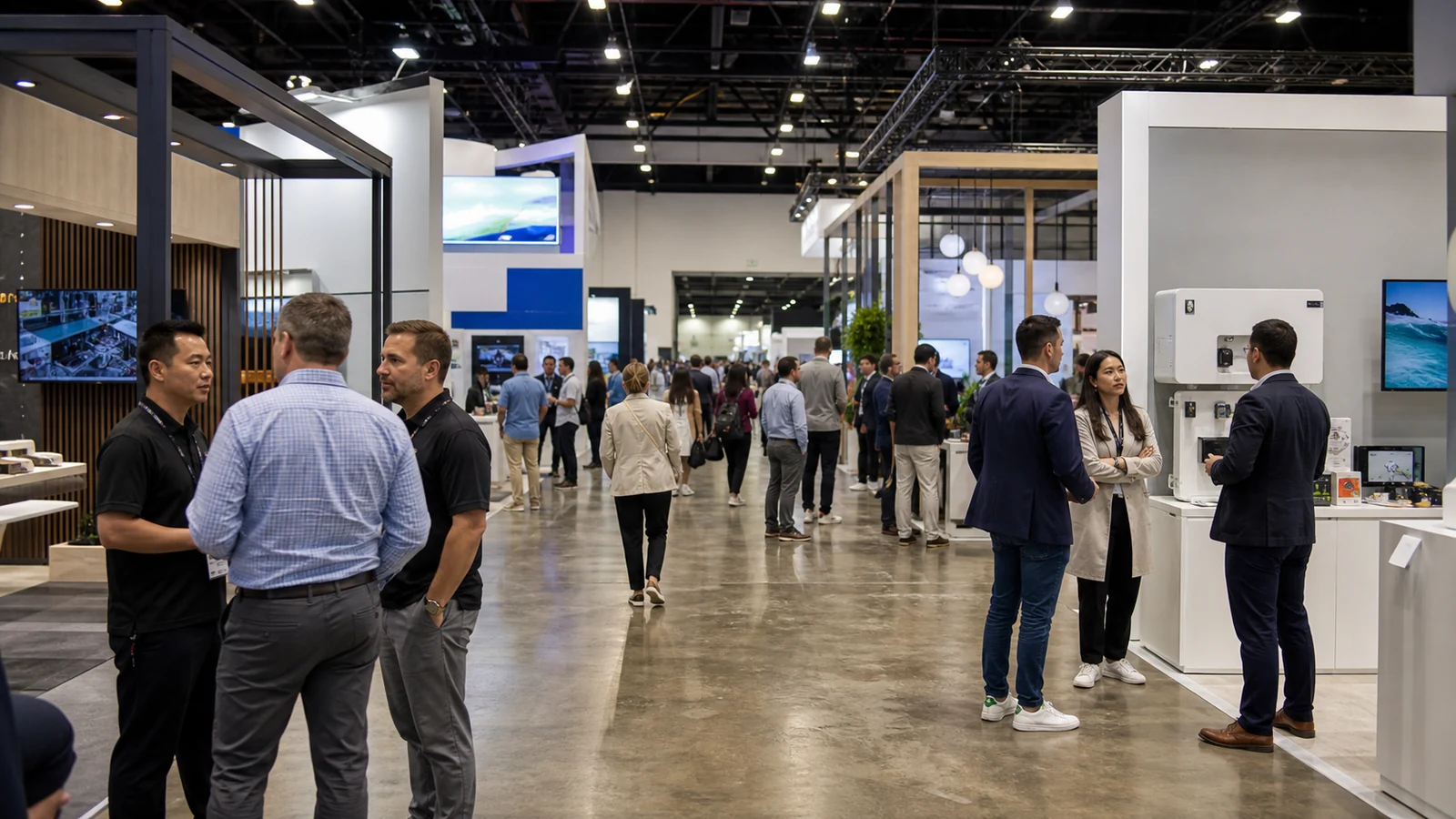
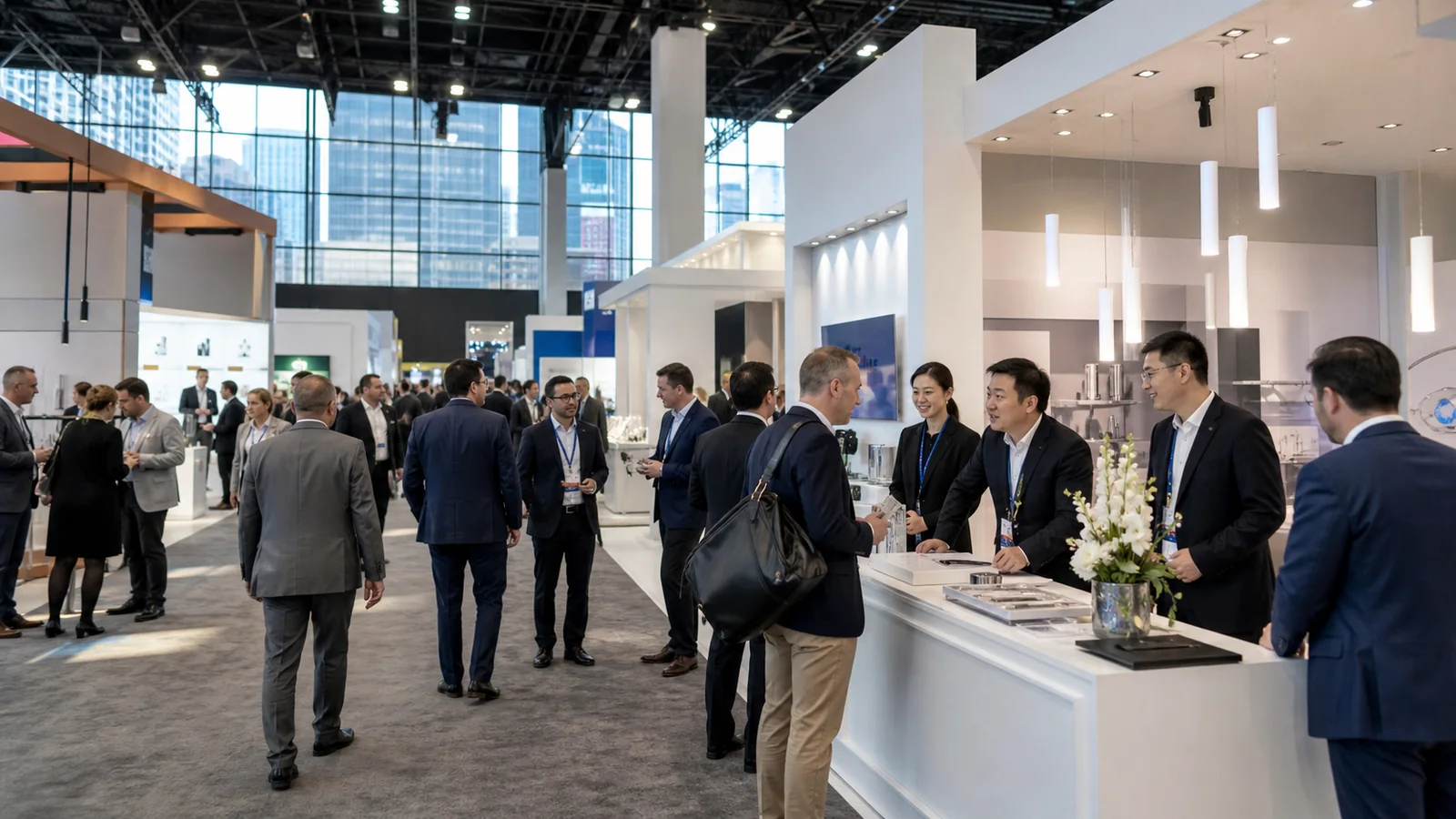
U.S. trade show planning and execution guide
If you are taking your company to a U.S. trade show for the first time, start with the event decisions that control your booth—not with a shopping list of promotional items. A useful trade show checklist covers the whole event project, not only the items that travel with the booth. It connects show selection, exhibitor rules, booth content, services, freight, staff, move-in, show days, move-out, and follow-up. Use the checklist below as the working structure, then replace every example time band and general condition with the current show’s written information.

Complete Trade Show Checklist
Copy these tasks into the tool your team actually maintains. Add an owner, the show’s deadline, an earlier internal deadline, status, and acceptance evidence in that live tracker. Mark a task N/A only after confirming that it does not apply; a submitted form or order is not complete until the required party has accepted it.
Choose the Show and Set Objectives — 8 Tasks
- 1. Define target accounts, roles, markets, and problems.
- 2. Verify current audience and exhibitor fit.
- 3. Choose one primary event objective.
- 4. Set measures, data sources, and reporting ownership.
- 5. Confirm booth number, size, configuration, and open sides.
- 6. Name one accountable project owner.
- 7. Assign scope, design, cost, schedule, and change approvers.
- 8. Establish one current project record.
Confirm Rules, Deadlines, and Responsibilities — 12 Tasks
- 9. Obtain the current manual, forms, portal, and contract.
- 10. Record show, move-in, opening, and move-out times.
- 11. Record applicable order, approval, warehouse, and carrier deadlines.
- 12. Confirm display, height, sightline, setback, and back-wall rules.
- 13. Identify required drawing, engineering, fire, product, or demo reviews.
- 14. Review accessible routes, entrances, circulation, meetings, and demos.
- 15. Confirm COI requirements and acceptance.
- 16. Complete required EAC registration or authorization.
- 17. Confirm labor jurisdictions, self-work, minimums, and time windows.
- 18. Confirm hand-carry, tool, cart, vehicle, and unloading rules.
- 19. Confirm hanging-sign approval, engineering, and rigging scope.
- 20. Retain written acceptance for applicable submissions.
Plan the Budget and Booth Scope — 9 Tasks
- 21. Budget exhibit space and organizer charges.
- 22. Budget booth work, graphics, equipment, and management.
- 23. Budget power, internet, AV, rigging, and cleaning.
- 24. Budget freight, material handling, empties, and outbound shipping.
- 25. Budget I&D, supervision, minimums, and labor windows.
- 26. Budget travel, lodging, transport, staff time, and expenses.
- 27. Budget outreach, meetings, lead systems, and follow-up.
- 28. Budget storage, repair, refurbishment, return, or disposal.
- 29. Set and control a contingency allowance.
Approve Design, Graphics, Products, and Services — 11 Tasks
- 30. Choose rental, purchase, reusable, modular, or custom.
- 31. Approve the booth brief and intended result.
- 32. Walk through reception, demos, meetings, and next steps.
- 33. Confirm products, samples, mockups, literature, and quantities.
- 34. Define each demo, operator, reset, and fallback.
- 35. Confirm dimensions, weights, utilities, AV, and technical inputs.
- 36. Freeze messages, artwork, files, responsibility, and locations.
- 37. Provide storage for stock, cases, tools, waste, and belongings.
- 38. Review visitor access against planned activities.
- 39. Check the design against current show rules.
- 40. Approve drawings, scope, criteria, and change control.
Prepare Freight, Installation, and Move-In — 12 Tasks
- 41. Order required services with correct technical inputs.
- 42. Verify order details, placement, dates, contacts, and confirmations.
- 43. Pre-build or test structure, graphics, products, demos, AV, and lighting.
- 44. Correct, retest, and close pre-build issues.
- 45. List each packed item, quantity, piece, condition, and destination.
- 46. Choose advance-warehouse or direct-to-show routing.
- 47. Confirm carrier, labels, pieces, tracking, target time, and contacts.
- 48. Confirm material-handling and empty-container procedures.
- 49. Confirm I&D call, supervision, sequence, access, and escalation.
- 50. Prepare one opening punch list and owner.
- 51. Prepare outbound carrier, labels, documents, and release authority.
- 52. Confirm contacts, backups, spares, and failure responses.
Prepare Outreach, Staff, and Lead Capture — 8 Tasks
- 53. Identify priority contacts and visit reasons.
- 54. Schedule relevant meetings, demos, or technical discussions.
- 55. Assign booth, meeting, expert, lead-data, and operations roles.
- 56. Build shifts, coverage, breaks, and handoffs.
- 57. Prepare talking points, questions, demos, and escalation paths.
- 58. Define lead fields, priorities, next steps, owners, and dates.
- 59. Test capture, fallback, export, privacy, and CRM routing.
- 60. Prepare a permitted booth operations kit.
Operate During the Show — 6 Tasks
- 61. Compare the installed booth with the approved brief.
- 62. Brief roles, meetings, visitor flow, leads, and move-out.
- 63. Maintain coverage and reset booth activities.
- 64. Record context, need, timing, promise, owner, and next step.
- 65. Route operational issues to the responsible contact.
- 66. Hold a short daily review and update actions.
Control Move-Out, Follow-Up, and Assets — 6 Tasks
- 67. Control empties, dismantling, labels, documents, and freight release.
- 68. Record damage, shortages, pieces, condition, and exceptions.
- 69. Clean and route leads by fit, timing, and promise.
- 70. Complete priority follow-up within the promised time.
- 71. Reconcile cost, explain variance, and record improvements.
- 72. Assign each reusable asset its next state.
Trade Show Planning Timeline

The timeline below is a planning framework, not a universal deadline schedule. A custom structure, overseas freight, a complex demonstration, a hanging sign, or an approval-heavy booth requires an earlier start. The current manual and written provider confirmations control the actual dates.
6–12 Months Before the Show
Confirm why the event fits your target accounts, what result matters, which exhibit space is available, who owns the project, and what budget boundary is realistic. Decide whether the booth direction is rental, purchase, reusable, modular, or custom early enough to support design, production, approvals, and logistics.
4–6 Months Before the Show
Obtain the current event documents and turn them into a responsibility map. Build the booth brief, identify insurance and EAC requirements, begin design, and define the products, demonstrations, visitor activities, utilities, and staff functions that affect the space.
8–12 Weeks Before the Show
Close the approvals needed to release production. Order applicable services, choose the inbound freight route, confirm I&D planning, prepare your lead process, and begin outreach to people who have a specific reason to visit. For the booth shipment, review the logistics and shipping service after you confirm the show’s current receiving route and deadlines. For booth assembly and move-out, review the installation and dismantling service against the approved labor scope and show schedule.
4–8 Weeks Before the Show
Freeze graphics and critical technical inputs. Pre-build or test every testable component, complete shipping and outbound records, confirm staff roles and shifts, and close missing approvals or service orders before they become show-site problems.
1–2 Weeks Before the Show
Reconcile your confirmations, contacts, files, freight, labor, meetings, and staff travel. Test demonstrations, AV, lead capture, exports, and fallbacks. Pack only after the inventory and destination of each piece are clear.
Move-In, Show Days, and the First 2–4 Weeks After
During move-in, control the carrier, material-handling, labor, service, and booth-acceptance handoffs. During the show, maintain role coverage, visitor readiness, lead context, and a short daily review. After the show, verify outbound freight, route priority leads within 24–72 hours when that matches the commitment made, then complete cost, result, and asset reviews over the following two to four weeks.
Confirm Show Fit, Objectives, Budget, and Ownership
The first booth decision is whether the event deserves your time and budget. Current organizer information should help you understand the industries, roles, markets, geographic reach, exhibitor mix, program, and attendance profile. Compare that evidence with the accounts, conversations, demonstrations, partnerships, or market learning you actually need.
Choose one primary objective before the booth brief is approved. A team focused on scheduled meetings needs different space, staffing, and lead evidence from one focused on live demonstrations or market feedback. Track supporting measures, but keep them subordinate to the primary reason for exhibiting.
Set the budget boundary and decision path at the same time. Name one accountable project owner, then identify the approver for design, scope, technical inputs, cost, schedule, and on-site changes. This prevents a late opinion from becoming an unpriced production or labor change in your approved scope. Use the trade show booth project process to assign the approvals that release design, production, shipping and site work.
Use the Exhibitor Manual to Build the Event Plan
The current exhibitor manual and connected order forms turn a generic checklist into an event plan. Record the show dates, move-in access, opening-ready time, show hours, move-out, service deadlines, warehouse receiving window, target times, carrier rules, and approval dates that apply to the booth.
For an event-specific example, the South Dakota Ag Expo registration and move-in guide shows why equipment and small booths need separate arrival plans.
Each applicable form or order should become an owned task in your project record. Record the source, external deadline, earlier internal deadline, required input, responsible party, current status, and written acceptance. An email sent or form uploaded is not the same as an accepted order or approved drawing.
Responsibility must also be separated. Assign each project part to the organizer, venue, official service provider, booth partner, carrier, or exhibitor-appointed contractor that controls it. Confirm who supplies, orders, approves, receives, installs, supervises, and pays for each scope before work is released. Keep those assignments visible in your scope map; a one-stop project coordinator simplifies handoffs but does not replace services that the event or venue reserves for an official provider.
Verify U.S. Trade Show Rules Before Design, Shipping, and Move-In
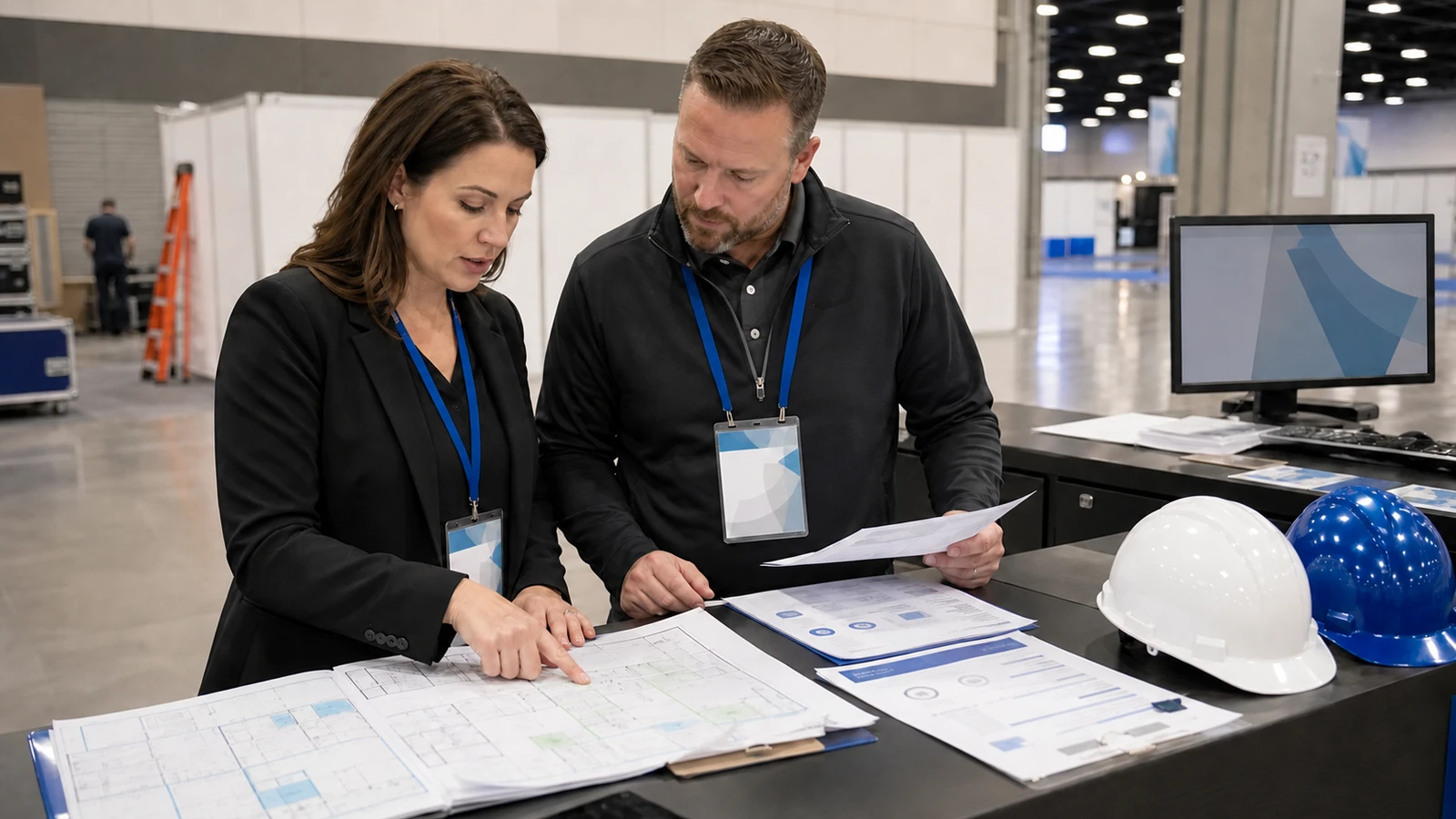
U.S. events combine organizer rules, venue policies, local approval processes, labor conditions, and official-provider procedures. The categories below are common enough to check early, but the answer must come from the current event and venue.
Certificate of Insurance and EAC Authorization
Check whether the exhibitor, an exhibitor-appointed contractor, or both must provide a Certificate of Insurance. Verify the required insured parties, certificate holder, policy dates, wording, coverage categories and limits, recipients, submission route, and acceptance. EAC work requires you to verify registration, authorization, badges, access information, and a clearly defined service scope. SEMA’s exhibitor guidance provides one example of show-specific EAC registration and insurance requirements.
Union Labor, Exhibitor Self-Work, and Hand-Carry Rules
Confirm which work your team is permitted to perform and which work belongs to designated trades or providers. The answer affects installation, electrical connections, rigging, material movement, cleaning, tools, carts, loading access, vehicle unloading, minimum calls, and straight-time, overtime, or double-time windows; record the result in your labor plan. McCormick Place publishes venue-specific labor jurisdictions and exhibitor rights; use this as evidence that the categories matter, not as a rule for every U.S. venue.
Freight, Material Handling, Target Dates, and Marshaling Yards
For the freight plan, separate transportation from material handling. Transportation moves freight between locations. Material handling or drayage covers show-site services such as receiving, unloading, delivery to the booth, empty-container movement, and reloading, according to the event’s terms. I&D labor assembles and dismantles the booth. Keeping these scopes separate makes quotes and handoffs easier to check.
For your route decision, compare advance-warehouse and direct-to-show options using the actual receiving dates, rate basis, minimums, weight, special-handling conditions, target times, and installation plan. If a marshaling yard applies, confirm driver check-in, documents, scale or queue procedures, dispatch to the dock, and pickup instructions. IMTS, for example, publishes event-specific carrier and marshaling-yard procedures that illustrate the detail a logistics record needs.
Fire Review, Height, Sightlines, Accessibility, Hanging Signs, and Rigging
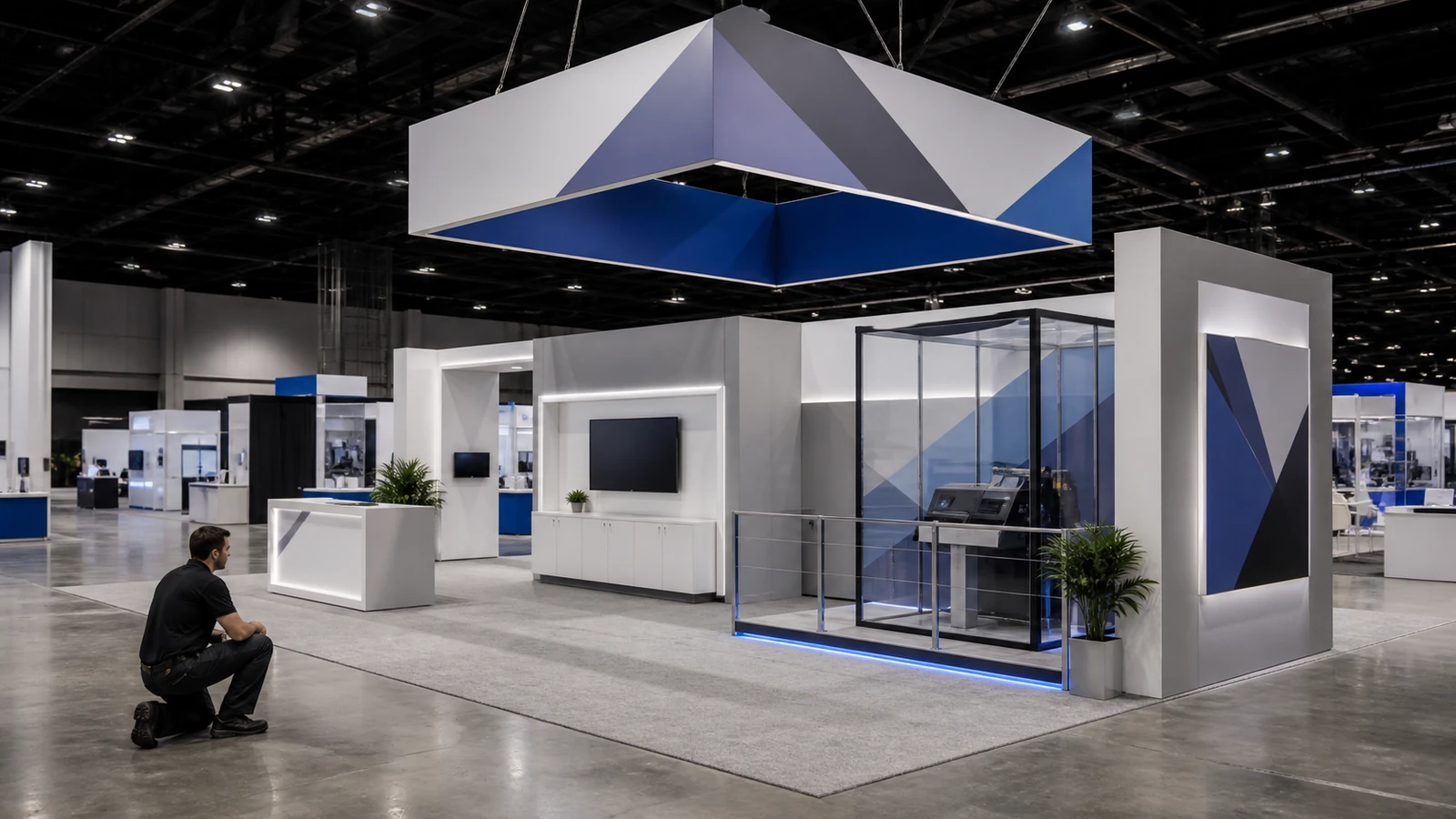
For your design, review structure, materials, covered or multilevel areas, products, vehicles, fuel, batteries, cooking, lasers, and demonstrations. Confirm booth height, setbacks, neighboring sightlines, unfinished backs, hanging-sign eligibility, weight, engineering, rigging provider, order, and installation timing. IAEE’s display rules and regulations guidance describes common display considerations, but the current show rules still control.
Accessibility should be reviewed against your booth’s real use: approach, entrance, circulation, meeting points, demonstrations, and visitor interaction. The 2010 ADA Standards for Accessible Design are an official reference, while the responsible project parties must determine what applies to the specific design and site.
Plan the Booth Content, Visitor Experience, Graphics, and Show Services
Start with what visitors need to see and do. Booth content falls into practical categories: products or samples, demonstrations, meeting or consultation areas, qualification conversations, educational information, and a clear next step. Select the categories that support the event objective instead of filling the space with every available message or product.
Walk through one real visit on your drawing. Where does someone first understand the offer? Where can a product be viewed without blocking circulation? Who runs the demonstration, where does the audience stand, and how is the area reset? Where do private or longer conversations happen? Where are cases, stock, waste, staff belongings, and replacement materials stored?
Freeze the inputs that affect your production and services: artwork, copy, product dimensions and weights, demonstration sequence, power, data, AV, lighting, plumbing, ventilation, internet, cleaning, storage, and accessibility. Treat a late graphic edit as a local change; a late change to product weight, power demand, or equipment location affects structure, orders, labor, and installation.
For every show service, record why it is needed, who provides it, who places the order, which drawing or technical input controls it, where it should be installed, and how completion will be tested. Keep the confirmation number and escalation contact with your project record.
Build the Full Trade Show Budget and Compare Quotes
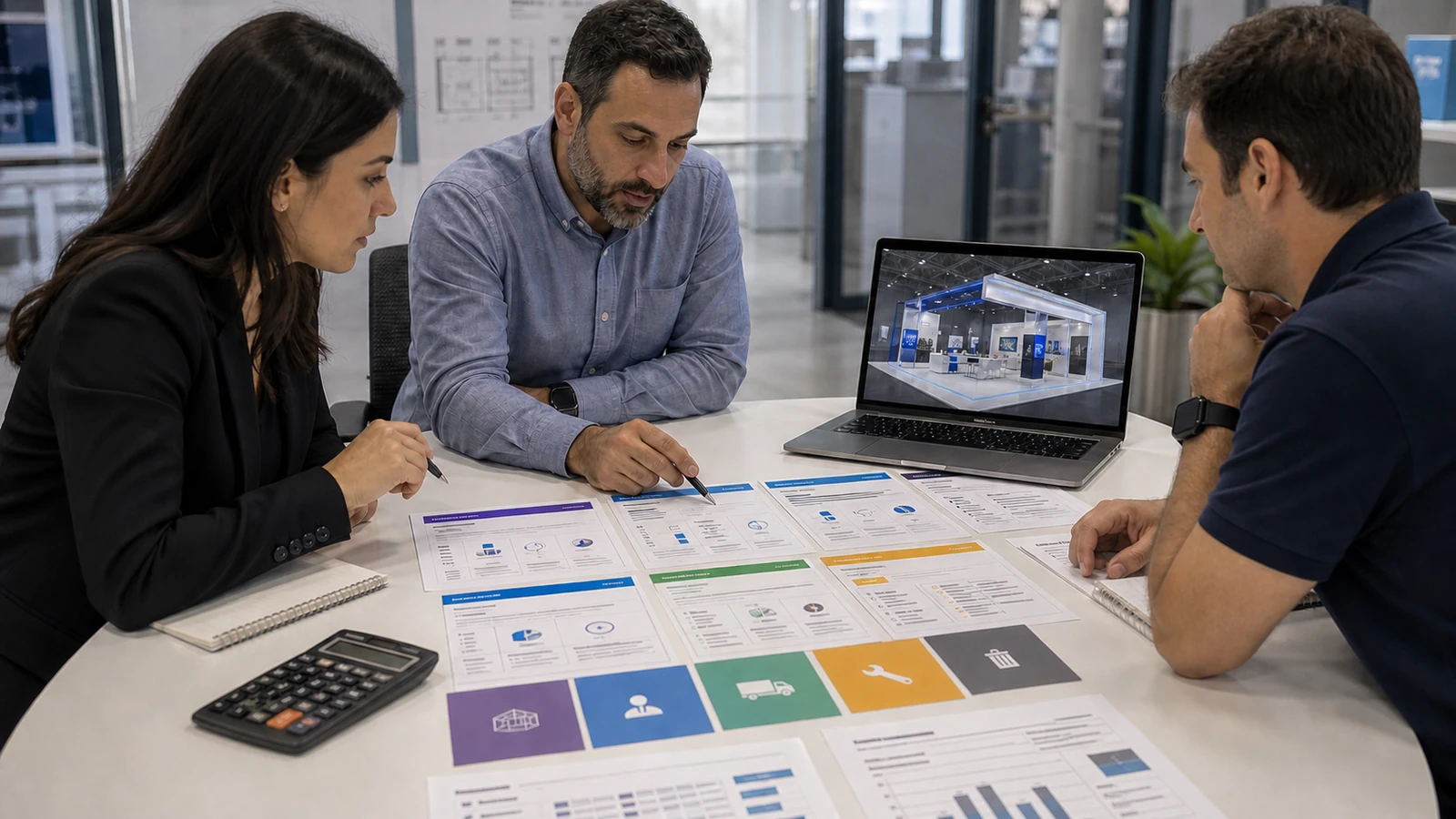
The full budget includes more than exhibit space and the booth quotation. Account for organizer charges; booth design, rental or construction; graphics and equipment; power and electrical labor; internet and AV; freight and material handling; I&D; and rigging. Also include cleaning and waste; travel and staff time; promotion and lead systems; and post-show storage, repair, refurbishment, graphics replacement, return, or disposal.
Identify the invoicing party and the trigger for each cost in your quote. Record triggers such as weight, minimum charges, handling conditions, order date, service location, labor window, minimum call, equipment, engineering, late change, off-target delivery, or outbound delay. Written rates and scope are more useful than assuming that an item is included because it appears necessary.
Compare rental, purchase, reusable/modular, and custom directions across your expected show program. Consider the number of shows, footprint changes, customization, production, freight, storage, refurbishment, graphics updates, ownership, and end-of-program obligations. The lowest first invoice is not automatically the lowest total cost. If you plan to retain exhibit property after the show, price trade show exhibit storage together with inspection, repair and future freight.
Normalize booth quotations before choosing. Align booth dimensions and configuration; materials and finishes; graphics and equipment; production and pre-build; project management; freight, material-handling, and I&D assumptions; official-service exclusions; taxes and allowances; change rates; on-site support; ownership; storage; and after-show work. Compare the same scope for your shortlist, then evaluate risk and responsibility gaps as well as price.
Complete Pre-Build, Freight, Installation, and Opening Readiness
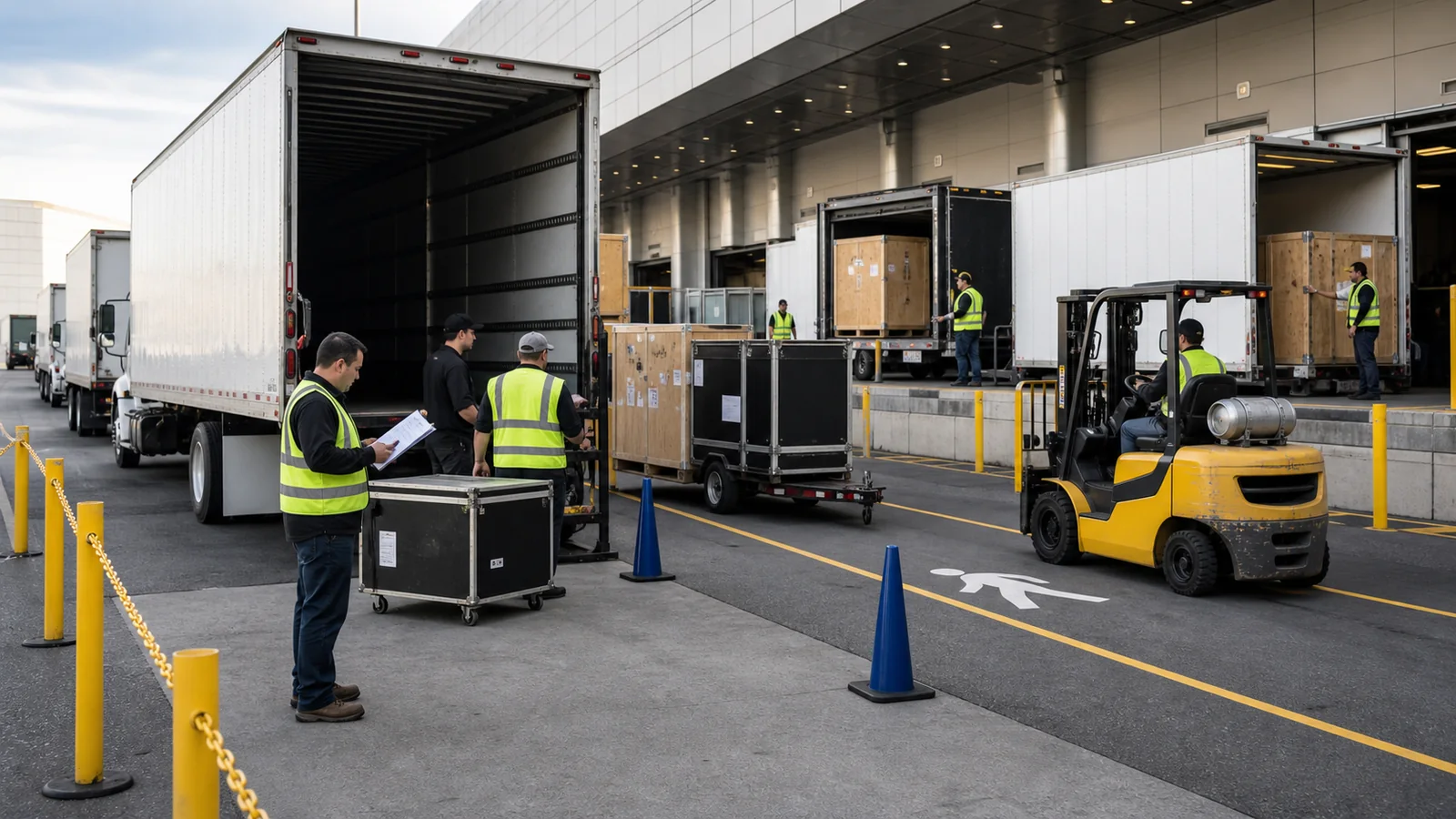
Pre-build or dry-run all identified components before shipping. Check structure, hardware, graphics, products, mockups, demonstrations, AV, lighting, cables, labels, tools, packing, and reset steps as applicable. Record each issue, correction, retest, and closure so the same problem is not rediscovered during move-in. For a documented check before shipment, review the trade show booth rental pre-build guarantee and agree which assemblies are included in your project.
Release freight from a verified inventory. Confirm the carrier, route, labels, piece count, tracking, destination, target date, driver instructions, on-site contact, and material-handling handoff. Prepare your outbound labels, carrier, documents, destination, pickup instructions, and release authority before inbound freight leaves.
Installation planning should connect the labor call, supervisor, access, unloading and delivery status, assembly sequence, service completion, products, demonstrations, and opening-ready deadline. Use one opening punch list for your structure, graphics, products, utilities, AV, lighting, storage, cleanliness, damage, visitor flow, and lead capture. Every open item needs an owner and a closure decision before the team begins operating the booth.
Prepare Outreach, Staff, Lead Capture, and Show-Day Operations

Give your priority contacts a specific reason to visit: a scheduled meeting, demonstration, technical discussion, product review, or conversation about a defined problem. Record the owner and time; booth staffing and visitor flow then support the commitment.
For your staffing plan, assign roles instead of asking everyone to do everything. Assign a host, qualifier, demonstrator or technical expert, meeting owner, lead-data owner, and operations contact as the booth requires. Build shifts, breaks, handoffs, arrival times, and escalation paths around scheduled activity and peak periods.
Lead capture should preserve the context needed for action. Record the reason for the visit, need, fit, role, timing, priority, notes, promised material, next step, owner, and due date. Test your scanner or app, offline fallback, export, privacy handling, and CRM route before the show opens.
During show hours, maintain role coverage and reset products, demonstrations, meeting areas, and visitor space. Route operational issues through the responsible contact; the rest of the team then continues working with visitors. End each day with a short review of priority leads, repeated questions, booth issues, staffing changes, and the next day’s meetings in your show-day log.
Control Move-Out, Follow-Up, Final Cost, and Asset Decisions
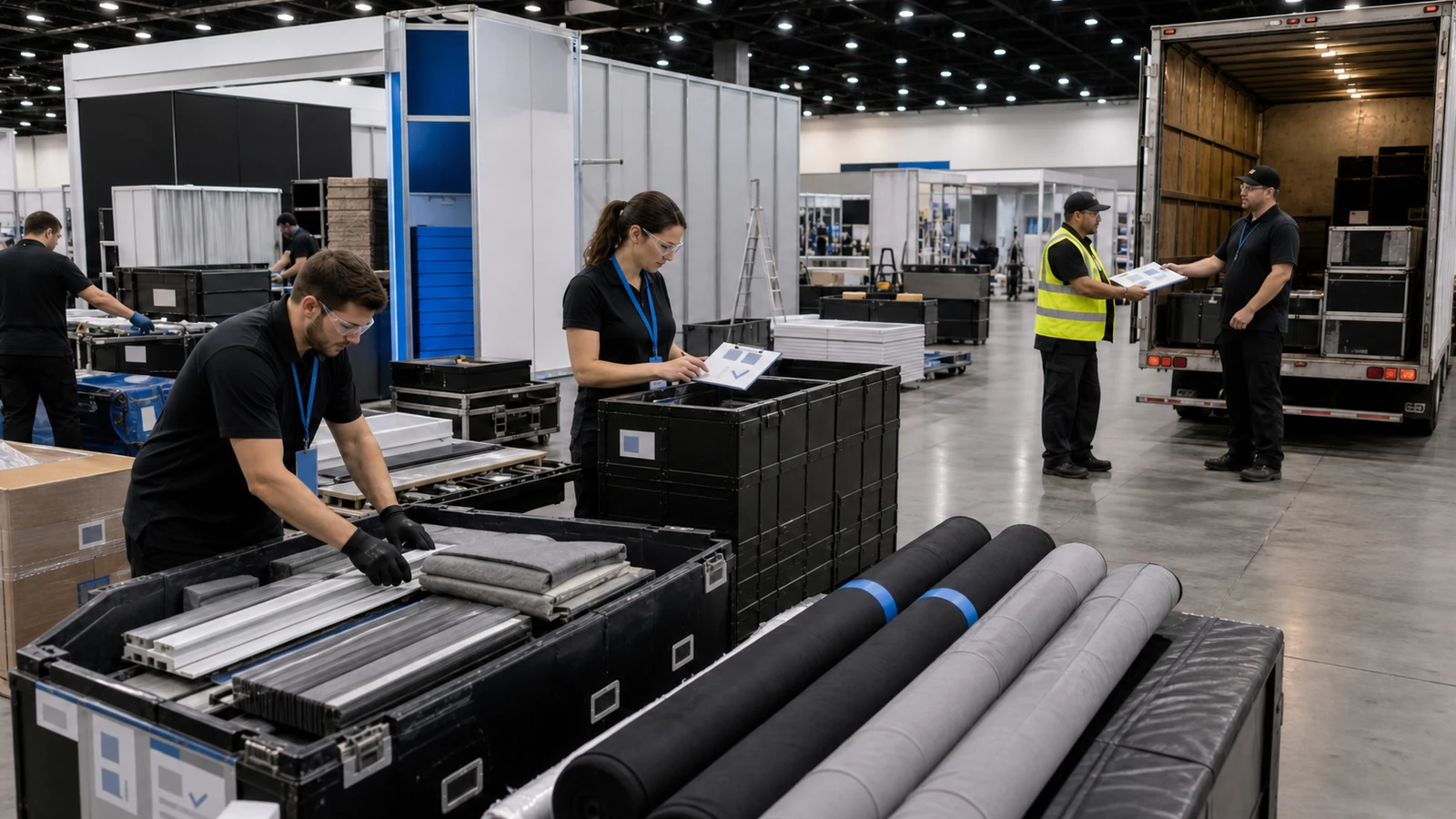
Move-out needs the same ownership as move-in. Keep an authorized person responsible for empty-container return, dismantling, labels, destination, piece count, carrier instructions, documents, damage or shortage records, and final freight release. A labeled crate is not proof that the outbound carrier accepted your shipment.
Clean and route priority lead records using the conversation context and promise made at the booth. Follow up within the agreed time, then track response, meeting, opportunity stage, and next action in the agreed system. A generic bulk email does not close a specific commitment.
Reconcile actual cost against the approved budget and explain variance by category. Review the original objective, meeting and lead quality, visitor questions, booth performance, team execution, service handoffs, and changes needed for your next event. Keep projected pipeline separate from realized financial results.
Every reusable asset should leave the project with a next state. Record whether it will return, store, repair, refurbish, receive new graphics, be reconfigured, transfer, or be disposed of, along with quantity, condition, location, owner, and next-use date in the asset record.
Trade Show Checklist FAQ
What if the exhibitor manual has not been released yet?
Build the objective, ownership, budget categories, booth brief, assumption log, and draft timeline. An earlier manual helps you identify questions, but it does not establish current dates, providers, rates, labor rules, labels, or approvals. Replace each assumption when the current documents are released.
Should the checklist be managed in Excel, Google Sheets, project software, or PDF?
Use a live source of truth that supports owners, dates, status, evidence, filters, and version control. Excel, Google Sheets, and project software work when the team maintains one current record. Use PDF as a stable snapshot or on-site fallback, not as the only tracker while tasks are changing.
How should you reuse the checklist across multiple shows?
When you reuse the task structure, refresh every event-specific date, rule, provider, rate, approval, labor condition, shipping label, and contact. Keep a separate asset record with quantity, condition, location, configuration, graphics, ownership, and next-use date so a reusable booth does not carry undocumented assumptions into the next show.
How do you calculate trade show ROI?
To calculate your trade show ROI, use trade show ROI (%) = net monetary benefit attributable to the show ÷ total show cost × 100. Net monetary benefit is the attributable financial benefit after show costs. Total cost should include space, booth work, official services, freight, material handling, I&D, travel, staff time, promotion, storage, refurbishment, and other costs that would not exist without the event. This follows the IAEE definition of ROI as net monetary benefits divided by meeting costs. For a long sales cycle, report realized ROI separately from projected pipeline and return on objective.
What should booth staff wear to a trade show?
Follow your current show and venue dress or safety requirements first. If they do not prescribe a uniform, use coordinated business-casual or business-professional clothing that fits the industry, identifies the team clearly, and remains comfortable for long hours on a hard floor. Plan separate move-in clothing where setup work requires it, and choose footwear and garments that do not create a trip hazard or interfere with required PPE.
Final Thoughts
Reuse the checklist structure, but rebuild the actual event plan. Refresh the dates, rules, providers, rates, approvals, labor conditions, freight route, and service confirmations for every show.
If you have selected or shortlisted a U.S. event, send us the show name, venue and dates, booth size and configuration, current exhibitor manual or floor plan, budget range, products or demonstrations, existing design or artwork, and the support scope you need. Those inputs make it possible to clarify booth requirements, responsibility gaps, cost exposure, project risks, and the next decisions.