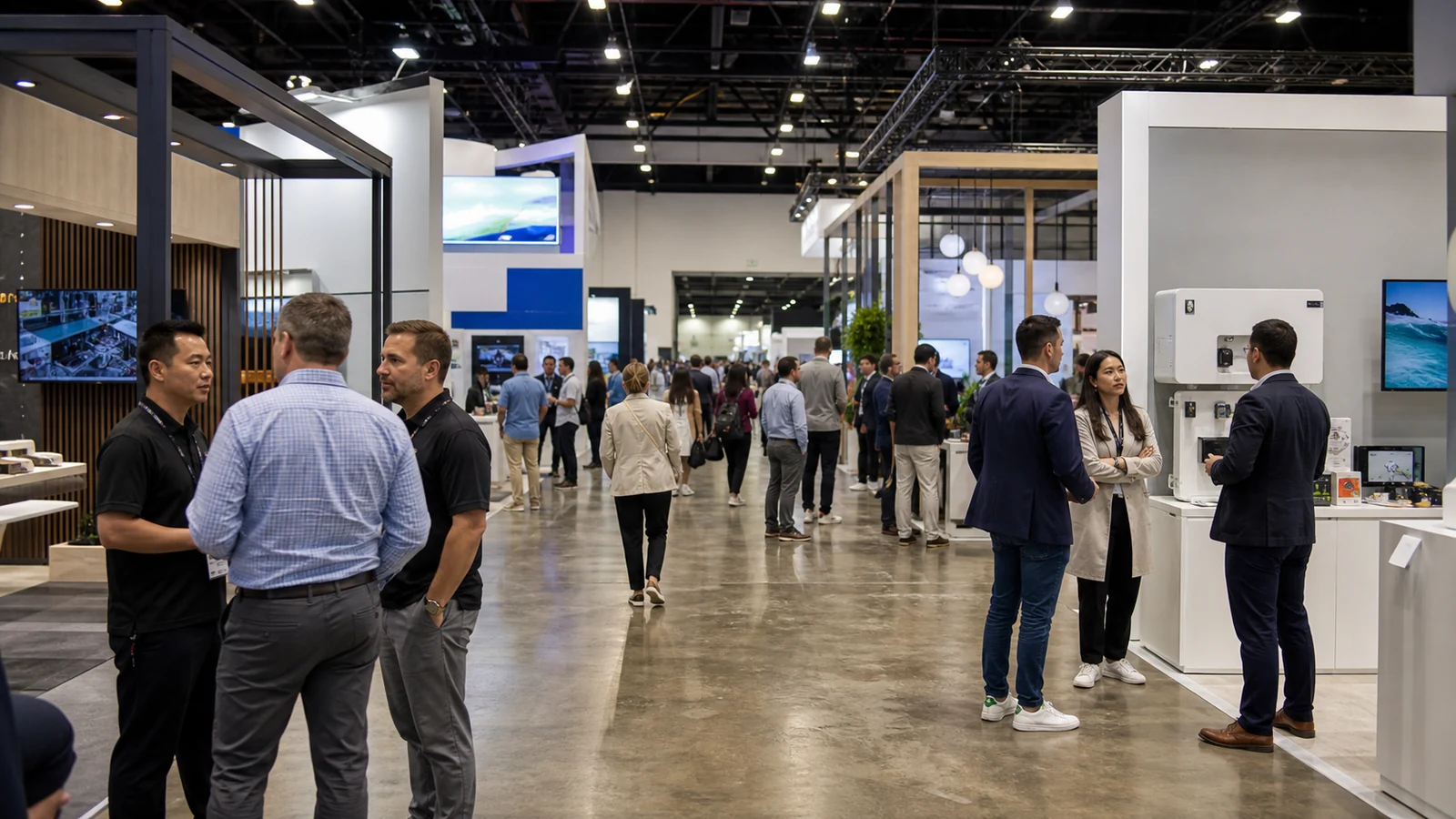
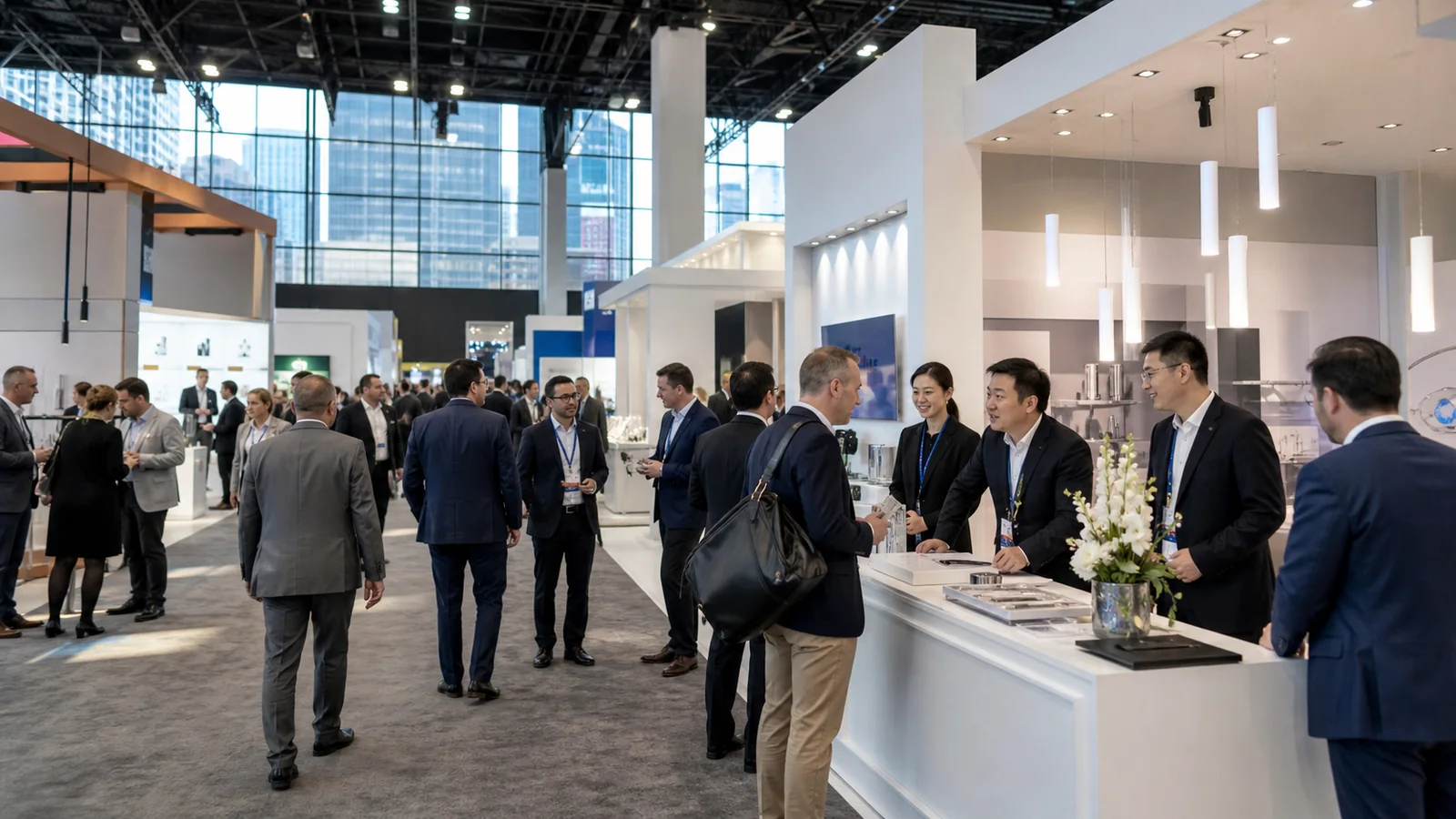
Carbon Capture Technology Expo North America brings CCUS technology and project discussions to Houston on February 10–11, 2027. Before you commit to exhibiting, decide which applications you can demonstrate, who you need to meet, and what evidence will make those conversations useful.
What Changed for the 2027 North America Edition?
Carbon Capture Technology Expo North America 2027 takes place at the George R. Brown Convention Center in Houston, replacing the NRG Center used for earlier editions. The organizer’s relocation announcement confirms February 10–11 and the continuing co-location with Hydrogen Technology Expo North America. If you have an old Houston show file, replace its venue and edition details before making transport or installation plans.
The current visitor information lists expo hours of 10:00–18:00 on February 10 and 10:00–16:30 on February 11. Conference sessions start at 09:00 on both days. These are public event hours, not permission to move equipment into the hall. Your freight arrival and setup schedule must come from the documents issued for your own exhibit.
The visitor page gives the venue address as 1001 Avenida de las Americas, Houston, Texas 77010. Confirm the delivery point in your exhibit documents before using that address for freight.
Where Does Your Technology Fit in the CCUS Program?
When you compare CCUS events, this North America edition is most useful if you can place your work within capture, transport, storage, or utilization and explain the next project decision it supports. The organizer’s published conference overview covers capture, transport, storage, and utilization, together with industrial applications. This describes the published program scope, rather than a confirmed list of individual sessions.
The organizer’s 2027 Houston announcement places the event within a region with refining, petrochemical, ammonia, and power assets. Treat that as a reason to prepare for industrial integration discussions, while using the published CCUS themes to check other applications such as cement or storage. The regional context alone does not confirm that a particular organization will attend.
Capture Materials and Process Equipment
The published topics include capture in hard-to-abate sectors, separation methods, carbon dioxide removal, and materials development. If you work with membranes, solvents, sorbents, or capture equipment, identify the gas stream and application first. A cement-plant application and a direct-air-capture application need different explanations. Use the application that matches your actual evidence to frame the exhibit, rather than expecting a general capture-rate headline to suit both.
For an early project, a useful outcome might be agreement on a test program or a technical review. For an established application, you may need to discuss integration, maintenance, or operating support. Choose the conversation your evidence can sustain. Presenting laboratory results as if they establish commercial operation will make the next technical exchange harder.

CO₂ Transport, Storage, and Monitoring
Transport solutions and storage-site selection and monitoring appear as separate areas in the published conference overview. For compression, handling, pipeline, shipping, storage, or monitoring work, identify the specific interface you address. Someone reviewing a compression package needs a different discussion from someone assessing a storage-monitoring approach. A simple diagram can show where your responsibility starts and ends without implying that you deliver the entire CCUS chain.
State what information you need to examine the application further. That might be a defined stream specification, a site description, an equipment connection, or a monitoring objective. Select only the information relevant to your work; a long list of unrelated requirements slows an otherwise useful conversation.
Utilization and Industrial Integration
The published utilization topics include concrete, chemicals, and polymers. If your work uses captured CO₂ in a product or process, explain the intended input and output and where integration is required. The useful exhibit question is how your process connects to a particular industrial application. Keep environmental performance claims separate from the physical description unless you have evidence for the stated conditions.
Use these distinctions to decide whether to exhibit or visit first. If you still need to identify the relevant industrial application, the technical audience, or a realistic next discussion, visiting lets you investigate those gaps before committing to an exhibit. You have a clearer reason to exhibit when you can already name the application and prepare a useful first exchange about it.
How the Hydrogen Co-Location Affects Your Exhibit Plan
The co-located hydrogen expo runs alongside a dedicated carbon capture exhibition and conference. You can use that relationship to investigate projects where hydrogen production and carbon management intersect. It does not mean every hydrogen conversation will be relevant to your work. The organizer explains the relationship on its event overview.
If your application supports carbon management within a hydrogen project, show that connection explicitly. Place the relevant process step in the diagram, identify the required interfaces, and have someone available who can explain the boundary. A generic hydrogen image adds little when the actual discussion concerns CO₂ treatment or handling.
If your strongest application is elsewhere, keep that application prominent. You do not need to turn a cement, power, chemicals, or storage-focused exhibit into a hydrogen presentation simply because the events share a venue. Use the co-location to add relevant meetings while preserving the technical message that brought you to the carbon capture event.
For a team covering both subjects, assign meeting responsibilities before the show. Decide who can explain each application and who needs to join a deeper engineering discussion. That is more useful than relying on every person at the booth to answer every question across both industries.

What Should You Display at the Show?
At the carbon capture expo, choose a display that lets you explain the part of a CCUS project you address and lets visitors inspect the relevant details. For a component, a physical assembly with visible connection points can make the first conversation more specific. Put the relevant operating limits beside it so you can discuss compatibility with the proposed system.
For membranes or sorbents, pair the sample or module with a short performance summary stating the feed gas, test conditions and scale of testing. Identify whether the result came from laboratory, pilot, or commercial operation. A capture-rate claim without that context gives little basis for assessing a different application.
For a complete capture system, start with a process diagram or scale model showing its connections to the plant and supporting services. Bring full-size equipment when you need visitors to inspect construction, access, or maintenance features. That benefit should justify the transport and floor space. A large object that cannot be explained or examined usefully can leave less room for the discussion you actually need.
For engineering or monitoring work, a project workflow or demonstration dashboard can explain scope and deliverables. Label simulated data clearly. Keep drawings or reports available for a deeper meeting, with permission to share any confidential material established beforehand.
Arrange the display so someone can understand the application before joining a conversation. Then provide a nearby place to open technical material without blocking the main viewing area. This makes the booth useful for both a short first exchange and a planned technical meeting.

Plan Your Carbon Capture Technology Conference Meetings
Start with the organizer’s advertised audience, which includes energy and utilities, heavy industry, industrial engineering, and gas and pipeline operations. Match those sectors to the application you selected for Houston, then identify relevant organizations and confirm their 2027 attendance. The published profile helps you choose whom to approach; it does not establish a confirmed appointment list.
For capture materials, prioritize people who can assess a test program or the intended process conditions. For an equipment or industrial-integration discussion, you need someone able to examine the plant connection and the information required for a further review. If your work concerns transport or storage monitoring, seek the team responsible for that particular part of the project. The right conversation depends on the technical question you can actually resolve together.
Use the longer first exhibition day for initial technical discussions where possible, and keep time on the shorter second day for agreed return visits. A first meeting might reveal that a colleague needs to join or that you need to open a drawing away from the display. Agree on the return time while both teams are there. If a key contact can attend only on February 11, give that meeting priority instead.
Conference sessions begin an hour before the expo opens on both days. If you plan to attend a morning session, arrange booth coverage for the 10:00 opening and choose meeting times that your technical team can actually attend. You should not promise a 09:00 booth demonstration based on the conference start time. Confirm the relevant session and its timing before moving a planned technical meeting.
As of October 23, 2026, the official site still links to a 2025 agenda and historical speaker and exhibitor information. Use those records to investigate past participation, then verify the current edition before arranging a meeting around a named presentation. While you wait for a confirmed 2027 timetable, you can prepare application notes and start relevant conversations. Add session-specific appointments when the current program identifies the people and times involved.
Before a confirmed meeting, share the application and the technical question you want to resolve. If the discussion needs a specialist in gas conditions, equipment connections, or monitoring, include that person in the invitation. Afterwards, record the unresolved point, the agreed next action, and who will carry it forward. This gives you a practical basis for continuing the discussion after Houston.

What Should You Confirm Before Booking and Designing Your Booth?
Confirm your contracted space, the current exhibit requirements, and your actual display needs before finalizing your trade show booth design.
Start with the Space and the Equipment
Match the booth number and footprint to the current plan, then identify open sides, display access, storage, and meeting needs. If you have an industrial component or equipment assembly, provide its dimensions, packed weight, handling points, and intended orientation. Those details let you assess whether it can reach the chosen position and be viewed there usefully.
Decide whether each item is a static display, a model, or something you intend to operate. For an operating demonstration, document the proposed inputs and outputs before design is finalized. Ask the organizer which current requirements and approvals apply to that specific setup. Do not assume that an earlier permission, a working product, or the presence of similar equipment elsewhere authorizes your demonstration.
Separate the Exhibit from Site Services
Check what your space agreement includes before assuming that furniture, electrical connections, internet, lifting, or material handling are covered. If you plan a remote dashboard demonstration, specify the internet connection it needs and how you will show the workflow if that connection fails. Video stored on the playback device can run without a live internet connection; confirm power and any other display services separately.
Establish who will receive the exhibit, which documents govern delivery, and when setup can actually occur. Resolve these questions before committing to trade show shipping, rather than after the equipment reaches Houston.

Frequently Asked Questions
Is Carbon Capture Technology Expo North America Free to Attend?
The organizer promotes free exhibition entry with registration. Conference access has separate pass terms, so you should not assume that a free expo registration includes conference sessions. Check the current registration options for the activities you intend to attend. Official entry information.
Where Can You Find the 2027 Floor Plan?
Use the official site’s link labelled “2027 Floor plan,” which opens the combined Hydrogen and Carbon Capture event plan. Check the edition and current availability there. A floor-plan listing does not reserve a space for you or replace your exhibit agreement. Official 2027 floor plan.
Can You Still Apply to Speak at the 2027 Conference?
The current conference overview gives tge-info@closerstillmedia.com as the contact for 2027 speaking opportunities. Ask whether proposals are still being considered and confirm the required topics, format, and submission deadline before preparing an application. A contact address does not confirm that a speaking slot is available. Official conference overview.
Can You Arrange Sponsorship as Well as Exhibition Space?
The official exhibition page lists exhibition and sponsorship opportunities. Ask the event team for the current options and the specific benefits attached to each. You should not infer presentation rights, attendee data access, or a speaking slot from a sponsorship label alone. Official exhibition options.
Is Carbon Capture Technology World Expo in Hamburg the Same Event?
They are separate regional events within the organizer’s portfolio. The North America event discussed here is in Houston; the World Expo is associated with Hamburg. Use the correct regional website and edition when you check registration, exhibition arrangements, or travel information. Official event portfolio.
Final Thought
Make the 2027 event useful by linking your display to a defined CCUS application and a clear next conversation. KingExhibits is a trade show booth supplier supporting U.S. exhibit design, fabrication, rental, and installation. Send us your booth plan, exhibit dimensions, demonstration needs, and budget. We can help you shape a practical layout and service scope for Houston.