
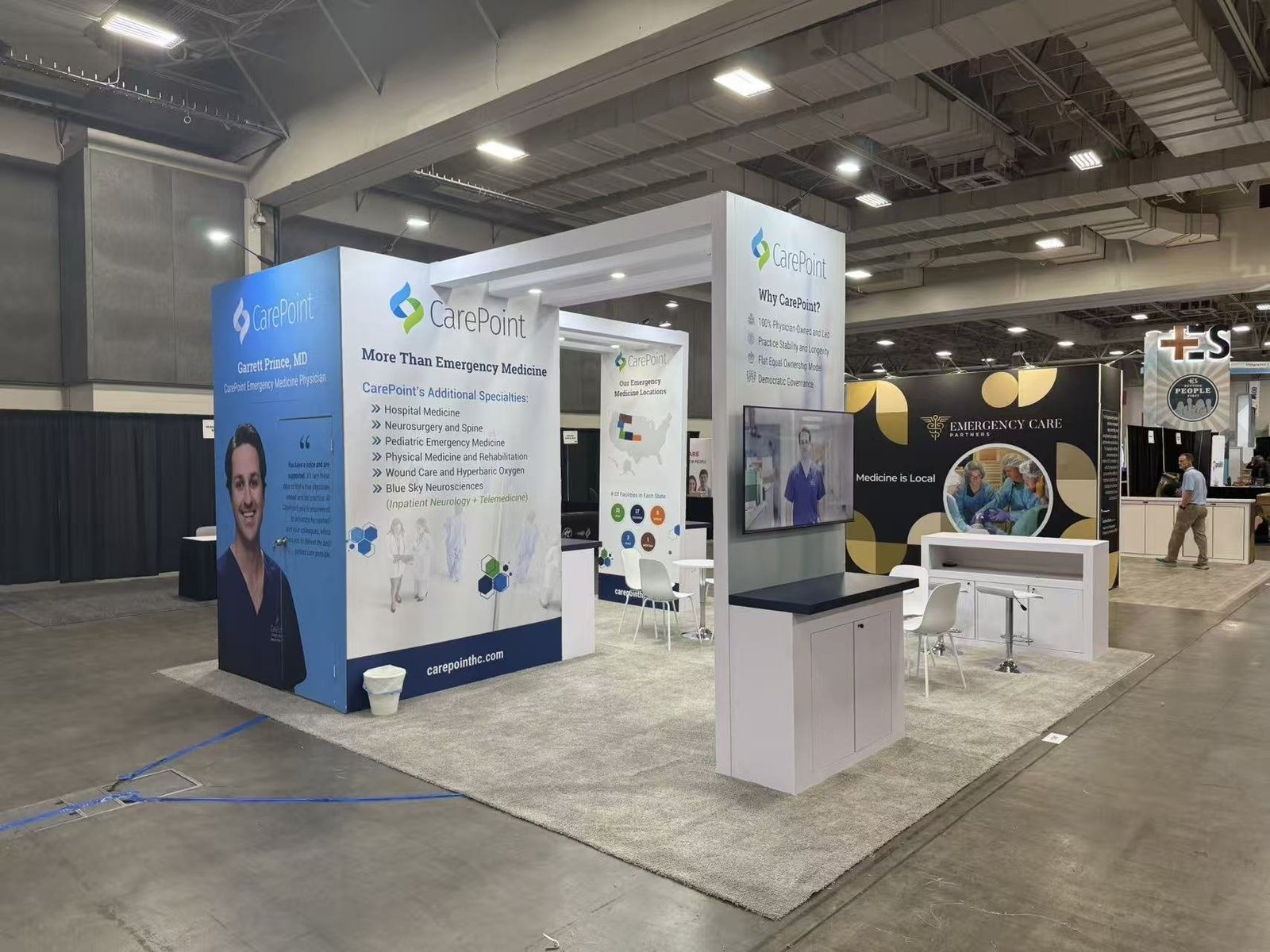


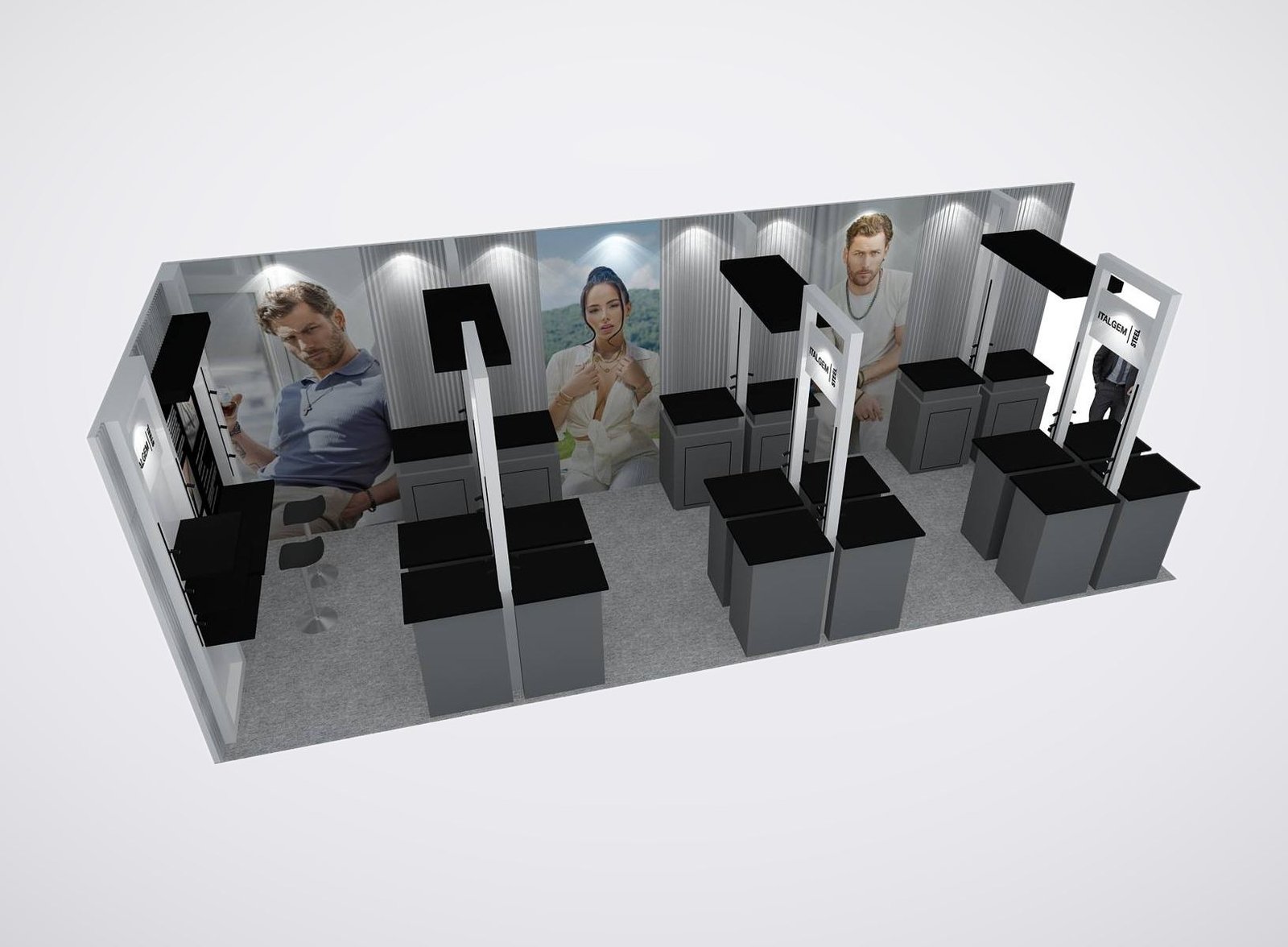
Give Us the Inputs That Control the St. Louis Booth
We review six items before the design and quotation move forward:
• Show, venue and assigned booth location
• Footprint, open sides and floor plan
• Products, demonstrations and visitor actions
• Brand files, graphics and screen conten
• Budget range and target approval date
• Freight, installation and dismantling scope
Build the Visitor Journey on Top of the Service Map
Once the service locations are fixed, use the remaining floor intentionally. The main aisle message should help the right attendee recognize the offer quickly. Product proof belongs where a visitor can stop without closing the entrance, while deeper technical content and meetings can sit farther inside the space.Each functional area should have a commercial purpose:When a St. Louis exhibit includes food, beverage or hospitality, position it so the queue and service activity do not block the product story. Confirm the venue process, equipment, power, water, cleaning and waste responsibilities before the counter is designed. Keep any spill risk and restocking route away from technology, samples and literature.
Keep Hospitality and Product Demonstration from Competing
When a St. Louis exhibit includes food, beverage or hospitality, position it so the queue and service activity do not block the product story. Confirm the venue process, equipment, power, water, cleaning and waste responsibilities before the counter is designed. Keep any spill risk and restocking route away from technology, samples and literature.Hospitality should give staff a natural opening for conversation, while the surrounding graphics explain why the visitor should continue. A concise application message or product result near the service point can connect the amenity to the business purpose of the booth.

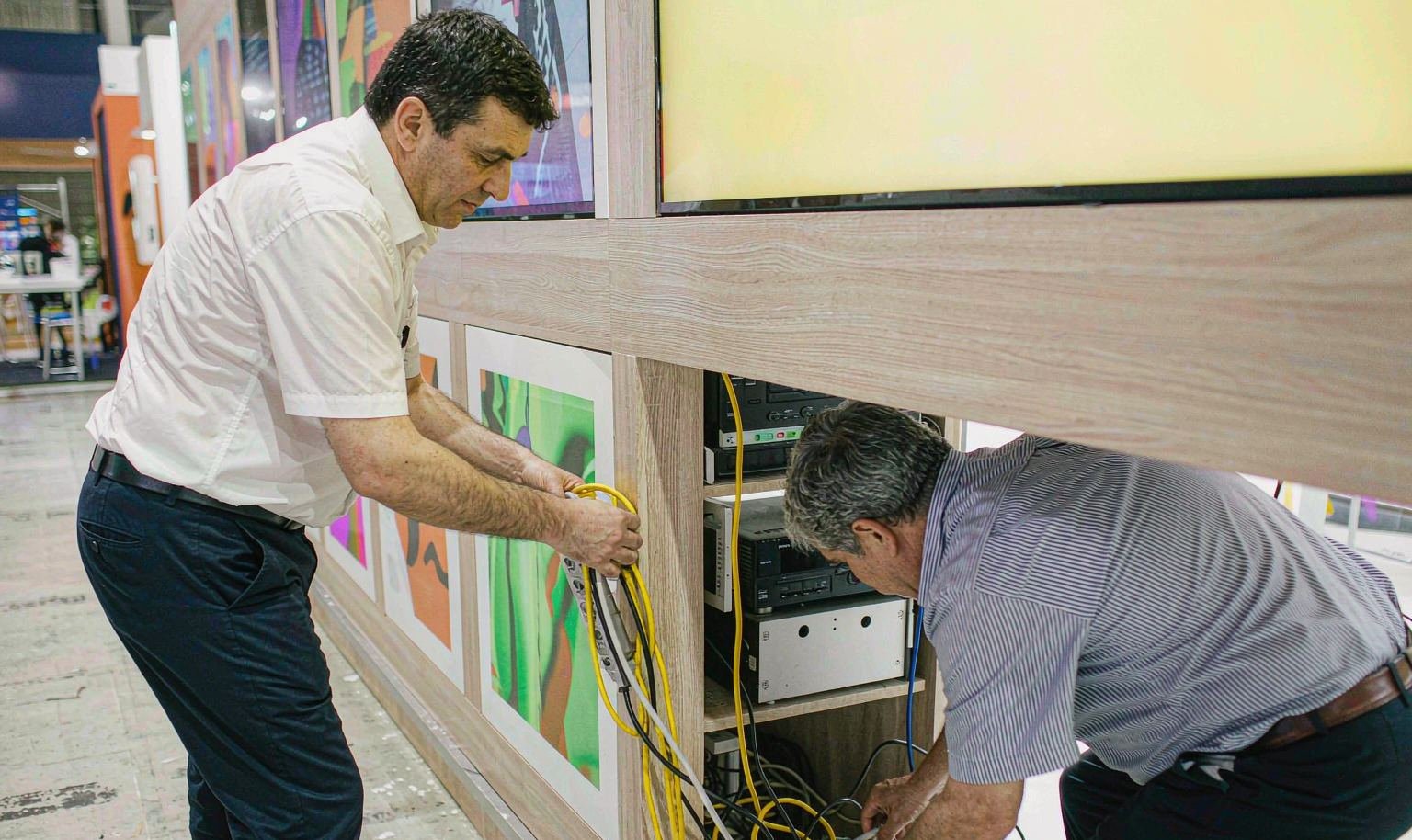
Test Every Service Handoff
Power should be live before screens and products are tested. Internet should be checked on the devices that will run the demonstration. Cleaning access and catering placement should remain clear of storage and cable routes. The installation schedule needs these handoffs in order, followed by one complete test of the visitor experience.The accepted proposal identifies design, rental assets, graphics, fixtures, packing, freight coordination and contracted labor. Official services remain assigned to their required providers.
Test the St. Louis Service Handoffs
Send the exhibitor kit, booth plan, device and product list, hospitality requirements and brand files. The resulting St. Louis proposal will show technical responsibilities and the visitor journey together.Before the team can test the st. louis service handoffs, send the current assignment, products, audience goal, graphics status, budget range and required field support in the city show brief. King Exhibits converts those inputs into a buildable layout and a quotation with named inclusions and exclusions. The result gives marketing, procurement and the onsite team one decision record before production starts.
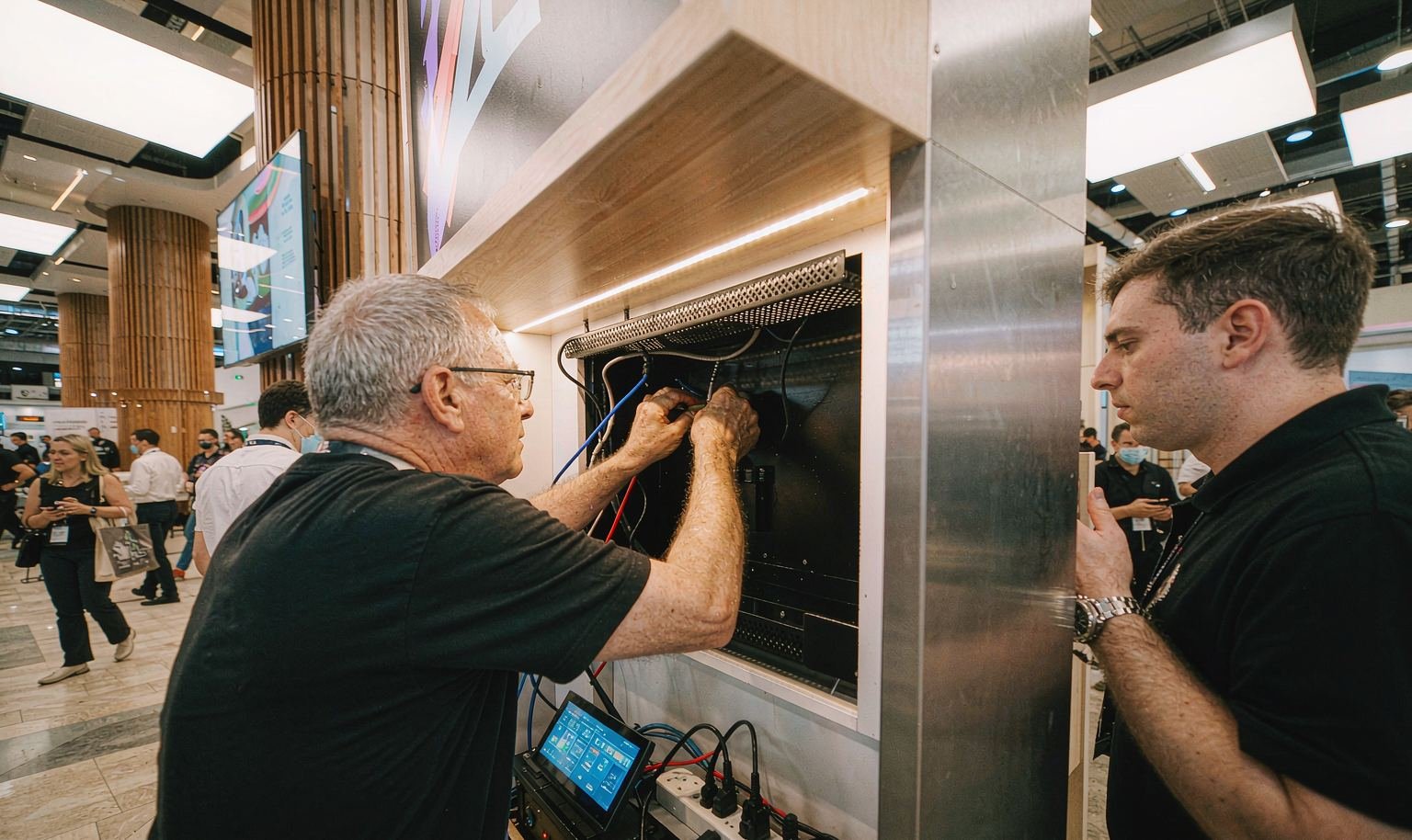

Senzani — 20×30 Exhibit at PACK EXPO 2025
This completed project gives teams planning St. Louis a concrete reference for scale, product presentation and visitor access. The verified project record identifies Senzani, a 20×30 footprint and PACK EXPO 2025. A new booth for St. Louis would still be developed around the assigned space, products and event requirements. Use the example to discuss the design direction rather than as a local-project claim.
Keep Design, Production and Field Scope Connected
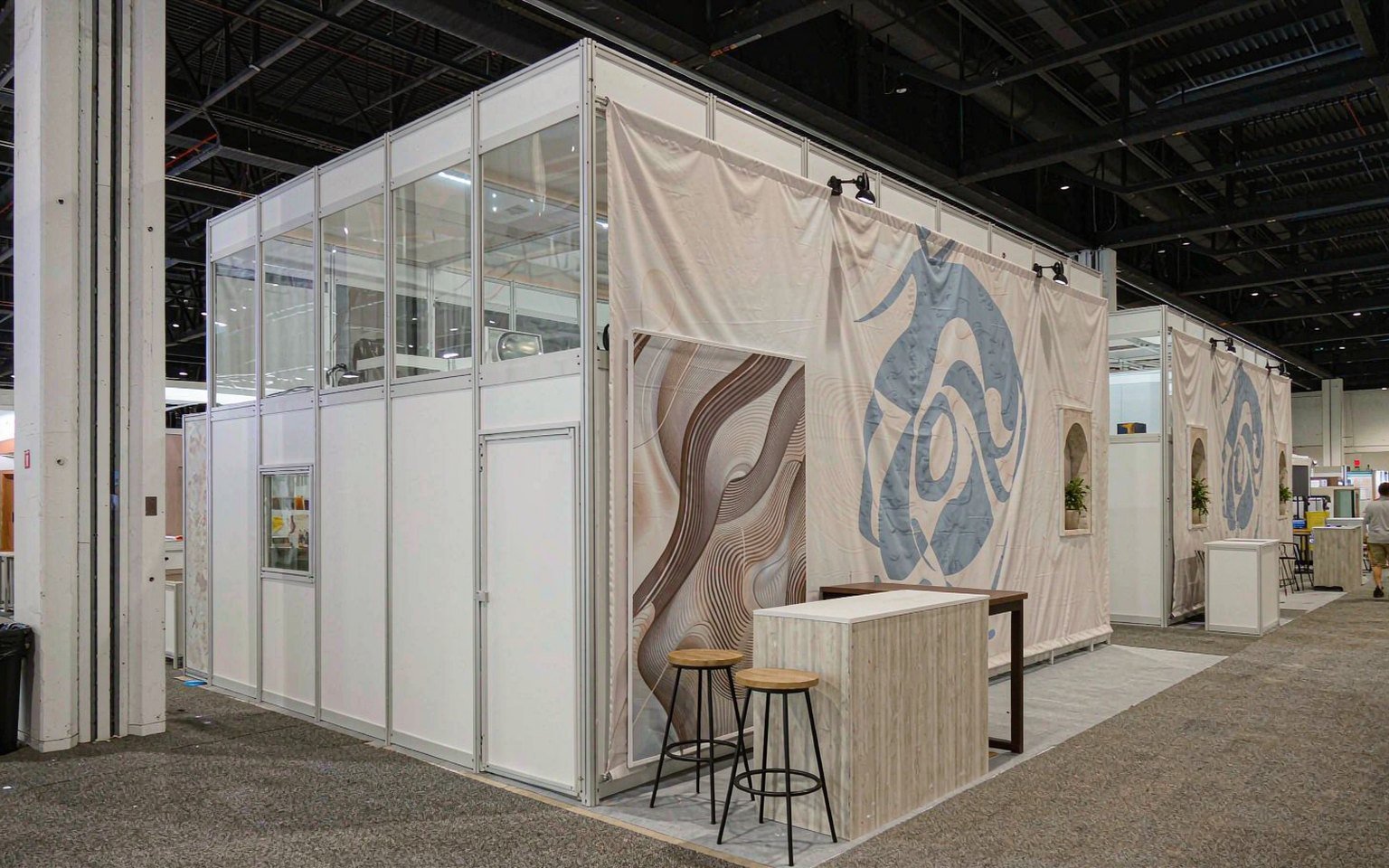
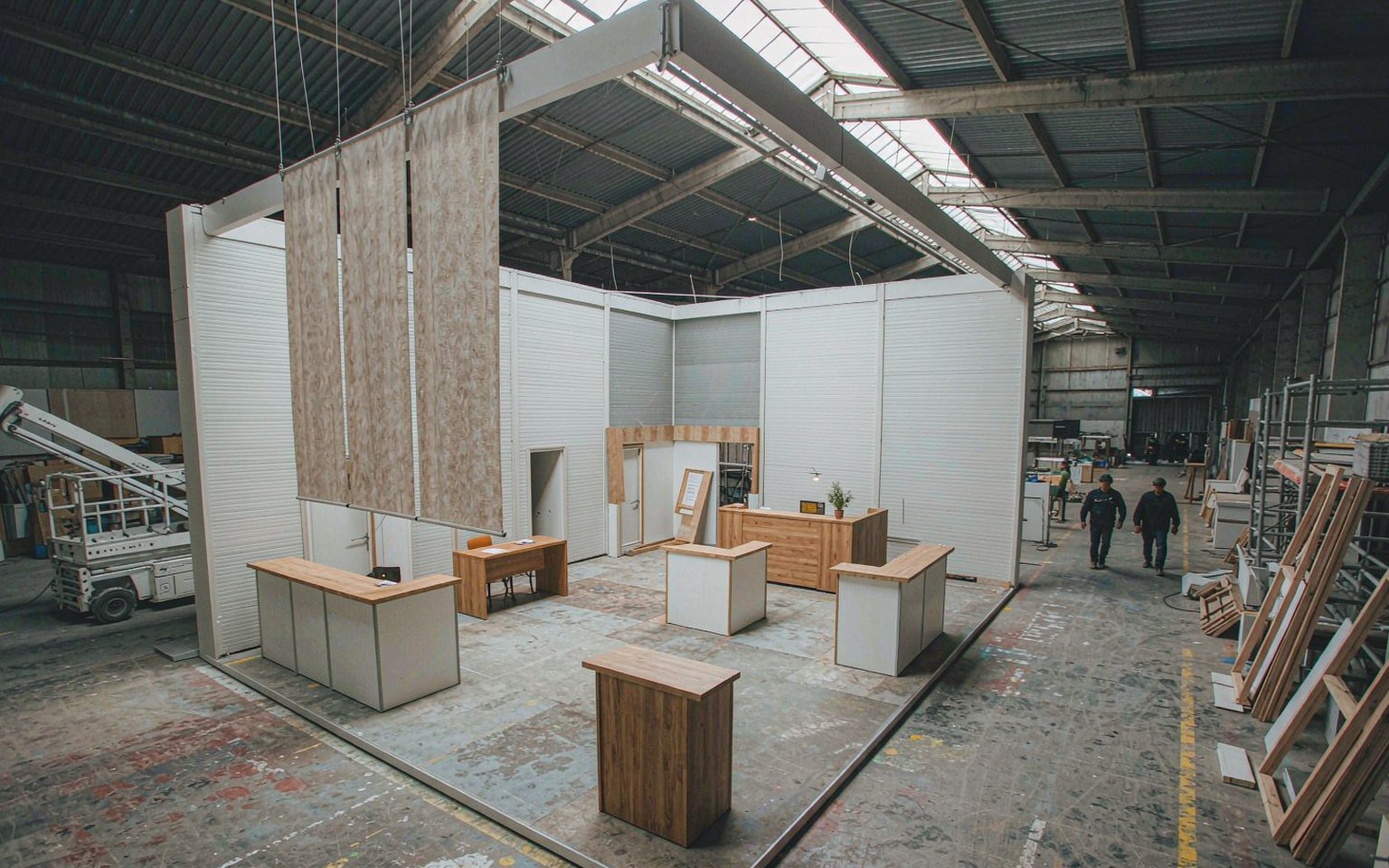
For St. Louis, the approved design should stay connected to the pieces that are produced, packed and installed. King Exhibits has supported U.S. exhibit projects since 2008. Our Las Vegas-based production support connects 3D visualization with rental preparation, custom graphics, CNC work and wood fabrication. When the project scope calls for it, key components can be assembled and checked before packing. The production record carries the approved local freight, service and reuse decisions into packing and field instructions. Freight and the floor work accepted in the quotation then follow that written scope.

How the St. Louis Booth Moves from Brief to Show Floor
Each stage turns customer information into a defined project output.
You provide the event, assigned venue, booth location and floor plan, footprint, products, budget and deadline. We identify missing organizer and technical information. The output is one usable St. Louis project brief.
We use the confirmed St. Louis operating brief to shape visitor flow, product placement, services and structure. You review the 3D direction and functional fit. The output is an approved layout basis.
You approve dimensions, artwork and final product information. We carry the approved St. Louis freight and service assumptions into rental preparation, fabrication, graphics and packing. The output is a production record.
You confirm the current organizer instructions, carrier plan and authorized floor contacts. We coordinate the freight and field work accepted for St. Louis. The output assigns installation, dismantling and outbound responsibilities before dispatch.
It depends on the service and room. America’s Center publishes exclusive and space-specific assignments for the current event. King Exhibits uses the current St. Louis show, assigned space and visitor goal to turn that decision into a buildable exhibit plan. This lets procurement compare the exhibit scope with official show charges before approval.
Test the live product sequence, screens, internet, utility-fed equipment, lighting, hospitality setup and staff path. Record the person responsible for correcting each incomplete item. King Exhibits uses the current St. Louis show, assigned space and visitor goal to turn that decision into a buildable exhibit plan. This lets procurement compare the exhibit scope with official show charges before approval.