


Give Us the Inputs That Control the New York City Booth
We review six items before the design and quotation move forward:
- Show, venue and assigned booth location
- Footprint, open sides and floor plan
- Products, demonstrations and visitor actions
- Brand files, graphics and screen conten
- Budget range and target approval date
- Freight, installation and dismantling scope
Assign the Work Before Approving the Schedule
Every physical and technical action should have one primary owner. The exact assignments depend on the current show manual, Javits policies, the General Service Contractor (GSC) and the accepted King Exhibits scope.
The map should use the same item names found in the drawing and quotation. If “LED wall,” “demo counter” or “client equipment” means different things in different documents, the team cannot reliably assign the work.
Javits freight movement begins before a truck approaches the building. Deliveries require the current logistics and event instructions, and drivers may need appointments, credentials and check-in steps. The show’s General Service Contractor receives event freight under its published process. Javits does not serve as an advance warehouse for exhibitor shipments.
Route Javits Freight Through the Current Event System
Javits freight movement begins before a truck approaches the building. Deliveries require the current logistics and event instructions, and drivers may need appointments, credentials and check-in steps. The show’s General Service Contractor receives event freight under its published process. Javits does not serve as an advance warehouse for exhibitor shipments.
This distinction matters when a carrier says a shipment has been delivered. Delivery to an advance warehouse, marshalling area or designated receiver is not the same as delivery to the booth.


Choose Hand Carry, GSC Handling and Exhibitor Appointed Contractor (EAC) Work Deliberately
Javits publishes separate conditions for hand-carried materials, exhibitor-appointed contractors and work performed by exhibiting personnel. These are operating categories, not interchangeable ways to avoid planning.
Use the hand-carry path only for items and methods allowed by the current policy. A small case that can be managed through an approved entrance may fit that category; a pallet, crate or shipment requiring material-handling equipment does not become hand carry because a company employee accompanies it.
Design the Display Around the Approved Work Sequence
The action-owner map should change the exhibit design when necessary. A concept that requires many on-site adjustments, loose graphic sections or late technology decisions creates more handoffs on a floor where responsibilities are already divided.
- Can it be fabricated and tested before the shipping release?
- Does it require a specialist, official order or separate approval?
- Can the correct team reach it at the correct stage of installation?
- Will a late product or media asset stop another part of the build?
- Can it be removed and repacked within the dismantle window?


Turn Assigned Actions into a Clear Proposal
The proposal identifies King Exhibits design, rental components, custom work, graphics, packing, freight coordination and contracted floor work. Customer products, artwork, media and equipment keep named delivery dates and approvers. Javits and show-provider orders remain visible with their ordering party, deadline and invoice owner.
Before release, compare the rendering, component list and assigned actions. They should describe the same physical booth and the same handoffs.
Assign Every Javits Action Before Release
Send the current exhibitor manual, Javits hall and booth assignment, floor plan, products, media requirements, artwork status and shipping origins. King Exhibits will use those inputs to define the display direction, assign the contracted responsibilities and identify the official services that must be handled through other channels.
Before the team can assign every javits action before release, confirm the receiving method, largest packed piece, carrier window, site contact and outbound plan in the city show brief. King Exhibits carries those decisions into case labels and the installation sequence accepted in the quotation. This exposes the handoffs that affect timing and cost before the shipment leaves production.

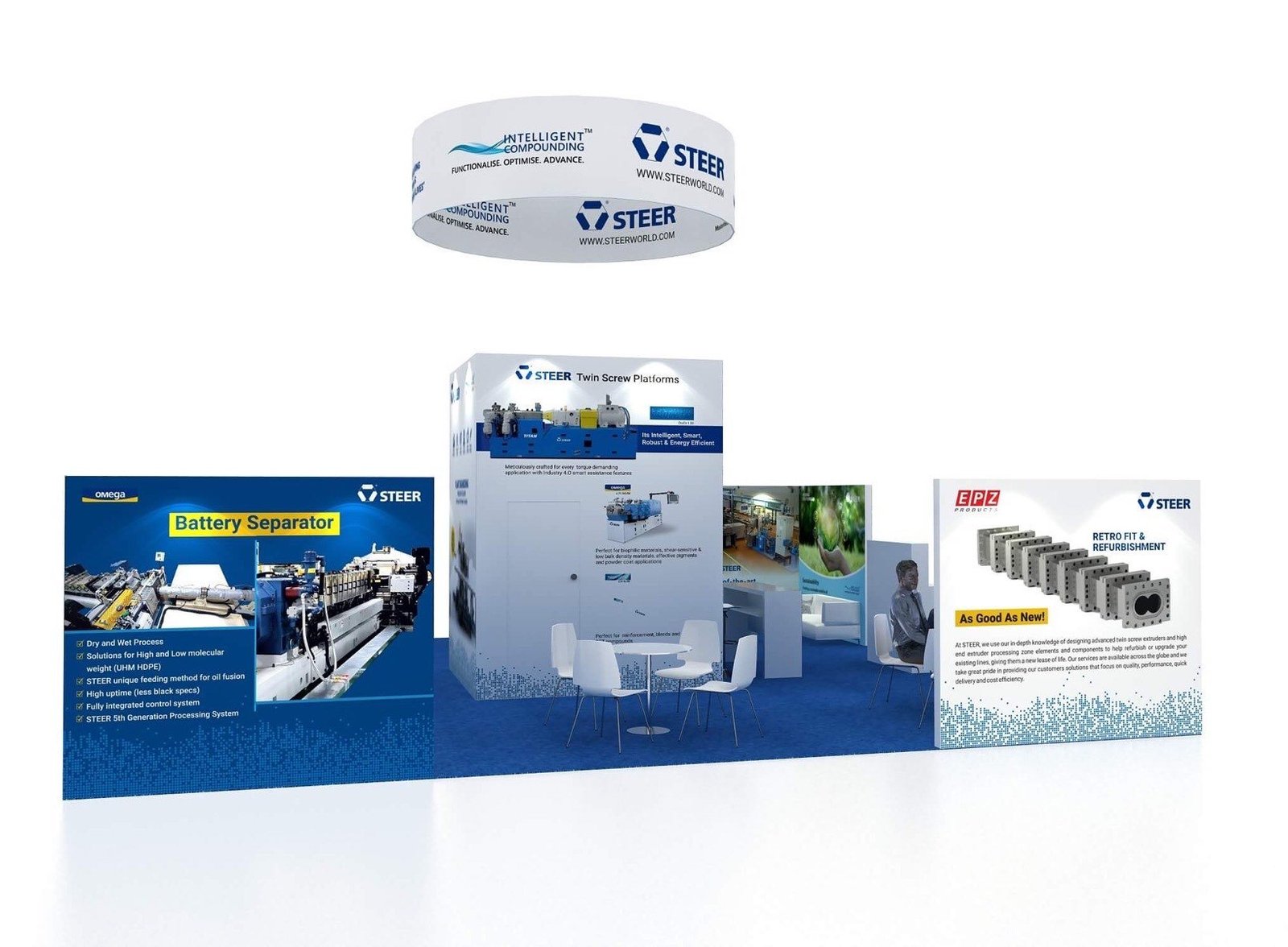
STEER — 30×30 Exhibit at NPE 2024, Orlando
This completed project gives teams planning New York City a concrete reference for scale, product presentation and visitor access. The verified project record identifies STEER, a 30×30 footprint, NPE 2024 and Orlando. A new booth for New York City would still be developed around the assigned space, products and event requirements. Use the example to discuss the design direction rather than as a local-project claim.
Keep Design, Production and Field Scope Connected


For New York City, the approved design should stay connected to the pieces that are produced, packed and installed. King Exhibits has supported U.S. exhibit projects since 2008. Our Las Vegas-based production support connects 3D visualization with rental preparation, custom graphics, CNC work and wood fabrication. When the project scope calls for it, key components can be assembled and checked before packing. The production record carries the approved local freight, service and reuse decisions into packing and field instructions. Freight and the floor work accepted in the quotation then follow that written scope.
How the New York City Booth Moves from Brief to Show Floor
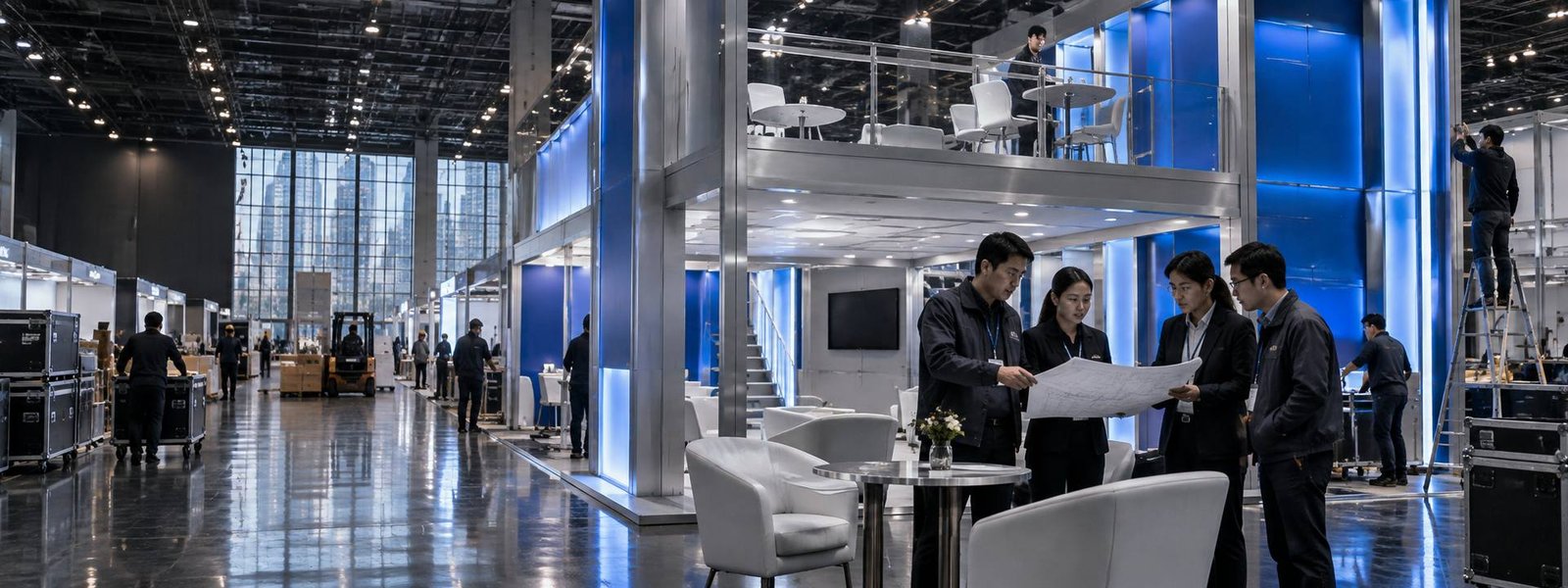
Each stage turns customer information into a defined project output.
You provide the event, assigned venue, booth location and floor plan, footprint, products, budget and deadline. We identify missing organizer and technical information. The output is one usable New York City project brief.
We use the confirmed New York City operating brief to shape visitor flow, product placement, services and structure. You review the 3D direction and functional fit. The output is an approved layout basis.
You approve dimensions, artwork and final product information. We carry the approved New York City freight and service assumptions into rental preparation, fabrication, graphics and packing. The output is a production record.
You confirm the current organizer instructions, carrier plan and authorized floor contacts. We coordinate the freight and field work accepted for New York City. The output assigns installation, dismantling and outbound responsibilities before dispatch.
No. Javits does not act as an advance warehouse for exhibitor freight. Use the receiving route, dates, labels and booking instructions issued for the current event and its General Service Contractor. King Exhibits uses the current New York City show, assigned space and visitor goal to turn that decision into a buildable exhibit plan.
No. Hand-carried items and commercial freight follow different conditions. Confirm the item, vehicle, entrance, equipment and responsible party against current Javits and show instructions before arrival. King Exhibits uses the current New York City show, assigned space and visitor goal to turn that decision into a buildable exhibit plan. This lets procurement compare the exhibit scope with official show charges before approval.
Some work may be completed by qualifying exhibiting personnel under the current rules, while other work belongs to the relevant trade, GSC or official provider. List each intended task and confirm its permitted owner instead of applying one answer to the complete installation. King Exhibits uses the current New York City show, assigned space and visitor goal to turn that decision into a buildable exhibit plan.
Often, but the layout and operating plan must be checked against the next venue. The rental framework, graphics and owned fixtures can be documented for reuse while freight, utilities, access and labor responsibilities are rebuilt for the new event. Use the current floor plan and organizer documents to confirm the second setting before the structure, shipment or service orders are released.