2026 U.S. cannabis event calendar and exhibitor guide
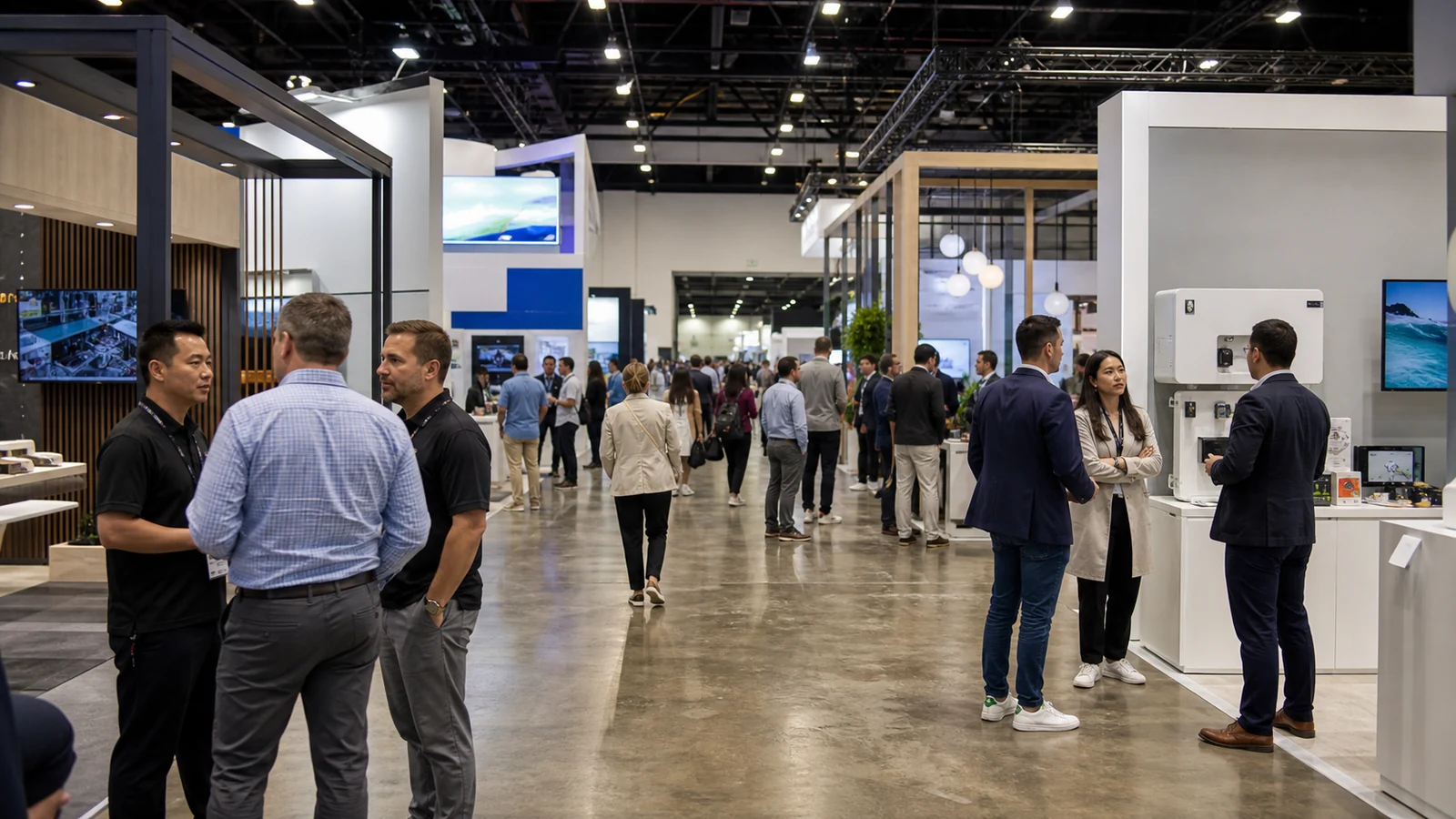
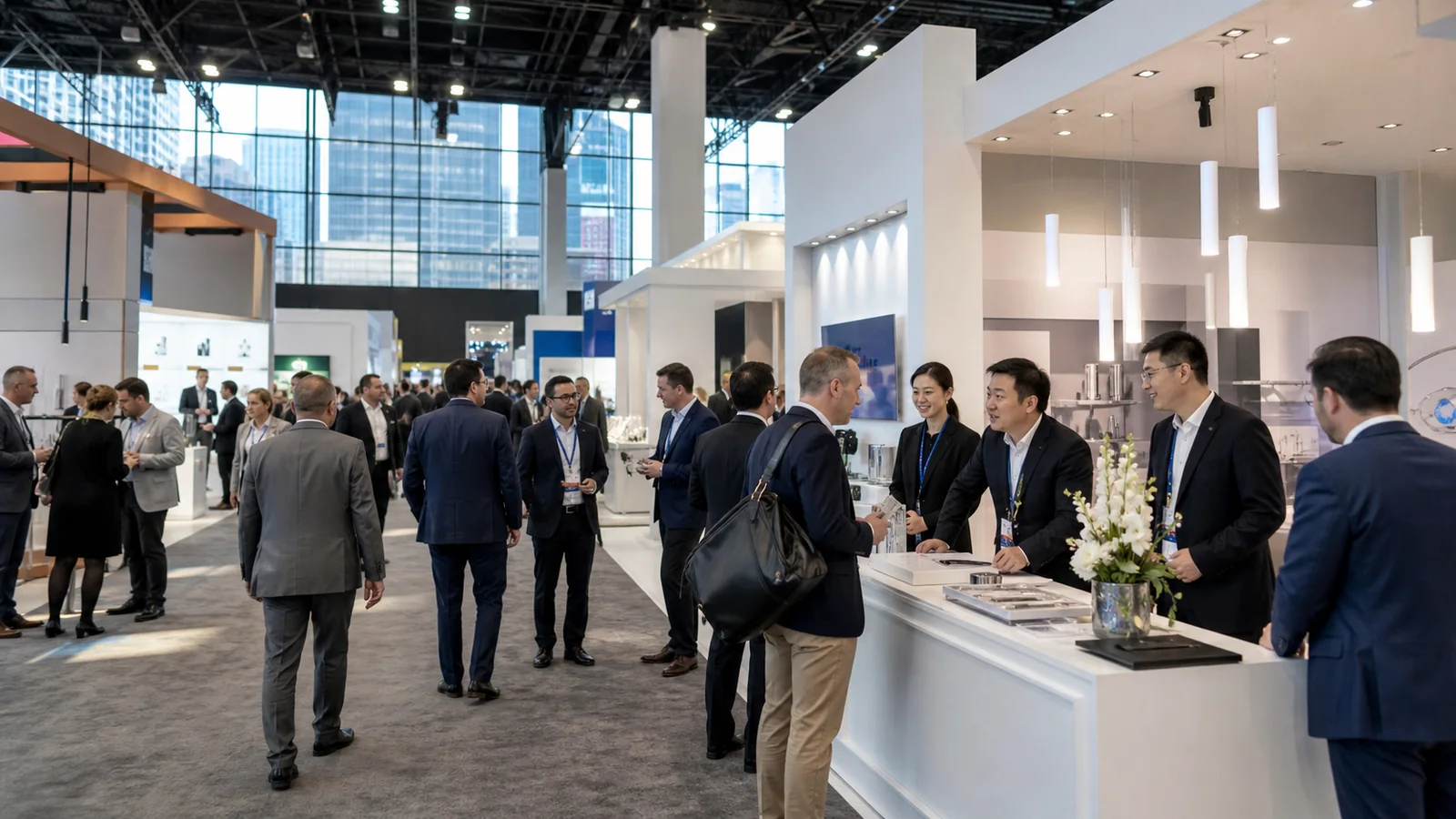
Searching for cannabis trade shows in the USA brings up everything from national expos to private buyer meetings and public-facing festivals. Those formats are not interchangeable. This guide organizes organizer-confirmed 2026 cannabis industry events by date and explains which type of event may fit your objective. “Upcoming” is based on a September 1, 2026 research cutoff.
The exhibitor-planning sections cover display decisions common to cannabis brands, cultivation and processing equipment, packaging, testing and laboratory services, software and compliance services, and exhibits originating outside the United States. The calendar remains the main task; booth type, budget, and lead-quality guidance follow after the event comparison.
Quick Answer
The remaining 2026 U.S. calendar includes national expos, regional conventions, specialist conferences, and invitation-only buyer events. MJBizCon is the clearest national B2B anchor, but the right choice depends on who can attend, the market you want to reach, and whether you need an expo floor or scheduled meetings. Recheck the organizer’s date and access rules before booking.

Upcoming Cannabis Trade Shows and Industry Events in the USA for 2026
The calendar below starts after September 1, 2026. It includes cannabis trade shows, cannabis conferences, regional conventions, and curated business events that serve different purposes. An event’s presence in the table does not mean it is open to everyone or that it operates as a conventional expo.
| Event | 2026 date | City or venue | Event type | Best fit | Access or status note |
|---|---|---|---|---|---|
| PBC Conference | Sep 9–10 | Capital Hilton, Washington, DC | Specialist B2B conference with exhibitors | Banking, payments, and compliance conversations | Professional audience; not a broad product expo |
| Flower Expo Chicago | Sep 15–16 | Chicago, Illinois | Private brand-and-retail event | Focused product discovery and retail relationships | Invitation only, not open to the public, and 21+ |
| The Exchange Portland | Sep 16–17 | Portland, Oregon | Curated business meetings | Licensed vendors, retailers, and ancillary exhibitors | Application identifies vendor, retailer, and exhibitor roles |
| NECANN New Jersey | Sep 18–19 | Atlantic City Convention Center | Regional convention and expo | New Jersey industry and community reach | Includes professionals and consumers; not trade-only |
| Ohio Cannabis Health & Business Summit | Sep 23–24 | Greater Columbus Convention Center, Columbus | Regional conference and expo | Ohio-focused education, exhibitors, and networking | Confirm ticket and exhibitor requirements with the organizer |
| Interchange Michigan | Sep 23–24 | Metro Detroit | Private 1:1 buy/sell event | Product conversations with participating retailers | Not an open walk-up expo |
| MJ Unpacked | Oct 14–15 | Sheraton Crown Center, Kansas City, Missouri | Curated national conference and experience hall | Licensed operators, researchers, and accredited investors | Organizer also shows an Oct 13–15 program listing; confirm add-on timing |
| Cannabis Quality Conference & Expo | Oct 21–23 | Crystal Gateway Marriott, Arlington, Virginia | Specialist B2B conference and expo | Quality, testing, standards, audits, and supplier management | Co-located with the Food Safety Consortium Conference |
| Hall of Flowers New York | Oct 21–22 | New York; confirm the current venue | Buyer, brand, and ancillary-provider event | Retail discovery and brand relationships | Confirm edition-specific passes and public access by day |
| The Exchange Michigan | Oct 21–22 | Shelby Township, Michigan | Curated business meetings | Qualified local vendors, retailers, and ancillary exhibitors | Application-based format |
| Hall of Flowers Sacramento | Nov 4–5 | Sacramento, California | Hybrid industry and public event | Day-one business interaction plus day-two consumer exposure | Organizer describes Day 1 as business-focused and Day 2 as public-facing |
| Interchange Seattle | Nov 10–11 | Seattle, Washington | Private 1:1 buy/sell event | Producers, processors, ancillary companies, and retailers | Meeting-led rather than open-floor traffic |
| CHAMPS Fort Lauderdale | Nov 17–19 | Broward County Convention Center, Fort Lauderdale | Adjacent counterculture marketplace | Qualified buyers and vendors in overlapping categories | Not a cannabis-only trade show |
| MJBizCon | Dec 1–4; expo hall begins Dec 2 | Las Vegas Convention Center | National B2B conference and expo | Broad industry reach, education, supplier discovery, and networking | Some Dec 1 programs have separate qualification or registration rules |
Dates and participation rules can change. Before paying for space, open the organizer’s current exhibitor page and confirm that the edition, venue, audience, and format still match your plan.
Cannabis Trade Show, Conference, Convention, or Buyer Event—What Is the Difference?
The labels overlap, but the operating format matters more than the event name. It determines how people enter, how conversations happen, how much floor traffic you can expect, and what kind of display makes sense.
| Event format | How it works | Audience caution | Display implication |
|---|---|---|---|
| National B2B conference and expo | Large exhibit floor plus education and networking across several industry categories | Broad reach also means more category and visual competition | A complete exhibit booth with fast category recognition and clear meeting flow |
| Regional convention or expo | Concentrates one state or regional ecosystem | May include professionals, advocates, and consumers rather than trade-only traffic | Localized messaging and a flexible inline or corner format |
| Curated buyer event | Uses qualification and scheduled 1:1 conversations instead of relying on aisle volume | Vendor, retailer, license, or role requirements may apply | Compact meeting display, organized samples, and conversation space |
| Specialist business conference | Focuses on banking, compliance, quality, testing, or another function | Relevance matters more than total attendance | Concise technical content and a consultation area |
| Hybrid industry and public event | Changes audience or purpose by day | Pass classes, selling, sampling, and public access may change | Day-specific staffing, message, product controls, and lead criteria |
The classification is a starting point, not a substitute for the current registration page and exhibitor manual. For example, NECANN New Jersey includes both industry participants and consumers, Flower Expo Chicago is private and invitation-only, and Hall of Flowers describes business and public activity on different days.

Which 2026 Cannabis Trade Show Is Right for Your Business?
Choose the event by objective, audience eligibility, and interaction format. Reported attendance is useful only after those three conditions match.
| Business objective | Recommended event type | Suitable 2026 events | Display requirement |
|---|---|---|---|
| National visibility and broad supplier or partner discovery | National B2B expo | MJBizCon | Strong visual identity, fast category recognition, meeting area, and a complete exhibit booth |
| Entry into a state market | Regional convention | NECANN New Jersey, Ohio Cannabis Health & Business Summit | Localized message, flexible product/demo area, and lead qualification that separates business and public traffic |
| Scheduled retail or licensed-operator conversations | Curated buyer event | Interchange, The Exchange, MJ Unpacked | Compact meeting-focused display; confirm room plan and allocated footprint before ordering a full booth |
| Brand and product discovery | Retail-focused or hybrid event | Flower Expo, Hall of Flowers | Product presentation, organized samples where permitted, and day-specific brand storytelling |
| Technical or professional conversations | Specialist conference | PBC Conference, Cannabis Quality Conference & Expo | Technical proof, a concise demonstration, and consultation space rather than a large activation |
| Overlapping counterculture categories | Adjacent marketplace | CHAMPS Fort Lauderdale | Confirm the exhibitor mix and qualified-buyer relevance before committing; it is not cannabis-only |
This table narrows the list, but the final decision still requires the edition-specific audience, exhibitor categories, access rules, floor plan, and total project cost. A high-traffic event with the wrong audience is not improved by a larger booth.

Earlier 2026 Cannabis Events to Monitor for Their Next Edition
Several established cannabis expos had already finished by the September 1 research cutoff. Their 2026 history can support future monitoring, but it does not confirm a 2027 date or location.
| Event | 2026 date and location | Format | Next-edition status |
|---|---|---|---|
| Flower Expo Northampton | Jun 17–18, Northampton, Massachusetts | Private brand-and-retail event | Organizer currently lists Northampton for Jun 16–17, 2027; recheck before planning |
| CannaCon St. Paul | Jun 26–27, Saint Paul RiverCentre, Minnesota | Regional cannabis conference and expo | Monitor the official locations page for the next confirmed edition |
| CannaCon St. Louis | Aug 28–29, America’s Center, St. Louis | Regional cannabis conference and expo | Past as of the research cutoff; do not reuse the 2026 dates for 2027 |
If an earlier event is central to your plan, subscribe to the organizer’s updates and wait for a dated official page. A past venue, month, or city is not a reliable production input.
What Type of Booth Do You Need for a Cannabis Trade Show?
The booth should follow the event format and the work it must perform. A larger footprint is justified only when it supports more products, demonstrations, meetings, or visibility—not simply because the show is large.
| Booth type | Best use | What it can support | Main caution |
|---|---|---|---|
| Compact meeting display | Curated buyer events and appointment-led conferences | Presentation screen, selected samples, literature, and seated conversation | Confirm whether the organizer provides the room, table, signage, or display footprint before ordering a standard booth |
| 10×10 inline booth | First market test, focused message, limited product group, or one concise demo | Back wall, counter or demo point, small storage solution, and a short standing conversation | One aisle-facing side and limited separation between demo, storage, staff, and visitors |
| 10×20 inline booth | Multiple product groups, a demonstration plus a conversation zone, or a larger working team | Two connected zones, wider graphics, additional storage, and more flexible traffic flow | It remains a linear booth; sightline and height rules still apply |
| Corner booth | A 10×10 or larger linear footprint where two aisles meet | A second open side and more flexible entry flow than an inline location | Corner availability and surcharge depend on the floor plan; linear-booth rules still apply |
| Peninsula booth | Larger product presentation, several demo faces, or a campaign designed for three-aisle exposure | Three open sides and multiple approach paths | IAEE describes peninsula booths as usually 20×20 or larger; neighboring-booth sightlines can limit walls and graphics |
| Island booth | National visibility, several product/demo zones, hospitality, or a high-volume meeting plan | Four open sides, stronger long-distance identity, and independent traffic planning | Usually requires a larger space, more structure, more services, and stricter organizer approval; it is not automatically the best ROI choice |

The IAEE display guidelines describe a typical linear booth as 10×10, a corner booth as a linear booth exposed to intersecting aisles on two sides, a peninsula booth as exposed on three sides and usually 20×20 or larger, and an island booth as exposed on all four sides and typically 20×20 or larger. The show’s own manual controls the actual height, sightline, rigging, fire, and accessibility rules.

The OCHBS 2026 Exhibitor Guide provides one event-specific example: its 10×10 package includes four staff badges and is described for product displays, demos, and first-time exhibitors; 10×20 includes six badges and room for demonstrations and private conversations; 20×20 island space includes eight badges and multi-aisle access. Badge allocation is not a universal booth-capacity rule, so do not transfer these numbers to another event.

For an international or multi-show program, also decide which parts will be reused. A modular rental or reusable custom system can preserve the main visual identity while allowing footprints and graphics to change by city. That decision should be made before production, not after the first booth has been built.
How Much Does It Cost to Exhibit at a Cannabis Trade Show?
There is no reliable single price for exhibiting at a U.S. cannabis trade show. Booth space is only the starting point; the full budget depends on the display, venue services, freight route, labor requirements, travel, staffing, and what will be reused.
As a bounded example, the official OCHBS 2026 guide lists standard space packages at $1,250 for 10×10, $2,450 for 10×20, $3,600 for 10×30, and $4,800 for 20×20. Its standard registration includes basic furniture and passes, but the same guide states that utilities are not automatically included unless a sponsorship agreement says otherwise. These figures are OCHBS prices, not a U.S. market range and not a complete exhibiting budget.
| Budget item | What it may include | What to confirm |
|---|---|---|
| Booth space | Floor area, basic listing, passes, and any package furniture | Exact inclusions, corner or premium-location fees, taxes, and cancellation terms |
| Rental or custom booth | Structure, counters, product displays, storage, lighting, and reusable components | Ownership, rental return, reuse plan, engineering, and what is excluded |
| Graphics and furniture | Printed graphics, screens, seating, tables, and accessories | Final artwork deadline, replacement risk, and whether package furniture is usable |
| Shipping | Transport to an advance warehouse or direct to the show, plus return or onward freight | Receiving window, labels, carrier appointments, insurance, and post-show destination |
| Drayage or material handling | Receiving, unloading, moving freight to the booth, empty-container handling, and reload | Official contractor, weight basis, special handling, overtime, and advance-versus-direct rates |
| Electrical and internet | Power drops, labor, wired internet, Wi-Fi, and compressed air where needed | Exclusive provider, advance-order deadline, outlet location, and onsite rates |
| Rigging | Hanging signs, suspended equipment, lift work, and approvals | Whether hanging is allowed, stamped drawings, weight limits, and required provider |
| Installation and dismantling labor | Booth setup, electrical connection boundaries, onsite changes, and teardown | Venue or union rules, minimum calls, straight time/overtime, supervision, and handoff scope |
| Storage and reuse | Empty-crate storage, post-show storage, refurbishment, and transfer to the next event | Who controls inventory, condition reporting, replacement graphics, and next shipping date |
| Travel and staffing | Flights, hotels, local transport, meals, training, and time onsite | Number of people required by the demo and meeting plan, not only included badges |
| Lead capture | Scanner or app, devices, connectivity, qualification form, and CRM follow-up | Data fields, consent, integration, ownership, and post-show follow-up process |
Build one responsibility-and-cost sheet with a named quote owner for every row. A blank cell should mean “not confirmed,” not “included.” This is especially important when the show organizer, venue, general service contractor, booth provider, freight carrier, and attending team control different parts of delivery.

How should lead quality and exhibit ROI be measured?
Define a qualified lead before the show. A useful record can include company, role, state or operating market, product interest, project timing, next action, and follow-up owner. Badge scans without those fields measure traffic, not opportunity quality.
Track at least scheduled meetings completed, total contacts captured, qualified leads, follow-up appointments, opportunities created, and attributable gross profit. Two simple calculations are:
- Cost per qualified lead = total exhibiting cost ÷ qualified leads
- Show ROI = (attributable gross profit − total exhibiting cost) ÷ total exhibiting cost × 100%
Set the qualification rules and attribution window before the event. Do not compare one show’s badge scans with another show’s qualified opportunities as if they were the same result.

What to Verify Before Committing to a Cannabis Trade Show Booth
Use this six-point check before approving the event and display scope:
- Date, venue, and status: Confirm them on the organizer’s current event page.
- Eligibility: Verify who may attend, exhibit, enter business-only programs, or access public days.
- Exhibitor manual: Obtain the current edition rather than reusing last year’s rules.
- Product and demo restrictions: Confirm what can be displayed, handled, sampled, sold, stored, or demonstrated.
- Venue and official services: Record deadlines, utilities, material handling, labor boundaries, and required providers.
- Project responsibilities: Define booth size, budget, asset reuse, shipping, installation, onsite support, dismantling, and ownership of each task.
Organizer instructions and applicable state requirements control regulated products and onsite activity. Do not build a sampling, sales, transport, or demonstration plan from a general event description.

Plan backward from the first binding deadline
There is no universal design-and-production lead time for every booth. Start when the space, objective, and current exhibitor manual are available, then work backward from the earliest reservation, service-order, artwork, warehouse-receiving, or direct-to-show deadline. A custom island booth or international freight plan needs more time and approvals than a domestic inline rental.
Use this sequence:
- confirm the event, space, access rules, product plan, and responsibility owner;
- freeze the concept only after the floor plan and display rules are known;
- order utilities, freight, material handling, rigging, internet, and labor before their applicable deadlines;
- complete graphic approval, pre-build checks, packing records, and onsite handover before freight leaves.
Frequently Asked Questions
What is the biggest cannabis trade show in the USA?
MJBizCon is the clearest large national B2B anchor in the current U.S. calendar. Its organizer describes it as the largest and most established cannabis conference and expo, but there is no universal independent size standard across every cannabis event format. Compare verified exhibitor, audience, and floor data if size is your deciding factor.
Are all cannabis trade shows B2B only?
No. Flower Expo is private and invitation-only, while NECANN New Jersey includes both industry professionals and consumers. Hall of Flowers describes business and public activity on different days. Check ticket classes and entry rules for the exact edition instead of relying on the words expo, conference, or trade show.
What is the difference between a cannabis trade show and a cannabis conference?
A trade show emphasizes exhibitor discovery and exhibit-floor interaction. A conference emphasizes sessions and education. Many events combine both, while curated buyer events organize qualified 1:1 conversations instead. That difference affects the display footprint, staffing, privacy, schedule, and materials you need.
Can equipment, packaging, software, and laboratory suppliers exhibit at cannabis conferences?
Often, but the event’s exhibitor categories and professional focus control the answer. MJBizCon includes processing, packaging, lab services, and business services on its expo floor; specialist events such as PBC or the Cannabis Quality Conference require a closer topic fit. Check the current exhibitor list and application categories before treating any cannabis conference as a suitable sales channel.
Can international companies exhibit at U.S. cannabis expos?
They can when the organizer approves the company and exhibit category, but a U.S. cannabis convention requires more than booking floor space. Confirm the exhibitor contract, U.S. delivery responsibilities, customs and freight route for non-regulated display materials, venue services, staffing, insurance requirements, and product rules. Do not assume regulated products or samples can be shipped across a border or state line.
Final Thoughts
The 2026 cannabis event calendar is not one uniform list of interchangeable expos. Start with verified upcoming dates, identify the audience and access model, and then match the event format to the conversations you need. A smaller regional or specialist event can be the better decision when its participants are more relevant; a national expo is stronger when broad industry reach is the goal.
Planning to exhibit at one of these events? Prepare the show name, date and city, booth size, exhibitor manual, product or demo requirements, target budget, and the support you need. KingExhibits can use that brief to identify the booth-project inputs and responsibility questions that should be resolved before production.