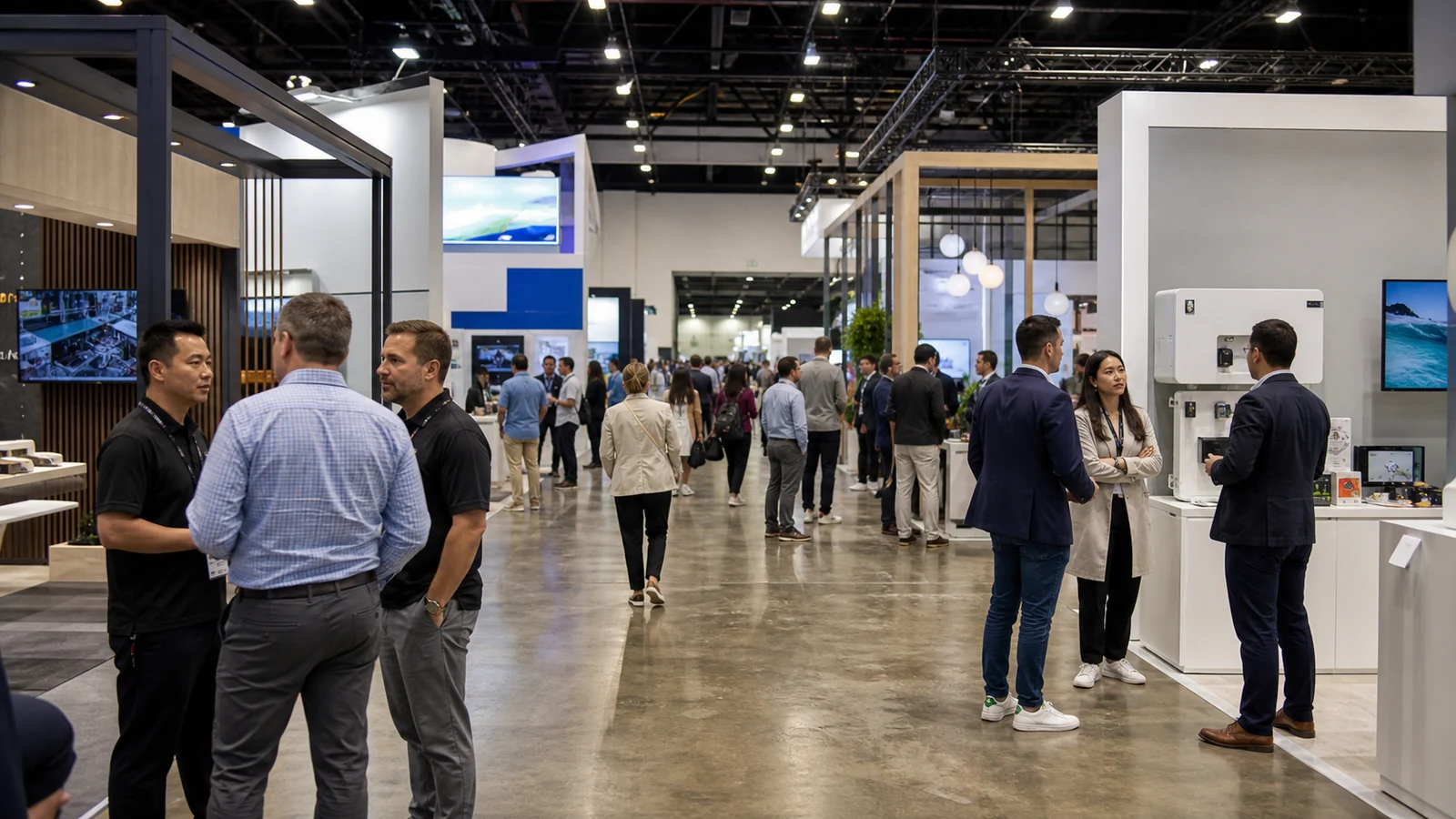
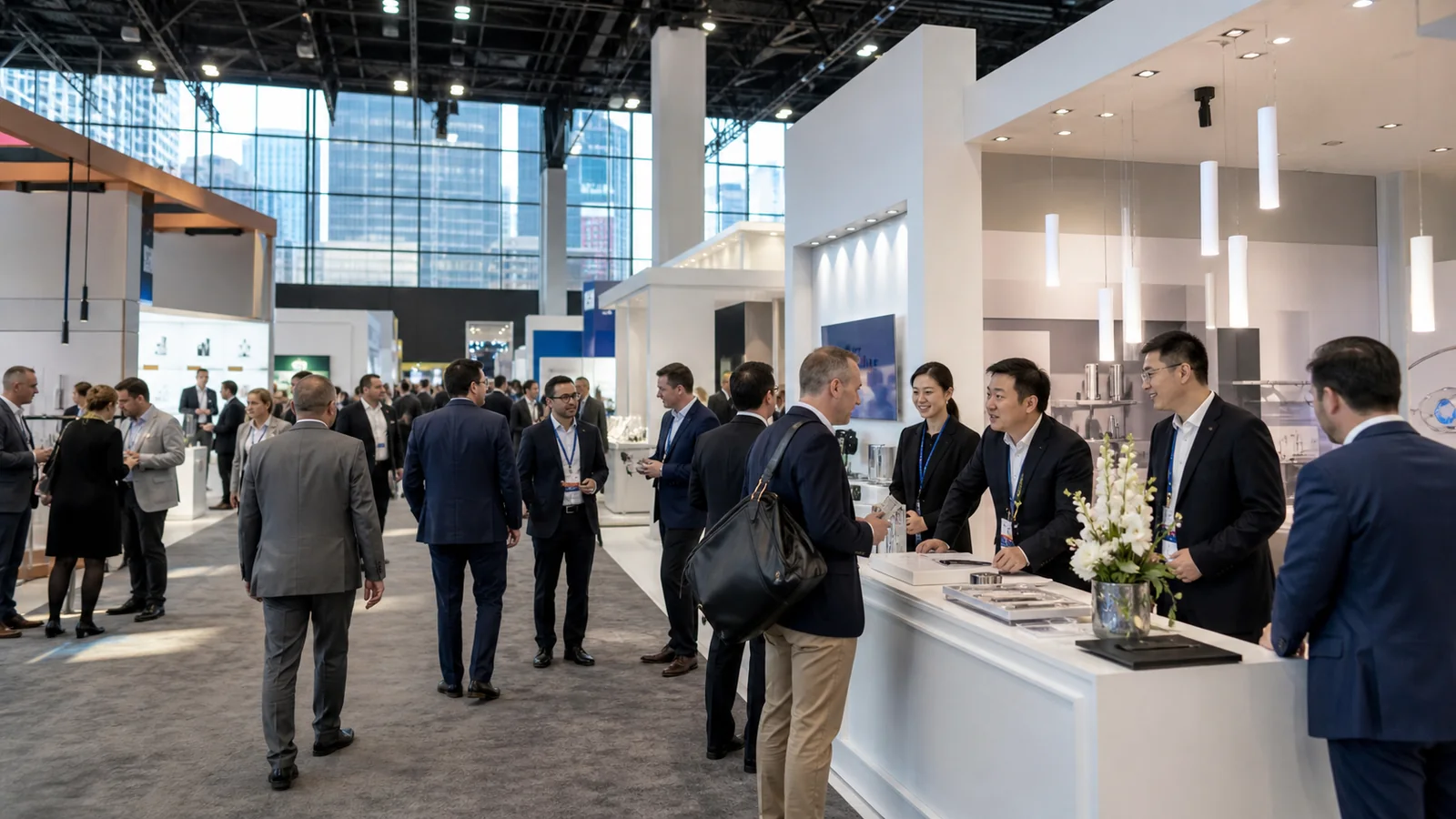
Trade show games can range from a tabletop guessing challenge to a full VR experience. The useful distinction is not simply low-tech versus high-tech. It is whether the activity fits the booth objective, gives the right attendees a reason to participate, and creates a natural path into a product or business conversation.
This guide groups 40 trade show game ideas by how they work in a B2B booth. Each idea includes a practical way to connect the game to a product, application, or audience instead of treating it as entertainment with a logo added afterward.
Why Trade Show Games Matter?
A well-chosen game gives passersby a low-pressure reason to stop and gives booth staff a natural opening question. Product-focused games can also make features, applications, and selection decisions easier to understand.
The game is still only the entry point. Its business value depends on the people it attracts, the message it reinforces, and what happens after a participant finishes.
Low-Tech Chance and Prize Games
These booth games are familiar, quick to explain, and usually easy to operate. They work best when the result leads to a product topic, useful prompt, or relevant next step—not only a prize.
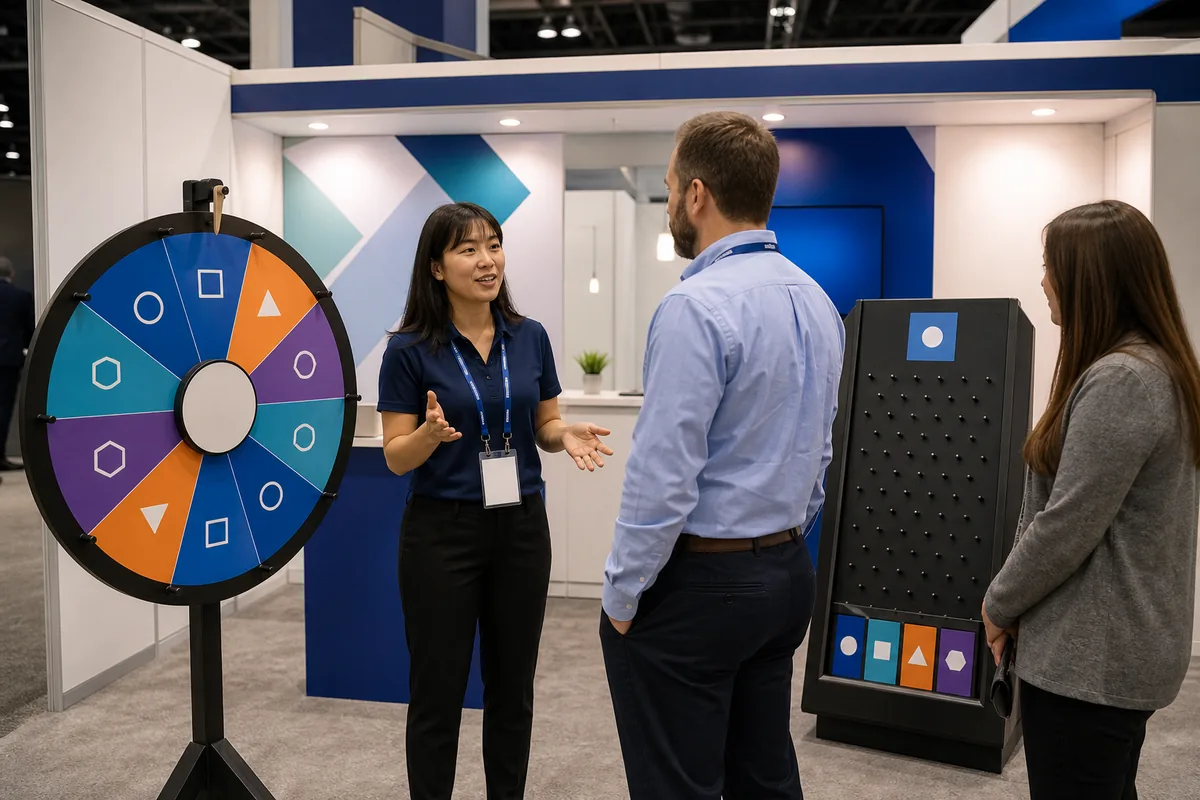
1. Spin-to-Win Prize Wheel
Visitors spin a wheel to reveal a prize, question, product category, or next action. It suits booths that want a visible, low-friction opener. Replace generic color segments with applications or customer challenges so staff can use the result to begin a relevant conversation.
2. Plinko or Drop-to-Win Board
A participant drops a disc through a pegged board and receives the result shown by the landing slot. The movement is easy for nearby visitors to follow. Label the slots with product families, demo topics, or common business problems to make the outcome useful beyond the prize.
3. Roll-Doubles Dice Game
The visitor rolls a pair of dice and wins after hitting doubles or another stated combination. It is compact, fast, and easy to understand. Custom dice faces can represent product options, applications, or purchasing priorities if the brand connection feels natural.
4. Scratch-Off Card
Participants reveal a result on a printed scratch card. This format supports fast participation and does not require a powered device. The hidden message can contain a product fact, a challenge question, a demo invitation, or a prize tier instead of a simple win-or-lose result.
5. Mystery Box or Envelope Pick
Visitors select a concealed object, card, or envelope and discover the result after committing to a choice. The small moment of suspense works well at a counter. Build the options around customer scenarios, material samples, or solution paths so the reveal gives staff something meaningful to discuss.
6. Guess-the-Number or Counting Jar
Participants estimate the number, weight, or value of items in a transparent container. It is useful for smaller booths because the entry point takes little space. Use safe items connected to the brand, such as components or material samples, and state when and how the result will be announced.
Product Education and Knowledge Games
These trade show booth game ideas turn learning or product exploration into the activity itself. They are especially useful when the exhibitor wants qualified conversations rather than the largest possible crowd.
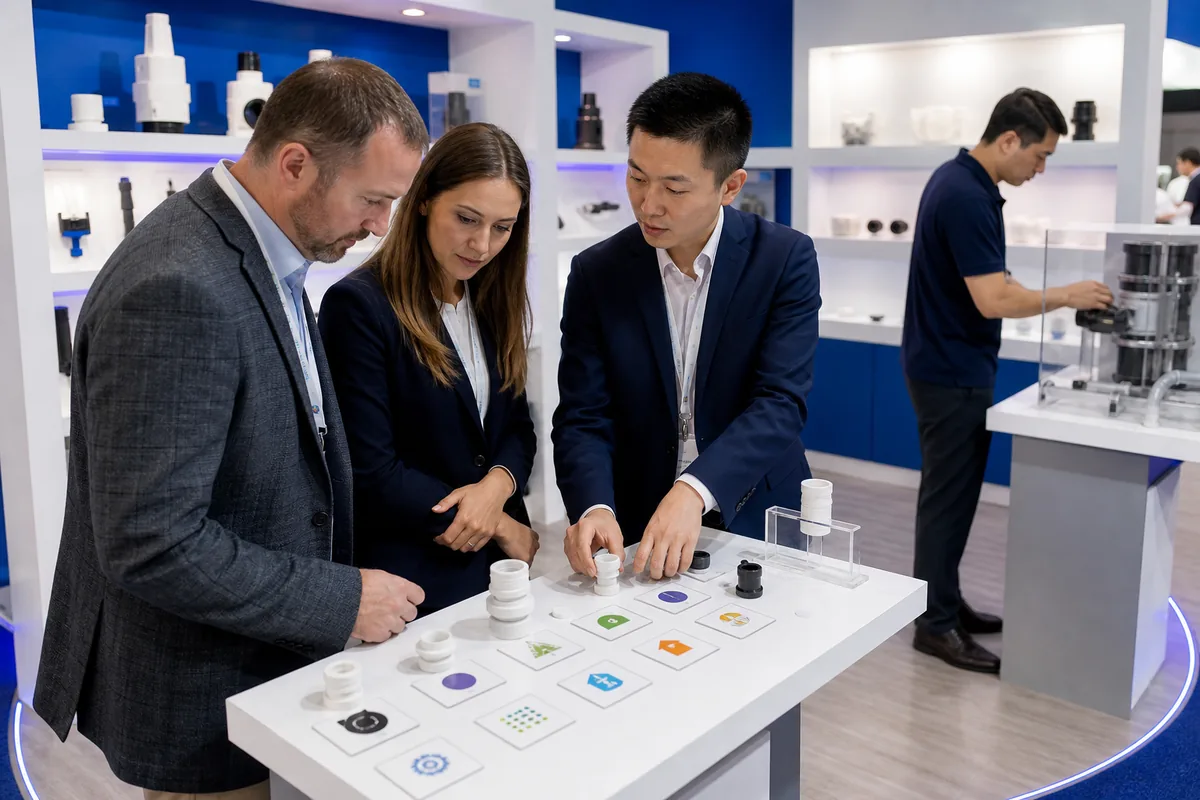
7. Product or Industry Trivia
Ask short questions about applications, selection criteria, common mistakes, or industry situations. Give an explanation after each answer so the visitor gains something even when the answer is wrong. Avoid company-history questions or obscure facts that feel like an exam.
8. Matching or Memory Game
Visitors match products to applications, problems to solutions, or components to functions using cards, magnets, or a screen. It can make a complex portfolio easier to understand. A staff member can use the final pair to ask which application is most relevant to the participant.
9. Product Puzzle Challenge
Participants assemble a product image, process sequence, system diagram, or group of components. This format suits exhibitors that need to explain how several parts work together. The finished puzzle should reveal a useful relationship rather than only recreate the company logo.
10. Build-Your-Own Solution
Give visitors a set of modules, options, or digital selections and ask them to build a solution for a stated scenario. Their choices expose priorities and create a natural qualification conversation. The result can lead directly to a recommended configuration or scheduled technical discussion.
11. Spot-the-Difference Challenge
Show two product images, installations, packages, or process scenes and ask participants to identify important differences. Use the explanation to teach quality details, correct application, or design choices. Keep the comparison factual instead of turning it into an unsupported attack on competitors.
12. Hands-On Product Demo Challenge
Let participants complete a short, safe task such as fitting a component, identifying a defect, selecting the right sample, or configuring a feature. Score the real benefit—accuracy, fit, finish, or correct selection. This is strongest when the product difference becomes clearer through use than through a sales presentation.
Physical Skill and Sports Games
Physical games are easy to watch and can create friendly competition. They suit booths with enough controlled space for the player and equipment, while compact versions can work where a full-size setup would be impractical.
13. Mini Golf or Prize Putt
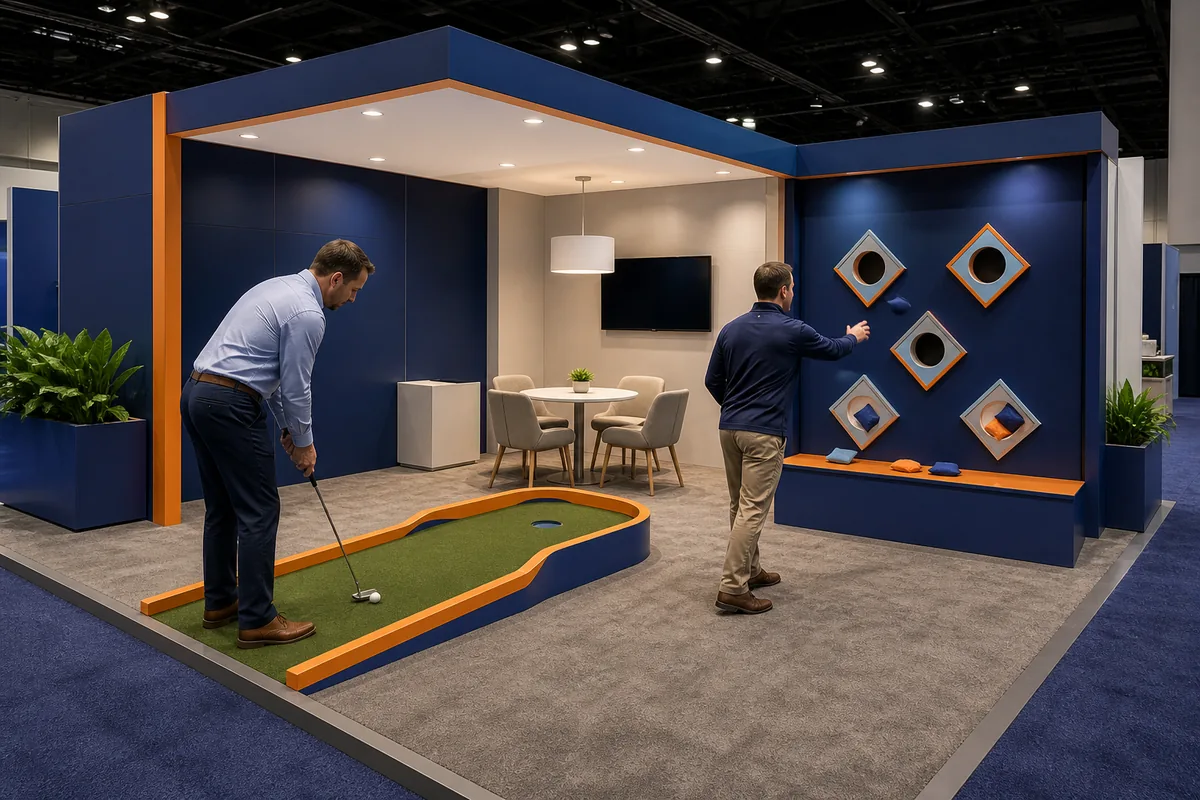
Visitors putt toward a target for a score, prize, or leaderboard position. Shape the hole, obstacles, or scoring zones around a product journey or industry theme. It works best for open layouts where the play area can remain separate from the main conversation space.
14. Cornhole or Bean Bag Toss
Participants throw soft bags toward a board or marked targets. Assign the openings to product lines, applications, or customer priorities so each throw leads to a topic. A tabletop or shortened version can preserve the idea when the booth lacks depth for a standard setup.
15. Mini Basketball Shootout
Give each player a limited number of shots and record successful baskets or a timed score. The backboard and scoring display provide useful branding space, but the activity should also connect to a campaign or business theme. Clear round limits keep the competition moving.
16. Skee-Ball or Rolling Target
Players roll balls or discs toward scoring rings, ramps, or targets. Different zones can represent product levels, service paths, or prize values. The format offers good spectator visibility and works best when the equipment footprint and return path are planned together.
17. Ring Toss or Target Toss
Participants throw rings or other soft objects at compact branded targets. It is simple enough for fast booth traffic and flexible enough for tabletop or floor versions. Give each target a product, application, or question category to avoid an unrelated carnival feel.
18. Buzz Wire or Steady-Hand Challenge
The player guides a loop along a shaped wire without making contact. It fits brands connected to precision, control, inspection, or technical skill. The wire path can follow a product outline or process, but the story should remain understandable without a long explanation.
Digital Screen and Mobile Games
These interactive booth games can change content quickly, collect results, and create engagement in a compact footprint. Their actual staffing and technology requirements depend on the device, registration process, network, and backup plan.
19. Tap Race or Reaction Challenge
Players tap lights, buttons, cards, or screen targets as quickly and accurately as possible. A mechanical version can work without a screen, while a digital version can record scores. Use product images, process steps, or application cues so the challenge tests more than raw reaction speed.
20. Swipe-to-Win Game
A participant swipes on a screen to reveal a result, prize, or branded animation. It provides the instant appeal of a prize wheel in a smaller physical footprint. Add one relevant question or choice before the reveal so the interaction gives the team useful context.
21. QR Code Mobile Mini-Game
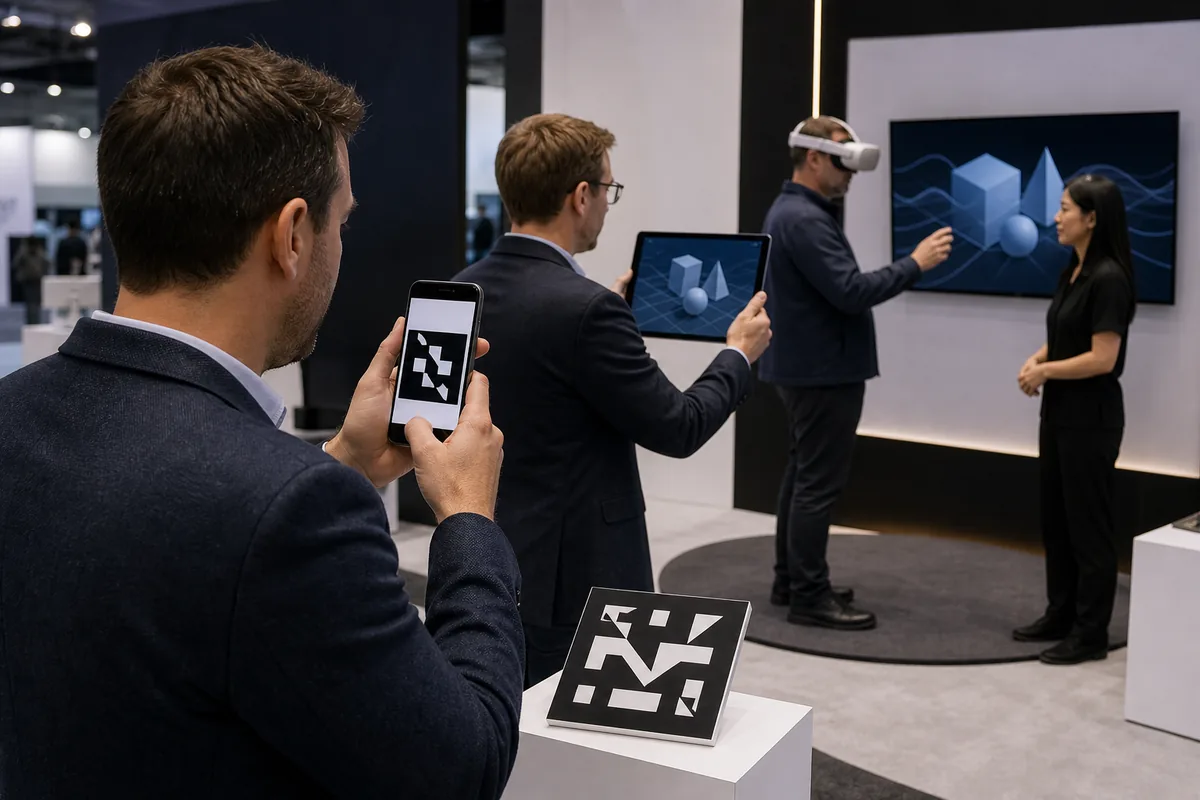
Visitors scan a QR code and play on their own phones. The game might be a short quiz, tap challenge, puzzle, or booth-based hunt. It saves device space, but the experience should avoid unnecessary downloads, long forms, and steps that fail when the venue connection is weak.
22. Touchscreen Memory or Puzzle Game
Use a kiosk or tablet for matching, sequencing, sorting, or puzzle play. Replace generic symbols with products, applications, process stages, or customer problems. This format is useful when content needs to be updated for different shows without rebuilding a physical game.
23. Interactive Arcade Wall
A large screen or projection responds to touch, gesture, or motion and gives nearby attendees something to watch. It can visualize collecting components, sorting defects, completing a process, or reaching a project goal. The animation should explain a brand idea rather than act as a generic arcade skin.
24. Digital Raffle With a Challenge
Visitors complete a quiz, survey, product selection, or short task before entering a digital drawing. The challenge adds context that a basic name collection would not provide. Keep the entry fields limited to what is genuinely needed for eligibility and follow-up.
AR, VR, Simulator, and Immersive Games
Immersive trade show games can represent environments, equipment, or processes that are difficult to bring to the show floor. Compact AR and large VR systems have very different footprints, so the format should be chosen around the actual experience rather than the technology label.
25. VR Product Challenge
Place the visitor inside a virtual operating, inspection, maintenance, or product-use scenario. Give the participant a task with a clear outcome instead of offering an unguided tour. A spectator display can help staff connect what is happening in the headset to the physical products in the booth.
26. Racing or Sports Simulator
Use a driving, cycling, golf, or other simulator for a timed competition or leaderboard. It suits brands that can credibly connect performance data, control, materials, mobility, or another business theme to the experience. A generic simulator with only a logo is less likely to reinforce the offer.
27. AR Product Explorer
Visitors use a tablet or phone to reveal internal components, configuration options, installation steps, or a product placed in a real environment. Add a find-and-identify task so the experience becomes a game. This can be relatively compact because the user is not necessarily isolated inside a large safety zone.
28. AR Mirror or Branded Photo Filter
An augmented-reality mirror or camera adds virtual equipment, environments, product elements, or characters to the participant's image. Create a prompt, pose, or collection challenge so the interaction has a goal. It can combine an immersive experience with shareable content when permissions are handled clearly.
29. Virtual Training or Assembly Challenge
Ask the participant to complete an assembly, maintenance, safety, or operating sequence in a simulated environment. Score correct steps, accuracy, or completion rather than speed alone. This is useful for complex or hazardous demonstrations that cannot be recreated safely in the booth.
30. Digital Escape Room
Build a short sequence of clues around a customer problem, process, or product system. Each answer unlocks the next step until the participant reaches a solution. A trade show version should be much shorter and easier to reset than a full entertainment escape room.
Social, Photo, and Creative Games
These ideas invite visitors to create, vote, or share rather than only chase a score. They are most useful when the output connects to the audience's professional interests and the participation rules are clear.
31. Branded Photo Booth Challenge
Give participants a photo task using a themed scene, product prop, pose, or customer scenario. The challenge turns a standard photo station into an activity with a recognizable result. Use a setting connected to the product or application instead of relying only on a logo wall.
32. Doodle or Design Contest
Invite visitors to sketch a solution, package, workspace, machine, future application, or industry idea. Entries can be created on cards, a whiteboard, or a digital canvas. The prompt should be specific enough to reveal useful audience thinking while remaining easy to complete.
33. Social Hashtag Challenge
Ask participants to create a stated type of post, image, or caption using an event hashtag. It can extend the booth experience beyond the show floor, but public posting should not be treated as lead qualification. State the judging, timing, permission, and platform requirements before people participate.
34. AI Portrait or Branded Character Photo
Transform a participant's photo into an approved brand world, professional role, future scenario, or illustrated character. Add a choice of themes so the result reflects an application or campaign. Explain how the image and participant data will be used rather than presenting the process as an unexplained novelty.
35. Industry Prediction Poll or Live Voting Challenge
Ask attendees to predict a trend, select a future priority, or vote between solution paths. Display the aggregated results so every vote adds to a live industry snapshot. Staff can use the participant's choice to begin a discussion about current plans and constraints.
Team, Networking, and Show-Floor Games
Team and networking games help participants interact with one another or explore a wider experience. They require a clear host, time limit, and boundary so the activity does not interfere with neighboring exhibitors or unrelated attendees.
36. Team Trivia Showdown
Two small teams answer industry, product, or application questions in a hosted round. The group format creates energy and lets staff explain the answers to players and spectators. Schedule short sessions so the game feels like a booth event rather than a continuous obstacle.
37. Trade Show Scavenger Hunt
Participants locate clues, product details, or marked stations within the booth or at show-approved locations. Each clue can reveal part of a process or solution. Do not send participants into other exhibitors' spaces unless those partners and the organizer have agreed to the activity.
38. Badge Bingo
Give players a bingo card containing professional roles, business needs, applications, or discussion prompts. They complete the card by meeting relevant people or visiting planned stations. Avoid squares that pressure participants to disclose confidential or sensitive information.
39. Matching Sticker or Find-Your-Partner Contest
Each participant receives one half of a pair, such as a problem and solution, component and system, or application and product. Players find the person holding the matching half. The format supports networking while reinforcing how two business concepts fit together.
40. Live Game Show or Team Relay
Combine several short questions or tasks into a hosted team competition. It suits a larger booth with a defined audience area and scheduled program. Build each round around the campaign message, then end with a clear invitation to see the relevant product or speak with a specialist.
Best Trade Show Games by Business Goal
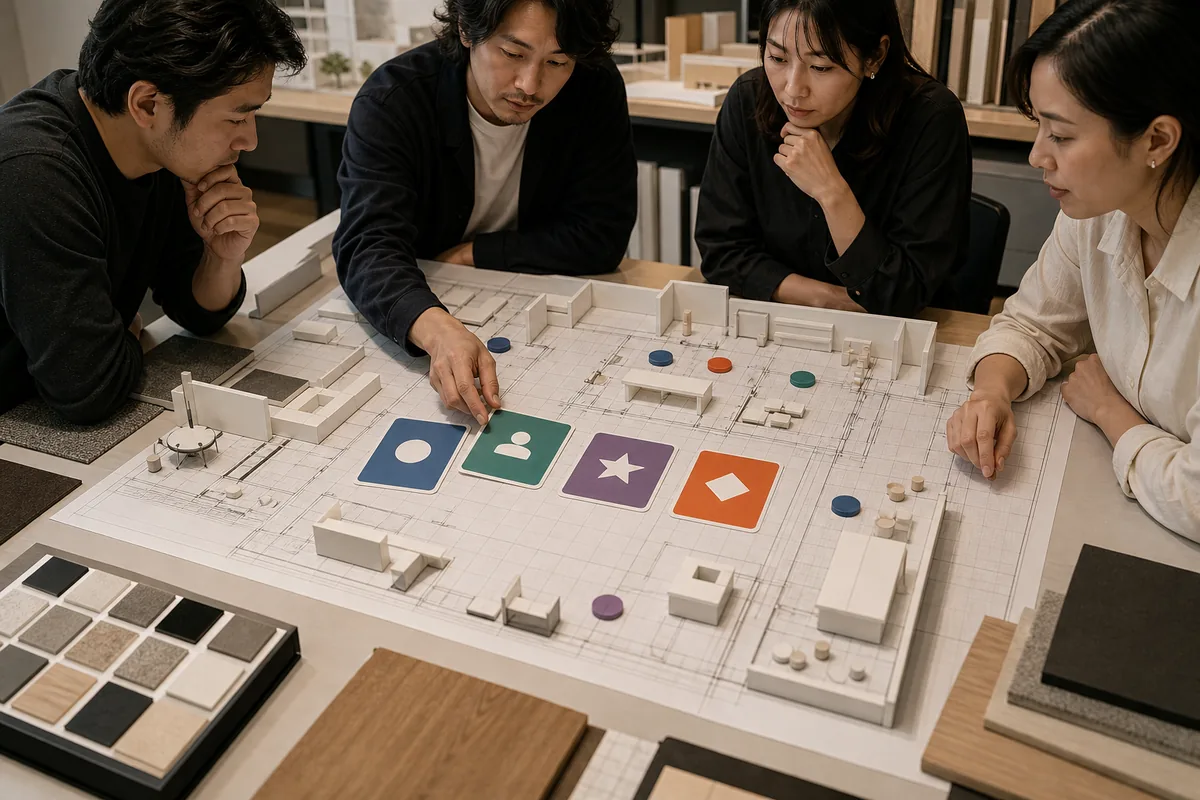
Start with one primary goal before comparing equipment. The same game can be redesigned around a different message, so the following options are starting points rather than fixed ratings.
| Primary Goal | Formats Worth Shortlisting | What the Game Still Needs to Do |
|---|---|---|
| Booth Traffic | Prize wheel, Plinko, mini golf, basketball, arcade wall, simulator | Be visible and easy to understand without allowing the queue to become the booth's main feature. |
| Product Education | Trivia, matching, product puzzle, demo challenge, AR explorer, virtual training | Make a product choice, process, feature, or application clearer by the end of the round. |
| Qualified Conversations | Build-your-own solution, demo challenge, prediction poll, challenged digital raffle | Reveal a relevant need or priority that staff can continue discussing. |
| Social Engagement | Photo challenge, AR filter, AI portrait, doodle contest, hashtag challenge | Produce something worth sharing while keeping permission and platform requirements clear. |
A game that supports several outcomes still needs one primary purpose. Otherwise, the team may collect participation, quiz results, social posts, and contact details without knowing which result actually matters.
Trade Show Game Ideas by Booth Size
Booth size does not automatically determine the game, but it changes which versions are practical. The real footprint includes the device or prop, player position, waiting area, spectators, reset path, and the space needed for a business conversation.
- Compact booths: Scratch-off cards, guessing jars, trivia, matching games, touchscreen puzzles, QR mini-games, and prediction polls can operate around a counter or screen.
- Standard booths: Prize wheels, tabletop Plinko, demo challenges, buzz wire games, photo challenges, and compact AR experiences can add visibility while preserving a separate conversation area.
- Larger or controlled-space booths: Mini golf, cornhole, basketball, simulators, VR, arcade walls, and hosted game shows benefit from defined player and spectator zones.
These are not universal size labels. A tabletop version may be much smaller than the standard game, while registration, equipment, or a one-player immersive experience can make an apparently compact idea create a long queue.
How to Choose and Fit a Game Into the Booth
After selecting the goal and likely format, test the complete operating sequence rather than judging the game as an isolated object. Record a rehearsal from invitation through play, result, reset, and staff handoff. This provides a realistic capacity estimate and exposes where a player, device, prop, or process creates a bottleneck.
| Planning Question | What to Decide Before the Design Is Finalized |
|---|---|
| Who should play? | Define the relevant roles, knowledge level, and whether the audience will be comfortable competing, sharing, or using a device. |
| How does it connect to the offer? | Link the question, action, visual, score, or result to a product, application, customer problem, or next step. |
| What is the round capacity? | Rehearse instructions, play, result, reset, and handoff; use the observed time to estimate how many participants the booth can handle. |
| Who operates it? | Assign inviting, explaining, resetting, troubleshooting, and conversation-handoff roles. |
| What can fail? | Confirm power, network, device, supplies, cleaning, storage, and a workable backup experience. |
| How will it be measured? | Match records to the primary goal: participation, completed learning, qualified conversations, agreed next steps, or attributable social actions. |
Players, queues, spectators, and staff should not block the aisle or neighboring booths. Use the current exhibitor manual for the specific show because activity, sound, safety, power, equipment, and installation requirements vary. For example, the CES exhibitor manuals direct exhibitors to rules and official-service information for their exhibit space.
Contests, drawings, photos, and platform-based activities may introduce additional requirements. The FTC's advertising guidance for small businesses notes that sweepstakes-type promotions can be subject to federal and state laws. Have the responsible legal or marketing owner review the current structure, disclosures, consent, data use, photo permissions, and platform terms.
How to Turn Game Participation Into Qualified Conversations
- Make the game prompt relate to an application, purchasing decision, or customer problem.
- Use the result to ask one short qualifying question rather than launching into a standard pitch.
- Offer an appropriate next step, such as a product demonstration, specialist conversation, scheduled meeting, or requested follow-up resource.
- Collect only the information needed for that agreed next step, and report participation separately from qualified contacts.
For example, a matching game might pair products with applications. After a participant completes a pair, staff can ask which application exists in the person's current project. A relevant answer can lead to a technical discussion or meeting; an unrelated answer can end with a useful explanation without forcing a sales follow-up.
Frequently Asked Questions
How Long Should a Trade Show Booth Game Take?
There is no universal ideal length. Time the complete sequence—including instructions, play, result, reset, and staff handoff—then compare the tested hourly capacity with expected traffic and the value of each interaction.
Are Digital or Physical Trade Show Games Better?
Neither format is automatically better. Physical games are often easy to see and understand, while digital games can personalize questions, update content, and record results. Choose according to the message, footprint, audience, staffing, reliability, and backup plan.
Do Trade Show Booth Games Need Prizes?
No. A useful result, leaderboard position, professional challenge, product insight, or social recognition can provide motivation. If prizes are used, make the eligibility, winner selection, notification, and collection process clear before participation.
Should a Trade Show Booth Have More Than One Game?
One well-integrated game is usually easier to explain, staff, and measure. Multiple games can work when each has a distinct purpose and the booth has enough space, people, equipment, and reset capacity to operate them without competing for attention.
Can Trade Show Games Work for Serious B2B Industries?
Yes, when the task reflects a real product, process, quality, training, safety, or application decision and the tone suits the audience. The activity does not need to feel playful; it needs to make a relevant idea easier to explore or discuss.
Final Thoughts
The best trade show game is not necessarily the most elaborate. It should be easy to understand, relevant to the offer, workable within the booth, and connected to a useful next step. Include its space, technology, storage, staffing, and visitor-flow requirements before the design and show services are finalized.
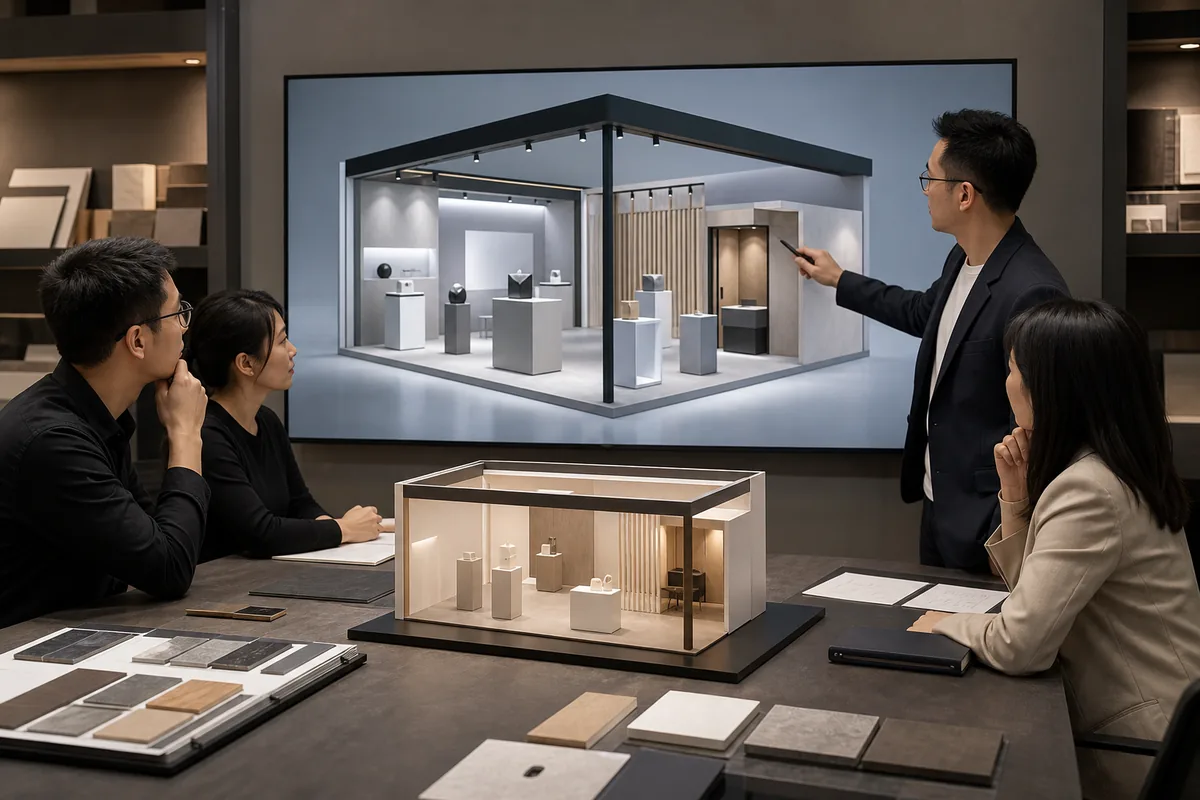
Planning an interactive booth? Share your booth size, show requirements, target audience, and game concept with our team. We can help you evaluate the layout, visitor flow, technology, storage, and staff handoff before the design is finalized.