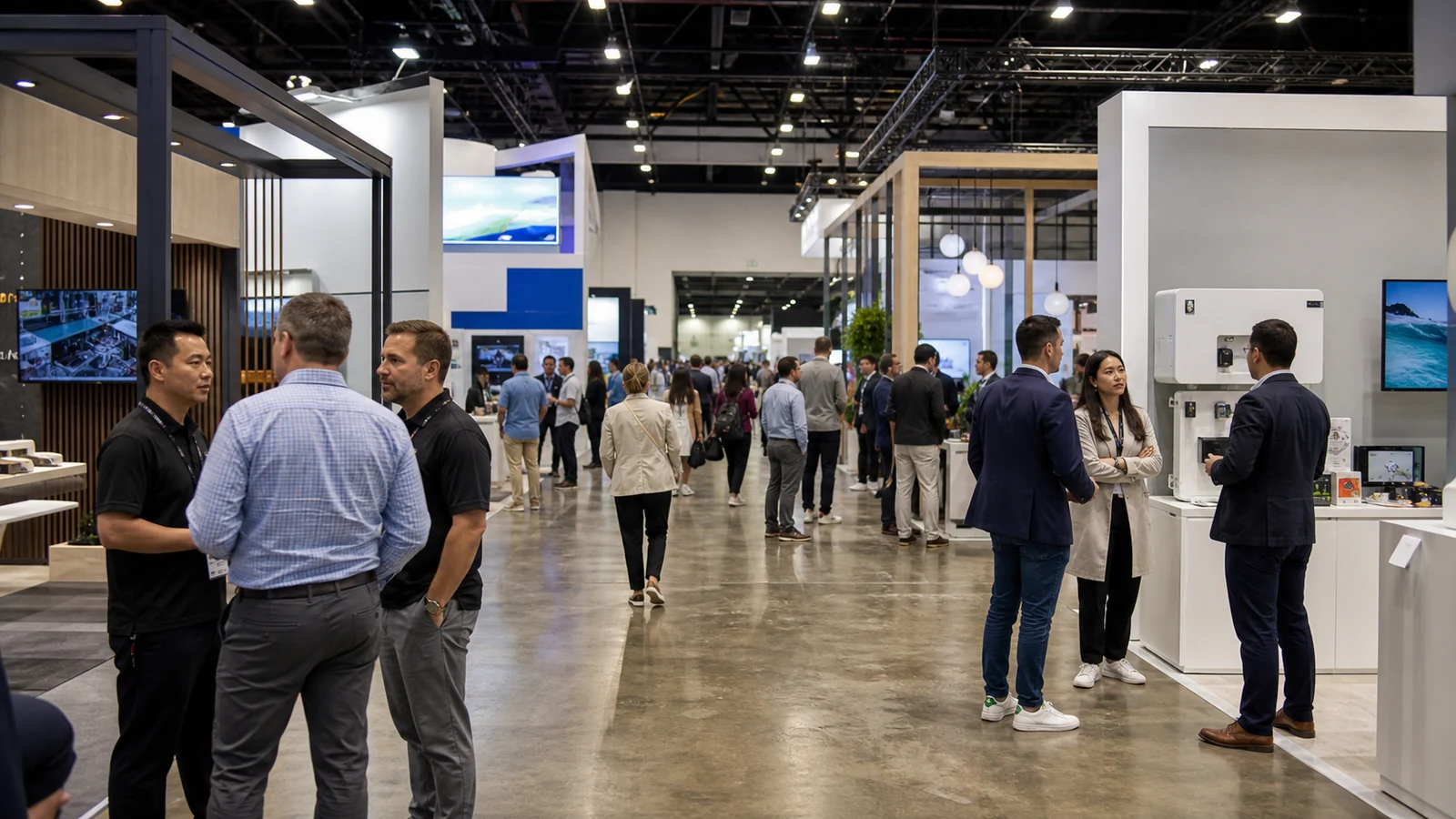
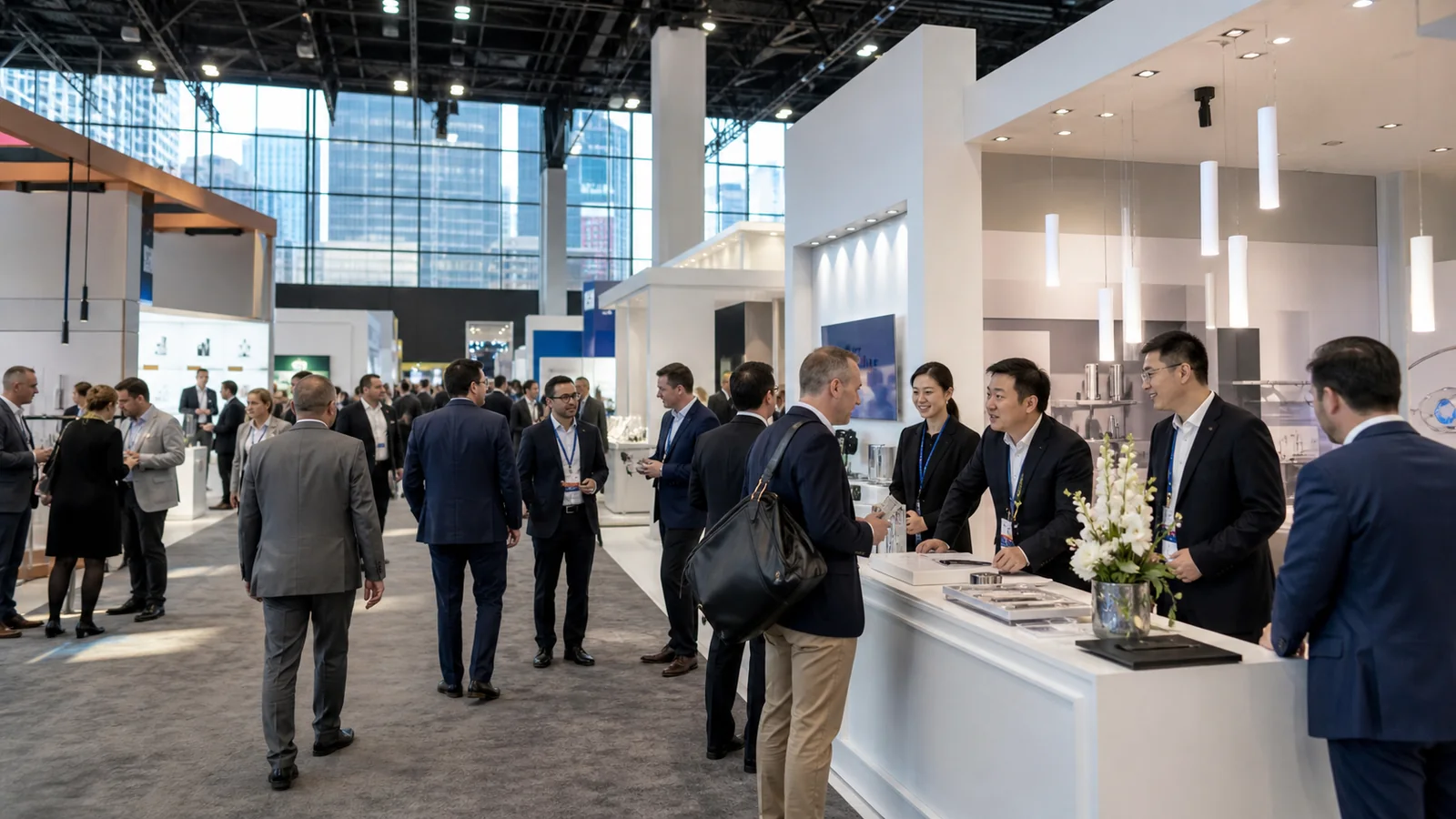
If you are deciding whether to exhibit an autonomy product at the XPONENTIAL trade show and conference, the hard question is not whether a moving robot will draw a crowd. It is whether the people you want to meet can understand the mission, inspect credible proof, and agree on a next test. This guide gives you the confirmed 2027 event facts, then helps you choose the buyer, demonstration, booth plan, and follow-up that would make exhibiting worthwhile.
The 2027 event at a glance
| Item | Current 2027 information |
|---|---|
| Current official event name | XPONENTIAL |
| Full event dates | May 17-20, 2027 |
| Exhibit dates | May 18-20, 2027 |
| Venue | Miami Beach Convention Center |
| Address | 1901 Convention Center Drive, Miami Beach, Florida 33139 |
| Event description | Global conference and exhibition for autonomy and robotics |
| Co-hosts | Association for Uncrewed Vehicle Systems International (AUVSI) and Messe Düsseldorf North America (MDNA) |
| Main technology scope | Platforms; components and sensors; software; materials; manufacturing; services across air, ground, and maritime systems |
| Public 2027 hall hours | Not yet published on the current 2027 pages checked |
You may still see the label “AUVSI's XPONENTIAL” in older calendars and search results. The current event site uses XPONENTIAL as the event name and identifies AUVSI and MDNA as its co-hosts. That distinction matters when you write booth graphics, invitations, and travel documents.

For XPONENTIAL 2027, the full event begins on May 17, but the current exhibitor material lists exhibits on May 18-20. Do not schedule a customer for a booth meeting on May 17 unless a later official schedule confirms that the hall is open. The public schedule page still shows detailed 2026 hours, so those hours should not be copied into a 2027 staffing plan.
Choose one mission buyer before you choose the booth story
The official exhibitor page says the event brings together people who build, buy, deploy, and regulate autonomous technology and robotics. That describes the hall, not the person your booth should be built for. Your first planning decision is one primary conversation.
Take a navigation sensor used in GPS-degraded work. The useful contact is the engineer responsible for position integrity, and the useful proof shows what happens when the signal becomes unreliable. Autonomy software changes the meeting: a program lead may care more about bringing several vehicle types into one operating workflow. Maritime platforms raise an operational question instead—can the operator gain endurance without making recovery harder?
Write down the job, the mission, the present constraint, and the next decision. If you cannot name all four, the booth will probably default to product categories and superlatives. Visitors may understand what you sell but not why they should keep talking.
The 2027 call for presentations highlights maritime and port autonomy, advanced air mobility, resilience and disaster response, smart infrastructure and operational AI, counter-UAS, dual-use technology, and links with Latin American markets. Use those themes to test relevance, not to claim that every person interested in a theme will visit your booth.
Show where your product fits in the autonomy stack
XPONENTIAL covers more than complete vehicles. The XPO Hall categories span air, ground, and maritime platforms; cameras, lidar, processors, communications, flight controls, navigation, power, propulsion, payloads, safety systems, software, advanced materials, contract manufacturing, cybersecurity, testing, training, and other services.

Use the first visual to answer a placement question: what enters your product, what does it change or decide, and where does the output go? Put that path on one system diagram. Mark your own elements, third-party elements, and anything simulated at the booth.
Partner logos cannot replace integration evidence. They do not reveal supported versions, data ownership, delay, environmental limits, or who handles a failed connection. Label a planned integration as planned instead of letting the visitor assume it is released.
Start at the point the buyer will inspect. Component displays work best when the diagram marks the platform class, inputs, outputs, mounting limits, and operating conditions. On a software screen, trace one data path through the human control point and an exception. Complete-platform displays should extend beyond the vehicle to show the mission equipment, communications link, operator workflow, maintenance need, and recovery process.
Build the demonstration around one mission result
Start with a result that the intended buyer can inspect. That could be maintaining a track through a defined obstruction, detecting an object at a stated range under stated conditions, routing a ground robot around a changing obstacle, handing control back to an operator, or producing a mission record that another system can use.
Then expose the conditions. Tell the visitor whether the data are live, recorded, simulated, or mixed, and identify the hardware and software version. Show the test environment and the measure the buyer should watch. Also show what causes the system to degrade, stop, or ask for human action.
A short failure case often creates more trust than another perfect run. Let the visitor see how the system reports a lost sensor target. When a communications link drops, show both the vehicle response and the operator's view. A demonstration that depends on a local server or private network should also explain what changes in field deployment.
Do not call a controlled booth demonstration “field proven” unless you have documented field evidence that supports the claim. Do not use “certified,” “approved,” “compliant,” “secure,” or “NDAA compliant” without naming the exact product configuration, program or authority, status, and date that apply.
Use the 2027 floor structure to reduce the wrong traffic
The current 2027 exhibitor page lists Advanced Materials & Manufacturing, the Defense Technologies Zone, Public Safety, and the XPO+ Launcher Startup area, along with state and international pavilions. A pavilion can help a visitor understand your context before the conversation begins, but only if that context matches the product and buyer.

Choose the area according to the question you want a buyer to ask. When weight, thermal control, production, or supply continuity is the real issue, tell a manufacturing story instead of forcing the product into a vehicle display. If defense and civil users evaluate the same product differently, prepare separate proof paths. The startup area can help with discovery and partnerships, but you still need to explain what is ready to integrate and who will support a U.S. evaluation.
Before accepting a location, inspect the current floor plan and ask what will sit beside you. A live robot, stage, or defense display can increase traffic and noise at the same time. A technical explanation that needs ten focused minutes may perform better near the right pavilion than beside the largest attraction.
Design the booth around an engineering conversation
Plan the booth for three moments. From the aisle, one sentence names the mission problem and the system boundary. At the demonstration, the buyer sees the input, decision, and result. At the meeting point, your team can open the relevant interface or test evidence without blocking the demo.
Separate motion from discussion. If a ground robot moves, visitors need a clear viewing edge and staff need a safe reset path. If the product cannot operate under approved indoor conditions, use a truthful recorded run with the same data fields that the buyer would review after a live test. Do not build a dramatic simulation that hides the difference between animation and system output.
Expect the conversation to become technical quickly. Keep the system map and supported-interface list within reach. Store test limits, the exact version shown, and any applicable security or supply-chain document in a controlled folder. Booth staff should know who may see each item and how a qualified visitor can request it.
Check the booth package before you promise a live demo
The current 2027 pricing sheet distinguishes raw linear space from shell-scheme space. Raw linear space lists a draped back wall, side rails, and an identification sign. The shell scheme adds standard carpet, track lighting, a counter, setup and removal, opening-day cleaning, a cafe table, four chairs, and one rear 10A/1000W outlet per booth.

That included outlet is not a demonstration power plan. Build a load sheet from the equipment you will actually bring. For each powered device, record its draw, startup load, heat, charging time, network dependency, cable route, and what the demo does after a power or internet interruption. Order services from that sheet, not from a booth rendering.
The public 2027 Exhibitor Service Center requires a login and says it contains the essential preparation resources. The detailed 2027 rules needed for a live technology exhibit were not publicly available in the pages checked. Send show operations your actual equipment list and request written answers about movement or propellers, battery storage and charging, radio transmitters, and high-power equipment. Ask separately about rigging, floor load, enclosed rooms, and fire review when the booth design uses them.
Record the answer, the person who gave it, and the date. “We used this at another show” is not approval for Miami, and a previous XPONENTIAL manual is not a 2027 authorization.
Staff the proof, not just the product
Assign names before the show: who frames the mission and business case, who answers integration and test questions, and who owns the follow-up record. A small team can combine duties, but every visitor should have a clear route from first question to next action.
Rehearse that route. The first conversation identifies the visitor's domain and decision. The product lead runs the proof that fits, then brings in technical support when the visitor asks about limits. Before the visitor leaves, record who owes the next piece of evidence and when it will be sent.
A badge scan is not a qualified opportunity. Capture the mission or system, deployment stage, current constraint, decision owner and timing, and the next proof required. Those fields tell you whether the next step is an engineering review, a controlled document exchange, a partner discussion, or no follow-up at all.
Decide whether to exhibit or attend first
Exhibit when you can identify one priority mission buyer, show a useful result under stated conditions, explain the product's place in the system, support the main technical claims, and offer a realistic next evaluation in the United States. The show can be valuable when the product needs close inspection and several parts of the autonomy ecosystem influence adoption.

Attend first when the target buyer is still “anyone in drones,” the integration boundary changes in every conversation, the demo depends on permissions you have not confirmed, or the team cannot support a U.S. evaluation after the event. Use the visit to map pavilions, observe which proofs stop the right people, and ask potential partners what evidence they need before a trial.
Make the final decision with a short test: can you name the buyer, mission, proof, boundary, follow-up, and show approval required? If two or more answers are missing, a larger booth will not fix the problem.
Frequently asked questions
What should we send before a scheduled booth meeting
Send one page that names the mission, shows where your product enters the system, and lists the evidence you can discuss at the booth. Ask the visitor which interface, operating condition, or decision matters most. The reply tells your team which proof to prepare and prevents the meeting from becoming a general product tour.
How should we plan staffing before the 2027 hall hours are published
Build roles and handoffs first, but keep shift times provisional. Mark the hours that depend on the final exhibitor schedule, and do not promise booth meetings outside confirmed hall access. When the official hours appear, update the staff sheet, meeting calendar, and travel plan from the same source.
What can we show when field data are confidential
Use an approved, sanitized scenario and keep the test method visible. State the conditions, metric definitions, software and hardware version, and whether the values are representative, aggregated, simulated, or recorded. A qualified buyer can understand withheld details; the buyer should not have to guess whether the result itself is real.
How should we answer a question about an unreleased feature
Separate the current configuration from the roadmap. Show what the released version does, label the requested feature as unreleased, and record the buyer's use case and decision date. Promise a follow-up only after the product owner confirms what can be shared and when.
When should the team stop a live demonstration
Stop when the approved operating area cannot be maintained, a battery or power condition changes, a radio or network dependency becomes uncertain, the system version no longer matches the stated configuration, or staff can no longer monitor visitors safely. A paused demo with an honest explanation protects more trust than an uncontrolled run.
Final thoughts
XPONENTIAL is broad enough to create useful meetings and broad enough to hide an unclear product. Go to Miami with one mission buyer, one result the buyer can inspect, honest operating limits, and a specific next evaluation. Confirm the show conditions before building the demo. If you cannot yet explain where the product fits or support what happens after interest, attend first and use the show to close those gaps.