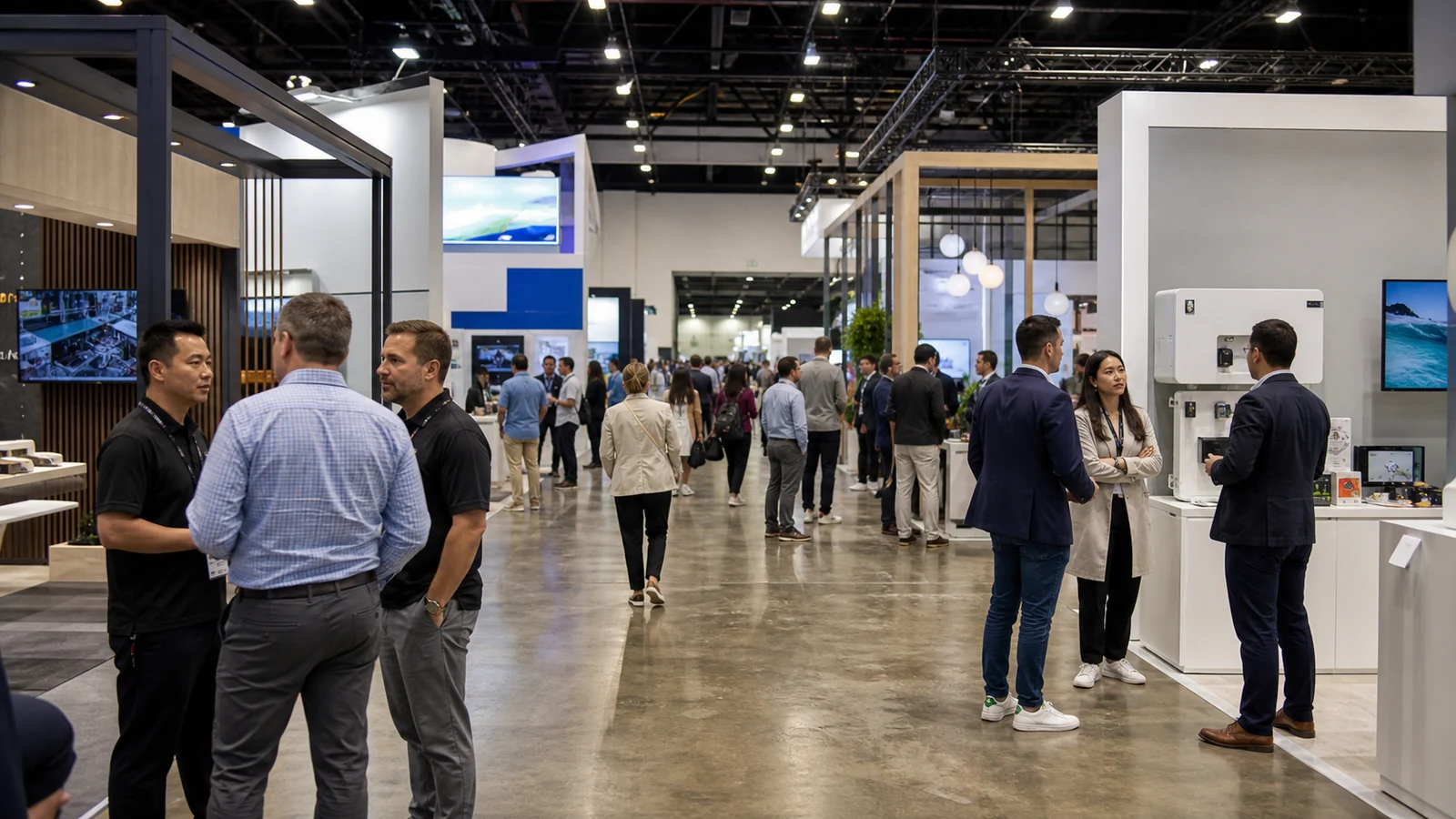
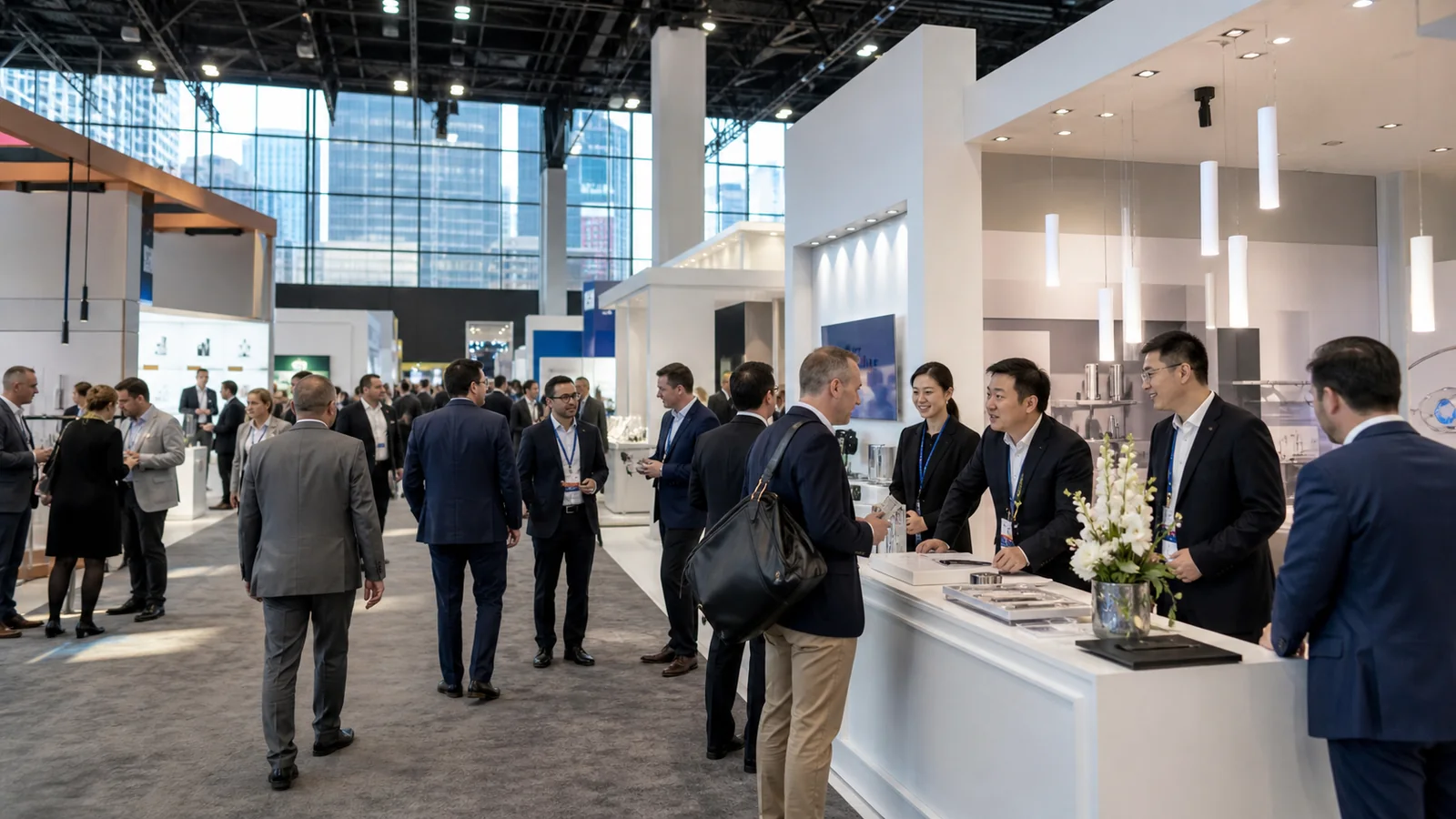
If you market electronics manufacturing equipment, materials, PCB services, assembly tools, or test systems, APEX EXPO is worth considering only when the booth can prove one manufacturing claim quickly. Its technical audience can challenge vague promises, so a polished structure is not enough. Use this guide to verify the 2027 dates and eligibility, decide what to demonstrate, brief your exhibit house, and choose whether to exhibit or attend first.
The event was widely known as IPC APEX EXPO. The organizer now uses APEX EXPO after IPC transitioned to the Global Electronics Association; the association's legal name remains IPC International Inc. Using the current name matters when you brief staff, invite customers, and label show materials.
The 2027 event at a glance
| Item | Current official information |
|---|---|
| Official event name | APEX EXPO 2027 |
| Organizer | Global Electronics Association; legal name IPC International Inc. |
| Venue | Anaheim Convention Center, Anaheim, California |
| Meetings and courses | April 3-8, 2027 |
| Conference | April 5-8, 2027 on the event homepage |
| Advanced Electronic Packaging Conference sessions | April 5-7, 2027 |
| Professional development courses | April 4, 5, and 8, 2027 |
| Exhibition | April 6-8, 2027 |
| Main industry scope | Electronics design, printed board manufacturing, electronics assembly, materials, equipment, and test |
Do not describe April 3-8 as six exhibition days. The exhibition is currently listed for April 6-8. Meetings, courses, and conference sessions occupy different parts of the week. That distinction affects flights, staffing, customer appointments, and when a product demonstration can actually run on the show floor.

The event homepage gives the conference span as April 5-8, while the organizer's July 2026 call for participation specifies conference sessions on April 5-7 and professional development courses on April 4, 5, and 8. Treat the detailed program as the working source for session planning, then check the final agenda before booking nonrefundable travel.
Decide whether your product belongs before choosing a booth
APEX EXPO is built around electronics manufacturing. The official audience description includes OEMs, EMS providers, PCB manufacturers, designers, equipment manufacturers, suppliers, and product innovators working across design, bare-board production, assembly, and test.
The exhibitor eligibility rule is narrower than “we sell to electronics companies.” An exhibitor must be a manufacturer or an independent representative of a manufacturer with products related to the technical program or relevant ancillary work. Show management makes the final decision on whether a product or service is appropriate.
The show floor uses two designations. The APEX area is for electronics assembly exhibitors. The EXPO area is for suppliers to bare-board manufacturing. Before you sign a contract, send the organizer a plain description of what the product does, who uses it, and where it fits in the manufacturing sequence. Get the designation confirmed in writing. A misplaced booth can create a traffic problem that graphics cannot solve.
This show is a strong candidate when your offer changes a result that the visitor can measure, such as placement accuracy, yield, cycle time, defect detection, or traceability. If the connection to electronics manufacturing takes several minutes to explain, ask about eligibility before committing budget.
Use the 2026 result as context, not a 2027 promise
The organizer reported 7,192 attendees, including 3,691 verified participants, from 50 countries at APEX EXPO 2026. It also reported 417 exhibitors across 140,000 net square feet of sold-out show floor. Those figures show the event's recent scale and technical reach.

They do not guarantee the same 2027 attendance, visitor mix, or lead volume. Set targets that your U.S. team can actually pursue: scheduled technical reviews, samples received, or trials opened. A badge scan without the visitor's application and next step is not a lead.
Build the booth around one technical decision
Technical visitors will test a booth claim within minutes. Give them one manufacturing question to answer: Can the equipment hold the stated tolerance? Does the material survive the defined process window? Will the inspection system find the defect that currently escapes? Can the software produce a traceable record without slowing the line?
Choose the evidence before the structure. Start with operating conditions, not graphics. Reserve the safety zone, utilities, ventilation, loading space, and operator position for anything that moves. Put process conditions and test limits beside material samples. Feed software or inspection systems a repeatable defect set, then label which results are live and which were prepared before the show.
Avoid a feature tour. Start with the part, board, defect, process step, or production record the visitor recognizes. Show the input condition. Run or explain the relevant step. Then show the output and its measurement. If a result comes from a controlled laboratory test rather than the live booth demonstration, label it that way.
Create one handoff sheet before the show. Name the model displayed, the sample or data needed from the visitor, the test method, utility limits, follow-up owner, and review date. Give the technical contact a specific next step instead of a promise to “talk after the show.”
Design around APEX EXPO display limits
The current display regulations make booth type a technical constraint, not a styling choice.

| Booth type | Current limit that affects the design |
|---|---|
| In-line | Fixtures and identification signs may reach 8 feet 3 inches. Anything over 4 feet high beside a neighbor must stay at least 5 feet back from the aisle. Hanging signs are not permitted. |
| Perimeter | Maximum height is 12 feet. |
| Island | Minimum size is 400 square feet, with aisles on all four sides. Structures and hanging signs may reach 20 feet. |
| Peninsula | Minimum size is 400 square feet, with aisles on three sides. Maximum height is 16 feet. |
Machinery and capital equipment receive a specific setback exception in an in-line booth. Even so, the equipment, controllers, monitors, and movable tables must remain within the footprint and operate near the aisle as the rule directs. Check every limit against the assigned booth and current floor plan before releasing drawings.
Sightlines matter because technical products attract small groups around screens and equipment. The rules require demonstrations, presentations, and queues to stay inside the contracted footprint. A tall monitor, sample rack, or counter can violate a neighbor's sightline even when it is not part of the main structure. Plan where a five-person conversation stands, not just where the machine sits.
All construction and decorative materials must be noncombustible or flame retardant. The rules also require finished backs on visible booth elements and appropriate temporary floor covering or carpet. Share the current display regulations with your exhibit house at the start. A late correction is paid for by the exhibitor and may weaken the demonstration you built the booth around.
Give live equipment enough room to be safe and convincing
Moving equipment needs more than a power outlet. The current rules tell exhibitors to use a minimum 3-foot setback and/or hazard barriers where necessary to protect visitors, and demonstrations must be conducted by qualified personnel. The Anaheim halls list a floor load limit of 350 pounds per square foot; heavier exhibits need special handling to distribute the load.
Before approving drawings, walk the demo from rigging to shutdown. Verify how the equipment enters and starts, where the operator and visitors stand while it runs, and how samples, consumables, or waste leave the area. Keep controls, cables, doors, carts, and service access inside the footprint.
If the full production process cannot run safely on the floor, do not fake it. Demonstrate the part that can be verified live and support the rest with clearly labeled footage, samples, or test records. A smaller honest demonstration gives a technical visitor more confidence than a theatrical cycle that hides the real conditions.
Lock the contractor and compliance path early
An Exhibitor Appointed Contractor is any contractor other than an official show contractor used for move-in, show days, or move-out. The current 2027 rules require the EAC form and certificate of insurance by March 5, 2027. Send the EAC terms to your booth partner before fabrication, because access and insurance problems are difficult to repair at the loading dock.

The rules state that booths must be occupied and completely set up by 5:00 p.m. on Monday, April 5, 2027. They also require badged exhibitor representatives to staff the booth during all open exhibit hours. Build the labor plan around setup, equipment commissioning, show coverage, and dismantling rather than counting only sales shifts.
The current rules page contains an apparent year error in the move-out paragraph: it names Thursday, April 8, 2026 while surrounding deadlines refer to April 2027. Do not copy that line into freight instructions. Confirm the corrected 2027 move-out bulletin, carrier check-in, and material-handling deadlines with show management and the official service contractor.
Literature stored in the booth is limited to a one-day supply, and storage behind drapes or display walls is prohibited. Plan cabinet volume and daily replenishment before approving the floor plan. Replace spare brochure boxes with a short decision sheet linked to controlled digital documentation.
Staff the booth for technical progress
Map the visitor's handoff instead of writing a list of job titles. At the aisle, the available staffer asks which part or process brought the visitor over and who owns that decision. Once the fit is clear, the person running the demonstration states both the result and its limits. Before the conversation closes, whoever owns follow-up records the current problem, production context, timing, and evidence needed next. A small team can rotate these duties, but the handoff must still happen.
Do not let the most technical person become trapped in a fifteen-minute explanation for every visitor. Use a two-minute proof for fit, followed by a scheduled deeper review for qualified projects. The short conversation should answer three things: what process problem you solve, what evidence is visible here, and what information is needed for the next test.
Do not assume neighboring exhibits are open to photography. Current rules say another exhibit may not be photographed or recorded without the exhibitor's permission, except for specified show management, official photography, and accredited press. Train staff to ask before recording a neighboring booth and decide how your own prototypes, screens, and customer data should be protected.
Decide whether to exhibit or attend first
Exhibit when the organizer confirms your eligibility, your product matches a clear APEX or EXPO audience, and you can demonstrate one meaningful manufacturing decision under show conditions. Your U.S. team should also be able to support a sample, technical review, trial, or quotation after the event.

Attend first when product eligibility is uncertain, the target process owner is still vague, the live proof depends on utilities or safety conditions you have not solved, or your team has no practical U.S. follow-up path. Use the visit to test the audience fit, watch how engineers evaluate comparable equipment, and note which questions appear before a buyer agrees to a deeper review.
The decision is not “big show or small show.” It is whether your evidence, staff, and follow-up can turn a technically informed visitor's attention into the next engineering or purchasing action.
Frequently asked questions
What should we send an exhibit house before asking for a quote
Send three working files: a scaled equipment footprint with access doors and service zones, a utility sheet showing power and other operating needs, and a one-page storyboard for the proof visitors will see. Add the assigned booth number and the current organizer rules. Without those inputs, an early quote may exclude rigging, show services, safety barriers, or the labor needed to commission the demo.
How should we rehearse live equipment before shipping
Run the same start-up, demonstration, stop, and recovery sequence you expect on the floor. Test it with the planned power, samples, operator position, and safety boundary. Record the time needed to reset between visitors and decide what staff will do if a sensor, sample, or connection fails. The goal is a repeatable proof, not a perfect factory cycle.
What can non-engineering booth staff say about the product
Give them a short application card with the problem the demo addresses, the visible result, the conditions that limit the claim, and the question or limit that requires an engineer handoff. They should not improvise tolerances, yields, compliance statements, or customer results. Their job is to recognize fit and bring the right technical person into the conversation.
How should we protect customer or production data in a demo
Use synthetic, anonymized, or explicitly authorized data. Remove customer names, drawing identifiers, production volumes, and any screen that could expose restricted records. Decide who may photograph your own display and prepare a clean demo mode before the equipment leaves the factory.
What should happen within 48 hours after a qualified conversation
Send the exact item promised at the booth and propose one dated next step: a sample review, data check, technical call, trial plan, or quotation. The record should identify the application, current problem, people involved, evidence requested, and internal owner. If those fields are missing, recover them before sending a generic follow-up email.
Final thoughts
Before paying for booth production, put three items in writing: the organizer's eligibility and area confirmation, an exhibit-house plan that fits the assigned booth and protects the demonstration zone, and the name of the U.S. follow-up owner. If any one is missing, attend first and use the event to close that gap before committing to a larger presence.