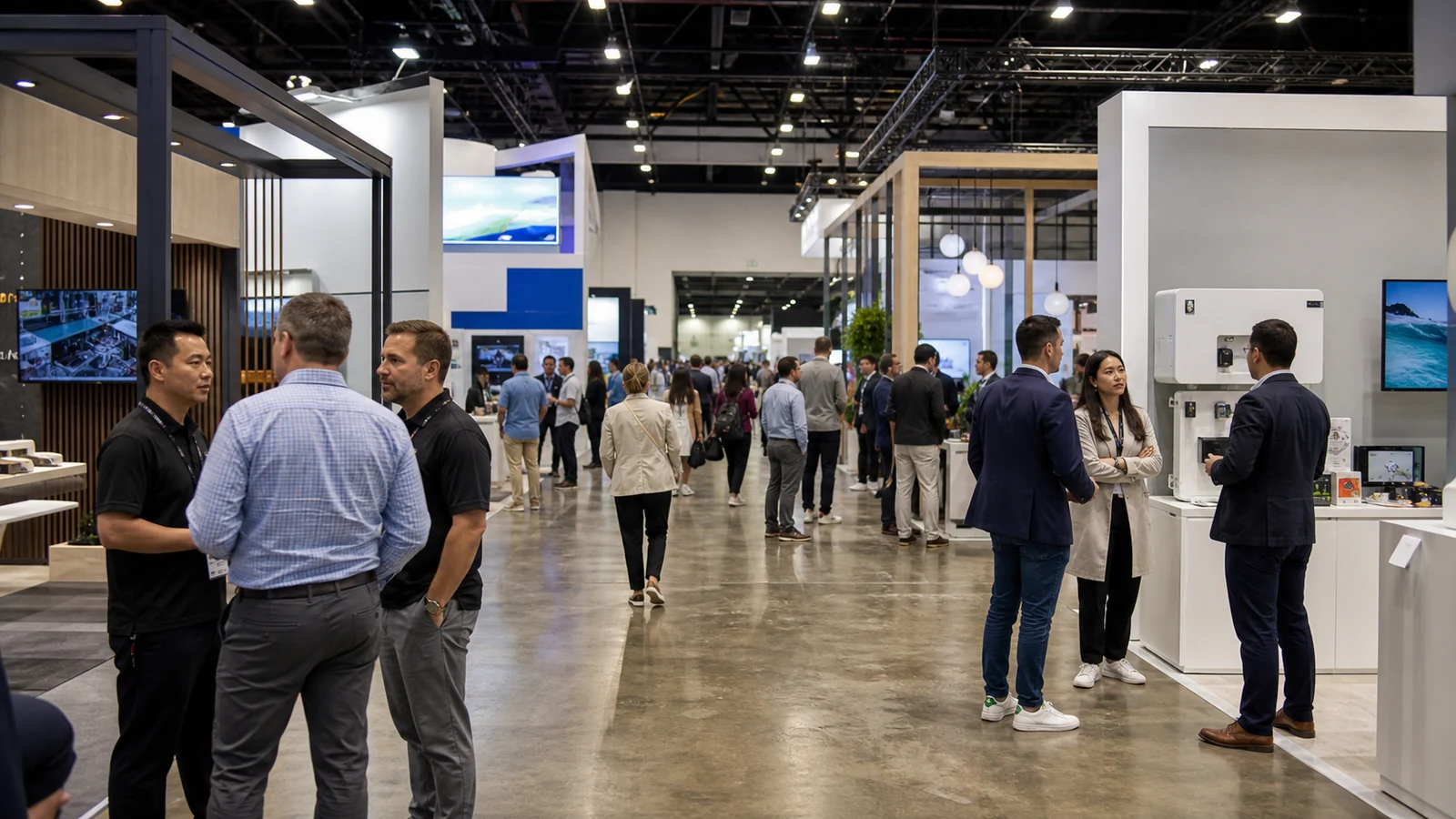
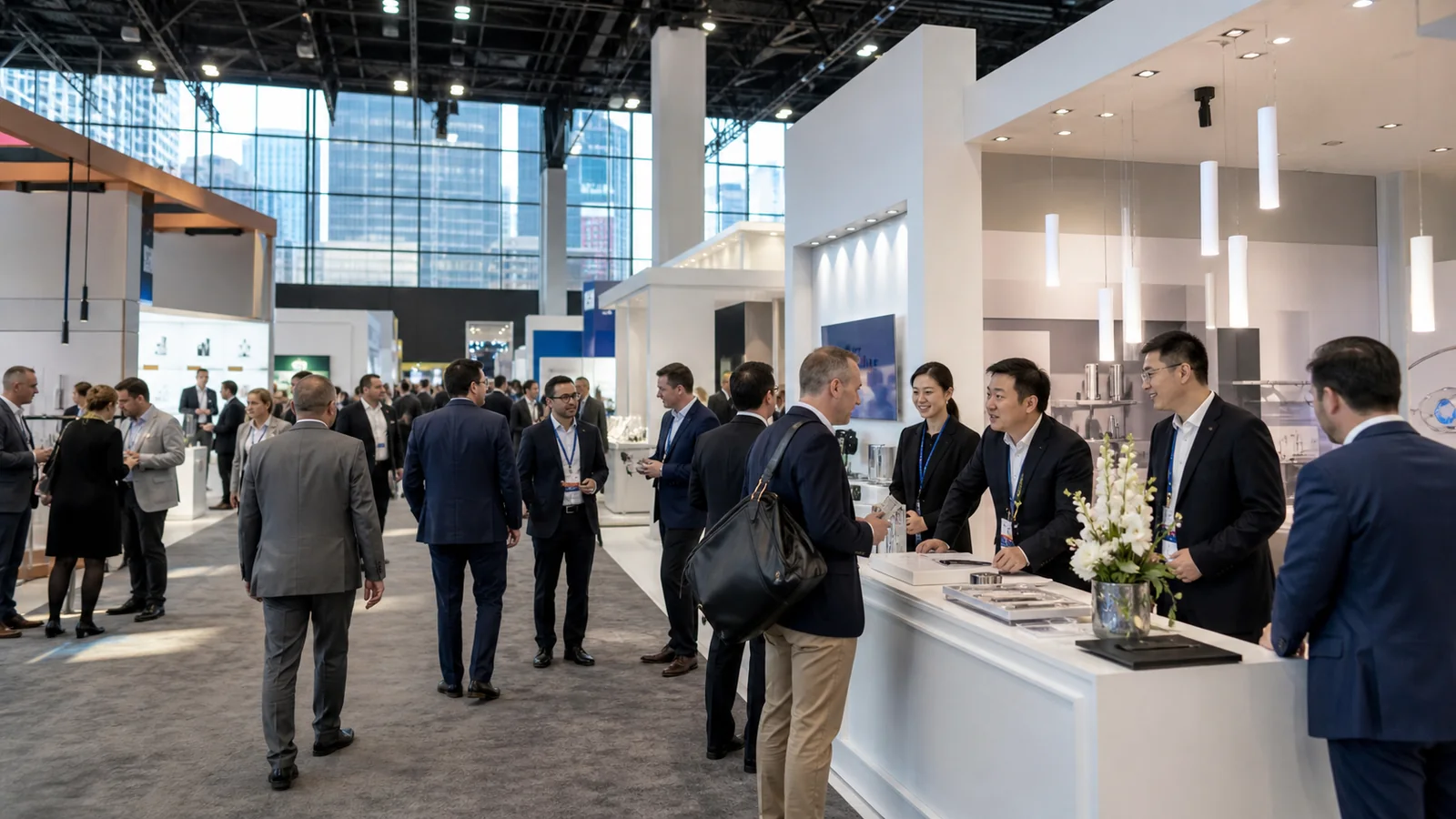
If you are deciding whether to exhibit at Seatrade Cruise Global, the key question is not whether cruise companies attend. It is whether your booth can help the right contact judge one real use case. This guide gives you the verified 2027 schedule, a way to choose the right show sector, and a practical test for what to demonstrate, who to invite, and what each booth conversation should lead to.
The 2027 event at a glance
| Item | Current official information |
|---|---|
| Event name | Seatrade Cruise Global |
| Full event dates | April 5-8, 2027 |
| Venue | Miami Beach Convention Center |
| Address | 1901 Convention Center Drive, Miami Beach, Florida 33139, United States |
| Monday, April 5 | 10:00 a.m.-4:00 p.m.; conference only |
| Tuesday, April 6 | 9:30 a.m.-6:00 p.m.; expo hall opens at 11:00 a.m. |
| Wednesday, April 7 | 9:00 a.m.-6:00 p.m. |
| Thursday, April 8 | 9:00 a.m.-3:00 p.m. |
| Official show sectors | Design and ship interiors; entertainment; environmental and health; expedition cruising; hotel operations and concessions; information technology; ports and destinations; safety and security; ship equipment and shipbuilding, with additional booking categories such as food and beverage, retail, wellness, services, logistics, and shipyards |
April 5 belongs to the conference program, not the expo hall. If your pass and meeting plan allow, you can use that day for conference sessions or planned conversations, but you should not build your visitor or staffing forecast as if the exhibition were open. Recheck the event site and exhibitor console before booking travel because the organizer can change published information.

The organizer reports that the 2026 event drew more than 12,500 attendees, 650 exhibitors, 85 cruise brands, and participants from more than 125 countries. Those figures describe the previous edition. Use them to understand the show's reach, not to forecast how many qualified buyers will visit your stand in 2027.
Decide which cruise decision your offer can support
Cruise buyers need to picture your offer in service, not just admire it in a catalogue. Space may be tight, replacement time short, and support spread across ports. A failure can interrupt work for the crew or the guest experience, so the first useful conversation usually moves quickly from benefits to operating conditions.
Before you brief a booth designer, finish this sentence: "After the demonstration, the visitor should be able to decide whether to ___." The blank could be "shortlist this material for one refurbishment," "book an interface review," "examine a controlled onboard trial," or "request a call with destination operations." Pick one step that a real contact could take without pretending to approve the whole project.
That decision tells you what belongs in the stand. If the first discussion tries to cover procurement, technical approval, hotel operations, guest experience, sustainability, and executive strategy, the product story disappears. Lead with one use case and keep the other questions for the right follow-up meeting.
Match your offer to the right show sector
The official website groups the show around cruise operating sectors, not broad supplier labels. Use the categories in the event table as your starting point, then confirm the choices and current floor plan with the organizer before reserving space.

Choose the sector where the person who owns the problem would naturally look. A sensor platform belongs in information technology when the first question is connectivity or integration; hotel operations may be the better route when that team uses the system and controls the budget. Lighting can fit design and interiors or ship equipment, depending on whether you need to discuss atmosphere, installation, controls, or technical integration first.
Before reserving space, ask the organizer for the current floor plan. Name your primary sector, the first role you want to meet, the question that person can answer, and the proof you will show. If you cannot make those four choices, a better stand location will not fix the positioning.
Build a demonstration that survives shipboard questions
Build the demonstration around the next decision, not around everything the product can do. A sample, dashboard, or machine can earn attention, but the visitor still needs to see whether the displayed configuration can work in the intended ship or shore setting.
Put the exact hardware configuration beside the sample. Show the few dimensions, materials, connections, cleaning steps, and service access points that affect the use case; move the rest to a technical sheet. Mark any prototype value or untested assumption clearly. A land-based certificate is not proof of marine approval.
When the demonstration runs on screen, take one task from input through an exception and recovery. Show who sees the information onboard and ashore, and explain connectivity, permissions, integration, or data export only when it changes that task. Label every simulated connection so the visitor knows what is real.
With a guest-facing concept, let the visitor see how the crew will start, reset, clean, supervise, and recover the experience. Keep broader questions such as training, accessibility, throughput, content changes, and spare parts in a follow-up sheet. The aim is to show an operation the crew could repeat, not just a five-minute attraction.
Prepare proof for more than one person
The organizer says many attendees influence purchasing and highlights participation by major cruise brands. That creates a chance to meet part of a buying group; it does not mean one badge holder can approve your project.

Give a passer-by 20 seconds to understand the shipboard problem and the visible result. When someone has a relevant fleet or project, ask who uses the product now, what blocks the change, and what evidence the next reviewer will need. If the fit is real, book a working session with that reviewer instead of forcing a technical and commercial decision in the aisle.
Build the document pack around the question left open. Bring the finish sample, drawing detail, cleaning method, and installation sequence when design is under review. Expect technical questions to focus on a load, interface, failure mode, approval status, or service gap. For the commercial follow-up, clarify what the buyer would purchase, where a trial could run, and who would support it. Bring only claims and files you can defend.
Use matchmaking before you rely on aisle traffic
Seatrade Cruise Global offers a matchmaking tool for pre-scheduled meetings. Use it only after the exhibitor profile explains the use case and you know which role should meet your team. "Explore synergies" gives the recipient no reason to protect time.
Write a request that can earn a clear yes or no. A lighting supplier, for example, could say: "We are showing a retrofit control module for cabins. Could we use 15 minutes to review the ship interface and service-access assumptions?" Replace the product and question with your real evidence. Invite customers and partners through the organizer's approved tools where appropriate, and ignore third-party offers to sell attendee data; the organizer says it does not sell those lists.
Put confirmed meetings on the booth schedule and name the colleague each visitor needs. Keep space for qualified walk-ins, but do not let three expo days depend on accidental traffic or a salesperson promising that a specialist will reply later.
Staff the expo days around evidence and follow-up
The event begins with a conference-only Monday and then moves into three expo days. Tuesday's expo hall opens later than the next two days, so plan travel, private meetings, and shifts around the actual opening hours instead of staffing four identical days.

Use a simple handoff at the stand. Start with one use-case question, then route the visitor to the colleague who can show the verified configuration. When the discussion turns technical or commercial, bring in the responsible lead. Before anyone leaves, record what must be answered, which file or test is missing, who owns the reply, and when it is due.
Keep the lead form short enough to finish while the conversation is fresh: company and role, relevant fleet or project, operating problem, current method, decision stage, and agreed next action. A badge scan is only a contact record until your team knows why the person stopped and what happens next.
Treat current rules as a design input
The official Exhibitor Hub says all stands must reach the Silver tier of Informa's Better Stands program by 2027 and will be evaluated onsite. Put that requirement in the first brief to your exhibit provider, before the structure, finishes, flooring, signage, and furniture are priced.
Current show policies keep product and literature distribution inside the contracted exhibit space unless the organizer approves another marketing opportunity. Photography and video also require the stated permissions. Leave enough room inside the stand for demonstrations and handouts, and agree on what the team may film before the show.
Do not use an older service manual as the 2027 rulebook. Before approving production, get the current manual and answer four questions: who may build and service the stand, how freight enters and leaves, which utilities or rigging must be ordered, and which demonstrations need organizer approval. Put the confirmed deadlines, insurance documents, and responsible person on the production checklist.
Decide whether to exhibit or attend first
Exhibit when you can name the cruise role that owns the problem, show one relevant configuration, answer the first operating questions honestly, and offer a realistic next review. You do not need every approval before the show, but you must separate completed evidence from planned tests and assumptions.

Attend first when the offer is still described only as "suitable for cruise," your team does not know who owns the decision, or U.S. service and follow-up are unresolved. Use the visit to compare sector placement, collect the questions buyers actually ask, and identify the people or tests needed before a future exhibit.
Even a large cruise industry trade show cannot repair unclear product fit. Your go-or-no-go decision should rest on whether a qualified visitor can see credible evidence and agree to a specific next step.
Frequently asked questions
Is Seatrade Cruise Global the same as F&B@Sea
No. The official FAQ describes F&B@Sea as a separate event focused on the cruise drinking and dining experience. If food or beverage is central to your offer, compare the 2027 dates, venue, pass, sampling, and buyer focus for both events before choosing. Do not assume a Seatrade Cruise Global booking automatically includes F&B@Sea access or sampling rights.
Should we bring the full product or a cutaway sample
Choose the format that lets the visitor inspect the point behind the next decision. A cutaway is useful when installation, materials, interfaces, or service access matter most. Bring the full unit when scale, operation, or the user interaction cannot be understood from a section. If neither can travel safely, use a dimensioned mock-up or drawing and label what the visitor is not seeing.
What can we budget before the 2027 exhibitor manual is final
You can build a working budget for space, design, travel, staffing, and the demonstration. Keep labor, material handling, utilities, rigging, approvals, and onsite changes as separate provisional lines until the organizer's current documents and suppliers confirm them. Do not copy a 2026 price into a 2027 approved budget without checking it.
Does every booth staff member need technical depth
No. Everyone should know the use-case question, the team's 20-second explanation, which claims the current evidence supports, and who handles deeper questions. Give the demonstration owner a clear stop point: when a visitor asks beyond the available evidence, record the question and bring in the responsible specialist instead of guessing.
Can we photograph or record a buyer conversation
Do not assume a show badge is consent. Check the current show policy, ask the person before photographing or recording, and explain how the material will be used. If consent or organizer permission is unclear, take written notes after the conversation instead.
What belongs in the first follow-up email
Refer to the exact use case discussed, restate the open question, attach only the promised evidence, and say who will do what next and by when. If your team still owes a test result or drawing, say when it will arrive. A generic company deck should not replace the specific follow-up the visitor agreed to.
Final thoughts
Before spending on a Seatrade Cruise Global stand, make one go-or-no-go decision: can a qualified visitor see credible evidence for one cruise use case and agree to a specific follow-up review? If yes, use the official schedule and sector map to design that meeting. If not, attend first and collect the questions your next exhibit must answer.