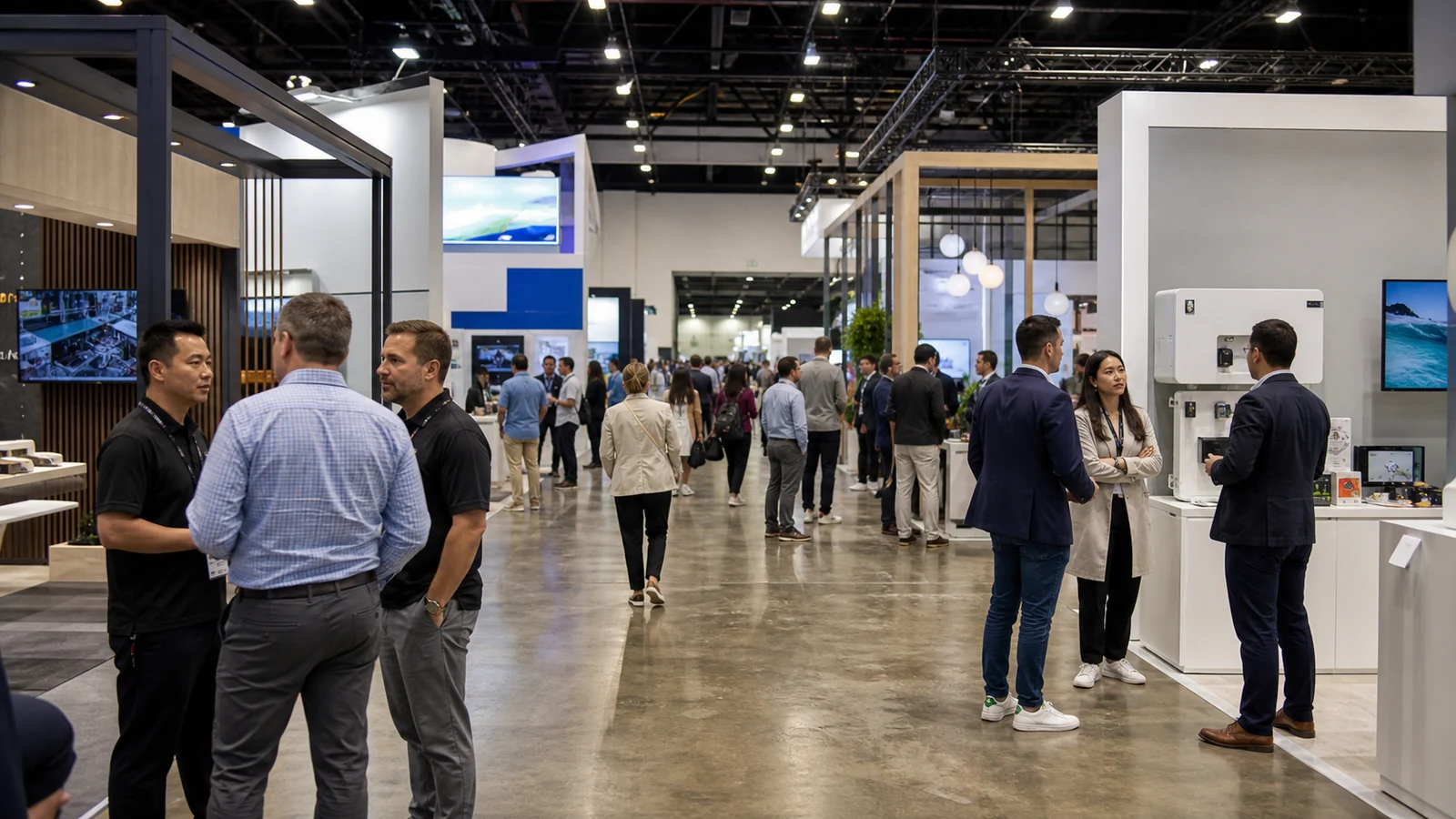
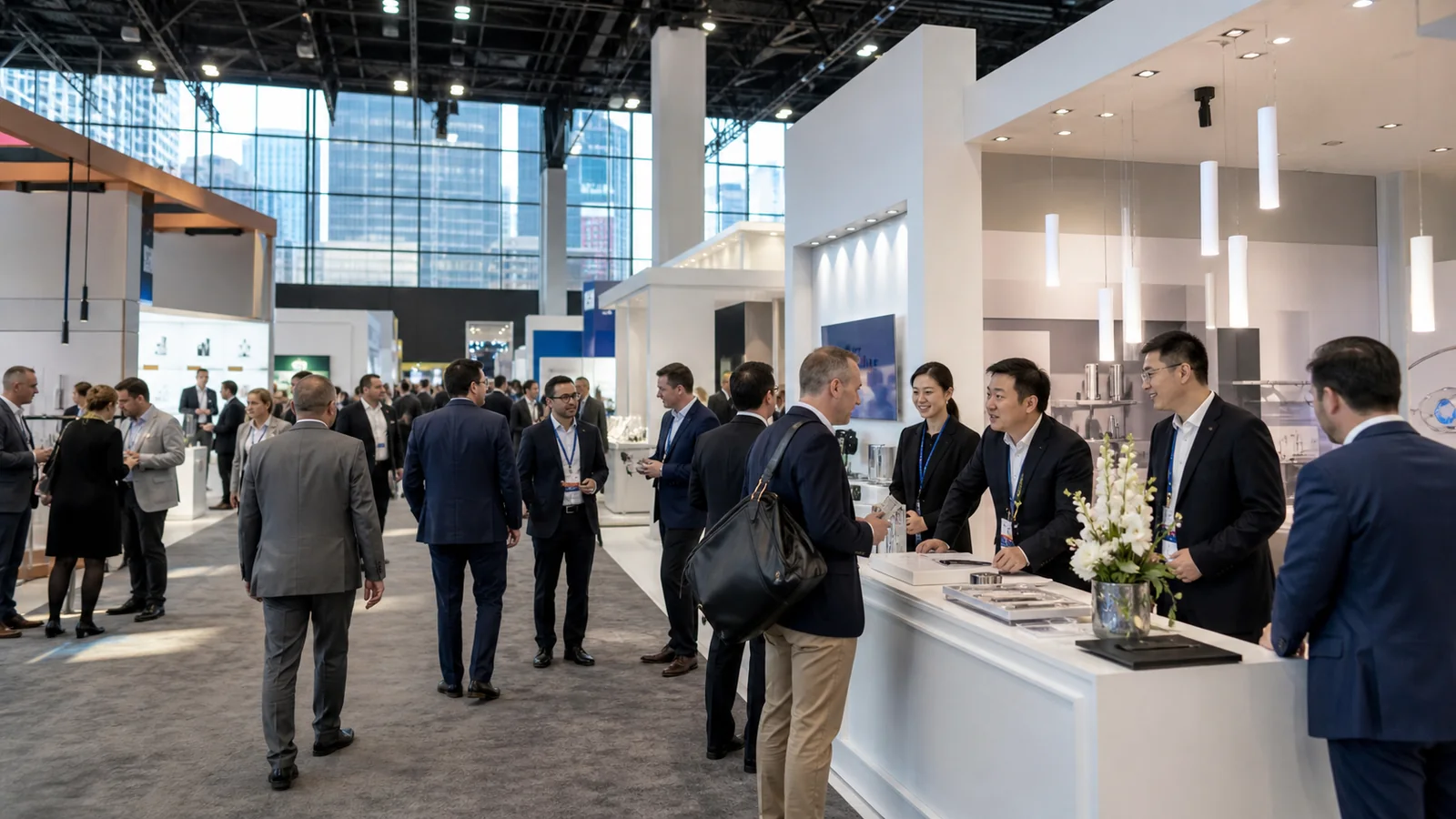
ISA International Sign Expo puts printers, fabrication equipment, materials, LEDs, digital displays, software, and installation solutions on one floor. If you sell into U.S. sign shops, that range is useful—but it also makes a vague “we do signage” booth easy to overlook. This guide gives you the confirmed 2027 event facts and shows how to turn one sign-production problem into a demonstration a shop owner or production manager can evaluate.
The 2027 event at a glance
| Item | 2027 information |
|---|---|
| Official event name | ISA International Sign Expo |
| Trade show dates | March 31–April 2, 2027 |
| Pre-conference date | March 30, 2027 |
| Venue | Mandalay Bay Convention Center |
| City | Las Vegas, Nevada |
| Organizer | International Sign Association |
| Core market | Sign, graphics, print, and visual communications |
| Main exhibit areas | Printing and production equipment; fabrication tools and materials; substrates; software and workflow; LEDs; digital signage and displays; wraps; installation solutions |
| Detailed 2027 hall hours | Not yet published on the current official schedule page |
The pre-conference date is not an extra exhibit-hall day. Build travel and meetings around the published March 31–April 2 show dates until the organizer releases the detailed 2027 schedule. Current exhibitor information is being released through the Exhibitor Resource Center, so confirm the service manual, move-in assignment, utilities, rigging, and demonstration approvals before committing freight or labor.

Start with one sign-shop decision
ISA identifies sign company owners and managers, production specialists, installers, fabricators, print providers, manufacturers, distributors, designers, and brand professionals among the audience. For this article, the primary buyer is the person responsible for production performance inside a sign company. That buyer does not need another broad promise about innovation. They need to know whether your product will improve a job their shop already performs.
Choose one job before you choose booth features. For a printer, that job could be holding color while increasing usable output. A cutter or router has a different test: can it reduce setup and rework across mixed materials? With LED components, the practical gain may appear in fabrication, wiring, service, or replacement. Workflow software should prove that a job can move from estimate to artwork, approval, production, installation, and billing without losing information.
Write the decision in the buyer's language. Can this system finish the shop's actual job mix within one shift? What changes upstream and downstream? Which operator skill, consumable, ventilation, power, software, or maintenance condition affects the result? If the booth cannot answer one such question, adding more product families will only make the message harder to follow.
Show the production handoff, not only the machine
Large-format equipment attracts people when it moves, but motion alone does not prove a production gain. Demonstrate a short, recognizable handoff: receive or prepare the file, choose settings, load the material, print or fabricate, finish the piece, inspect it, and prepare it for installation. The visitor should see where time, judgment, waste, and operator intervention enter the process.

State the test conditions next to the output. Useful facts include file type, image mode, material and thickness, ink or tool set, resolution or pass mode, production speed, drying or curing condition, finishing step, operator involvement, and the definition of acceptable quality. A maximum-speed banner sample does not prove sellable output for backlit graphics, close-view retail signs, vehicle wraps, or color-critical brand work.
Keep the finished sample with the setup that produced it. Let the buyer inspect edges, registration, banding, surface finish, color consistency, adhesion, bend, illumination, or fastening where those details matter. If the result came from a factory demonstration rather than the show-floor machine, label it and explain what can be repeated at the booth.
Make material claims shop-testable
Films, substrates, inks, adhesives, coatings, LEDs, power supplies, fasteners, and finishing products often look similar in a small display. Help the buyer test the use condition, not just touch a swatch. Show the intended surface, preparation, application temperature, cure or dwell time, tool requirement, outdoor or indoor boundary, compatible print or finishing process, and removal or service method.
Avoid performance claims without a named construction and condition. “Five-year,” “weather resistant,” “low-tack,” “repositionable,” “color stable,” or “high brightness” can mean very different things across climates, orientations, substrates, duty cycles, installation methods, and warranties. Put the test method, product series, application boundary, and exclusions close enough that a buyer can connect the claim to the sample.
Bring a comparison that reflects a real shop choice. That could be two liners during application, two channel-letter assembly methods, two edge-finishing sequences, or a conventional and automated file-preparation workflow. Explain what stays constant. Otherwise the booth creates a dramatic difference without helping the buyer know what caused it.
Let software and digital signage survive a failure question
A polished interface is easy to stage. A sign company will also ask how files enter the system, which formats and devices are supported, who builds templates, how approvals are recorded, what connects to estimating or production, and what happens when a network, player, integration, or user step fails.

Run one job through the workflow instead of clicking through a feature list. Show intake, artwork or content preparation, customer approval, scheduling, production or publishing, an exception, and the record that remains afterward. Identify prepared data and simulated connections. If a feature is planned but not released, do not let the demo imply that it is available.
Prepare the ownership questions: license or subscription structure, user and device limits, required hardware, content or data responsibility, onboarding, update policy, offline behavior, security documentation, support hours, data export, and cancellation. These conditions can outweigh a feature advantage for an independent shop that cannot dedicate an IT team to the product.
Design the booth around work, samples, and safe viewing
Plan the booth from the live process outward. Mark equipment footprint, operating clearance, doors and panels that open, material loading length, ventilation, heat, light, noise, waste, storage, network, power, compressed air, and the route used to restock or remove finished work. Then give visitors a safe place to watch and a separate place for technical conversations.
Do not assume a machine can run because it fits on the floor plan. The current 2027 exhibitor service details, move-in and move-out schedules, and order forms are being provided through the official portal. Submit the exact plan for power, rigging, compressed gases, moving parts, lasers, heat, fumes, vehicles, liquids, sound, hanging elements, and internet where applicable, and rely on written approval rather than an older show's setup.
Use samples as navigation. Group them by job—such as vehicle graphics, retail environments, channel letters, wayfinding, architectural signage, or short-run personalized work—only when those jobs match your buyer. A wall filled with every possible application makes it harder for a production manager to find the process they came to evaluate.
Prepare proof beyond the specification sheet
Technical buyers may start with width, speed, resolution, load, brightness, accuracy, or material compatibility, but the purchasing decision continues into uptime and support. Prepare preventive maintenance, consumable life assumptions, cleaning routine, calibration, common failure points, diagnostic access, spare-parts availability, warranty boundary, training, installation, and escalation responsibility.

For an international supplier, state the U.S. path exactly. Name the regions and product lines a distributor or service partner actually supports. Separate local stock from factory stock, remote diagnosis from onsite service, and published response targets from best efforts. “Nationwide support” is not useful if the buyer cannot identify who answers a failed-machine call.
Ask enough questions before quoting a result. Record the shop's job mix, monthly volume, typical materials, current equipment, bottleneck, quality standard, staffing, floor space, utilities, software environment, service location, replacement timing, and decision role. A scanned badge without this context is not a qualified equipment or materials opportunity.
Use the three show days for different work
The trade show runs Wednesday through Friday. When exact 2027 hall hours are published, assign the most technical demonstrations to times when the necessary operator and specialist can both be present. Keep a shorter repeatable version running between scheduled sessions so visitors who arrive at another time still understand the proof.
On the first day, test whether the intended buyer stops for the stated problem. On the second, revise the explanation around repeated objections and use planned meetings for deeper comparisons. On the final day, focus on unresolved technical questions, sample or file exchange, site-data collection, and a dated next test rather than trying to recreate opening-day traffic.
After each demonstration, record what the visitor accepted and what remains unproven. The next step might be a file-and-material test, a sample kit with a defined application, a production calculation using the buyer's job mix, a utility review, a distributor introduction, or a service call with the responsible partner. “Send information” is too vague unless the exact file, owner, and date are recorded.
Decide whether to exhibit or attend first
Exhibit when you can name the sign-shop job you improve, repeat the proof under show conditions, state the operating boundary, and support installation, consumables, parts, and service in the United States. The show is especially useful when buyers need to inspect output, compare materials, operate a tool, or see several steps connect.

Attend first when the product category is too broad, the U.S. service path is still uncertain, the booth would depend on an unapproved live process, or the team cannot explain quality and throughput under comparable conditions. Use the visit to see how shop owners move between printing, fabrication, digital display, wraps, software, and installation solutions—and which claims they challenge.
Evaluate relevant exhibitors using the same fields: target job, visible handoff, stated conditions, finished result, operator work, maintenance, U.S. support, and next test. The purpose is not to copy a booth. It is to decide what your own buyer must be able to verify.
Frequently asked questions
What should a visitor bring for a meaningful file test
Ask for a representative file, intended output size, substrate or application, color requirement, finishing step, and the quality problem the shop wants to solve. Agree in advance on whether the file may be stored or shown. A random high-resolution image may make an attractive print without testing the buyer's real workflow.
How should you handle a request to test the visitor's own material
Confirm the material identity, thickness, surface, storage condition, intended process, safety information, and whether your equipment or ink supplier permits the test. Label the result as a show-floor trial under stated conditions. If the material could damage equipment or create fumes, dust, heat, or waste that has not been approved, schedule a controlled post-show test.
What should an equipment quotation include after the show
Use the exact model and options discussed, then add freight basis, installation, required utilities, software, training, starter consumables, warranty, service coverage, and any acceptance test. State which output or production assumptions came from the buyer. A headline machine price does not show what it costs to put the system into usable production.
Does ISA sell an attendee contact list to exhibitors
No. The official exhibitor FAQ says ISA Sign Expo does not sell or distribute attendee contact lists and warns exhibitors about unauthorized third-party offers. Build lead capture around consent at your booth and approved event marketing options.
What if the sample looks good but the claimed production speed does not match
Check the file, material, print mode, pass count, resolution, curing or drying, finishing, and definition of acceptable output behind both numbers. Ask the visitor which condition matters in the shop, then agree on a repeatable test. Do not defend a maximum speed when the buyer is evaluating saleable work under a different quality standard.
Final thoughts
At ISA International Sign Expo, a machine, material, or screen earns attention by being visible. It earns a serious next step when a sign company can connect the demonstration to its own jobs, quality standard, operator workload, and support risk. Choose one production decision, show the handoff honestly, and make the next test specific. If the proof or U.S. support path is not ready, attend first and learn what buyers will ask before you ship the exhibit.