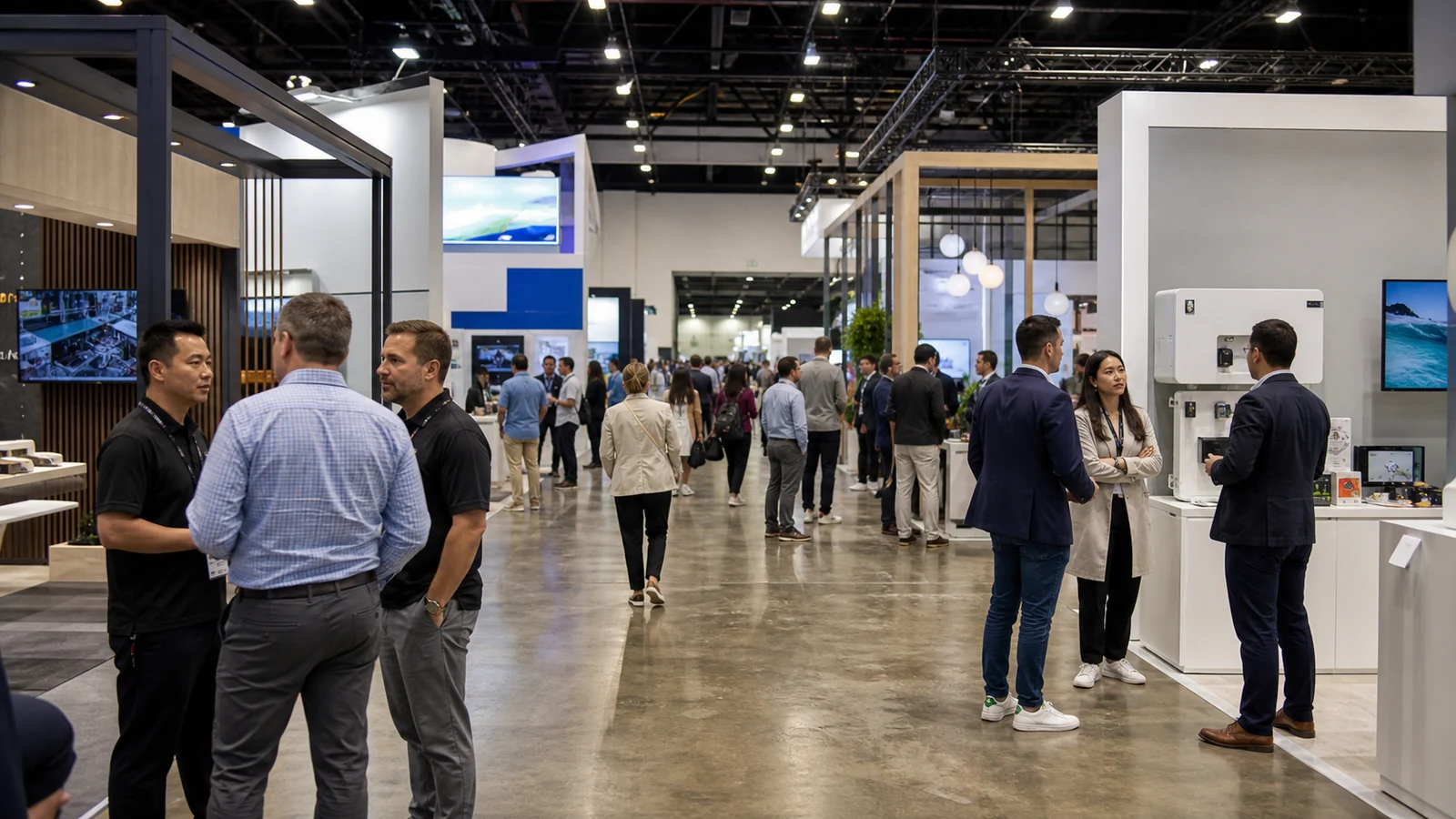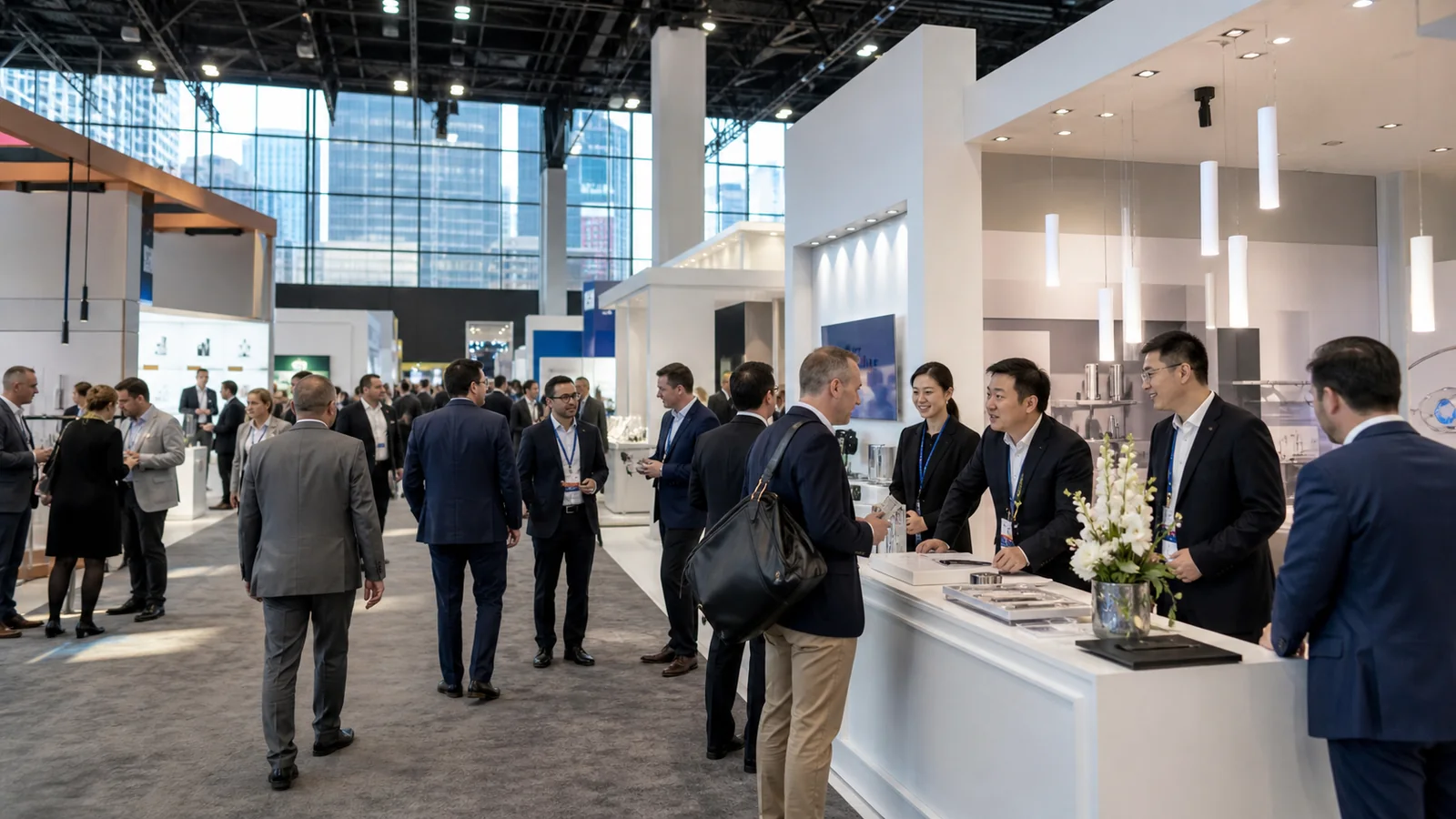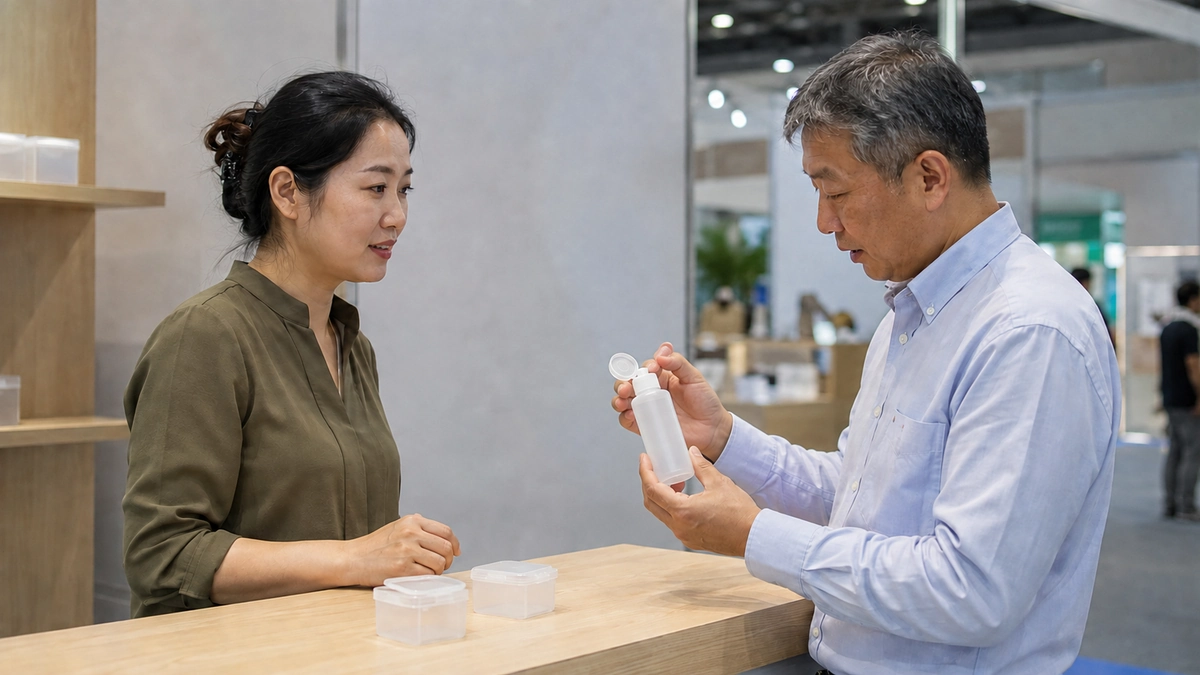
A busy sample counter can leave your sales team with little to follow up on. Visitors enjoyed the product, but nobody recorded which version they tried, what they needed, or whether they wanted another conversation.
A useful trade show sampling strategy connects a small product experience to a real buying question. You need to decide what visitors should try, who needs more time with it, and what happens after they leave. Those decisions also tell you how much stock, counter space, and staff time the booth needs.
Give the sample one job
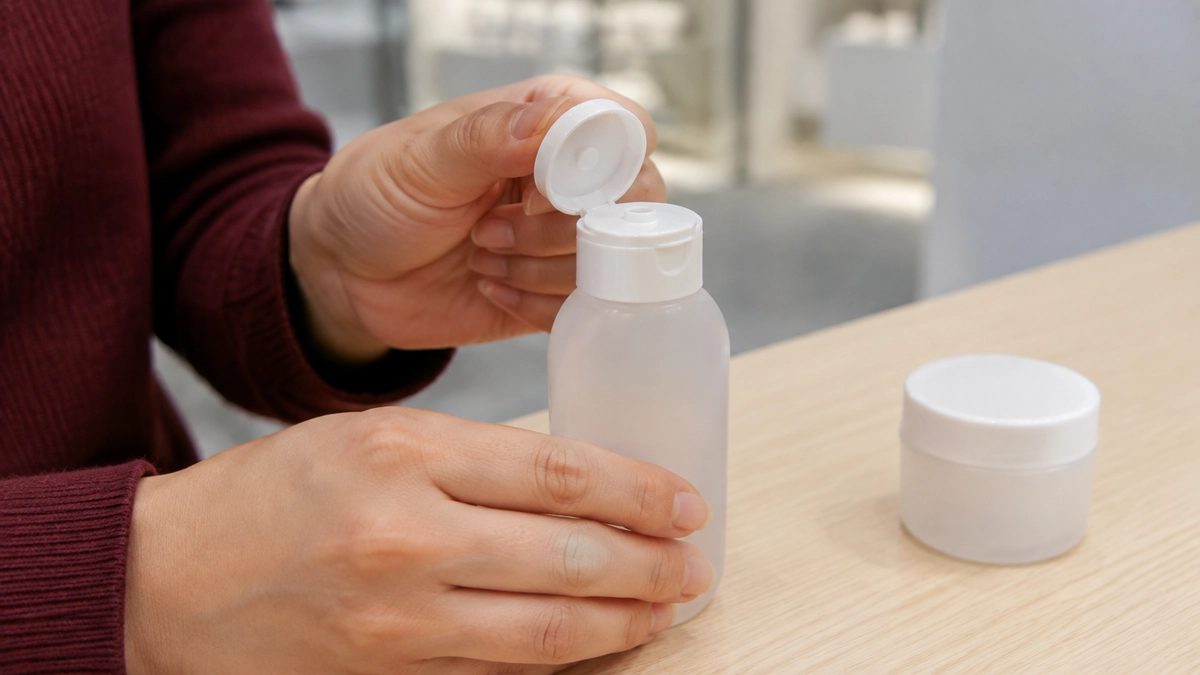
Start with the uncertainty you want the product to resolve. A packaging customer might need to feel how a closure opens. A distributor may want to judge a finish before requesting a larger assortment. An ingredient customer might need to taste the ingredient in a finished application, rather than look at a bag of powder.
Write that question in ordinary language: “Can you open and close this with one hand?” is more useful to the person running the station than “Demonstrate product innovation.” It tells them which sample to present and what to ask the visitor to do.
Keep product sampling distinct from a giveaway. A branded pen can help someone remember your company; a sample of the product you sell helps them evaluate it. If you manufacture pens, the same object could serve both purposes. Its job depends on what you ask the visitor to notice.
Choose a product you can explain and present consistently under show conditions. Trying to demonstrate every size, finish, or flavor can slow the conversation before you discover what matters to the visitor. Start with a representative option and bring out alternatives when there is a reason to compare them.
Choose what visitors will do with it
“Give out samples” leaves too much undecided. Decide whether someone needs to handle the product, use it with guidance, or take it back to a colleague. Those are different experiences, with different demands on your booth.
| What the customer needs to judge | Suitable sample experience | What makes it useful |
|---|---|---|
| An immediately visible or tactile difference | Handle a labeled material swatch, finish, or component at the booth | Let the visitor perform a relevant action and identify the version afterward. |
| Performance during a short task | Use the product with a staff member nearby | Prepare the same starting conditions each time; explain what the short trial can and cannot show. |
| Taste or texture in the intended application | Try an appropriate prepared portion | Identify the product and application, and arrange the approvals and handling needed for that event. |
| Suitability in the customer’s own process | Review the product at the booth, then arrange a product sample kit for a defined test | Agree what the customer will test, which version is needed, and who will review the result. |
A miniature piece is not always a useful substitute for the real product. A small material swatch can show color and feel, but it cannot establish how a finished assembly performs. Explain that limit before the visitor draws a conclusion the sample cannot support.
For a take-home sample, make sure the product name, version, and company contact stay with it. Add the specific instructions someone needs to use it correctly. If the sample will be handed to a colleague, the label should make sense without your booth team standing beside it.
Expensive or bulky products call for a different arrangement. Keep a demonstration unit at the booth and offer a later evaluation only after agreeing on the application, recipient, and test. Avoid promising to ship a kit simply because someone scanned a badge.
Make room for the conversation after the trial
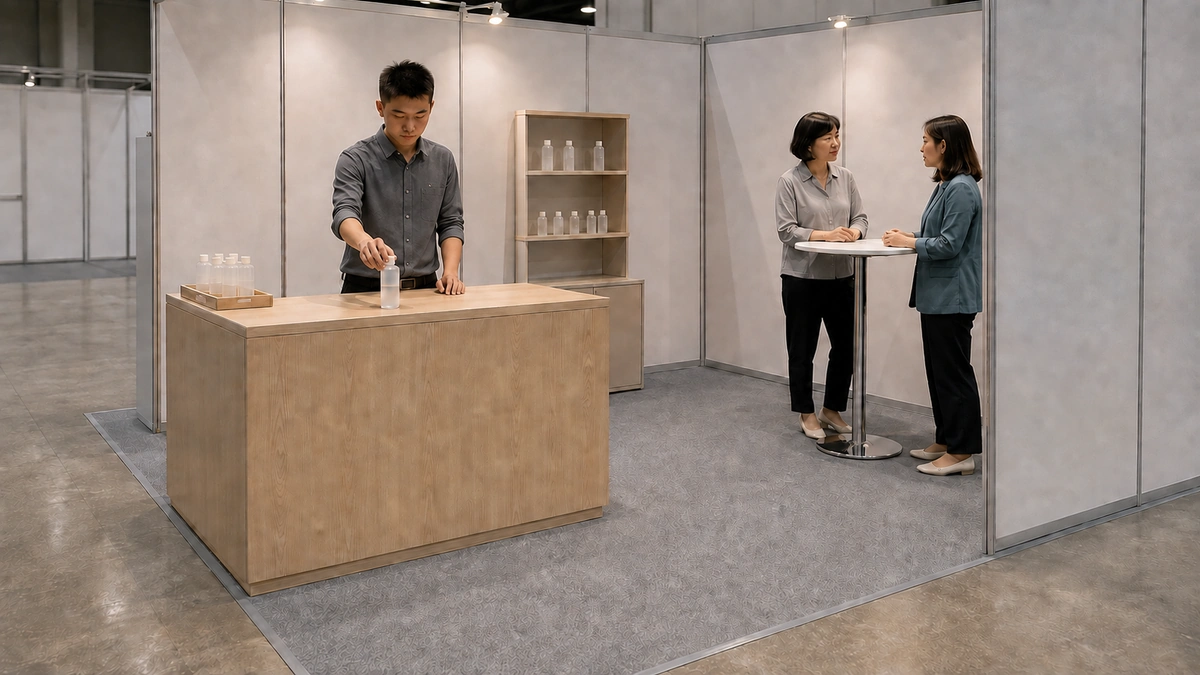
Walk through the experience before approving the booth layout. A visitor needs somewhere to approach, put down a bag if necessary, handle the product, and ask a question. Staff need to reach replacement stock without leaning across that person or carrying cartons through an active demonstration.
Set the trial far enough inside your space that people can stop without forming a line in the aisle. Keep a nearby place for a longer discussion, even if it is only a small standing table. Someone who wants to talk about an order should not have to compete with the next visitor reaching for a sample.
Replenishment and cleanup deserve space too. Plan where unused samples, used demonstration pieces, packaging, and waste will go. With a reusable product, include the time needed to reset or clean it between visitors. A countertop that looks generous in a rendering can become crowded once these items arrive.
For food or drink, check the current exhibitor manual before committing to a tasting setup. For example, the 2026 Abbott Health & Fitness Expo at McCormick Place requires exhibitors offering food or beverage samples to submit an authorization form to OVG Hospitality. That is an event-specific example, not a rulebook for every U.S. show. Confirm your own event’s permitted products, portions, preparation, storage, and service arrangements with the responsible contacts. Official exhibitor information.
Ask a useful question before choosing the sample
Your opening question should help the visitor find the right product: “What kind of packaging are you working with?” or “Which application are you looking at?” That gives the staff member a reason to select one sample over another.
Avoid turning a quick trial into a long qualification form. For an inexpensive sample, a short exchange may be enough to begin. When someone wants a costly kit or a technical session, it is reasonable to establish the application and who will evaluate it before committing resources.
During the trial, direct attention to the feature connected to that answer. Let the visitor handle the closure, compare the surface, or try the product. Then ask what they noticed. A question such as “Would that opening work for your customers?” gives you more to discuss than asking whether they liked it.
If there is a fit, suggest the next step the conversation has earned. That could be an application review, a specification sheet for the version they tried, or a sample kit for their product team. Ask whether they want it and agree on the recipient and timing. If there is no fit, let the interaction end courteously; every trial does not need to become a sales lead.
Plan quantities around what the team can deliver
Total show attendance is a poor starting point when ordering trade show samples. Your usable quantity depends on the visitors who reach your booth, the time each trial takes, and the stock needed for the rest of the event.

Run a rehearsal with the actual product and count the complete cycle: invitation, explanation, trial, question, and reset. For example, suppose two staff members can each manage 12 complete trials an hour for five planned sampling hours. That gives you a planning capacity of 120 trials. If each trial uses two pieces, those sessions would require 240 pieces before adding separately planned appointment kits and a reserve for damage or waste.
These are illustrative assumptions, not an industry benchmark or a prediction of demand. Rework the estimate if staff must also run meetings, if breaks leave the station uncovered, or if cleanup takes longer than expected. For an open tasting counter, count the actual serving-and-replenishment cycle rather than borrowing the timing of a guided product trial.
Treat that capacity as a ceiling for the planned sessions. Use booked appointments and your own comparable event records to estimate likely demand below it. With no history, price a quiet-show quantity and a busy-show quantity, then decide how much unused stock you can afford to keep or discard. Include sample packaging, transport, and any event-specific storage or preparation in that decision.
Allocate stock by show day and keep committed appointment kits separate. Label cartons so the team can see both the product version and the intended day without opening everything. Give one person responsibility for checking usage and releasing reserves.
Check early whether you are running out because demand is strong or because people are taking extras without a conversation. The response may be smaller replenishment batches, a clearer presentation, or extra help. Simply placing more stock on the counter will not fix a trial that visitors cannot understand.
Leave a record your sales team can use
A badge scan does not tell a colleague what happened at the sample station. For an agreed follow-up, your lead capture form should record the contact and company, the sample version, the intended application, the visitor’s reaction or unresolved question, and the action you promised. Assign a person to carry it out.

A useful note could read: “Tried closure B for a refill pack; opening force still a concern; send the specification sheet and arrange a call with their packaging engineer.” That tells your colleague which question to pick up when they make contact.
Explain what contact details will be used for and collect only what you need for the agreed action. Keep a request for sample information separate from a newsletter signup. When sending U.S. commercial email, use your company’s approved process: the FTC states that CAN-SPAM covers business-to-business commercial messages too. A trade show contact is not an exemption. FTC business guidance.
After the show, compare completed trials with the next steps people actually accepted and completed. Keep pieces distributed, useful product conversations, requested evaluations, and later sales outcomes as separate counts. If many visitors tried the product but few wanted to continue, review the product choice, audience fit, and unanswered objections before ordering more samples for the next show.
FAQs
Can we sample a prototype before the final product is ready?
Use a prototype only after your product team has cleared it for the proposed trial, and label its status clearly. Identify which features are representative and which may change. Do not let the sample imply that an unfinished specification, package, or launch date is confirmed. If those changes would invalidate the visitor’s evaluation, use the booth for an early discussion and arrange another trial when a representative sample is available.
Can we use sampling to choose between two product versions?
You can use it to gather directional feedback. Keep the explanation and trial conditions consistent, vary the order in which versions are presented, and record which kind of customer responded. A busy booth attracts a self-selected group, so its favorite is not proof of wider market demand. Use the observations to decide what deserves a more controlled test.
Should we give samples to people from other exhibiting companies?
Decide in advance which samples are open for general distribution and which require a business discussion. Other exhibitors may be useful customers or partners, but a badge alone does not establish that. For a proprietary or expensive item, have staff refer the request to the person authorized to approve it rather than making different decisions at each shift.
Final Thoughts
Test the sampling experience with someone unfamiliar with the product before ordering stock. Check that they understand the difference and know the next step available to them. Then bring the trial sequence, sample sizes, and staffing plan to KingExhibits. We can help plan the booth space for the trial, replenishment, and follow-up conversations before you approve the counters and displays.