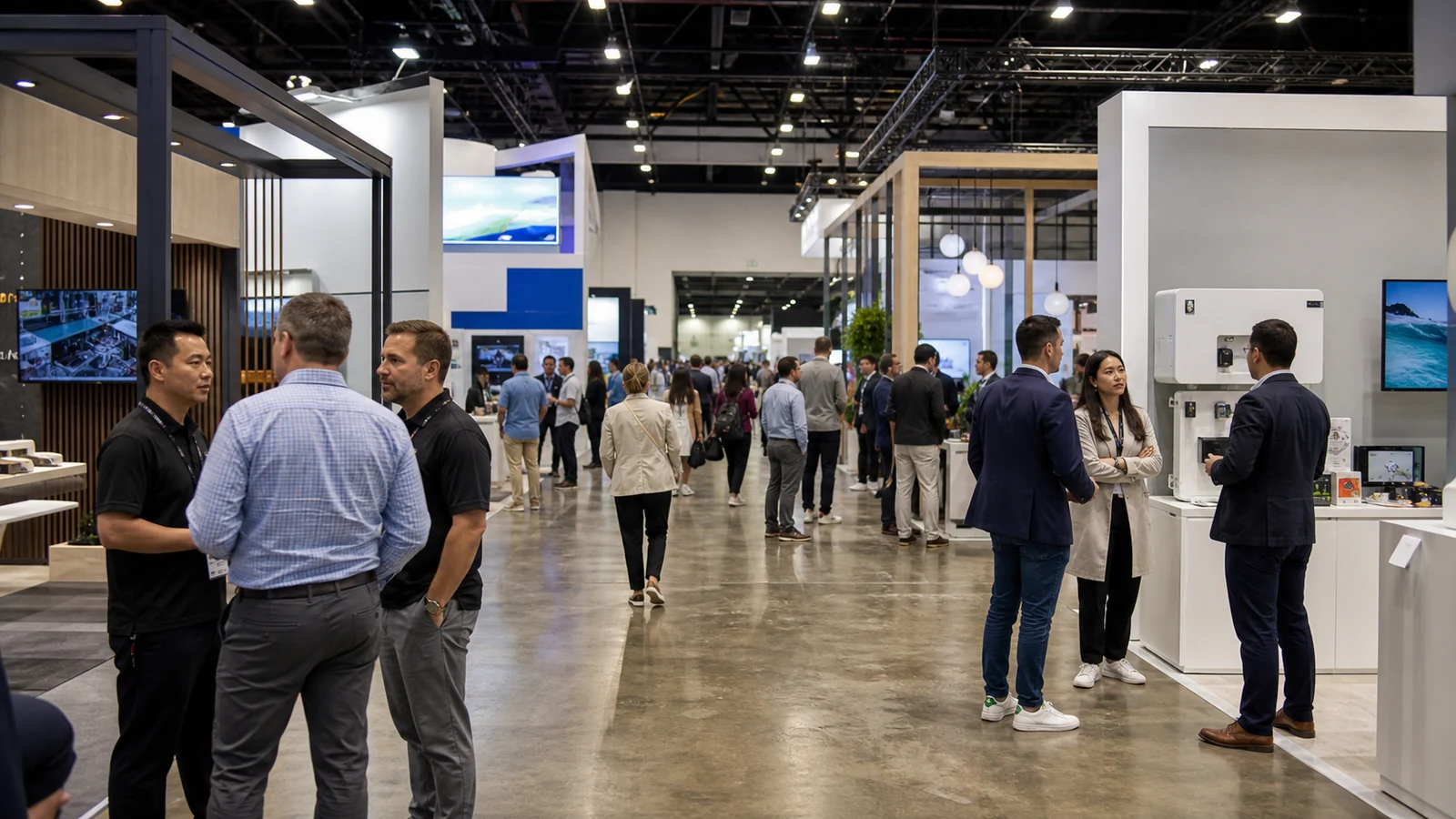
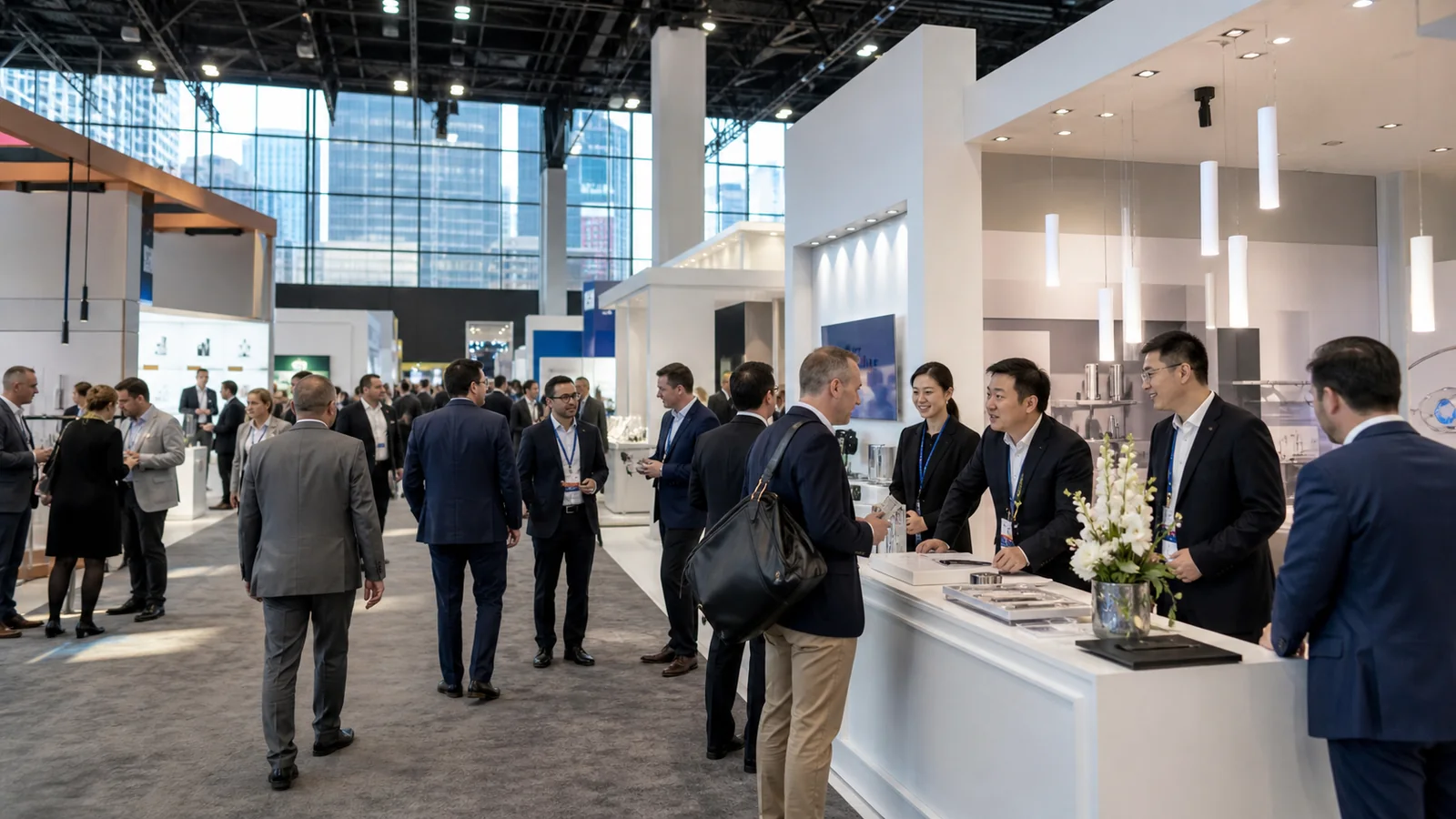
A seafood sample can be commercially persuasive and operationally difficult at the same time. Before your team promises tastings, running machinery, ice, refrigeration, or water at the booth, it needs the current show rules and the right service owners. This guide turns the confirmed 2027 event facts into an exhibitor plan without treating last year's instructions as current.
Read the Event as Two Connected Marketplaces
Seafood Expo North America and Seafood Processing North America take place together, but they serve different parts of the buying conversation.
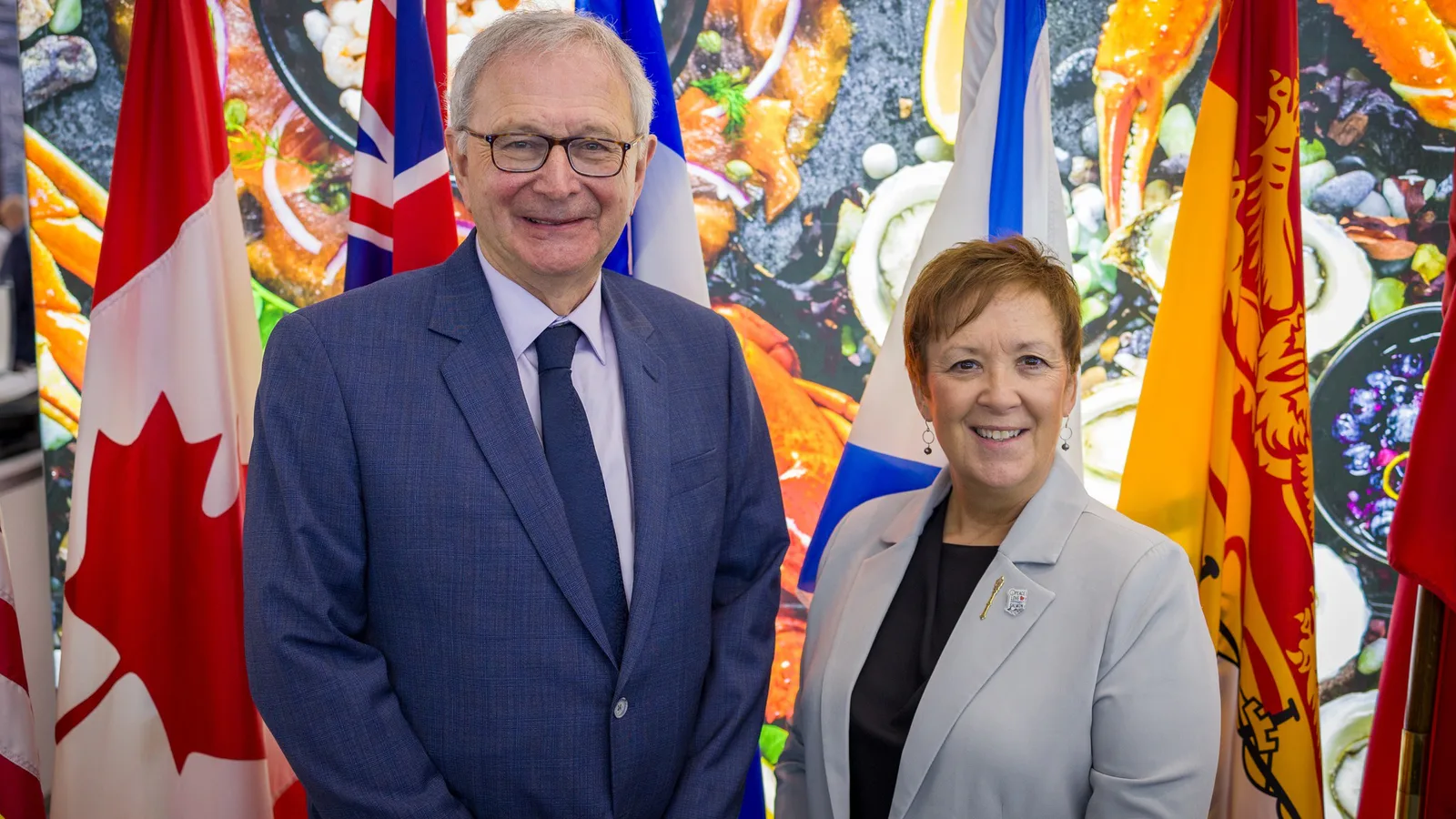
Seafood Expo North America is the product marketplace. The organizer describes fresh, frozen, value-added, processed, and packaged seafood, along with seafood-related services. A supplier here is usually helping a buyer judge the product itself: species, format, quality, supply, packaging, private-label fit, or another commercial requirement.
Seafood Processing North America is the equipment-and-services side. Its official profile covers primary and secondary processing equipment, packaging machinery and materials, refrigeration and freezing, logistics and cold storage, quality assurance, sanitation, software, labeling, containers, and related solutions. A visitor here is more likely to ask how a process changes, what connects to an existing line, or what the installation requires.
That distinction should control your application, listing, booth message, demonstration, and staff. A value-added seafood producer should not sound like a machinery vendor. An equipment company should not present a running line as a general attraction without explaining the production problem it solves.
Put the Confirmed 2027 Facts on the Project Calendar
The organizer currently lists the 2027 exposition for March 7-9, 2027, at the Thomas M. Menino Convention & Exhibition Center, 415 Summer Street, Boston, Massachusetts 02210. The venue was formerly known as the Boston Convention & Exhibition Center.
| Day | Current official exhibit hours | Planning consequence |
|---|---|---|
| Sunday, March 7 | 10:00 a.m.-5:00 p.m. | The booth, samples, cold storage transfers, and running demonstrations must be ready before the first public opening. |
| Monday, March 8 | 10:00 a.m.-5:00 p.m. | Plan the longest full day for priority meetings and repeat demonstrations. |
| Tuesday, March 9 | 10:00 a.m.-3:00 p.m. | Keep the booth operational through the listed close, then follow the current dismantling instructions before packing. |
Only qualified seafood-industry professionals may attend, and the exposition is not open to the general public. The organizer identifies owners, purchasing executives, category managers, private-label buyers, and equipment or packaging buyers across retail, foodservice, distribution, import/export, processing, hospitality, and other commercial channels.
For scale, the organizer's current buyer page reports more than 19,000 seafood professionals and 107 represented countries for the 2026 edition. These are prior-edition figures, not a forecast or attendance guarantee for 2027. Their practical value is simply to show that a generic message such as “high-quality seafood solutions” will be too broad for a visitor making a specific sourcing or operating decision.
Choose the Right Exhibiting Path Before Designing the Booth
The official route begins with the Exhibitor Inquiry form. The organizer then assigns a sales representative to discuss the company and its goals. Once space is contracted, the lead exhibitor should control the official account, the company listing, co-exhibitor information, badges, manuals, forms, and service orders.

Prepare a short internal classification before that sales conversation:
| What you are exhibiting | Likely primary path | What the buyer must be able to evaluate |
|---|---|---|
| Fresh, frozen, value-added, processed, or packaged seafood | Seafood Expo North America | Product form, quality, intended channel, packaging, supply fit, and next commercial step |
| Processing, cutting, weighing, sanitation, freezing, or refrigeration equipment | Seafood Processing North America | Process change, operating envelope, footprint, utilities, safety boundary, and integration questions |
| Packaging machinery, labels, containers, logistics, cold storage, software, or quality services | Usually Seafood Processing North America | Where the solution enters the workflow and what information is needed to qualify it |
| A company with both food products and processing technology | Confirm placement with show sales | Which offer is primary and whether one space can explain both without confusing visitors |
Do not decide the last row by assumption. Ask the sales representative which show section and product categories match the offer, and get the answer reflected in the contract and directory listing.
Make One Buyer Decision Easy to Complete
The floor brings together many commercial roles, but your booth cannot serve all of them equally. Choose one priority decision.
A frozen seafood supplier might help a retail category manager decide whether the product format and pack architecture fit a private-label range. A foodservice product company might help a distributor or chef compare portion consistency, preparation, and menu use. A processing-equipment supplier might help an operations team determine whether a machine can handle a defined product at the required throughput and sanitation routine.
The display should then make the proof easy to find. Put the relevant product, process, or result where a visitor can see it before entering. Keep supporting details close to the demonstration rather than on a distant graphic wall. If a technical or compliance claim needs a qualification, train staff to state the boundary and show the correct supporting document.
This is more useful than trying to summarize the whole company. The buyer should leave knowing whether a second conversation is justified and what information both sides need for it.
Build the Sample Plan Before Ordering Booth Features
The current 2027 exhibitor FAQ says product sampling must take place on the exhibit floor and that attendees may not remove samples from the hall. That affects the portion, container, handoff, waste, and staffing plan.

Before committing to a tasting, write down:
- the exact product and whether it arrives fresh, frozen, chilled, shelf-stable, or cooked;
- how it will be stored before and during each service period;
- whether preparation uses heat, water, drainage, ice, utensils, or food-contact surfaces;
- the sample size, serving method, allergen information, and waste route;
- who monitors holding conditions, replenishment, cleaning, and end-of-day product;
- what happens to unused product after the event.
The organizer's 2026 logistics bulletin required a Boston temporary food permit workflow for exhibitors sampling food and asked for supporting health-license documentation. That bulletin is not the 2027 manual, so it cannot establish the 2027 form, documents, or deadline. Use it as an early warning: ask the 2027 Exhibitor Resource Center which permit and food-safety steps apply to your exact sample before shipping product or finalizing catering labor.
The current official vendor page lists Levy Restaurants for food and beverage/catering, Acme Ice for ice, Lowe Refrigeration for refrigeration/freezer equipment, and the Greater Boston Food Bank for food donations. Confirm the assigned contacts and order procedures in the 2027 resource center before making a purchase.
Turn a Processing Demonstration Into a Service Schedule
A machine demonstration should begin with the operating condition, not the booth rendering. Record the equipment's packed and operating dimensions, weight, power, water, drainage, compressed air or gas, network needs, heat output, noise, guarding, cleaning method, consumables, and waste. Add the product that will run through it and the number of cycles planned each day.
Then divide the demonstration into three states:
- Transport state: how the machine arrives, where lifting points are, and what must be removed or secured.
- Installation state: the clearances, connections, assembly sequence, inspection, and test material needed before opening.
- Visitor state: the guarded footprint, operator position, viewing line, sample or output handoff, cleaning pauses, and safe shutdown.
This sequence exposes conflicts early. A machine may fit inside the booth outline yet leave no service access. A drain may exist on the drawing but sit on the wrong side of the equipment. A demonstration may be technically possible but too noisy or slow to support a clear buyer conversation.
Do not release a final freight plan until the current floor plan, booth rules, utility locations, service orders, and move-in target have been checked together.
Use the Official Service Channels, Not an Unverified Seller
The organizer warns that unauthorized companies offer hotel, advertising, and attendee-data services. It also states that the event and its official vendors do not sell attendee or customer lists. Treat any list offer as unaffiliated, not as a shortcut to buyer outreach.

The current official vendor page assigns several operational categories:
| Need | Current official channel | What to confirm for 2027 |
|---|---|---|
| Booth furnishings and decorator labor | Freeman | Scope, rates, order deadline, onsite rate, and cancellation terms |
| Material/freight handling and show shipping | Freeman / Freeman Transportation | Advance warehouse, direct-to-show route, labels, target date, handling boundaries, and outbound paperwork |
| Electrical, internet/telephone, security, water/drain/gas | MCCA / Thomas M. Menino Convention & Exhibition Center | Connection location, capacity, labor, inspection, deadline, and after-hours conditions |
| Hanging signs and trusses | J. Calpro | Approval route, stamped drawings if required, installation schedule, and permitted equipment |
| Refrigeration/freezer equipment | Lowe Refrigeration | Temperature range, capacity, delivery, power, monitoring, and removal |
| Food and beverage/catering | Levy Restaurants | Sampling scope, preparation, service labor, permit coordination, and approved equipment |
| Ice | Acme Ice | Quantity, delivery windows, storage, drainage, and replenishment |
| Lead retrieval | CDS | Device/app choice, user setup, data fields, privacy process, and current price deadline |
Vendor names and assignments can change. Reopen the official vendor page and your 2027 resource-center instructions before ordering. A familiar vendor from another show does not automatically have authority at this one.
Keep Confirmed Facts and Pending Instructions in Separate Columns
As of September 7, 2026, the public site confirms the 2027 event dates, exhibit hours, venue, general audience, exhibiting route, and current official-vendor categories. It does not yet provide a complete public 2027 exhibitor manual, 2027 floor plan, service rate book, detailed move-in and move-out schedule, freight target dates, or a full set of show-service deadlines.
The public logistics bulletin still identifies itself as the 2026 edition and even contains some older deadline text. The floor-plan page also still points to 2026 plans. Those pages are useful for discovering likely workstreams, but their dates, booth package, drape colors, forms, and access hours are not 2027 instructions.
Maintain a live control sheet with four fields: item, source document, edition/date, and owner. Put every unresolved rule in a pending column. Replace it only when the lead exhibitor receives the 2027 document or an authorized show contact confirms the answer in writing.
At minimum, keep these items pending until current instructions arrive:
- booth-space price, inclusions, payment terms, and cancellation conditions;
- booth configuration, display-height rules, approvals, and drawing deadline;
- sampling permit form, required supporting documents, and submission date;
- service discount dates and final order dates;
- advance-warehouse and direct-to-show shipping windows;
- assigned move-in and move-out dates and times;
- exhibitor access hours during installation, show days, and dismantling;
- empty-container storage, outbound carrier, and forced-freight procedures;
- 2027 floor plan, booth number, utility locations, and neighboring exhibits.
Plan Move-In and Move-Out Without Guessing the Schedule
The venue's current general exhibitor guidance gives companies some self-help options. Employees of an exhibiting company may load or unload a personal, company-owned, or rented vehicle no longer than 24 feet, use company-owned non-mechanized hand trucks or flat trucks, pack and unpack company-owned displays, use hand power tools, and connect their devices after MCCA personnel have delivered the electrical or internet connection. Exhibitors may not operate forklifts, pallet jacks, or other mechanized equipment themselves.

These are venue-wide guidelines, not the 2027 event move-in schedule. The show manual and assigned target will determine when freight can arrive, where it goes, which contractor handles it, and when dismantling may begin.
Build the outbound plan at the same time as the inbound plan. Assign an owner for remaining seafood, donated product, refrigerated inventory, waste, equipment disconnection, empty containers, carrier check-in, bills of lading, and handover to the material-handling desk. The current organizer information identifies the Greater Boston Food Bank as the official product-donation organization and says third-party pickup requires outbound paperwork with Freeman. Reconfirm the 2027 onsite procedure before relying on it.
Treat the Conference as a Separate Program
The exposition is the marketplace on the show floor. The conference is a separate educational program held during the same dates. The organizer says 2027 conference planning is underway; the topic list currently shown on the conference page describes the 2026 program, not a finished 2027 agenda.
If your team wants to attend sessions, submit a speaker proposal, or arrange a sponsored presentation, assign that work separately from booth operations. Check the eventual 2027 agenda, access rules, pass requirements, and timing before scheduling booth staff away from the exhibit.
Run This Readiness Review Before the Plan Is Frozen
Bring the product, marketing, exhibit, logistics, food-safety, and equipment owners into one review. Use the current official documents, not screenshots without an edition date.

- The contracted show section and directory categories match the primary offer.
- One priority buyer decision controls the display and staff conversation.
- Every sample has an approved storage, preparation, service, allergen, cleaning, waste, and end-of-day route.
- Every running machine has confirmed dimensions, weight, utilities, guarding, service access, noise, cleaning, and shutdown conditions.
- The booth drawing reflects the assigned floor plan and actual utility entry points.
- Orders go through the current official vendors and account credentials.
- Each deadline has an owner, source, edition, and completion record.
- Inbound freight and outbound product/equipment are planned together.
- Conference participation does not leave the booth without the people needed for demonstrations and decisions.
If any one of these rows still depends on “what happened last year,” leave it open. An unresolved condition on the plan is safer than a false confirmation that reaches production or freight.
Frequently Asked Questions
Is Seafood Expo North America the same as Seafood Processing North America?
They are co-located and promoted together, but they have different exhibit emphasis. Seafood Expo North America centers on seafood products and the commercial seafood supply chain. Seafood Processing North America centers on processing equipment, packaging, refrigeration, logistics, sanitation, software, quality, and related services. Confirm your placement and categories with the organizer before contracting or designing the exhibit.
Are the 2027 exhibitor manual and move-in schedule available?
The public website reviewed on September 7, 2026, does not provide a complete 2027 manual or detailed 2027 move-in and move-out schedule. The public logistics bulletin and floor-plan links still refer to 2026. Use the 2027 Exhibitor Resource Center and the documents issued to the lead exhibitor before booking freight, labor, utilities, or installation travel.
Can attendees take seafood samples out of the exhibit hall?
The current 2027 exhibitor FAQ says sampling must occur on the exhibit floor and attendees may not remove product samples from the hall. Build portions and packaging around onsite consumption, then confirm the 2027 permit, food-safety, catering, storage, and waste requirements for your exact product.
Who orders electrical power, water, drainage, and internet?
The current official-vendor page assigns electrical, internet/telephone, water, drainage, and gas to the MCCA and the Thomas M. Menino Convention & Exhibition Center. The person managing the booth should coordinate those orders with the machine or sample owner so the location and capacity match the final plan. Use the 2027 order forms and deadlines.
Can our staff unload and install the booth themselves?
The venue's general rules allow limited self-handling by employees of the exhibiting company, including certain vehicles, company-owned non-mechanized carts, company-owned displays, and hand power tools. Exhibitors may not operate forklifts, pallet jacks, or other mechanized equipment. The event's current manual, target schedule, dock instructions, and contractor rules still control the actual move-in.
Before You Lock the Plan
The strongest plan for this show begins with the thing your visitor must evaluate: a seafood product, a processing change, or a service decision. Once that is specific, the sample, machine, utility, freight, staffing, and follow-up requirements become visible. Keep confirmed 2027 facts separate from pending instructions, and reopen the official resource center before each commitment that depends on a date, rate, rule, or assigned service provider.