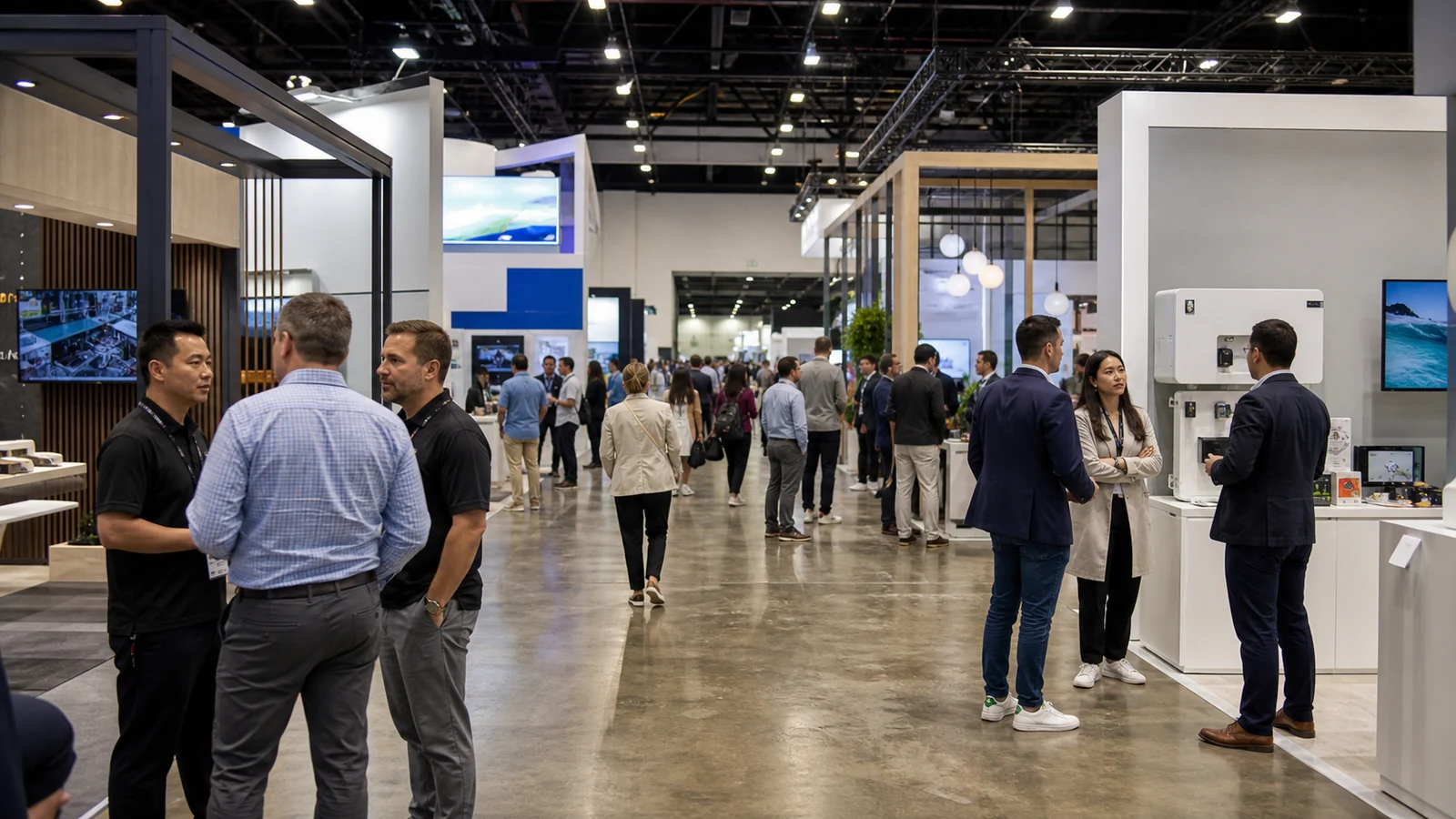
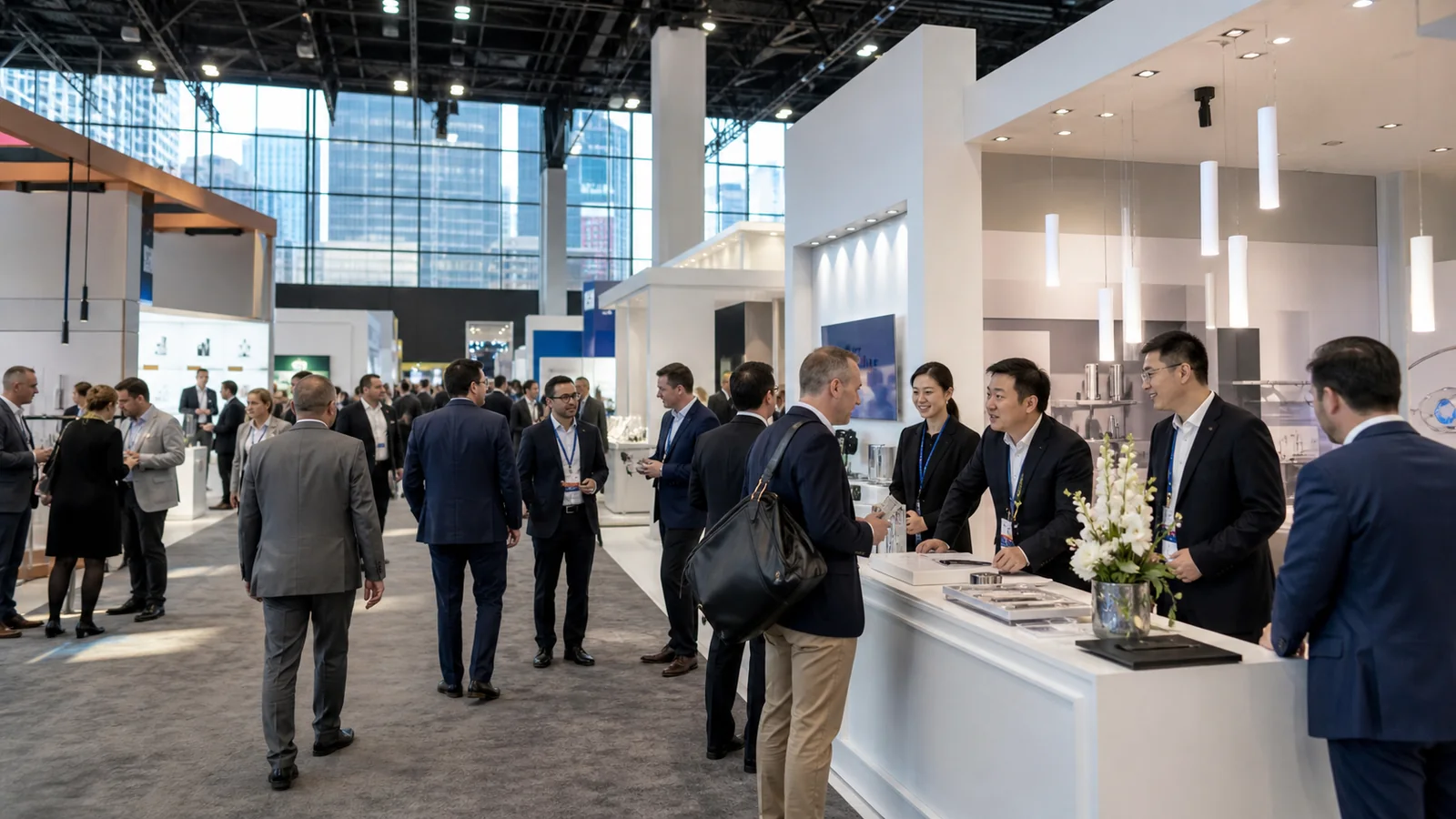
Pittcon is useful when your product needs to be evaluated by people who understand laboratory work, not just noticed by a large crowd. For an analytical instrument manufacturer, the real question is whether you can put the right application, data, and technical staff in front of scientists who have the same problem. This guide explains Pittcon 2027 and how to decide whether your company is ready to exhibit.
Pittcon 2027 at a glance
| Item | 2027 information |
|---|---|
| Official event | Pittcon 2027 Conference + Expo |
| Full event dates | April 24–28, 2027 |
| Exposition dates | April 26–28, 2027 |
| Venue | David L. Lawrence Convention Center |
| City | Pittsburgh, Pennsylvania |
| Main field | Analytical chemistry, spectroscopy, laboratory science, instruments, methods, and applications |
The official site currently promotes more than 350 exhibitors, 6,000 attendees, 1,500 presentations, and 40 short courses. Treat these as organizer figures for planning context, not as a guarantee of booth traffic or sales.

What Pittcon is and who attends
Pittcon combines a technical conference, short courses, networking, and a laboratory science exposition. The organizer says it is for people who develop, buy, or sell laboratory equipment, perform physical or chemical analyses, develop analytical methods, or manage those scientists. Attendees come from industry, government, and academia.
That broad scientific audience is valuable only if your application matches a real group inside it. A chromatography accessory company, a portable environmental analyzer, a sample-preparation system, and laboratory software may all belong at Pittcon, but they should not target the same visitor or use the same proof.
The 2027 conference tracks include AI and data analytics, bioanalytical and life sciences, environmental and energy work, forensic science and toxicology, instrumentation, and materials and nanoscience. Use those tracks as a map of technical interests, then compare them with your actual customer applications.
Which suppliers should consider exhibiting
Pittcon is a strong candidate when your product is used to perform, improve, automate, document, or support physical or chemical analysis. That can include complete instruments, detectors, sensors, sample preparation, chromatography and spectroscopy products, consumables, software, laboratory automation, safety products, and supporting services.

You are more likely to benefit when you can answer four questions clearly:
- Which analytical problem does the product solve?
- Which sample, method, or workflow does it fit?
- What measurable result improves—accuracy, sensitivity, throughput, repeatability, labor, safety, or cost per test?
- What must happen after the show for a U.S. laboratory to evaluate, buy, install, and support it?
Pittcon is harder to justify when the booth can only display a machine and list specifications. Scientists can read a data sheet without traveling. The exhibit needs to help them compare a workflow, challenge an assumption, examine data, or speak with someone who can answer a technical question.
Conference dates and exposition dates are not the same
The full Pittcon program runs April 24–28, 2027. Short courses are scheduled from April 24 through 28, the technical program from April 25 through 28, and the exposition from April 26 through 28.
The official expo hours are 10:00 a.m.–5:00 p.m. on Monday and Tuesday and 10:00 a.m.–3:00 p.m. on Wednesday. Exhibitors should not build travel and staffing plans around only the three expo days if technical staff need to attend courses, presentations, or meetings earlier in the week.
This schedule also affects demonstrations. The first two expo days allow longer conversations; the last day is shorter. Put high-priority appointments and any demonstration that needs more time on the calendar rather than hoping the right scientist arrives during a quiet period.
How to judge audience fit before booking
Start with application, not industry label. “Pharmaceutical,” “environmental,” or “materials” may still be too broad. A method-development scientist, a lab manager replacing an aging instrument, a university principal investigator, and a distributor evaluating a product line have different questions and authority.

Create a one-page audience map with the job role, application, current method, limitation, and next action you need. Then ask the organizer for the latest available demographics and exhibitor information. Compare the official technical program with your use cases. If very few sessions, exhibitors, or communities touch your problem, total attendance will not fix the mismatch.
Also decide whether the show is for end users, channel partners, existing customers, or a product launch. One stand can support more than one audience, but it still needs a priority. Otherwise, technical specialists spend the day answering basic distributor questions while qualified users wait, or sales staff collect leads they cannot evaluate.
What to demonstrate at a laboratory science expo
A credible demo starts with a sample or workflow the visitor recognizes. Show what enters the process, what the instrument or software does, what result comes out, and which limit or tradeoff remains. If a live method is impractical, use recorded runs, real data, hardware cutaways, consumable handling, or a guided software workflow instead of pretending a static instrument is operating.
Choose evidence that fits the claim. If you promise higher throughput, show cycle time and conditions. If you claim sensitivity, show the method and detection context. If you reduce operator steps, let the visitor count the steps. Do not use a dramatic chart without enough information for a scientist to judge it.
Plan for three levels of conversation:
- a short explanation for a passerby who only needs to understand the application;
- a five- to ten-minute comparison for a qualified user;
- a scheduled technical discussion for method details, integration, validation, or commercial next steps.
The booth layout should support those levels without allowing a long technical meeting to block the instrument or aisle.
Staff the booth with both technical and commercial answers
Pittcon visitors may want to talk directly with technical experts and design engineers. Do not send a team that can describe the campaign but cannot discuss sample compatibility, performance conditions, service, integration, or limitations.

At the same time, a booth full of scientists may struggle to qualify a project or agree on follow-up. Assign responsibility for application questions, demonstrations, channel conversations, commercial qualification, and lead notes. Every important discussion should end with a specific next step: a sample test, method review, distributor meeting, quotation, remote demo, or technical call.
Write lead notes in the language your follow-up team can use. “Interested in analyzer” is nearly worthless. Record the sample, current method, problem, timeline, decision role, location, and promised action.
Preparation for international exhibitors
Confirm the U.S. route for equipment, demo samples, consumables, batteries, gases, chemicals, and return freight before the booth leaves your country. A demonstration plan may change when a material cannot ship normally or when a venue service is required.
The 2027 event returns Pittcon to Pittsburgh. Use the current David L. Lawrence Convention Center information and official exhibitor resources; do not rely on older Pittcon manuals from another city. Dates, contractors, freight routes, union or labor procedures, utilities, and venue rules can change with the location.
International teams should also plan how U.S. prospects will receive installation, calibration, training, warranty, consumables, and service after the show. A scientist may accept the performance data and still reject the operational risk if local support is unclear.
Should you exhibit or attend first
Exhibit when you have a defined application, defensible evidence, the right technical staff, and a practical U.S. follow-up path. Attend first when you are still deciding which applications matter, how competitors demonstrate them, or whether Pittcon attracts enough of your exact users.

An observation visit should have a research plan. List the sessions, product categories, competitor demonstrations, distributors, and customer roles you need to study. The goal is not to walk every aisle. It is to return with enough evidence to decide whether a future booth should exist and what job it should perform.
Frequently asked questions
Should you accept a visitor's sample for testing at the booth
Only when the sample, method, handling, disposal, confidentiality, and result boundaries have been approved in advance. Otherwise, record the sample type and analytical question, then arrange a controlled post-show test. An improvised booth test can create safety, contamination, data-quality, or confidentiality problems that neither side intended.
What should staff say when an application is outside the validated range
State what has actually been tested, identify the condition that falls outside that evidence, and avoid predicting a result. Capture the matrix, concentration or performance requirement and route it to the method or product specialist. The useful outcome is a scoped evaluation, not a confident answer without data.
What should you learn about a potential U.S. distributor
Ask which laboratory markets and regions the company actively covers, which technical staff it employs, what competing lines it carries, how demonstrations and installations are supported, which parts it stocks, and how opportunities are registered. A large customer list does not prove that the distributor can sell and support your instrument.
What should follow a serious technical demonstration
Send the exact method, configuration, test conditions, and document promised in the conversation. Restate the visitor's sample or workflow question, list what remains unproven, and propose one next test with an owner and date. Do not replace a technical follow-up with the full company catalog.
When is a smaller tabletop exhibit the better choice
Choose it when a compact component, data workflow, sample comparison, or scheduled technical meeting can prove the buyer's decision without shipping a full instrument. Use the saved budget for the right specialist, clearer evidence, and a post-show evaluation. A full system is worth the freight only when physical access or live operation materially changes the decision.
Final thoughts
Pittcon rewards exhibitors who can turn a laboratory claim into a technical conversation. It does not reward a complicated instrument simply for being on the floor. Before you book, decide which scientist you need, which workflow you will show, which evidence can withstand questions, and how a U.S. prospect will move from interest to evaluation. If those answers are still vague, use Pittcon first as a place to learn.