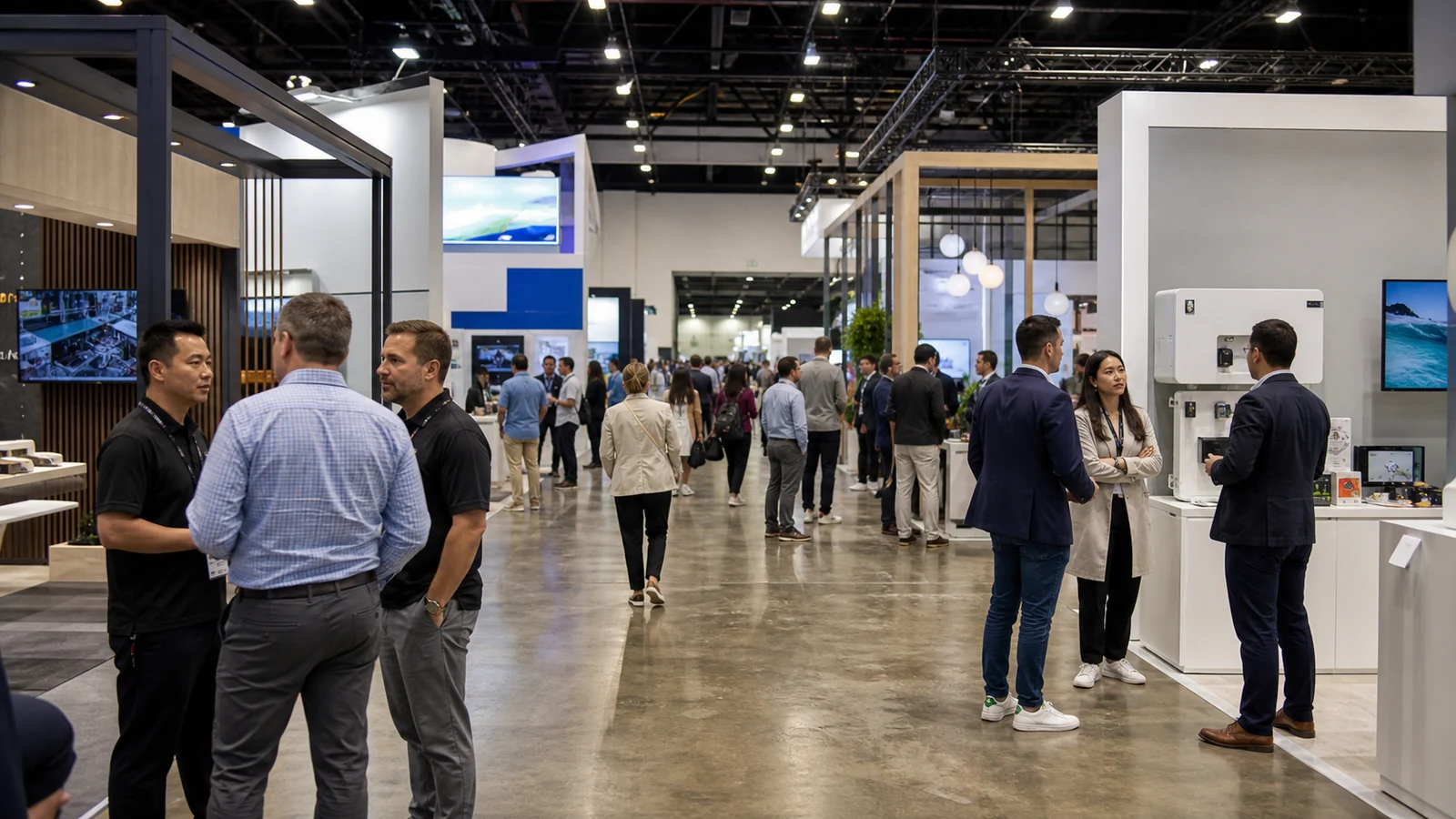
EXHIBITORLIVE is not a general business expo. It is built for people who plan, buy, manage, and measure trade show and corporate event programs. If you already run a U.S. show calendar, the useful question is which live problem you will bring to Denver—not how many sessions you can attend. This guide explains the 2027 event and how to use it well.
EXHIBITORLIVE 2027 at a glance
| Item | 2027 information |
|---|---|
| Official name | EXHIBITORLIVE |
| Conference dates | February 14–18, 2027 |
| Exhibition dates | February 15–17, 2027 |
| Venue | Colorado Convention Center |
| City | Denver, Colorado |
| Audience | Trade show and corporate event marketers |
The detailed 2027 exhibitor prospectus lists February 14–18 for the conference and February 15–17 for the exhibition. Some shorter promotional pages display a simplified February 15–18 date range. Use the detailed 2027 schedule and registration package when booking travel, because the conference and exhibit floor do not run on identical dates.

What EXHIBITORLIVE is
EXHIBITORLIVE combines professional education with an exhibition of products and services used in trade show and corporate event programs. The education program is designed around measurement and analytics, planning and execution, marketing and sales, management and leadership, global exhibit marketing, exhibits and experiences, and professional development.
The exhibit floor is relevant when you need to compare exhibit producers, design and fabrication partners, rental systems, technology, lead retrieval, data tools, logistics, audiovisual services, experiential agencies, graphics, or other program suppliers. The conference is relevant when you need a repeatable method, a peer's experience, or a better way to manage a decision.
Those are different jobs. A supplier walk without a current brief becomes a collection of ideas. A full course schedule without one implementation target becomes notes that nobody uses.
Who should consider attending
The event is most useful for an exhibit or event manager who owns real decisions: show selection, budgets, vendors, design, logistics, staffing, measurement, international programs, or internal reporting. It can also help a marketing leader taking over a program, a procurement partner evaluating suppliers, or a team member working toward deeper professional training.

Attend when you need to:
- rebuild an RFP or supplier evaluation process;
- improve budget control and explain cost changes internally;
- connect booth activity with lead handling and sales follow-up;
- create a clearer measurement plan;
- solve recurring logistics, staffing, or execution problems;
- compare suppliers for an upcoming redesign or multi-show program;
- develop a team member who is moving into an exhibit-management role.
It is less useful when nobody has defined the problem or has authority to change the process afterward. The event can provide methods and options, but it cannot create an internal owner for the work.
Start with one program problem
Before registration, write a short problem statement using your own program data. “We need better engagement” is too vague. “We scan 600 visitors but sales cannot identify which 50 need follow-up” gives you something to solve. “Freight and labor exceeded plan at four shows” is more useful than “our costs are high.”
Use the problem to choose sessions and suppliers. A lead-management problem may require education on qualification, data flow, staff behavior, measurement, and sales handoff—not a new interactive screen. A cost-control problem may require better scope, deadlines, freight choices, labor planning, and change approval—not simply a cheaper booth.
Bring the numbers and documents you are allowed to discuss: budget categories, show calendar, RFP outline, lead stages, service orders, staffing plan, measurement report, or floor plan. You do not need to share confidential details. You do need enough facts to recognize advice that fits your situation.
How to use the education program
Do not select classes only by titles that sound current. For every session, decide what question it should answer and what document or behavior may change afterward. If no one on your team will own that change, the session is professional interest rather than project work.

Build a balanced schedule. Use one or two sessions for the main problem, one for a related weakness, and one that challenges how you currently run the program. Leave time between sessions to write decisions, not just notes.
EXHIBITOR Group states that EXHIBITORLIVE sessions are eligible for credits toward its Certified Trade Show Marketer program. Eligibility for credit does not mean every attendee is automatically enrolled or certified. Confirm registration, course and CTSM requirements separately if certification matters to you.
How to use the exhibition
Turn the project problem into a short supplier brief before you walk the floor. Include the program type, show locations, approximate footprints, timing, required services, major constraints, decision process, and what you want to improve. A useful first conversation can then test fit rather than repeat your company introduction.
Compare suppliers using the same questions. Ask who owns design, estimating, production, on-site changes, storage, repairs, invoicing, and post-show reporting. Ask how they handle multi-city programs, late information, budget changes, and venue-specific rules. A polished display tells you how a supplier markets itself; its answers tell you how it may run your account.
Do not request a complete design from every company on the floor. First decide whether the operating model, communication, geography, and commercial approach fit. Detailed creative work belongs in a later, well-scoped process.
Who should go from your team
Send the person who owns the decision and the person who must implement it when those are different people. A program manager may understand the operational problem, while procurement controls the contract or marketing leadership approves the strategy. One attendee can collect information; two aligned attendees can often make a decision faster.

Avoid sending a large group without separate assignments. Divide responsibilities by education topic, supplier category, or program question, then schedule a short daily review. Otherwise, everyone attends similar sessions and visits the same impressive booths while important gaps remain uncovered.
For a new employee, the event can provide useful context, but give that person a task: map the program process, compare three approaches, or return with a draft checklist. “Learn as much as possible” is not an outcome.
A practical plan for Denver
Six to eight weeks before the event, define the problem, internal decision owner, and information you can share. Review the published education program and exhibitor list when the 2027 versions are available. Request meetings only from suppliers that appear to match the brief.
During the event, protect time for courses, exhibit-floor comparison, peer conversations, and daily synthesis. Record decisions in a simple format: what we learned, what applies, what does not, what evidence is still missing, who owns the next action, and by when.
Within one week after returning, convert the useful material into an updated RFP, budget rule, lead process, vendor shortlist, staff standard, or measurement plan. If the event produces only a presentation about trends, the company has not captured much value.
Should you attend the conference or only visit the exhibit floor
Choose the conference when the problem is about process, capability, leadership, measurement, or professional development. Prioritize the exhibit floor when you already have a defined project and need to compare suppliers or tools. Use both when education will change the brief you bring to suppliers, or supplier conversations will test what you learn in class.

If your team has no current project and no recurring program problem, a shorter observation visit may be enough. The event becomes more valuable when you arrive with a decision that must be made.
Frequently asked questions
What should you put in a supplier-meeting brief
Bring the show program, cities, typical booth sizes, service scope, internal decision process, known pain point, and the change you are considering. Add one recent example with its actual constraints. Remove confidential pricing or client data that the supplier does not need for the first conversation.
How many supplier appointments should you book
Book only the number your team can prepare for, attend without rushing, and document immediately afterward. Leave space between meetings to compare answers and inspect relevant exhibits. A full calendar is counterproductive when every supplier receives a different explanation of the same program.
What should you compare before inviting a supplier into an RFP
Confirm geographic coverage, ownership of design and files, estimating method, local execution model, project-management responsibility, change-order process, reporting, and references relevant to your program. Then decide whether the supplier belongs in the same comparison group as the others. Price comparisons are misleading when the operating models differ.
How should a team divide learning during the event
Give each attendee one program problem and one required output. One person might compare measurement methods while another tests logistics or exhibit-partner models. Meet at a fixed time each day, combine the evidence, and decide which idea is worth a controlled trial; do not divide sessions simply to cover more rooms.
What should be implemented first after returning from Denver
Choose one change that solves the problem you brought to the event and can be tested on a real upcoming show. Assign an owner, deadline, baseline, and success measure within the first week. Save other ideas in a later-review list so the team does not turn conference notes into several unfinished initiatives.
Final thoughts
EXHIBITORLIVE is most useful when it changes how you run a real exhibit program. Bring one specific problem, choose education that can change a process, compare suppliers against one brief, and assign the follow-up before you leave Denver. Without that discipline, even a strong conference can become a folder of notes and business cards.