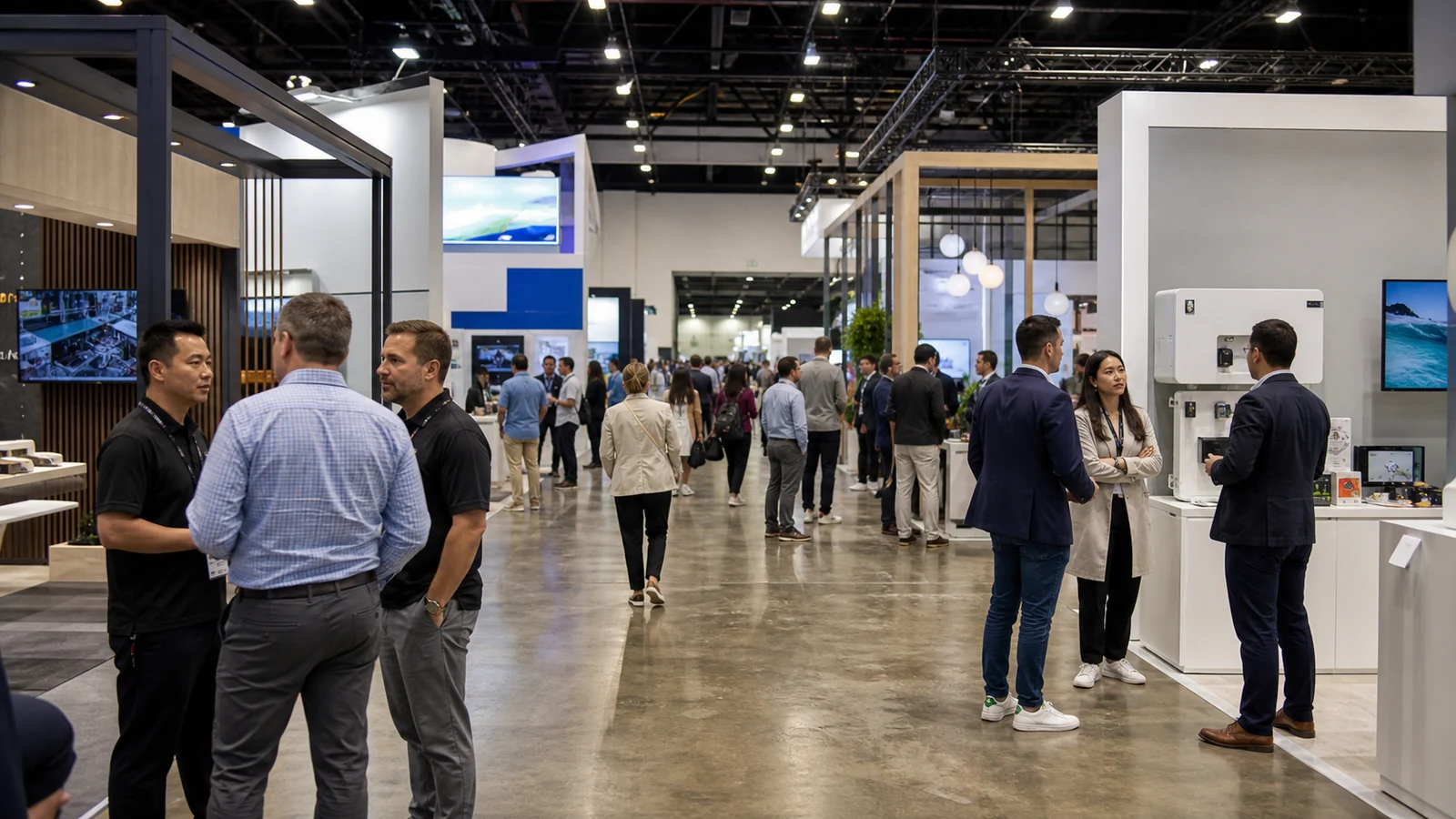
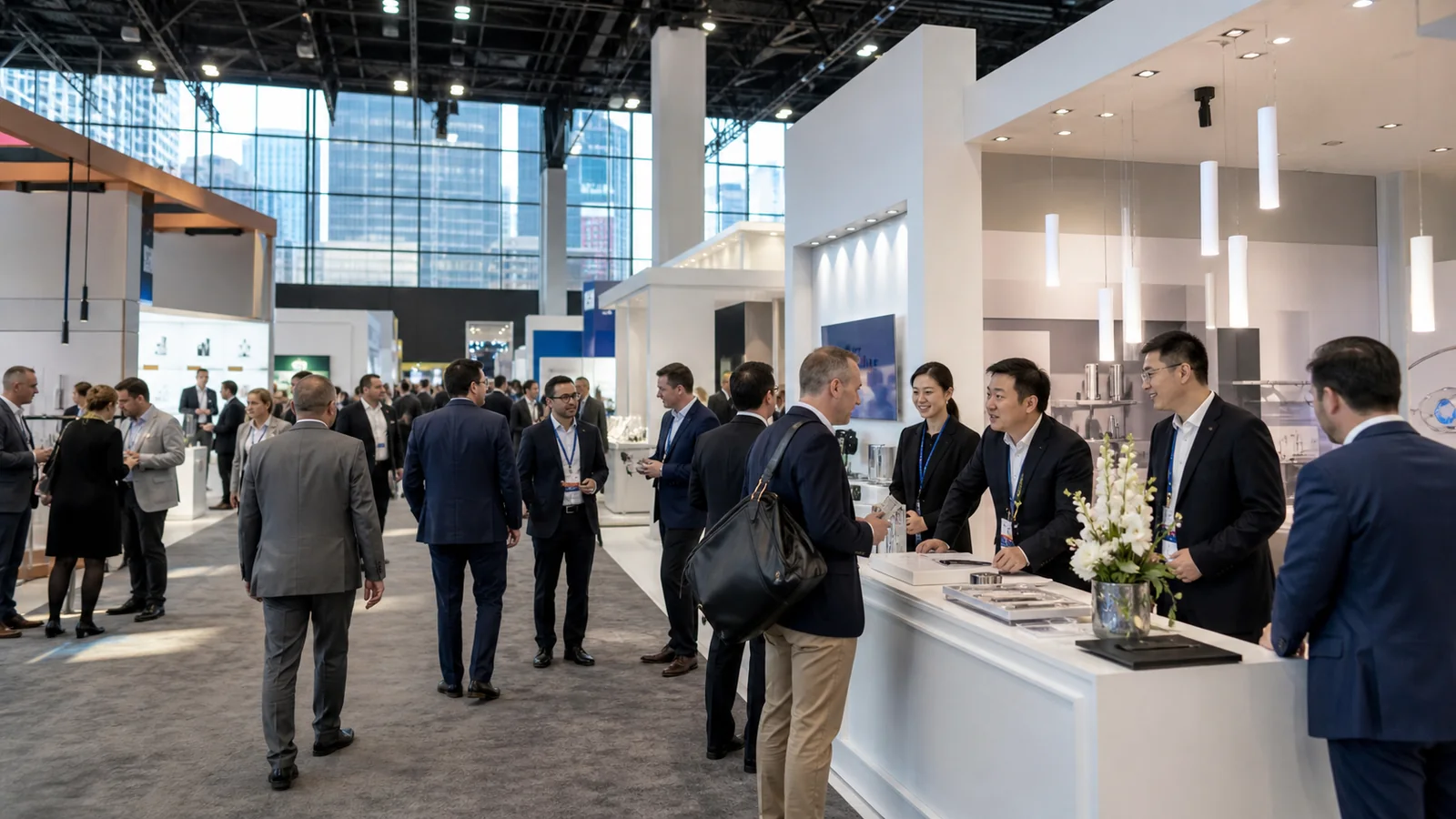
If your marine company is considering Newport for a 2026 product launch, dealer conversation, or live demonstration, the first risk is approving an exhibit concept before you know whether your offer belongs in the water, on land, or in a booth. The Newport International Boat Show runs September 17–20, 2026, across downtown Newport, Rhode Island's waterfront rather than inside one exhibition hall.
That setting can make a vessel or marine system easier to understand, but it also creates decisions that a standard hall-booth brief does not solve. Before you reserve space or approve a design, you need to know which part of the waterfront marketplace fits your offer, what the audience can see or do there, and which details only the organizer can confirm.
Article Contents
- Newport Boat Show 2026 at a glance
- This is a waterfront marketplace, not one exhibition hall
- Decide whether the audience fits your offer
- Use the live directory to test the competitive set
- Treat a U.S. product debut as a separate decision
- Your next move depends on your 2026 status
- Confirm these items before you commit to an exhibit
- Turn the organizer's answers into a waterfront exhibit brief
- Frequently asked questions
- Official sources to recheck
- Final thoughts
Newport Boat Show 2026 at a Glance
| Item | Current official information | Why it matters to an exhibitor |
|---|---|---|
| Dates | September 17–20, 2026 | Use the confirmed show dates for staffing and travel, but use your exhibitor materials for move-in and move-out dates. |
| Public hours | Thursday–Saturday, 10 a.m.–6 p.m.; Sunday, 10 a.m.–5 p.m. | Your staff plan must cover four public days without assuming every hour has the same visitor pattern. |
| Location | Downtown Newport, Rhode Island waterfront | Products, staff, and display materials may need to move through an outdoor, multi-site environment rather than one enclosed hall. |
| Format | More than 17 acres across interconnected waterfront sites, with displays on land and in the water | Your assigned display type determines the useful visitor experience and the information your exhibit partner needs. |
| Organizer | Owned and produced by Informa Markets, according to the 2026 exhibitor brochure | Space, sponsorship, deadlines, and exceptions must come from the organizer or its appointed providers. |
| Main content | New and brokerage boats, sailboats, powerboats, marine equipment, accessories, services, education, and on-water activities | Fit depends on the specific boating problem or purchase your offer supports, not the word "marine" alone. |
| Scale context | The organizer's 2025 recap reports more than 450 exhibitors; its 2026 exhibitor brochure markets the show to more than 30,000 visitors | These figures show a substantial marketplace, but neither number proves that your target buyer will visit your particular display. |
| Sales routes | Separate routes for in-water, land, booth, and sponsorship inquiries | An inquiry form is the beginning of a conversation, not evidence that the space you want is still available. |
The dates, public hours, location, and format above come from the official 2026 show overview. The ownership and visitor figure come from the organizer's 2026 exhibitor brochure. The exhibitor count is explicitly a 2025 recap figure on the official show homepage, not a final result for 2026.
This Is a Waterfront Marketplace, Not One Exhibition Hall
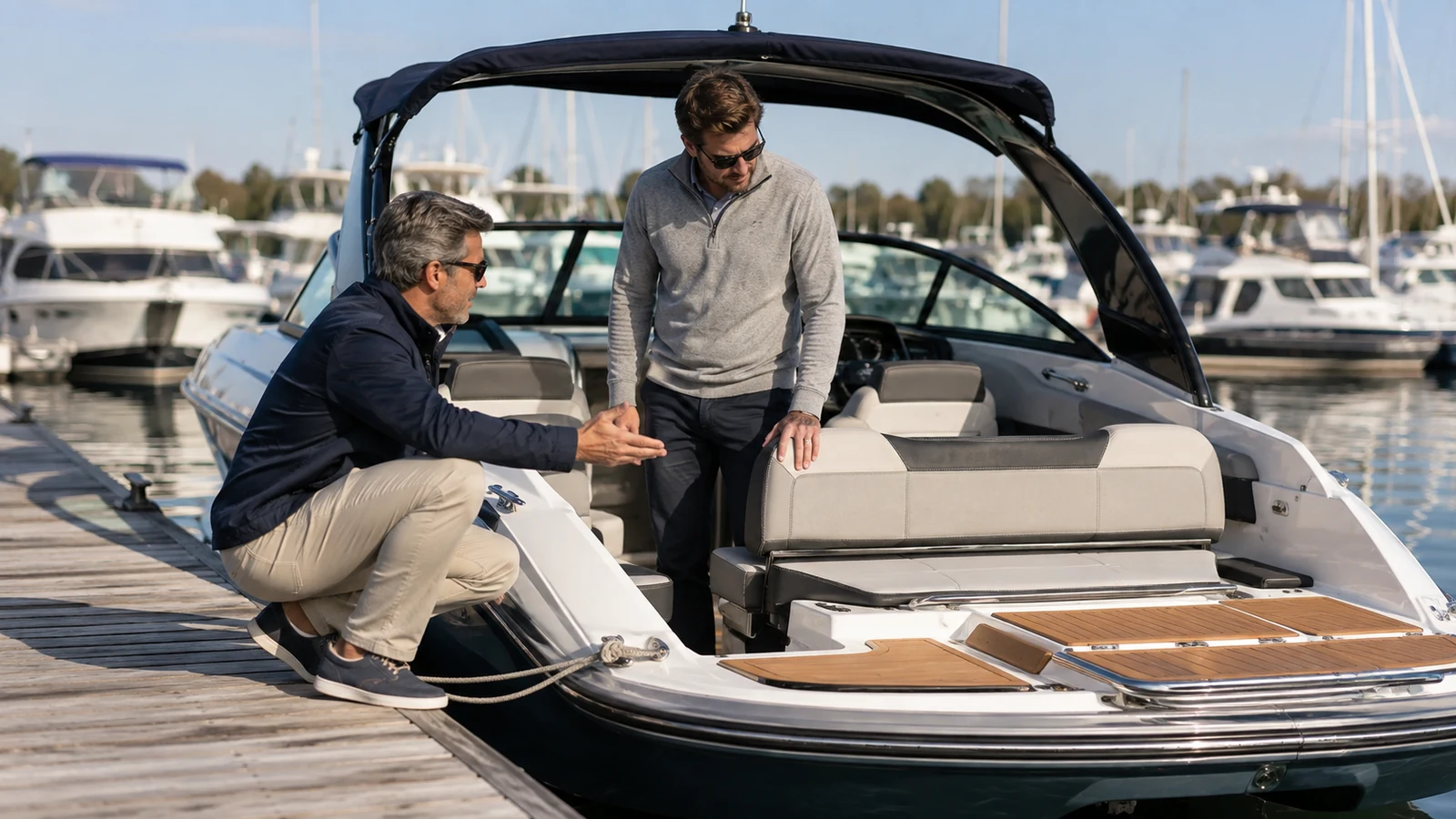
At a conventional venue, the booth number usually identifies one rectangular footprint inside a hall. Newport uses several display settings, and the difference is commercial as well as physical. A visitor who boards a yacht is having a different product experience from someone who compares an engine component, watches an electronics demonstration, or stops at a lifestyle sponsor activation.
In-water displays make the vessel the experience
For a boatbuilder, dealer, or broker, the vessel can carry most of the proof. Visitors may be able to see proportions, finish, storage, controls, and interior decisions in context. The surrounding dock still has work to do: it must identify the brand, manage waiting and boarding conversations, and give staff a place to qualify interest without obstructing movement.
Do not begin with a land-booth rendering and assume it can be transferred to a dock. Ask the show sales team to confirm the water-display type, vessel dimensions and orientation, permitted dock elements, branding locations, boarding control, utilities, staffing access, and any weather or safety instructions for the assigned area. A beautiful reception counter is irrelevant if it cannot be placed where you expect.
Land and booth space must create context that the boat would have provided
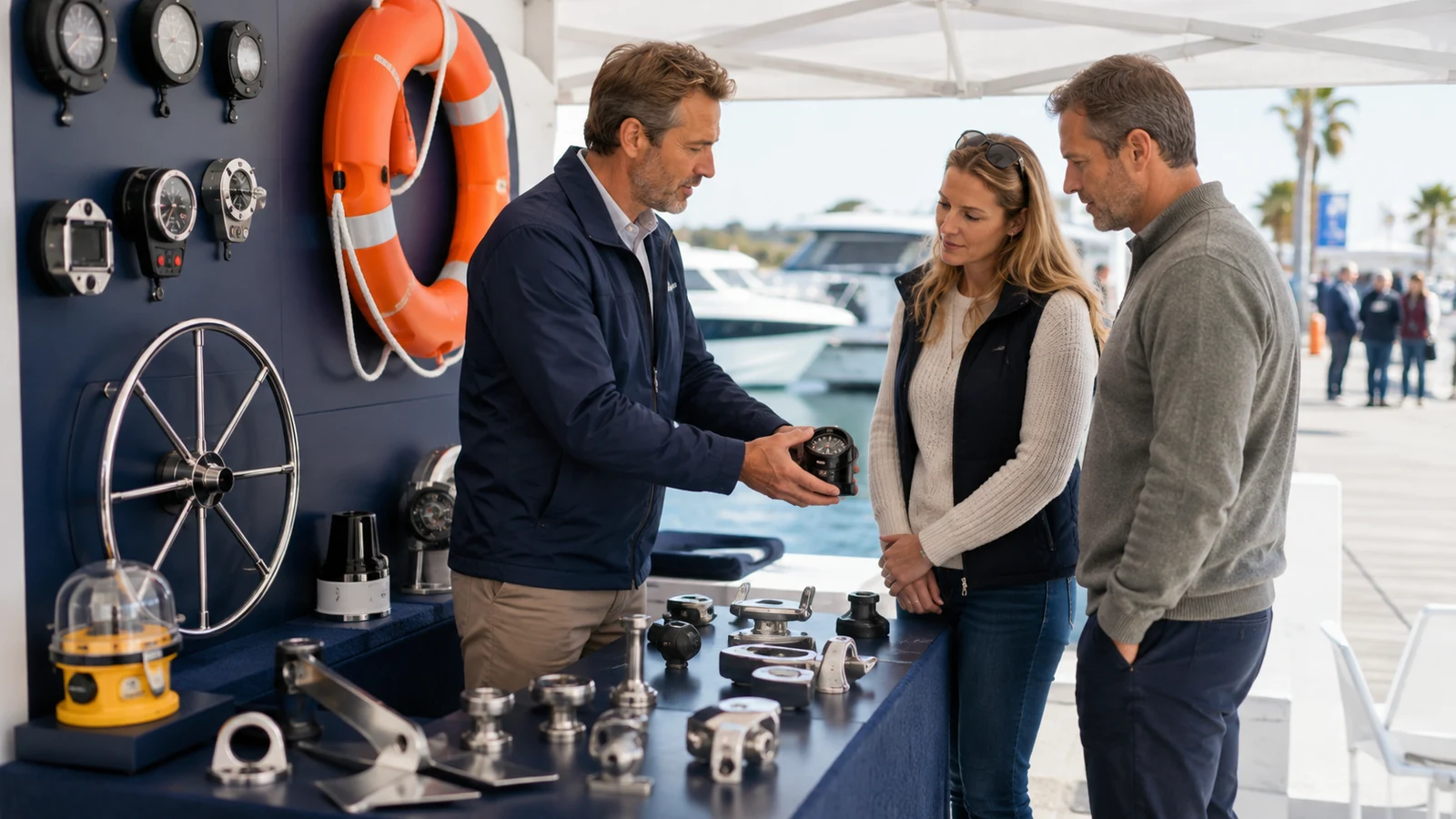
Marine electronics, propulsion, safety equipment, maintenance products, apparel, accessories, finance, insurance, services, and other boating offers may be better suited to a tent, land display, standard booth, or sponsorship placement. Here the exhibit has to make the application visible. A component on a table may be technically impressive yet difficult to understand until visitors see where it fits, what it changes, or how to compare it.
Build the display around one observable buyer task. Let a visitor compare two interfaces, trace an installation, handle a material, diagnose a maintenance problem, or see how a product behaves in a boating scenario. That gives your sales team a better opening than a wall of specifications and keeps the exhibit connected to the reason people came to Newport.
The organizer's exhibitor page separates in-water, land, booth, and sponsorship contacts. Use that distinction before you ask for a design or quote; the wrong space assumption can invalidate dimensions, weather protection, utilities, traffic flow, and staffing plans at once.
Decide Whether the Audience Fits Your Offer
The event is open to the public and also provides a marine-trade ticket route. That makes it a mixed marketplace rather than a closed dealer conference. The right question is not simply whether the show is "B2B" or "B2C." It is whether the people who can understand, influence, use, specify, sell, or buy your offer have a reason to stop.
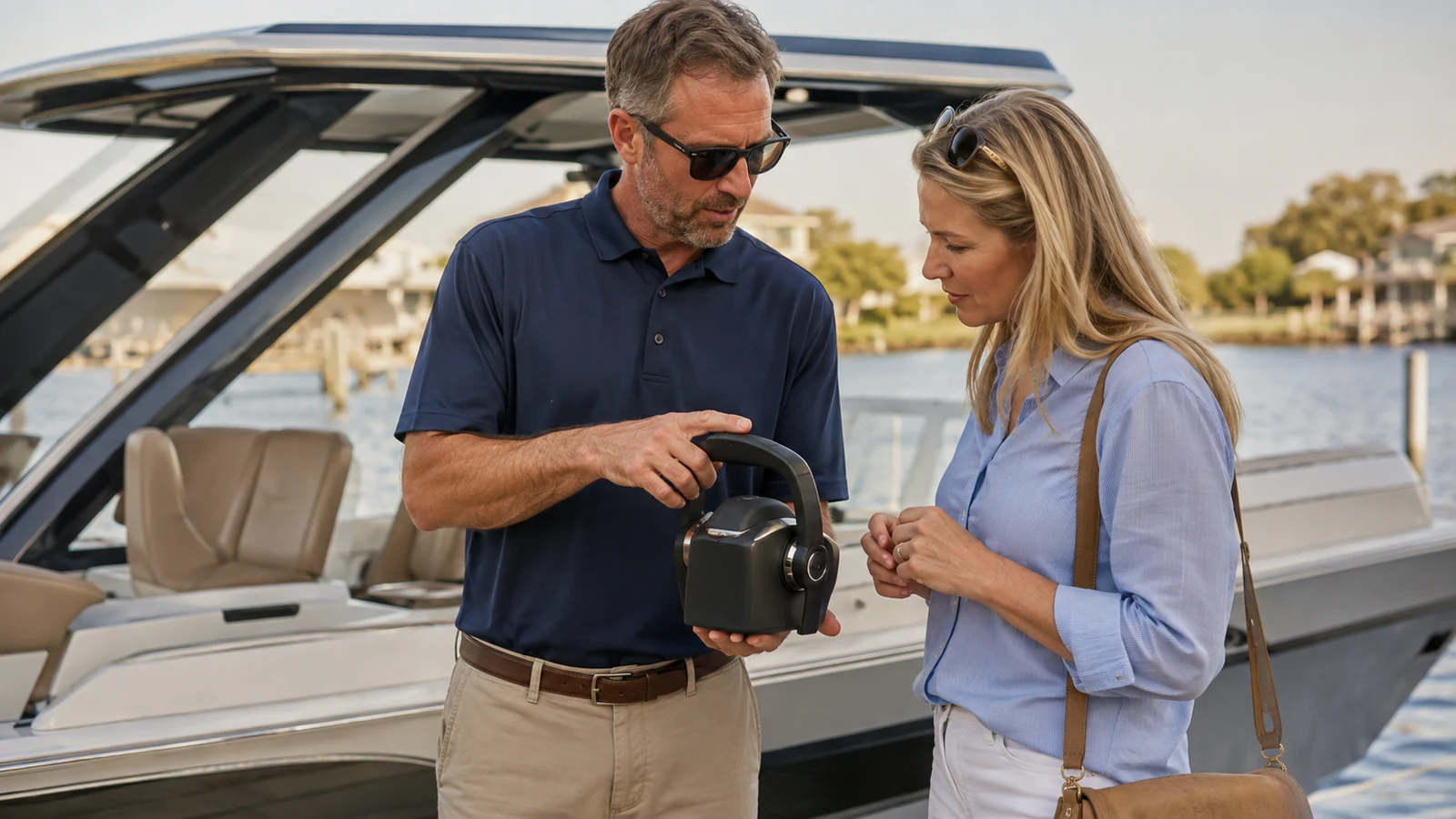
The organizer promotes an audience of more than 30,000 visitors in its 2026 exhibitor brochure. Treat that as the organizer's marketing figure, not a sales forecast. Total traffic cannot tell you how many visitors need your product, hold the right role, or are ready for the next commercial step.
Test fit through three concrete conversations:
- What can a visitor evaluate at the show? A boat can be boarded; an accessory can be handled; an electronic system can be demonstrated; a service can be explained through a real maintenance, ownership, or operating decision. If the only possible interaction is collecting a brochure, the show may expose the brand without proving the offer.
- Who must join the conversation? A consumer may purchase or request a dealer introduction. A dealer, broker, installer, yard, designer, or manufacturer may influence the route to market. Decide which one matters most before you write the headline or staff script.
- What outcome justifies the space? A qualified dealer conversation, a scheduled sea trial, a product demonstration, a distributor meeting, a launch introduction, and an immediate retail sale are not interchangeable. Choose one primary result and design the exhibit around the evidence and staff needed to reach it.
Newport is a strong candidate when your product becomes easier to understand in a real boating environment and your team can name the next step after the demonstration. It is a weak candidate when the target contact is absent from the public-facing market, the offer cannot be shown or explained without a separate technical setting, or success depends entirely on unplanned foot traffic.
Use the Live Directory to Test the Competitive Set
The 2026 boats-by-brand directory is useful before you contact sales because it shows how the marketplace is divided. The live page currently includes powerboats, sailboats, multihulls, inflatables, trawlers, brokerage boats, house boats, and zero-emission boats, with locations that range from docks to land displays and tents. It also says more boats and exhibits are still coming, so it is a current planning view, not a frozen final census.
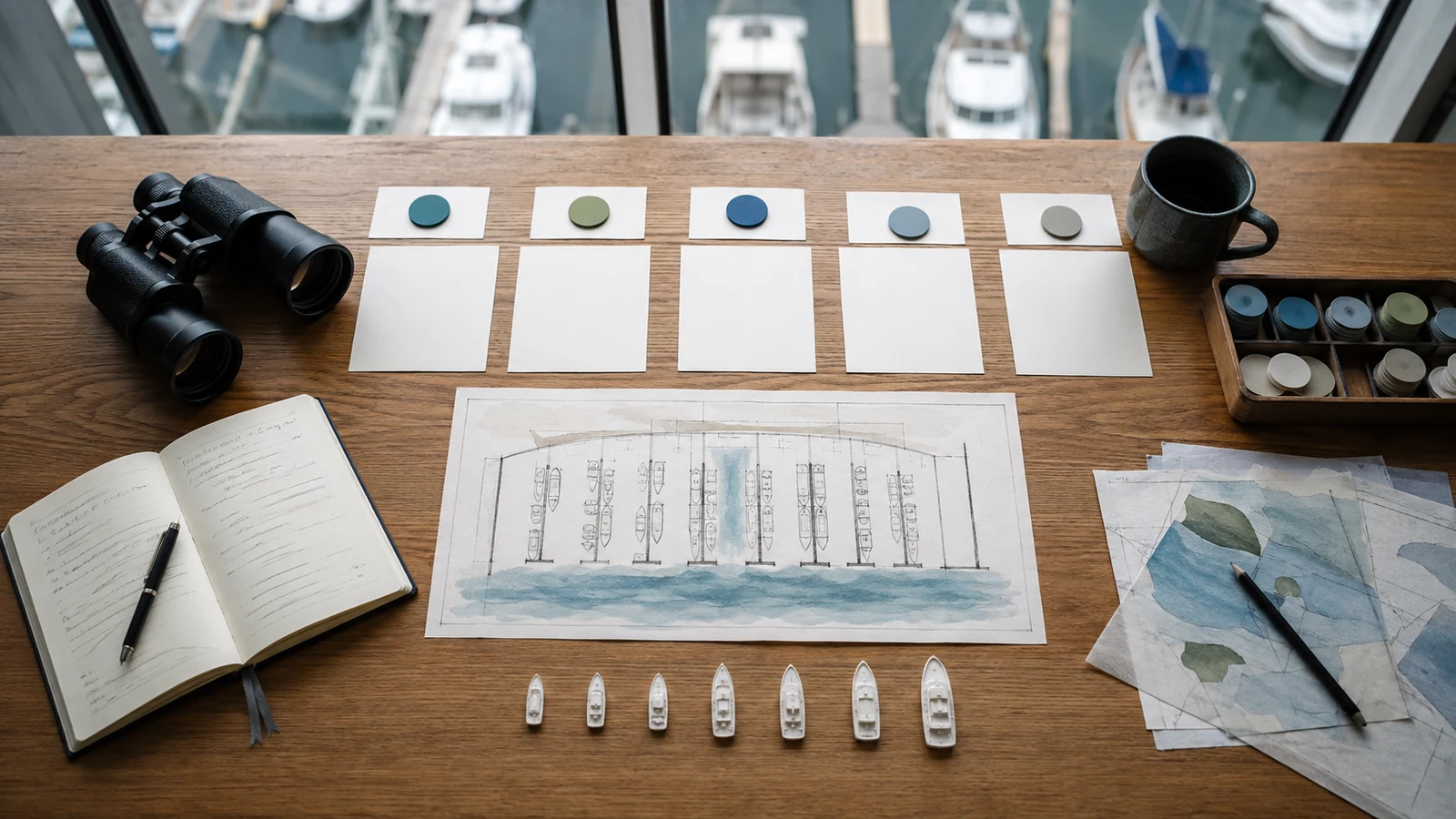
Read the directory for context rather than copying names into a competitor list. Start with the boat types and display zones closest to your customer. Then ask:
- Are complementary manufacturers or dealers already concentrated in one part of the show?
- Will your product make more sense near boats, in a product tent, in a demonstration area, or through a sponsorship placement?
- Does the directory show direct alternatives that visitors will compare within the same hour?
- What single demonstration or proof would make that comparison easier for the right person?
Competition is not automatically a reason to stay away. A dense category can concentrate serious interest. It does mean that a generic message such as "innovative marine solutions" will disappear. Your exhibit must name the application, the buyer problem, or the visible difference quickly enough to earn a closer look.
Treat a U.S. Product Debut as a Separate Decision
Newport for New Products is the organizer's program for qualifying U.S. debuts of boats and boating products. The 2026 categories cover powerboats, sailboats, technology such as navigation and electronics, boat operation/maintenance/safety, and weather gear, with additional green and accessibility recognition. Accepted entries receive program exposure beyond an ordinary directory listing.
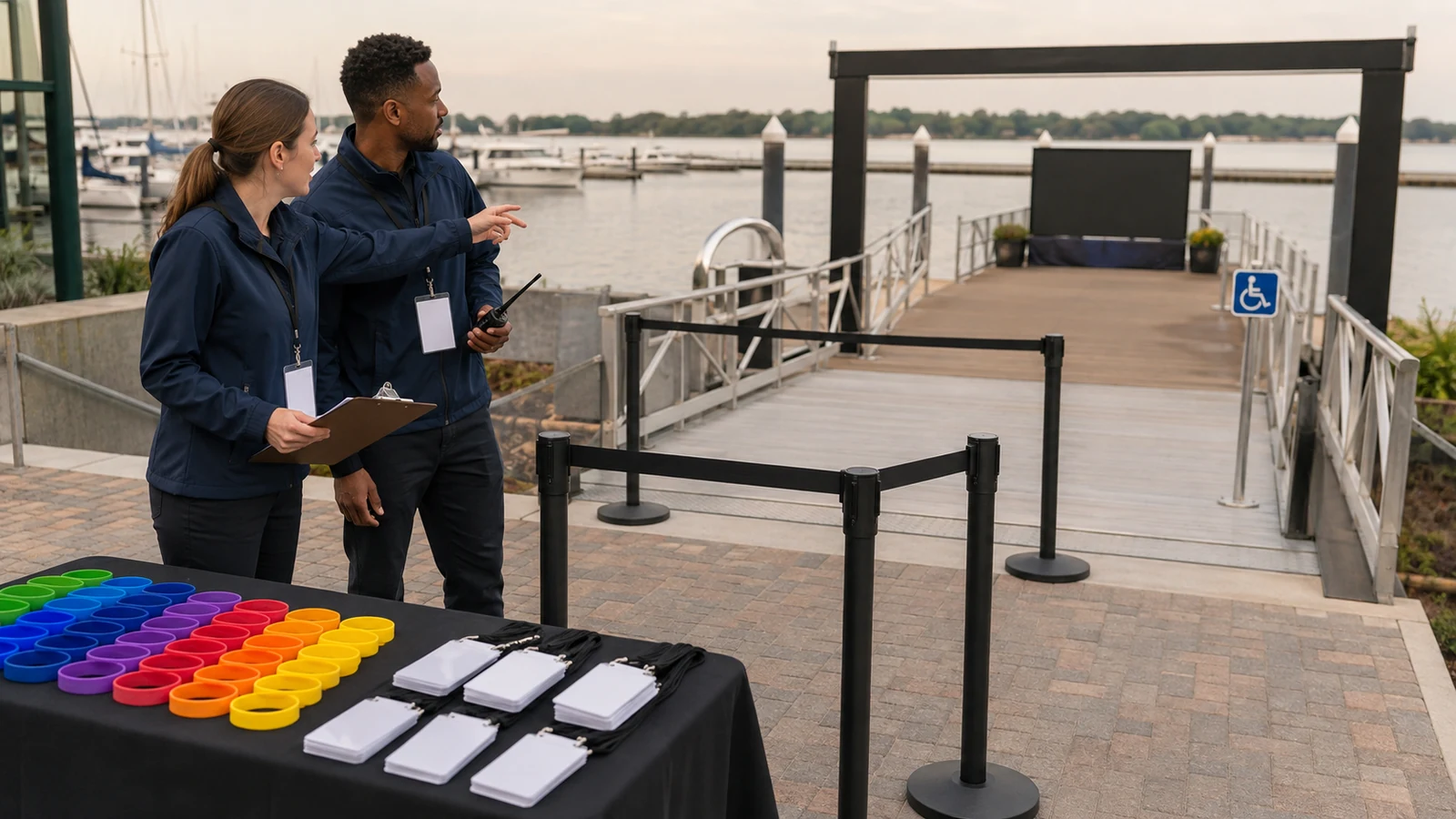
The official 2026 program page lists August 15, 2026 as the application deadline. That date had already passed when this article was researched on September 7, 2026. Do not build a late 2026 launch plan around an entry that has not been accepted. Ask the organizer what recognition or media options, if any, remain available for a contracted exhibitor; for a future edition, place the program deadline ahead of booth graphics, press materials, product photography, and launch approvals.
The program also changes what your exhibit must accomplish. A debut needs a clear explanation of what is new, who benefits, and what visitors can verify. The award label or press exposure may bring attention, but the display and staff still have to turn that attention into a useful product conversation.
Your Next Move Depends on Your 2026 Status
As of September 7, the show is close enough that three companies searching the same event name may need three different answers.
| Your current status | Useful next move | Do not assume |
|---|---|---|
| You already have a confirmed assignment | Reconcile the assignment, current exhibitor materials, product list, utilities, staffing, directory profile, and on-site contacts into one operating record. | A confirmed space assignment also confirms every utility, demonstration, delivery, or staffing detail. |
| You want 2026 space but have no contract | Use the official space-sales inquiry route and ask what space types, if any, remain available and which deadlines can still be met. | A visible inquiry form means suitable inventory or production time remains. |
| You are evaluating a future edition | Visit the 2026 show with a written observation plan or monitor the official directory and organizer updates before deciding whether to pursue the next edition. | The 2026 map, prices, contacts, program dates, or providers will carry forward unchanged. |
This timing distinction prevents a common planning error: treating research, space sales, exhibit design, and show operations as if they can all start on the same day. The organizer decides whether participation is still possible. Only after that answer should your company commit design and production resources.
Confirm These Items Before You Commit to an Exhibit
Send a focused question set to the contact responsible for your intended participation route. Keep the organizer's written answers with the current application or contract.
- Participation route: in-water display, open land, tent, standard booth, special area, sponsorship, or a combination.
- Exact assigned location: current map reference, dimensions, open sides, dock or land conditions, and nearby features that affect access or visibility.
- Product acceptance: which boats, equipment, services, demonstrations, vehicles, samples, or promotional activities are approved for that space.
- Current commercial terms: space price, inclusions, exclusions, payment schedule, cancellation terms, and any mandatory provider charges.
- Exhibitor deadlines: forms, insurance, badges, directory content, graphics, services, move-in, move-out, and approval submissions.
- Operating services: power, internet, water, drainage, lifting, freight, storage, cleaning, waste, security, and overnight requirements that apply to your display.
- Weather and waterfront controls: anchoring, flooring, wind and rain response, dock access, boarding, product protection, and who can authorize a change on site.
- Demonstration and launch needs: sound, screens, live equipment, water access, media events, product-debut status, and the staff responsible for each approval.
Not every exhibitor needs every service. The purpose of this list is to expose the items that can change your space, budget, schedule, or visitor experience before those assumptions become part of a design.
Turn the Organizer's Answers Into a Waterfront Exhibit Brief
A useful brief for this show should fit on one working page before drawings begin. Put the confirmed participation route and location at the top. Then add the product or vessel dimensions, the one visitor action the exhibit must support, the proof or demonstration, staff roles, approved utilities, outdoor or dock conditions, directory and launch commitments, and every open question with an owner and due date.
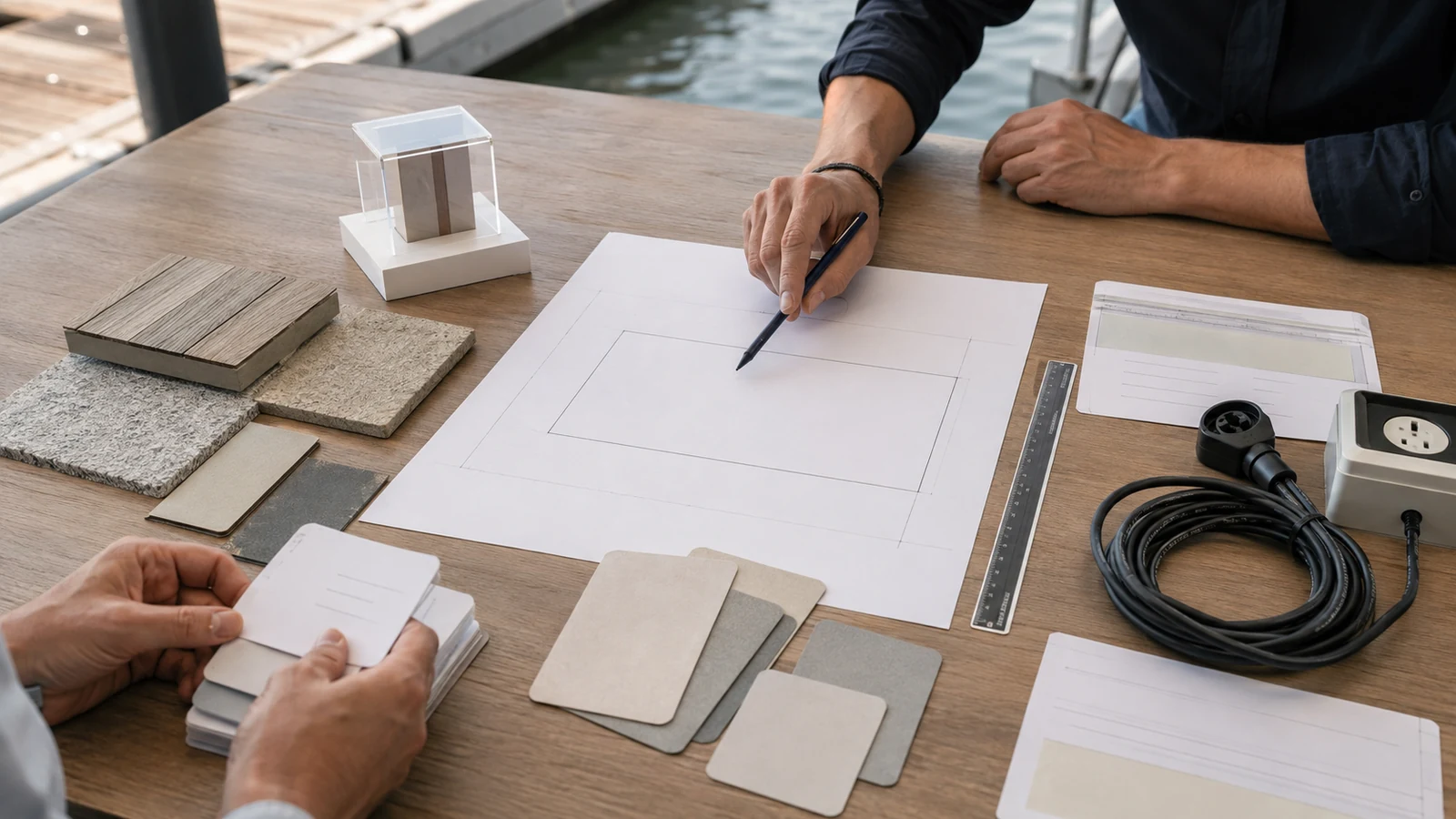
Keep water-display and land-display decisions separate even when the brand uses both. The vessel area may need boarding control and dockside qualification; the land area may need a more complete product explanation, demonstration station, storage, and weather response. One brand message can connect them, but one unchecked layout cannot serve both environments.
Before asking a booth partner to develop a concept, label each input as confirmed, pending organizer response, or internal choice. That small distinction stops an attractive design from turning an unverified map, dimension, utility, or placement into an expensive commitment.
Frequently Asked Questions
Is the Newport International Boat Show the same as the Newport Beach International Boat Show?
No. This article covers the event held on the downtown waterfront in Newport, Rhode Island. The similarly named Newport Beach event is a separate California show. Put the full official event name and Rhode Island location in your internal brief, travel plan, and launch materials so your team does not use dates, maps, or contacts from the wrong organizer.
Should exhibitors buy public tickets for booth staff or invited guests?
Do not use public ticketing as a substitute for exhibitor credentials. The public site does not provide enough information to determine the badge or credential route for your contracted booth staff, so use your current exhibitor materials or portal and ask the organizer when the route is unclear. For invited guests, recheck the official ticket information before you send it and keep visitor admission separate from staff access.
Does a 10 a.m. public opening mean your exhibitor crew enters at 10 a.m.?
No. Ten o'clock is the published public opening time, not proof of your staff-access, delivery, service, or move-in window. Confirm credentialed entry time, the assigned access point, and any delivery cutoff in your current exhibitor materials or with the organizer. Build your staffing and handoff schedule from those answers rather than from the attendee timetable.
Can a 2025 exhibitor manual be used to plan the 2026 show?
Use an older manual only to identify questions, never as the controlling instruction. Dates, sites, providers, forms, prices, contacts, and operating rules can change. A 2026 exhibitor should work from the current materials supplied through the organizer or exhibitor portal and obtain written clarification when a public page and the current exhibitor documents disagree.
What should a company record while visiting Newport before exhibiting in a later year?
Follow the route your target customer would take. Record which display zones hold the relevant products, where comparisons happen, what causes visitors to wait or board, which demonstrations attract qualified questions, and where weather or congestion affects the experience. Capture observations about the task, not private visitor data or unsupported traffic estimates. That record will be more useful than a folder of general waterfront photos when you evaluate space for the next edition.
Official Sources to Recheck
- Official show overview and 2026 schedule
- Exhibitor and sponsorship overview
- 2026 exhibitor brochure
- 2026 boats-by-brand directory
- Newport for New Products program
- Official attendee FAQ
- Official contact and space-sales routes
Recheck the organizer's pages before relying on dates, hours, maps, contacts, availability, prices, deadlines, or program status. This article is an independent planning guide, not the event organizer, an offer of exhibit space, or a replacement for your current exhibitor agreement and service materials.
Final Thoughts
Newport deserves further evaluation when your boat, product, or service becomes more convincing in a waterfront setting and your team can name the person, proof, and next commercial step the exhibit must support. The crowd size is context; the real decision lies in the match between your offer, the assigned display environment, and the conversation you need to create.
Get the organizer's answers before the design carries them as assumptions. Send KingExhibits your confirmed space type and dimensions, current exhibitor materials, products or vessels, demonstration needs, and remaining open questions. KingExhibits can then help you turn those verified inputs into a practical waterfront exhibit brief and a focused concept discussion.