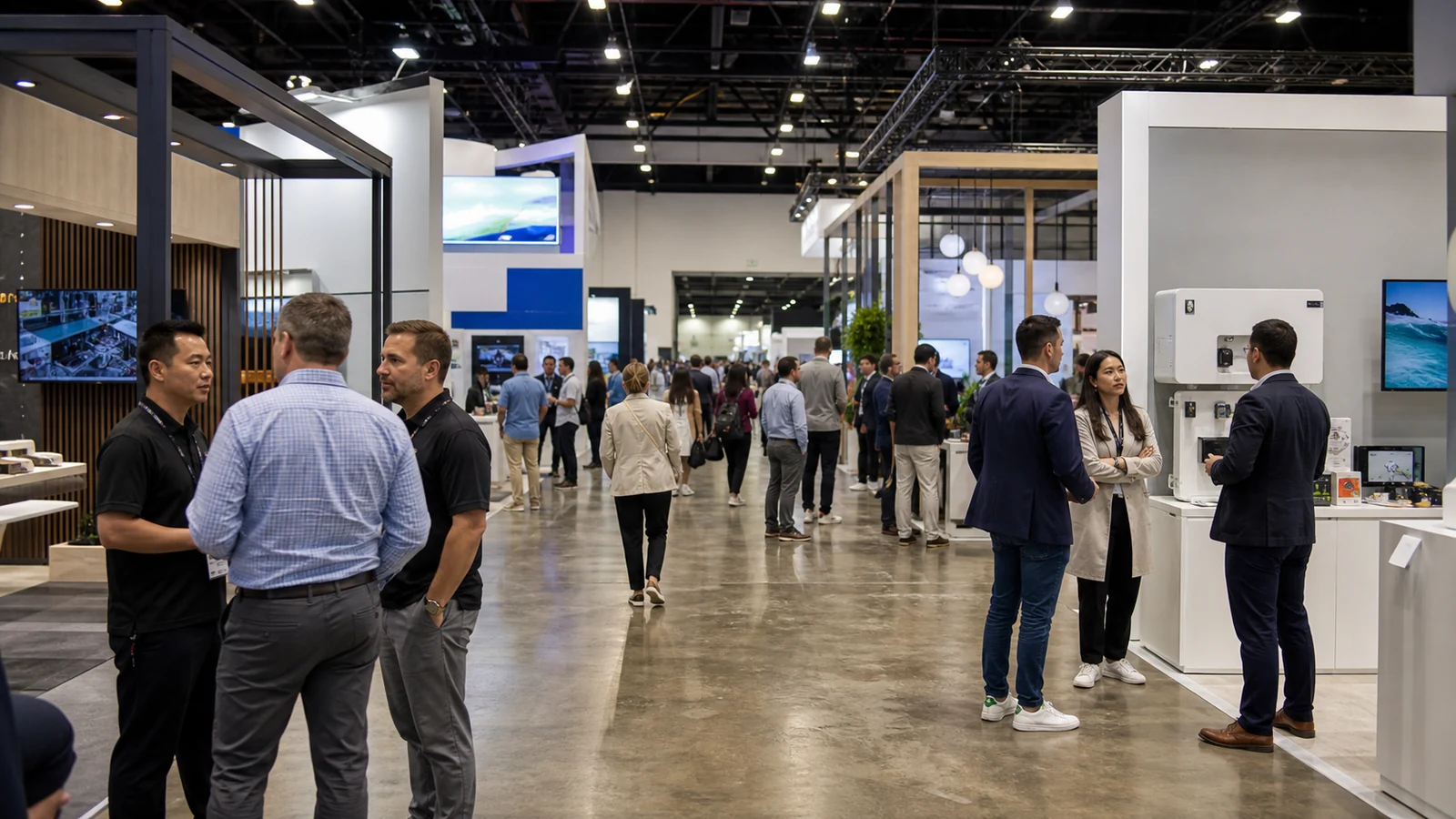
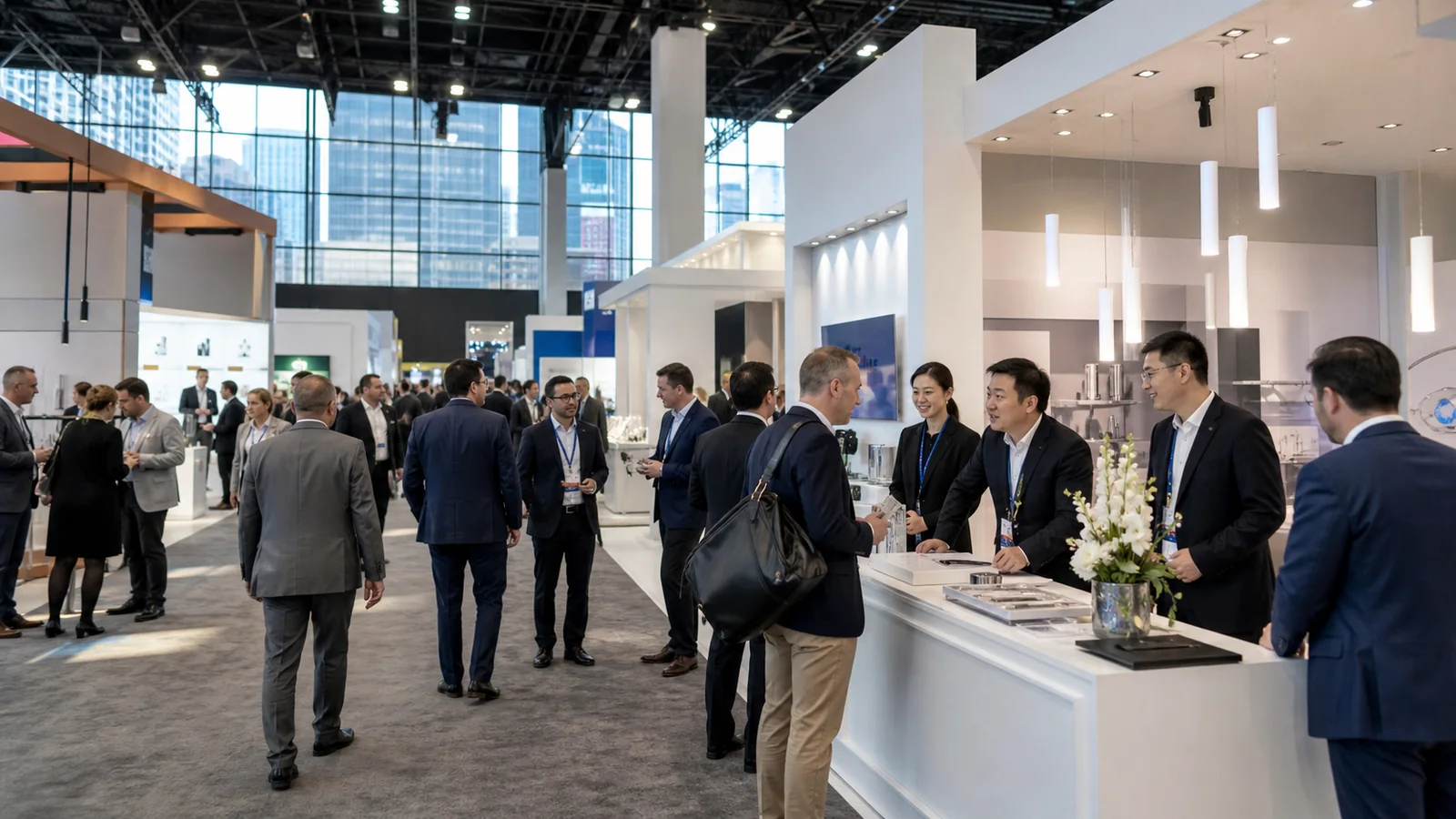
Your product may look convincing in a rendering and still be difficult to explain across a booth counter. A finish needs to be seen from an angle. A closure needs to be handled. A food ingredient needs to be tried in something a customer would actually serve.
These five-sense brand activation ideas help you turn those gaps into experiences visitors can take part in. In this trade show setting, sensory marketing means using sight, sound, touch, smell, or taste to help visitors explore a product and connect it to your brand. Choose the senses that make the differences between your products easier to understand; there is no need to add a scent or a snack simply to complete the set.
Sight: Give visitors control over what becomes visible
Let them move the light across a surface
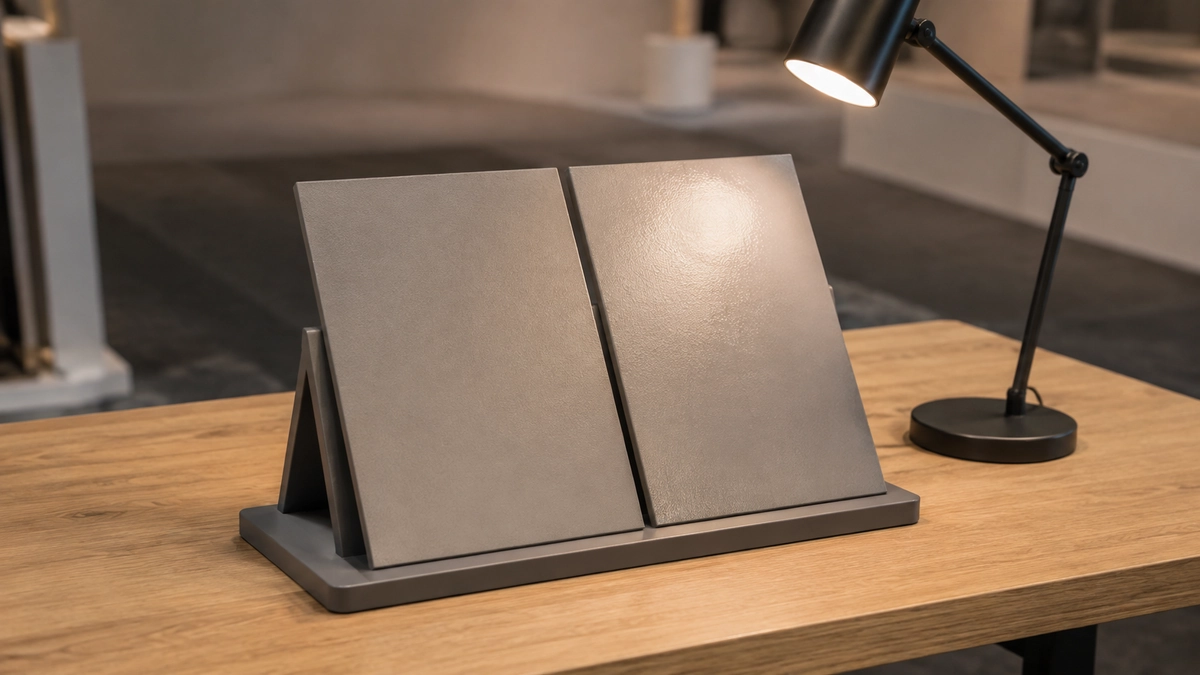
A static swatch can hide the very detail you want a buyer to notice. For a decorative panel or packaging finish, set up a sample cradle with a light that visitors can move between marked positions. Invite them to look at the same surface face-on and at an angle, then compare it with a second finish.
The change in view becomes the activity. Someone choosing a retail display surface can see whether texture, gloss, or visible marks matter under the lighting they expect to use. Put the sample code beside the cradle so the finish they choose remains connected to your product.
Keep the comparison honest: use the same light and viewing position for both samples, and identify any difference in substrate or preparation. This is a way to discuss appearance. It does not establish scratch resistance or durability. If those become the buyer’s next questions, offer the relevant test information rather than treating the light demonstration as proof.
Build a slide-out view of a hidden feature
For a package with multiple layers or an enclosure, let a visitor pull out a section that reveals the construction. Number the physical layers or parts and match those numbers to a short explanation beside the model. The visitor should be able to trace one feature from the outside to the place where it does its job.
A packaging example could expose the insert that locates the product inside the box. Staff can then place a matching sample into it and show how the parts fit together. A cross-section is particularly useful when an assembled product conceals the feature your sales team keeps trying to explain with gestures.
Use a prepared model with protected edges. If the model is enlarged or simplified, label that clearly. Showing how a part fits is useful; claiming it proves transport protection without the relevant testing is a different claim.
Touch: Let the visitor make a choice with their hands
Create a material tray around one use
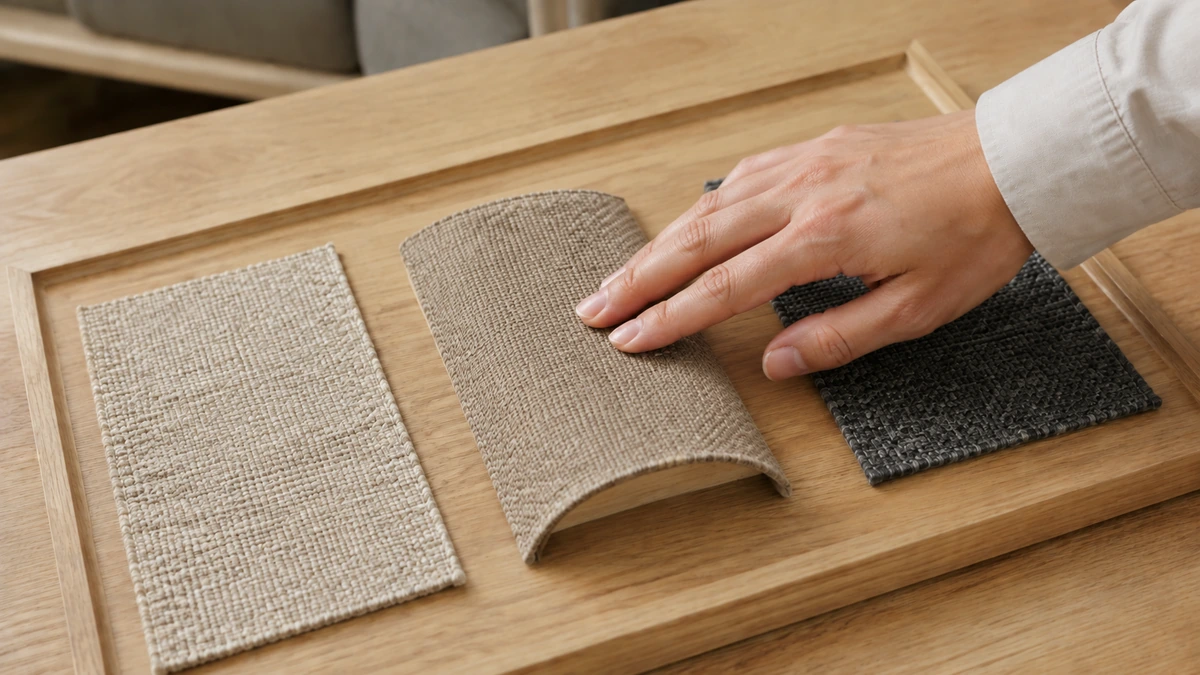
Instead of covering a wall with every available material, give the visitor a small tray tied to an application: an upholstery panel, a reusable carrying case, or a product grip. Include a few labeled samples that differ in a property a hand can explore, such as texture, flexibility, or how the surface feels when held.
For upholstery, a visitor could lift matching-size pieces, bend them over the same curved support, and compare the surface with their fingertips. That gives staff a specific question to ask: “Which of these feels closer to the seat you are developing?” The conversation now has a sample reference, not just the word “premium.”
Separate what visitors can feel from what still needs evidence. Softness is not an abrasion rating, and a heavier sample is not automatically stronger. Include material and construction details so an apparent difference is not mistakenly attributed to the finish alone. Keep spare samples ready, and use a cleaning method the supplier approves for the material.
Let buyers open, close, and carry the package
An opening experience can reveal something a photograph cannot: where a person grips the pack, how the closure releases, and how the product is removed. Put a representative product or clearly labeled dummy inside a sample package and invite the visitor to complete that sequence.
If you want to compare two designs, use equivalent contents and explain which design feature changes. Otherwise a lighter dummy can make a carrying handle feel better for the wrong reason. Give the visitor room to set the pack down and try again; this should feel like handling a product, not performing a timed test in front of strangers.
Keep the brand visible on the pack and identify the version underneath. When someone prefers one closure, you can record the version and the application they described. Their preference can guide a later sample discussion, but it does not establish what the whole market will choose.
Sound: Make one product difference easy to hear
Use a listening switch for a specific comparison
If sound is part of the product decision, give visitors a simple way to switch between two examples. A fan supplier, for instance, could provide recordings made with the same microphone setup at clearly stated operating settings and recording distances. Label the recordings, use the same playback equipment, and let the listener replay the part they want to compare.
The useful question is what the visitor notices: a tone, a rattle, or a change as the product starts. Show the recording conditions beside the controls. Do not adjust one clip to make it sound more favorable, and do not present headphone playback as the sound level a buyer will experience in an installed system. That claim needs suitable measurement data and installation conditions.
For a product whose function includes a click, chime, or spoken prompt, a live control can work better than a recording. Let the visitor trigger the action and hear the response while seeing what changed. Keep any sound that is merely background decoration out of that comparison.
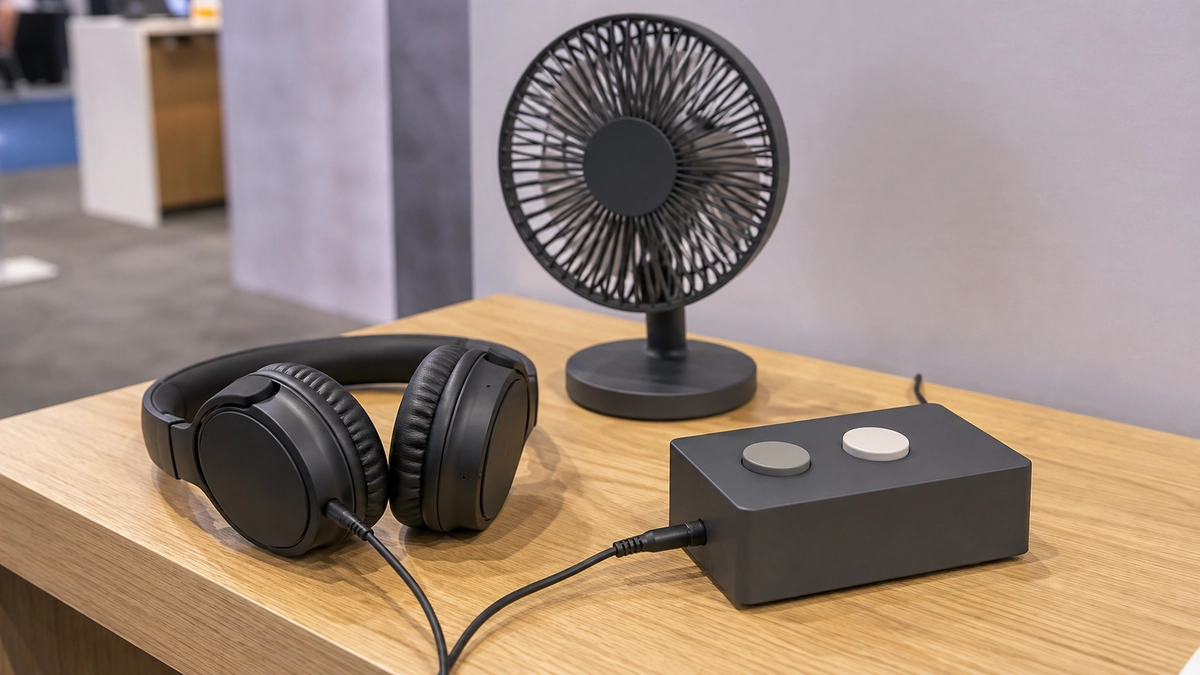
Place the listening position inside the booth, away from the sales conversation. Confirm the current show’s sound rules before specifying speakers. IAEE’s display guidelines are a planning reference, but individual organizers set their own event rules; a number in a general guide is not permission for your demonstration. IAEE display guidelines
Smell: Offer an individual product sample
Let visitors compare a short scent selection
For a fragrance or scented personal-care product, place capped, labeled samples behind a small counter and let visitors choose which to try. Use the sampling method recommended for that product, such as individual scent strips, and provide a place to discard used materials. The choice belongs to the visitor; they should be able to talk about the product without smelling it.
Make the comparison about a real selection. A hotel amenity brand could group samples around the product lines it actually offers and invite a buyer to shortlist one for further evaluation. Keep the formula or product reference attached to the choice. A bowl of anonymous scents may be entertaining, but it leaves the buyer unable to specify what they liked.
Avoid filling the booth with fragrance as a shortcut to this experience. It removes visitors’ choice and makes separate samples harder to compare. Keep samples closed between uses, confirm the organizer’s restrictions, and keep scent sampling away from food or other scent demonstrations.
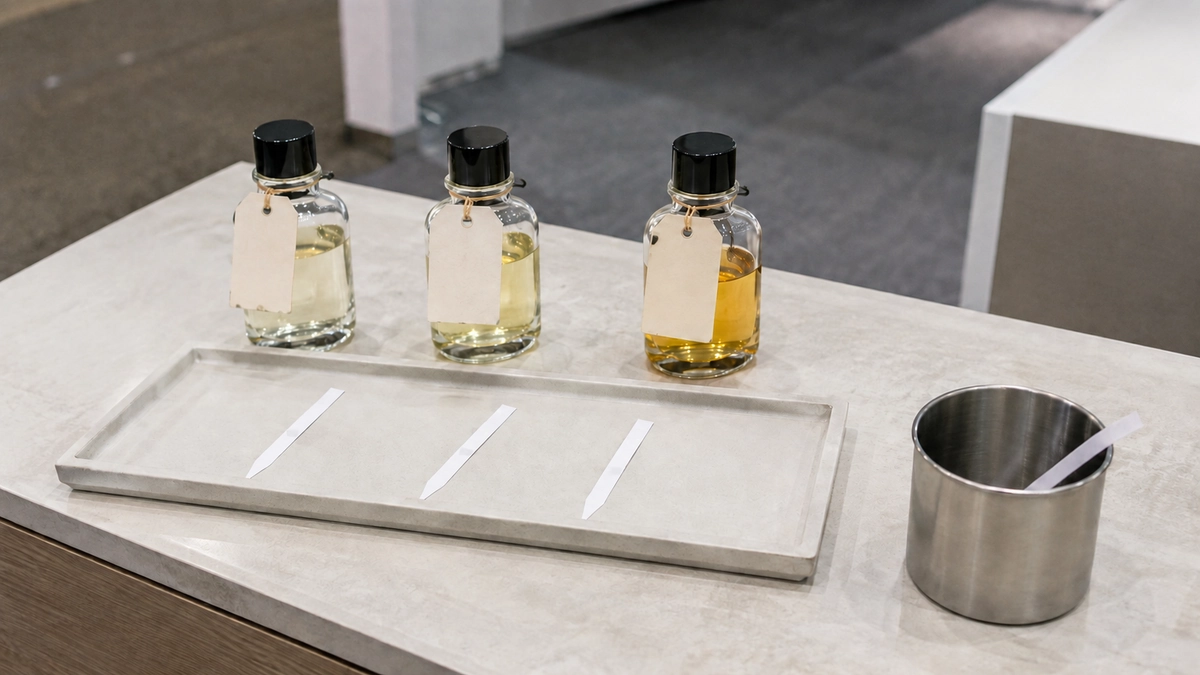
An ingredient’s smell also does not necessarily represent the finished product. If you show an ingredient beside a finished sample, explain the relationship and base the buyer’s shortlist on finished samples they can evaluate. Do not invent a “brand scent” for an unrelated industrial product just to include smell.
Taste: Put the product into a believable use
Offer a paired tasting with one clear difference
For a food or beverage product, build the tasting around a decision your trade buyer actually makes. A sauce supplier could serve two variants on the same neutral base, using the same preparation and serving conditions. Give each sample a visible code and a description of what differs.
Ask which variant would suit the visitor’s menu or product brief, then explain the corresponding product options. If one sample is served warm and the other cold, you may be asking visitors to compare serving conditions instead of the recipes. Show the food in a representative application rather than disguising a weak sample with an unusually rich accompaniment.
A second option is to show one ingredient in two end uses, such as a filling served in a baked item and in a chilled dessert. Here the question changes: which application does the buyer want to develop? Make that distinction explicit so the activity does not pretend to be a controlled comparison of ingredient performance.
Plan ingredients, allergen information, serving utensils, storage, waste, and replenishment with whoever will prepare and serve the samples. Provide product information for people who decline to taste. A visitor should not have to eat something to obtain the specification sheet or discuss an order.
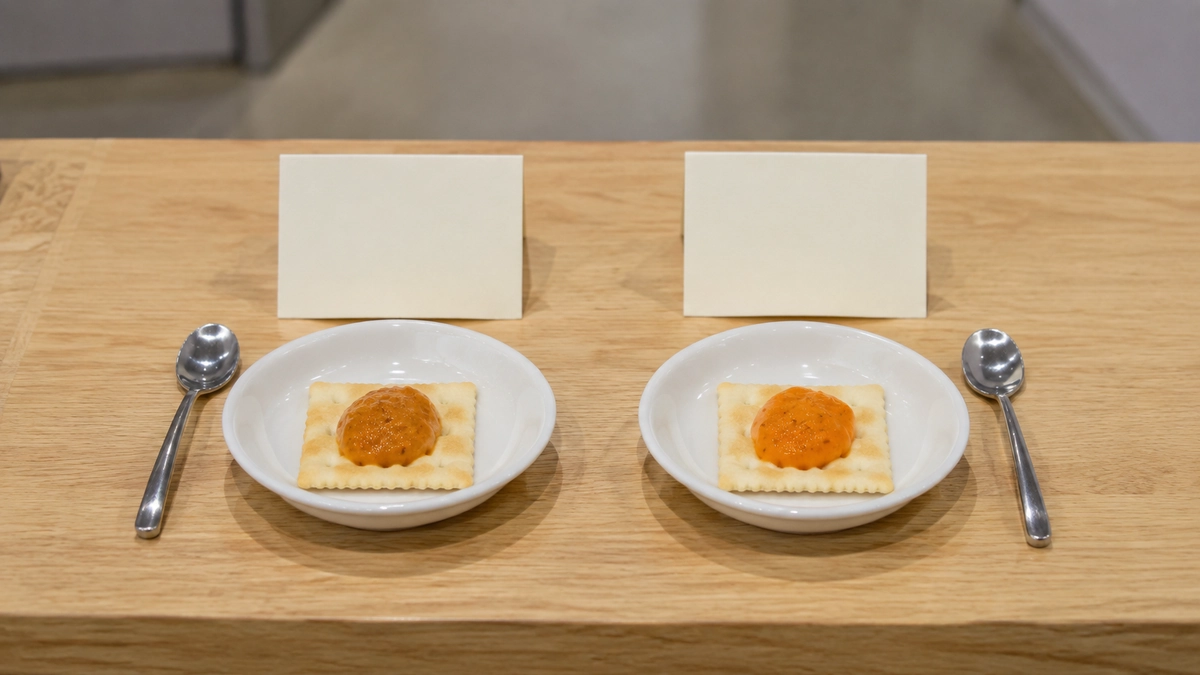
Before buying supplies, check the current exhibitor manual and the venue’s food-service arrangements. For example, the National Restaurant Association Show’s exhibitor FAQ distinguishes exhibitors’ own products from other food that must come through its named hospitality provider. Those event-specific rules are a reason to check your own arrangements, not a nationwide sampling policy. National Restaurant Association Show exhibitor FAQ
Combine senses around the same product question
A useful multisensory brand activation lets the visitor learn more about one product choice. For a reusable carrying case, that might mean seeing how the insert holds the contents, lifting the case, then closing it and hearing the latch engage. Sight explains the arrangement; touch reveals the handling; sound confirms the action the visitor just performed.
Keep the sequence together. If the visitor handles one model while a nearby screen shows a different version, staff have to explain why the versions differ before discussing the product. Use the same sample identifiers on the physical item, display, and information the visitor takes away.
Choose a primary action before adding another sense:
| What the buyer needs to judge | A useful starting experience | What still needs separate evidence |
|---|---|---|
| How a finish looks in use | Move the light and compare surfaces | Wear and scratch performance |
| How a package is handled | Open, carry, and close a representative sample | Shipping and load performance |
| What a product sounds like | Switch between clearly labeled examples | Installed sound levels |
| Which scent to shortlist | Try individual finished-product samples | Performance in the buyer’s intended use |
| Which food variant suits an application | Taste matched servings and identify the variant | Commercial production and storage suitability |
To check whether the idea explains anything, try it with someone who did not help design it. Ask them to describe the difference they noticed and identify the sample it belonged to. If they remember the effect but cannot connect it to the product, change the explanation or the activity before investing in a bigger installation.
Frequently Asked Questions
Can a sensory activation work for software?
Yes, when it makes the software’s behavior easier to understand. Let a visitor carry out a task and see the result; use sound or vibration only when it is part of the actual interface being demonstrated. A physical control connected to a mock system can help explain a workflow, but label the simulation. Do not imply that a staged response proves the speed or reliability of a live deployment.
How can someone take part without using the featured sense?
Offer another route to the same product information. A listening comparison can include a written description of what changes and relevant measured data. A touch activity can include a staff demonstration and a close-up view. Ask visitors which format they prefer, and keep the conversation and sample request available without requiring a taste, a scent, or a headset.
How do you tell whether a sensory activation is working?
After the show, look at which visitors requested a relevant sample, technical review, or further product discussion, and what happened next. Keep those outcomes separate from participation counts and the pre-show comprehension check. A request is a useful next step, not revenue; the fact that someone remembers a scent does not show that it influenced a purchase. Use those distinctions when deciding whether to repeat the activity.
What should a buyer take away after choosing a sample?
A small selection card can carry the product code, the variant tried, the application discussed, and the question still to resolve. For a physical takeaway, agree on suitable packaging and handling with the product team. Do not promise that a loose scent strip or an unlabeled food sample will reproduce the booth experience later. Where a sample will not travel well, arrange a properly identified evaluation sample instead.
Final Thoughts
Show KingExhibits the sample you plan to use and explain what you want visitors to try. We can help shape the booth layout around that experience, with room for visitors to participate and watch, and for staff to reset the display. Include the product information visitors will take away, so the design discussion stays focused on the difference you want them to understand.