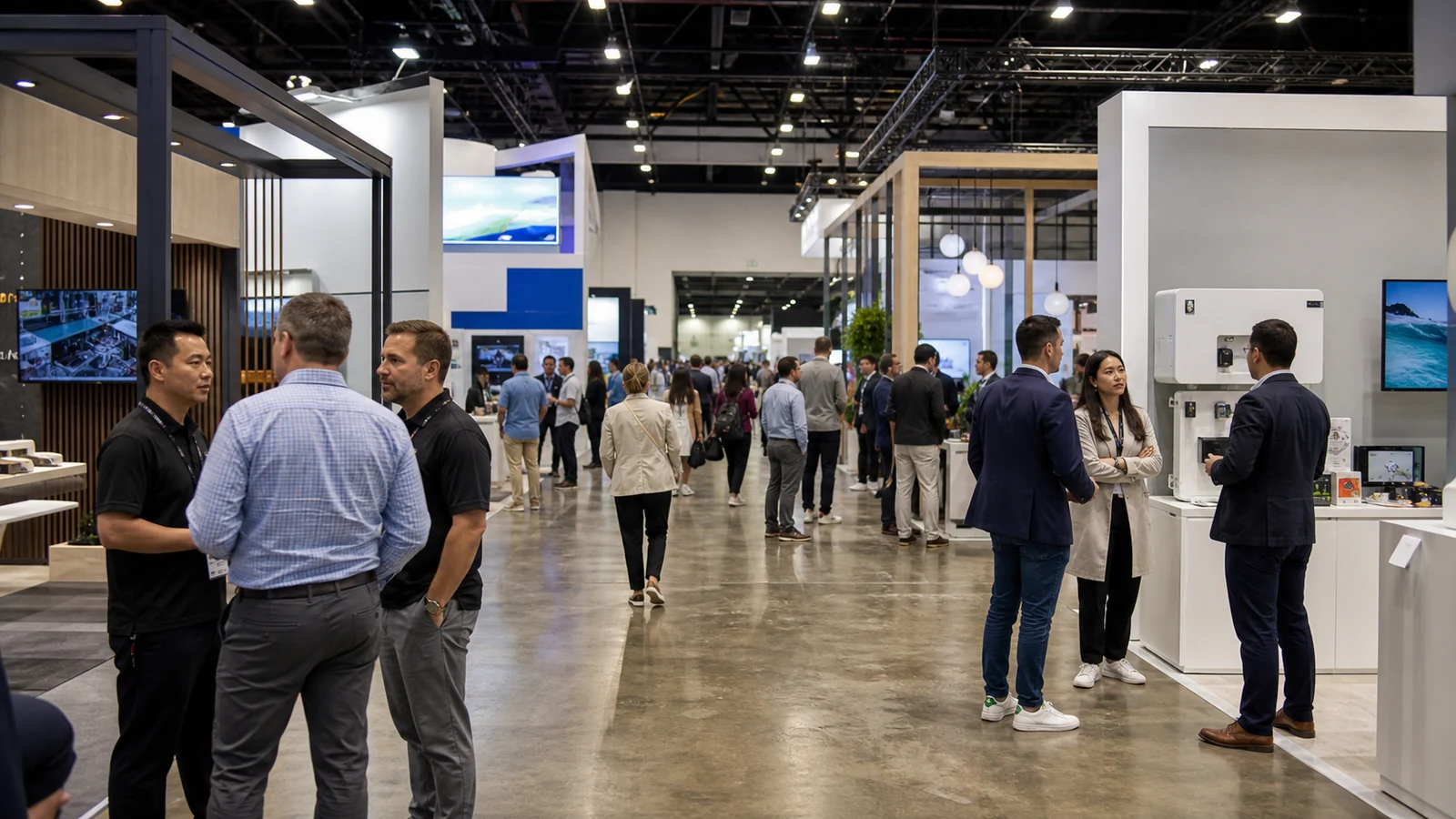
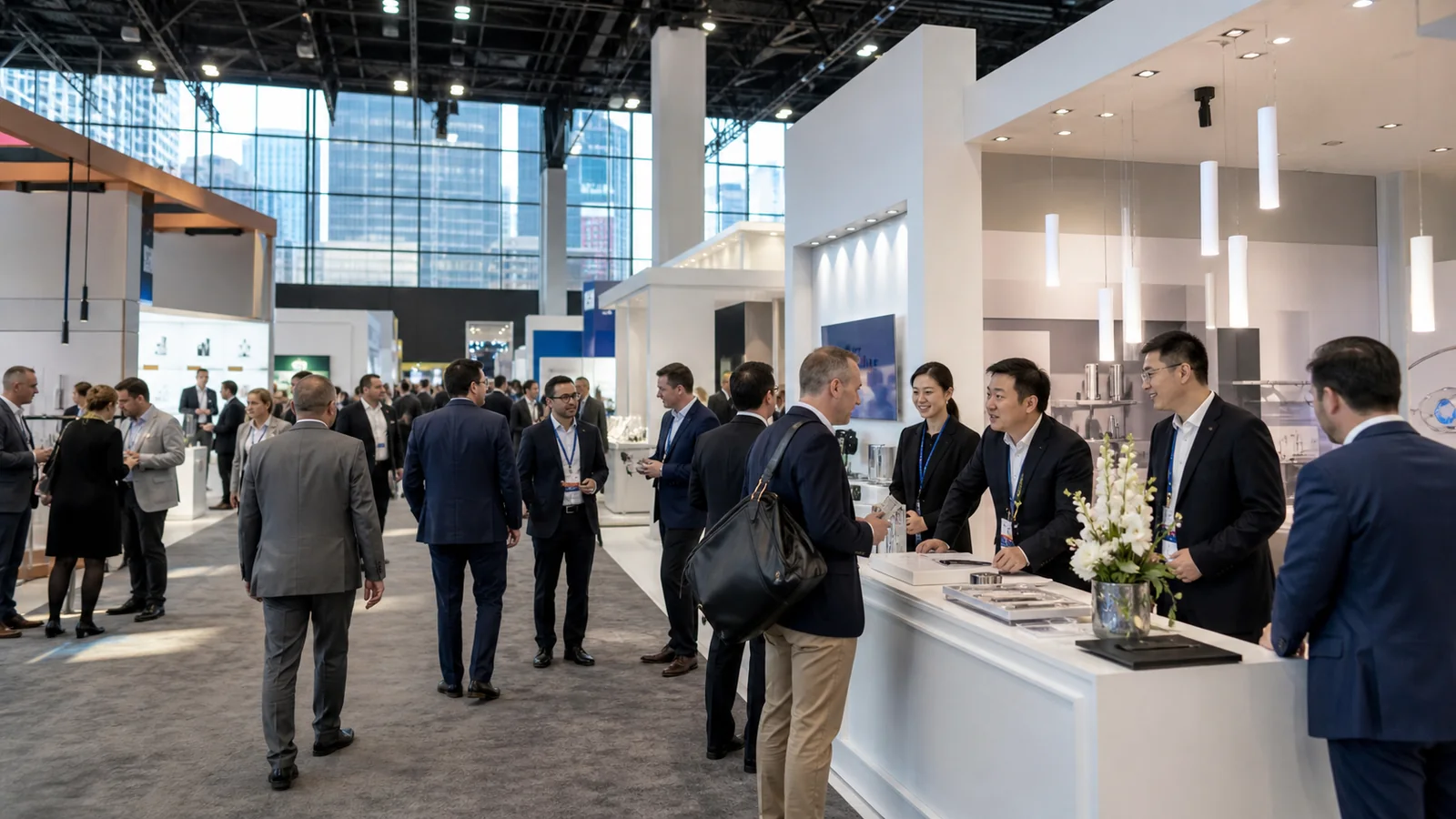
MODEX is a place where visitors can see conveyors, robots, software, controls, storage systems, vehicles, packaging equipment, and other supply-chain solutions across a very large floor. A qualified buyer will not study every booth. Your exhibit must quickly show what operational problem you solve and what evidence makes the solution worth discussing.
This guide is for an equipment or technology supplier planning to exhibit at MODEX. As of September 2026, MODEX 2026 has ended. The official site lists MODEX Atlanta for April 3–5, 2028, at the Georgia World Congress Center, and MODEX Las Vegas for October 18–20, 2028. Use the current 2028 exhibitor materials for any booking, deadline, or rule.
Last verified: September 6, 2026. Recheck the official MODEX site before contracting space, travel, freight, or services.
Choose the Buyer and Operating Problem First
“Warehouse automation” is not a booth message. Decide which visitor you most need: an operations leader reducing labor dependence, an engineer integrating a line, a distribution executive planning capacity, an IT leader evaluating software, or a buyer comparing specific equipment.
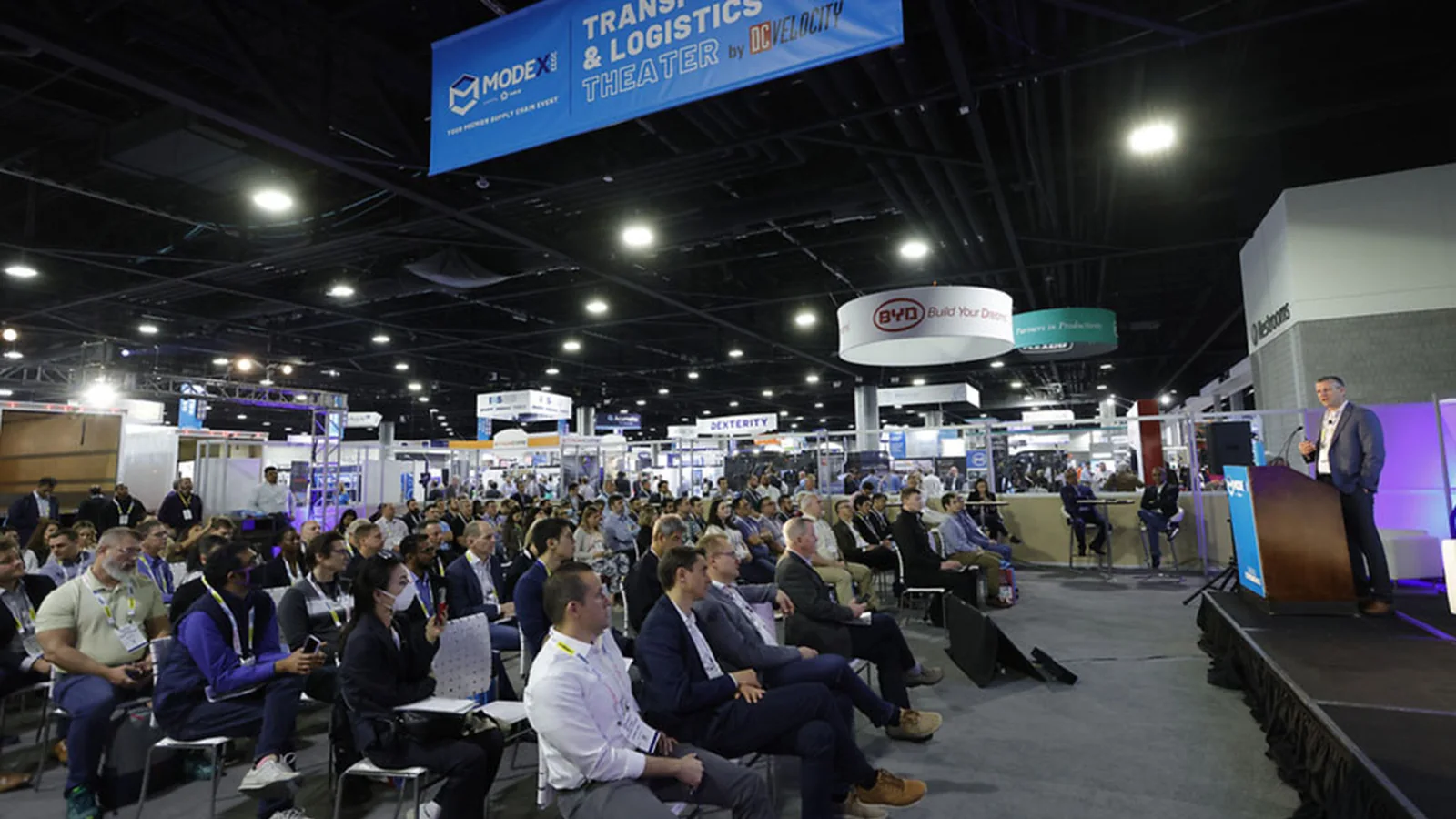
Then name the operating problem in their language. It may be throughput at peak, changeover time, picking accuracy, damaged product, space utilization, system visibility, safety, maintenance access, or integration risk.
This choice should control the first product shown, the headline, the demo scenario, and the specialist assigned to the conversation. If you try to speak equally to every supply-chain role, the booth will often look like a catalog with no clear reason to stop.
Make the Demonstration Answer One Buying Question
Visitors at MODEX expect to see equipment and technology work. Movement alone is not proof. A robot repeating an easy cycle may attract attention without answering whether it fits the visitor’s operation.
Build the demo around a question such as:
- How does the system handle an exception?
- What changes when product size or order mix changes?
- How quickly can an operator recover from a stop?
- What data is available to the customer’s existing system?
- What maintenance access or skill is required?
- What result can the visitor compare before and after?
Show the starting condition, the action, and the result. Keep the explanation short enough to repeat, but prepare deeper technical evidence for qualified visitors. If the real equipment cannot run safely or practically, use a cutaway, controlled simulation, recorded real-world cycle, or live software environment that still shows a verifiable process.
Design for Viewing, Queueing, and Reset
An equipment demo needs more than the equipment footprint. Allow for guards, operator access, product loading, cables, visitor viewing depth, a safe exit, and the people waiting for the next cycle.

Keep the demonstration inside the contracted space. Do not rely on the aisle as the audience area. Test how many people can actually see the critical action and screen. If the demo takes three minutes and eight minutes to reset, it cannot support continuous traffic without a second work cell or a different schedule.
Create a short-loop experience for passing visitors and a scheduled deep-dive for serious projects. The same demo does not need to serve both groups in the same way.
Bring the Right Evidence to the Booth
For capital equipment and systems, useful evidence may include application boundaries, cycle or throughput conditions, accuracy method, integration interfaces, safety approach, maintenance requirements, installation inputs, and a realistic implementation sequence.
Do not put every specification on the wall. Give staff an evidence kit: diagrams, sample outputs, test assumptions, interface lists, short application examples, and the questions needed to determine whether the visitor’s operation is comparable.
When a number depends on product, layout, labor, software, or upstream conditions, state the conditions. A qualified buyer trusts a bounded answer more than a best-case number with no context.
Plan Utilities and Freight Around the Live System
List every operational input before the booth plan is approved: voltage, phase, amperage, compressed air, water, drainage, network, equipment weight, heat, noise, charging, consumables, product feed, and shutdown sequence.

Put utilities on the same drawing used by the exhibit builder, electrical provider, network provider, rigging team, freight lead, and product engineer. Confirm floor loading, access, installation sequence, and who is authorized to make each connection under the current show and venue rules. The trade show AV planning guide covers screens, playback, sound, power, network, and backup in detail.
Decide which freight uses the advance warehouse and which must go directly to the venue. Machinery may have acceptance or handling conditions. Provide dimensions, weights, lifting points, center of gravity, packaging, and a named technical receiver. The broader route, labeling, and outbound process belongs in the trade show logistics and shipping guide.
Use Appointments to Protect Technical Time
The official MODEX exhibitor page says visitors come for hands-on demonstrations, supplier meetings, and capital-equipment decisions. Do not leave all valuable technical conversations to chance floor traffic.
Invite target accounts with a specific reason: a 20-minute application review, a timed demo, a specialist meeting, or a comparison tied to their operating issue. Ask enough before the show to bring the right engineer and prepare relevant proof.
Keep appointment space separate from the demonstration queue where possible. A serious project conversation should not compete with machine noise and passing traffic.
Train Staff to Diagnose Before Presenting
Give booth staff a small set of questions: current process, volume and variation, main constraint, existing system, project timing, decision role, and what must be proven next. Product experts should know when to give detail and when to bring in integration, service, commercial, or regional colleagues.

Record more than a badge scan. Capture the application, reason for interest, relevant product or system, decision stage, promised information, owner, and agreed follow-up date. The next message should continue the conversation that happened in the booth.
Frequently Asked Questions
Is MODEX held every year?
MHI alternates major MODEX and ProMat events. Confirm the current event and city on the official site. At the time of this review, the official MODEX site lists two 2028 editions: Atlanta on April 3–5 and Las Vegas on October 18–20.
Do we need machinery to justify a MODEX booth?
No. Software, controls, integration, consulting, and service companies can be relevant when the booth shows a real supply-chain workflow, the system inputs, and a result that an operations team can evaluate. A generic corporate presentation is not a substitute for that proof.
What should staff do if a live demo stops?
Move the system to its planned safe state, tell the audience what happened, and switch to the tested backup. If recovery is itself part of the product story, demonstrate it only through the approved procedure. Never bypass a guard, connection rule, or safety step to keep a crowd watching.
How should we follow up after a technical booth conversation?
Send the promised drawing, test result, interface note, or application question—not a generic brochure blast. State the conditions behind any performance number, name the next technical or commercial owner, and give the visitor the follow-up date agreed in the booth.
What a Strong MODEX Booth Lets Visitors See
MODEX visitors do not need another list of capabilities. They need a fast way to decide whether your equipment or technology deserves a technical conversation.
Choose one buyer problem, make the demo prove something that matters, and connect the result to credible operating conditions. A booth with fewer products and clearer evidence can create more serious projects than a crowded display that tries to represent the entire catalog.