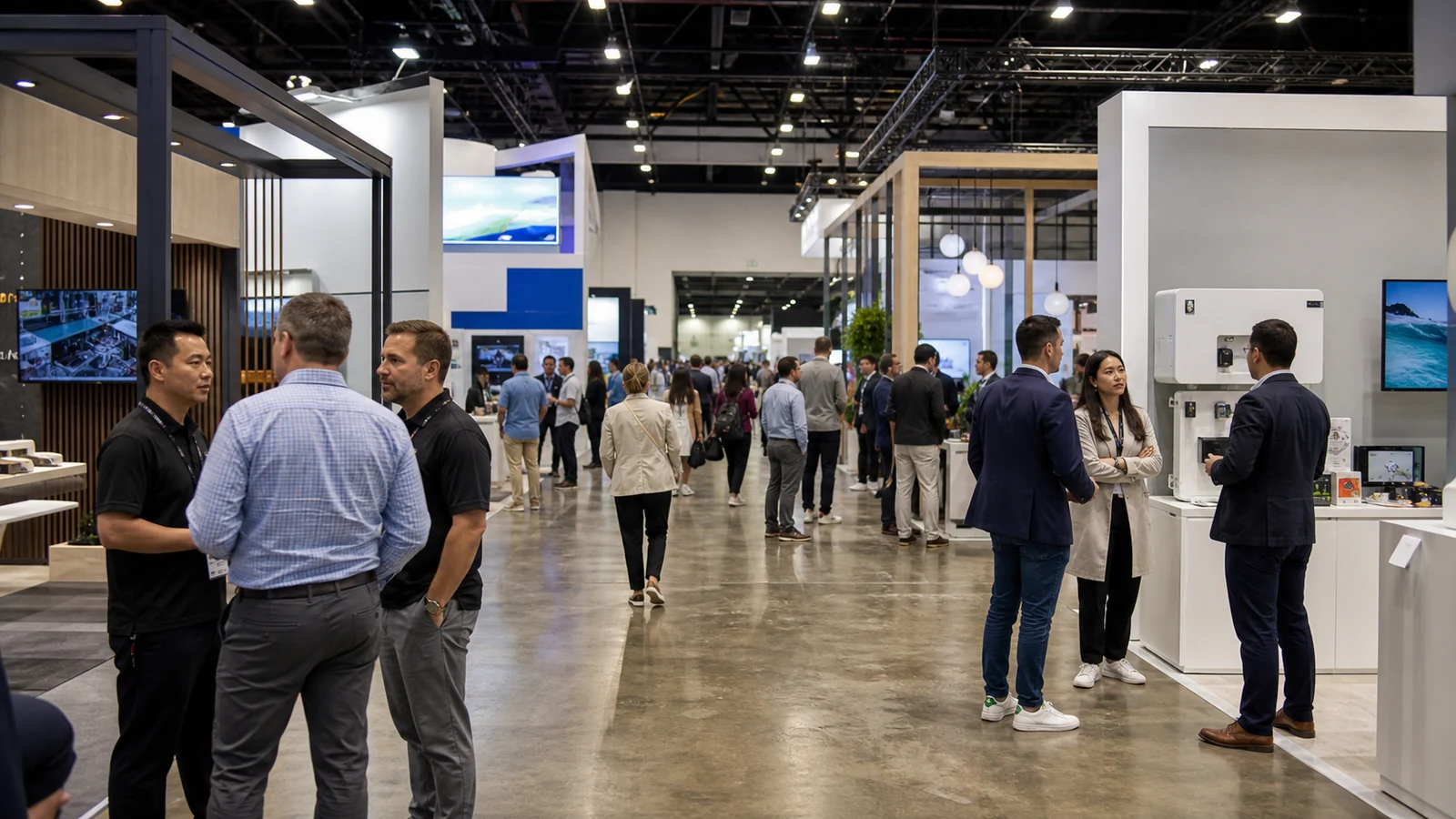
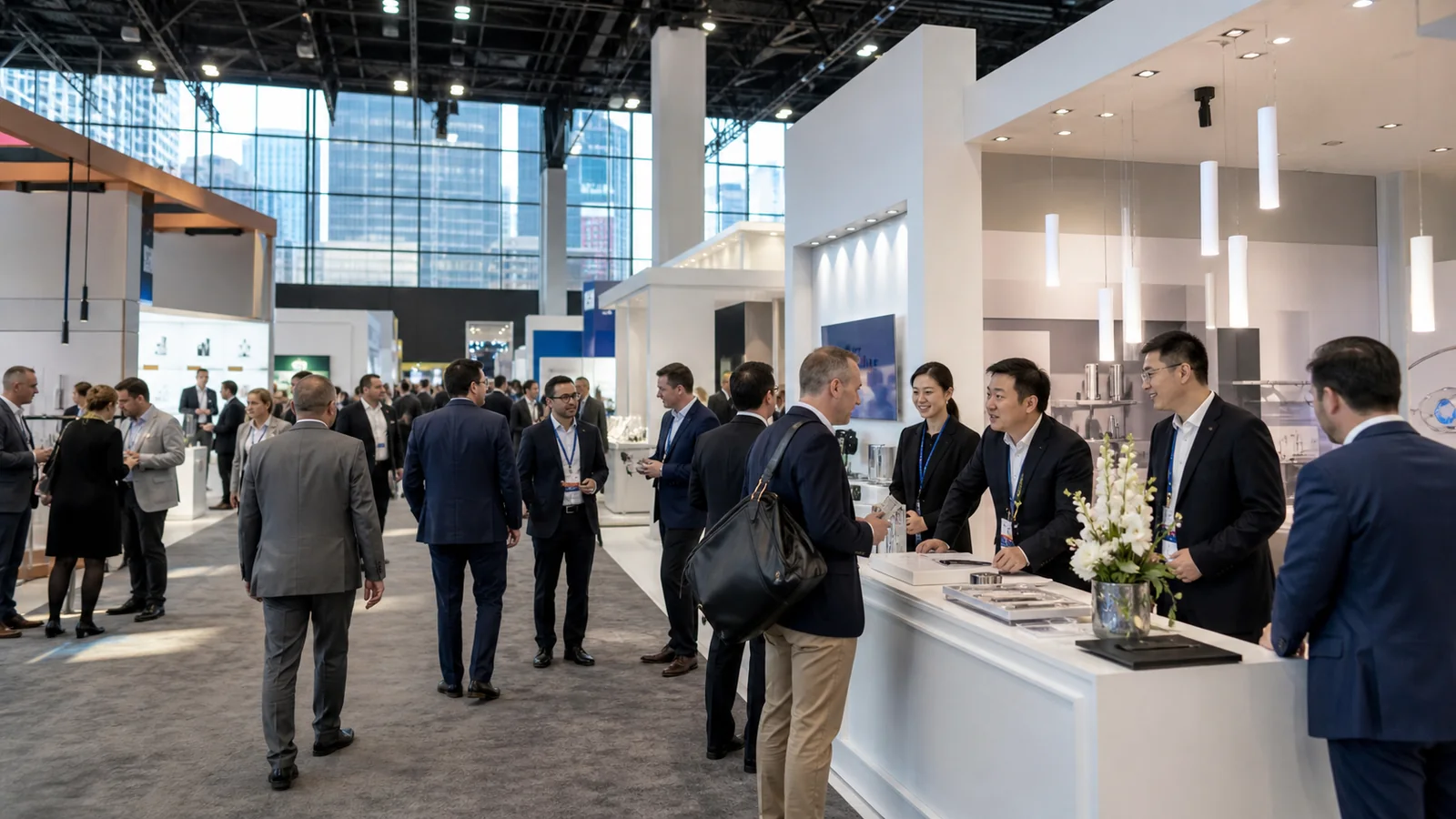
You have a medical-device manufacturing offer and a November event slot in front of you. The hard question is not whether MEDevice Silicon Valley looks relevant. It is whether your team can turn a short booth conversation into a credible next step for the people the show is built to attract.
This guide separates current event facts from organizer promotion, then helps you test audience fit, booth proof, and budget readiness. By the end, you should be able to pursue a booth, attend for research, or hold the project until the missing facts are confirmed.
If you searched for BIOMEDevice Silicon Valley 2026 in Santa Clara, it is the same Silicon Valley event under the current MEDevice name—not a second show.
When and Where Is MEDevice Silicon Valley 2026?
The official event site lists MEDevice Silicon Valley for November 18-19, 2026, at the Santa Clara Convention Center in Santa Clara, California. The Informa Manufacturing event calendar and the official 2026 event-planning interface show the same two-day schedule and venue.
| Current event fact | What is confirmed | What you still need to check |
|---|---|---|
| Event | MEDevice Silicon Valley, presented as an MD&M event | Use the current event name in contracts, travel, and booth files |
| Dates | November 18-19, 2026 | Recheck before booking nonrefundable travel |
| Venue | Santa Clara Convention Center | Confirm hall, entrance, booth number, dock, and service locations |
| Address | 5001 Great America Parkway, Santa Clara, CA 95054 | Use the organizer's shipping labels, not the street address, for exhibit freight |
| Show hours | Still listed as TBD on the current general-information page | Wait for the final schedule before assigning shifts and travel |
Informa Markets owns the event portfolio. KingExhibits is not the organizer, venue, registration provider, or official source for schedule changes.
What Kind of Event Is It?
MEDevice Silicon Valley is a focused B2B event for the medical-device design and manufacturing community. The official event page identifies engineers, R&D, quality, purchasing, design, executives, and owners as parts of its community. It also highlights suppliers in components, materials, contract manufacturing, automation, 3D printing, robotics, and related technology.
That scope gives you a useful first filter. A product merely used by a healthcare company is not automatically a good fit. Your offer should connect to how a medical device is designed, engineered, made, tested, supplied, or improved.
The event also combines an expo floor with education and networking. The current education overview describes three show-floor stages, workshops, and sponsored sessions. Those formats matter because your booth will compete with scheduled content for attention. A visitor needs to understand your relevance quickly enough to decide whether to stop now or return later.
Is MEDevice Silicon Valley the Right Event for Your Company?
Start with the visitor decision, not the size of the floor. Write down the one problem your best visitor should be trying to solve. Then test whether the person, proof, and next step all belong at this event.
Does what you offer match a medical-device development or manufacturing decision?
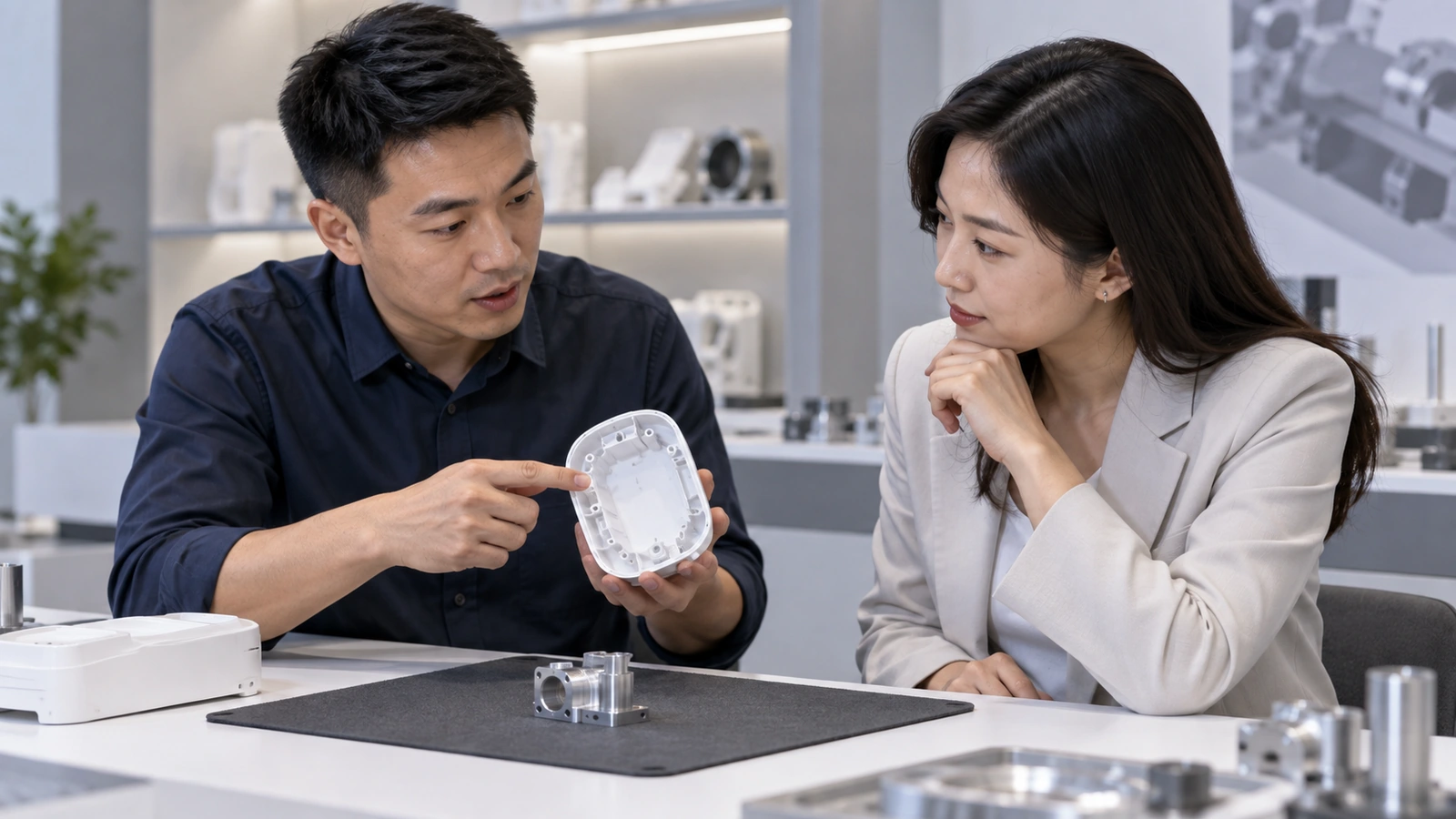
A supplier of a physical component can show where that part enters the device and what changes when a specification changes. A contract manufacturer can explain which project stage it can accept and what evidence it needs. An automation or software company can show one controlled workflow instead of a generic technology claim.
If your team cannot name the decision, the booth will probably default to broad statements about quality, innovation, or partnership. Those words do not give an engineer or sourcing manager a reason to continue the conversation.
Can a visitor evaluate credible proof at the booth?
The proof you use should match the claim. A dimensional claim needs a drawing, tolerance context, or inspection record. A material or performance claim needs the conditions and method that make the result meaningful. A process claim needs a visible input, operation, output, or quality checkpoint.
Do not make the display carry claims your team cannot support. Product, certification, safety, clinical, and regulatory statements remain your company's responsibility. The event and booth contractor do not validate them for you.
Is the next step specific enough to justify the conversation?
Decide what you want a qualified visitor to do after the booth discussion. That might be a drawing review, application call, sample request, technical demonstration, or supplier-qualification meeting. Pick a next step your team can actually deliver.
“Scan every badge” is not a useful objective. It treats a curious student, a possible partner, and an active sourcing contact as the same lead. Your staff needs a short qualification path that respects the visitor's role and project stage.
Is your team ready for a two-day technical event?
You do not need a subject-matter expert to deliver a lecture, but someone must be able to answer the first serious technical question. If that person cannot staff the booth throughout the event, set appointment windows and create a clear handoff process.
A booth can still be worthwhile with a small team when the demonstration is controlled and the follow-up owner is clear. It is harder to defend when the concept depends on a complex live demo, uncertain approvals, or a single specialist with no backup.
What Do the Organizer's Audience and Scale Numbers Really Tell You?
The current event home page displays 1,500+ attendees, 140+ exhibitors, and 50+ education sessions. Its Why Exhibit page also publishes claims about decision-makers, active projects, and management seniority.
Use these figures as organizer-published planning signals. They support the view that this is a focused industry event rather than a broad public expo. They do not tell you how many people need your exact solution, how many will reach your aisle, or what result your booth will produce. The pages reviewed for this guide do not label every figure as a final 2026 count.
When you ask event sales for the most relevant available breakdown, compare it with your own customer profile. Useful questions include:
- Which job functions and company types best match your target account?
- Which product categories are closest to your offer?
- Which past or current participation data is dated, and which is a 2026 forecast?
- What official pre-show tools can you use without buying or accepting an unauthorized list?
The answer may strengthen the booth case, narrow it to one product line, or show that attending first is the better test.
What Does the Published Exhibit Price Cover?
The official Become an Exhibitor page says exhibit-space pricing starts at $65 per square foot. It also tells prospective exhibitors to review the 2026 floor plan, choose a booth size and preferred locations, and contact the event team.
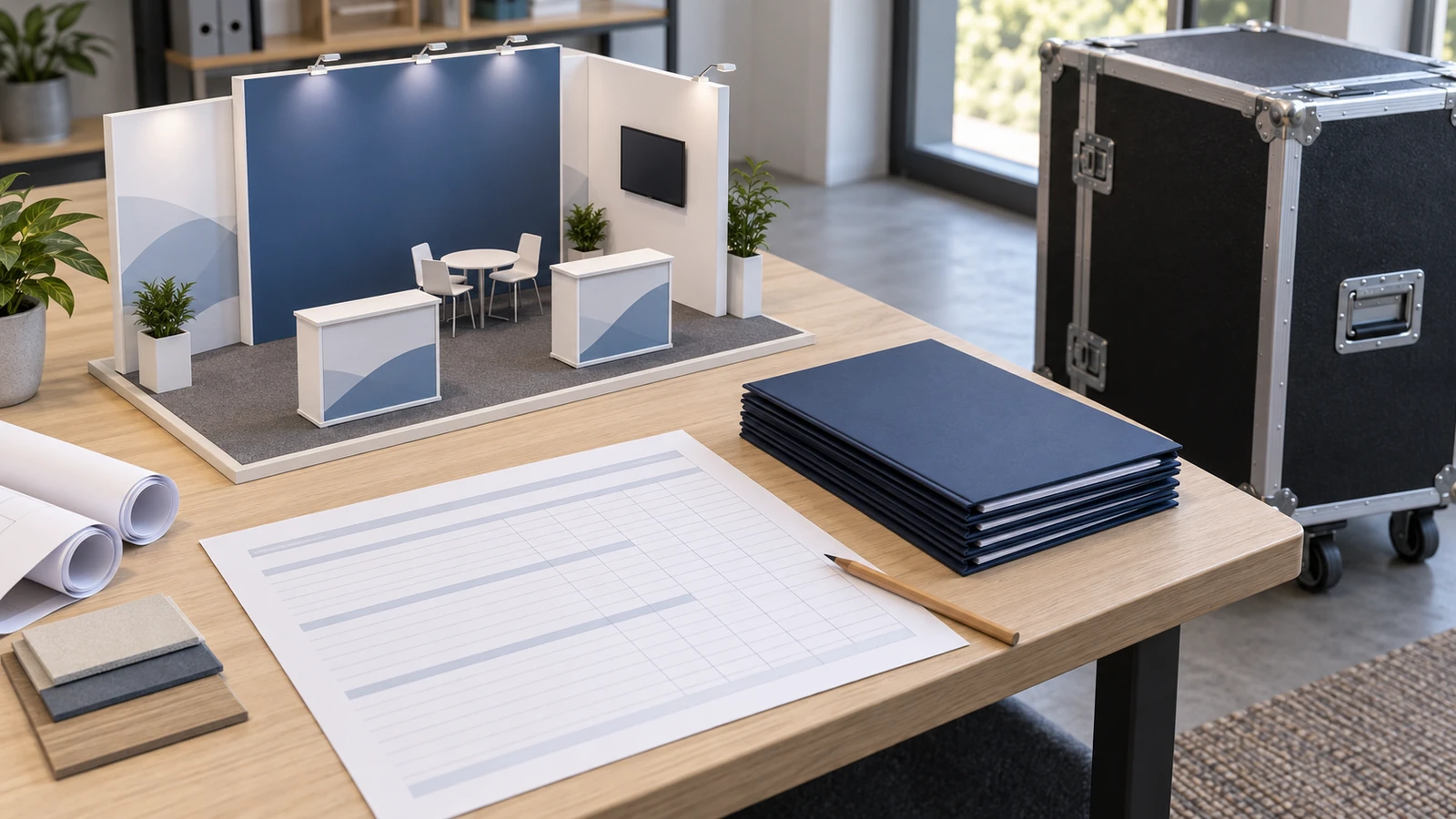
Treat that number as a starting space-price signal. The public statement does not establish your final location, inclusions, sponsorships, booth build, graphics, furniture, freight, material handling, labor, power, internet, cleaning, insurance, travel, or late-order exposure.
Before you approve a total budget, obtain the current agreement and service documents. Build a cost sheet with separate owners and evidence for every line. If a cost is unknown, keep it visible as TBD; do not hide it inside a round booth estimate.
| Budget layer | Evidence to obtain before approval |
|---|---|
| Exhibit space | Written size, location, open sides, rate, inclusions, payment terms, and cancellation terms |
| Booth scope | Approved concept, graphics, structure, furniture, storage, accessibility, and installation responsibilities |
| Show services | Current forms, rates, minimums, taxes, deadlines, and provider contacts |
| Freight | Shipment method, labels, receiving location, handling basis, return route, and empty-container plan |
| Team | Travel, lodging, staffing schedule, training, lead capture, and follow-up ownership |
This separation also protects you from comparing unlike quotes. An exhibit-space invoice, a booth rental, and a complete show budget answer different questions.
What Should Your Booth Help a Visitor Understand?
The booth should make one useful evaluation easier. The exact form depends on what you sell.
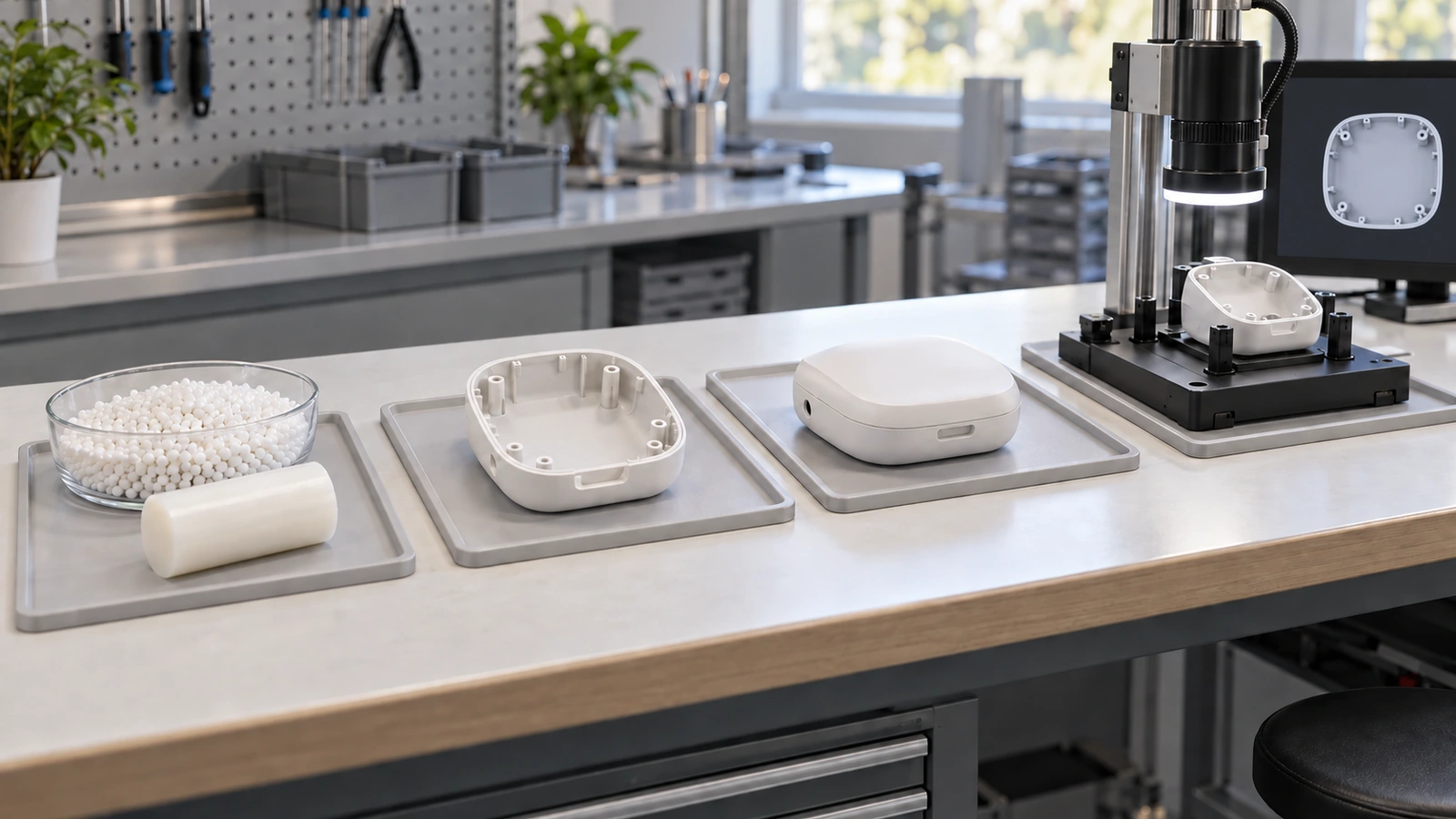
Components and materials need context, not a sample wall
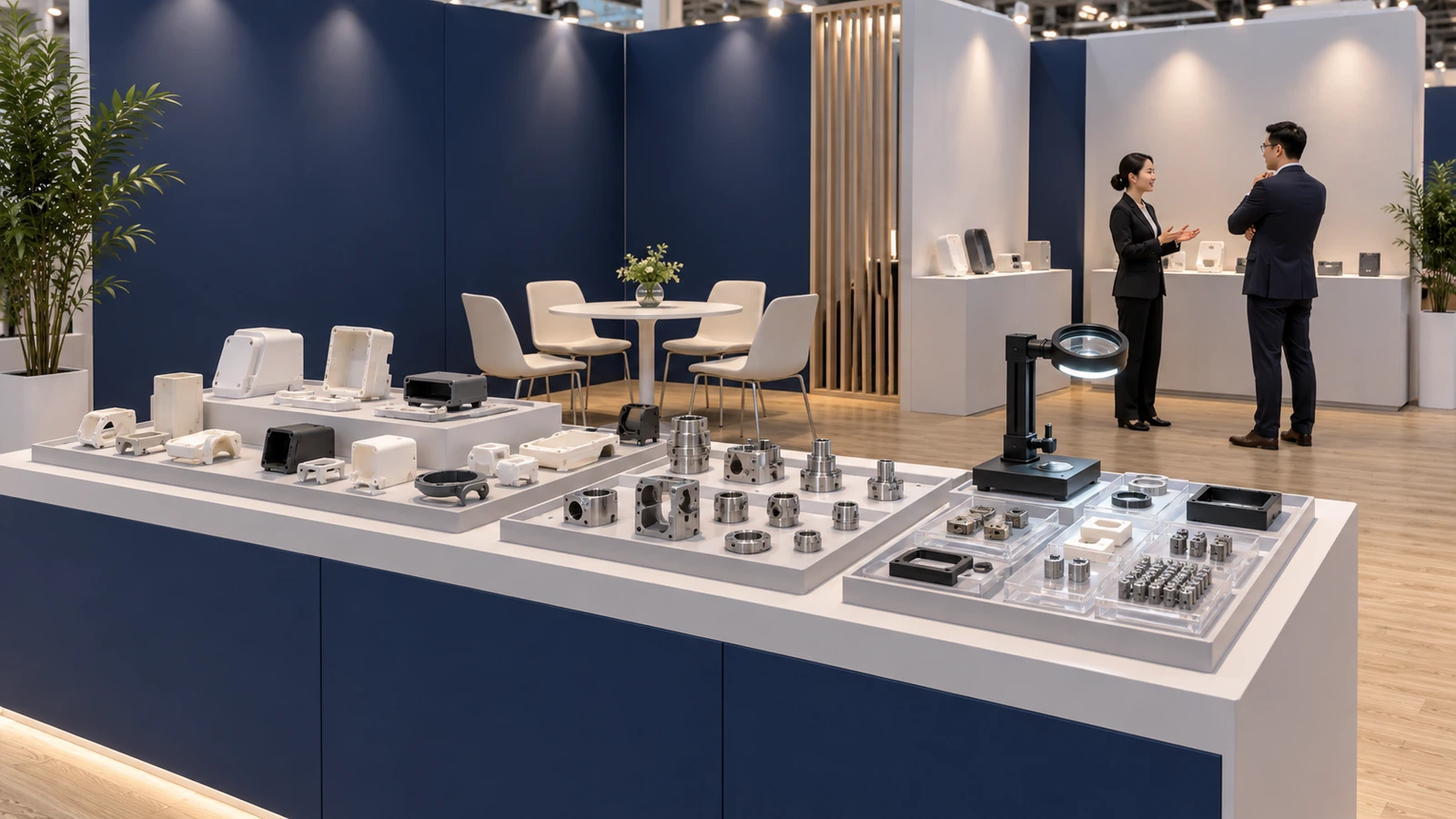
A tray of parts can show range, but it rarely explains selection. Organize the display around a device function, interface, production constraint, or failure your visitor recognizes. Then label only the facts needed to interpret the sample.
If two versions look alike, show what makes the choice different. Keep confidential drawings and customer-specific information out of public view. Your goal is to create a qualified technical question, not to publish an uncontrolled design file.
Contract manufacturing and design services need a visible project boundary
Service companies often lose clarity by promising support from concept to production without showing what each stage requires. Use one representative development path and mark the inputs, review points, and handoffs your team actually owns.
Visitors should be able to see whether you fit their current stage. A startup looking for design-for-manufacturing feedback and an established OEM qualifying production capacity may both stop, but they should not receive the same first conversation.
Equipment, automation, and software need a controlled workflow
A live system attracts attention only when visitors can see the operating problem and the result. Keep the sequence short. Show the input, the action, the output, and the next technical question.
Prepare a fallback for any demo that depends on connectivity, utilities, protected data, or equipment approval. A recorded workflow or guided station is more credible than a failed live demonstration. Confirm every physical and technical dependency before the booth design makes it unavoidable.
What Must Be Confirmed Before Booth Production?
The current floor plan and event pages are useful for evaluation, but they are not a substitute for your executed agreement and exhibitor service documents.
| Decision | Confirm with | Why it changes the booth |
|---|---|---|
| Booth number, dimensions, open sides, and neighbors | Event sales/show management | Controls orientation, sightlines, traffic approach, and graphics |
| Height, hanging, and structure approval | Current show rules and venue-approved contacts | Determines whether overhead or tall elements are possible |
| Utilities and internet | Current official service forms | Changes equipment placement, cable routing, and demo reliability |
| Machinery, batteries, heat, liquids, gases, sharps, or live samples | Show management and the responsible safety/venue contacts | May require approval, documentation, containment, or a different demo |
| Shipping and material handling | Current logistics/service documents | Controls labels, timing, handling, empty storage, and return freight |
| Lead capture and data use | Organizer tools plus your privacy/compliance team | Determines how staff collect, store, and follow up with contact data |

Santa Clara Convention Center publishes general facility information, but an event-specific manual can add or change the operating path. Do not release a suspended sign, powered demonstration, or freight plan because a general venue page appears to allow it. Get the current MEDevice requirements and written approvals that apply to your assigned space.
How Should You Make the Go, Attend, or Hold Decision?
Choose attend for research when the audience looks relevant but your booth message, proof, or staffing is not ready. Follow the organizer's registration classification and solicitation rules. An attendee or non-exhibiting supplier badge is not a substitute for exhibit rights.
Choose hold or skip when the event is only loosely related to your offer, the booth would rely on unsupported claims, or your team would approve design and freight before key show facts are in writing. Missing evidence is a planning condition, not a reason to guess.
Frequently Asked Questions
Can someone under 18 enter the MEDevice Silicon Valley expo?
No. The current official event FAQ says no one under 18 is permitted in the expo halls and that childcare is not available onsite. Check ages before you assign interns, student helpers, or family members to your booth team. A guest invitation does not remove the age restriction.
Can a non-exhibiting supplier promote products on the show floor?
The current official FAQ says no. A company whose products or services qualify to exhibit may be classified as a non-exhibiting supplier or manufacturer. The organizer limits that category and prohibits solicitation or distribution of sales materials on the floor. Confirm your classification directly with registration before choosing attendance as a sales alternative.
Is admission to the MEDevice Silicon Valley expo free?
The current FAQ says expo admission is free with preregistration and $199 at the door, subject to eligibility and change. It separately states that non-exhibiting suppliers may be placed in a different paid category. Read the current registration terms for your company type instead of assuming the attendee price applies.
How should you use the MEDevice Silicon Valley exhibitor list before the show?
Use the organizer's directory to map the supplier landscape: flag direct competitors, complementary suppliers, and companies you may want to meet, then note what should change in your booth message or appointment plan. An exhibitor listing does not prove that a particular buyer, engineer, or OEM team will attend. Record the date of the list you review, recheck it as the event approaches, and use public business contact routes for any pre-show outreach.
Can you rely on the posted Innovation Showcase rules for 2026?
Not yet. The current official Innovation Showcase page carries the 2026 event header, but its eligibility section still refers to 2025 exhibitors and lists the submission deadline as TBD. Treat the feature as a possible promotion channel, not an approved 2026 plan. Ask the organizer for refreshed eligibility, timing, fees, display rules, and submission instructions before assigning budget or booth space to it.
Final Thoughts
MEDevice Silicon Valley is most defensible when your booth helps a medical-device professional evaluate one real design, manufacturing, or sourcing decision. Confirm the audience fit first, then separate the published space-price signal from the complete project budget. If the proof, staff, approvals, or operating details are not ready, attending or holding the project is a better decision than forcing a booth.
Send KingExhibits your confirmed booth assignment, current organizer documents, product or demonstration plan, target visitor action, freight origin, and budget boundary. With those inputs, the discussion can focus on a practical exhibit scope while keeping organizer, venue, regulatory, and company-claim decisions with the responsible parties.