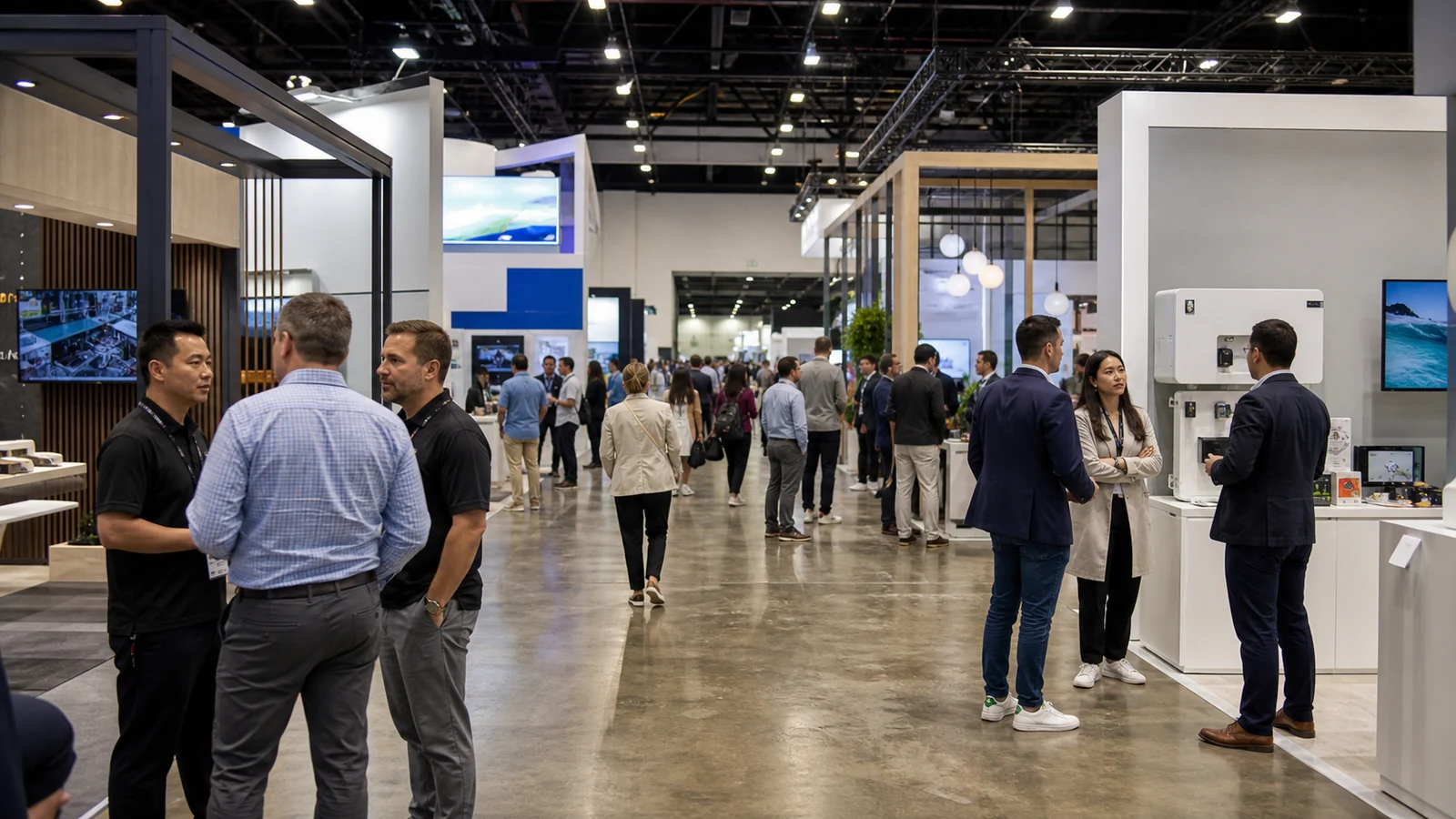
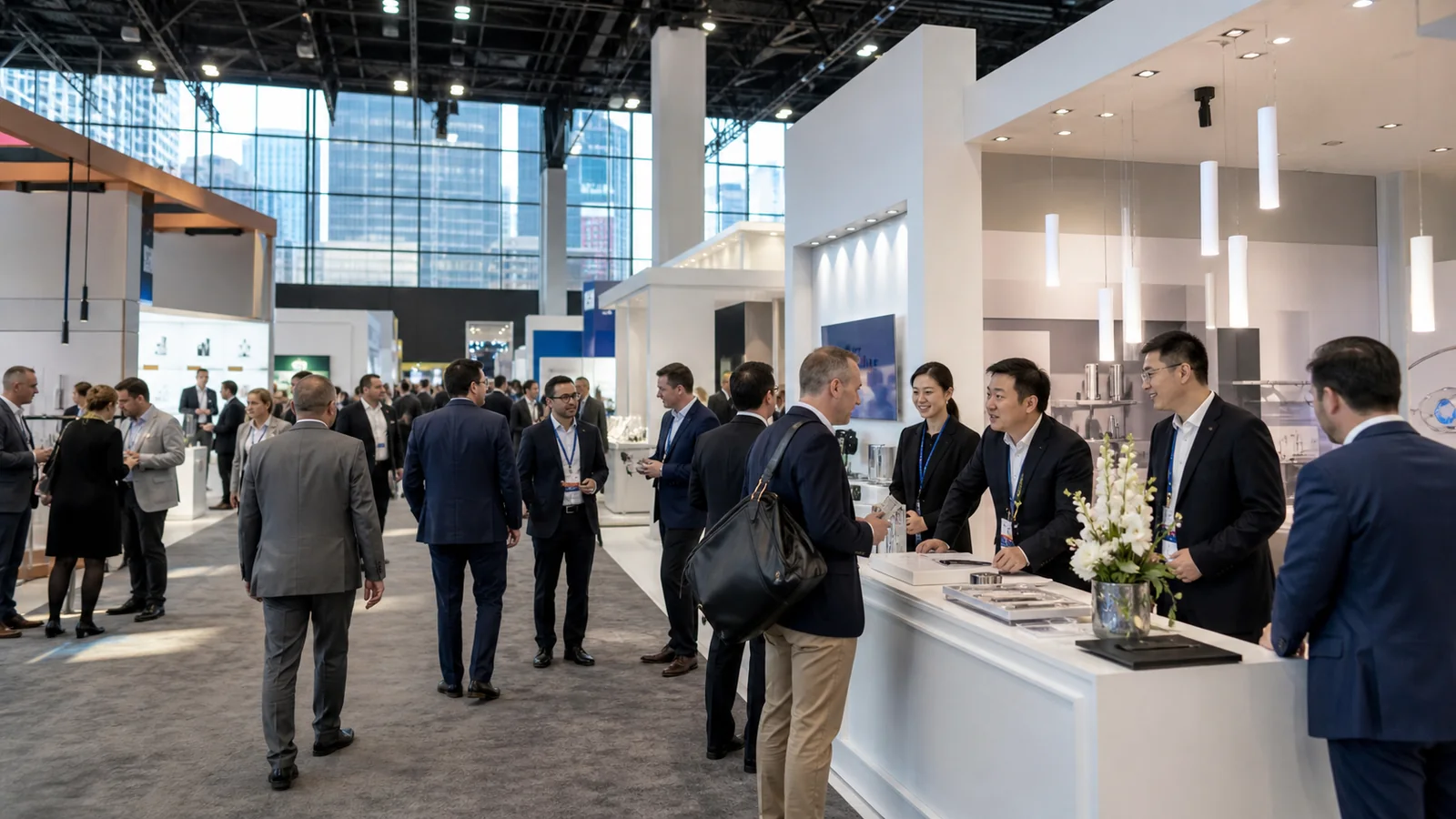
If your company is considering IMECE, the first mistake is treating it like a broad equipment expo. IMECE 2026 is an ASME research-and-development conference with a three-day exhibition inside a five-day technical program. Your decision depends on whether your offer can support a real engineering conversation—not whether “mechanical engineering” appears in your market description.
This guide confirms the 2026 dates, venue, audience, exhibit package, and service roles. It helps you decide whether to exhibit, attend without a booth, or hold the decision until eligibility, staffing, and delivery responsibilities are clear.
What Has ASME Confirmed for IMECE 2026?
ASME lists IMECE 2026 as an in-person event at the Vancouver Convention Centre in Vancouver, British Columbia, Canada. The conference runs November 8–12, 2026, while the exhibition runs November 9–11, 2026. The venue's own November calendar independently lists the International Mechanical Engineering Congress & Exposition for the same five conference dates.

| Planning fact | Current status on September 8, 2026 | What remains live |
|---|---|---|
| Event | ASME International Mechanical Engineering Congress and Exposition | Use the current ASME event site and agreement |
| Conference | November 8–12, 2026 | Session details and any late program changes |
| Exhibition | November 9–11, 2026 | Available space, assigned location, and final exhibit schedule |
| Venue | Vancouver Convention Centre, Vancouver, British Columbia, Canada | Building, hall, access point, and delivery instructions in current documents |
Check the ASME IMECE event page and the Vancouver Convention Centre calendar. Before you book travel, match the conference or exhibition dates to the registration and exhibit agreement your team will use.
Why Is IMECE Different from a Broad Industrial Expo?
ASME describes the IMECE conference as its largest research-and-development conference focused primarily on mechanical engineering. The program overview places researchers from academia, government, and industry R&D labs in the same technical program. The current site also says the event brings together more than 2,000 research leaders. Treat that figure as organizer promotion for the upcoming event, not a guaranteed attendance result.
The program reaches across advanced manufacturing, materials, aerospace, biomedical engineering, dynamics and control, energy, fluids, heat transfer, mechanics, micro- and nano-systems, power, safety and reliability, tribology, and engineering education. That breadth creates opportunity, but it also makes a vague exhibit easy to ignore.
A visitor may be comparing a method, building a research partnership, recruiting talent, looking for test capability, or trying to move an idea toward application. Your booth needs to enter one of those conversations quickly. A product catalog arranged by model number may show what you sell while still failing to show why an IMECE attendee should stop.
Where Can an Exhibitor Create Real Value?
Begin with a technical decision that your company can help someone make. The decision should be narrow enough to explain in one sentence and important enough to justify a follow-up after the show.
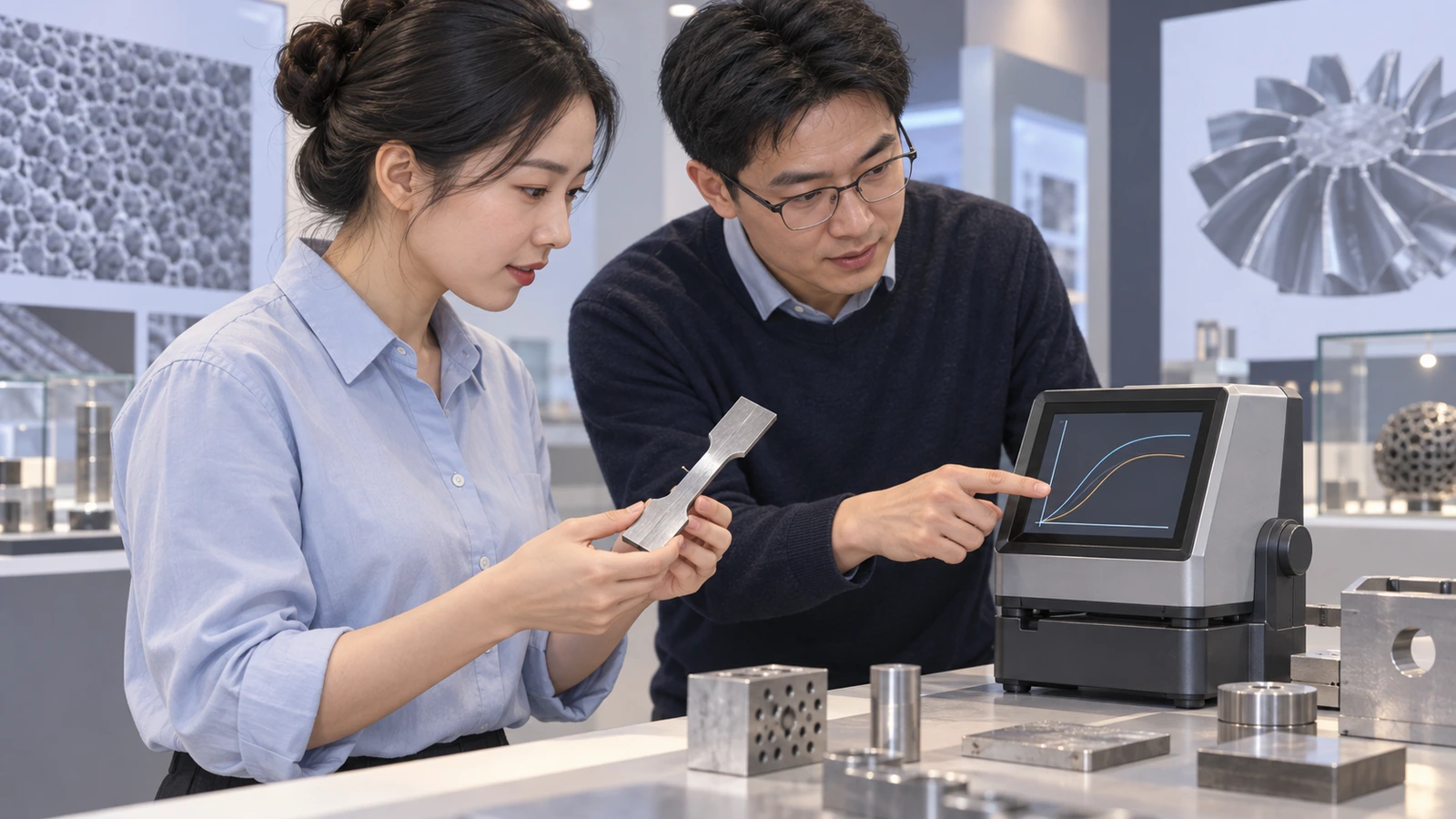
A testing or instrumentation company might help a researcher measure something that was previously uncertain. A simulation or engineering-software provider might make a model easier to validate or connect to physical data. A materials or component supplier might show how a verified property, interface, or production route changes an application. A manufacturing-technology company might demonstrate how a process improves repeatability or opens a design option.
These are fit examples, not an official ASME eligibility list. Send ASME a precise description of what you plan to exhibit if your category, sample, or demonstration could be misunderstood.
Recruiting and partnership goals can also justify a presence, but they require a different booth. If your main objective is to meet graduate researchers, lab leaders, or prospective R&D partners, your display should make the opportunity and qualification route visible. Do not use a product-sales message and assume the right people will infer a research or career offer.
Should You Exhibit, Attend, or Wait?
| Decision | Choose it when | Do not choose it when |
|---|---|---|
| Exhibit in 2026 | You can name the research or engineering role you need to meet, show approved proof, staff the booth with someone who can handle technical follow-up, and obtain current exhibit documents | Your message is only “we serve mechanical engineering,” or your sales team cannot take a technical conversation beyond a scanned badge |
| Attend without a booth | You need to learn how the audience frames a problem, meet researchers or partners by appointment, recruit, or test whether your offer belongs in a future exhibit | Your team will arrive without a session plan, meeting targets, or a written learning question |
| Wait | Space, product eligibility, sample rules, Canada delivery responsibilities, budget ownership, or staffing remains unresolved | You are using delay to avoid facts that ASME and the official service providers have already made available |
| Pass | Your offer serves a different buying process, depends on high-volume end-user traffic, or has no defensible connection to the research program | A specific track, target role, and piece of evidence create a credible reason to participate |
Attendance is not a failed version of exhibiting. For a first-time company, one well-planned visit can show whether conversations are led by researchers, technical managers, students, government labs, or commercial R&D teams in the areas you care about. That evidence can prevent you from building a booth for an audience you have only imagined.
What Does the Published 2026 Exhibit Package Include?
The current ASME sponsor prospectus lists a 100-square-foot space at USD 3,000 plus applicable GST. It describes a standard 10-by-10-foot space with an eight-foot black draped backwall, three-foot side dividers, a six-foot draped table, two chairs, and an identification sign.

For each 100 square feet, the page also lists one technical-conference badge and two booth-personnel badges, complimentary lead retrieval, discounted conference registration for company employees, exhibit-hall lunches for booth staff, and a digital booth. These are published package statements as of September 8, 2026, not a reservation or a promise that inventory remains.
The exhibition is scheduled for Monday through Wednesday. Published hours are noon–7:00 p.m. Monday, noon–4:00 p.m. Tuesday, and noon–4:30 p.m. Wednesday. ASME currently shows Monday move-in from 8:00–11:30 a.m. and Wednesday move-out from 4:30–8:00 p.m.
Those hours make staffing quality more important than staffing volume. The show floor does not run for five full days. Decide who can explain the proof, who qualifies the contact, and who owns the next technical or commercial step.
How Should Your Booth Carry a Research-Led Conversation?
The best starting point is not the wall. It is the exchange you want a qualified visitor to have with your team.

Write one question that the visitor should recognize. Put the proof needed to discuss that question within reach. Then define the next step that both sides can complete after the show. The sequence could be question → sample → measurement → technical review, or application → model → validation gap → collaboration meeting. It should not be slogan → catalog → badge scan.
Technical proof must be readable without becoming a poster paper. Use one clear comparison, sample sequence, instrument view, or process result to start the conversation. Label what is measured and what is only proposed. If a result comes from a test condition, simulation, or development program, state that limit where the visitor can see it.
Physical objects need an operating plan. Record dimensions, weight, value, packing method, power, connectivity, heat, motion, fluids, gases, batteries, sharp edges, security, and handling needs. If you plan to run a live demonstration, obtain the required approvals before production locks the footprint. A machine that looks persuasive in a concept rendering can become unusable when power, material handling, safety approval, or return freight is unresolved.
Your lead record should preserve the engineering context. In addition to contact details, capture the visitor's application, project stage, question, evidence requested, decision role, and agreed follow-up. These fields give your team a better chance of continuing the conversation than an undifferentiated badge list.
Who Controls Each Part of the Vancouver Project?
IMECE's current service boundaries are specific. ASME names GES as the official 2026 service contractor and freight forwarder. ASME also says electrical and Wi-Fi services can be ordered from the Vancouver Convention Centre, while additional furnishings can be ordered from GES.
| Party | Current role shown by official sources | What you should obtain |
|---|---|---|
| ASME | Event owner, exhibit seller, program and show-policy source | Executed agreement, booth assignment, badge terms, approvals, deadlines, and official contacts |
| GES | Official service contractor and freight forwarder named for IMECE 2026 | Current service manual, shipping labels, warehouse and direct-to-site instructions, material-handling terms, and order deadlines |
| Vancouver Convention Centre | Venue; source for electrical and Wi-Fi orders identified by ASME | Current venue order forms, technical requirements, and building-specific instructions |
| Your company | Owner of products, claims, staff, demonstrations, travel, and commercial follow-up | Approved content, object inventory, responsible staff, insurance decisions, and return plan |
ASME's travel page and the venue's public site show different Canada Place street numbers. Neither public address is a freight label. Use the exact warehouse or direct-to-site label in the current GES service manual, including the event and booth identifiers, and confirm the delivery route before dispatch.
Do not let a booth concept blur those roles. A designer can use confirmed inputs, but cannot grant event approval, rewrite a freight label, decide who imports goods into Canada, or promise that a machine can operate. Put every unresolved dependency in a visible open-items list with an owner and due date.
What Must Be Ready Before You Release Design or Production?
Build a release pack that connects the exhibit decision to the documents and orders that govern the work. At minimum, it should contain:
- the executed ASME agreement, booth number, dimensions, open sides, and current floor plan;
- the latest GES service manual and official shipping instructions;
- the venue forms for confirmed power, internet, audiovisual, or other technical services;
- written approval for any sample, machine, material, battery, fluid, gas, heat, motion, or demonstration that may trigger a rule;
- your one target attendee role, one engineering question, one primary claim, and the evidence that supports it;
- an object list with dimensions, weight, value, packing, handling, security, and return responsibilities;
- the booth staffing schedule, badge types, meeting needs, and technical escalation owner;
- freight origin, customs/import responsibility, delivery path, empty-container plan, dismantle window, and return destination;
- a budget that separates exhibit space, structure and graphics, official services, freight and material handling, travel, tax, contingency, and unresolved items;
- a responsibility table that identifies who supplies, approves, orders, pays for, and signs off each item.

If one of these inputs changes the footprint, structure, electrical load, freight route, or legal responsibility, it is not a minor detail. Keep that item open until the responsible party confirms it in writing. A polished rendering is not a substitute for a buildable, shippable, and approvable scope.
Frequently Asked Questions
Is IMECE 2026 in Vancouver the same event as IMECE India 2026?
No. Google results can show both names, but they are separate event routes with different locations, dates, sites, and participation details. This guide covers ASME's IMECE 2026 in Vancouver from November 8–12, with its exhibition November 9–11. Use the specific event page and agreement for the edition you plan to attend; do not transfer a deadline or package between them.
Does a company need an accepted paper to reserve exhibit space?
The public 2026 sponsor/exhibit information reviewed does not list an accepted paper as a booth-booking prerequisite, but that absence is not a formal eligibility confirmation. ASME invites companies to select space or contact its exhibits team. Keep exhibit booking separate from the author registration process; before you commit, ask ASME to confirm whether your company and proposed display require an accepted paper, along with space availability and the agreement and payment steps.
What is the IMECE startup exhibit offer?
The current sponsor page lists a USD 1,500 opportunity for startups that have been in business for less than five years. It says a company may participate as a startup for no more than three years. Treat that as a published offer, not a confirmed reservation or complete package description. Ask ASME what documentation, space, badges, services, taxes, and availability apply before budgeting it.
Can booth-personnel badges be used for technical sessions?
Do not assume that they can. The published package distinguishes one technical-conference badge from two booth-personnel badges per 100 square feet. Ask ASME which rooms, meals, receptions, and program elements each badge can access. If your exhibit plan depends on technical staff attending sessions, budget and register for the access they actually need.
What Can You Put in the IMECE Digital Booth?
ASME's sponsor page says the included digital booth can hold brochures, videos, job postings, and more. The phrase “and more” does not define formats, file limits, upload deadlines, or how attendees will find the material. Before you build assets, ask ASME for the current specifications and publishing schedule. Choose only materials that support the same engineering question and follow-up route as the physical booth, so the digital listing does not become a second, unrelated catalog.
Final Thoughts
IMECE 2026 can justify an exhibit when your company has a precise engineering conversation, visible proof, the right technical staff, and a current Vancouver operating plan. If those pieces are not ready, attend with a learning and meeting plan or wait; do not let the event's broad mechanical-engineering label make the decision for you.
KingExhibits currently presents its public service scope around U.S. trade shows, so IMECE 2026 in Canada requires a written scope check before any booth work is discussed. Ask the team to confirm whether it can support a Vancouver project and define who will handle customs, freight, GES coordination, venue services, and local execution. If you receive written confirmation, send your ASME agreement, floor plan, evidence list, and budget for a scoped review.