Your extrusion technology may solve a real production problem, yet that alone does not make this show a good investment. The 2026 Plastics Extrusion World Expo North America gives you a focused place to meet the industry. Before you book, you still need to prove that the right technical audience, booth evidence, and complete cost support your sales plan.
What Is Confirmed for the 2026 Plastics Extrusion World Expo North America?
AMI lists the next North American edition for November 11–12, 2026, in Cleveland, Ohio. The event will run from 9:00 a.m. to 5:00 p.m. on both days at the Huntington Convention Center of Cleveland, 300 Lakeside Avenue. AMI's current visitor-planning page says the combined event will use Halls A, B, and C.
The Plastics Extrusion World Expo is one of four specialized exhibitions held together. The other three cover compounding, plastics recycling, and polymer testing. Visitor access spans the co-located exhibitions, but your exhibit still needs a clear extrusion purpose.
AMI and the venue retain control over the event, registration, floor plan, operating rules, and official services. A booth partner can help you translate confirmed requirements into an exhibit brief; it cannot approve your company, reserve space, or change show rules.
Is Your Product a Strong Fit for the Extrusion Expo?
The strongest fit is not “we sell to plastics companies.” Your product needs a recognizable place in an extrusion line, and a role inside your target account must be responsible for evaluating the problem it solves.

| Your offer | Likely fit | Evidence that belongs in the booth |
|---|---|---|
| Complete extruders or extrusion lines | Strong when you serve a defined process and output | A process map, line configuration, sample output, operating window, and a clear route to a technical review |
| Dies, screws, barrels, screen changers, pumps, or filtration components | Strong when the component changes melt handling or finished-product consistency | A cutaway, wear comparison, sample defect, maintenance access point, or before-and-after operating evidence |
| Material handling, blending, drying, dosing, feeding, or conveying systems | Strong when the system directly supports extrusion stability | A flow diagram, control response, material-change sequence, contamination-control step, or measurable repeatability claim with its basis |
| Cooling, calibration, haul-off, cutting, winding, printing, or other downstream equipment | Strong when visitors can connect the equipment to a finished product | A product sample sequence, dimensional comparison, line-speed context, changeover example, or compact working demonstration |
| Sensors, controls, software, automation, or inspection tied to extrusion | Strong when your team can show what the operator sees and does | A live or simulated interface, alarm-to-action example, trend display, traceability record, or offline demonstration |
| General plastics materials or laboratory services | Conditional | Confirm whether the extrusion expo or a co-located compounding/testing show places you closer to the person who starts the evaluation |
| Broad industrial products with no extrusion-specific use case | Weak | Do not rely on general plastics traffic to create relevance that your product and message do not have |
If your offer crosses two shows, start with the person who normally opens the opportunity. A resin additive may influence extrusion results, but the first evaluator could sit in formulation rather than line operations. A testing instrument may diagnose an extrusion defect, but its natural audience may be in the Polymer Testing World Expo. Ask AMI which show your contract, directory category, and booth location will identify.
Who Must Be Present for the Event to Be Worth Your Budget?
The organizer describes a targeted plastics audience and publishes four-show totals. Its 2025 event results report 5,453 attendees and 352 exhibitors across the co-located event. Those figures indicate scale, but they do not tell you how many visitors were responsible for your extrusion process, product category, or purchase decision.

Build your case from named evidence. Start with the live 2026 exhibitor directory and list customers, channel partners, complementary suppliers, and competitors you recognize. Then ask AMI for the latest company-type and job-function information available to exhibitors. Compare that material with your own target-account list.
Your decision should survive three questions:
- Which plant, OEM, converter, brand, or supplier accounts do you want to meet?
- Which role owns the problem your product solves: operations, process engineering, maintenance, quality, purchasing, or management?
- What can your team do before the show to secure meetings instead of depending on aisle traffic?
Move forward when you can connect a credible group of accounts to a specific technical problem and follow-up path. Pause when total attendance is the main argument. Pass when your desired audience is primarily consumer, academic, or unrelated to extrusion production.
What Should You Verify Before You Reserve a Booth?
Request the current space application and contract before you release exhibit production. The document set should answer:
- the space rate, deposit schedule, cancellation terms, and taxes;
- what the space fee includes and excludes;
- the show name and directory category attached to your company;
- the floor-plan conditions and any approval limits on the display;
- access to the Exhibitor Resource Center and current service deadlines.
Treat every missing cost as pending, not zero. A public floor-plan price or space fee, if shown during your inquiry, would still be only one part of the delivered exhibiting cost.
How Should an Extrusion Booth Prove Technical Value?
An extrusion audience does not need another wall of unsupported claims. It needs to recognize the line problem, inspect the evidence, and understand the next technical step.
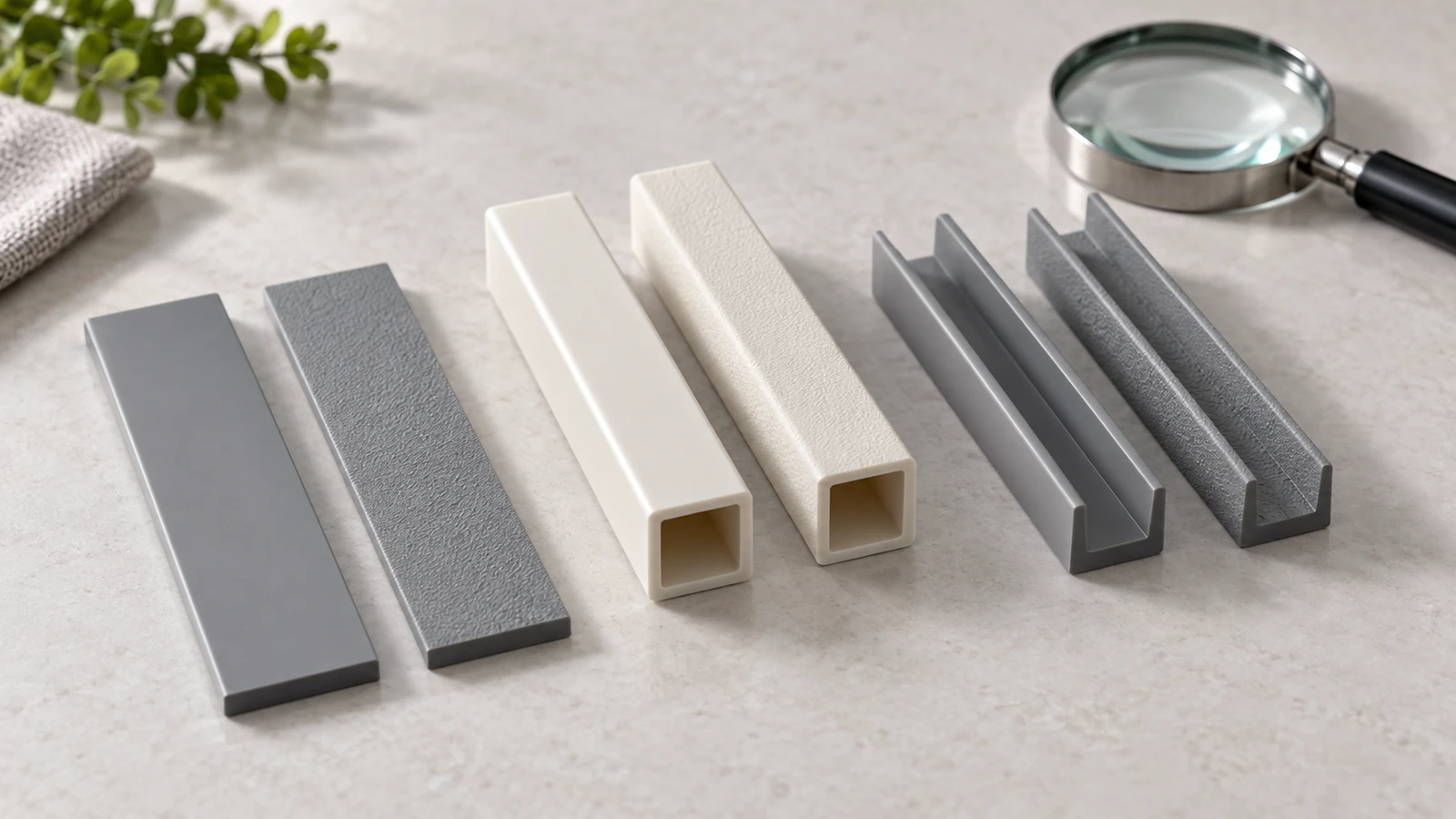
Make one problem visible from the aisle
Choose the production issue that creates the most useful conversation for your team. It might be gauge variation, contamination, slow changeover, unstable feeding, surface defects, scrap, or difficult maintenance. Put the issue and the affected output where a passing visitor can identify it without reading a paragraph.
The message must be narrow enough to qualify people. “Improve extrusion performance” attracts agreement but does not tell the visitor why to stop. A more specific statement should still be supportable: name the process point or finished-product result, then keep the operating conditions beside the proof.
Let the visitor inspect evidence
Build the central interaction around something the visitor can compare. Product samples, cutaways, wear parts, screen data, a control simulation, or a short recorded process sequence can carry the conversation when a full line is impractical.
Do not detach a performance number from its test or operating basis. If you show output, energy, scrap, changeover, or consistency improvements, state the machine, material, conditions, baseline, and source your team is allowed to discuss. If the claim changes by application, train staff to say what still requires a trial.
Separate aisle explanation from engineering discussion
A large machine image may earn a glance, but it cannot answer every technical question. Use the front of the booth for a fast process story. Put detailed drawings, videos, application examples, and meeting space deeper in the layout so a qualified visitor can continue without blocking the aisle.
Assign each demonstration an owner. That person should know how to start it, stop it safely, explain the limits, and capture what the visitor wants to test next. If a specialist will join remotely, test the handoff and keep an offline version of the evidence.
Capture the process context, not only a badge
Your lead record should tell the next technical person why the conversation matters. Capture the material, end product, line type, current problem, operating constraint, purchase stage, and agreed next action. Do not force every visitor through a long form at the aisle; qualify first, then record the fields needed for the promised follow-up.
The next action should match the evidence. It may be a sample trial, drawing review, line audit, engineering call, or quotation. Define the owner and response time before the show. Otherwise, a technically promising conversation becomes an unqualified name in a spreadsheet.
What If Your Equipment Is Too Large to Bring?
If you cannot bring a full production line, preserve the visitor's evaluation path in a smaller footprint. The compact proof still needs to answer the questions below.

| Full-line question | Compact proof option | Detail to keep available |
|---|---|---|
| Where does the product sit in the line? | A simple line map with your scope highlighted | Upstream and downstream interfaces |
| What physically changes? | A cutaway, representative component, or safe moving sample | Dimensions, materials, wear point, and maintenance access |
| What result should improve? | Matched samples, a trend display, or a recorded trial | Baseline, operating conditions, measurement method, and limits |
| Can it fit an existing plant? | A retrofit sequence or before/after layout | Utility, control, footprint, guarding, and integration inputs |
| What happens after the show? | A clear technical intake station | Files, samples, line data, and people required for the next review |
This approach is especially important for international suppliers. A smaller proof package can reduce physical scope, but it does not remove the need to confirm freight, material handling, customs, installation, utilities, safety, and return logistics. Make those decisions from current written instructions, not from an older show's routine.
How Do You Build a Complete Exhibiting Budget?
AMI's current public pages do not establish a complete 2026 exhibitor total for your company. Ask for the current commercial documents, then keep each cost owner visible.
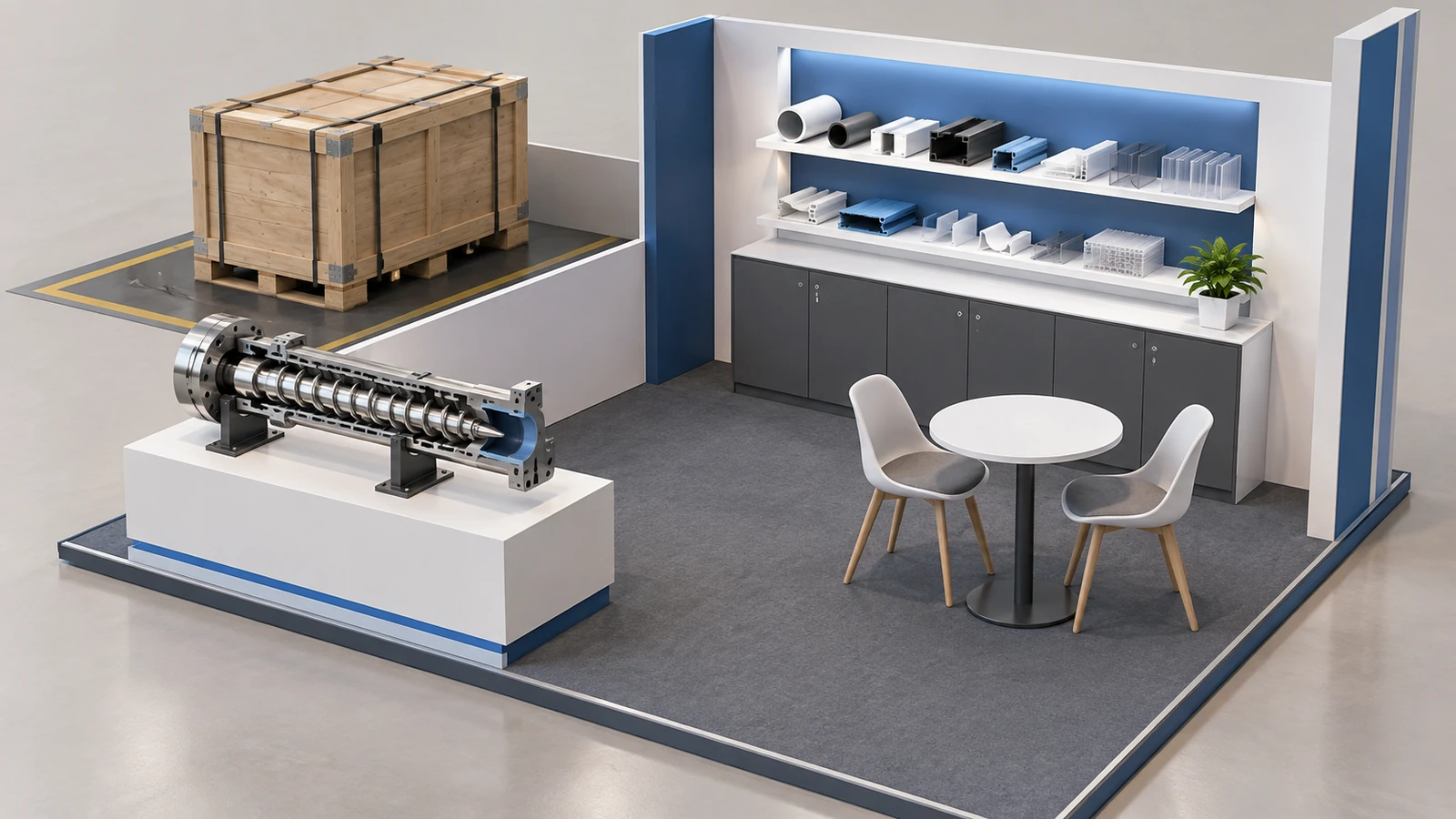
| Budget line | What to confirm | Why it matters for extrusion exhibitors |
|---|---|---|
| Exhibit space | Rate, footprint, open sides, inclusions, deposit, cancellation | Establishes the organizer commitment, not the finished exhibit |
| Exhibit structure | Rental or owned components, graphics, storage, meeting area | Must support the proof without hiding equipment or samples |
| Equipment preparation | Cleaning, guarding, fluids, crating, lifting points, demonstration mode | Affects approval, handling, safety, and what can operate onsite |
| Show services | Material handling, labor, electricity, internet, rigging, cleaning, lead retrieval | Heavy or connected equipment can make these lines material |
| Freight and travel | Carrier, advance warehouse, direct shipment, customs, hotels, staff time | Timing and responsibility can be more important than the lowest freight quote |
| Follow-up | Sample handling, technical calls, trials, visits, quotations | The show has little value if your team cannot execute the next step |
| Contingency | Late orders, replacements, delays, onsite changes | Protects the plan when current instructions or equipment needs change |
Compare proposals on the same scope. A low exhibit quote that excludes graphics, electrical coordination, handling, labor, or return freight is not automatically the lower delivered option. Mark the provider and approval authority for every line before you release purchase orders.
Which Current Documents Control Logistics and Services?
AMI says its Exhibitor Resource Center opens five to six months before the show. It is the route for logistics, health and safety information, onsite-service forms, official supplier details, and order instructions. Your current contract and Resource Center files should control the plan; an old manual should not.

Before production, create one responsibility list that separates AMI, the venue, official suppliers, your exhibit partner, your carrier, and your own team. Confirm who submits drawings, who orders utilities, who receives freight, who provides labor, who supervises equipment, and who signs off at move-out.
Do not assume that visitor opening hours are build hours or that booth placement permits an operating machine. Put every planned powered, heated, moving, or material-fed element into the current document review. The questions below show how to prepare the technical details without treating your booth partner's answer as show approval.
Frequently Asked Questions
What information should you provide before placing a heavy die, screw, or barrel in the booth?
Treat a static component as an engineered display, not ordinary decoration. Before fabrication, document its actual weight, dimensions, center of gravity, support and contact points, lifting method, transport frame, and whether visitors may touch or rotate it. Give the same information to your exhibit partner and the contacts named in the current organizer documents. Ask which drawings, calculations, and handling orders require approval, then keep the pedestal, enclosure, and installation method pending until the load path and responsibilities are accepted in writing.
What must be approved before running a heated, moving, or resin-fed demonstration?
Do not infer operating permission from an exhibitor contract or booth assignment. Send the organizer and the current venue or official-service contacts a written operating description covering power, heat, compressed air or water, moving parts, guarding, emergency stop, material feed, fumes or odors, noise, waste, and operator access. Ask who approves each element and what evidence is required. If written approval is incomplete, use a cold, non-powered, simulated, or recorded demonstration instead. Your booth fabricator can coordinate the request, but its answer alone is not show approval.
How can you use customer samples without exposing confidential process data?
Obtain written permission before showing an identifiable customer part, logo, drawing, result, or process condition. Without that permission, use your own or sanitized samples, remove identifiers and reconstructable specifications, and separate public evidence from controlled files used in private meetings. Label what visitors may compare without implying that hidden conditions do not matter. Brief the booth team on what may be photographed, scanned, emailed, or discussed so a useful proof point does not become a confidentiality breach.
What utility brief should accompany a powered extrusion demonstration?
Assign one technical owner to consolidate the equipment requirements before anyone orders services. The brief should state voltage, phase, frequency, full-load current, startup demand, plug or hardwire method, compressed-air pressure and flow, water supply and return, heat rejection, drainage, network needs, and expected operating periods. Send the same revision to the equipment team, exhibit partner, and the show or venue contacts identified in current documents. Keep prices and availability pending until the official providers confirm the connections, capacity, and installation responsibility in writing.
How do you register booth staff for Plastics Extrusion World Expo?
AMI's current exhibitor FAQ directs you to the personalized team-registration link in the Exhibitor Resource Center. It says staff must use exhibitor registration to receive the correct access and credentials, and it allows exhibitors to register as many team members as they need. Confirm that every scheduled salesperson, application specialist, and relief colleague has completed that process before travel. A general visitor registration should not be used to arrange booth-staff access.
Final Thoughts
Proceed with Plastics Extrusion World Expo North America 2026 when you can name the extrusion problem, the people who own it, the evidence they can inspect, and the full cost of creating the next technical step. Pause if current contract or service facts are missing, and pass if broad plastics exposure is the only reason to exhibit.
Send KingExhibits your confirmed booth assignment, current organizer documents, equipment or sample plan, target visitor action, utility and freight needs, and budget boundary so the team can scope the exhibit around facts rather than assumptions.