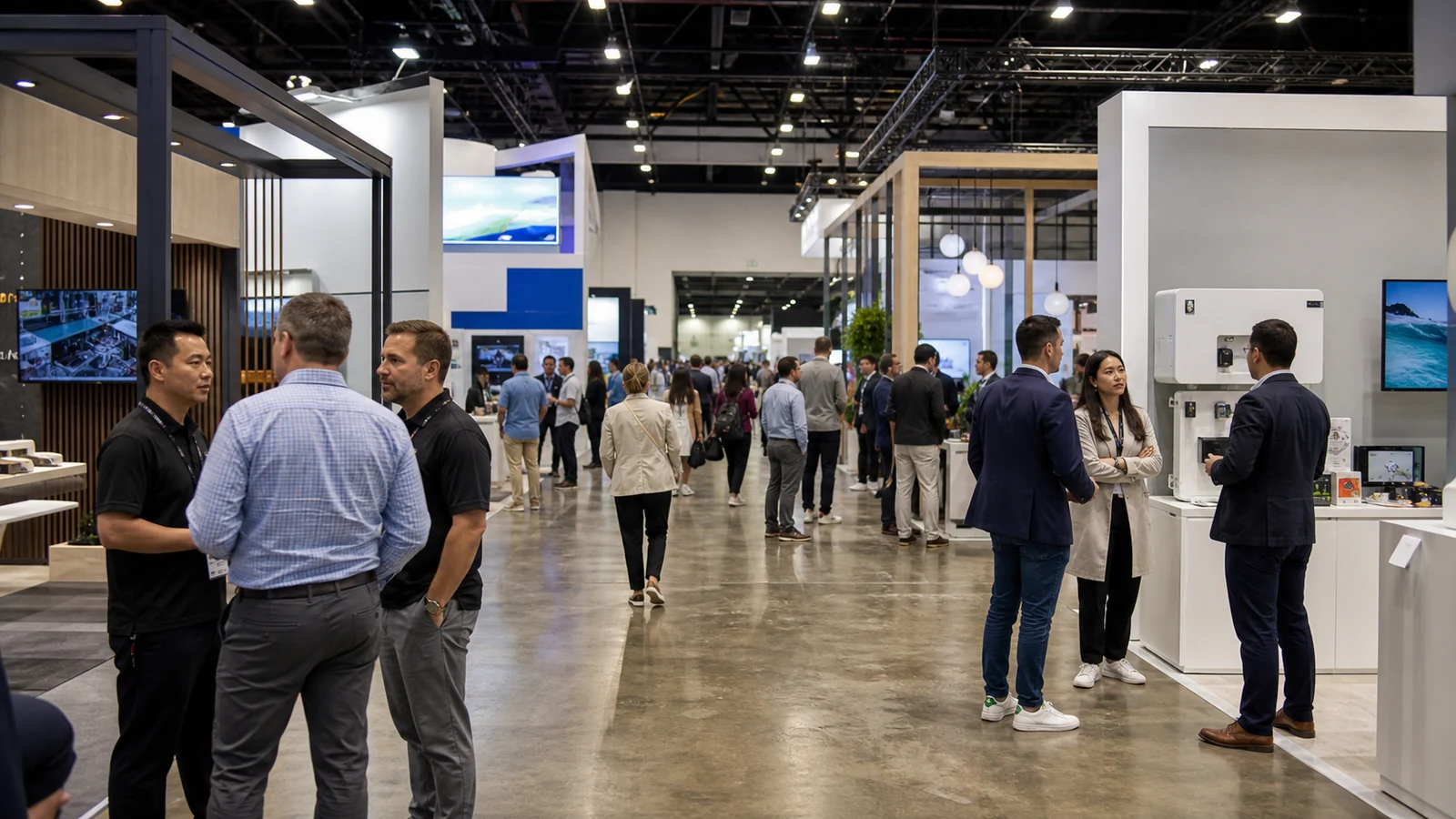
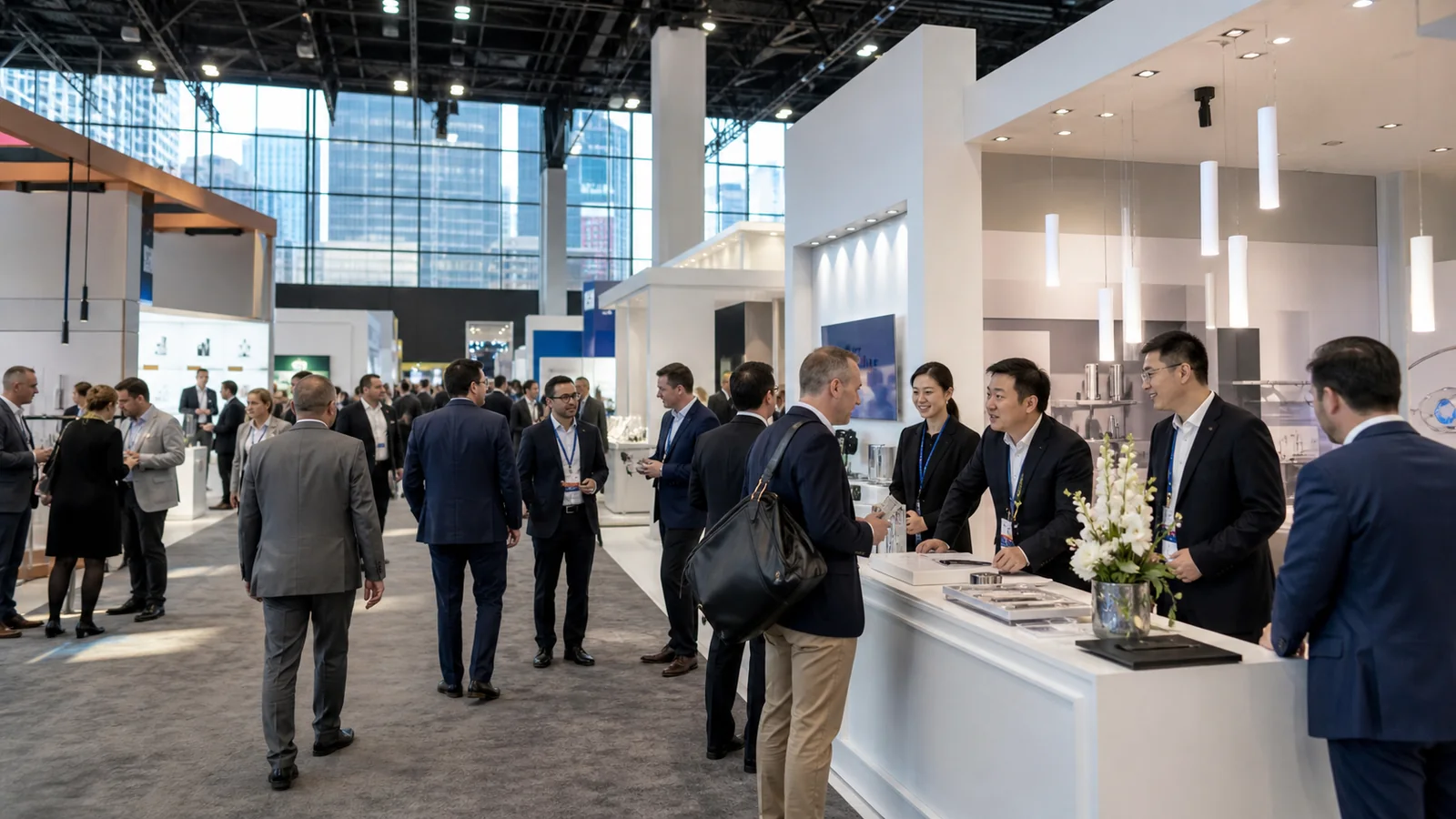
If you are planning a B2B trade show booth, a busy activation can still fail. People may line up and take photos, yet your sales team may finish the show without knowing who had a real need, what anyone learned, or who agreed to continue the conversation.
This guide explains how to plan a brand activation at a trade show around one meaningful buyer action instead of a gimmick. You will learn to judge whether a concept fits your audience, how it must work inside the booth, and what evidence would justify the time and budget.
What Is a Brand Activation at a Trade Show—and How Is It Different From Experiential Marketing?
A trade show brand activation is a planned interaction that lets a target visitor experience, test, compare, create, or decide something connected to your brand. It is not defined by expensive technology. It is defined by what changes for the participant.
Experiential marketing is the broader approach of using participation and experience to build a relationship with an audience. The brand activation is the specific moment your visitor takes part in. At a trade show, that moment must also work inside a crowded booth, support a useful business conversation, and lead somewhere after the interaction.
An aisle attraction only answers, “Why should I stop?” An activation also answers three harder questions:
- What should this visitor understand or believe after taking part?
- What can your team learn about the visitor from the interaction?
- What useful action should happen next?
A prize wheel can attract attention without answering any of them. A two-minute product challenge can answer all three if it reveals a buyer’s application, demonstrates a relevant advantage, and leads naturally to a technical conversation.
The booth still matters. It gives the experience a visible entrance, enough working space, a place for staff to interpret what happened, and a route into a quieter next conversation. The activation and the exhibit should therefore be planned as one visitor journey, not as separate purchases.
Start With One Change You Want in the Visitor
Before discussing formats, finish this sentence:
After the right visitor completes this experience, they should be able to ______.
The blank should describe a change you can observe. “Remember our brand” is too broad on its own. “Identify which of our three systems fits their production bottleneck” is clearer. So is “see why the new component removes one maintenance step” or “book a review with the correct product specialist.”
Choose one primary change. If the activation must create awareness, explain five products, qualify every visitor, collect social content, entertain existing customers, and generate meetings at the same time, the experience will become slow and difficult to explain.
Use the show objective to set the visitor change:
| Show objective | Useful visitor change | Evidence during the interaction | Appropriate next step |
|---|---|---|---|
| Introduce a new product | The visitor can explain the problem the product solves | They complete a relevant task or comparison | Product-specific follow-up or demo |
| Reposition the brand | The visitor sees the company in a new category or role | They choose or discuss a scenario that expresses the new position | Conversation with a category specialist |
| Qualify opportunities | The visitor identifies a real application and constraint | Their choices reveal need, timing, fit, or decision role | Recorded next action with the right owner |
| Strengthen an account | The visitor contributes an idea, priority, or use case | The discussion produces information both teams can use | Scheduled account or technical review |
The activity is not the objective. It is the moment where the objective becomes visible.
Write the Activation Brief Before You Design the Experience
A strong creative brief gives designers, exhibit partners, technology suppliers, and booth staff the same operating picture. Write these decisions in plain language:
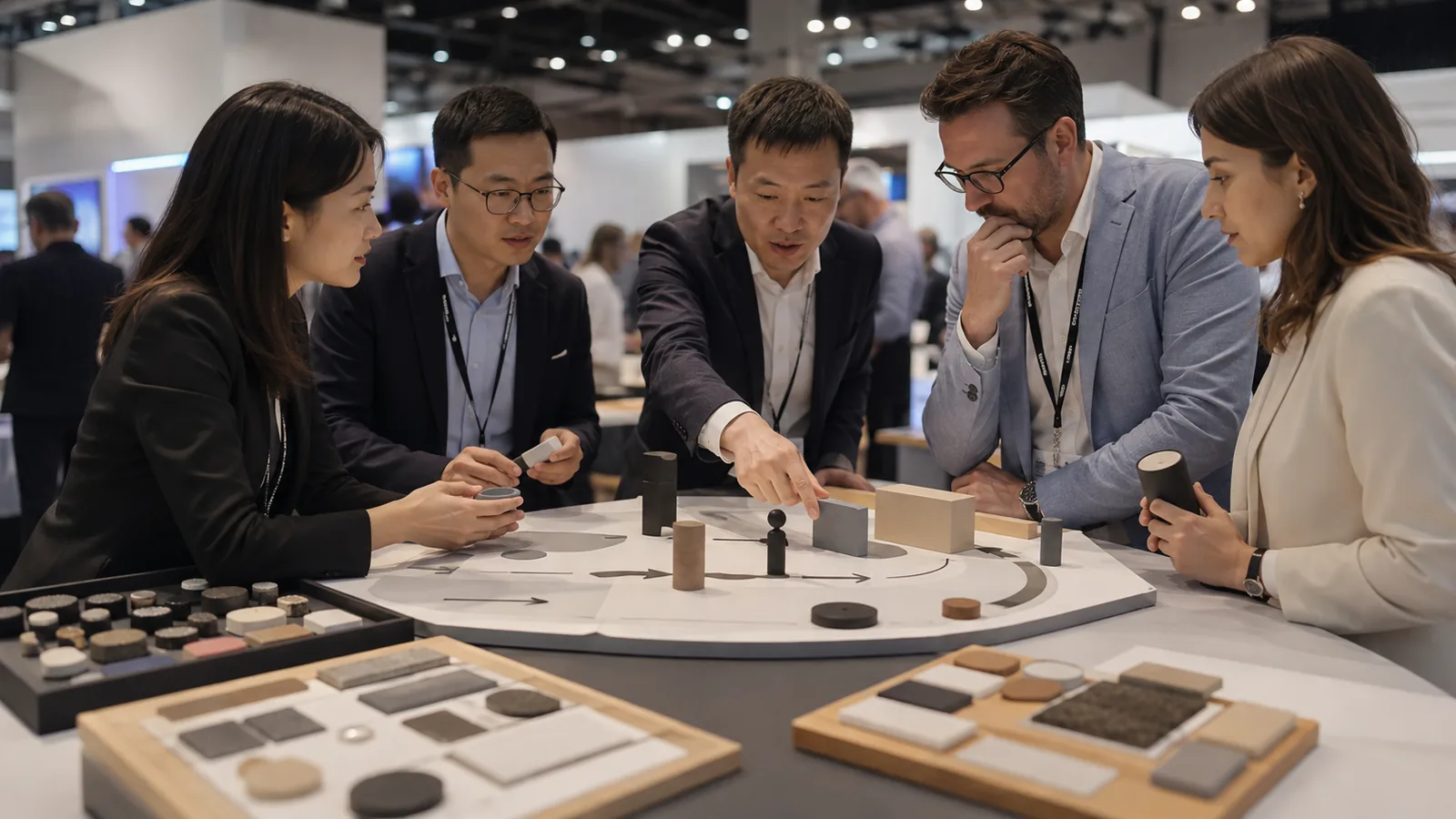
- Target participant: Name the one visitor the experience is built for. “All attendees” is not a usable answer.
- Brand promise: State the one point the participant should experience, not a list of campaign messages.
- Participant action: Describe what the person will physically or mentally do.
- Proof moment: Identify what they will see, feel, compare, produce, or learn that makes the promise credible.
- Qualification clue: Decide what their choice, answer, or behavior can honestly tell your team.
- Staff handoff: Define who steps in, when they step in, and what they say next.
- Follow-up asset: Prepare the result, recommendation, sample, recap, or appointment the participant receives.
- Failure condition: Name the outcome that would make the concept not worth building, even if it draws a crowd.
The failure condition is especially useful. You may reject a concept if most participants are outside the target audience, if the line blocks product access, if staff cannot connect the activity to a business discussion, or if the follow-up data will not help anyone act.
Choose a Format by What the Buyer Needs to Understand
A list of interactive trade show booth ideas is useful only after you know what the buyer needs to understand. Start with that learning job, then choose the simplest format that can do it.
| Buyer need | Activation format | Why it can work | Common way it fails |
|---|---|---|---|
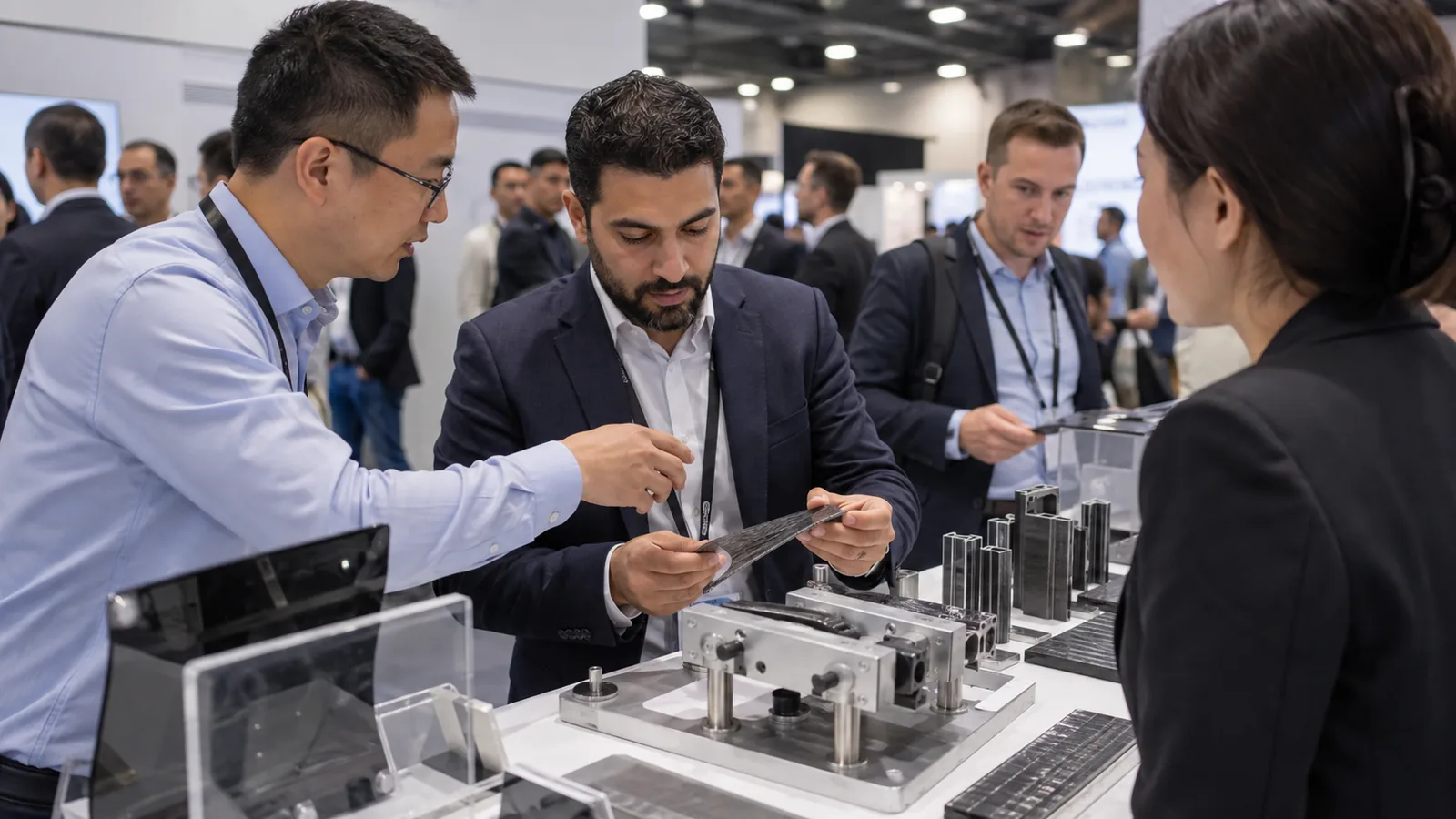
| Understand a technical difference | Guided side-by-side comparison | The visitor can see or handle the evidence and ask a specialist about the result | The comparison is theatrical but does not reflect a real application |
| Find the right solution path | Short diagnostic or scenario choice | Answers can route the visitor to a relevant product, resource, or staff member | Questions are generic, and every result recommends the same thing |
| Believe a performance claim | Visitor-controlled demonstration | The participant sees the input, process, and result instead of watching a sales loop | The demo hides conditions or needs a long explanation before it makes sense |
| Explore a configurable offer | Co-design station or physical build exercise | The visitor makes choices and leaves with a useful configuration to discuss | Too many choices create a queue and no clear conclusion |
| Express an industry priority | Voting wall or structured contribution | The answer starts a peer-level conversation and can guide later content | The question is shallow, and the data has no owner after the show |
| Extend awareness beyond the booth | Useful content or photo moment tied to the message | The participant creates something worth keeping or sharing | The visual moment is memorable but the brand and business point disappear |
Technology should remove friction or reveal something the participant could not otherwise see. A physical sample, a well-run comparison, or a marker on a decision board can outperform an elaborate screen when it gives the visitor more control and the staff a better conversation.
Design the Booth Around the Interaction
An activation changes the booth plan because people need to approach, understand, participate, finish, and move somewhere next. Draw that route before approving a rendering.

At the aisle, a visitor should understand the invitation without blocking the entrance to read instructions. Inside the experience, participants and observers need a defined place. At the exit, staff need room to interpret the result without stopping the next person from starting.
Check the concept against the actual footprint:
- Invitation: Can the right visitor understand the point in a few seconds from the aisle?
- Entry: Can people join without crossing a product demo, meeting, or staff work zone?
- Participation: Can the intended number of people take part without hiding the brand message or main product?
- Observation: Does the booth have a safe place for people who want to watch before committing?
- Handoff: Is there a clear route from the experience to a specialist, meeting area, or scheduled next step?
- Reset: Where do used samples, cleaned components, giveaway stock, devices, cables, personal items, and waste go?
- Exit: Can someone leave easily without cutting through the queue?
In a small inline booth, the best activation may be a single participant action at the aisle edge followed by one staff conversation. A larger booth can support separate discovery, participation, and meeting zones, but those zones still need one understandable sequence. More space does not fix a confusing invitation.
Before fabrication, compare the activation plan with the current exhibitor manual, booth configuration, venue services, safety requirements, accessibility needs, sound limits, power and internet orders, and any organizer approval process. Those conditions change by event. A concept that works in one hall should not be copied into another without a new check.
Make the Staff Handoff Part of the Activation
Visitors rarely interpret an experience exactly as the creative team intended. Booth staff connect the action to the buyer’s situation.

Give staff a four-part conversation path:
- Ask: Use one question to confirm why the visitor stopped.
- Guide: Explain the action in the shortest possible language.
- Interpret: Connect the result to the visitor’s product, role, or current problem.
- Advance: Agree on a next step, or close the conversation politely when there is no fit.
For a diagnostic activation, the handoff might sound like this: “You chose faster changeover rather than maximum output. Is that because your line changes products frequently?” The answer is more useful than “Did you have fun?” and gives a product specialist a reason to join.
Rehearse the difficult moments as well as the ideal one. Staff should know what to do when a visitor does not understand the activity, a device stops working, a group arrives at once, a participant wants only the reward, or a strong prospect needs a private discussion. Assign an activation host, a business or technical specialist, and an owner for queue and reset tasks. In a small team, one person may hold more than one role, but the handoff must still be explicit.
Capture Context, Not Just Contact Details
A badge scan can tell you who entered the system. It does not explain what happened.
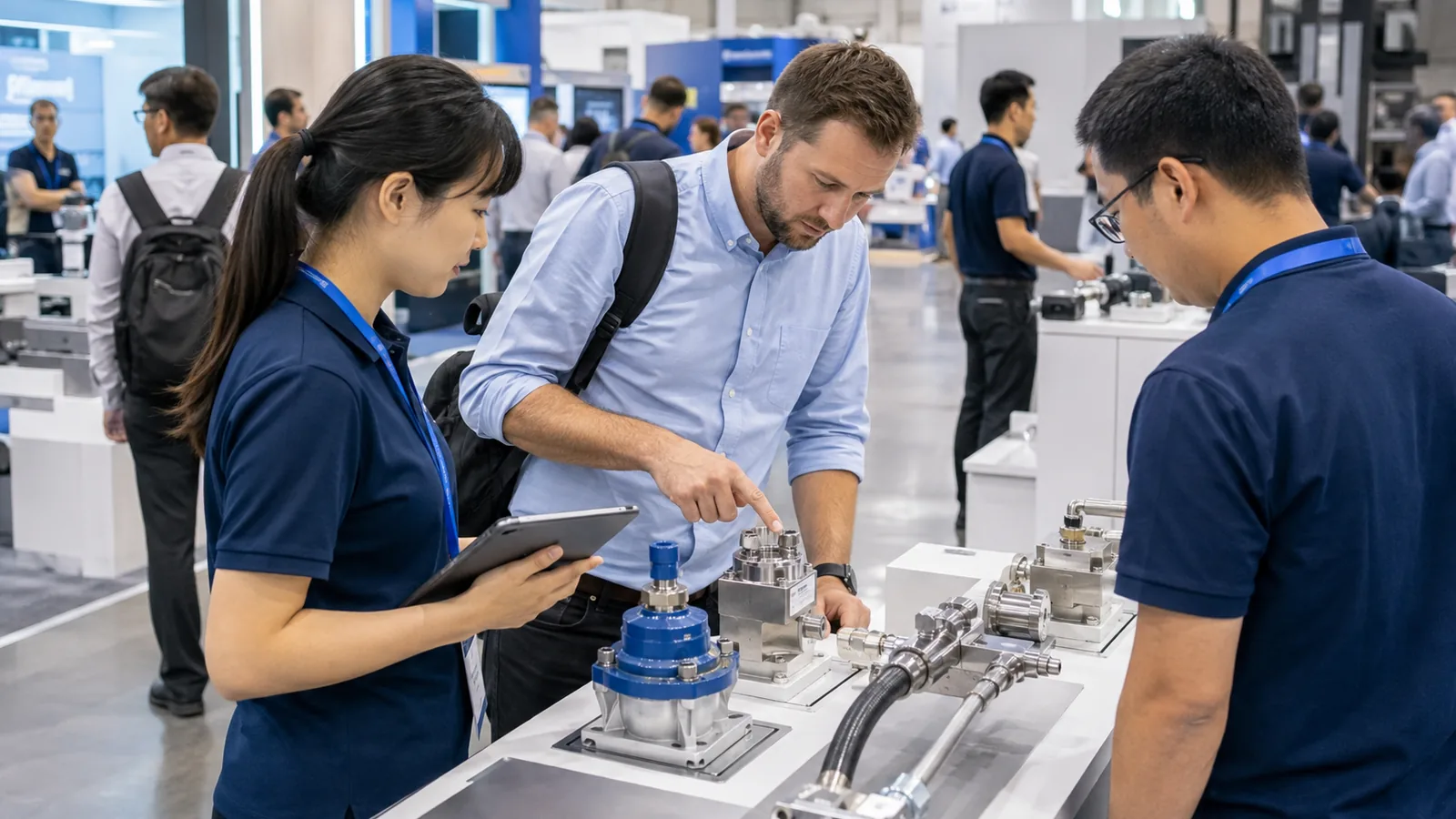
Record only the context your follow-up team can use. At minimum, capture:
- why the visitor engaged;
- what product, application, or problem the interaction revealed;
- what next step was agreed, with an owner and timing.
If the activation produces a result, make that result useful to both sides. A configuration summary, comparison outcome, annotated photo, sample request, or meeting confirmation gives the visitor a reason to continue and gives your team a specific starting point.
Do not hide lead capture inside an apparently open activity. Make the value exchange clear, follow the organizer’s current badge-use conditions and your company’s privacy process, and collect only what the stated follow-up needs. If you cannot explain how a field will be used after the show, remove it.
Measure the Action the Activation Was Built to Create
Crowd photos and total scans can describe activity without showing progress. Match the metric to the visitor change you chose at the beginning.
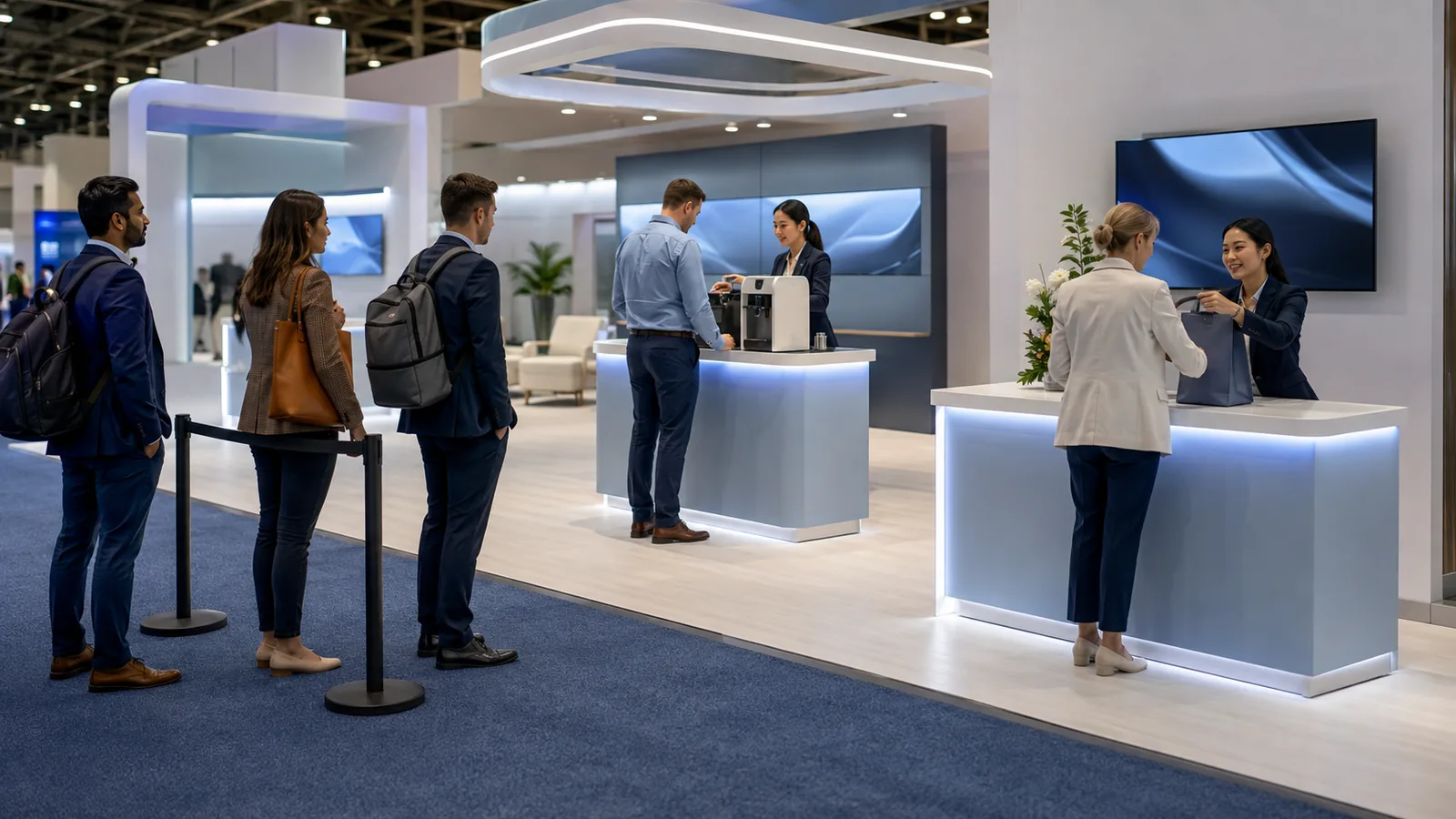
UFI’s exhibition-measurement matrix separates lead quality, demonstration participation, message exposure, customer relationships, new-product testing, and other outcomes. The useful metric depends on the objective. These are not interchangeable numbers.
Build a small measurement chain:
| Stage | Question | Possible measure |
|---|---|---|
| Stop | Did the invitation attract the intended visitor? | Relevant stops or invitations accepted |
| Participate | Did the visitor complete the meaningful action? | Starts, completions, completion rate, abandonment reason |
| Learn or reveal | Did the experience create the intended change or useful information? | Correct comparison, selected need, stated takeaway, configuration result |
| Advance | Did the right visitor agree to continue? | Qualified conversations, samples requested, meetings accepted, technical reviews scheduled |
| Follow through | Did the agreed action happen? | Follow-up completed, meeting held, opportunity stage changed, account action completed |
Three simple calculations can expose different problems:
- Completion rate = completed interactions ÷ started interactions
- Qualified-action rate = participants with an agreed relevant next step ÷ completed interactions
- Cost per qualified action = activation-specific cost ÷ agreed relevant next steps
Define each term before the show. Decide what counts as a start, a completion, a qualified action, and an activation-specific cost. Otherwise, two staff members can report the same booth very differently.
For a new-product or brand-positioning objective, forcing an immediate sales-return calculation can hide the actual job. Return on objective can be more useful when the current job is product understanding or brand awareness. Use the objective measure now, then connect it to later sales or account movement where your sales cycle allows.
Protect the Experience From Operational Failure
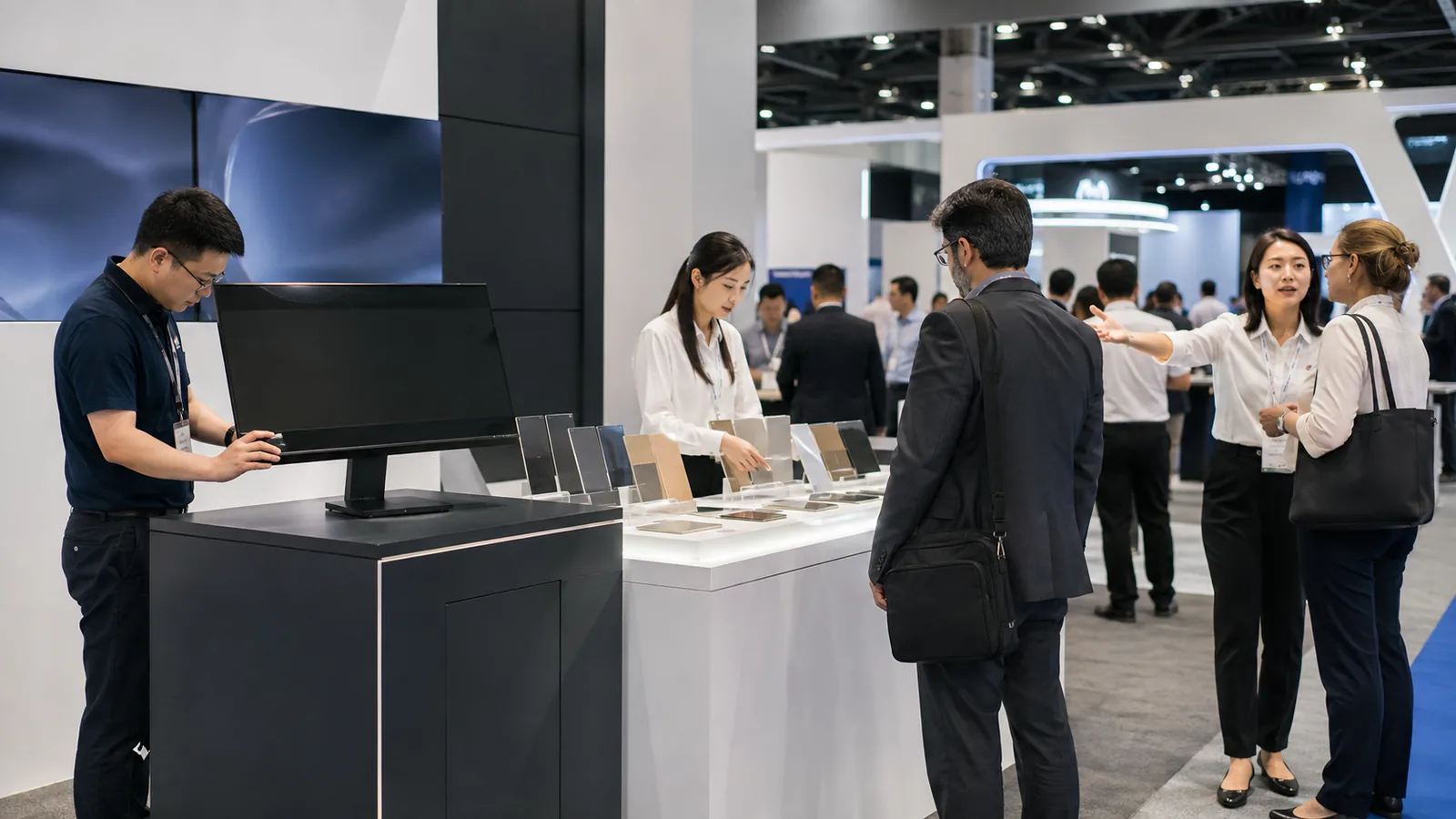
The activation is a live operating system, not just a creative asset. Give each part an owner before the show:
| Work item | Decision that must be settled |
|---|---|
| Creative and brand | Who approves the promise, wording, visual direction, reward, and participant result? |
| Exhibit and floor plan | Who integrates the invitation, experience, queue, product, meeting area, storage, utilities, and exit? |
| Technology or equipment | Who supplies, tests, transports, secures, supports, and replaces each component? |
| Content and data | Who owns the questions, result logic, consent language, data transfer, access, retention, and deletion process? |
| Booth staff | Who recruits, trains, schedules, observes, coaches, and handles escalation? |
| Show services | Who checks the manual, submits approvals, orders services, and confirms on-site responsibility? |
| Follow-up | Who receives each outcome, how quickly must they act, and how will completion be reported? |
Test the entire path with people who did not help design it. Give them the same sign, instructions, device, sample, staff prompt, and follow-up step a visitor will receive. Watch where they hesitate. A hesitation at the aisle becomes a missed stop; one during participation becomes a queue; one at the handoff becomes an unqualified scan.
Prepare a lower-tech fallback that preserves the same visitor action. If a touchscreen diagnostic fails, printed scenario cards may still allow the visitor to choose and discuss a path. If the only fallback is “hand out giveaways,” the original concept was too dependent on the equipment.
Know When to Simplify or Reject an Activation
An activation is a poor investment when it solves the wrong problem.
Simplify or reject the concept when:
- your target buyers mainly need a private, technical, or account-specific conversation;
- the reward is more attractive than the subject, so the likely crowd will be mostly irrelevant;
- the activity hides the product or blocks the people who came to see it;
- the interaction takes longer than the value it gives the visitor;
- staff cannot explain the connection to the brand in one clear sentence;
- the experience collects information that nobody is prepared to use;
- the venue, organizer, supplier, staffing, accessibility, safety, sound, power, internet, or reset conditions cannot be confirmed;
- the team has no realistic follow-up capacity after the show.
In those cases, a scheduled demonstration, guided product comparison, invite-only workshop, or better staff conversation may create more value than a public game. “Less creative” is not a failure if the alternative helps the right buyer make progress.
How Can You Brief KingExhibits About the Activation?
KingExhibits can use an activation brief to shape an exhibit proposal around the footprint, visitor route, product or demonstration needs, graphics, lighting, storage, meeting space, and show-service assumptions. The proposal should separate the booth scope from technology, staffing, promotion, data handling, content production, and organizer or venue services so you can see which party owns each part.
Send your show name, booth number and configuration, floor plan, target visitor, visitor-change statement, activation brief, product and demo requirements, expected participation pattern, meeting needs, available assets, budget range, and current exhibitor manual. Ask for the assumptions, exclusions, required approvals, utility needs, and handoff points to be written into the scope before you approve detailed design.
Frequently Asked Questions
How can we estimate activation capacity before the show?
Run a timed rehearsal, then calculate a planning ceiling: usable show minutes × simultaneous participants ÷ tested cycle minutes. Treat that as a ceiling, not a promise. Reduce it for resets, staff breaks, troubleshooting, uneven traffic, and longer conversations with strong prospects. If the number is far below your objective, shorten the interaction, allow more people to participate at once, or change the objective before adding equipment.
Can you reuse the same brand activation across multiple trade shows?
You can reuse the core promise, interaction logic, content, equipment, and staff training when they still fit the next audience. Do not assume the same physical setup will transfer unchanged. Recheck the booth footprint, open sides, show objective, expected traffic pattern, current manual, approval path, utilities, and tested cycle time for every event. A reusable activation keeps a stable core while allowing the entrance, instructions, capacity, and handoff to change with the show.
When should a trade show activation be self-guided rather than staff-guided?
Use a self-guided format when the invitation is obvious, a visitor can complete the action safely, the result explains itself, and staff do not need to qualify every participant. Use a staff-guided format when the experience needs interpretation, product setup, safety control, application questions, or a direct handoff to a specialist. Test both versions with people outside the project team; choose the one that produces clearer buyer understanding, not simply the faster cycle.
What should you verify before approving an activation technology supplier?
Ask to see a working prototype under realistic show conditions, not only a concept video. Verify the tested cycle time, simultaneous capacity, reset steps, power and internet needs, offline mode, data export, access and retention responsibilities, on-site support, spare equipment, and replacement route. The final scope should name who owns each failure point and what your staff can still run if the primary system stops.
What should we do if the organizer does not approve the original concept?
Preserve the intended visitor change and redesign the delivery. A loud group activity might become a one-person tabletop comparison; an overhead element might become a floor-level proof point; an internet-dependent tool might become guided cards. Do not keep the format and lose the objective. Recheck the revised plan against the current manual and approval path.
Final Thoughts
Judge a trade show activation by the progress it creates, not by how crowded it looks. Start with one target visitor and one observable change. Then connect the participant action to proof, staff interpretation, a next step, and a measurement that matches the objective.
When that chain is clear, the creative format becomes easier to choose and the exhibit becomes easier to design around it. KingExhibits can use your activation brief, show and booth details, product or demo needs, visitor route, meeting requirements, budget range, and current exhibitor manual to discuss a scoped booth plan. Ask for responsibilities, assumptions, exclusions, and approval points in writing before you commit to detailed design.