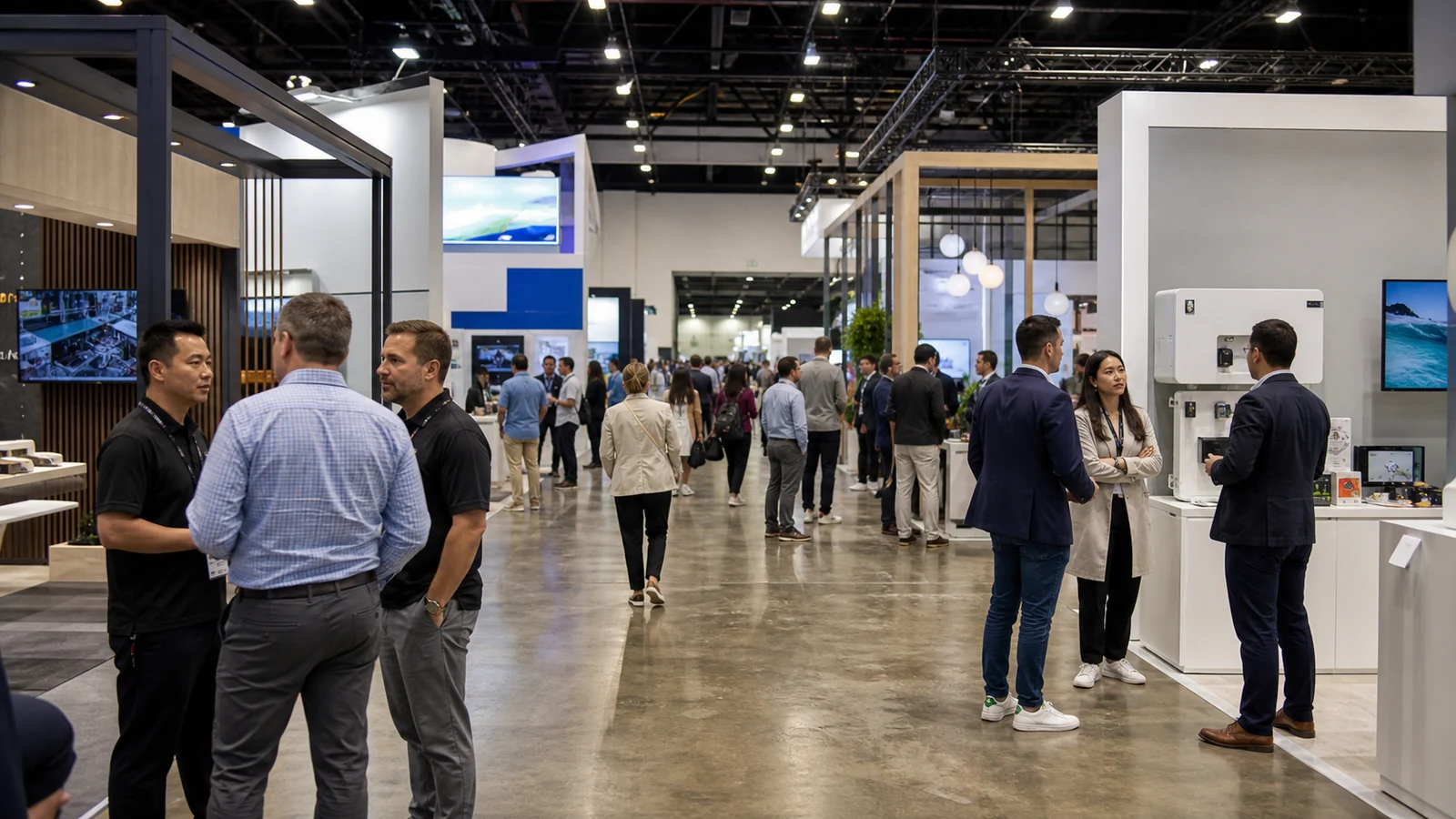
If your team still calls the Orlando event “IAAPA Attractions Expo,” the current official event you are looking for is IAAPA Expo 2026. The name matters when you search for the contract, floor plan, exhibitor manual, hotel block, or service forms: the current organizer pages use “IAAPA Expo.”
For a supplier, the harder question is not whether IAAPA Expo is large. It is whether your product gives an attractions operator or developer a reason to stop, examine the proof, and agree to a next step. This guide explains the 2026 event first, then helps you decide whether your product, demonstration, and booth plan fit the way the show is organized.
What Is IAAPA Expo 2026?
IAAPA Expo is the Orlando event organized by IAAPA, the Global Association for the Attractions Industry. It is broader than an amusement-park-only trade show. In 2026, it brings attraction operators together with the companies that design, equip, and support their venues. Major theme parks are part of the audience, but so are indoor entertainment venues, water attractions, museums, zoos, resorts, and other visitor destinations.
The organizer currently promotes more than 1,100 show-floor exhibitors and over 170 education events. Those figures explain the range of choices a visitor will face; they do not guarantee that the right buyer will find your booth or that a conversation will become an order. Your result still depends on product-market fit, where the booth sits, what visitors can understand quickly, and whether your team can follow up after the show.
IAAPA Expo 2026 Dates, Hours, and Location
IAAPA separates the education schedule from the trade show floor. That distinction affects staffing: the person attending a technical or operations session may be the same person you need in the booth.
| Event element | Current 2026 information |
|---|---|
| Education | November 16–19, 2026 |
| Show floor | November 17–20, 2026 |
| Tuesday–Thursday show-floor hours | 10:00 a.m.–6:00 p.m. |
| Friday show-floor hours | 10:00 a.m.–4:00 p.m. |
| Venue | Orange County Convention Center, Orlando, Florida |
| South Building | 9400 Universal Boulevard, Orlando, FL 32819 |
| West Building | 9800 International Drive, Orlando, FL 32819 |
These times and addresses come from IAAPA’s current on-site information. In 2026, IAAPA Expo expands beyond the South Building into the West Building. IAAPA describes the additional space as an increase of nearly 50 percent. Treat that as a major layout change, not as a promise of equal traffic in every aisle. Before you approve graphics, freight labels, hotel plans, or staff entry points, confirm your building, hall, booth number, open sides, nearby pavilion, and the current floor plan.
Who Will You Meet at IAAPA Expo?
The useful way to read the audience is by the problem each visitor is trying to solve, not by counting industry labels. A park operator choosing a ride component and an indoor-entertainment owner reviewing ticketing software may both attend, but they are buying for different reasons and on different timelines.
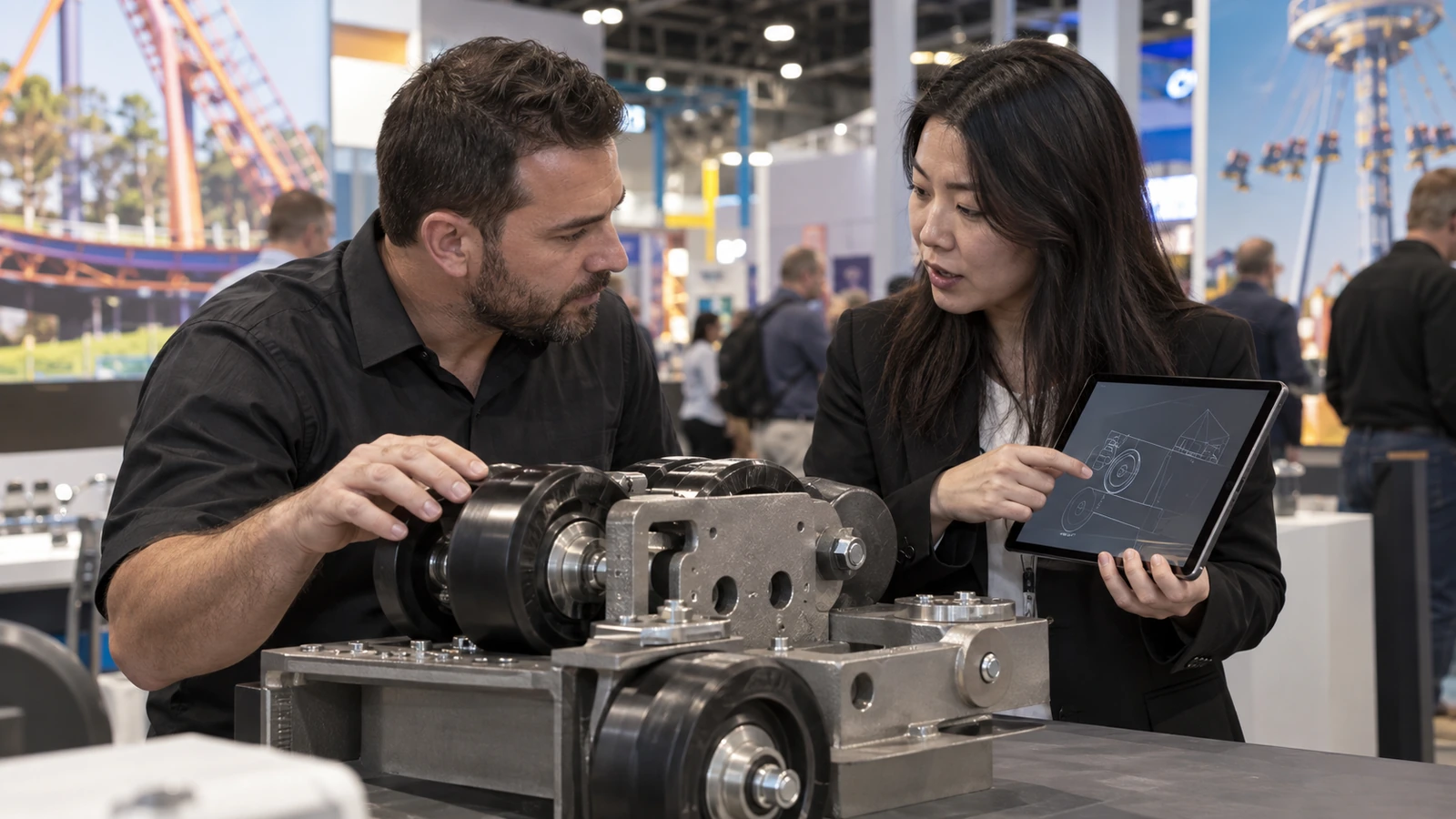
Your booth therefore needs one primary conversation. For a ride component, that may be a technical discussion about reliability, documentation, and support. Software and service offers often need a short workflow or project example that makes the operational change easy to see. Whatever you sell, choose the role that can use, specify, recommend, or buy it, then put the right proof in front of that person.
How the 2026 Show Floor Is Organized
The current IAAPA Expo exhibitor page shows two buildings and product-focused areas. The main groupings cover rides and equipment, games, water attractions, food and beverage, operational services, entertainment design, merchandise, and several specialist categories. Rides and equipment appear in both buildings rather than being confined to one pavilion.
This structure helps a buyer narrow a large floor, but a pavilion label cannot do all of your positioning. Review the current exhibitor list and floor plan, then ask where buyers for your exact product are likely to enter, what else they will compare nearby, and whether the product is better understood beside similar equipment or in a cross-category operating area. If your offer spans several categories, lead with one use case instead of trying to place every product line on the front wall.
The two-building format also changes practical decisions. A team with meetings, education sessions, press activity, and demonstrations in different buildings needs enough coverage for breaks and travel time. A shipment, installer, or staff member sent to the wrong address can lose time during a fixed move-in window. Put the current building and booth number on every internal schedule, shipment instruction, and vendor order after IAAPA confirms the assignment.
Is IAAPA Expo a Good Fit for Your Company?
IAAPA Expo is a credible candidate when your company serves a real attractions-industry buying or operating problem and can make the proof visible. Use four questions to test the fit:
- Who is the first buyer or specifier you need to meet? Name the role and the type of attraction it works for.
- What can that person inspect in the booth? Choose a working demonstration, component, material sample, operating screen, comparison, scale model, or documented project process.
- What must be true before the product can be used in the United States? Confirm the delivery and support plan, then check the required documents and any applicable safety or certification steps with the responsible project team.
- What can your team do after the conversation? Define an achievable next step such as a technical review, site discussion, distributor meeting, sample evaluation, or scheduled demonstration.
If some of these answers are still unclear, it may be better to start with a smaller footprint or resolve the gaps before adding space. A clear buyer, a workable U.S. delivery plan, confirmed demonstration needs, and an assigned follow-up owner will matter more than extra square footage.
What the 2026 Expansion Changes for Exhibitors
The additional West Building space creates more inventory and more ways to group product categories. It also makes location information more important. Do not reuse a 2025 booth drawing, freight label, staffing assumption, or visitor route without checking it against the 2026 assignment.
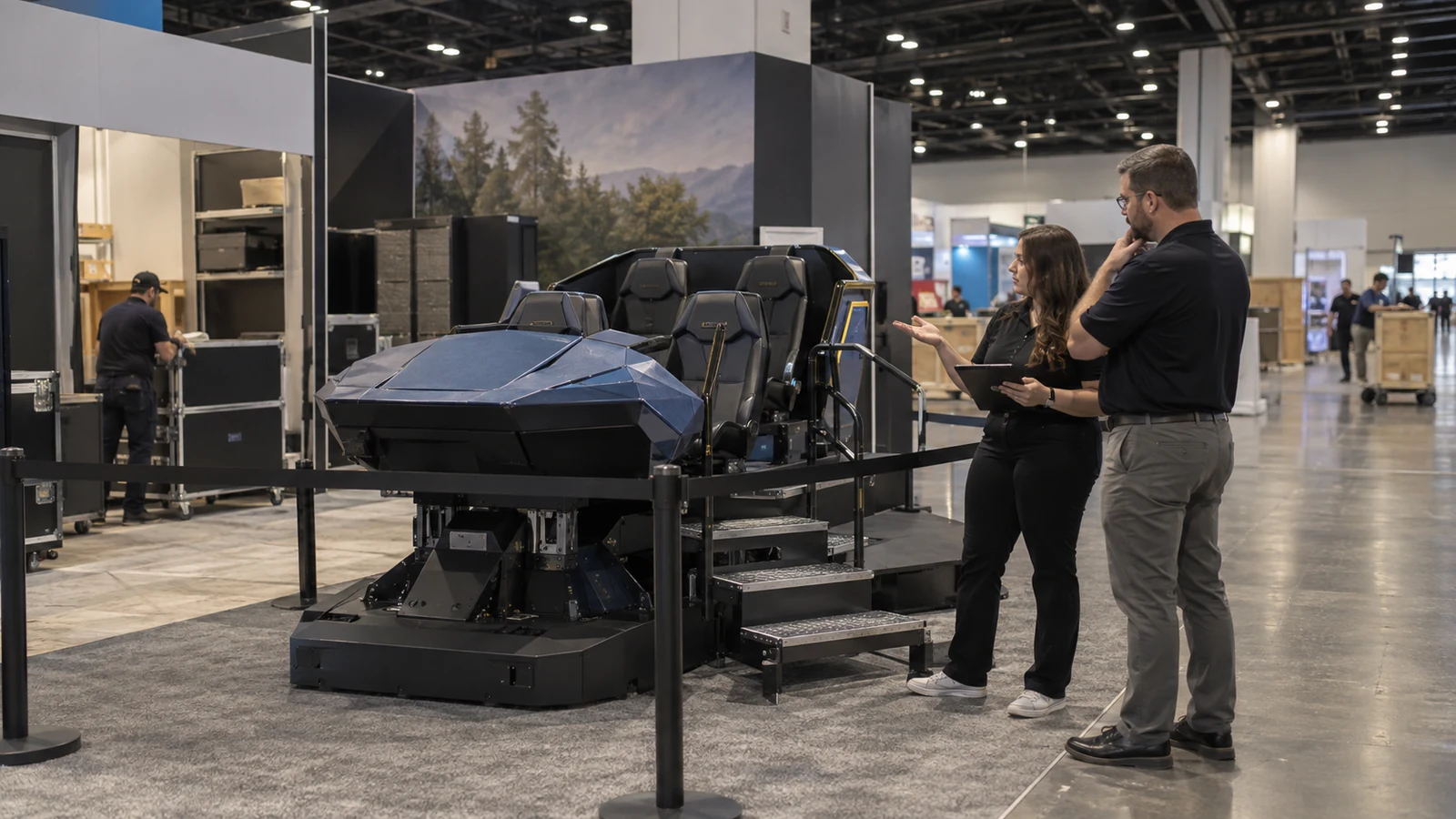
For a first-time exhibitor, a smaller space can work when the product proof fits the footprint and the next step is clear. Large or active exhibits need a different level of planning. If you are bringing a ride vehicle, inflatable, simulator, food-service setup, or water feature, start with the product’s size and how visitors will interact with it. Those two points shape the space, services, safety controls, and approvals you may need. Decide what must operate live and what can be shown with a component, cutaway, video, or controlled demonstration before you choose the structure around it.
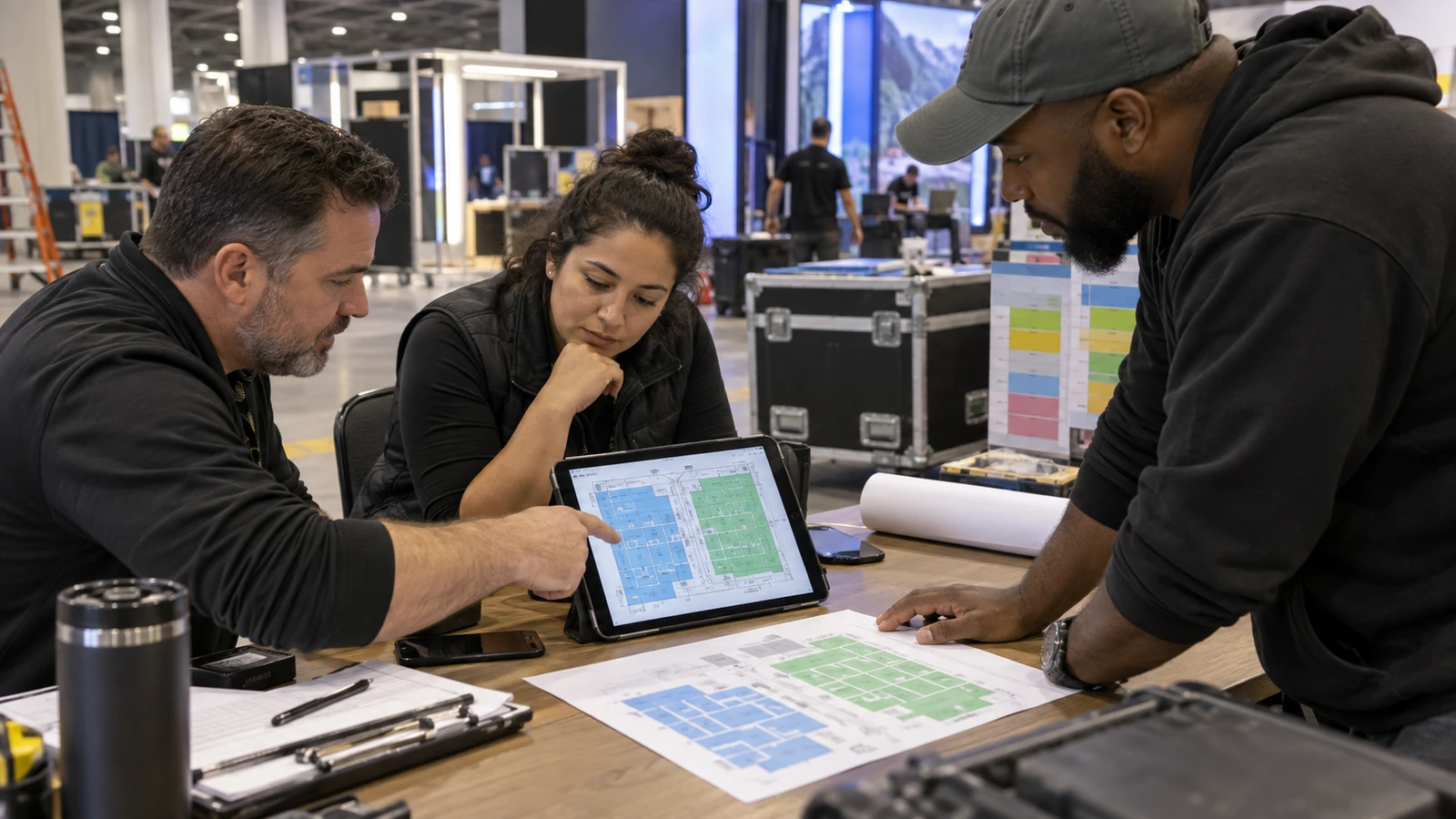
The organizer’s live booth calculator estimates exhibit-space cost, not the complete project budget. Build the rest in three groups: the booth and show services, freight and on-site labor, and the cost of bringing the team and product to Orlando. Keep any line without a current quote marked as pending.
Which IAAPA Rules Affect the Booth Plan?
IAAPA Expo now uses “cubic content” booth rules, which allow an exhibitor to use the booth width and depth up to the maximum height for the contracted booth type. Cubic content does not remove those type-specific limits. A standard linear booth is commonly 10 feet deep, may use the full space up to 8 feet high, and cannot use hanging signs. Indoor exhibitors must provide a floor covering. IAAPA’s specifications also say that exposed exhibit surfaces must be finished and that the structure should leave clearance where it borders neighboring booths.
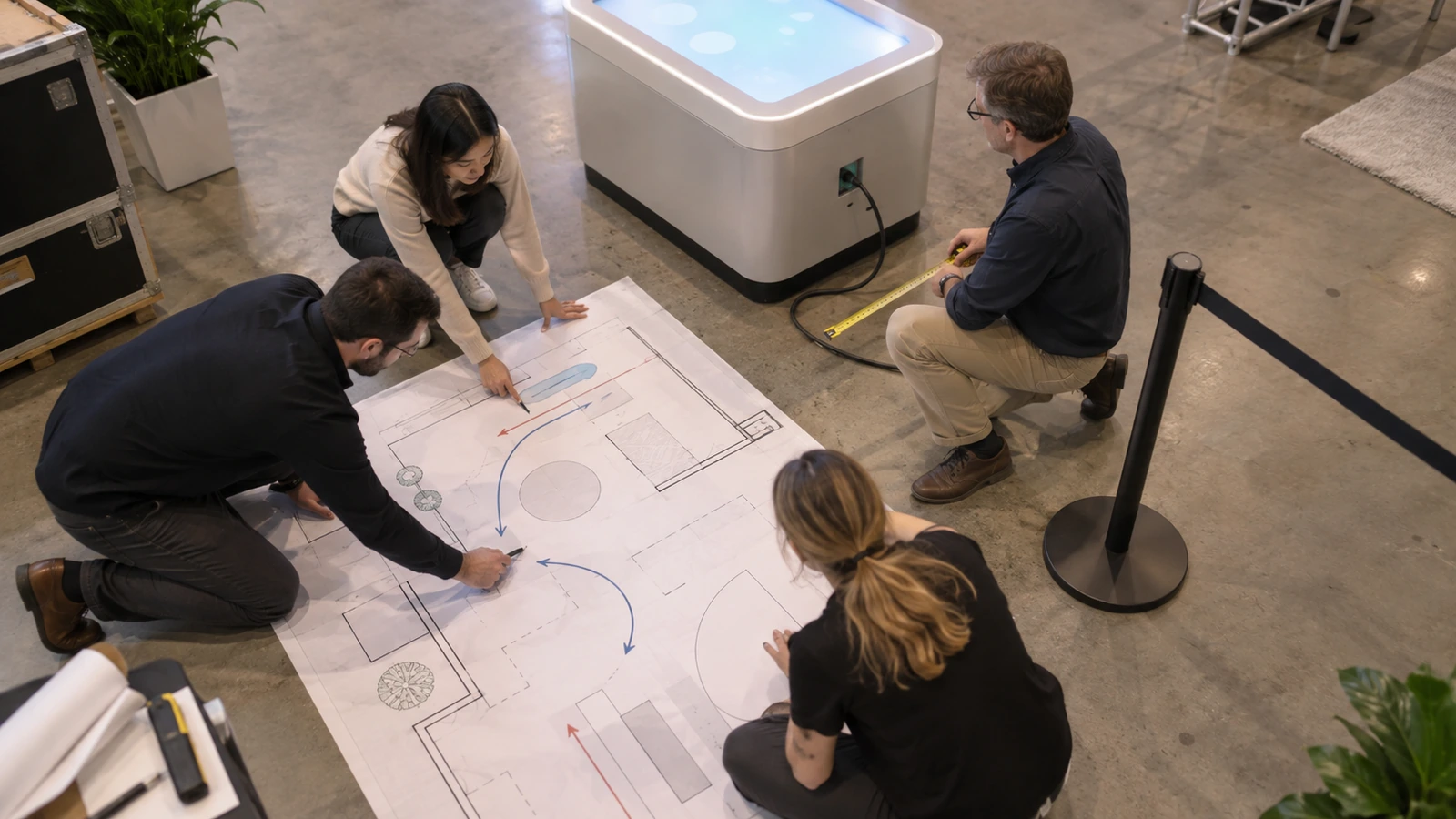
All exhibitors must complete the Booth Layout Form. A booth that meets specified review criteria needs supporting design information. Do not release fabrication because a concept fits the purchased dimensions; release it after the current booth type, height, layout submission, variance needs, floor location, utilities, and organizer response are recorded.
The demonstration may create a second approval path. IAAPA requires all exhibitors to complete the Audience Participation Safety Form and Ride Registration by October 2, 2026, even if their display is static. Dynamic or audience-participation devices require additional information and may be reviewed before and during the show. For an interactive display, agree in advance on who can operate it, how visitors will approach it, and what happens if the demonstration must stop. Close the technical and safety questions with the product team and IAAPA before the show; the booth team can then build the agreed operating plan into the space.
What Should Be Confirmed Before Production or Shipping?
As of September 8, 2026, the early space-allocation period and the published August 14 final payment deadline have passed. That does not tell you whether suitable space is still available, whether IAAPA will accept a new contract, or what terms apply now. Ask Exhibit Sales for current availability and use the present contract, invoice, and floor assignment—not an older prospectus or another exhibitor’s terms.
If you already have space, use the current IAAPA Expo 2026 exhibitor manual to close these items before the booth or product leaves your facility:
- contracting company, invoice, payment status, cancellation terms, and official IAAPA contacts;
- building, hall, booth number, booth type, dimensions, open sides, columns, and nearby pavilion;
- approved layout, height, hanging-sign or rigging status, floor covering, and required clearances;
- product dimensions, weight, center of gravity, operating envelope, visitor position, and storage;
- power, internet, compressed air, water, drainage, cooking, heat, sound, lighting, and other service orders;
- demonstration classification, safety form, ride registration if applicable, insurance, barriers, procedures, inspection documents, and approvals;
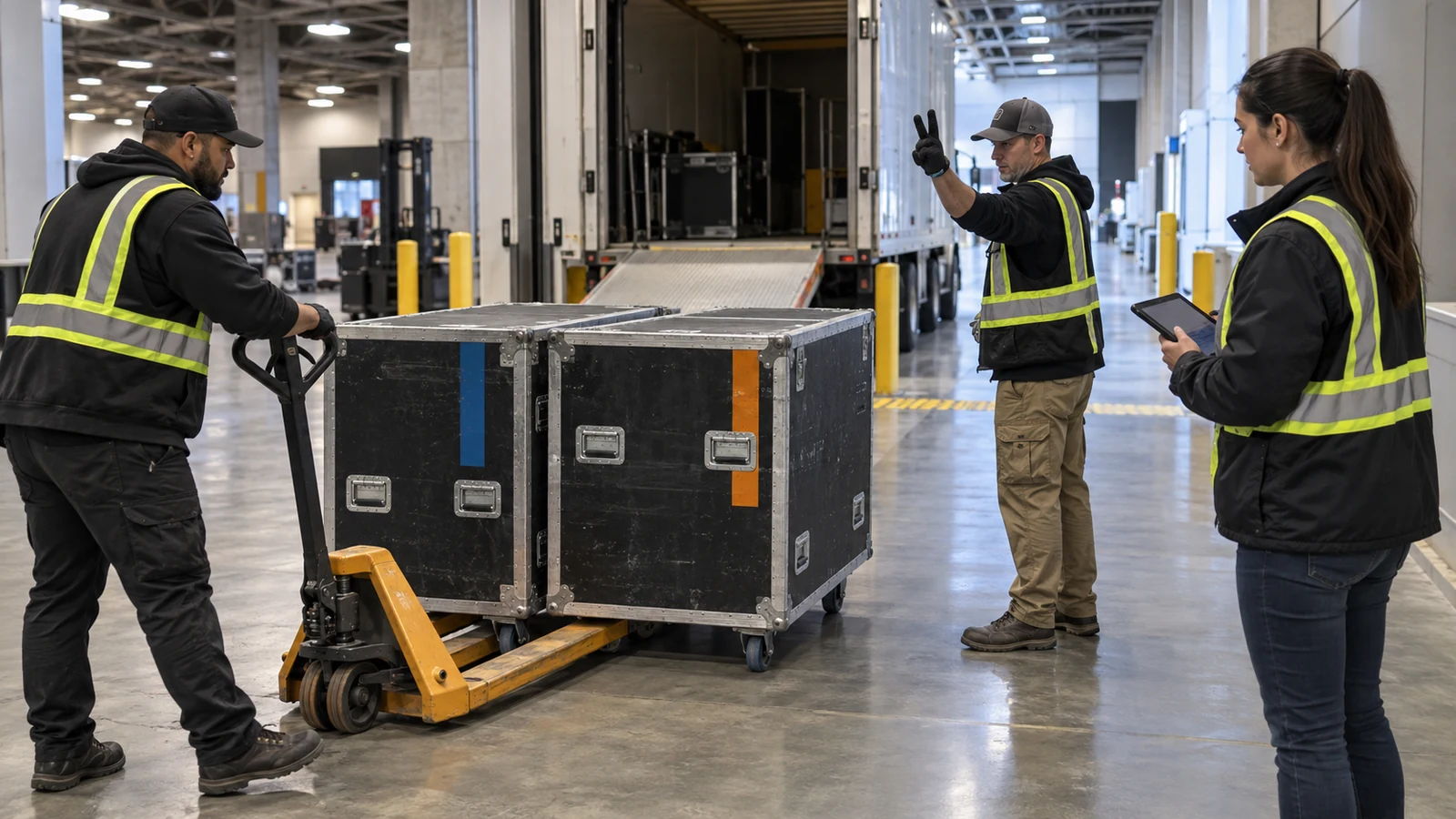
- official contractors, exhibitor-appointed contractor requirements, freight route, target date, labels, material handling, and empty-container plan;
- staffing, badges, education conflicts, daily opening checks, lead ownership, and response time;
- targeted or general move-in assignment and the correct move-out deadline for the building.
The published exhibitor schedule gives November 14–16 as the general move-in period, with earlier targeted periods for assigned exhibitors. Booths must be set or in progress by 5:00 p.m. on November 16. Move-out begins only after the show closes at 4:00 p.m. on November 20, and building-specific removal deadlines continue afterward. Your own target schedule and service orders are the controlling documents for the booth.
FAQ
Does the standard IAAPA Expo booth space include carpet and electricity?
Do not assume it does. IAAPA’s current linear-booth specification lists pipe and drape plus an identification sign, says flooring is not provided, and makes other equipment and services the exhibitor’s responsibility. A turnkey booth package includes selected furnishings, carpet, lighting, and a stated electrical outlet, but the included items depend on the package. Compare your current contract and package description with the exhibitor service orders before budgeting.
Should an international supplier ship its demonstration directly to the convention center?
Only after the current shipping route and assigned move-in date are confirmed. The exhibitor manual provides international shipping instructions, advance-warehouse and direct-to-show options, labels, and marshaling information. Customs responsibility, delivery timing, material handling, and return or onward shipping must be assigned in writing; a generic Orlando delivery address is not a freight plan.
Can you register a customer with an exhibitor staff badge?
No. IAAPA’s current exhibitor badge guidance says exhibitor registration is for booth staff, not buyers or other guests. Use the Exhibitor Guest Program when you invite a current or prospective customer, and register each person in the correct category before arrival. This keeps the customer’s access separate from the badges your team needs to work the booth.
Can you use your own exhibit contractor at IAAPA Expo?
Do not treat appointing a contractor as the same as clearing that company to work on site. The current exhibitor manual identifies official service providers and sets requirements for exhibitor-appointed contractors. Confirm the applicable authorization, insurance, credentials, access rules, submission deadlines, and any work reserved for an official provider before the crew travels or the booth ships. Put responsibility for each order and on-site handoff in writing so the exhibitor, booth company, freight provider, and utility provider do not assume that another party has completed it.
Does an exhibitor staff badge include the education program?
It depends on the exhibiting company’s membership status. IAAPA currently includes education-program access with exhibitor registration for exhibiting members; non-member exhibitors need to purchase education access separately. Special events are separately ticketed for both groups. Check each staff member’s badge and ticket selections before building the booth schedule, especially if the same person is expected at a technical session and at a live demonstration.
Final Thoughts
IAAPA Expo 2026 is large enough to create opportunity and noise at the same time. The right decision is not simply to be present. It is to arrive with one buyer, one product proof, a workable U.S. delivery path, confirmed organizer requirements, and a team that can carry the conversation forward.
Once your space, product inputs, demonstration status, and current IAAPA documents are clear, KingExhibits can help translate them into a booth design and U.S. delivery plan. That conversation should begin with the booth assignment and operational facts—not with a generic structure chosen before the show requirements are known.