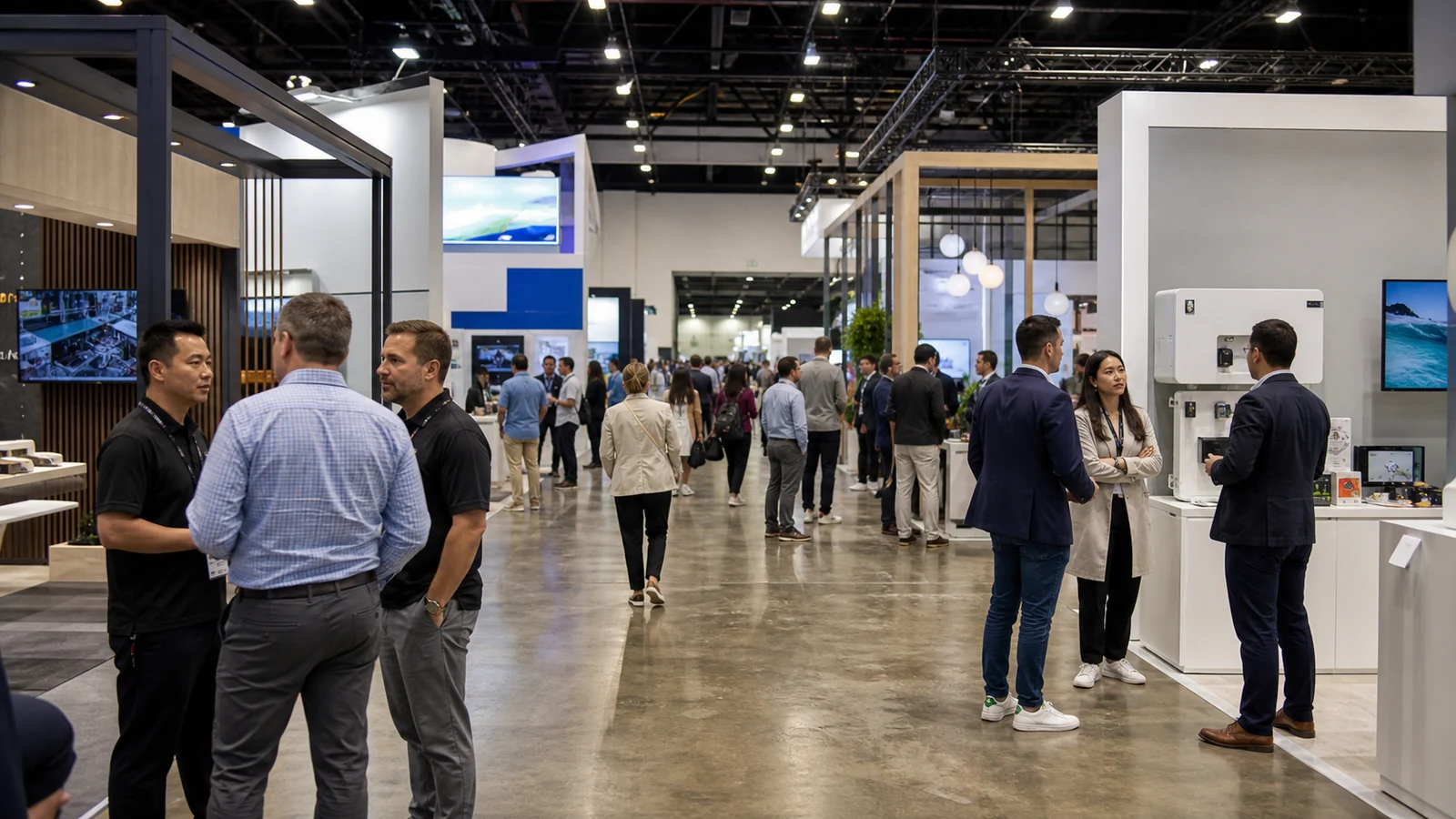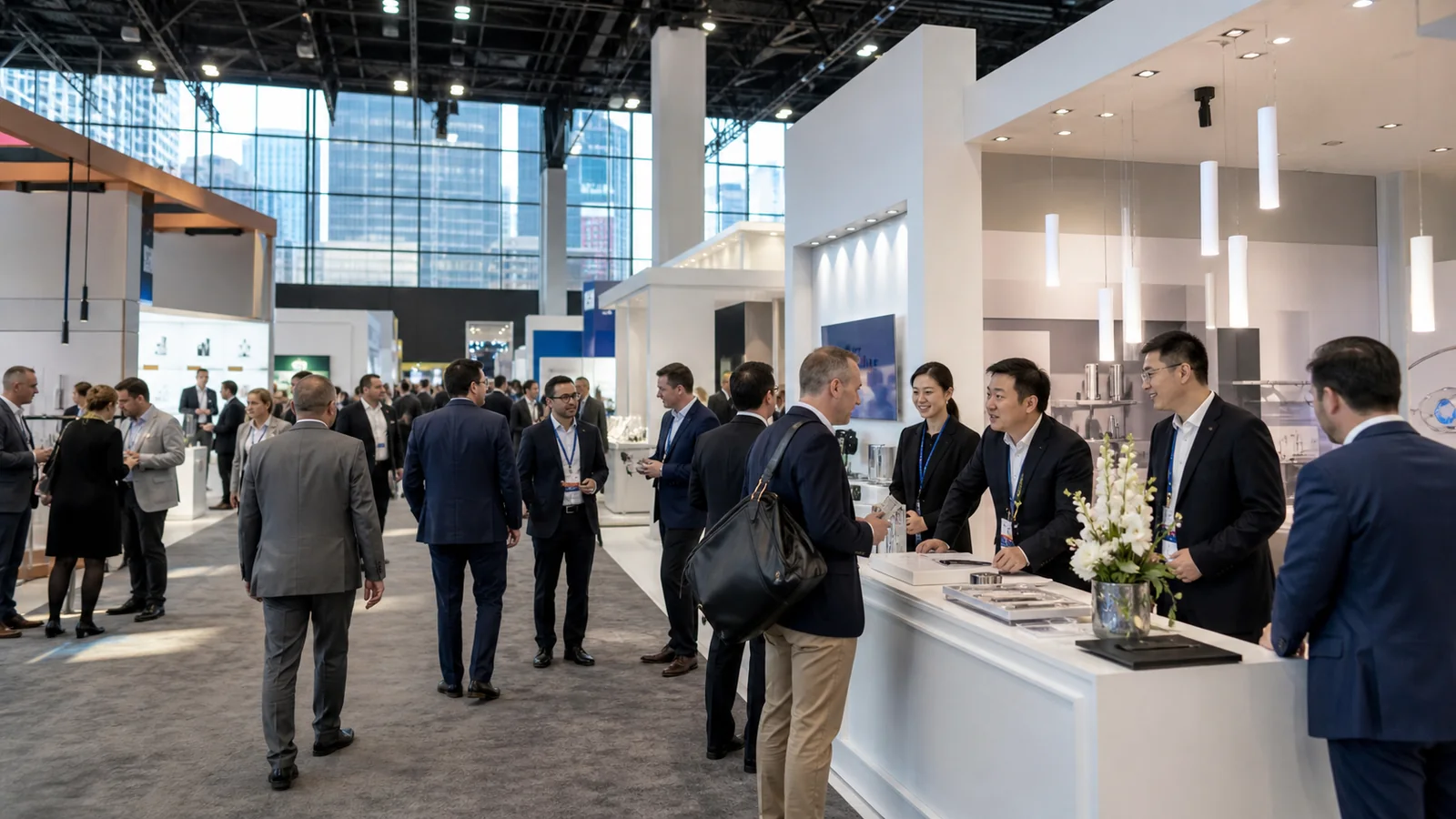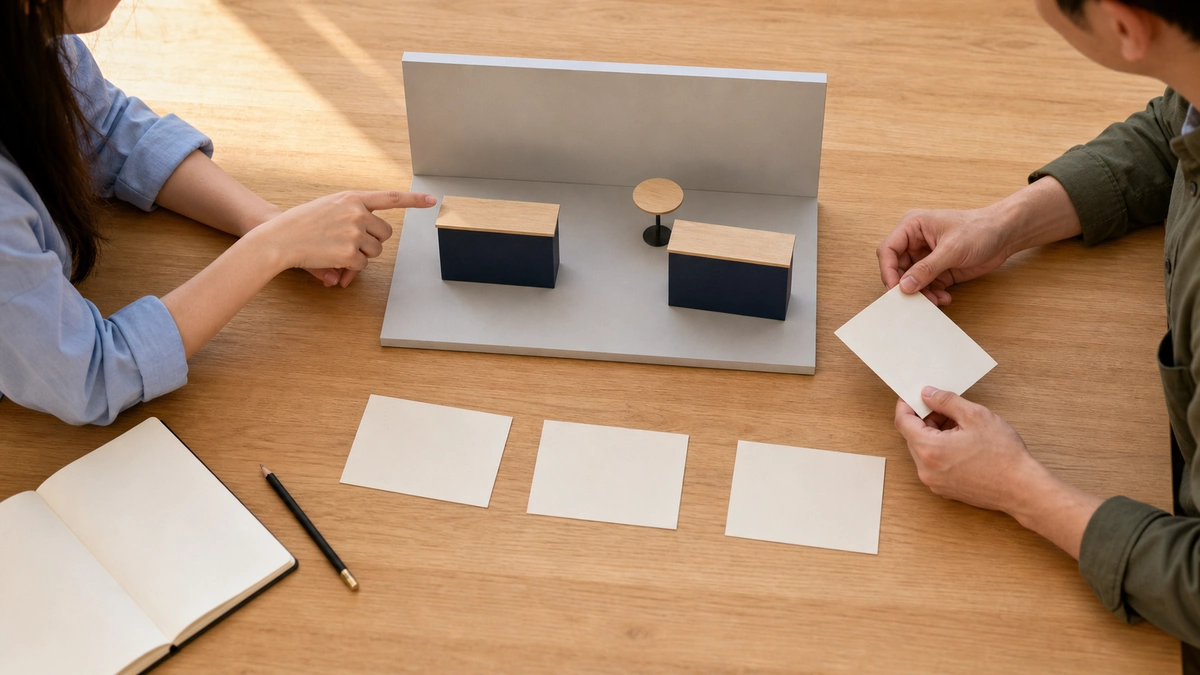
Your team likes the idea of a hands-on experience at its next trade show. Now you need a plan that explains what visitors will do and gives your colleagues enough detail to approve, build, and run it.
An experiential marketing plan connects a participant’s experience with a specific marketing objective. The B2B trade show example below shows how to write each part, from the visitor’s activity to the budget and follow-up. A short template at the end helps you assemble your own plan.
Start with the decision you want the experience to support
Start your experiential marketing strategy with the business problem the activity will address. What are potential customers struggling to understand or believe? What could they discover by taking part that a sales presentation would leave unresolved?
For a software company, that might be whether a warehouse supervisor can handle an order exception without switching between several screens. An experience built around that question has a clear job: let the visitor try the workflow and decide whether it deserves a closer look.
Turn that purpose into a short objective with a defined audience, action, and deadline.
Worked example: The company and two-day trade show used throughout this article are fictional. All quantities, targets, timings, and budgets below are planning assumptions, not industry benchmarks, forecasts, supplier prices, or KingExhibits project results.
The opening of the plan could read:
We will help warehouse operations managers evaluate our order-exception workflow through a guided, hands-on exercise. During the two-day show, we aim for 90 target visitors to complete the exercise and 30 to request a follow-up workflow review. Sales will contact those who request a review within two business days after the show.
Define the terms immediately. In this example, a completed exercise means the visitor reaches the result screen and discusses the result with a demonstrator. A qualified follow-up request means the person fits the target role, describes a relevant business problem, and agrees to a specific next conversation. A badge scan alone does not meet either definition. Decide how to count each participant once so repeat visits do not inflate the completion total.
Give the sales lead the objective before anyone promises the target. That person must confirm who will handle the requests and whether the proposed follow-up is useful enough for a prospect to accept.
Describe the audience, the promise, and the place
Your audience paragraph should tell the team whom to invite and what to ask at the booth entrance. A job title by itself rarely gives a demonstrator enough to work with.
For the example, write:
Our primary participants are warehouse operations managers whose teams regularly resolve delayed or incorrect orders. They want to see how an exception is investigated and assigned. We will use a fictional order so they can explore the process without providing company data.
Next, write the promise in language the visitor will recognize: “Try resolving an order exception and see which steps your team would need.” This gives both the invitation and the booth message something concrete to say.
Choose the setting that makes participation plausible. For this plan, a trade show makes sense only if the organizer’s audience information and your sales team’s attendance checks support finding the intended people there. A large attendance figure does not establish that your prospects will attend. If the exercise needs a private conversation or substantial preparation, a booked session outside busy exhibition hours may be more appropriate.
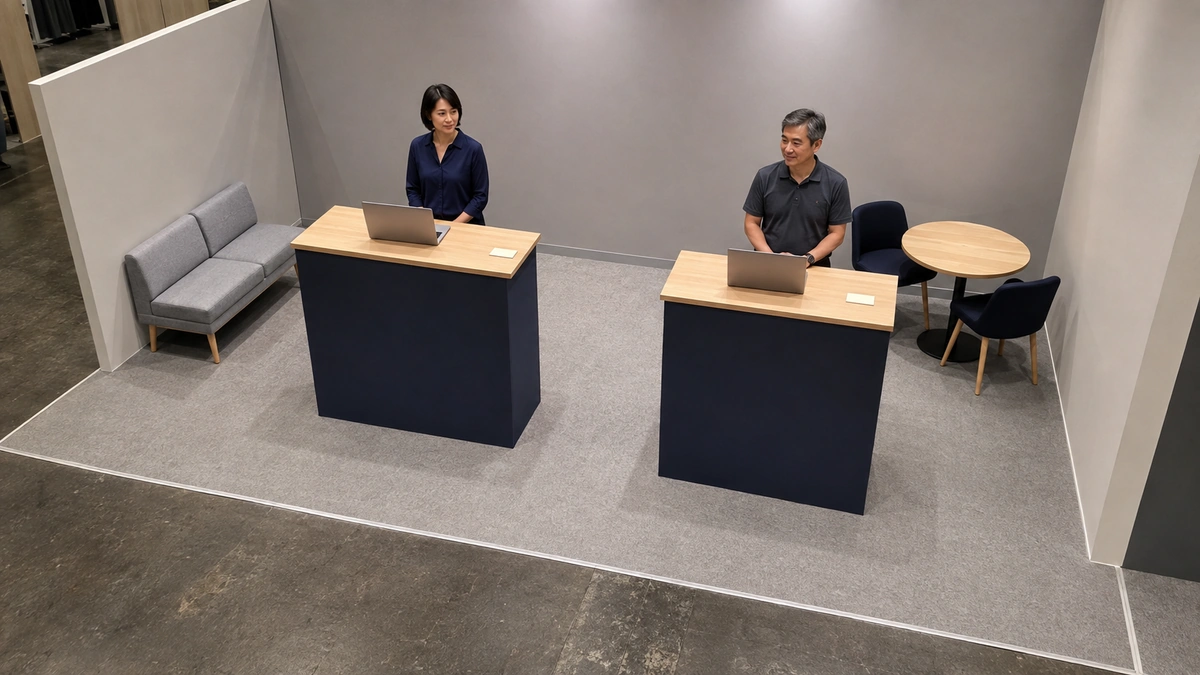
Name the event, location, operating dates, and proposed footprint in your actual plan. Check these against the booking and current exhibitor manual. For the fictional example, the plan assumes two demo stations and a separate place for follow-up conversations; the final booth dimensions remain subject to a layout review.
A brand activation gives people a way to experience your brand’s promise. Here, the demonstration itself has to deliver that promise. If the message is that work becomes easier to understand, let visitors see the sequence of actions and explain the result in their own words. An unrelated game may attract participation while leaving that promise untested.
Write the visitor’s experience as a sequence of actions
This is the section your designer and on-site team should be able to rehearse. Describe how someone notices the activity, joins it, participates, and leaves with something useful.
In the example, each station has an eight-minute slot: six minutes with the participant and two minutes to reset the demonstration. The proposed sequence is:
| Moment | What the visitor does | What the team provides |
|---|---|---|
| Invitation | Sees “Try an order-exception workflow in six minutes” and decides whether to stop | A readable invitation that describes the task; a greeter who checks interest and explains any wait |
| First minute | Chooses a fictional delayed-order scenario | A demonstrator who explains the starting information without a product tour |
| Minutes 2–4 | Uses the demo to investigate the order and choose a next action | A prepared demo account, clear prompts, and help when requested |
| Minutes 5–6 | Reviews the result and explains how the task compares with their own process | A question: “Where would your team need a different step?” and a takeaway summary of the exercise |
| After the exercise | Takes the summary or asks for a workflow review | A separate conversation area, a clear invitation to book, and no requirement to book in order to receive the summary |

Write the operating details beside that sequence. What appears on the screen at the start? Which answers are fixed in the demonstration? Where do people wait? How does the greeter keep the queue inside the approved booth space? Who resets the account after each visitor?
Give participants a way to follow the exercise if they cannot comfortably use the display or hear the presenter. Accessible materials, captions, and descriptions of visual information are practical starting points in W3C’s event accessibility checklist. Work through the actual activity with your team; a captioned video alone does not make every part of a booth experience accessible.
Now check the capacity. Two stations operating for six active hours each day over two days offer 180 eight-minute slots: 2 × 6 × 2 × 60 ÷ 8. That is a theoretical ceiling with continuous use. It does not account for empty slots, longer discussions, or equipment interruptions.
The example’s target of 90 completions uses half that ceiling. It is still an assumption to test, not a predicted turnout. Check it against the accounts you can reach and the response to early invitations. Having enough demo slots does not mean enough people will want them. If a rehearsal takes twelve minutes per visitor, revise the session, target, or staffing before approving the plan.
For this layout, assign two demonstrators, one greeter, one salesperson, and one trained relief person. The relief person covers breaks and can help with resets. Recheck the capacity if that coverage is unavailable; staffing the booth and continuously operating both stations are different commitments.
Plan how people arrive and what happens afterward
The experience needs an invitation that reaches the intended people. In your plan, give each channel a message, an owner, and a measurable action. “Promote on social media” leaves all three decisions open.
For the fictional campaign, the account team invites relevant contacts it is permitted to approach, using the six-minute exercise as the reason to visit. The event marketer prepares a booking page showing the activity, available times, and location. Scheduled appointments share the demo capacity with walk-ins; they are not additional capacity.
A usable invitation might say:
Handling order exceptions at your warehouse? Try a six-minute workflow exercise with a fictional order, then discuss which steps would fit your team. Reserve a demo time or visit the booth during the scheduled sessions.
Write a reminder for booked visitors that includes the confirmed booth location and how to change their appointment. Use the same task description on the page and the booth so the visit matches the invitation.
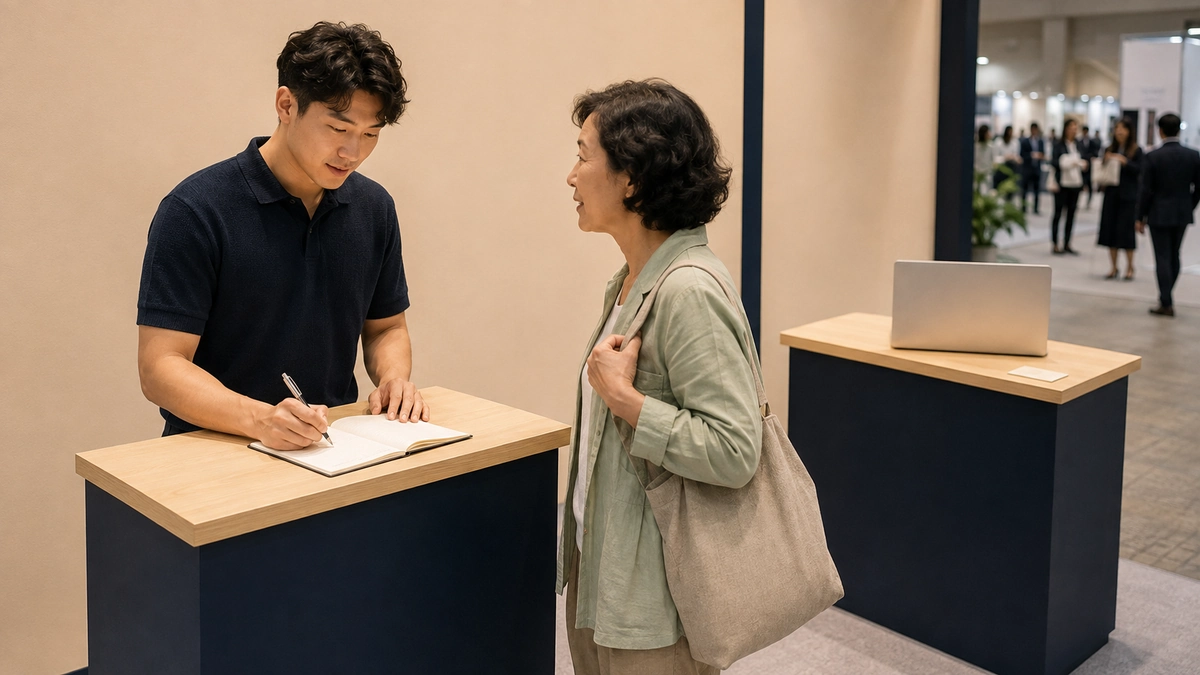
Then prepare the follow-up before opening day. The demonstrator records the participant’s specific question; the salesperson records the next step the participant requested. Marketing sends the promised exercise summary through the agreed channel. A workflow-review request goes to a named sales owner with the relevant notes, not into an undifferentiated list of scans.
For example: “Interested in handling split shipments; requested a review with the operations team next week.” That note gives the next conversation a purpose. “Good lead” does not.
Use your company’s approved data-collection process and explain what the form is for. Confirm the fields, notices, permissions, and retention arrangements with the people responsible for them. Do not assume event registration or a badge scan authorizes every later marketing use.
Build the budget and schedule around the promised experience
The activity description tells you what needs to be purchased or produced. Ask for quotes against that description and the proposed layout, then identify costs that the quote leaves to you or to event service providers.
Here is an illustrative US$48,000 cash budget for the fictional campaign. These allocations demonstrate how to write the budget; they do not estimate what your event will cost. The example assumes an existing software product and a demo prepared by current employees. Custom software development is outside this budget.
| Budget line | Assumed allocation | Scope to verify before approval |
|---|---|---|
| Exhibition space | $8,000 | Booked space and applicable organizer charges |
| Booth design, structure, and graphics | $15,000 | Design revisions, demo counters, conversation area, and graphics |
| Freight, on-site handling, and installation/dismantling | $7,000 | Both directions, labor schedules, and which party orders each service |
| Demo equipment and venue connections | $4,000 | Displays, devices, power, internet, and backup equipment |
| Travel and additional staffing | $5,000 | Travel assumptions, accommodation, and any hired relief support |
| Invitations, booking, and follow-up materials | $3,000 | Production, tools, and any paid distribution |
| Unallocated contingency | $6,000 | Held for approved changes or unexpected charges |
| Total | $48,000 | Existing employee salaries excluded; applicable taxes belong in each quoted line |
Record whether each amount is an assumption, a quote, or an approved commitment. The example contains assumptions only. Include cancellation terms and payment dates when you receive actual quotes. If the costs exceed the cap, first consider simplifying the build or reducing optional equipment while protecting the demonstration and required staffing.
Keep contingency visible. Allocating it to another feature during design removes the money available for an unexpected charge.
The schedule should work backward from real approval and delivery deadlines. The following eight-week illustration is a writing example, not a recommended lead time or a promise that a booth can be delivered in eight weeks. Your event’s deadlines and suppliers’ confirmed schedules may require an earlier start.
| Illustrative timing | What must be ready | Who is responsible |
|---|---|---|
| 8 weeks before | Audience check, objective, proposed activity, and budget cap | Marketing lead, with sales and product input |
| 6 weeks before | Tested demo concept, workable layout, quotes, and a list of organizer submissions | Product lead and exhibit project lead |
| 4 weeks before | Approved content and graphics; booking and follow-up process tested | Marketing lead and sales operations |
| 2 weeks before | Full rehearsal, staff briefing, backup files, and confirmed service orders | On-site lead |
| Before opening | Delivered booth checked, equipment tested, queue and accessible participation reviewed | On-site lead with the relevant service providers |
| Within 2 business days after | Requested follow-ups assigned and contacted; participation records checked | Sales lead and marketing operations |
Replace each role with a person’s name in the working plan. Give each approval its own due date, and distinguish “sent for approval” from “approved.” Track the latest plan version in the same document so staff are not working from an old activity or floor plan. A graphics file should not be released for production while the product team is still deciding what the demo can truthfully show.
Test the plan before you commit to the build
Run a rehearsal with someone who has not helped create the activity. Ask them to complete the exercise without a product explanation beforehand. Watch where they hesitate, time the reset, and ask what they believe the product does afterward.
If the person leaves with the wrong message, change the exercise or the prompts before adding more promotion. A polished booth cannot correct a demonstration that teaches the wrong thing.
Write a short operating sheet for the event team. Include opening checks, the staff rotation, scheduled appointments, and the person authorized to stop an activity or approve a change. Keep the current organizer contacts and supplier contacts with that sheet.
Three entries for the example could be:
- Demo connection fails: The product lead switches to a tested offline walkthrough and tells visitors it is a simulation. Record those sessions separately from completed live exercises.
- The queue reaches the approved waiting area: The greeter offers the next available appointment instead of inviting more people to line up.
- A station cannot run safely or reliably: The on-site lead pauses it, calls the responsible service provider, and updates the remaining appointment availability.
Finally, decide what gets reviewed after the show. Compare completed exercises and follow-up requests with the original definitions. Note where participants got stuck, which questions kept returning, and which requested conversations actually happened. Use those observations to decide what to keep or change for the next event. Revenue attribution can be a separate analysis; this plan first needs to establish whether the promised experience ran and produced the intended next steps.

A simple experiential marketing plan template
Copy these fields into your working document. Use the examples above to write actual decisions under each heading, then attach the visitor sequence, itemized budget, and dated production schedule.
- Campaign and owner: Name the activity, the person accountable for it, and the current version.
- Audience problem: State whom you want to reach and what they need to understand.
- Objective: Define a participant action, a target, a deadline, and how it will be counted.
- Experience: Write the invitation, participant task, takeaway, and next-step offer.
- Delivery: Specify the confirmed place and dates, station capacity, staff coverage, and service needs.
- Promotion and follow-up: Assign the invitations, booking process, visitor records, and requested follow-ups.
- Spending and approval: Record the cap, quoted costs, exclusions, reserve, and who can authorize changes.
- Rehearsal and review: State what must pass before production, the fallback for a failed activity, and the date for reviewing results.
Keep unconfirmed items visible beside the decision they affect. “Internet service awaiting quote” is useful beside the demo cost; burying it in a separate meeting note makes it easier to approve an incomplete budget.
FAQs
How much detail does an outside agency need before proposing ideas?
Separate the decisions the agency must respect from the decisions you want it to explore. For example, the approved product message and available footprint may be fixed, while the interaction format is open. Ask each proposal to identify its deliverables and remaining assumptions. A request for concept development should make that scope clear before agencies price a finished activity.
Can the same plan be used in several cities?
Keep the core audience promise and measurement definitions if they still fit. Create a separate delivery appendix for each stop covering local dates, venue services, staffing, transport, and language needs. Recheck the audience mix too: a user conference and a prospect-focused trade show may need different invitations and follow-up, even when the physical demonstration stays the same.
What if the product is too confidential to demonstrate openly?
Use an approved sample, fictional dataset, or clearly labeled simulation that demonstrates only what you can disclose. Put any restricted discussion in a separately arranged private session, following your company’s process. If removing confidential details also removes the evidence participants need, change the experience’s promise; do not imply that a public simulation proves undisclosed product performance.
Final Thoughts
Walk through one visitor’s full experience with the person who will run the booth, and resolve any missing messages or handoffs. When the sequence is clear, share it with KingExhibits alongside your space, equipment, and budget. We can help turn those requirements into a booth design and discuss the build scope and outstanding service needs before production begins.