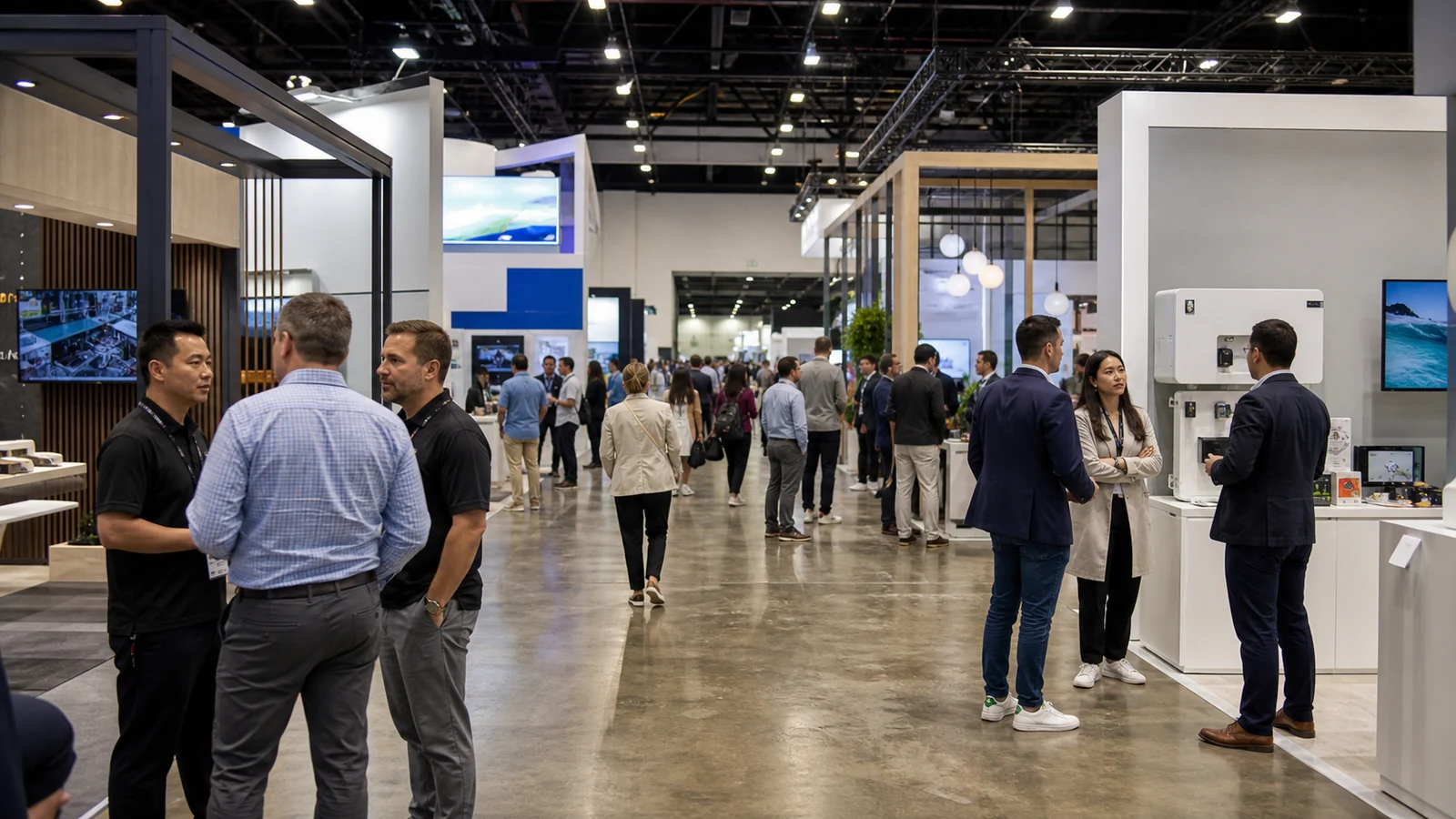
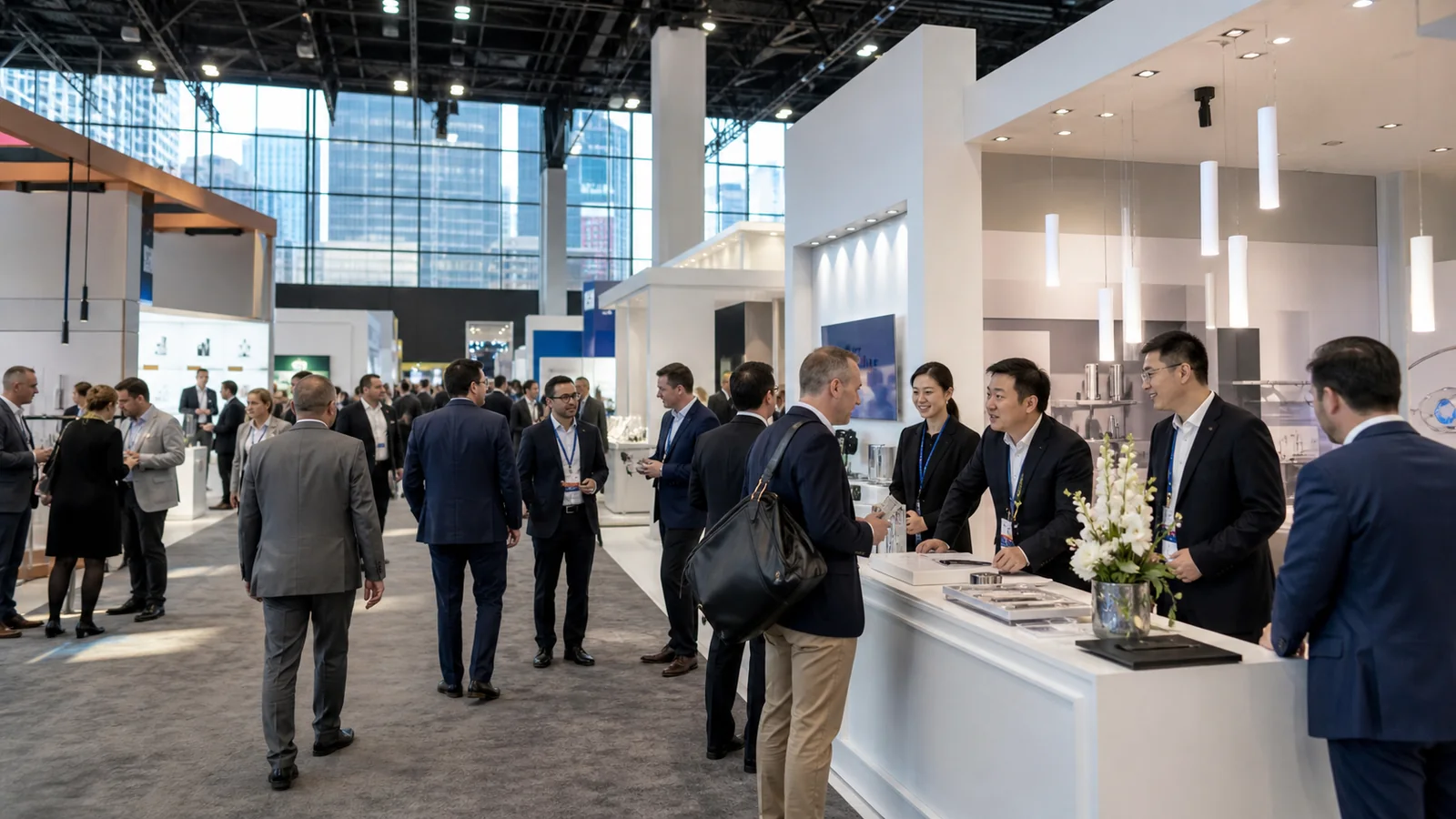
If your company sells titanium materials, processing services, production equipment, or application technology, TITANIUM USA may look like an obvious event to add to your calendar. The harder question is whether exhibiting will put your team in the right conversations—and whether your booth can explain a technical advantage without burying visitors in data.
This guide separates confirmed 2026 facts from the still-unannounced 2027 edition, explains what the program is built around, and helps you decide whether to exhibit, attend without a booth, or wait until the organizer releases the inputs that affect your project.
What Is Confirmed for TITANIUM USA 2026–2027?
The International Titanium Association (ITA) lists the main TITANIUM USA 2026 conference for October 4–6, 2026, in Las Vegas, Nevada. ITA identifies Caesars Palace as the venue, and the venue's event-technology provider also lists TITANIUM USA 2026 there on those dates.

| Event fact | Current 2026 information | What you should verify |
|---|---|---|
| Organizer | International Titanium Association | Use ITA's current contact and event pages, not a directory |
| Main conference dates | October 4–6, 2026 | Confirm the sessions and exhibit hours tied to your registration |
| Venue | Caesars Palace, 3570 Las Vegas Boulevard South, Las Vegas, NV 89109 | Confirm the exact hall, loading route, and service contacts in the current exhibitor documents |
| Format | Titanium-industry conference with an exhibition | Confirm whether exhibit space is still available and what each package includes |
| Additional education | ITA's current conference page separately lists a Fundamentals of Titanium workshop on October 7 | Confirm whether it requires separate registration and whether your pass includes it |
| 2027 edition | No 2027 dates or venue were announced by ITA in this review | Treat timing, location, exhibit inventory, and registration as TBD; do not reserve production or freight against a predicted edition |
ITA's event detail and conference page should be your starting points. Registration status, pricing, booth inventory, and hotel availability can change, so treat live organizer confirmation as the final authority.
What Kind of Event Is TITANIUM USA?
TITANIUM USA is a titanium conference and exhibition, not a broad manufacturing expo where almost any industrial product can find a natural audience. It is centered on the titanium value chain. ITA describes its role as connecting people interested in using titanium with organizations that can provide technical and commercial help, while also supporting education across titanium applications and production.
That focus matters for your exhibit decision. A company that can contribute to a specific titanium conversation has a stronger reason to be there than a company that only wants general brand exposure. Your case becomes clearer when you can name the material, process, application, supply problem, or technical decision that your team helps visitors address.
The 2026 program also makes the event's priorities visible. ITA's current conference overview includes market demand, commercial aerospace, defense, medical applications, titanium production and processing, industrial uses, raw-material supply, traceability, additive manufacturing, recycling, and emerging production routes. Those are not merely topics to print on booth graphics. They are clues to the questions visitors may bring into the exhibit area.
Which Titanium-Industry Capabilities Match This Event?
Start with the part of the titanium value chain your company serves, not with a generic claim that you operate in metals. TITANIUM USA is most relevant when your offer belongs in a technical or commercial conversation that the program actually brings together.
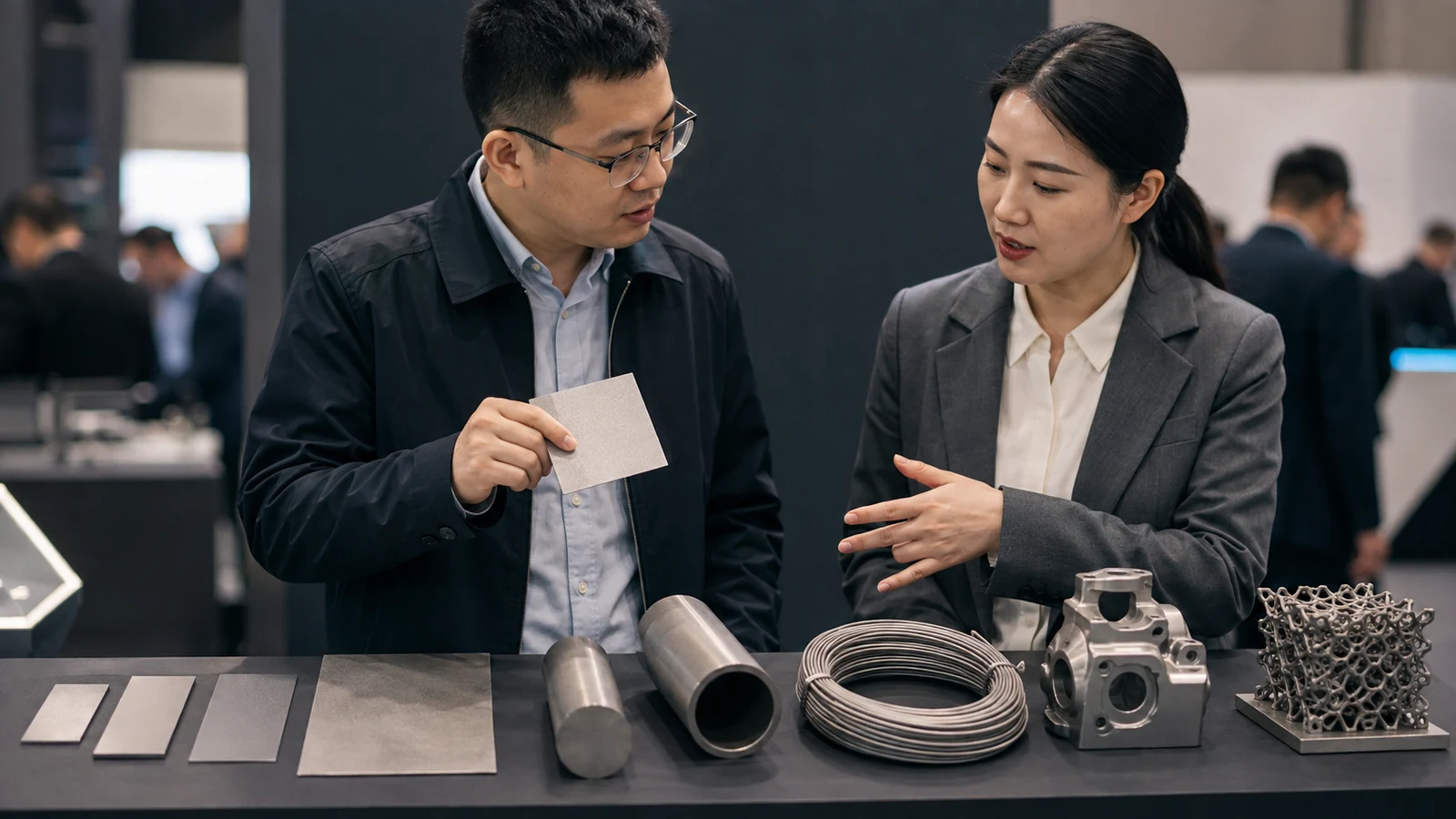
Relevant capabilities commonly include:
- selecting or sourcing titanium forms, alloys, feedstocks, master alloys, sponge, powder, scrap, or recycled material;
- improving melting, forming, machining, heat treatment, inspection, testing, joining, or process control;
- solving application-specific questions in aerospace, defense, medical, energy, chemical processing, marine, or other industrial markets;
- showing how your technology improves traceability, material authentication, production consistency, yield, safety, or supply resilience;
- explaining a manufacturing route or technical service with evidence that an engineer, procurement leader, or executive can examine.
These categories describe topical relevance, not a recommendation to purchase a booth. The decision module below tests whether your company has the proof, team, organizer inputs, and commercial reason to act on that relevance.
What Will People Be Discussing in 2026?
The agenda is broad, but it is not random. It brings together three levels of decision that your team should separate before preparing booth content.

Market and supply decisions
The program addresses demand trends, aerospace and defense outlooks, global supply, feedstocks, master alloys, scrap, recycling, and supply-chain change. If your offer belongs here, visitors will need more than a capacity statement. They may want to understand supply position, qualification boundaries, lead-time drivers, traceability, and how your material or service fits an existing chain.
Your booth does not need to publish sensitive commercial terms. It should make the scope of the conversation clear: what you supply, which forms or processes you cover, where qualification begins, and what evidence your team can discuss privately.
Production and application decisions
ITA lists sessions on production, processing, medical applications, industrial markets, alloys, microstructure, and mechanical behavior. Companies in this part of the market often face a communication problem: their strongest evidence is technically detailed, but a visitor may have only a minute to decide whether it applies to their work.
Choose one visible route into the conversation. A labeled sample sequence, a before-and-after process comparison, or a short application map can work better than a wall filled with equipment specifications. Once a visitor identifies the relevant process or application, your technical staff can take the discussion deeper.
Traceability and emerging-technology decisions
The current program also covers material authentication, digital traceability, on-site analysis, additive manufacturing, binder-jet routes, wire quality, and recycling technologies. These subjects attract interest, but they also invite vague claims.
If you present technology in this area, show what is actually measured, recorded, changed, or verified. Separate a demonstrated capability from a development program, and label simulated data or sample outputs honestly. A precise limit can make your exhibit more credible than a broad promise.
Should Your Company Exhibit, Attend First, Delay, or Pass?
Strong Exhibit Fit
Exhibit at the confirmed 2026 edition when you can name the titanium-industry role, application, and problem your team can discuss, then support that conversation with approved evidence. Your booth should lead to a technical review, qualification exchange, sample request, or scheduled meeting—not merely brochure collection. This choice is strongest when you have current ITA terms, an assigned space, and staff who can carry a technical discussion beyond the first introduction.
Attend First
Attend without a booth when the audience looks relevant but your message, proof, or target accounts still need validation. For a focused titanium conference, planned meetings and session listening can reveal how buyers frame supply, processing, traceability, or application questions. You can then decide whether a future exhibit has a credible purpose. Attending first is a deliberate research choice, not a lesser outcome, when your team cannot yet make a specific offer visible.
Delay or Pass
Delay the 2026 project if ITA has not supplied the current exhibit agreement, space details, service information, or restrictions that affect your samples and freight. Pass when your offer has only a loose titanium connection or when no one can own technical follow-up. For 2027, delay is the only evidence-based state today: ITA has not announced dates or a venue, so no schedule, budget, production, or logistics commitment should depend on an assumed edition.
Proof and Team Readiness
Before requesting a concept, confirm what you can show and who can explain it. Approved samples, process evidence, test outputs, and application examples need clear labels, while commercial and technical staff need a shared route for qualifying questions. Your team should also know which claims require private follow-up. If the proof is unapproved, the sample is restricted, or the responsible specialist will not attend, resolve that gap before you buy visibility.
How Should a Technical Booth Support the Conversation?
At TITANIUM USA, your booth should help a qualified visitor answer three questions quickly:
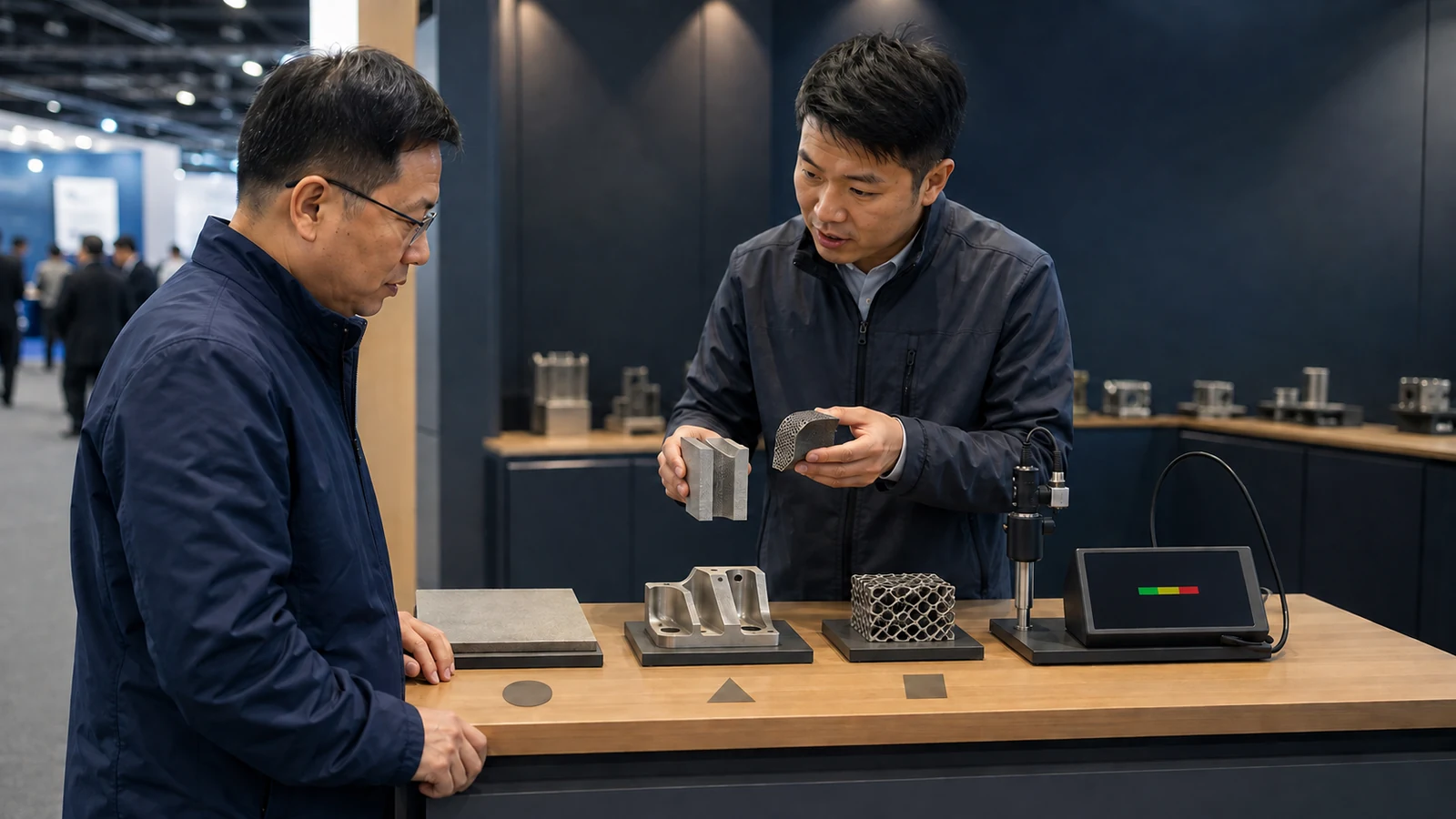
- What part of the titanium value chain do you serve? Use a short category statement that a visitor can understand before speaking with your team.
- What can the visitor inspect or verify? Give approved samples, process stages, data views, or application evidence a clear label and purpose.
- What happens after the first conversation? Make the next step specific, whether it is a technical review, qualification exchange, sample request, or scheduled meeting.
This usually calls for editing, not adding. A booth wall should not try to reproduce your full product catalog or conference presentation. Put the first decision at eye level, keep technical proof close to the staff member who can explain it, and reserve enough space for a focused conversation.
Physical samples need their own planning path. Record each item's dimensions, weight, handling method, value, security need, power requirement, and whether a visitor may touch it. Do not promise that a large component, operating machine, pressure system, powder, chemical, or controlled material can enter the venue until the current event documents and responsible service contacts allow it in writing.
What Must You Confirm Before Releasing the Booth?
The public event pages do not establish the detailed 2026 exhibit rules needed for production and freight. Before approving construction, ask ITA for the current exhibitor agreement, assigned space, floor plan, exhibitor service kit, and service-contact list.

Your team should obtain written answers for:
- the exact booth number, dimensions, open sides, height limits, and neighboring conditions;
- included furniture, badges, listings, registrations, sponsorship rights, and any items that require separate orders;
- the general-service contractor and any services that must be ordered from the venue or an appointed provider;
- move-in, setup, show, dismantle, and move-out times;
- advance-warehouse and direct-to-site shipping instructions, labels, deadlines, and material-handling rules;
- labor, insurance, electrical, internet, audiovisual, rigging, cleaning, storage, security, and waste procedures;
- sample, machinery, powder, gas, battery, sharp-edge, high-value-item, and demonstration restrictions;
- artwork approvals, hanging-sign approvals, and deadlines that affect production.
If any of those answers are missing, label the item TBD in the booth scope. Do not hide it inside a general allowance or assume a service is included because another Las Vegas event used the same venue.
What Should Go Into Your Booth Brief?
Once the event facts are controlled, prepare a brief that a designer, fabricator, and your internal reviewers can all use. Include:
- your ITA exhibit confirmation, booth number, footprint, and current floor plan;
- the current exhibitor service kit and every written organizer or venue approval;
- the audience role and application problem you want to prioritize;
- the one claim visitors should understand first;
- approved samples, dimensions, weights, handling details, and proof files;
- the demonstration sequence, utilities, screen content, and fallback if a demo cannot run;
- meeting capacity, staff plan, storage, literature, security, and lead-routing needs;
- freight origin, return plan, target deadlines, and responsible owners;
- budget range and a responsibility table separating supplied, show-appointed, excluded, and unresolved work.
This information is more useful than a mood board by itself. It gives your team a basis for judging whether a concept can be built, approved, shipped, staffed, and used for the conversations that justified the exhibit.
Frequently Asked Questions
How does ITA currently sequence exhibition reservations?
ITA's current conference page says exhibition reservations are accepted in the order that 2026 membership dues are paid. That statement does not confirm that space remains, what package is available, or what your company must submit. Ask ITA for the current availability, dues status, exhibit agreement, and any separate registration or sponsorship requirements before treating a reservation as secured.
Are ITA's 2026 delegate and exhibitor figures guaranteed?
No. ITA's call-for-abstracts page describes a future-event profile of more than 800 senior delegates from over 30 countries and 100 exhibitors. Treat those as organizer planning or promotional figures, not audited 2026 results. Base your decision on audience fit, current inventory, and written package details rather than a guaranteed headcount.
Is submitting an abstract the same as reserving exhibit space?
No. Speaking, registering as a delegate, sponsoring, and exhibiting are separate decisions and may use different forms, deadlines, approvals, and fees. Ask ITA which routes remain available and what rights each one includes before you plan signage or announce participation.
Do the call-for-abstracts rules automatically govern booth conversations?
Do not make that assumption. ITA's speaker terms prohibit titanium pricing in presentations and limit product promotion by speakers, but those terms are written for submitted presentations. Ask ITA for the current exhibitor agreement and antitrust guidance that apply in the exhibit area; do not broaden or narrow a rule without written confirmation.
Can you use the published speaker roster as your target-account list?
Use it to understand program emphasis, not as a confirmed buyer or meeting list. A speaker's company and topic do not prove that the person will visit booths, hold purchasing authority for your offer, or accept meetings. Build your account plan from confirmed participants and direct appointments, and keep unconfirmed names out of staffing and ROI assumptions.
Final Thoughts
TITANIUM USA 2026 is the only edition you can currently plan against: it has confirmed dates and venue, while 2027 remains TBD. Exhibit only when your company can connect a relevant titanium-industry problem to clear proof, an accountable team, and a practical next step.
If you want KingExhibits to review a booth scope, send your confirmed ITA space, current floor plan and exhibitor documents, sample list, technical proof, meeting needs, freight origin, and budget range. We can help separate confirmed inputs from organizer-dependent items before any design or production approval.