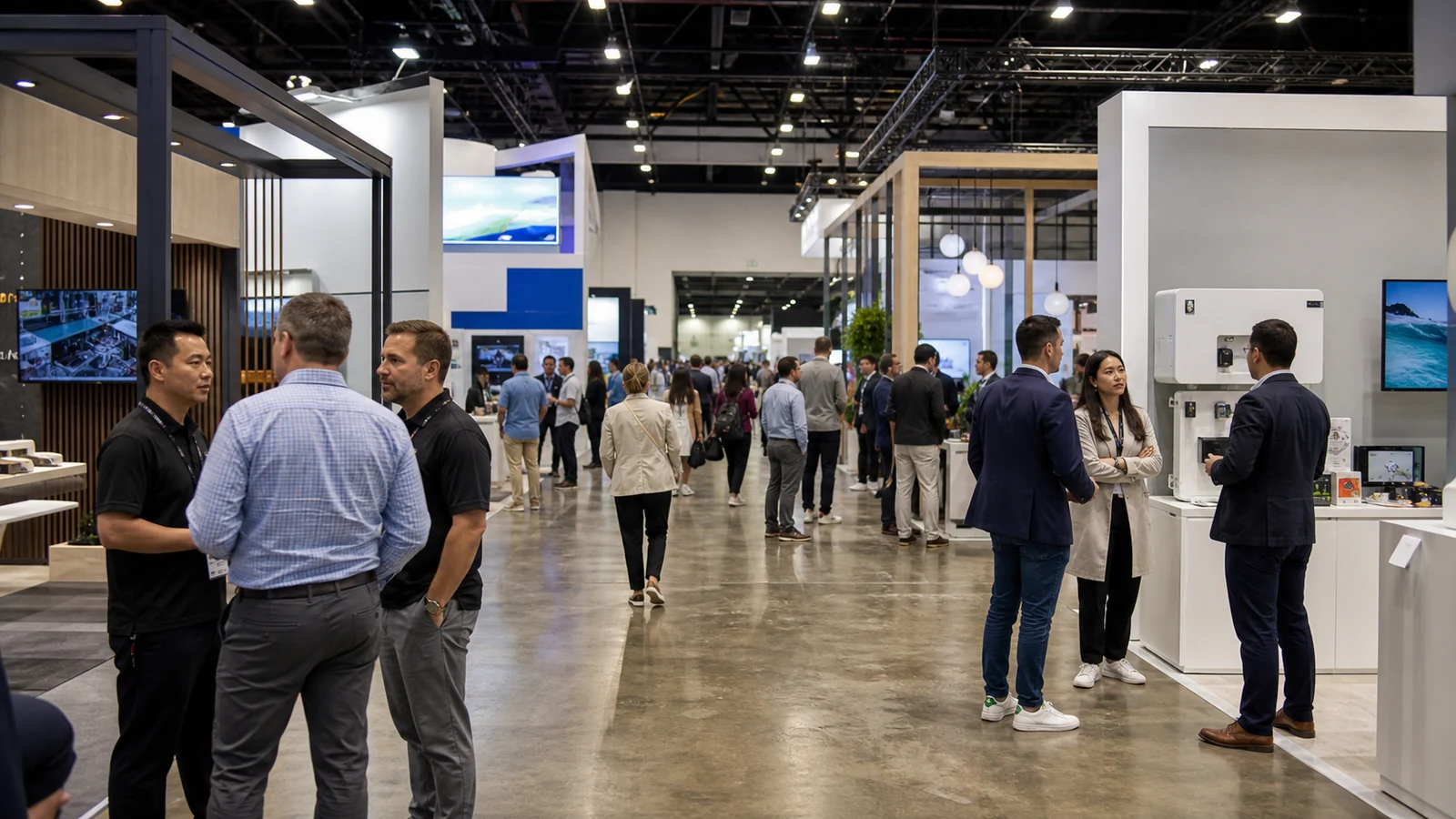
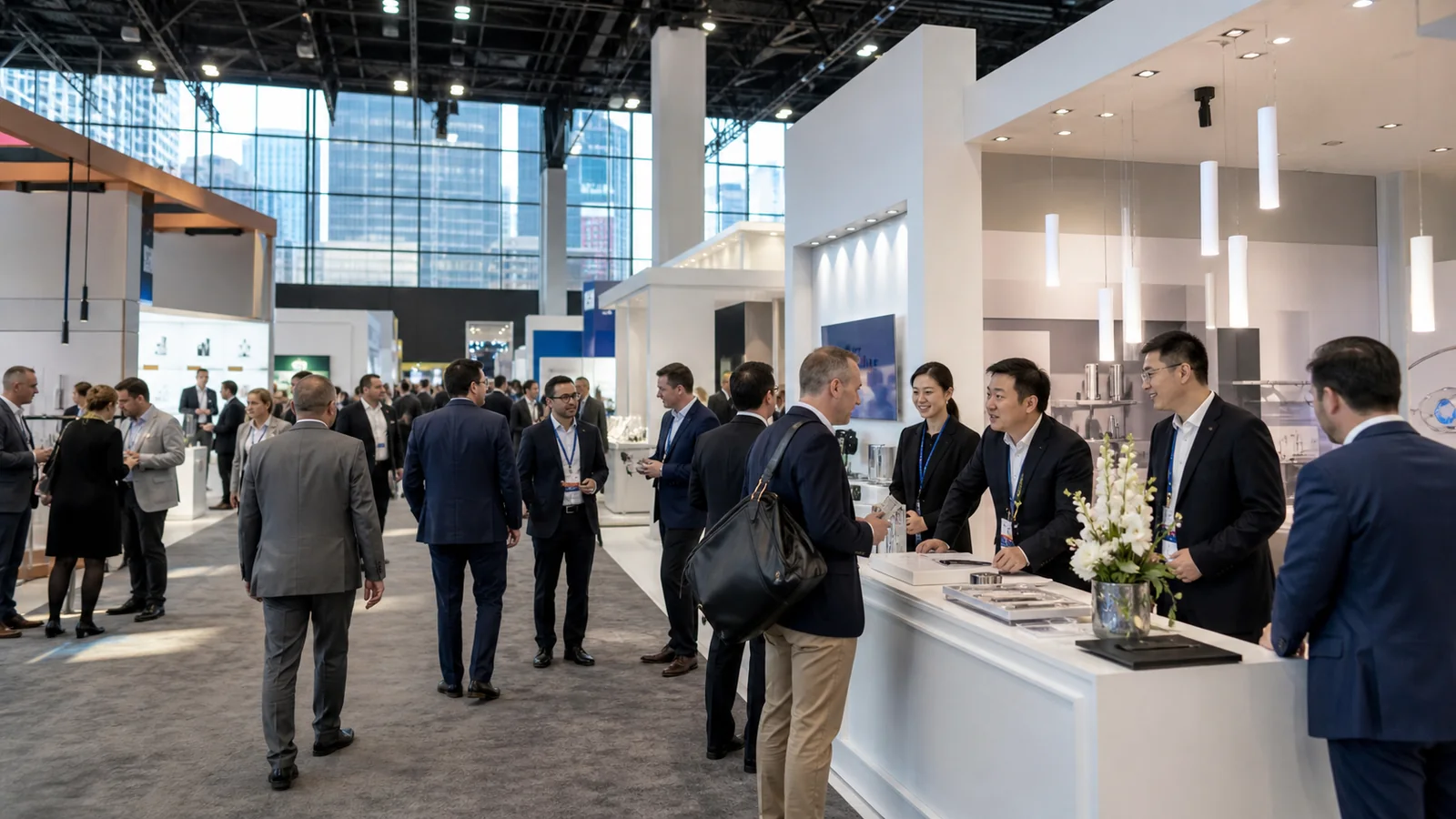
If your company sells into the battery or EV supply chain, The Battery Show North America may look like an obvious place to exhibit. The harder question is whether the people walking the floor will care about your specific offer—and whether your booth can make that value clear in a few minutes.
The 2026 event is scheduled for October 12–15 at Huntington Place in Detroit. This guide helps you plan the confirmed 2026 edition, assess early 2027 planning information without treating it as final, and turn a technical product into a workable booth brief before you commit to design or production. Dates, access, pricing, the floor plan, and service details can change, so recheck the official event documents before you sign or ship anything.
Quick answer
The Battery Show North America is a B2B expo and conference for advanced battery and EV technology. The organizer is promoting the 2026 Detroit edition to engineers, executives, R&D teams, manufacturing professionals, quality specialists, and buyers across the battery and electrification supply chain. It is a strong prospect when your company can connect its product to a current design, manufacturing, testing, thermal, charging, safety, materials, or supply-chain problem. It is a weak prospect when your offer has only a loose sustainability connection or your team cannot show technical and commercial proof at the booth.
Before you approve a booth, confirm your category fit, review the live exhibitor directory and floor plan, request the current exhibitor documents, and separate exhibit-space cost from services, freight, labor, utilities, and production.
What is known about the 2027 edition?
The organizer's public North America site currently confirms the 2026 Detroit edition, not a final 2027 schedule. AUMA's fair calendar lists a Detroit edition for October 5–7, 2027, but that is not an organizer announcement or an exhibitor contract. Use it only as a planning signal. Do not book travel, approve production, or represent 2027 dates or venue as final until The Battery Show publishes the relevant notice and current exhibitor documents.
What is The Battery Show North America?
The Battery Show North America is an advanced-battery and EV-technology trade event organized by Informa Markets. The show combines a supplier expo, conference sessions, workshops, product demonstrations, and networking. The official event environment also includes Electric & Hybrid Vehicle Technology Expo North America, so the floor extends beyond cell chemistry into components, vehicle systems, testing, manufacturing, charging, and related engineering services.
For an exhibitor, that breadth is useful only when you narrow it. “We work in batteries” is not a booth message. A cell-material supplier, formation-equipment company, thermal-management developer, test-lab provider, and charging-hardware manufacturer may all belong at the show, but they solve different problems for different teams. Your first planning task is to identify the buyer problem you can credibly discuss and the proof you can show.
The organizer currently promotes the 2026 event with 16,000+ attendees, 1,300+ suppliers, 250+ speakers, and 140+ hours of education. Treat those as organizer projections and scale signals, not guaranteed results for your company. A large floor can create more relevant conversations, but it also gives visitors more alternatives and less time for a vague presentation.
When and where is The Battery Show Detroit 2026?
The Battery Show Detroit 2026 is scheduled for October 12–15 at Huntington Place, 1 Washington Boulevard, Detroit, Michigan. The current official FAQ separates the week into a workshop day and three expo/conference days:
| Program | Current 2026 schedule | Planning effect |
|---|---|---|
| Workshops | Monday, October 12 | Decide whether technical or leadership staff need to arrive before the expo opens |
| Expo | Tuesday, October 13 through Thursday, October 15 | Build staffing, meetings, demonstrations, and replenishment around three floor days |
| Conference | Tuesday, October 13 through Thursday, October 15 | Avoid booking every subject-matter expert into booth shifts when customers may want them in sessions |
The public schedule is enough to start travel planning, but it is not an installation schedule. The exhibitor FAQ still lists move-in dates as TBD. Do not derive freight arrival, installation, or dismantle times from the attendee schedule. Those instructions need to come from the current exhibitor portal, service manual, and official contractors.
Who will you meet on the show floor?
The organizer describes an audience that includes design, project, and application engineers; executives; R&D specialists; manufacturing and operations teams; quality professionals; and purchasing decision-makers. The expo scope covers battery cells and packs, materials, production equipment, testing, thermal management, charging, EV systems, and other parts of the electrification chain.
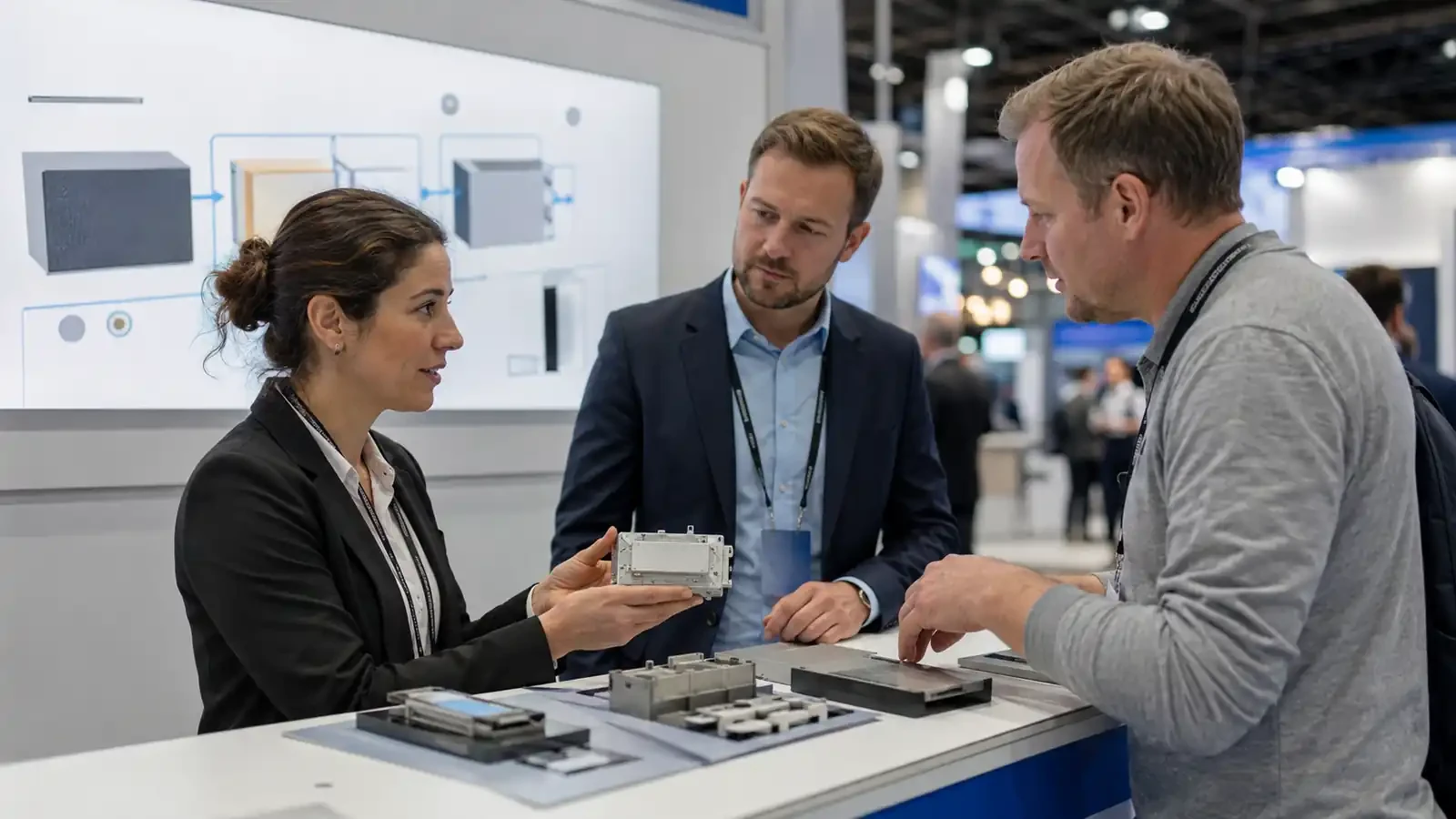
That does not mean every attendee is your prospect. A better fit test starts with three questions:
- Which job function owns the problem your product solves?
- At what point in design, sourcing, validation, scale-up, or production does that problem become urgent?
- What can a visitor see, compare, or discuss at your booth that moves the project forward?
If you cannot answer those questions, review the live exhibitor directory before you reserve a larger space. Search your product category, likely competitors, adjacent technologies, and target accounts. The goal is not to copy other booths. It is to understand how crowded your category is and whether your message is specific enough to earn attention.
Does your company fit the event?
The show is most relevant when your offer sits directly inside a battery or EV engineering, manufacturing, or sourcing decision. That may include:
- cell, module, or pack materials and components;
- manufacturing, coating, assembly, formation, or automation equipment;
- test, inspection, metrology, simulation, and quality systems;
- thermal-management, safety, fire-protection, and enclosure solutions;
- battery-management, power-electronics, charging, and EV-system technologies;
- recycling, recovery, logistics, and supply-chain services with a clear battery use case.
Fit becomes weaker when the connection is indirect. A general software platform, packaging supplier, staffing service, or sustainability consultant may still have a valid reason to exhibit, but the team needs a battery-specific use case and relevant proof. Do not rely on a broad label such as “innovative solution for the energy transition.” A visitor should be able to tell which process, cost, risk, or performance issue you address.
A practical go-or-pause test
Move forward when you can name the primary buyer, the project stage, the booth proof, and the next action you want after a conversation. Pause when your team is still choosing between unrelated audiences, your demonstration depends on unconfirmed services, or your category fit rests only on a general connection to clean technology.
How should you use the exhibitor directory and floor plan?
The current 2026 exhibitor directory and floor plan let visitors and exhibitors browse companies, product categories, sessions, literature, and booth locations. Use them before you decide what your booth must say.
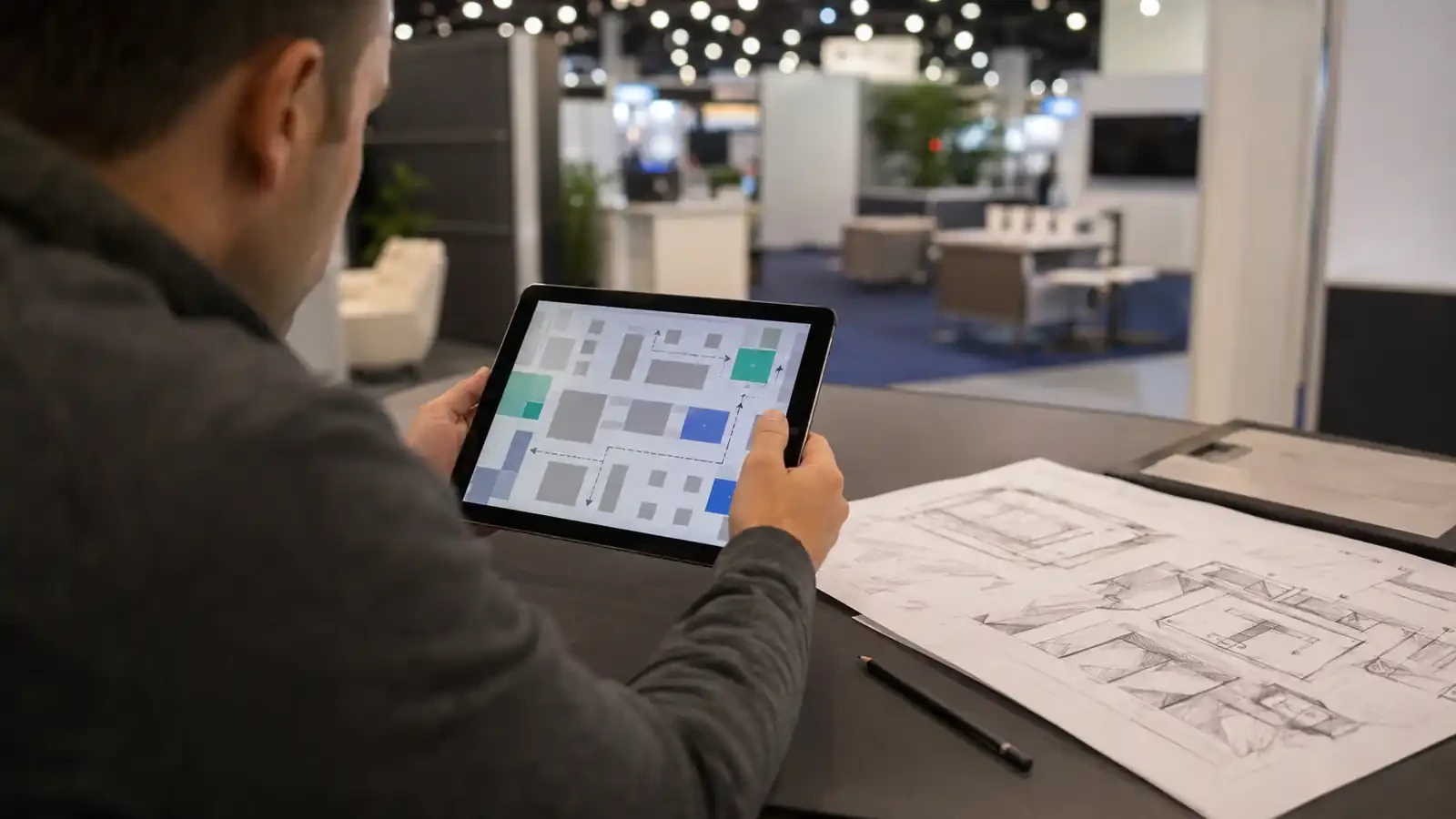
Start with your direct category. Record which terms competitors use, which products they lead with, and where similar suppliers appear on the floor. Then look at adjacent categories that share the same buyer. A battery-testing company, for example, may need to understand where cell developers, pack integrators, manufacturing-equipment suppliers, and quality teams cluster—not just where other test vendors sit.
Next, compare available locations against how your team expects to work. An entrance or major aisle may create visibility, while a position near a relevant cluster may improve the quality of conversations. Neither automatically produces better leads. Ask event sales what is actually available, confirm dimensions and open sides, and obtain the current floor plan before your designer treats any location as fixed.
What should your booth help a visitor understand?
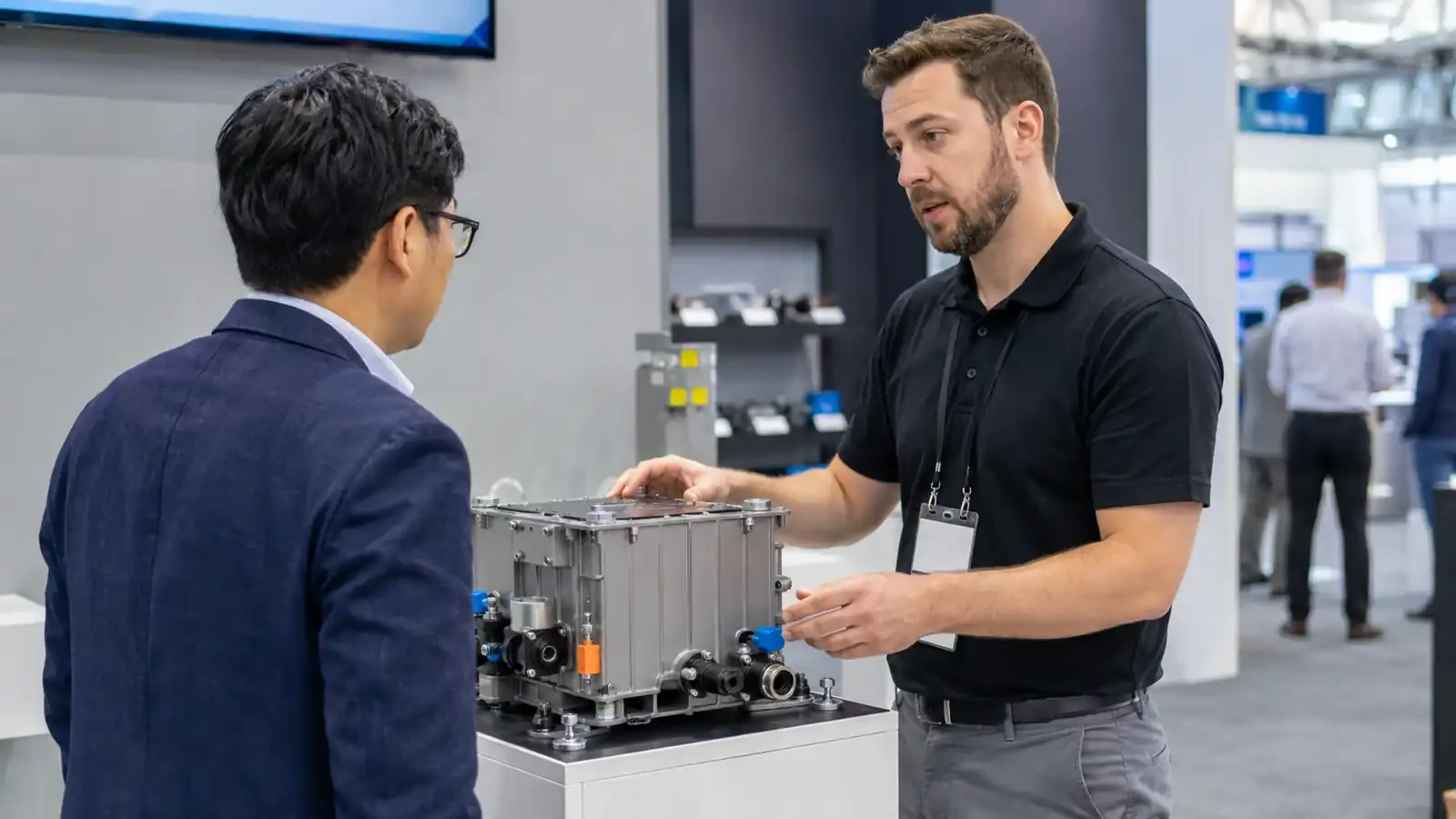
A technical buyer should not have to decode a wall of product families to find the reason to stop. Build the booth around one useful progression:
- the problem or project stage you address;
- the product or method you offer;
- the evidence that supports the claim;
- the next technical or commercial step.
For a materials supplier, the proof may be a clearly labeled sample family, application boundary, and validated performance range. For equipment, it may be a process map, throughput range, inspection method, or changeover logic. For testing or software, it may be an understandable workflow and example output rather than an unattended dashboard. For a component or system, it may be a cutaway, comparison, or integration path that a visitor can discuss with an engineer.
Avoid claims such as “higher quality,” “smarter manufacturing,” or “next-generation performance” unless the booth immediately shows what changed and how the visitor can verify it. If a claim needs ten minutes of explanation, use the graphic to earn the conversation and keep the detailed evidence ready for the right person.
Plan demonstrations as operations, not decoration
A live demonstration can be valuable, but it creates requirements that a render may hide. Write down its power draw, heat, sound, moving parts, consumables, network needs, safety controls, operator, reset time, and shipping method. Confirm those requirements through the organizer and official service providers before you build the demo into the booth.
If the real machine is too large, sensitive, or restricted, choose a proof format that still helps the buyer: a cutaway, controlled sample comparison, recorded process sequence, physical output, measurement report, or scheduled off-floor demonstration. A smaller proof that works every time is more useful than a centerpiece that cannot be operated.
What must be in your booth brief?
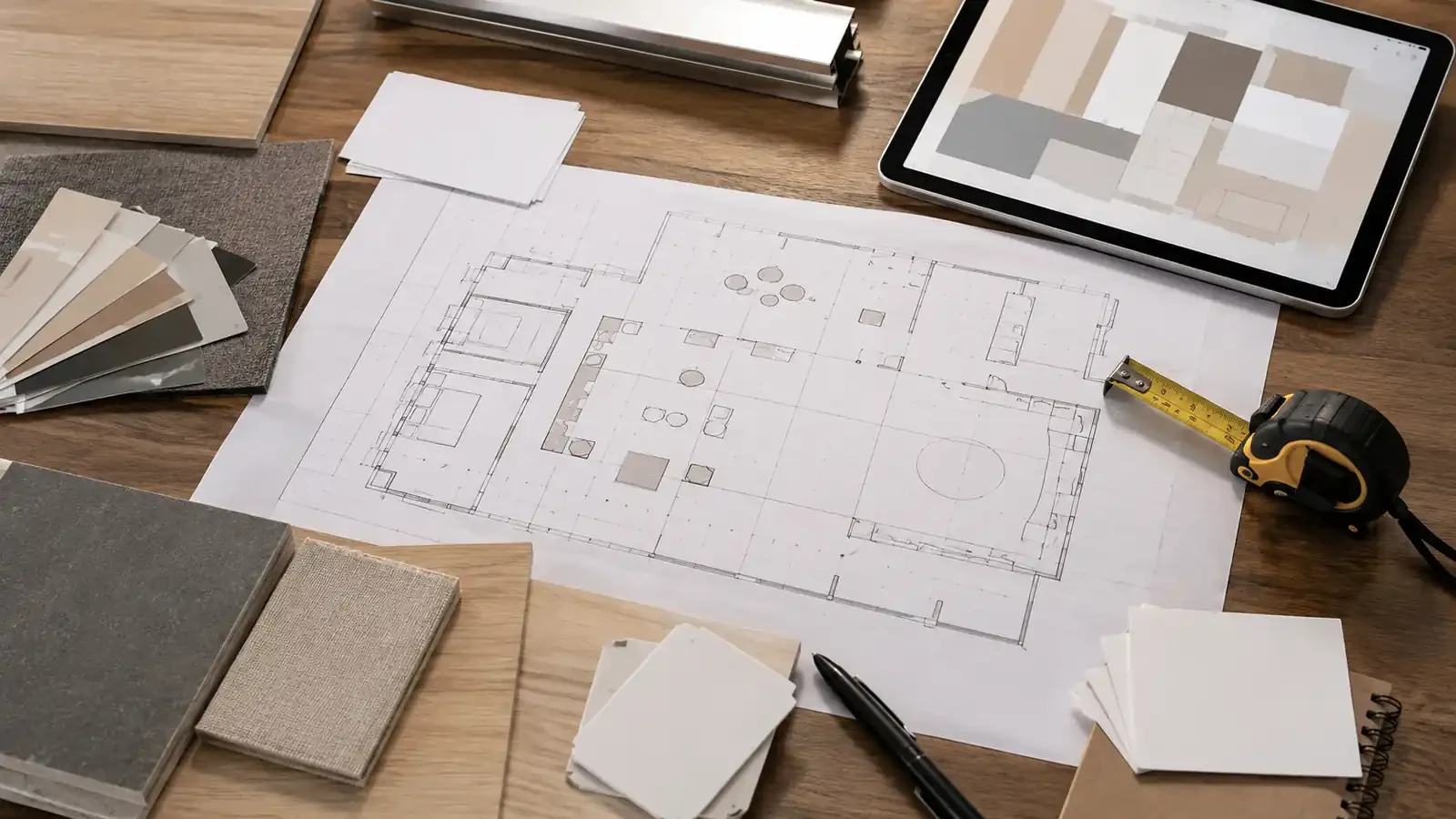
Your first brief should be short enough for marketing, sales, engineering, and the exhibit team to use together. Include:
- the primary buyer and project stage;
- the one problem the booth leads with;
- priority products and the evidence available for each;
- booth size, open sides, and confirmed location;
- demonstrations, samples, screens, equipment, utilities, and safety questions;
- the number and type of conversations the space must support;
- storage, literature, personal items, and replenishment needs;
- staff roles, daily coverage, and conference conflicts;
- lead-capture fields and the owner of follow-up;
- official deadlines, pending answers, and the person responsible for each one.
This brief prevents design from running ahead of facts. A screen, hanging sign, enclosed room, heavy machine, or suspended object should remain a pending feature until the applicable rule, service, and budget are confirmed.
What does exhibit space cost—and what is missing from that number?
The current official exhibit-booking page publishes a space range of $48.75 to $56.50 per square foot, depending on booth size. Use that as a current starting point only. Your contract and live quote control the actual space charge.
Space is not the finished booth. A useful budget separates:
| Cost group | Examples to confirm |
|---|---|
| Event-controlled | exhibit space, badges, sponsorships, required insurance, official services |
| Booth structure | rental or fabrication, flooring, graphics, counters, storage, meeting areas |
| Technical services | electrical, internet, AV, rigging, compressed air, plumbing, approvals |
| Logistics | shipping, advance warehouse, material handling, installation, dismantle, return freight |
| Operations | travel, lodging, staffing, training, samples, cleaning, lead retrieval, follow-up |
The official exhibitor center identifies show management and several official providers, including the show contractor, directory host, lead-retrieval provider, and logistics vendor. Use the current portal to confirm who controls each service. If an outside booth partner gives you one blended estimate, ask it to mark every line as included, excluded, allowance, or paid directly to an official provider.
Which official details should you confirm before design approval?
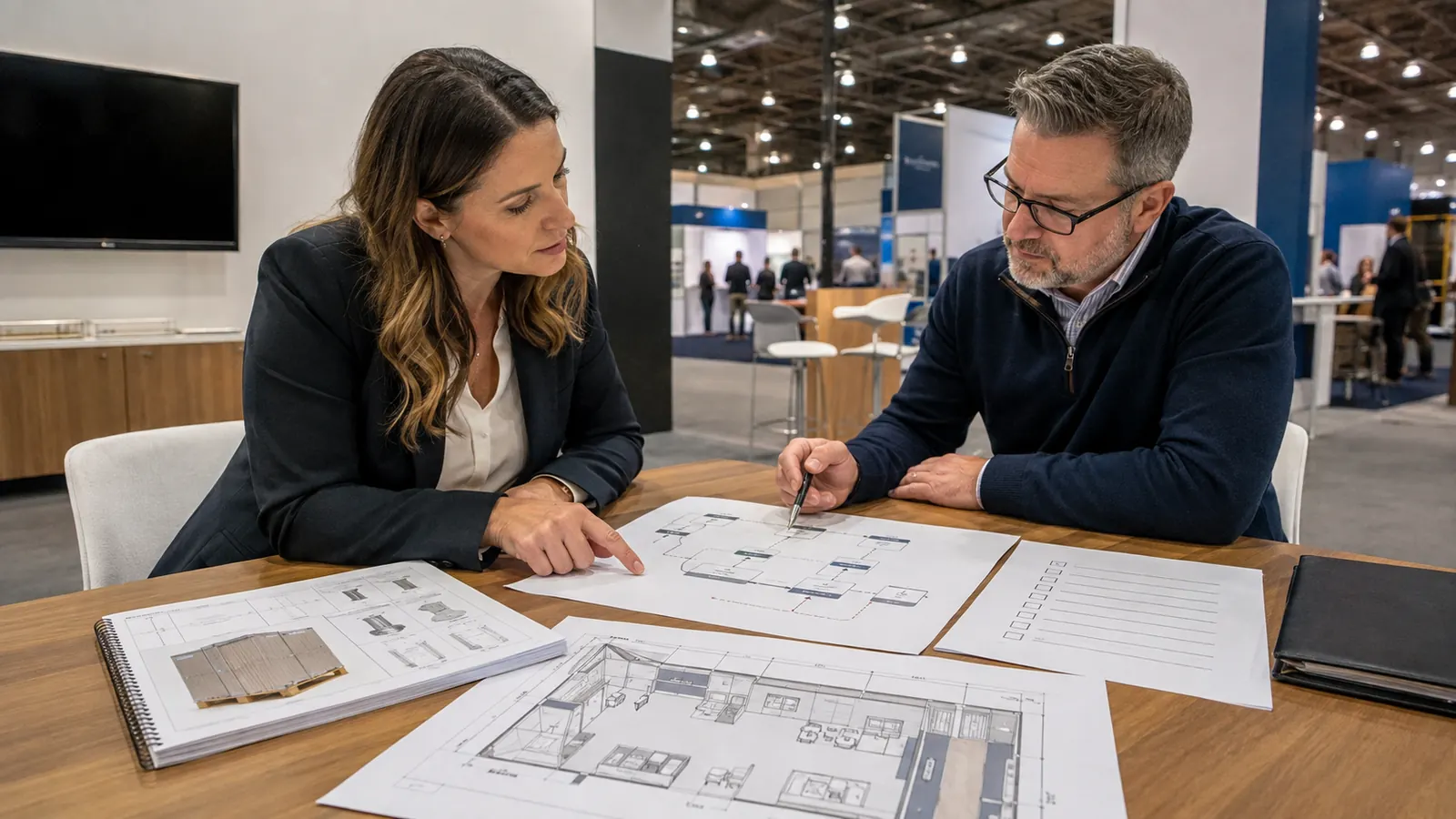
Collect the current control documents before you release a final drawing or production order:
- executed exhibit agreement and booth assignment;
- current floor plan with dimensions, open sides, and neighboring features;
- exhibitor manual and service kit;
- move-in, target freight, installation, show, and dismantle schedule;
- display-height, line-of-sight, hanging-sign, rigging, electrical, network, and fire-safety rules;
- approved contractor and exhibitor-appointed-contractor procedures;
- material-handling, warehouse, direct-to-site, and return-shipping instructions;
- badge, insurance, cleaning, security, and lead-retrieval requirements;
- order deadlines and late-rate dates.
The organizer warns exhibitors about unofficial vendors and attendee-list solicitations. Confirm vendor names and contacts through the exhibitor portal instead of trusting an email because it uses the event name.
How should you plan meetings and follow-up?
The show attracts multiple technical and commercial roles, so one generic lead form will not tell your team what happened. Capture the visitor's company, role, application, project stage, current problem, product interest, decision timing, and agreed next action. If the conversation is exploratory, record that instead of forcing it into a sales-ready category.
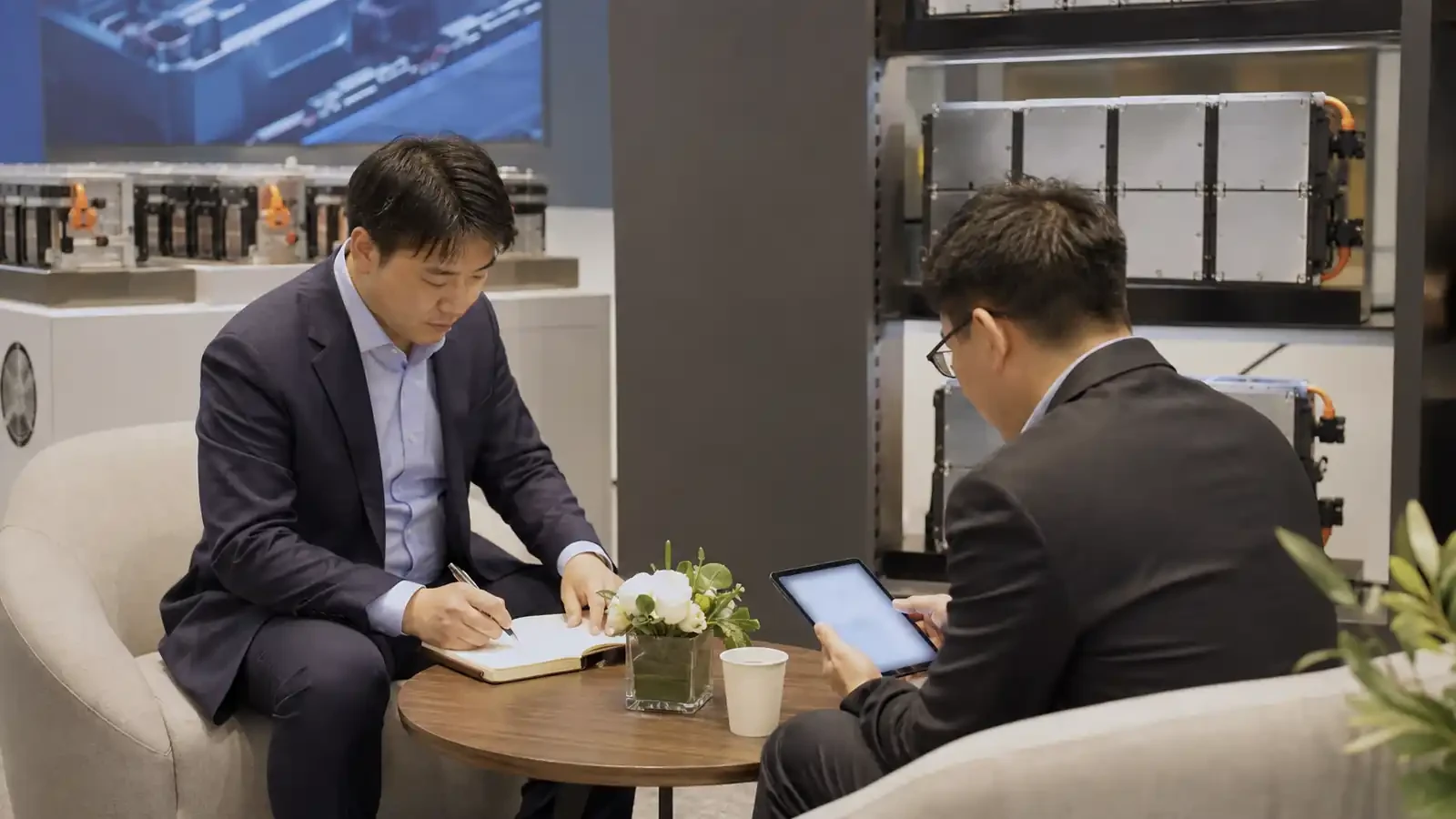
Give technical staff a defined booth schedule and protect time for planned meetings. Decide which conversations can happen at an open counter and which need a seated or semi-private area. Then test the layout with the expected number of staff and visitors inside it. A meeting area that looks generous in a render can block product access once six people and their bags are present.
Before the show, assign follow-up owners and service levels. A qualified engineering question may need an application specialist; a sourcing request may need sales; a press or partnership inquiry may need marketing. The booth should make the handoff easier, not collect a large list with no context.
Frequently asked questions
Is The Battery Show North America the same as EV Tech Expo?
They are presented together in the 2026 event directory, but the names point to connected areas of the broader battery and electric-vehicle technology program. Use the live directory and your exhibit agreement to confirm how your category and booth are represented rather than assuming the two names are interchangeable in every document.
How early should you arrive in Detroit?
The attendee schedule does not answer that. Your arrival should be based on the final move-in target, installation scope, demonstration setup, staff training, and any workshop participation. Wait for the current exhibitor manual and contractor schedule before booking a nonrefundable arrival plan for the booth team.
Can you bring battery cells or energized equipment into the booth?
Do not assume that a product suitable for customer use is automatically approved for exhibition, transport, or live operation. Send the exact chemistry, quantity, state of charge, enclosure, power, heat, and operating plan to show management and the relevant official providers. Obtain written instructions before shipping or including the item in the final design.
How do you compare a smaller booth with a larger location?
Compare the conversations and proof each option can support, then price the complete project. A larger footprint may help with equipment, storage, or simultaneous meetings, but it also adds structure, services, handling, staffing, and operating demands. Choose the smallest space that can perform the required work without crowding.
What should an international exhibitor confirm before shipping to Detroit?
Confirm who will act as importer of record, how each product and battery will be classified, whether hazardous-material rules apply, which temporary-import or bond process is appropriate, and how unsold samples or equipment will leave the United States. Give your customs broker and carrier the product details early, then match their plan to the organizer's advance-warehouse, direct-to-site, and return-shipping instructions. Do not ship first and try to resolve customs or battery-document questions after the freight is moving.
Final thoughts
The Battery Show North America can be a strong event for a supplier with a clear battery or EV use case, credible proof, and a team ready for technical and commercial conversations. The decision should come from audience fit, category evidence, and a workable booth operation—not from the size of the event alone.
KingExhibits can help turn your confirmed booth assignment, product priorities, demonstration needs, and official service requirements into a practical exhibit brief. Start by sending the current floor plan, exhibitor documents, and the one buyer problem your team wants to own; those inputs are more useful than asking for a concept before the event facts are settled.