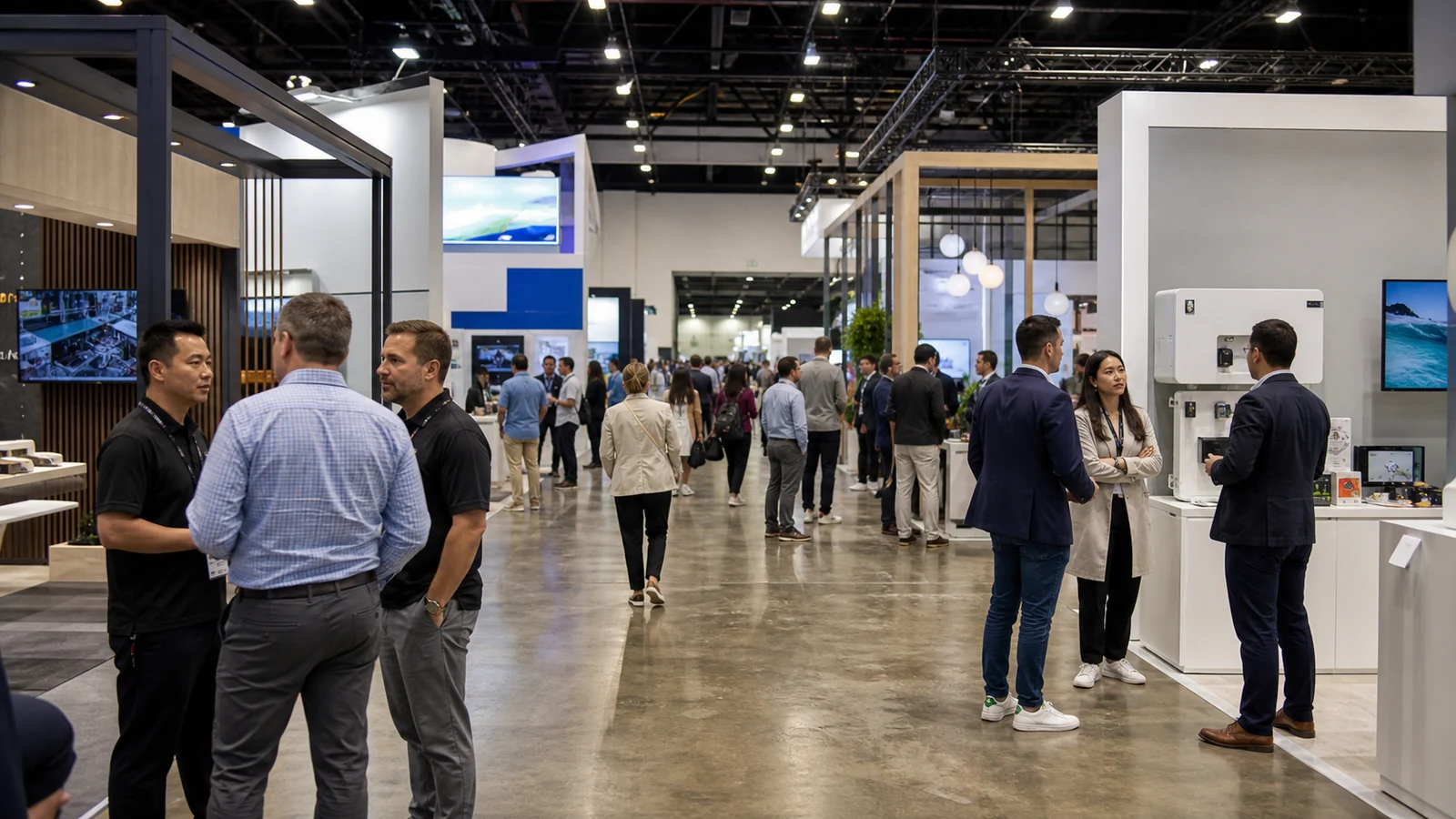
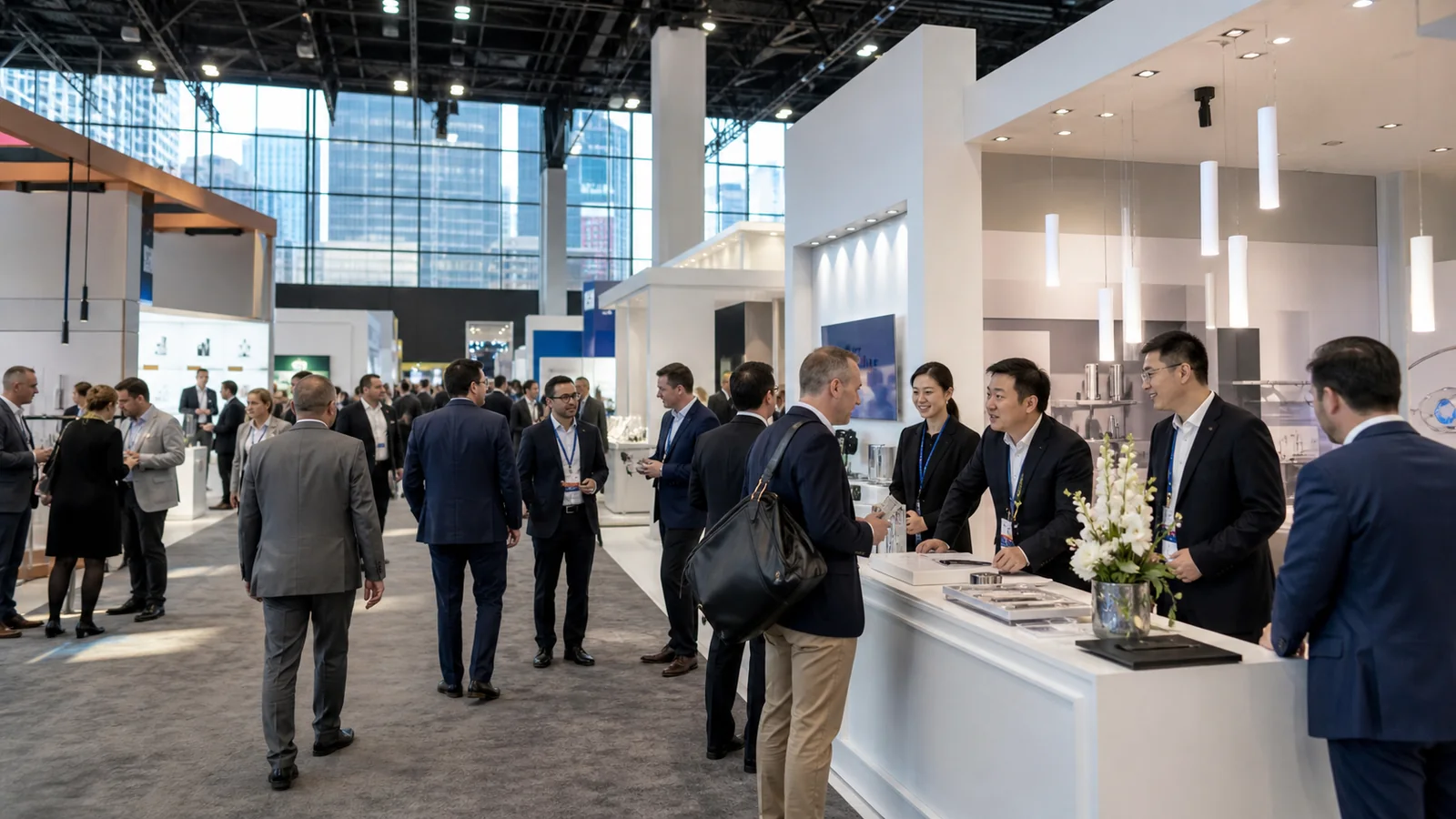
If you are bringing packaging or processing equipment to PACK EXPO International, the machine cannot be treated as an object that simply arrives after the booth is built. Its shipping weight, operating footprint, service connections, safe demonstration area, operator access, and move-out plan all affect the exhibit project.
This guide is for a first-time international exhibitor preparing for PACK EXPO International 2026 in Chicago. It explains what to verify with the organizer and service providers, what to decide inside your own team, and where a late assumption can disrupt the booth. It does not replace your assigned target schedule, exhibitor contract, current rules, or Exhibitor Service Manual.
PACK EXPO International 2026 at a glance
| Item | Current official information checked September 7, 2026 | What it means for your team |
|---|---|---|
| Dates | October 18–21, 2026 | Machine commissioning, booth training, and final cleaning must be completed before opening |
| Venue | McCormick Place, 2301 S. King Drive, Chicago, Illinois | Confirm the building, hall, booth number, dock route, and service desk—not just the venue name |
| Show hours | Sun–Tue 9:00 a.m.–5:00 p.m.; Wed 9:00 a.m.–3:00 p.m. | Build staffing and demonstration cycles for four days, including the shorter final day |
| Organizer's stated scale | 2,600 exhibitors, 40+ vertical markets, exhibits in North, South, West, and Lakeside buildings | Buyers will plan routes; your directory listing, category, booth number, and invitation must help the right person find you |
| Exhibitor portal | Exhibitor Resource Center (ERC) | The primary show contact controls access to the listing, manual, registration, invite tools, and other resources |
| Official services | Exhibitor Service Manual and official-vendor pages | Use the current official sources for orders, target dates, forms, and approved providers |
The scale figures above are the organizer's current statements for the upcoming event, not independently audited attendance results. Recheck every operational date in the ERC because pages and assignments can change.

Start with the product demonstration, then design the booth
PACK EXPO visitors expect to see machinery operating and materials handled. That makes the demonstration plan a design input, not an activity to add after the layout is approved.
Create one equipment sheet for every machine or live system. It should show:
- packed and operating dimensions;
- crated and uncrated weight;
- lifting points, center of gravity, and handling restrictions supplied by the manufacturer;
- operating clearances, door swings, service panels, and maintenance access;
- power voltage, phase, amperage, connection point, and startup load;
- compressed air, water, drain, gas, exhaust, data, or dedicated internet needs;
- heat, noise, vibration, emissions, liquids, ingredients, consumables, and waste;
- guarding, barriers, emergency stop, operator position, and spectator distance;
- the product or material that runs through the demonstration;
- startup, shutdown, cleaning, changeover, and daily replenishment time.
Do not ask the booth designer to “leave room for the machine” without this information. A rectangle on a floor plan cannot show whether an electrical panel opens into a wall, an operator blocks the aisle, a drain is on the wrong side, or the finished product has nowhere to go.
Decide what the visitor needs to see. Running a complete production cycle may be impressive but difficult to explain. A shorter repeatable sequence can be more useful if it clearly shows the change, control, output, or problem the buyer cares about. The abbreviated demo must still be truthful about operating conditions and normal performance.
Confirm the booth rule before developing height and signage
PACK EXPO applies show-specific limits. According to the official FAQ available on September 7, 2026:

- booths under 599 square feet have a 12-foot maximum for display material, and hanging signs are not permitted;
- booths from 600 to 1,499 square feet have a 14-foot maximum for display material, including logos, graphics, and hanging signs;
- booths of 1,500 square feet or more have an 18-foot maximum;
- display material and machinery must be set back at least one foot from all aisles.
These short statements are not enough to approve a drawing. Confirm your booth type, orientation, setbacks, sign rules, sightline conditions, and any review requirement in the current Rules and Regulations. Send a dimensioned plan and elevations for clarification when the design sits near a limit.
The one-foot machinery setback is especially important for large equipment. It reduces the usable footprint and affects guarding, operator position, queues, and visitor viewing. Draw it before selecting the machine orientation, not after fabrication.
Build one utility schedule from the actual demo
Machine exhibitors often create service orders from separate emails: engineering sends power, the booth team orders lighting, IT requests internet, and operations adds compressed air later. This produces gaps and duplicate assumptions.
Use one coordinated schedule with a row for every connection:
| Equipment | Service | Required capacity | Connection location | Operating hours | Ordered by | Drawing/order reference | Verified |
|---|---|---|---|---|---|---|---|
| Machine A | Electrical | ||||||
| Machine A | Compressed air | ||||||
| Demo system | Internet/data | ||||||
| Product area | Water/drain | ||||||
| Booth | Lighting/AV power |
Overlay the connection points on the latest floor plan. Then have the machine owner, exhibit project lead, and relevant service provider confirm the same revision. A correct electrical total does not help if the drop appears on the access side of the equipment or a cable crosses the visitor path.
Do not rely on general venue Wi-Fi for a demonstration that must stay connected. Ask the current McCormick Place technology-service channel what service is appropriate, how the line is delivered, what equipment is included, and how onsite support is requested. Prepare an offline demonstration mode even when dedicated service is ordered.
Treat targeted move-in as a logistics condition
PACK EXPO International assigns exhibitors target dates and time slots for installation, dismantling, equipment, and display material. The official show page states that drayage/material handling is included in the space rate when the truck arrives by the assigned target date and time. Missing that condition can affect cost and execution, so the target is not a suggestion for the carrier.

As of September 7, the show states that target-change requests are due September 9, 2026; approval is not guaranteed. The first-time exhibitor page also says exhibits must be fully set up and empty containers removed from the floor by 1:00 p.m. on Saturday, October 17. Use the ERC and official move-in/out page to confirm the assignment that applies to your booth.
Build the freight plan backward from the assigned target:
- Identify every shipment: exhibit property, machine, demo material, tools, spare parts, samples, and staff-carried items.
- Record packed dimensions, weight, pickup location, carrier, customs status where relevant, and delivery method.
- Decide which property must arrive first for installation and which items cannot be trapped behind the machine.
- Give the carrier the official labels, check-in instructions, target date and time, onsite contact, and return plan.
- Prepare a move-out document before the show, including carrier, destination, paperwork owner, and fallback if the planned carrier is late.
Material handling may be included under the stated show condition, but that does not make transportation, waiting time, special handling, rigging, labor, storage, customs, or late arrival free. Identify each cost and responsibility separately from the space rate.
Plan installation around machine access, not visual completion
Write an installation sequence before the team reaches Chicago. Large equipment may need to enter before walls, storage rooms, overhead elements, or finished flooring close the route. Utilities may need to be placed before the machine is finally positioned, but connected only after inspection or by the designated provider.
A practical sequence might be:
- mark the footprint and verify service locations;
- place floor protection or approved finished flooring;
- receive and position the machine using the authorized handling plan;
- complete the surrounding exhibit structure without blocking access;
- install utilities and make authorized connections;
- commission the machine with the product team;
- install guards, visitor barriers, samples, graphics, and operating instructions;
- run the complete demonstration, shutdown, cleaning, and reset;
- train booth staff and remove cases, tools, waste, and empty containers on time.
The exact sequence depends on your booth, contractor, equipment, and current rules. Its purpose is to expose dependencies early. If the machine cannot be commissioned until a product technician arrives on Saturday afternoon, the team should see that risk before the published completion time.
Design for how PACK EXPO buyers evaluate equipment
At a packaging and processing show, a visitor may need to see the machine, inspect the output, ask an application question, and bring a technical colleague back later. Give each behavior a place.
Let the machine explain one clear difference
Choose one primary proof for the aisle-facing message: changeover, control, inspection, throughput condition, material compatibility, cleaning access, output quality, footprint, or another defensible difference. Do not cover the machine with six claims that cannot be understood while it runs.
Keep the technical conversation beside, not in front of, the demo
Visitors should not have to block the viewing edge to ask a question. Place a sample counter, small standing conversation point, or scheduled consultation area where staff can compare specifications without stopping the next demonstration.
Make samples traceable
Label outputs with the machine, setup, material, and condition that produced them. If the attendee takes a sample, record which version they received. A bag of unlabeled output loses its value when it reaches a colleague after the show.
Prepare for return visits
A serious buyer may first walk past, then return with engineering, operations, procurement, or management. Use a short demo schedule and a clear way to book a technical review so the second visit is more useful than the first.
Complete the online listing for the buyer who is planning a route
PACK EXPO spans all four McCormick Place buildings. Buyers are unlikely to discover every relevant supplier by walking every aisle. For PACK EXPO exhibitors, the official listing and planning tools influence whether the right person puts a booth on the route.

The show's complimentary listing can include a company description, contact information, website, social links, product categories, sustainability description, vertical markets, and press releases. Complete the fields for what you will actually show. A description such as “global leader in innovative solutions” gives a buyer no reason to add the booth. State the equipment or material, application, product handled, and problem demonstrated.
Check the listing as an attendee would:
- Can the buyer identify your product without knowing your brand?
- Are the selected categories the ones that customer would browse?
- Does the listing say what will run or be available at the booth?
- Is the booth number correct in every invitation and landing page?
- Can a visitor request a meeting or technical review before the show?
Use the Customer Invite Program for named accounts
The official Customer Invite Program provides exhibitors with a unique complimentary-registration code and promotional tools. The program page says exhibitors can see who registered through their code. That makes it more useful as an account-planning tool than as a generic social post.
Give each salesperson a short list of customers and prospects to invite. The invitation should say what will be running, who will be available, how long the relevant demo takes, and why a meeting is worth scheduling. Then review registrations and contact the appropriate person with a proposed time.
Do not promise that an invitation code guarantees a meeting or a qualified lead. It only creates a trackable path to registration. The quality still depends on the account choice, message, and follow-through.
Register and train the whole booth team
The first-time exhibitor page currently says exhibitor staff registered by September 18, 2026 are free, while registrations after that date incur a $15 fee and require onsite badge pickup. Recheck the ERC before acting, especially if your team changes.

Registering the badge is the administrative step. Training is the operating step. Before travel, each person should know:
- the target buyer and applications to prioritize;
- the one-sentence invitation from the aisle;
- the demonstration schedule and safe operating boundary;
- which claims and technical questions they can answer;
- when to bring in an engineer or application specialist;
- what to record after a conversation;
- who owns startup, shutdown, cleaning, samples, and daily replenishment;
- the process for a service failure, injury, machine fault, or visitor complaint.
Run the full demonstration with booth staff watching and participating. A salesperson who has only seen slides may stand in the wrong place, interrupt the operating sequence, or promise a condition the machine team has not approved.
Use official sources and reject vendor-list scams
PACK EXPO publishes an official-vendor page and warns exhibitors about unauthorized hotel, attendee-list, and advertising solicitations. Verify unfamiliar offers against the current official list or with the PMMI Show Department before paying or sharing company data.
Keep an order register with the service, provider, contact, order number, amount, deadline, confirmation, onsite location, and cancellation terms. The exhibitor manual may route different work to the organizer, PACK EXPO Services, McCormick Place, or another official provider. “The venue handles it” is not a usable owner.
Final PACK EXPO exhibitor check
Before the team travels, confirm that:

- the latest booth plan complies with the current show rules and reflects the aisle setback;
- every machine sheet matches the equipment being shipped;
- utilities, positions, drawings, and orders use the same revision;
- the assigned move-in target is acknowledged by the carrier and onsite team;
- the installation sequence keeps the machine route and service access open;
- the live demo has been tested through startup, operation, shutdown, cleaning, and reset;
- guards, barriers, staff roles, consumables, waste, and offline operation are ready;
- the online listing and product categories describe what the buyer will see;
- named customers have a specific invitation and meeting option;
- badges, travel, hotel, and onsite contacts are confirmed;
- return freight and move-out paperwork have an owner;
- every third-party solicitation has been checked against official sources.
An unchecked item needs a name and a due date. Moving it into a general “onsite” list does not make the dependency disappear.
Frequently Asked Questions
Should the machine run continuously or at scheduled times?
Use continuous operation only when the equipment, consumables, noise, staffing, cleaning, safety, and service capacity support it. Scheduled demonstrations make it easier to gather the right audience and have a specialist present, but late visitors need to see the next time clearly. A hybrid often works: a safe visual motion or short loop remains visible, while the complete process runs at published times.
Can a customer bring their own product or material for a booth test?
Do not accept an unplanned test at the machine without review. Confirm the material, dimensions, condition, ownership, handling risk, sanitation or contamination concern, confidentiality, disposal or return, and whether the show permits the activity. If the technical team cannot approve the input and operating condition, collect the requirement and arrange a controlled test after the show.
How many spare parts and consumables should we bring?
Build the quantity from planned demonstration cycles, setup and cleaning use, expected waste, shelf life, storage conditions, and the consequence of running out. Separate normal consumables from failure-critical spares. The machine owner should identify which part can stop the demo, whether it can be replaced onsite, and who is authorized to perform the work.
How should an international team handle translated technical claims?
Approve the meaning before printing or training. Product names, units, safety words, performance conditions, and exclusions must remain consistent across languages. Give bilingual staff a short glossary and escalation path for questions they cannot translate precisely. A fluent conversation is not permission to broaden an engineering claim.
What should the team document during the show?
Keep a daily operating log with demonstration cycles, settings that changed, material or sample version, service interruptions, faults, repairs, consumable use, and open technical questions. Record buyer-specific information only under the company's approved privacy and lead-handling process. The log should help the next shift run the machine correctly and help the post-show team answer what actually happened.
Make the machine plan and exhibit plan one project
For a first-time PACK EXPO exhibitor, the most important working session is not a design presentation. It is a review of the machine sheets, demonstration, floor plan, utilities, target schedule, installation sequence, staffing, and return plan in one room.
Hold that review with the people who own the product, exhibit, logistics, services, and onsite operation. Mark every unresolved condition directly on the plan and assign a source and due date. If you still need to translate the approved machine and show requirements into a coordinated U.S. exhibit scope, use the trade show project management guide to define owners, approvals, and handoffs.
Official sources checked September 7, 2026
- PACK EXPO International 2026 show information
- PACK EXPO exhibitor resource center
- PACK EXPO first-time exhibitors
- PACK EXPO move-in/move-out schedule
- PACK EXPO rules and regulations
- PACK EXPO frequently asked questions
- PACK EXPO customer invite program
- PACK EXPO official vendors and scam notice
- McCormick Place exhibitor service guidelines