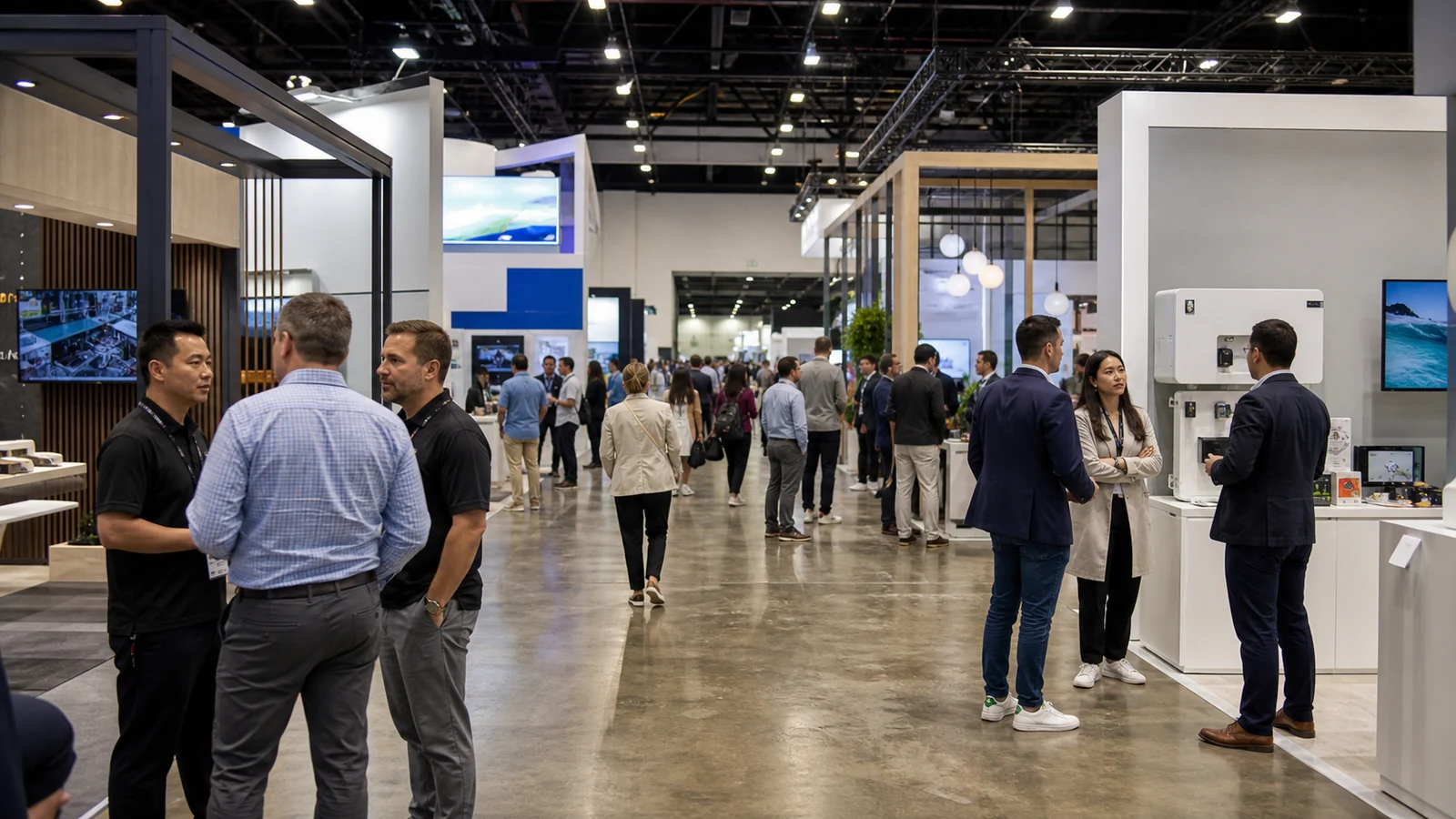
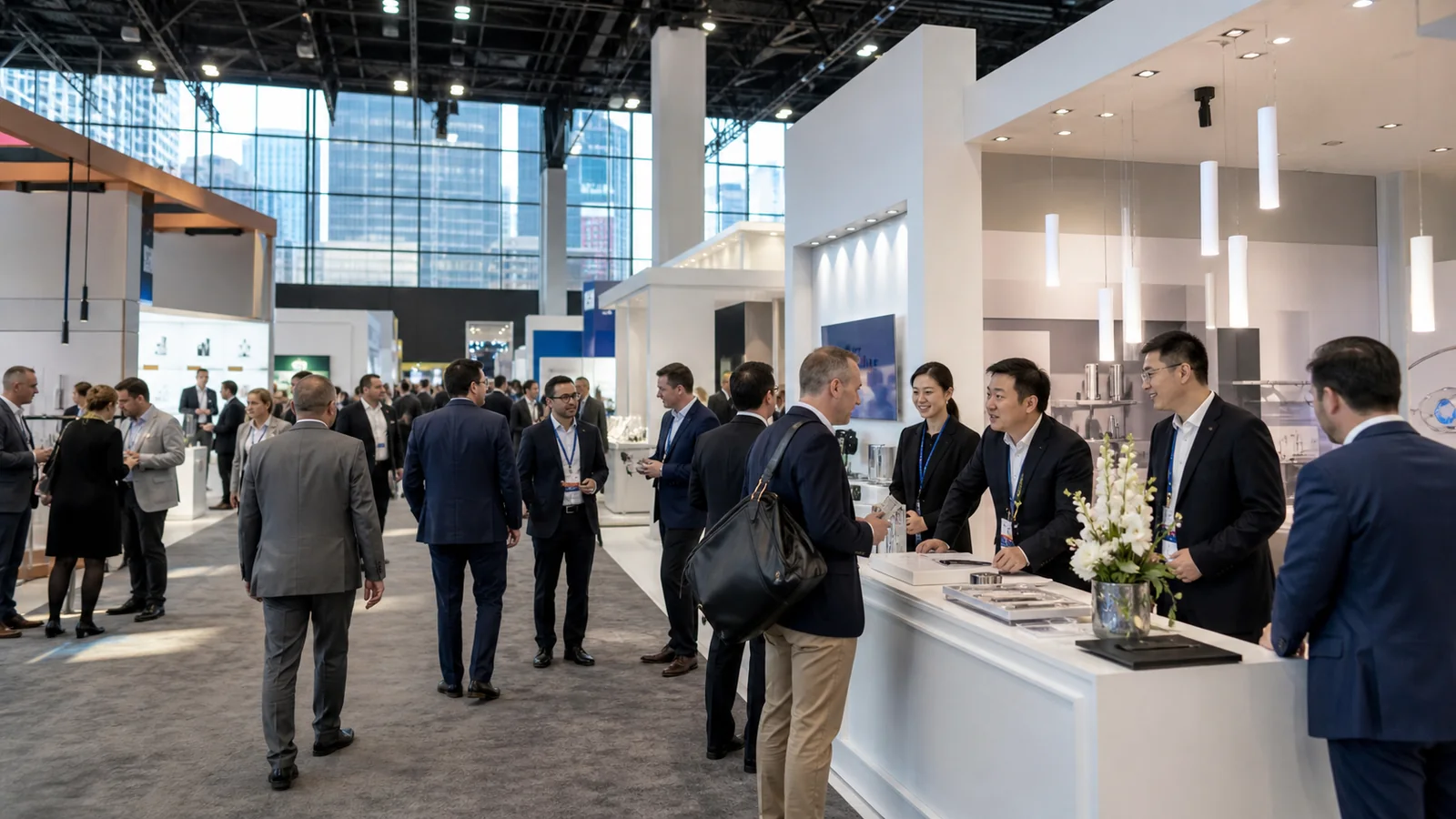
A badge scan proves that someone stood close enough to your booth to be scanned. It does not prove they have a problem you can solve, the authority or influence to move a project, or any reason to answer the email that arrives after the show.
This trade show lead generation guide helps a B2B marketing manager turn a trade show into qualified sales follow-up. The work begins before the booth opens: define what counts as a lead, decide which accounts matter, capture the context sales needs, and agree who will take each next step. More scans are not the goal unless more of them become useful conversations.
Define a lead before setting a target
Marketing and sales often use the word “lead” for different things. One team counts every scanned visitor; the other counts only a person with a confirmed project. That disagreement makes the final report look like a performance problem even when it is a definition problem.

Use separate stages:
| Stage | Minimum evidence | What happens next |
|---|---|---|
| Contact | Permission and enough information to identify the person | Store or route according to the approved data process |
| Relevant conversation | The person or company fits a market, application, or account you serve | Capture the topic and decide whether more qualification is needed |
| Qualified lead | Agreed criteria are met, such as application fit, business need, role, timing, or a defined project signal | Assign a sales owner and a specific follow-up |
| Meeting or action agreed | Both sides understand the next step, owner, and expected timing | Put the action on a calendar or in the CRM task queue |
| Opportunity | Sales has accepted and opened an opportunity under the company's normal rules | Track it through the existing sales process |
Your company may use different names. Keep the evidence clear. Do not report every contact as a qualified lead or every show-floor promise as an opportunity.
Then set targets by stage, not only by total scans. A useful plan might track named-account meetings, qualified leads, technical reviews requested, samples to send, distributor conversations, and contacts that require longer-term nurture. Choose the outcomes that fit the reason you are exhibiting.
Write the qualification rule in the buyer's language
Avoid a long scoring model that booth staff cannot use in a live conversation. Decide the few facts that change the next action.
For an equipment supplier, those facts may include the product being processed, current method, capacity or changeover need, facility location, project stage, technical constraint, buying team, and target timing. For a materials supplier, application, substrate, environment, performance requirement, current problem, approval process, and expected volume may matter more.
Turn internal fields into natural questions:
- Instead of
Need, ask: “What are you trying to change in the current process?” - Instead of
Authority, ask: “Who else will review the technical and commercial options?” - Instead of
Timing, ask: “What has to happen before this project can move forward?” - Instead of
Budget, ask: “Is the team comparing an approved project, building a business case, or still exploring?”
The attendee should feel that you are trying to understand the application, not complete a form. Staff can record the structured field after hearing the answer.
Build a named-account plan before the show
Do not leave the best prospects to chance foot traffic. Ask sales, distributors, customer-success teams, and product leaders to identify companies and people who have a reason to meet now.

For each account, record:
- why the event creates a timely conversation;
- which person or role should attend;
- what product, problem, or proof is relevant;
- who already has the relationship;
- the best meeting format: booth demo, technical review, private conversation, or short introduction;
- the proposed next step if the meeting goes well.
Prioritize the list. A accounts deserve coordinated, personal outreach and an appointment attempt. B accounts may receive a relevant invitation plus salesperson follow-up. C accounts can enter a broader approved campaign. The letters are not a judgment of company value; they tell the team where to spend limited pre-show attention.
An invitation should give a reason to meet. “Visit us at booth 412” is a location, not a reason. Tell the buyer what they can see, compare, test, bring, or discuss, and name the person who will be available.
Design the booth around the first useful conversation
The booth message should help the target buyer answer three questions from the aisle:
- Is this relevant to my product, application, or problem?
- What can I learn or see here that I cannot get from a generic brochure?
- Is it easy to start a short conversation without committing to a long sales pitch?
Use one primary problem or outcome at the highest message level. Product families, technical details, and case material can support the conversation deeper in the booth. When every wall carries a different headline, staff must spend the first minutes explaining what the company does instead of learning what the visitor needs.
Plan a simple path: recognition at the edge, proof or demonstration inside, a place for qualification, and a clear next-step handoff. The path does not have to be physically large. Even a 10-by-10 booth can separate a quick product view from a two-person conversation if furniture and storage do not occupy the working edge.
Give each booth role a job in the lead path
Not every staff member should deliver the same pitch. Assign roles based on the conversation stage:
- Greeter or opener: recognizes likely visitors and begins a short, relevant exchange.
- Qualifier: asks the few questions that determine fit and next action.
- Product or technical specialist: explains evidence, conditions, and limitations without turning every interaction into a full consultation.
- Account owner: handles named customers and agreed meetings.
- Capture owner: checks that notes and next steps are complete during busy periods.
- Flow lead: watches coverage, queues, breaks, scheduled demos, and unresolved visitors.
One person may perform several roles, especially in a small booth. The roles still need to be named. Otherwise every person assumes someone else captured the note or arranged the meeting.
Rehearse handoffs. The opener should be able to introduce a specialist with context: “Maria is evaluating seal integrity on a recyclable film and wants to understand the test condition.” Making the visitor repeat the entire story wastes time and signals that staff were not listening.
Build the capture form around the follow-up
Start with the message you want sales to send after the show. Then identify the fields needed to write it.

A practical trade show lead capture form may include:
- contact and company identity;
- account owner or territory;
- application, product, or line discussed;
- current method or supplier status when voluntarily shared;
- problem, trigger, or goal in the buyer's own words;
- technical conditions that affect fit;
- project stage and timing signal;
- other people involved in the decision;
- material promised: sample, drawing, quote, test, case, or specification;
- next step, owner, and due time;
- qualification stage and reason;
- consent or communication preference required by the company's approved process.
Use selectable fields for routing and reporting, but preserve one short free-text note. A dropdown can say six to twelve months; it cannot explain that the buyer must finish a plant relocation before the project can be reviewed.
Do not collect information merely because the scanner permits another field. Every question costs time and creates data the company must manage. If a field does not change qualification, routing, personalization, or measurement, remove it.
Separate fast capture from a real sales note
Busy periods need two modes.
Fast capture is appropriate when a relevant visitor cannot wait. Record identity, topic, owner, and a specific callback or meeting request. Staff must tell the visitor what will happen next.
Full qualification is appropriate when both sides have time and the right expertise is present. Capture application, conditions, timing, stakeholders, evidence requested, and the agreed action.
Do not disguise a bare scan as full qualification. Create a status that makes the missing work visible, such as callback requested—qualification incomplete. Then give someone a deadline to close it.
Use paper or an offline form as a backup when the scanner, app, or network fails. The backup must collect the same minimum routing information and have a named person responsible for entering it later.
Decide the next step while the visitor is present
“We will follow up” is not a next step. It does not say who will do what or why the visitor should respond.

Stronger next steps include:
- send the requested sample set after confirming the shipping address;
- review an uploaded drawing with an application engineer;
- schedule a discovery call with the plant team;
- provide a comparison against the stated operating condition;
- introduce the visitor to the correct regional distributor;
- run a controlled test with the customer's material;
- place the contact into a specific nurture track because the project is not active yet.
Whenever practical, agree on the action and timing in the booth. If a calendar can be opened without derailing the conversation, book the meeting. If information is missing, state exactly what each side needs to send before the next review.
Use lead categories that change behavior
Categories should control routing and follow-up, not decorate the report.
| Category | Example evidence | Follow-up behavior |
|---|---|---|
| Immediate project | Relevant application, active evaluation, clear issue, next action agreed | Assigned owner acts within the team's shortest approved window |
| Qualified future project | Fit is real but timing or internal approval is later | Personalized follow-up plus a dated future task or nurture path |
| Existing customer action | Service, expansion, parts, training, or new application question | Route to the current account/service owner with context |
| Partner or distributor | Channel fit and market/territory are relevant | Route to channel owner; do not mix with end-user opportunity counts |
| Media, supplier, job seeker, or other contact | Valuable relationship but not a sales lead | Route to the correct function or retain only as permitted |
| Unqualified scan | No relevant conversation or evidence of fit | Do not send a false personal sales message; use only under the approved contact policy |
Avoid hot, warm, and cold unless the team defines the evidence and action behind each word. One person's warm lead is another person's unqualified contact.
Build the trade show lead management handoff before the show opens
The lead system needs owners at four points:
- Capture: who checks required fields and resolves duplicates during the show?
- Enrichment and routing: who matches accounts, territories, products, and existing owners?
- Sales acceptance: when and how does sales accept, return, or reclassify a lead?
- Execution: who completes the promised action and records the outcome?
Write the handoff rule and test it with sample records before travel. Include an existing customer, a named prospect, an unknown but qualified buyer, a distributor, a student, a duplicate contact, and a record with no note. The routing gaps will appear quickly.
Agree on follow-up windows by category. Do not publish a universal rule such as “all leads within 24 hours” if the company cannot meet it or if the next action requires a technical review. The customer-facing promise and the internal due time must match the work.
Make the first follow-up prove that the booth conversation mattered
The first message should identify the context, deliver or advance the agreed action, and make the reply easy.

Weak:
Thanks for visiting our booth. We would love to tell you more about our solutions.
Useful:
You asked about reducing film breaks during the higher-speed run. I have attached the test-condition sheet we discussed. Could you confirm the film structure and current line speed so our application engineer can prepare the comparison for Thursday's review?
The useful version does not need an elaborate email sequence. It proves the note was read and connects the next question to the buyer's problem.
If the promised material is not ready, acknowledge the conversation and give a realistic delivery time. Silence while the team prepares a perfect package can make the visitor assume nothing was recorded.
Measure the system, not only the final list
Review the stages separately:
- named accounts invited, registered, met, and advanced;
- contacts captured;
- relevant conversations;
- qualified leads by category;
- next steps agreed;
- promised actions completed on time;
- sales-accepted leads;
- meetings held after the show;
- opportunities created under the normal sales definition;
- records returned because notes, fit, ownership, or permission were missing.
Also measure loss points. If many relevant conversations lack notes, fix staffing or capture. If records are complete but sales does not accept them, revisit the qualification rule. If qualified leads are accepted but meetings do not happen, review the agreed action and follow-up quality.
Do not claim revenue for the show merely because an account appeared on the scan list. Use the company's normal attribution method and keep sourced, influenced, existing, and unrelated opportunities separate.
Run a daily show-floor lead review
At the end of each day, spend a short, fixed period reviewing the records that need action. Do not turn it into a presentation about total scans.

Check:
- important leads with no owner;
- promised actions due before the show ends;
- named accounts that registered but have not visited;
- duplicate or incomplete records;
- recurring questions that require a new proof point or specialist;
- booth messages attracting the wrong audience;
- staffing periods where notes or handoffs fail.
Correct what can still be corrected. Move the right specialist to a busy time, update the opening question, contact a missed account, or add a required field. A post-show lesson cannot recover the next two days of the current event.
Frequently Asked Questions
Should staff scan everyone who enters the booth?
No. Tell people why you are scanning and follow the event's tools plus your company's approved privacy and contact process. A visitor looking at a machine is not automatically consenting to sales outreach. Capture identity when there is a useful reason, and distinguish a contact from a qualified lead.
How many qualification questions should booth staff ask?
Ask only what is needed to choose the next action. For a short conversation, that may be application, current problem, role, and timing signal. A complex technical review may need more. Stop when the visitor's time or interest changes; missing details can become an explicit next-step request rather than an interrogation.
Should giveaways require a badge scan?
Only if the exchange is clear, allowed, and useful. Requiring a scan can produce a larger contact file with weaker intent. If the giveaway is open to general traffic, keep that response separate from sales qualification and do not tell the sales team that every entrant requested a product conversation.
Can booth staff promise a quote during the show?
Only when the information needed to prepare that quote is clear and the person making the promise has authority to set the timing. If application details, drawings, test conditions, freight, installation scope, or commercial approvals are still missing, promise the next review—not a number the team cannot support. Record what the buyer and your team must provide before pricing can be prepared.
What if sales rejects a lead after the show?
Require a reason that can improve the system: wrong account, no fit, duplicate, existing owner, missing context, no permission, timing too early, or criteria not met. Marketing should not force acceptance, and sales should not return a record without evidence. Review patterns after the event and change the definition, training, or routing rule.
Make one record tell the whole next-step story
Before the show, take five realistic visitor scenarios and run them through the complete system: invitation, booth opening, qualification, proof, capture, category, owner, first message, and sales acceptance. Repair every point where the context disappears.
The standard is simple: someone who was not at the booth should be able to read the record and understand who the buyer is, what matters to them, what was promised, and what happens next. If your booth layout still needs to support that conversation path, connect the lead plan to the trade show booth design process before the physical scope is frozen.