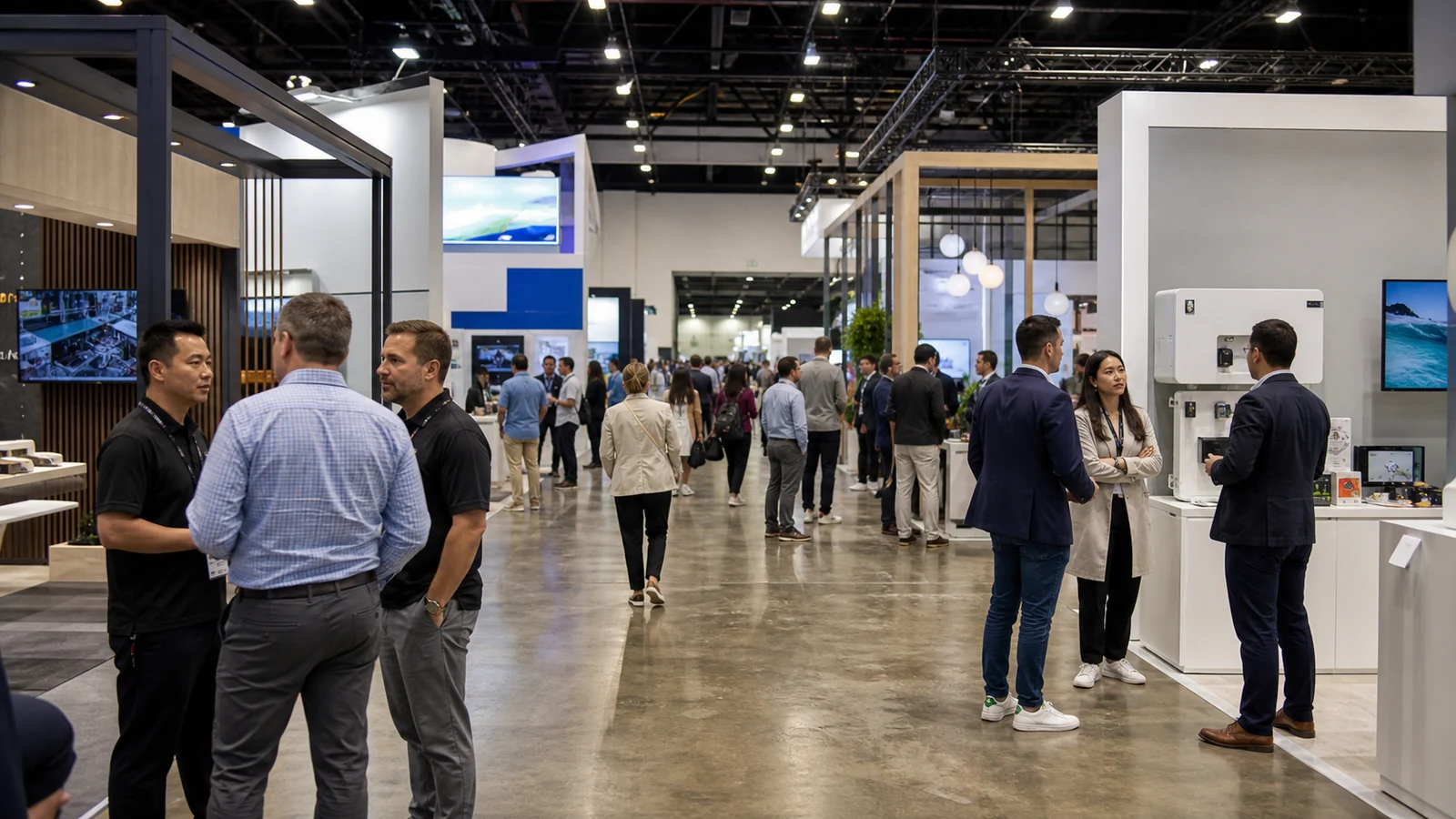
SCTE Cable-Tec Expo is now SCTE TechExpo. If you sell broadband equipment, the practical question is whether the 2026 event will put you in the right operator conversations. Start with its audience and program, then decide what your booth needs to demonstrate.
What happened to Cable-Tec Expo?
SCTE’s flagship event became TechExpo in 2024 as its scope expanded beyond cable. It remains an industry gathering centered on broadband technology, with an exhibition alongside conference sessions. The shorter name does not turn it into a general consumer electronics fair. CableLabs rebranding announcement

SCTE, the Society of Cable Telecommunications Engineers and a CableLabs subsidiary, organizes the event. Its June announcement names AMC Global Media and Charter Communications as the 2026 co-hosts. That combination reflects a program connecting network delivery with the services people use over those networks. SCTE announcement
For your equipment business, the useful distinction is the sales channel. You need a reason for a broadband operator to evaluate your product. A retail price tag and a consumer feature list will not explain where it belongs in an operator’s network.
SCTE TechExpo 2026 dates, location, and exhibition hours
SCTE TechExpo26 is scheduled for September 29–October 1, 2026, at the Georgia World Congress Center in Atlanta, Georgia. The published attendee hours for the exhibition are below; these are not the full conference or exhibitor access hours. Official trip planner

| Exhibition day | Attendee access, Atlanta local time |
|---|---|
| Tuesday, September 29 | 10:30 a.m.–5:30 p.m. |
| Wednesday, September 30 | 10:30 a.m.–5:00 p.m. |
| Thursday, October 1 | 9:00 a.m.–1:00 p.m. |
Thursday has a shorter window for visitors. Put any substantial operator demo earlier in the schedule when your contact can stay for questions. Do not treat the longer exhibitor access window as permission to invite customers in whenever your team can enter.
Why the broadband audience matters more than the show’s size
The event describes its audience as engineers, technology leaders, and decision-makers working on broadband and converged networks. That is a useful starting point, not a promise that the right purchasing team will visit your booth. TechExpo event overview
The 2026 exhibitor directory lists Adtran, Amphenol Broadband Solutions, and VIAVI Solutions. Use the official floor plan and directory to examine the companies around your category. These are listed exhibitors, not a list of buyers or confirmed appointments. Check the live directory again before selecting a location.
If your product goes into an operator’s access network, make its position clear. A simple diagram showing the equipment on either side of yours can be more useful than a wall of product photographs. It lets a visitor ask about a real connection instead of guessing which part of the network you serve.
Exhibiting becomes easier to justify when you already know which operators you want to reach and what they would need to test. If your team cannot yet explain that, an exploratory visit may be more useful than shipping a full display. Use the visit to learn the language of the projects you hope to win, then decide what a future demonstration must prove.
What the 2026 program tells you to bring
The Multi-Access Convergence track brings DOCSIS, fiber, and wireless access into the same discussion. Autonomous Networks looks at how networks respond with less manual intervention. Operations, Planning & Construction addresses building and maintaining those networks. StreamTech featuring SEGMENTS adds the streaming side of the conversation. Read those topics as clues to the conversations your equipment must support, rather than labels to add to your graphics. 2026 track descriptions

For equipment used alongside DOCSIS or fiber networks, bring a labeled connection diagram and state which configuration you actually tested. DOCSIS enables broadband over hybrid fiber-coax networks, which combine optical fiber and coaxial cable. Simply putting the term on a banner does not demonstrate compatibility. Identify the software version and surrounding equipment used in your testing. Separate those results from configurations you still need to validate. Before bringing another company’s device into the display, ask SCTE how its restriction on third-party products applies to your proposed setup. Exhibitor rules, section 8E
If remote management is part of your product, show what an operator can see and do when a fault occurs. A working sequence from an alert to a diagnosis gives the visitor something specific to assess. A dashboard full of green indicators leaves the difficult part unanswered.
For hardware that field crews install or service, let visitors inspect the task itself. Show access to connectors or a replaceable component, then explain which tools are needed. A clear view of that job gives the construction and operations discussion a physical reference.
These are suggested demonstrations, not technical qualifications set by SCTE. Choose the one your team can support with real evidence. You do not need to claim that a product addresses every topic on the conference agenda.
Give the demonstration enough space to work
The manual offers several exhibit formats, including booth space and meeting rooms. Choose around the conversation: an equipment demonstration needs visibility and room for people to stop; a discussion of a confidential deployment may benefit from a meeting room. Confirm the available format and what is included before designing around it. Exhibit formats

Some 2026 rules directly affect that choice: linear booths cannot contain enclosed conference rooms; double-decker exhibits are prohibited; visitors must stay inside the booth boundary. Island plans had an August 6 approval deadline. Direct selling and order-taking on the floor are prohibited. SCTE exhibitor rules, sections 6 and 8
As of September 7, that island-plan deadline has passed. If you are starting now, get written guidance on what can still be approved before commissioning a structure. Keep the demonstration screen readable from within your footprint so a small group does not need to watch from the aisle. Prepare your sales team to arrange technical follow-up after the event.
Check the services behind the screen
The internet guidance says dedicated service is separate from booths and meeting rooms, and shared Wi-Fi has no guaranteed bandwidth. Check your particular package before ordering; a bundled connection, if offered, still needs to suit your demonstration. Official internet guidance

A demonstration that depends on a remote server needs a separate connectivity plan. Ask the approved provider about your actual upload needs and remote-access setup before ordering. Keep a local recording of the same demonstration so you can still explain the result if the connection fails; label a recording clearly rather than presenting it as live.
A separate contractor deadline also matters: the rules require a third-party contractor notice at least 30 days before the event and prior written SCTE consent. That notice window has already passed as of September 7. Confirm the available route with SCTE before hiring a new outside installation team. Exhibitor rules, section 12
For setup, distinguish a badge’s access hours from the time when your freight and crew can work. The public FAQ contains a Monday installation deadline that does not clearly reconcile with its later access entries. Have show management confirm your construction cutoff and freight appointment in writing before booking labor. Official FAQ Access schedule
FAQ
Does an exhibitor badge include every conference session?
Do not assume so. SCTE lists Full Access and EXPO Only passes separately, while booth managers receive instructions for registering staff through a portal. Check each colleague’s entitlement before assigning them to sessions. If a technical specialist will leave the booth to attend one, schedule another person to handle their demonstration. Registration information
Can a new supplier participate without an American customer case study?
You can prepare a useful technical conversation without inventing one. Bring documented testing that your team can explain, and make clear which results came from a lab. Ask a prospective operator what it would require for an evaluation. This is a way to prepare your evidence, not a statement about the organizer’s eligibility decision; confirm acceptance with SCTE.
Should we buy a list of attendees to arrange meetings?
SCTE says it does not sell or share its attendee list. Do not treat an unsolicited seller’s spreadsheet as an official event resource. Work from contacts you already have permission to approach and verify planned attendance directly. A company’s connection with the event does not establish that a particular person will be there. Exhibitor manual
Can we hold a private demo before the exhibition opens?
Request approval before making the appointment. The FAQ describes special customer access tags and an escort by your company representative; an exhibitor badge alone does not cover your guests. The rules also require advance written approval for meetings outside normal hours. Confirm the time and admission process with SCTE before you promise an operator a private slot. Official FAQ Exhibitor rules, section 8I
What should we send after an operator asks for more information?
Send material tied to the discussion: the configuration they saw and the test detail they requested. State any limitation that affects their network. Suggest one next step, such as a call with your technical colleague to define an evaluation. A general catalog makes the operator do the work of reconstructing the conversation.
Before you commit
Write down the operator conversation your booth must make possible, then rehearse it using the equipment and evidence you can actually bring. If that conversation is ready, ask SCTE to confirm available space and the remaining approval route. If it is not, use the 2026 event to learn what to demonstrate next time.