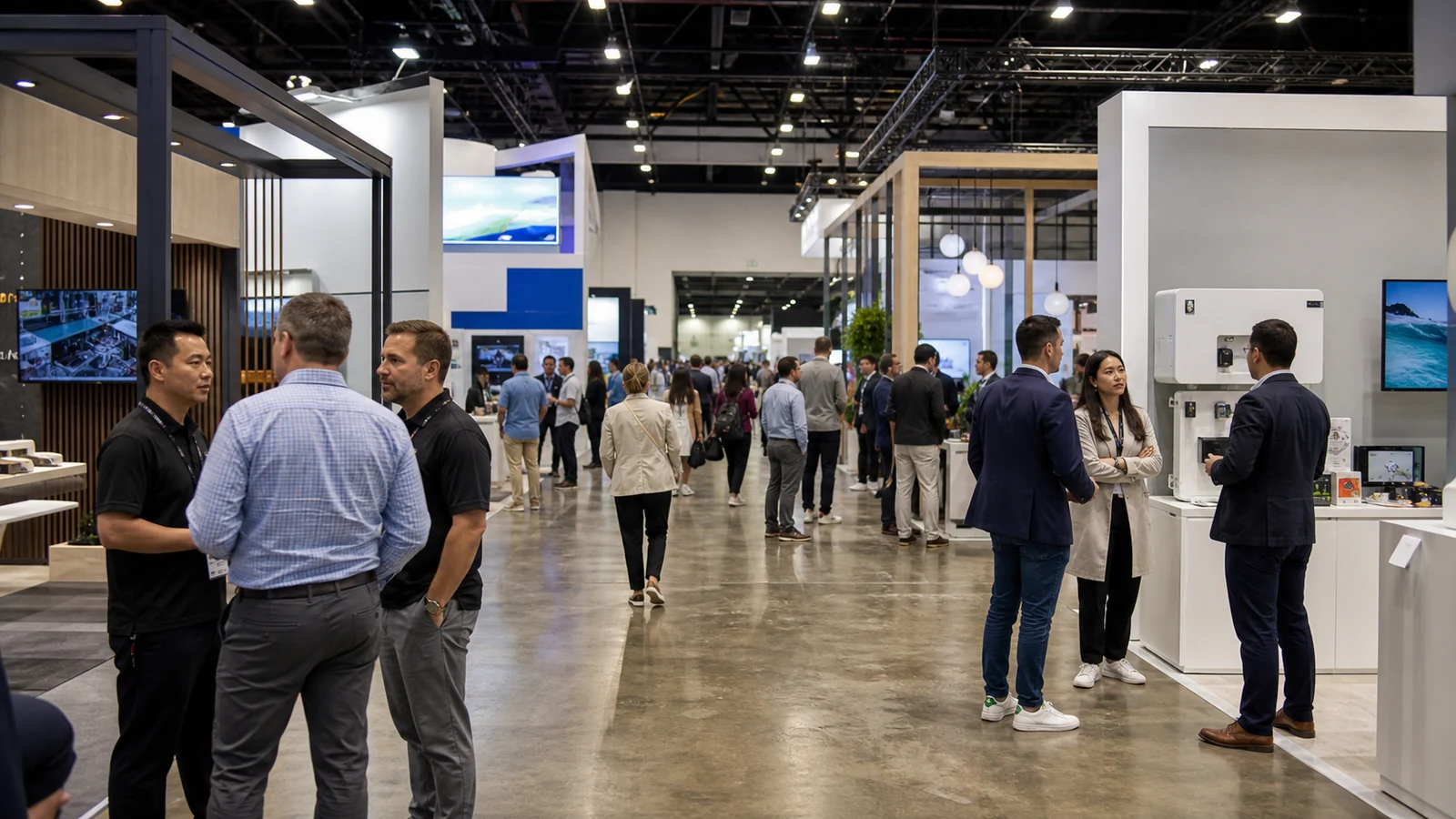
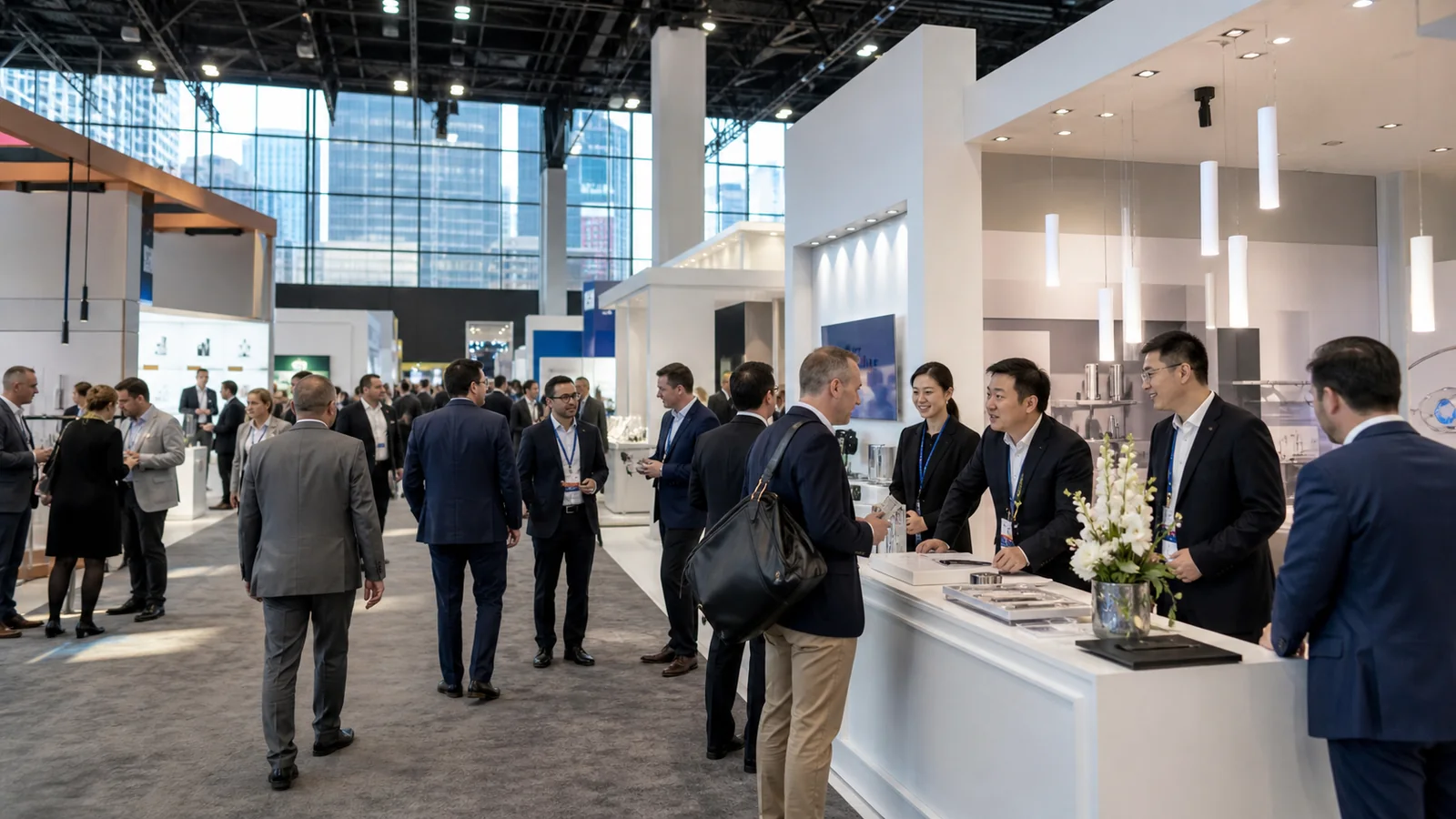
Preparing for a trade show can put your team between designers, fabricators, printers, carriers, installers, and venue providers. A turnkey trade show booth brings those moving parts into one managed project so the agreed booth is ready for your team at the venue.
Turnkey does not mean every fee is included. It means you have a defined delivery path and a main point of responsibility. This guide covers services, benefits, options, costs, process, and supplier selection.

What Is a Turnkey Trade Show Booth?
A Simple Definition of a Turnkey Booth
A turnkey booth is managed through one primary provider from the brief to an agreed site handover. The scope may cover design, engineering, fabrication or rental components, graphics, freight, installation, dismantling, and post-show handling.
The provider may coordinate carriers, venue-appointed contractors, and local labor rather than self-perform every task. Its role is to connect them to one approved plan, schedule, and scope.
Turnkey Does Not Always Mean All-Inclusive
Turnkey describes the service and responsibility model. All-inclusive describes the price and included scope. The terms can overlap, but they are not interchangeable.
Your provider may manage an official show service while the organizer, venue, or general service contractor supplies and invoices it. A turnkey proposal can therefore include coordination without including the final third-party charge. Keep this distinction in mind when you reach the cost section.
What Is Included in a Turnkey Trade Show Booth Package?
Turnkey scopes vary. Use this three-stage view to compare a package with your show requirements.
| Project stage | Services commonly managed | Useful outputs to request |
|---|---|---|
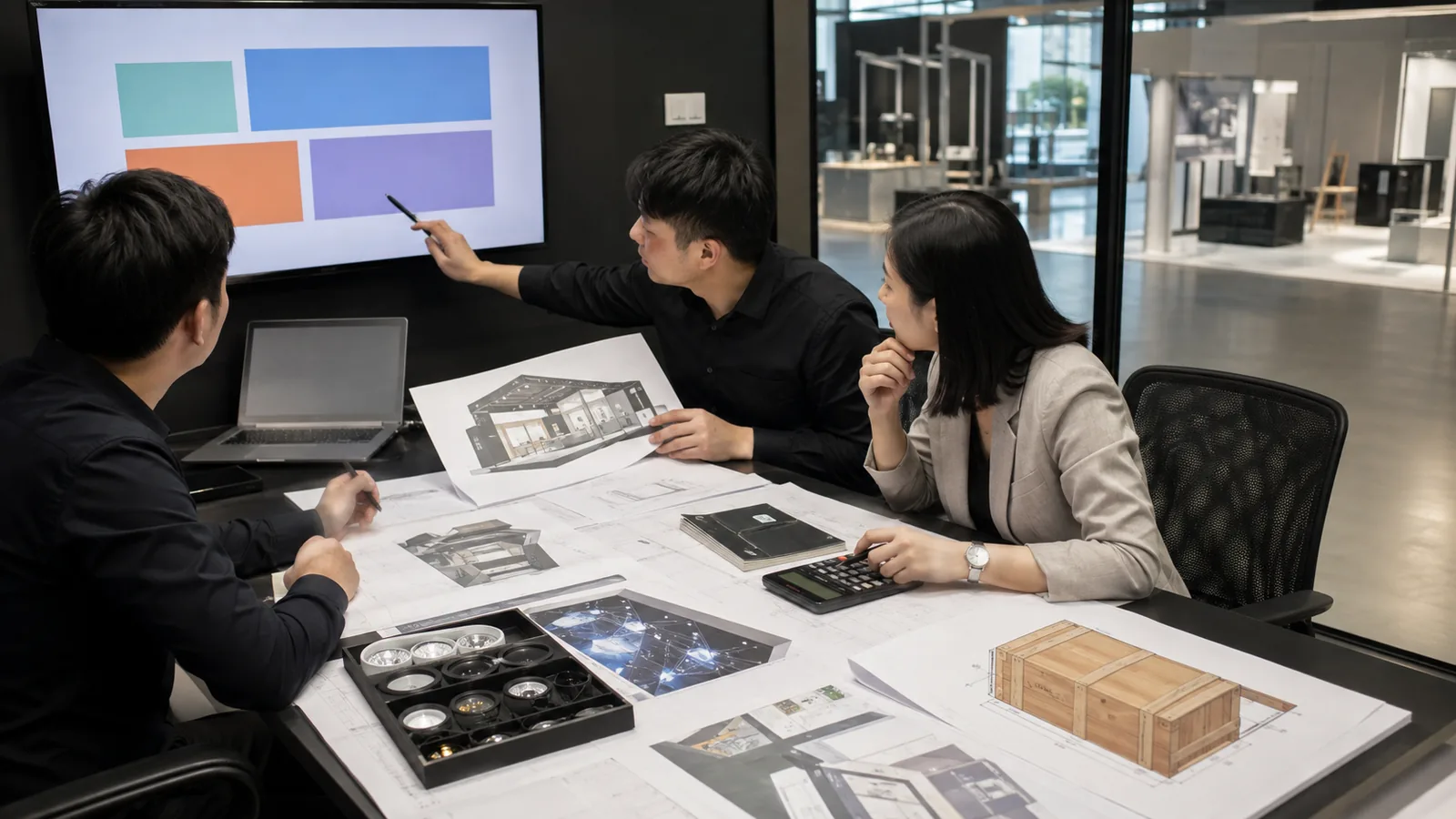
| Pre-show planning and design | Brief, floor plan, 3D design, technical development, show-rule review, schedule, graphics coordination | Approved layout, renderings, drawing list, graphic schedule, milestone plan |
| Booth production and preparation | Structure, fabrication or rental components, flooring, graphics, lighting, furniture, storage, AV integration, pre-build inspection | Component list, finish specifications, proofs, pre-build record, packing plan |
| Logistics and on-site services | Packing, shipping, show orders, installation, inspection, handover, dismantling, return freight, storage or disposal | Shipping plan, order confirmations, site contact, handover record, post-show instructions |

Pre-Show Planning and Design
Your brief becomes the floor plan, visual direction, functional zones, and technical requirements. The current exhibitor manual must inform the design because rules and deadlines differ by show.
Booth Production and Preparation
Production may combine custom, rental, and modular components with graphics, flooring, lighting, furniture, storage, displays, and AV. For complex work, request an agreed pre-build or documented component check.
Logistics and On-Site Services
The site phase may cover freight, show orders, labor, installation, handover, dismantling, and post-show handling. The Freeman international exhibitor guide explains why different contractors may perform parts of this work.
What Are the Benefits of a Turnkey Trade Show Booth?
The value comes from connected management, not bundled line items alone.
One Point of Contact
One coordination path reduces repeated messages and identifies the next action owner.
Less Work for Your Internal Team
The provider handles specialist production and site coordination while your team focuses on customers, demonstrations, meetings, and staff.
Better Coordination Between Design and Execution
The approved concept stays connected to technical drawings, production, show orders, and installation.
More Predictable Scheduling and Budgeting
One schedule and cost map make deadlines and third-party charges more visible, without promising that changes or overtime disappear.
Faster Problem Resolution at the Venue
A defined site contact can coordinate freight, graphic, lighting, or installation issues.
Easier Multi-Show Management
An asset record connects storage, repairs, graphics, and footprint changes to the next show.
Why Choose KingExhibits for a Turnkey Trade Show Booth?
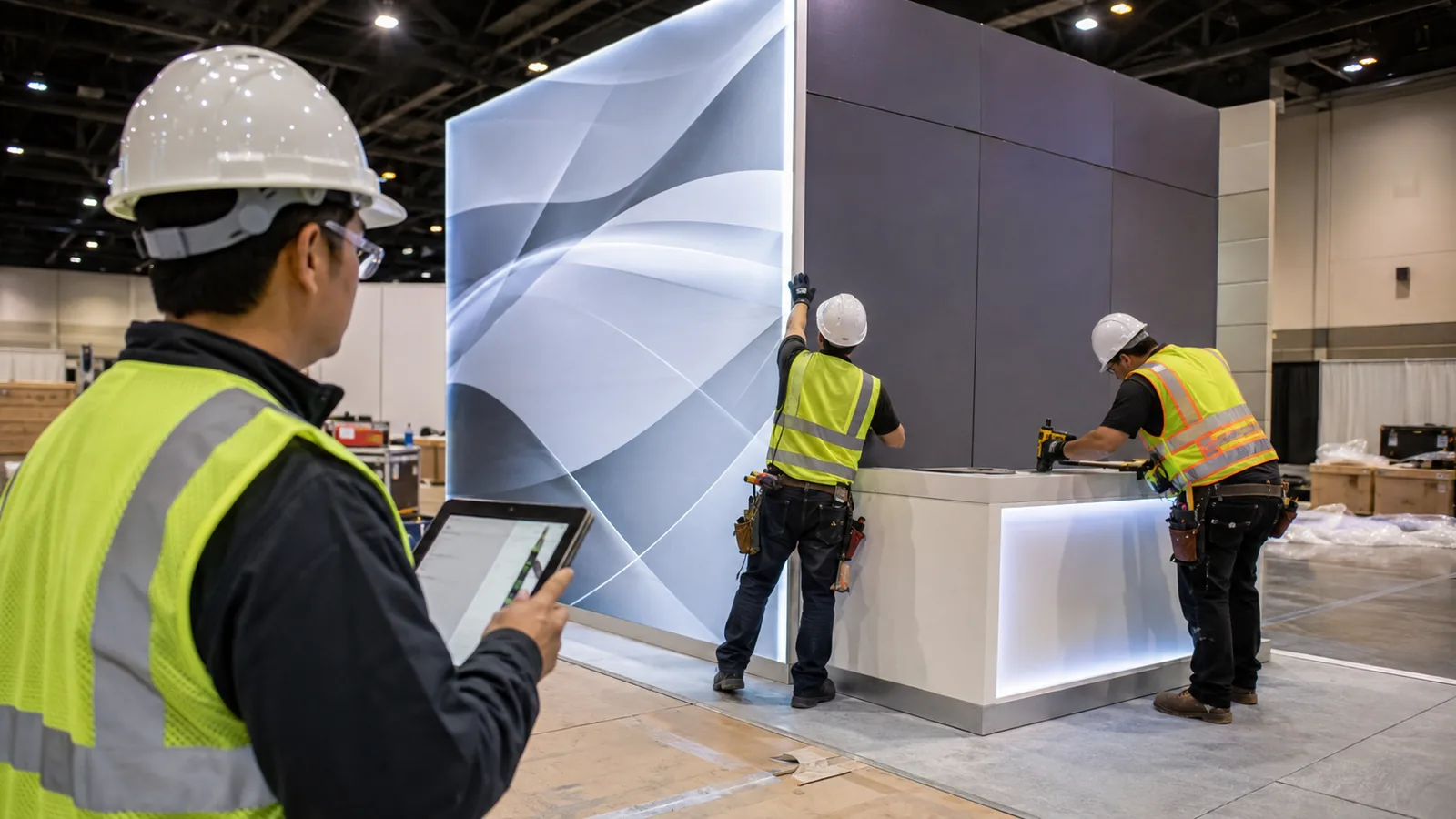
KingExhibits organizes work across strategy and design, production or rental preparation, logistics, installation and dismantling, and agreed post-show handling. The advantage is a documented path connecting decisions, files, deadlines, and supplier interfaces.
One Working File for Scope, Files, and Deadlines
One current record can track the manual, floor plan, approved drawing, graphic list, dates, open questions, and decision owners, showing what is final and what blocks progress.
Approval Gates Before Costly Commitments
Review gates can cover layout, design, graphics and technical inputs, pre-build, shipping readiness, site handover, and post-show inventory. Written approvals help keep obsolete files out of production.
Clear Interfaces With Official Show Services
KingExhibits can map the supplier, order owner, invoice owner, and deadline for freight, material handling, electrical, internet, rigging, and venue labor.
Rental and Reuse Decisions Made for the Show Program
Options can be evaluated against expected footprints and reuse. The proposal identifies rented and owned elements and their return, storage, repair, reuse, or disposal path.
What Types of Turnkey Booth Solutions Are Available?
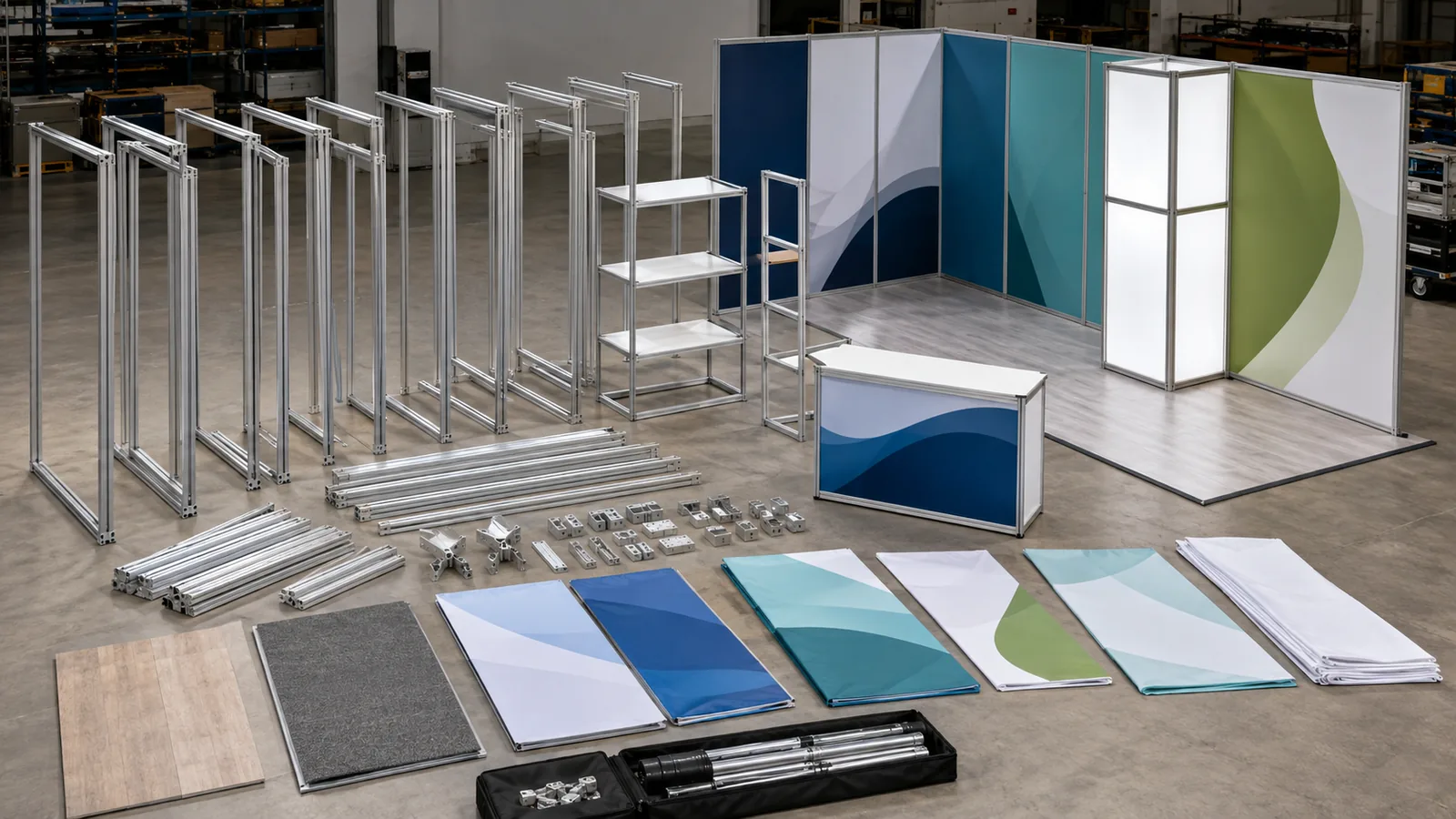
Turnkey is a management model; rental, custom, modular, portable, and shell scheme describe the physical solution. Several booth types can therefore be delivered as turnkey projects.
Turnkey Rental Booth
A rental uses components supplied for the event. It suits first-time exhibitors, changing footprints, and companies that want to avoid owning and storing the main structure.
Turnkey Custom Rental Booth
A custom rental adds brand-specific layouts, finishes, graphics, displays, or feature elements to rented structures, increasing distinction without requiring you to own the full booth.
Turnkey Purchased Booth
A purchased booth creates owned assets for a stable, repeat-use program. Include storage, freight, repairs, graphic updates, and reconfiguration in the ownership decision.
Turnkey Modular or Hybrid Booth
Modular components can be rearranged for different footprints; a hybrid combines rented structures with selected owned elements. Both can support multi-show flexibility.
Organizer Turnkey Shell Package
Some organizers sell standard shell packages with walls, carpet, signs, lighting, furniture, power, or cleaning. The IAAPA Expo booth specifications, for example, list package furnishings and services while treating monitors and wall mounts separately.
This may be enough for a basic presence, but it is different from a customized exhibit-house service built around your products, workflow, and brand.
Turnkey Booth vs. Other Trade Show Booth Options
Custom is not the opposite of turnkey. A custom booth can be fully managed or self-managed. The useful comparison is how responsibility, flexibility, and internal workload differ.
| Option | Project responsibility | Design flexibility | Internal workload | Cost visibility | Installation support | Best use case |
|---|---|---|---|---|---|---|
| Turnkey managed booth | One primary provider coordinates the agreed scope | Medium to very high, depending on package | Lower for specialist coordination | Higher when scope and third-party costs are separated | Usually included or coordinated | Companies needing a managed path from design to show site |
| DIY or portable booth | Your team manages ordering, shipping, setup, and removal | Low to medium | High | Clear for simple hardware, less clear when show services are added | Usually self-install or separately ordered | Small spaces and teams comfortable with setup |
| Organizer shell scheme | Organizer or appointed contractor supplies a standard base package | Low | Low to medium | Package is visible; upgrades and exclusions vary | Defined by the package | Basic exhibit requirements with limited customization |
| Self-managed custom booth | Your team manages designers, fabricators, carriers, labor, and show services | Very high | Very high | Depends on your internal cost control | Ordered and managed separately | Experienced exhibit teams with established suppliers |
The right option depends on coordination load, design requirements, internal experience, ownership preference, and the number of shows—not only booth size.
How Much Does a Turnkey Trade Show Booth Cost?
For early planning, published U.S. vendor examples put a turnkey or installed rental booth anywhere from about $4,000 for a straightforward 10×10 to $60,000 or more for a detailed 20×20 island. That is a broad range because “booth price” does not mean the same thing in every guide: one package may include graphics and installation, while another also includes flooring and freight.
Use the following figures as market reference points, not as a KingExhibits quote or a universal price list.
| Booth example | Typical solution | Published planning range | Check before comparing |
|---|---|---|---|
| 10×10 ft inline | Standard or modular rental | About $4,000–$15,000 | Graphics, flooring, freight, installation, and dismantling |
| 10×20 ft inline | Modular or custom rental | About $12,000–$30,000 | Design, structure, graphics, furniture, freight, labor, and show services |
| 20×20 ft island | Custom rental or hybrid | About $18,000–$60,000+ | Engineering, custom features, AV, freight, material handling, installation, and rigging |
| Larger or complex island | Custom rental, hybrid, or purchased program | Project-specific quote | Height, hanging signs, product loads, private rooms, AV, utilities, freight, and site labor |
The ranges combine current published examples rather than pretending that one provider’s scope is an industry standard. A 2026 JET Exhibits rental guide cites $10,000–$15,000 for a 10×10, $20,000–$30,000 for a 10×20, and $40,000–$60,000+ for a 20×20 booth package. Event Fab lists $4,000–$9,000 for a 10×10 modular rental including graphics, installation, and dismantling. Exhibit Experience publishes starting rental ranges of $7,000–$10,000 for 10×10, $12,000–$13,000 for 10×20, and about $18,000 for 20×20. The spread is the reason you must compare inclusions, not just dimensions.
Per-Square-Foot Benchmarks Need Context
The JET guide uses roughly $100–$150 per square foot for its rental booth package. That can be a quick sense check, but it is not a reliable final formula. A small booth still carries minimum design, graphics, freight, and labor costs, while an island with a hanging sign, specialty finish, heavy product, or large AV package may cost much more per square foot.
Rental, Custom Rental, and Purchased Booth Costs
- Standard rental usually has the lowest upfront exhibit cost because it reuses an existing system with your graphics and selected accessories.
- Custom rental adds layouts, finishes, displays, or feature elements without requiring you to purchase the full structure.
- A purchased booth has a higher initial capital cost and creates an owned asset. Exhibit Experience’s examples put several purchase starting prices near twice its own rental starting prices, but that is provider-specific, not a universal ratio. Include future freight, storage, repairs, and reconfiguration in the decision.
- A hybrid program directs ownership toward reusable brand elements while retaining a rented structure.
Exhibit Cost vs. Total Exhibiting Cost
The exhibit or booth package is only one budget. Your total exhibiting cost can also include exhibit-space rental, registration, material handling, venue utilities, rigging, internet, cleaning, staff travel, accommodation, samples, hospitality, lead capture, and pre-show marketing. A booth price should never be presented as the total cost of attending the show unless those items are expressly included.
For planning, build two subtotals: booth/provider scope and show, venue, travel, and marketing costs. Add contingency according to how many items remain estimates. The right amount depends on the venue, labor schedule, freight weight, utilities, and maturity of your inputs.
For scale, one 2026 Exhibit Bridge size guide recommends adding at least 30%–40% above a 10×10 booth price for total-show costs, while the JET guide advises stress-testing show services at roughly the booth-package amount. These are planning scenarios, not fixed cost shares; larger AV, rigging, freight, or labor needs can change the mix substantially.
Main Factors That Affect the Price
- Footprint and configuration: inline, corner, peninsula, or island.
- Rental, custom rental, purchase, modular, or hybrid strategy.
- Structure, engineering, materials, finishes, graphics, and display features.
- Furniture, lighting, AV, interactivity, product weight, and utilities.
- Crates, freight distance, delivery route, material handling, and site labor.
- Venue rules, order deadlines, overtime, approvals, and post-show handling.
What KingExhibits May Quote vs. Venue-Controlled Costs?
The KingExhibits proposal should itemize the agreed provider scope, which may include design, structure or rental preparation, custom production, graphics, coordination, freight, installation, dismantling, and post-show work. The actual proposal—not the word “turnkey”—determines what is included.
Exhibit space, material handling, electrical, internet, rigging, plumbing, cleaning, security, and some venue labor may be controlled and invoiced by the organizer, venue, or official contractor. KingExhibits may coordinate or estimate them without controlling the final invoice. The IAEE guidance on selecting service contractors explains why contractor roles and responsibilities vary by event.
Costs Most Likely to Exceed the Initial Plan
Common overrun triggers are late design or graphic changes, missed advance-order deadlines, incorrect freight routing, greater shipment weight, direct-to-show delays, overtime installation, additional electrical or internet drops, onsite AV changes, and unplanned return freight or storage. Ask who can authorize each change and how it will be documented before work proceeds.
How to Compare Turnkey Booth Quotes?
Ask each bidder to label material costs consistently:
Included: part of the stated package and quantity.Fixed price: agreed amount for a defined deliverable.Allowance: provisional budget amount that may change after selection or measurement.Estimated third-party cost: forecast for a charge controlled by another provider.Pass-through: third-party charge passed to you under the stated terms.Client-direct: ordered and paid by your company.Excluded: outside the proposed scope.
Compare the same deliverables, quantities, responsibilities, and post-show plan. A lower headline total can become the higher project cost when freight, labor, utilities, or storage sit outside it.
How Does the Turnkey Booth Process Work?
1. Share Your Show Requirements and Objectives
Start with the show, footprint, current exhibitor manual, business objective, priority products, budget scope, and decision owner. The complete quote-input list appears later in this guide.
2. Develop and Approve the Booth Design
The provider develops the layout, 3D direction, functional zones, brand presentation, and technical approach. Your decision owner consolidates feedback and approves the selected version.
3. Finalize Graphics and Technical Details
You approve graphic proofs and confirm product dimensions, loads, lighting, AV, internet, hanging elements, accessibility, and other technical inputs. Late changes may affect the structure, services, schedule, and cost.
4. Produce and Pre-Build the Booth
The provider prepares the custom or rental components, graphics, and specified equipment, then completes the agreed pre-build or component check. You review the defined evidence and open items before shipment.
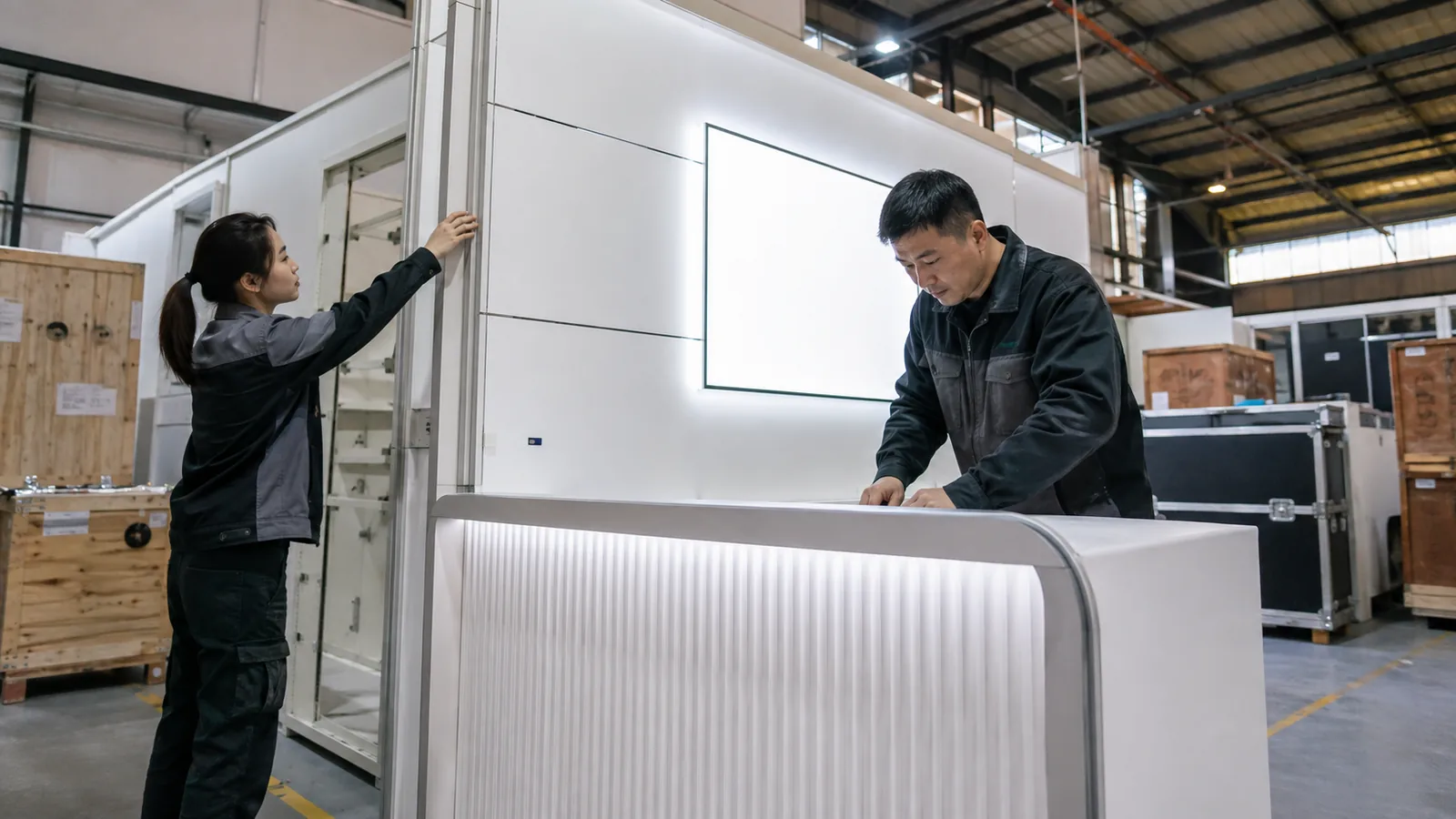
5. Ship, Install, and Hand Over the Booth
The team coordinates packing, delivery, show orders, labor, installation, testing, and handover. Your site representative checks the result against the approved plan and reports issues through the named contact.
6. Dismantle and Manage the Booth After the Show
After dismantling, rented items return to their supplier while owned assets follow the agreed return, storage, repair, disposal, or reconfiguration plan. Decide this before move-out.
Is a Turnkey Trade Show Booth Right for You?
A Turnkey Solution May Be a Good Fit If…
- You are preparing for your first U.S. trade show.
- You do not have an internal exhibit-operations team.
- Your booth requires several specialist suppliers or venue services.
- You need a custom design, product demonstration, AV, or managed installation.
- You exhibit in multiple cities or at several shows.
- Your marketing and sales teams need to reduce production coordination work.
- You want one documented path for schedule, decisions, handover, and post-show action.
A Simpler Solution May Be Better If…
- You only need a tabletop or basic portable display.
- Your team can ship, assemble, dismantle, and return the booth without specialist support.
- The organizer’s shell package already meets your real requirements.
- You have an experienced internal team and established suppliers.
- You only need one service, such as graphics, freight, or installation.
This balanced test is more useful than assuming every exhibitor needs a full-service package.
How to Choose a Turnkey Trade Show Booth Provider?
Review Relevant Booth Experience
Ask for evidence from similar footprints, product displays, technical needs, cities, or venues—not only attractive renderings.
Confirm the Complete Scope
Confirm design, structure, graphics, furnishings, freight, site, and post-show deliverables in one scope matrix.
Identify Third-Party and Venue Charges
For each official service, identify the coordinator, supplier, order owner, invoice owner, deadline, and estimate.
Check the Design and Approval Process
Confirm outputs, review stages, revision limits, freeze dates, and approval authority.
Confirm On-Site Support
Identify the site contact, handover method, issue path, support hours, and change authority.
Clarify Ownership and Post-Show Handling
List rented and owned items, then define their return, inventory, repair, storage, or disposal path.
Before approval, use this short proposal check:
- Scope, quantities, approval stages, and change limits are defined.
- Rented, owned, provider-supplied, and official-service items are separated.
- Freight, labor, site support, and third-party cost labels are clear.
- Decision owners, deadlines, issue reporting, and change authority are named.
- Handover evidence and acceptance method are agreed.
- Return, storage, repair, reuse, and disposal responsibilities are defined.
Written estimates and approvals simplify invoice review. EXHIBITOR Magazine’s discussion of billing discrepancies shows why authorization and service records matter.
What Information Should You Provide to Get an Accurate Quote?
For an accurate scope and useful budget discussion, prepare:
- Show, city, venue, dates, and move-in and move-out schedule.
- Booth number, dimensions, configuration, and number of open sides.
- Current exhibitor manual, floor plan, and organizer deadlines.
- Product dimensions, weights, demonstrations, samples, and displays.
- Target visitors, booth objective, desired action, and staffing plan.
- Meeting, hospitality, accessibility, and storage requirements.
- Brand guidelines, logos, graphics, copy, and video.
- AV, lighting, electrical, internet, rigging, plumbing, and technology needs.
- Rental, purchase, modular, hybrid, or reuse preference.
- Working budget range and which third-party costs it should cover.
- Post-show return, storage, refurbishment, disposal, or reuse plan.
Also state whether your working budget covers only the booth/provider scope or the total exhibiting program. That one distinction prevents many unusable first-round proposals.
Frequently Asked Questions
Is a turnkey booth the same as a rental booth?
No. Turnkey describes project management; rental describes supply and ownership. A turnkey booth can be rented, purchased, modular, custom, or hybrid.
Does a turnkey booth include installation and dismantling?
They are common in a complete scope, but confirm labor, supervision, timing, and venue-service boundaries in the proposal.
Does turnkey mean all-inclusive pricing?
Not necessarily. A turnkey proposal may combine included work, fixed prices, allowances, estimated third-party charges, pass-through costs, client-direct orders, and exclusions.
Can a turnkey booth be customized?
Yes. The available layout, finish, graphic, and feature changes depend on whether you select a standard, modular, custom rental, purchased, or hybrid solution.
How far in advance should you order a turnkey booth?
Lead time depends on size, fabrication, engineering, graphics, technology, approvals, shipping, venue rules, and show deadlines. Request a project-specific schedule.
Conclusion
A turnkey trade show booth gives you one managed project path from planning to show-site delivery. Its value is coordinated responsibility, while the actual proposal defines price and inclusions.
For your U.S. trade show, send KingExhibits the show, venue, dates, footprint, manual, products, brand files, functional requirements, budget scope, and post-show plan. We can define the booth solution, service scope, and delivery path.