The Westchester Home Show can look attractive if your company sells remodeling, design, energy, security, outdoor-living, or other home-related services. But the name alone does not tell you whether the event fits your sales model. You first need to know which edition is current, who comes to the show, and whether your team can turn a short homeowner conversation into a qualified local opportunity.
As of September 8, 2026, Jenks Productions has published the Fall 2026 and Spring 2027 editions. It has not published a Fall 2027 Westchester edition on its current New York schedule. This guide helps you decide whether to exhibit, what your booth should ask a visitor to do, and which show details you still need to confirm before approving a budget.
Which Westchester Home Show Dates Are Published for 2026–2027?
Jenks Productions runs seasonal Westchester home-show editions. Use the season and year—not an ordinal number—to identify the event when you ask for a contract, floorplan, or exhibitor manual.
| Edition | Current organizer-published status | Dates | Venue and location |
|---|---|---|---|
| Fall 2026 | Published | October 31-November 1, 2026; Saturday 11:00 a.m.-5:00 p.m.; Sunday 11:00 a.m.-4:00 p.m. | Westchester County Center, 198 Central Ave, White Plains, NY 10606 |
| Spring 2027 | Published | March 13-14, 2027; Saturday 11:00 a.m.-5:00 p.m.; Sunday 11:00 a.m.-4:00 p.m. | Westchester County Center, 198 Central Ave, White Plains, NY 10606 |
| Fall 2027 | TBD / not published on the organizer's current New York schedule | Do not assume dates from prior fall editions | Do not assume a venue or address until Jenks publishes the edition |
The Fall 2026 event page and Spring 2027 event page publish the two confirmed entries above. The 2026 spring edition has already passed and is not treated here as a forthcoming planning option. A recurring location is not a commitment for Fall 2027: wait for the organizer's own listing before contracting space, shipping materials, or quoting a build.
You may see conflicting annual numbers on current event, exhibitor, and registration pages. That conflict does not change the published Fall 2026 dates, but it is a good reason to identify the show by season and year rather than by its ordinal number.
What Kind of Event Is It?
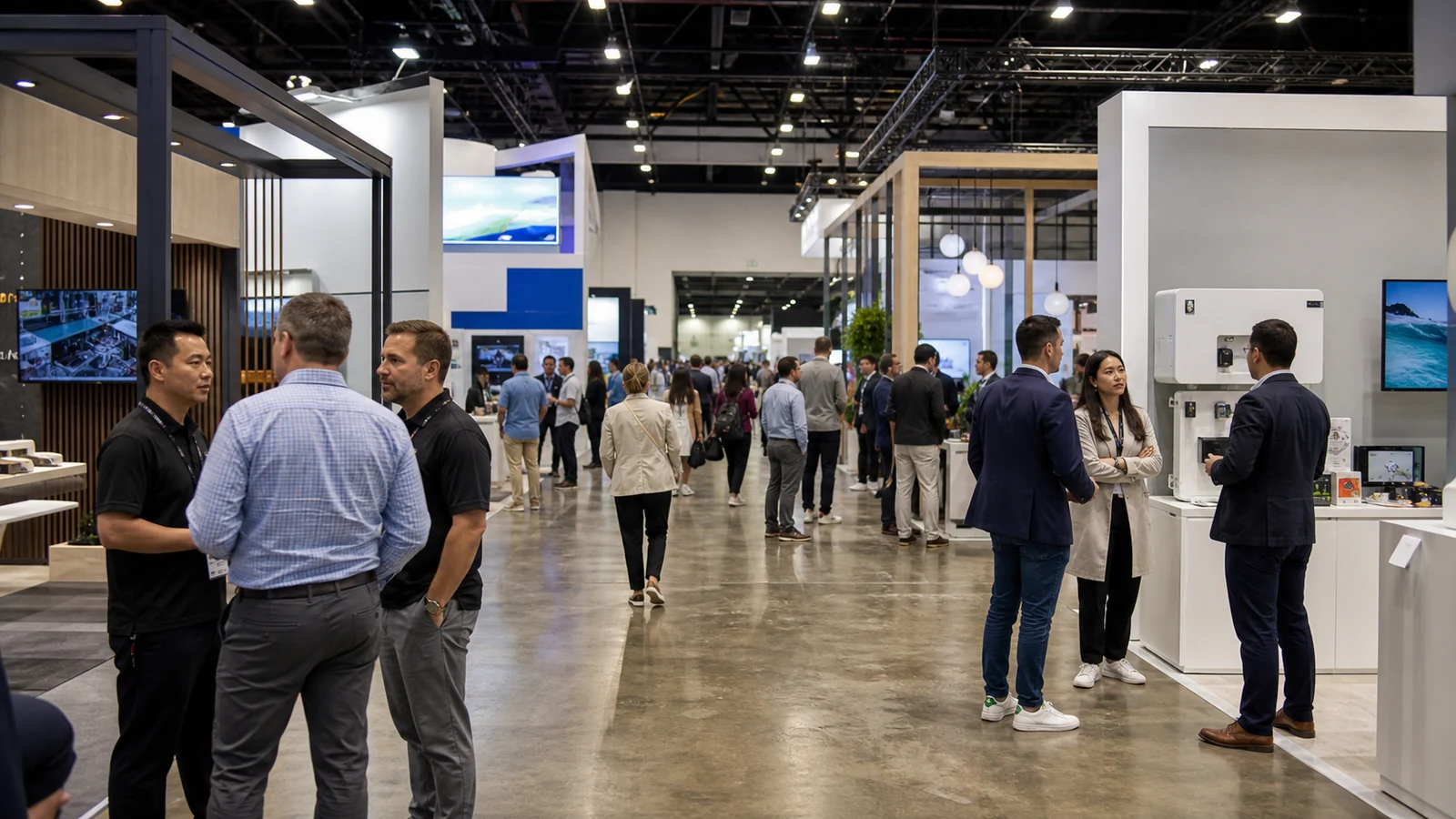
The Fall Westchester Home Show is a regional consumer event built around home-improvement products and services. The organizer describes builders, remodelers, architects, contractors, designers, and other vendors meeting homeowners under one roof. Its current public event page says more than 120 exhibitors are expected; that is an organizer statement, not an independently audited attendance result.
This distinction matters. You are not preparing for a B2B procurement event where every visitor represents a retailer, distributor, or commercial buying team. You are preparing for short conversations with homeowners who may be comparing projects, products, installers, financing, or design ideas.
Your booth therefore needs to answer a homeowner's immediate question: “Can this company help with my project in my area, at the stage I am in now?” A beautiful structure that does not make that answer clear can attract attention without creating useful follow-up.
Which Published Edition Should You Evaluate?
Fall 2026 is the nearer option. It can suit a company that has local staffing, approved proof, and an organizer-confirmed operating plan ready before late October. Spring 2027 gives more lead time for a new market test, product samples, or a disciplined follow-up process. Neither published date proves that a space is available, that your category is accepted, or that your service area matches the audience.

Do not treat Fall 2027 as a planning slot. You may keep a provisional internal budget or a reminder to monitor the organizer, but you should not promise dates, build dimensions, venue access, or a customer appointment around an unannounced edition.
Is the Westchester Home Show a Good Fit for Your Business?
The show is most plausible when your offer is relevant to a homeowner and your team can serve the local or regional market after the event.
| Business situation | Fit signal | What to verify before booking |
|---|---|---|
| Remodeling or installation service | Stronger if you serve Westchester-area properties and can discuss project scope in person | Service radius, licenses, lead time, minimum project size, and who will qualify appointments |
| Kitchen, bath, window, door, flooring, or cabinetry company | Stronger if visitors can see materials, finishes, or a clear before-and-after result | Sample weight, display depth, consultation flow, and installation coverage |
| HVAC, insulation, solar, security, or water-treatment provider | Stronger if you can explain eligibility and next steps without promising a result on the spot | Required home data, inspection or site-visit process, financing boundaries, and claim substantiation |
| Landscape, patio, deck, pool, spa, or outdoor-living company | Stronger if you can show project scale and book a site conversation | Seasonal timing, territory, property requirements, and visual proof you are allowed to use |
| Furniture, décor, cookware, craft, or homeowner product seller | Stronger if the offer can be demonstrated or purchased through a simple interaction | Inventory, payment, delivery, display security, and whether direct selling is permitted under current terms |
| Wholesale-only manufacturer or industrial supplier | Usually weak unless you have a genuine homeowner offer or a local dealer strategy | Whether the expected visitor can buy, specify, refer, or request the next step you need |
| Company without local quoting, installation, or follow-up coverage | Weak | Who owns the lead after the show and whether your operating area matches the audience |
Do not use the exhibitor list as proof that the show will work for you. A category can be accepted by the organizer and still be a poor investment for your business. Your own territory, average project value, sales cycle, and appointment capacity decide whether the event deserves a test.
What Should Your Booth Help a Homeowner Do?
A regional home show rewards clarity. Most visitors will not study a long brand story. They need a quick way to recognize their problem, understand your service area, and choose a sensible next step.

Build the visitor path around one primary action:
- Identify the project. Use a plain headline such as “Planning a kitchen remodel?” or “Need replacement windows before winter?” rather than a general quality claim.
- Prove the relevant difference. Show one material comparison, operating demonstration, project sequence, or documented result that your company is authorized to use.
- Check fit. Ask for the visitor's location, property type, project stage, timing, and approximate scope before treating the contact as a lead.
- Offer the next step. Book a consultation, arrange a site visit, provide a measurement checklist, or schedule a technical call. Choose one action your sales team can actually fulfill.
- Record permission and context. Capture the information needed for follow-up and make sure the visitor knows what communication to expect.
If your team cannot agree on that sequence before design starts, adding more graphics or screens will not fix the problem. First define the conversation, then give each part of the booth a job in that conversation.
How Much Display Do You Really Need?
The current registration and floorplan tools show a broad mix of exhibitor categories, but the public pages reviewed for this guide do not provide a reliable current package sheet with every booth size, price, and included service. Ask the organizer for the available footprint and inclusions before your booth partner prices the structure.

For this type of event, display scope should follow the proof you need:
- A service business may need a consultation counter, two strong project visuals, concealed storage, and a place to schedule an appointment.
- A material-driven seller may need safe sample handling, clear labels, lighting, and room for side-by-side comparison.
- A product demonstration may need power, a safe operating zone, and enough viewing space to keep the aisle clear.
- A company selling larger projects may need seated conversation space, but only if the sales process benefits from a longer qualification discussion.
Avoid scaling the booth from the size of your full product catalog. Select the few products or decisions that help a homeowner move forward. A compact display with a clear interaction can be more appropriate than a large exhibit filled with unrelated examples.
What Must You Confirm Before You Approve a Booth Budget?
- available booth dimensions and exact space fee;
- what is included with the space and what must be ordered separately;
- electrical, internet, furniture, cleaning, material-handling, and storage options;
- move-in and move-out times, loading access, vehicle rules, and maximum door dimensions;
- insurance certificate requirements and the entities that must be named;
- display-height, fire-safety, tent, roof, open-flame, and demonstration restrictions;
- exhibitor badge allocation and check-in procedure;
- food-sampling or direct-selling rules if they apply to your offer;
- cancellation, payment, and space-assignment terms;
- current licensing or permit documentation applicable to your business.
Westchester County maintains a home-improvement licensing process. If your company performs covered home-improvement work, verify your obligations directly with the County Department of Consumer Protection and ask the organizer what documentation is required for this edition. Do not rely on an older move-in kit as proof of the current rule.
This confirmation list protects both your budget and your booth design. For example, a live demonstration may be easy to draw but impractical if the required service, safety clearance, or approval is not available. Resolve those dependencies before fabrication.
How Should You Plan Staffing and Follow-Up?
The published show-floor schedule totals eleven open hours across two days. That is enough time to generate many short conversations, but it does not justify an attendance or lead forecast by itself.

Plan staffing from the visitor path:
- one person opens the conversation and identifies the project;
- one person handles technical questions or demonstrations;
- one person records the next step during busy periods;
- each shift has a named owner for booked appointments and urgent follow-up.
Then define your measurement before the show. Useful counts include qualified conversations, appointments booked, site visits accepted, samples requested, and opportunities that meet your territory and project threshold. Raw scans or giveaway entries should not be mixed with qualified leads.
After the event, compare total show cost with the number of qualified next steps, not with the organizer's promotional language. If your sales cycle is long, track the opportunities by stage rather than forcing an immediate revenue conclusion.
What Should Go Into Your Booth Brief?
Once the organizer confirms the space and rules, give your booth partner a brief that includes:

- event edition and exact booth number;
- contracted footprint and open sides;
- organizer floorplan and current exhibitor documents;
- primary homeowner problem your booth will address;
- one desired visitor action;
- products, samples, screens, or live equipment to display;
- power, internet, plumbing, lighting, storage, and handling needs;
- staffing level and conversation type;
- freight origin, installation plan, and dismantle responsibility;
- approved visual assets and claims;
- budget range and approval deadline.
If one of these inputs is unknown, mark it as pending rather than allowing a designer to guess. A visible list of pending decisions is easier to manage than a polished concept built on the wrong footprint or service assumptions.
Frequently Asked Questions
Can two companies share one booth?
Do not assume that co-exhibiting is allowed just because two brands share ownership, products, or sales staff. Ask the organizer whether both company names must appear on the contract, whether each brand needs approval, how signage is handled, and whether insurance or badges change. Agree internally on staffing and lead ownership before you present a shared space.
Can I sell products directly from the booth?
Confirm the show's current sales rules before bringing retail inventory. If direct sales are allowed, decide how you will handle payment, sales-tax obligations, receipts, stock security, delivery, returns, and customer information. If the product cannot be carried out safely, use the booth to place an order or arrange delivery rather than improvising fulfillment in the aisle.
How should I handle contact details collected at the show?
Collect only the information needed for the next step, record where and why it was collected, and tell the visitor what follow-up to expect. Keep access limited to the staff who need it and follow your privacy and retention rules. Separate giveaway entries from qualified sales opportunities so a prize drawing does not inflate your lead count.
Can I use customer before-and-after photos in the display?
Use them only when you have permission for the intended public use and the images accurately represent the work described. Keep the scope, location, and result claims precise, and avoid implying that every project will achieve the same outcome. If permission or attribution is unclear, replace the asset before the artwork is approved.
Can I exhibit if my home-improvement business is not licensed in Westchester County?
Do not treat a booth booking as permission to perform or advertise covered home-improvement work in the County. Westchester County states that home-improvement contractors who work there must be licensed, while the organizer separately decides exhibitor eligibility. Confirm the legal status of your specific offer with the County Department of Consumer Protection, and ask Jenks which documentation it requires for the published edition. Do not represent your company as locally authorized until both questions are resolved.
Final Thoughts
The published Fall 2026 and Spring 2027 Westchester Home Show dates may be worth testing if your company sells a homeowner-facing product or service, covers the region, and can turn a brief conversation into a defined next step; Fall 2027 remains TBD, not a confirmed event. Ask KingExhibits to review the published edition, footprint, visitor action, staffing plan, proof assets, and budget range before you authorize a practical booth concept.