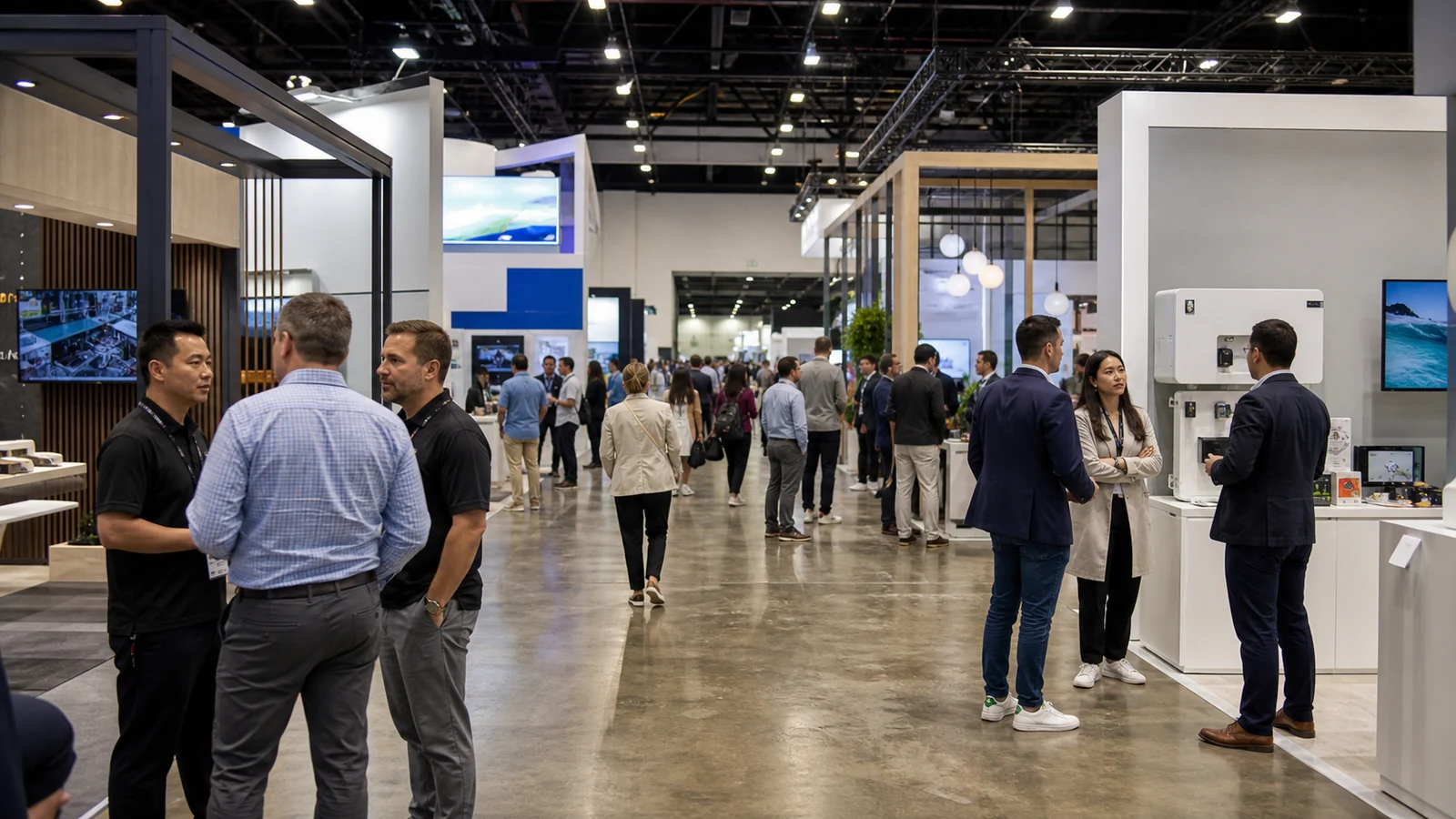
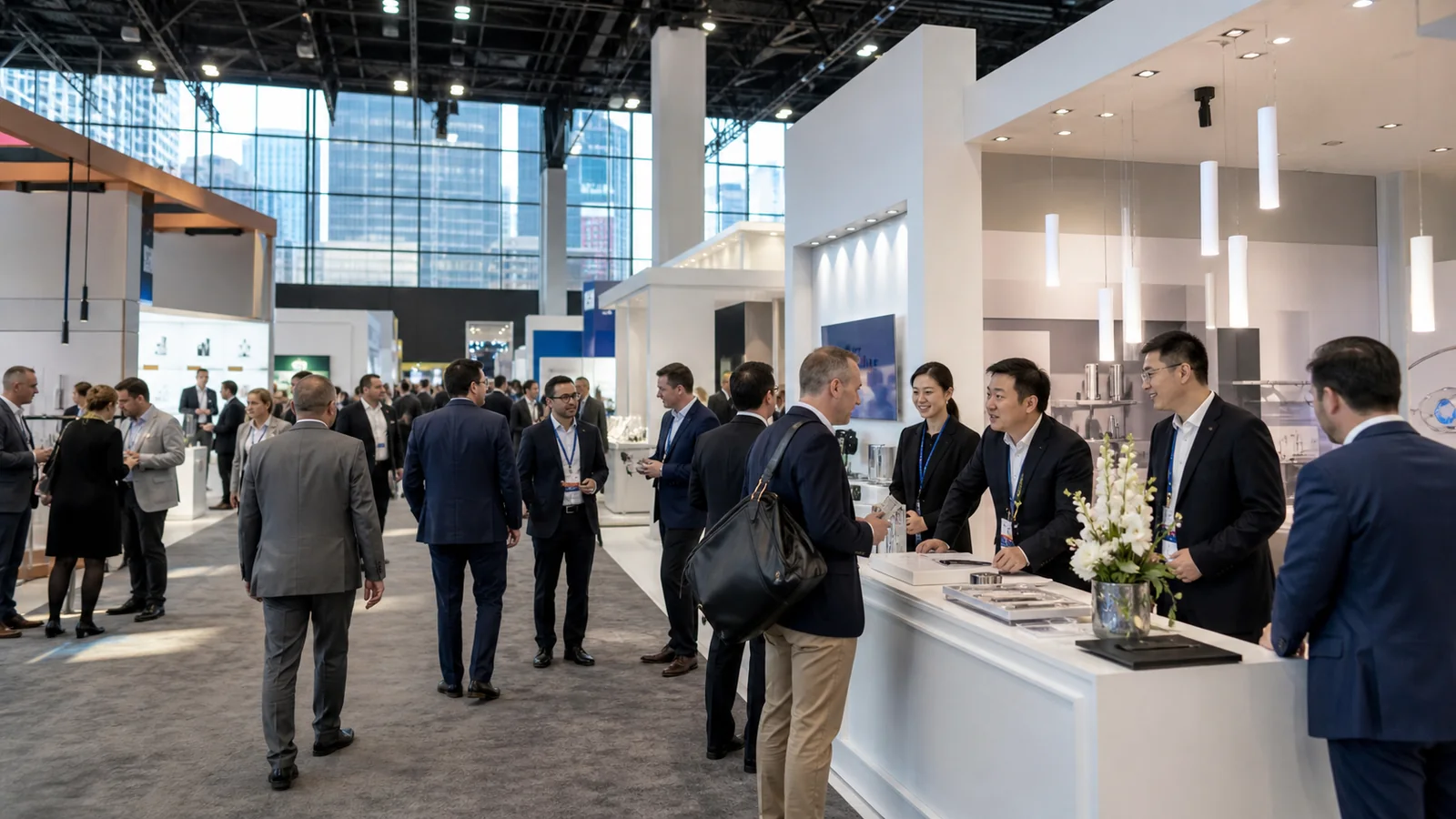
“Turnkey” should mean you arrive to a booth that is ready for the work you planned. It does not mean every supplier includes the same structure, graphics, freight, labor, furniture, utilities, AV, or onsite support. If you are comparing turnkey trade show booth proposals, compare the included tasks and named owners—not the word on the cover.
Define What Ready Means for Your Team
Start with an acceptance statement: what must be installed, powered, tested, cleaned, stocked, and handed over before your staff arrives?

For one exhibitor, ready may mean a branded 10×20 rental with carpet, lights, counter, stools, and wastebasket. For another, it means a custom environment with working product demos, dedicated internet, hanging signs, meeting rooms, hospitality, and secured storage. Both may be sold as turnkey, but the work and risk are completely different.
Write the outcome first. Then ask the bidder to identify every included and excluded task needed to reach it.
Compare Proposals by What They Actually Cover
A useful turnkey scope separates at least these project areas:
| Project area | What to confirm |
|---|---|
| Design and engineering | Concept rounds, final drawings, approvals, structural review |
| Exhibit structure | Rental or owned components, finishes, counters, storage, accessibility |
| Graphics | Quantity, material, artwork support, proof, production, replacement |
| Furnishings and flooring | Exact items, substitutions, padding, delivery, removal |
| AV and technology | Equipment, content, mounting, playback, power, network, technician |
| Show services | Electrical, rigging, internet, cleaning, plumbing, compressed air |
| Freight and material handling | Origin, carrier, warehouse/direct delivery, drayage scope, outbound |
| Installation and dismantling | Labor, supervision, hours, overtime assumptions, return packing |
| Project management | Owner, schedule, orders, approvals, change control, onsite contact |
| Post-show | Inspection, repair, storage, disposal, return freight, final reconciliation |
Mark each line as included, allowance, estimate, exhibitor responsibility, organizer-provided, or not applicable. An empty cell is not an inclusion. If you need more detail on the handoffs, use the separate guides to project management, logistics and shipping, and installation and dismantling.
Distinguish a Booth Package From a Managed Project
Some turnkey packages are deliberately standardized. They can be a good choice when you need speed, predictable components, and fewer design decisions. The package may include the structure, graphics, installation, dismantling, and material handling for provider-owned components, with furniture, flooring, AV, or utilities offered separately.

A managed turnkey project goes further: one lead coordinates custom design, show orders, vendors, freight, installation, testing, and handover. It reduces the number of interfaces you manage, but it still needs named boundaries. Exclusive venue services, exhibitor-owned shipments, samples, staff travel, and organizer approvals may remain outside the exhibit provider's contract.
Do not pay for custom project management if a standard package meets the objective. Do not buy a package when the demonstration requires coordination it was never designed to provide.
Ask Who Owns the Gaps
Every project has gaps between suppliers. The important question is who finds and closes them.
If the exhibit provider supplies a monitor but the venue supplies power and internet, who confirms the outlet location and tests the connection? If your machine ships separately, who receives it, positions it, connects it, and signs off? If the organizer changes move-in hours, who updates labor and carrier appointments?
Name one accountable project owner and one decision-maker on your side. A “single point of contact” is useful only if that person can see and act across all relevant parts of the project.
Read Allowances and Assumptions Like Prices
A low proposal may contain optimistic labor hours, placeholder freight, estimated drayage, standard electrical, one graphic revision, or no overtime. These are not minor footnotes. They are parts of the final cost that have not yet been fixed.

Ask what quantity and rate support each allowance, what triggers a change, and whether markup or coordination fees apply. Compare taxes, payment terms, cancellation, damage, late orders, storage, and post-show charges as well as the headline number.
The best comparison is a common-scope table. Normalize all bidders against the same booth outcome and event rules before comparing totals.
Control Changes After the Award
Turnkey does not remove decisions. It concentrates them.
Set dates for concept approval, artwork, engineering inputs, service orders, freight release, and final acceptance. Decide who may authorize cost or schedule changes. Require the provider to show the effect of a change on graphics, construction, services, freight, labor, and testing—not only the design image.
Keep one current scope, drawing set, responsibility matrix, and change log. Approval by email is not useful if the site team is building from an older file.
Require an Onsite Acceptance
Define handover before the show. The acceptance should cover dimensions and finishes, graphic condition, furniture, lights, AV playback, internet-dependent demos, doors and locks, storage, cleaning, safety issues, and any product integration.
Walk the booth with the onsite lead while there is still time to correct something. Photograph the accepted condition and record unresolved items with an owner and deadline. After the show, reconcile damage, outbound freight, rentals, and final charges.
This is the point of turnkey: fewer problems reach your booth staff. It is not permission to skip verification.
Decide When Turnkey Is the Better Model
Turnkey is usually valuable when your internal team is small, the event is remote, the schedule is tight, or several suppliers and tasks need one coordinator. It can also help an international exhibitor who needs local execution and one person to call when something goes wrong.

It may be less suitable when you already run a mature owned exhibit program, have trusted direct suppliers, or need transparent control of every component and rate. A hybrid model can keep strategic assets and specialist vendors while assigning one party to integrate the onsite work.
Choose the model that reduces total coordination risk without hiding the scope.
Frequently Asked Questions
Can a turnkey provider order exclusive venue services for you?
Often it can coordinate or place approved orders, but the exhibitor may still be the contracting or paying party. Confirm the authorization, account, drawing, deadline, markup, invoice path, and who checks the installed service. “We handle it” should describe the exact action.
What should happen if the booth is not ready at handover?
Create an issue list with photographs, business impact, owner, correction deadline, and the temporary plan for staff or visitors. Apply the acceptance and payment terms in the contract. Do not sign an unqualified handover merely because the show is about to open.
Can your products and samples ship separately from the turnkey booth?
Yes, but name who tracks, receives, handles, positions, connects, repacks, and returns them. Give the turnkey lead the dimensions, weights, arrival path, installation dependency, and contact even when another carrier owns the shipment.
How should you compare turnkey with a self-managed project?
Compare the total installed, operated, dismantled, and reconciled cost for the same outcome. Add the internal time needed to coordinate vendors, the gaps your team must carry, and the cost of likely changes. A lower supplier total is not cheaper if it transfers critical work back to an already stretched team.
When Turnkey Actually Makes the Job Easier
A turnkey booth makes the job easier when your team has fewer suppliers to coordinate and still knows who owns every task. Before approving a proposal, check the itemized inclusions, exclusions, allowances, show-service assumptions, onsite contact, and handover standard. If those details are missing, the proposal is a booth concept—not a complete delivery plan.