If you sell giftable products and are considering the Fredericksburg Holiday Craft Show, the decision comes down to three tests: whether the event matches the way people buy your products, whether the likely sales can support the full cost and inventory commitment, and whether you have enough information for a useful first conversation about the display.
The 2026 show is scheduled for December 4–6 at the Fredericksburg Convention Center in Fredericksburg, Virginia. The public vendor-interest form is a screening step rather than a booth reservation, and the public event page is not a complete exhibitor agreement. This guide separates the facts already available from the terms that still need organizer confirmation.
What Is the Fredericksburg Holiday Craft Show?
The Fredericksburg Holiday Craft Show is a three-day consumer shopping event at the Fredericksburg Convention Center, 2371 Carl D. Silver Parkway, Fredericksburg, VA 22401. Some older listings and one legacy section of the venue site still say Fredericksburg Expo & Conference Center; the current official site and 2026 event page use Fredericksburg Convention Center. The address and 2026 dates are the safer way to match current documents.
| Day | Public hours |
|---|---|
| Friday, December 4 | 9:00 a.m.–5:00 p.m. |
| Saturday, December 5 | 9:00 a.m.–5:00 p.m. |
| Sunday, December 6 | 10:00 a.m.–4:00 p.m. |
The venue promotes the event as bringing together more than 350 vendors from across the region, with handmade gifts, holiday décor, gourmet treats, artisan work, jewelry, and home décor. That count is current official event-page marketing, not an independently audited number or a forecast for any one product category.
The official event page presents the vendor opportunity and names a convention-center sales representative as the contact. The venue’s current About page says the Fredericksburg Convention Center is managed by OVG360, an Oak View Group division. This identifies current venue management; it does not make KingExhibits the organizer or establish the legal party on a vendor contract. The entity named on the current contract, invoice, and secure payment portal controls that relationship.

Step 1: Check the Retail Fit
The current vendor-interest form lists categories such as art, bath and body products, candles, ceramics, food, glasswork, jewelry, laser woodwork, metalwork, needlework, ornaments, pet products, photography, resin art, tumblers, woodworking, and wreaths. A business can also describe another category. Submitting the form does not guarantee acceptance; the show team reviews the business and may contact it about an opportunity.
A workable retail fit usually has three features. Shoppers can understand the product and price without a long explanation. The assortment offers a clear lead category with enough choice across relevant gift budgets. The margin can absorb event costs while leaving room for packaging, card fees, stock risk, and staff time.
More complex products are not automatically a mismatch. Fragile or oversized pieces, regulated products, food samples, and made-to-order items simply depend on more conditions: approval, safe handling, clear options, reliable fulfillment, and enough staff attention. A brand that mainly needs wholesale buyers, distributors, or a long technical sales cycle is less likely to get the same value from this consumer event as from a trade-only show.

Step 2: Test the Cost and Inventory
The public event page and vendor-interest form did not publish a current 2026 booth price, standard footprint, included furnishings, application deadline, deposit schedule, or cancellation terms when this guide was researched. A provisional decision therefore needs four grouped calculations rather than a borrowed rate from an older program.
| Decision group | What belongs in the calculation | What remains to be confirmed |
|---|---|---|
| Space and display | Vendor-space fee, location premium, tables or counters, shelving, flooring, lighting, graphics, signs, and permitted structures | Exact footprint, open sides, display-height limits, package inclusions, quote, deposit, and cancellation terms |
| Sales and stock | Expected gross profit per transaction, opening stock, replenishment stock, packaging, labels, bags, payment equipment, and unsold-stock exposure | Accepted product lines, on-site replenishment rules, and any restrictions on custom orders or product handling |
| Services and logistics | Power, internet, furniture, cleaning, security, delivery, parking, move-in/out help, staff, travel, lodging, meals, and break coverage | Service prices and deadlines, assigned route and times, storage or receiving options, badges, and parking rules |
| Approval and risk | Insurance, tax registration, permits, and any food, sampling, fire, electrical, battery, or product-specific review that applies | Required certificates, licenses, written approvals, contracting entity, and official payment route |
A simple break-even check is total show cost ÷ expected gross profit per transaction. The result is the number of transactions needed before the show contributes profit. A conservative sales scenario can then be translated into units by product and checked against production capacity, shelf space, replenishment speed, and the amount of unsold stock the business can carry.
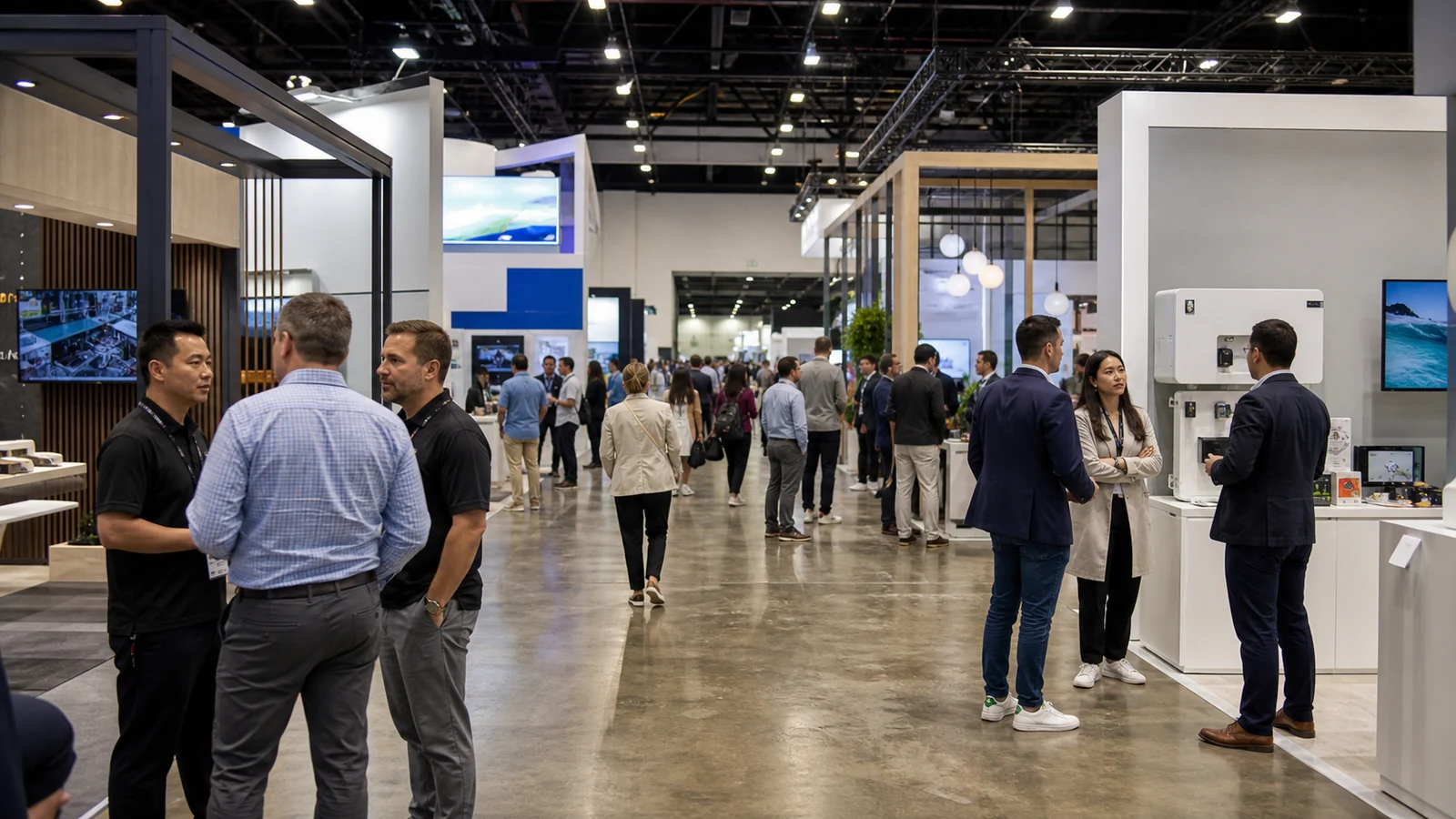
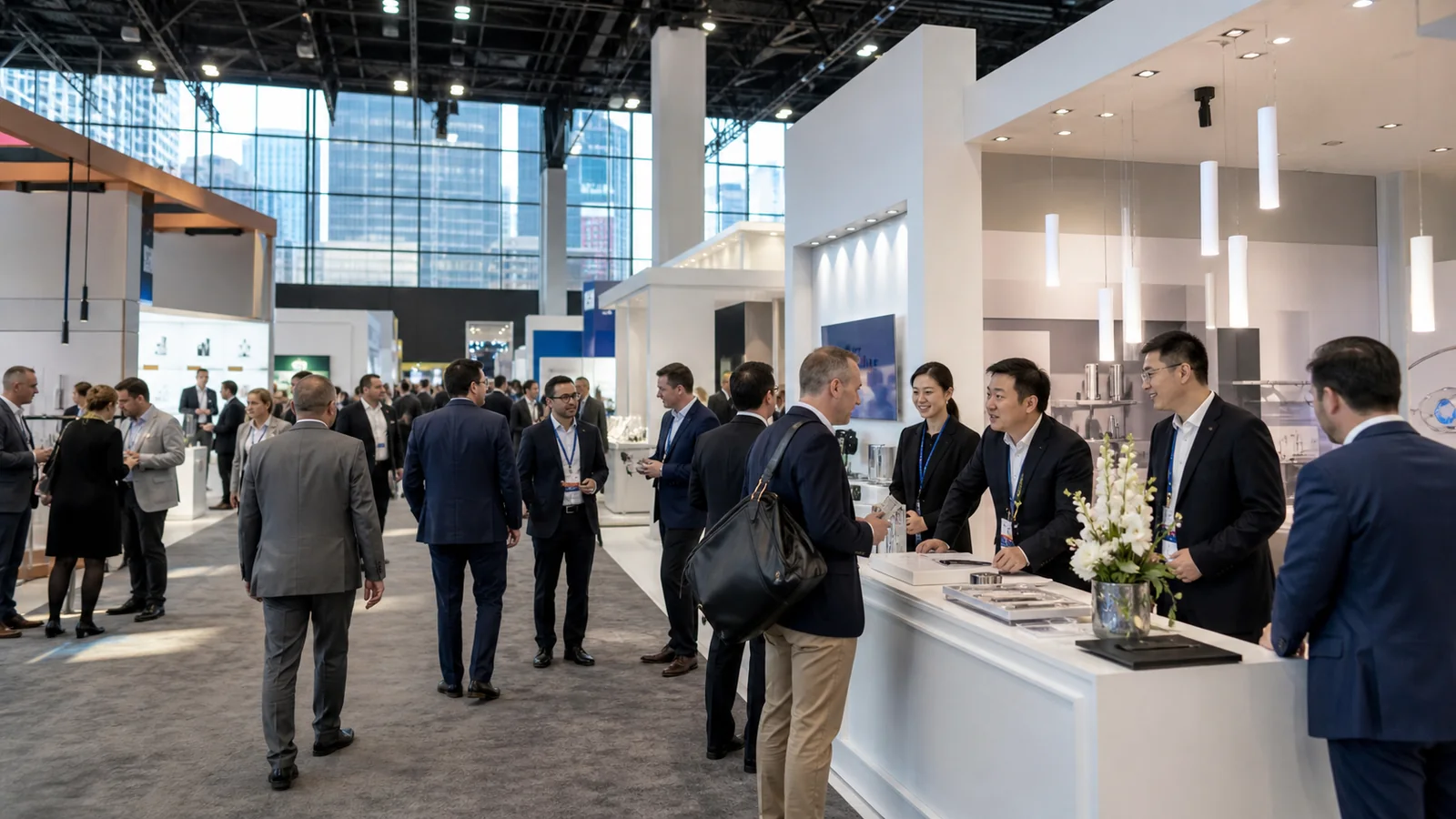
The venue describes an 80,000-square-foot exhibition hall with nominal capacity for 380 10-by-10-foot booths. It lists two ground-level roll-up doors, two loading docks, ceiling-accessible power and ethernet, plus services such as Wi-Fi, electrical, labor, decorating, security, and housekeeping. These are facility capabilities, not promises about the assigned space or included services for this event.
The venue’s exhibitor FAQ says the show promoter determines booth-package inclusions. It also says electrical and chairs can be ordered through Exhibitor Services, that the promoter directs exhibitors to the correct move-in doors, and that move-in and move-out are not allowed through glass doors. Event-specific instructions are therefore still needed before a vehicle route, labor booking, utility order, or maximum structure size is fixed.
The display itself can stay focused on one short customer path: notice the product, understand the choice, see the price, pay or place an order, and leave with the item or correct fulfillment information. For a first-time craft-show vendor, a tabletop or modular system may protect margin better than a custom build. The most suitable format depends on the confirmed footprint, product volume, stock access, repeat-use plan, and available budget.

Step 3: Prepare a Useful First Conversation
A complete exhibitor manual is not required for an initial display discussion. Four inputs are enough to make that conversation specific:
- the product category, typical price band, and a few representative product images;
- whether the current idea is tabletop-based or needs an approximate floor area, plus the quantity and size of products to be shown;
- a working display budget and any known stock, staffing, travel, or installation constraints;
- whatever current event material is already available, such as the official event link, vendor-interest form, offer, contract, floor plan, or exhibitor instructions.
The official show contact remains responsible for product acceptance, space assignment, services, rules, and payment instructions. KingExhibits can support display planning and execution, but it does not replace those decisions.

FAQ
Final Thoughts
For a giftable-product brand, the Fredericksburg Holiday Craft Show is worth considering when shoppers can understand and buy the assortment quickly, the break-even sales and inventory risk are acceptable, and staffing and logistics are workable. A useful next step is to assemble the product category and price band, likely tabletop setup or approximate area, working budget, and whatever current event material is already available, then compare the display level with the likely sales test.
If you are preparing to exhibit at the Fredericksburg Holiday Craft Show, KingExhibits can provide booth design and build services, from a tabletop or modular presentation to a custom exhibit.