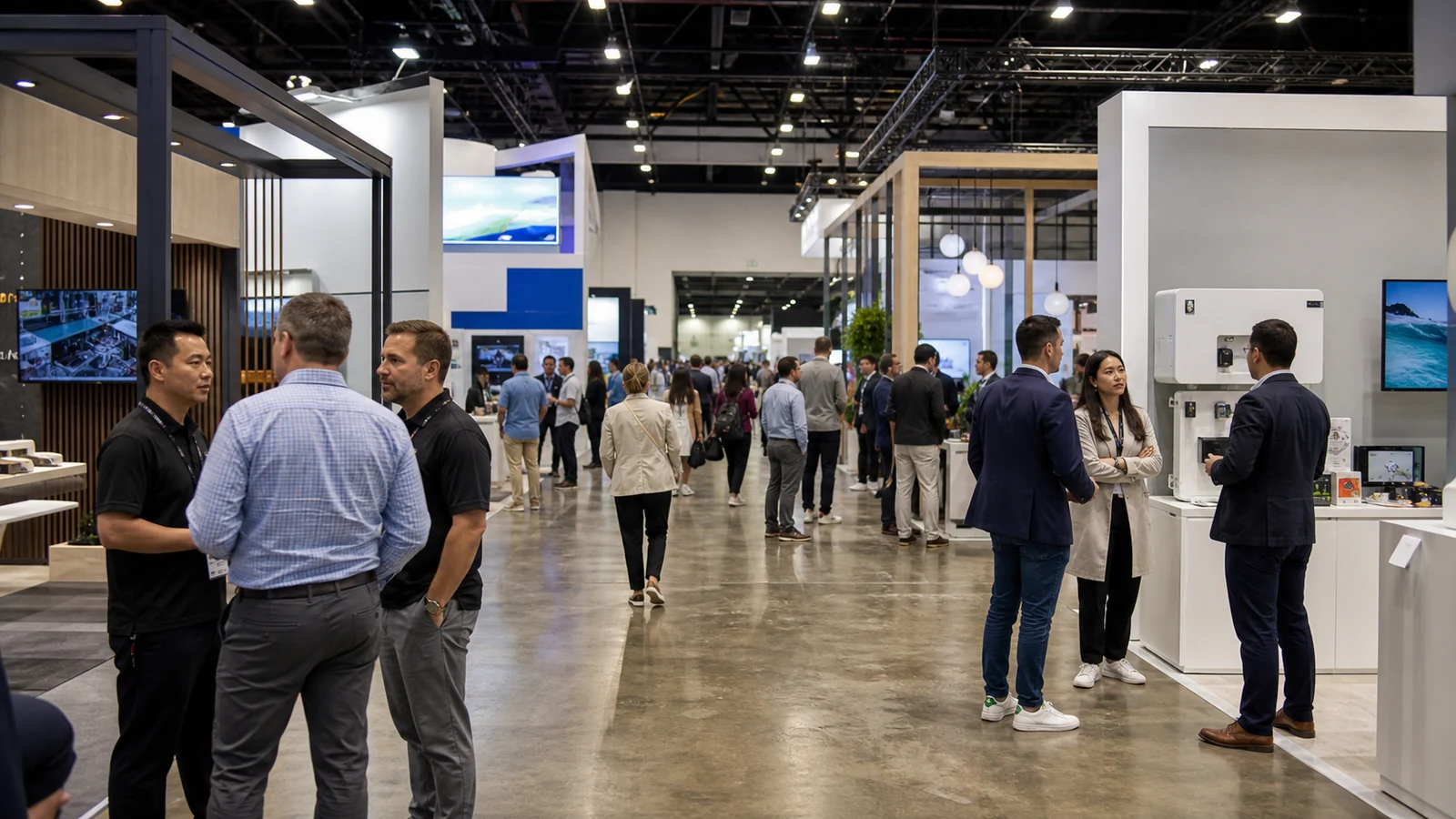
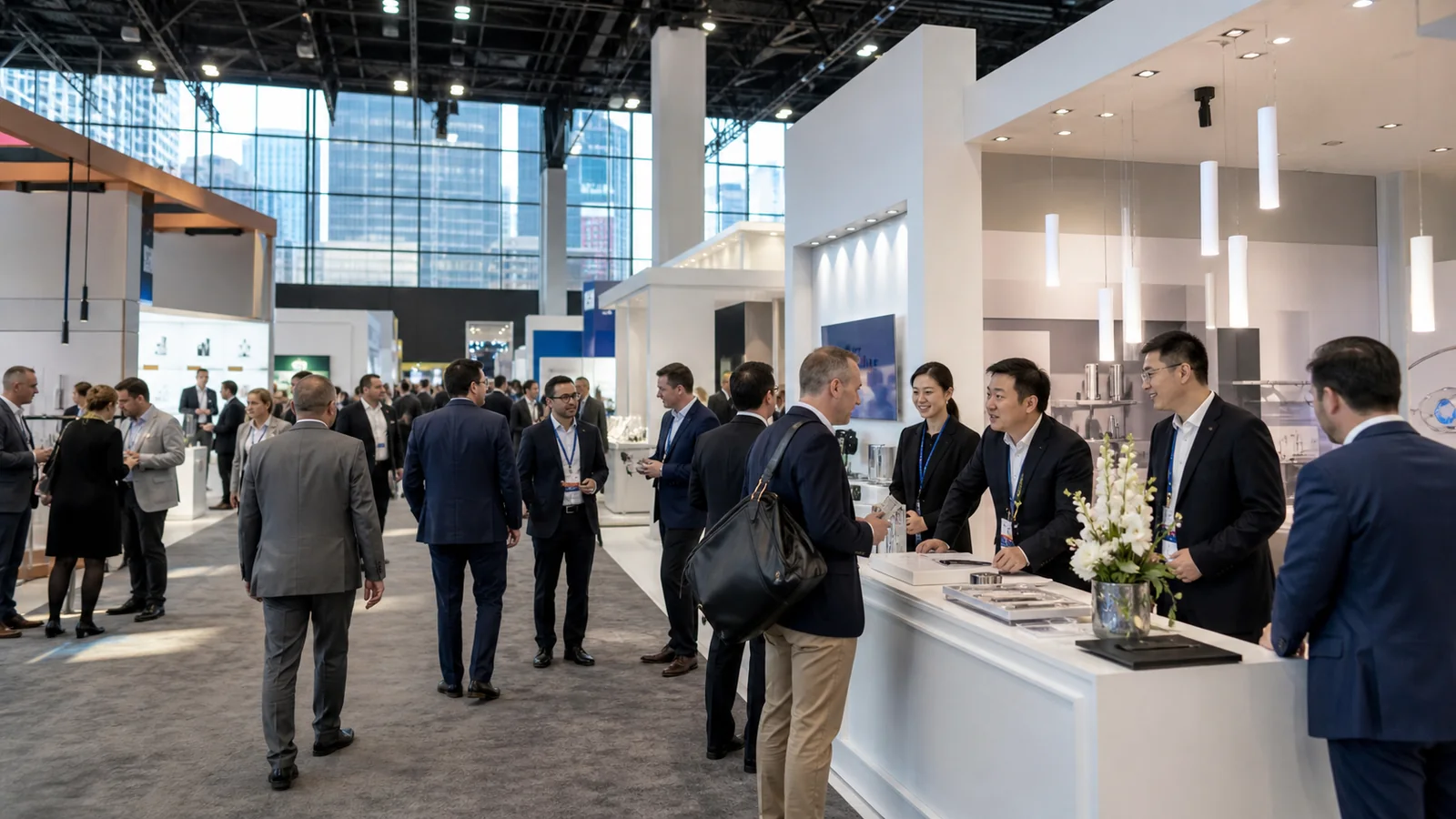
Your competitor has a crowded booth, a new product on display, and a message that sounds sharper than yours. Before you return to the office asking for a bigger exhibit or a different sales pitch, you need to know which of those impressions points to a real competitive problem.
Trade show competitive intelligence means using information you can legitimately observe or obtain at an event to judge what a competitor is offering and how your team should respond. It should help you decide whether to change your message, improve a demonstration, or ask your product team to investigate a possible disadvantage.
Look at Competitors Your Buyers Actually Compare
Build your competitor analysis around the alternatives that appear in your sales conversations. If you sell equipment to plants running small batches, a competitor promoting high-volume production may have an impressive exhibit without answering the same buying problem. A less conspicuous company demonstrating quick changeovers between production runs could matter more.
Before the show, read the exhibitor directory, public product pages, and demonstration schedule. Choose a question that will make a difference to your next event: are buyers being shown a simpler changeover, a smaller installation footprint, or a clearer way to calculate running costs? Match each booth visit to that question. Keep time for an unfamiliar exhibitor that appears to solve the same problem, so your research does not merely confirm the competitors you already know.
Arrange for a colleague to cover your own booth while you look around. If a visit would leave a scheduled customer meeting unattended, use the competitor's public materials first and arrange a shorter visit later. Collecting intelligence should help your exhibition program, not take staff away from the buyers you came to meet.
Read the Product Demonstration More Carefully Than the Headline
A claim such as “faster changeovers” tells you what the competitor wants buyers to value. Watching a changeover can tell you something more specific: which tasks the operator performs, what equipment is already prepared, and whether the demonstration shows the whole sequence.
In a hypothetical packaging-equipment demonstration, an operator might change a guide without a tool. That is an observable action. It does not establish the time needed to clean the machine, replace other parts, load a new program, and restart production. If the brochure promises a complete changeover time, preserve the stated conditions alongside the claim.

Look for the model and configuration being shown, the material it is running, and the start and finish of the demonstration. If part of the process is hidden or explained verbally, record that distinction. Ask whether a public specification sheet or demonstration video describes the same setup. You are trying to understand what was demonstrated, not conduct an improvised performance test in somebody else's booth.
This comparison can reveal a problem in your own presentation before it reveals a problem in your product. Your equipment may already offer an equivalent feature, but your team may be describing it on a slide while the competitor makes it visible. That finding supports testing a hands-on demonstration. It does not, by itself, support redesigning the equipment.
Notice Who the Message Is Trying to Win
Read the main message from the aisle, then compare it with the application shown inside the booth. “Reduce downtime” is broad. A demonstration built around short production runs, frequent cleaning, and one operator points to a more specific buyer problem.
Listen to public presentations for the questions the presenter chooses to answer. Look at openly displayed case studies for the industry and application being emphasized. Those choices show the audience the exhibitor is trying to attract. They do not prove that the company has won that audience or that every logo represents a current customer relationship.
Compare that promise with the questions buyers ask at your own booth. If your visitors keep asking about operator training while your display concentrates on maximum output, there is a concrete message to reconsider. Ask your sales team whether the same concern appears in ordinary customer conversations before rewriting your entire campaign around a single afternoon.
The advertised offer is part of that message too. A sign advertising a starting price may exclude options, installation, or support that your offer includes. Save the amount, currency, model, included items, date, and any conditions together. An advertised figure gives you a question to investigate; it is not evidence of the price every customer pays. Do not turn an incomplete price comparison into a discount recommendation.
Separate an Effective Exhibit From a Successful Business
When a booth is busy, first identify what is happening. Is a scheduled demonstration running? Are people collecting a giveaway? Can visitors see the product from the aisle, or are they crowding around because the viewing space is too small?

A second visit at a different time may change your interpretation. You can describe whether people watch a demonstration and stay for a conversation. You usually cannot know their purchasing authority, the quality of that conversation, or what happens after the event. A queue is not a lead count, and a large exhibit is not evidence of revenue or market share.
The useful design lesson may be modest: a clear view of the machine attracts attention, while a separate conversation area lets staff continue a discussion. In your next booth brief, describe the behavior you want to make easier and the space it needs. Copying the competitor's structure or increasing floor space does not tell you whether buyers will understand your product better.
Keep the Source Attached to the Conclusion
A reliable source can still support only a narrow claim. A current product sheet is strong evidence of what a company publishes; it is not independent proof that the product will perform that way in your customer's plant.
| Information you collect | What it can support | What still needs checking |
|---|---|---|
| A dated product sheet for the displayed model | The specification or claim the exhibitor publishes | Test conditions, configuration, and fit for your buyer's application |
| Your notes from a public demonstration | What you saw happen during that demonstration | Steps outside your view and whether the result holds under other conditions |
| An exhibitor press release repeated by several publications | The company's announcement and how it is being circulated | Whether any publication independently checked the claim |
| An informal remark from another attendee | A possible question to investigate | The person's basis for the remark and a source you can verify |
Trace repeated claims back to their origin. Three articles repeating the same release do not provide three independent confirmations. If a brochure and a website disagree, check the model, market, revision date, and stated options before deciding that one is wrong. If the conflict remains, keep both versions and leave the point unresolved.
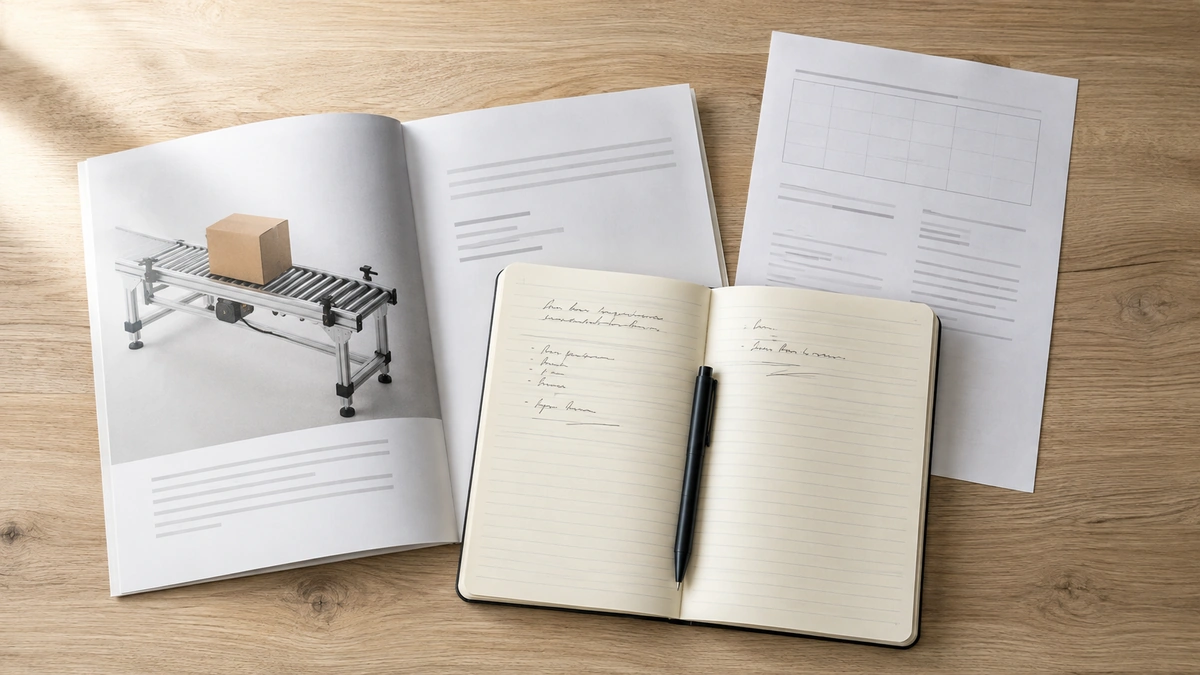
You do not need a complicated scoring system to preserve this reasoning. A shared note can contain the event, date, booth and product; the source or permitted file; the exact observation; your interpretation; and the next check with a named owner. Separate the observation from the interpretation so a colleague can disagree with your reasoning without losing the original evidence.
For example, a fictional entry might read:
Observed: During a public demo, the operator adjusted one guide without a tool. The rest of the changeover was not shown. Source: My dated booth notes and the model's public product sheet. Interpretation: The feature may make that adjustment easier; total changeover time is unknown. Next check: Ask our product manager to compare the published procedure with ours before recommending a new demonstration.
In a real entry, add the actual event, time, model, source location, and responsible colleague. If photography is prohibited, useful written notes can still preserve what you were allowed to observe. Do not substitute a confident label such as “high confidence” for the explanation of what the evidence actually shows.
Gather Competitive Intelligence Openly
Check the current event's registration rules before assigning a visit. For example, as checked on September 7, 2026, the official registration page for CES 2027 describes a trade-only event for people aged 18 or older with a consumer-technology industry affiliation. Attendees must meet the requirements for their registration category. A desire to research competitors does not replace those credentials. CES registration information.
Use your real name, employer, and role when asking someone for information. Do not pose as a buyer or journalist, conceal your company to obtain answers, or ask for confidential customer records or unpublished plans. Market-research firm Cascade Insights explains the importance of identifying the researcher and giving people a choice about participating. Cascade Insights on B2B research ethics.
Introduce yourself and your company, explain your interest in the application, and ask whether there is a public product sheet you can take. If the person declines, move on. Do not send another colleague to repeat the question under a different story.

Access to the hall does not mean access to private meetings, screens, or documents. Check the current show manual and any booth restrictions before recording, and obtain permission for photographs or video. If permission is unclear, ask; if it is refused, stop. Rules from a previous edition or a different event are not permission for this one.
Decide What to Change After the Show
At the post-show discussion, begin with the decision you were investigating. Show the source, explain what changed your view, and include evidence that does not fit your first interpretation. A colleague who did not attend should be able to follow the reasoning.
Changing a demonstration script is easier to reverse than changing a product roadmap. If your own visitors asked for a clearer explanation and a competitor made that explanation easier to see, test a revised demonstration before the next show. Ask whether a person unfamiliar with the product can identify the benefit without a long introduction.
A suspected technical disadvantage calls for a different response. Have the product team compare the published specifications and the conditions behind them. A price gap needs a like-for-like offer comparison. A claim about lost business needs your own sales evidence. Keep these investigations open until the people responsible have enough information to decide; a deadline for the report should not force a premature conclusion.
For the next exhibit, turn the findings into a brief your booth team can use: the buyer problem to make visible, the product or process to demonstrate, where people need to stand, and where a detailed conversation should continue. That gives a designer something more useful than “make us look as impressive as the competitor.”
Frequently Asked Questions
What if an important competitor is not exhibiting?
Check the current exhibitor directory and the company's public announcements before concluding it is absent. It might appear through a partner or under another brand name. If you cannot confirm a presence, use its public materials and mark the comparison as desk research. Absence from one show does not establish a retreat from the market.
How do we judge whether the research was worth doing?
Return to the decision you named before the show. Did the evidence change a demonstration plan, settle a comparison, or prevent an unsupported product change? Record what the responsible manager decided and which uncertainty remains. If no one can use the findings, narrow the question next time. The number of visits or photos measures activity; it does not show the value of the decision.
Should competitor observations go into our sales CRM?
Keep the source record somewhere your team can maintain it, then link the relevant finding to a CRM opportunity only when it helps explain an actual sales situation. A rumor from the show floor should not become a lost-deal reason. Otherwise, a speculative observation can later look like evidence from a customer conversation.
Can an outside researcher do the booth visits?
An outside researcher can help if their actual identity and role meet the event's rules. Agree in advance on the question, permitted sources, disclosure, and the evidence to return. Ask for the original observations and their limits alongside the recommendation. Delegating the visit does not make an unsupported conclusion more reliable.
Final Thoughts
Before changing your next booth, name the observation that supports the change and the buyer problem it addresses. Once you have a benefit worth demonstrating more clearly, share that finding with KingExhibits. We can help turn it into a product display and booth layout that give visitors room to see the difference and discuss its relevance to their work.