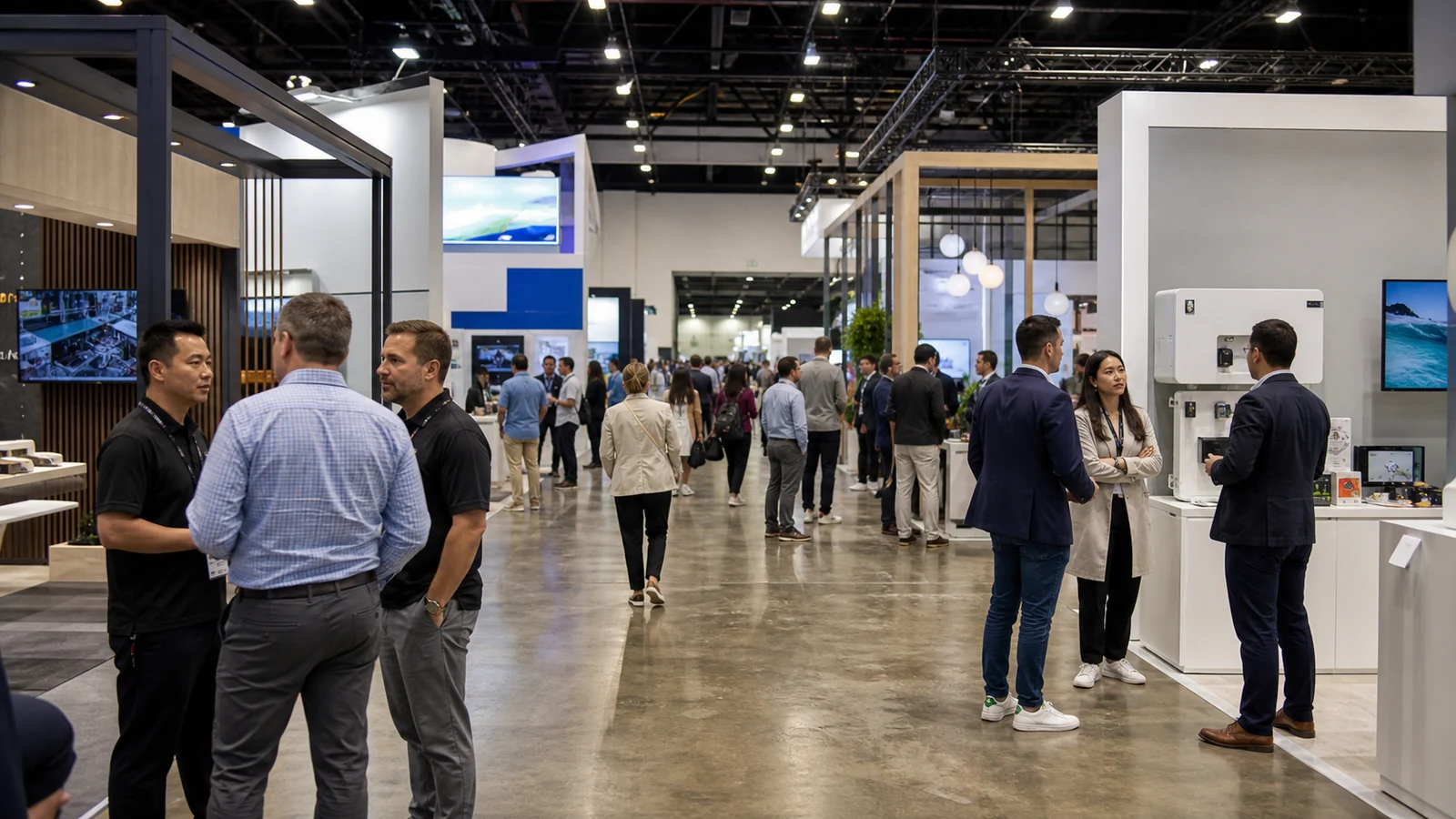
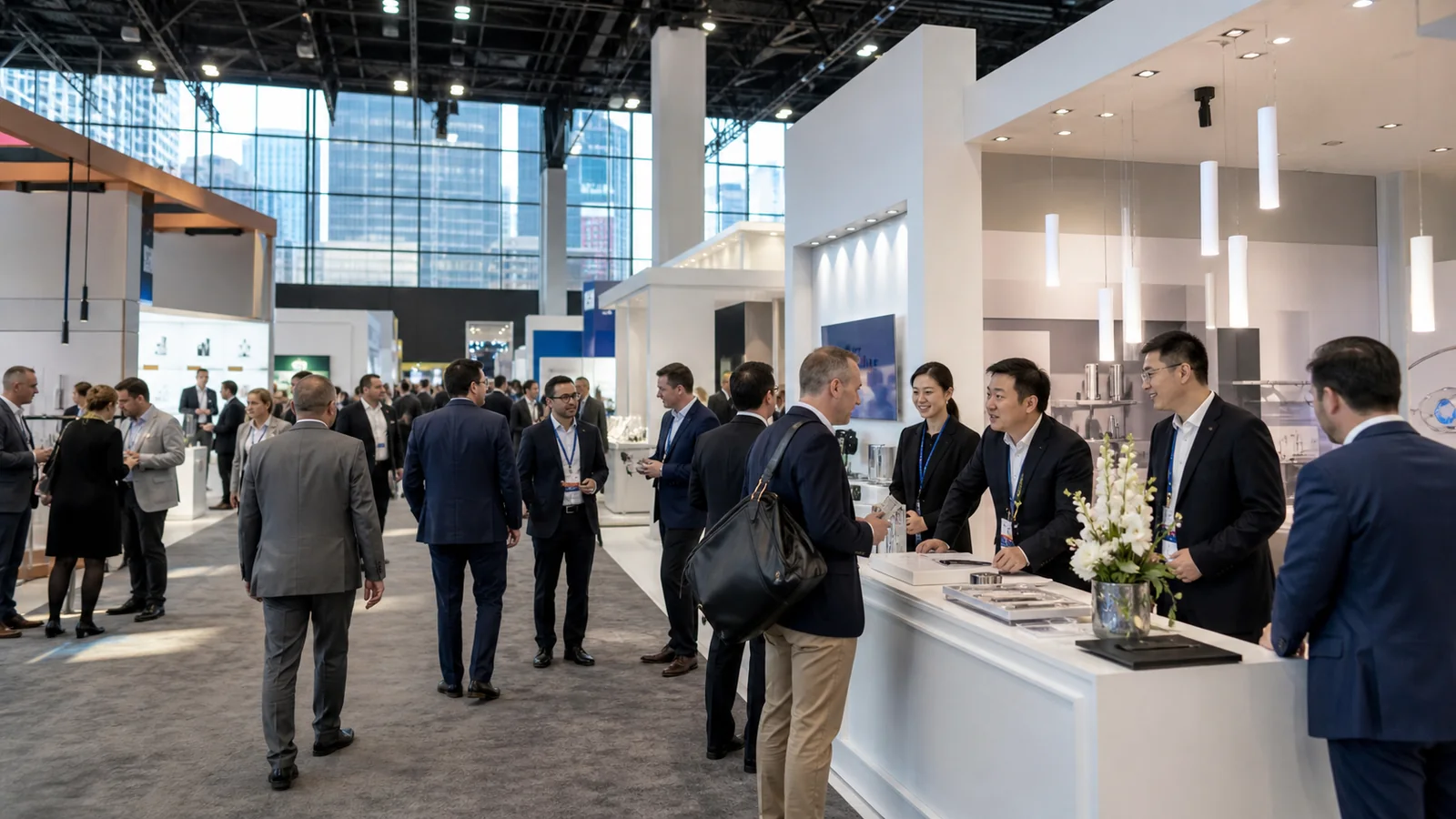
If your company is considering APEX Las Vegas 2026, the useful question is not simply whether the event is “large” or “international.” You need to know whether the people the organizer is bringing together match the next step in your development pipeline—and whether your booth can help those people understand that opportunity quickly.
As of September 7, 2026, the official APEX website lists the fourth edition for September 23–25, 2026, at World Market Center in Las Vegas. A current AREAA Las Vegas partner listing confirms the same dates and venue. Organizer and partner pages use variants including America’s Property Exhibition, America’s Property Expo, and American Property Exhibition for this APEX event. This guide explains what the event currently promises, whether your business is a strong fit, and what your booth must do if you decide to participate.
APEX Las Vegas 2026 at a Glance
| Item | Current information | What to confirm |
|---|---|---|
| Event | APEX — America’s Property Exhibition; current pages also use America’s Property Expo | Do not confuse it with unrelated events that use the APEX acronym. |
| Current upcoming edition | September 23–25, 2026 | The organizer currently presents Las Vegas as the next edition. |
| Venue | World Market Center, Las Vegas | The AREAA listing gives the address as 475 S. Grand Central Parkway, Las Vegas, NV 89106. |
| Edition | Fourth edition | The official event history lists New York in 2024, Miami in 2025, and Chicago in May 2026 before Las Vegas. |
| Core business audience | Developers, investors, capital providers, brokers, PropTech companies, and real estate service firms | These are organizer-defined audience groups, not a guarantee that every category will attend in equal numbers. |
| Format | Property exhibition plus speakers, meetings, and networking | Your booth needs to support a business conversation, not just display project images. |
| Co-located events | Smarter Home & Furnishings Expo and Smarter Infrastructure Summit | The adjacent audiences may create useful crossover, but your team should confirm exact badge and floor-access terms. |
| Organizer record | The APEX site is operated under MIE USA; MIE Group lists APEX in its 2026 event calendar | Use the current APEX site, your signed participation agreement, and show-specific documents as the controlling event sources. |
The organizer publishes several reach figures across its current pages, but those figures are not presented consistently. Treat visitor, participating-company, country, speaker, and buyer totals as organizer projections or promotional counts unless your current participation package defines the number, edition, and period being measured.
What Kind of Event Is APEX?
APEX is a real estate expo positioned around property, capital, and the businesses that help developments move from concept to transaction and operation. The official participation page describes developers and owners, capital providers, and PropTech or real estate services. The current event page adds commercial and office projects, hotels and leisure developments, industrial and logistics parks, residential and luxury homes, smart cities, infrastructure, government investment initiatives, and mixed-use projects.
That breadth creates an opportunity, but it also raises the cost of a vague booth. “Premium real estate opportunities” will not tell a visitor whether you are offering an operating asset, a development partnership, a brokerage mandate, a technology product, or a service. Your first visible message should name the category, location, and commercial next step.
For example, a developer seeking capital for a U.S. hospitality project needs a different front-of-booth promise from a PropTech company selling an operations platform. Both can fit APEX, but they should not look or sound interchangeable.
Is APEX a Good Fit for Your Development Company?
APEX is a strong candidate when your team has a specific property, pipeline, market-entry offer, or partnership need that can be discussed with investors, brokers, lenders, advisers, or development partners. It is a weaker fit when the team only wants broad brand exposure and cannot define what a qualified visitor should do after the first conversation.
Use the following test before approving the booth:
| Fit question | Stronger fit | Warning sign |
|---|---|---|
| What are you bringing to market? | A named project, pipeline, site opportunity, investment mandate, or defined service | A general company story with no current opportunity |
| Who needs to engage? | A clear capital, sales, brokerage, development, technology, or service partner | “Anyone interested in real estate” |
| What proof can you show? | Verified location data, project stage, use mix, delivery team, approval status, deal structure, or product demonstration appropriate to the offer | Renderings and superlatives without decision-grade facts |
| What is the next step? | A scheduled diligence call, document review, demonstration, site discussion, or partner qualification | Collecting badges without an agreed follow-up action |
| Can your team answer qualification questions? | The booth team knows what can be disclosed and who owns the next conversation | Staff can greet visitors but cannot move a serious inquiry forward |
This test does not judge the investment itself. It judges whether the exhibit has enough substance to support the type of business conversation APEX promotes.

How the Three-Show Format Changes Your Booth Plan
APEX is being promoted alongside the Smarter Home & Furnishings Expo and the Smarter Infrastructure Summit. For a developer, that can widen the conversation beyond capital. A hospitality or residential project may meet furnishing and smart-home suppliers; a mixed-use or industrial project may find technology and infrastructure discussions nearby.
Do not respond by putting every possible audience on the main graphic. Keep the front message focused on the person who can advance your primary objective. Use a second layer—a screen, project board, sample table, or meeting deck—to show adjacent opportunities once the visitor has self-identified.
The crossover also changes staff preparation. Your team may speak with an investor in one conversation, an architect or systems provider in the next, and a broker after that. Give staff a short routing question such as, “Are you looking at this project as an investor, an adviser, or a delivery partner?” The answer should determine which proof they show and who takes the meeting.

What Your APEX Booth Must Make Easy
1. Identify the opportunity from the aisle
A visitor should be able to tell what you offer without reading a paragraph. Use the project or solution category, geography, and business action. “Mixed-use development opportunity in [market]” is more useful than “Building the future together.” Do not place an unverified return, completion date, approval, or availability claim on the wall.
2. Move from interest to evidence
Choose a small set of proof that matches the conversation you want. A developer may need a location map, current project stage, use mix, delivery milestones, team responsibilities, and a clearly bounded investment or partnership path. If any element is preliminary, label it accordingly. The booth should help a serious visitor ask a better next question, not pressure the team to disclose sensitive deal material in public.
3. Qualify before the meeting becomes a pitch
Decide what the team must learn: investment focus, geography, asset class, check size or mandate, decision role, timing, and the requested next step. Only ask for fields that your follow-up process will use. A long badge list is not evidence that the event worked.
4. Support both a quick exchange and a serious discussion
Plan one standing conversation point for fast qualification and a quieter area for scheduled meetings. If the footprint is small, protect one uncluttered surface for documents or a laptop instead of filling the stand with furniture. If you need a confidential conversation, use the booth to qualify it and move the detailed discussion to an appropriate private setting.
5. Make the follow-up visible before the visitor leaves
End each qualified conversation with one named action and owner: send a project brief, arrange a diligence call, provide a demonstration, introduce a technical lead, or decline the fit. Record consent and the visitor’s requested subject. “We will follow up” is too vague for a deal-focused event.

Confirm These Items Before Booth Production or Freight
The public APEX pages reviewed for this guide do not provide a complete current participation manual. Your signed agreement, organizer-issued participation package, and show-specific service documents should control production and logistics decisions.
Ask the organizer or its appointed service provider to confirm the following in writing:
- contracted booth number, dimensions, orientation, height limits, and neighboring structures;
- what the exhibit package includes and which items require separate orders;
- the current floor plan and the location of APEX relative to the two co-located events;
- move-in, inspection, show-open, move-out, and carrier check-in times;
- advance-warehouse or direct-to-site options, shipping labels, material-handling scope, and outbound procedures;
- the appointed labor, electrical, Internet, rigging, audiovisual, cleaning, and security contacts;
- drawing approval, fire-safety documentation, insurance, and product-display rules;
- badge allocation, lead retrieval, meeting scheduling, and access across the co-located shows;
- every order deadline and the rate or service consequence of missing it.
Do not substitute a generic venue guide or a guide from another World Market Center event for APEX instructions. The venue may host different organizers and service arrangements. If the organizer has changed a deadline or contractor since your first quotation, update the production and freight plan before anything ships.

A Practical Go/No-Go Decision for APEX 2026
If you have not yet contracted space, ask for written confirmation of availability, location, inclusions, remaining deadlines, and access conditions before treating the show as operationally feasible. Then test the audience description against one live business objective. A good fit means you can name the people you need, the evidence you will show, and the next action your team wants.
If your booth is already confirmed, stop adding messages. Freeze the primary offer, verify every public claim, assign staff by conversation type, and reconcile the booth drawing with the latest organizer documents. At this stage, clarity and execution matter more than adding another feature.
FAQ
Final Thoughts
APEX Las Vegas 2026 is most relevant when your company can bring a defined development, capital need, property service, or PropTech solution into conversations with real estate decision-makers. The co-located events may expand that opportunity, but they do not rescue an unfocused exhibit.
Use the organizer’s current documents to verify the event, then make your booth answer three questions quickly: what is the opportunity, who is it for, and what should happen next? The event decision should come first; the booth plan should follow it.
If you need booth-building support for APEX Las Vegas 2026, KingExhibits can help with U.S. design, production, logistics, installation, and storage.