Before your brand budgets a booth for HITS Championship, confirm that HITS will treat you as a commercial vendor or sponsor—not as a horse-show “exhibitor.” If you assume this is a conventional expo, you could price the wrong structure, plan an activity the organizer has not approved, or commit inventory before the next Championship date is confirmed.
HITS Championship is the culminating week of a hunter, jumper, and equitation series at HITS Hudson Valley in Saugerties, New York. Brands can have a commercial presence, but HITS routes that presence through vendor and partnership programs. This guide helps you decide whether your brand needs a place to sell or demonstrate a relevant product, a sponsorship built around audience exposure and hospitality, or no presence at all—and shows you what to verify before you request a display design.
Last verified September 7, 2026. The most recent confirmed HITS Championship ran September 2–6, 2026. HITS had not posted a 2027 Championship date in the official event pages reviewed for this article, so confirm the next edition before committing budget, travel, inventory, or production.
Quick answer
HITS Championship is a horse-show competition, not a conventional trade show. The 2026 edition formed part of HITS Hudson Valley VIII at HITS-on-the-Hudson and featured CSI3* show jumping, World Championship Hunter Rider competition, hunter derbies, an equitation championship, and national jumper classes. If your main objective is a product or service presence for the equestrian community, start with the official HITS Vendors route. If you need naming rights, hospitality, media, signage, or a broader on-site activation, start with HITS Partnership Opportunities. Do not approve a space or design until HITS confirms the current event, package, location, permitted activity, and operating rules in writing.
What is HITS Championship?
HITS Championship is the finale of the HITS Hudson Valley summer hunter/jumper series. HITS calls the event Championship Week, while the current series page places it within HITS Hudson Valley VIII. This naming matters when you contact the organizer: use the target year and the exact HITS Hudson Valley event so your inquiry is not confused with another HITS circuit or with The League National Finals, which is a separate event.
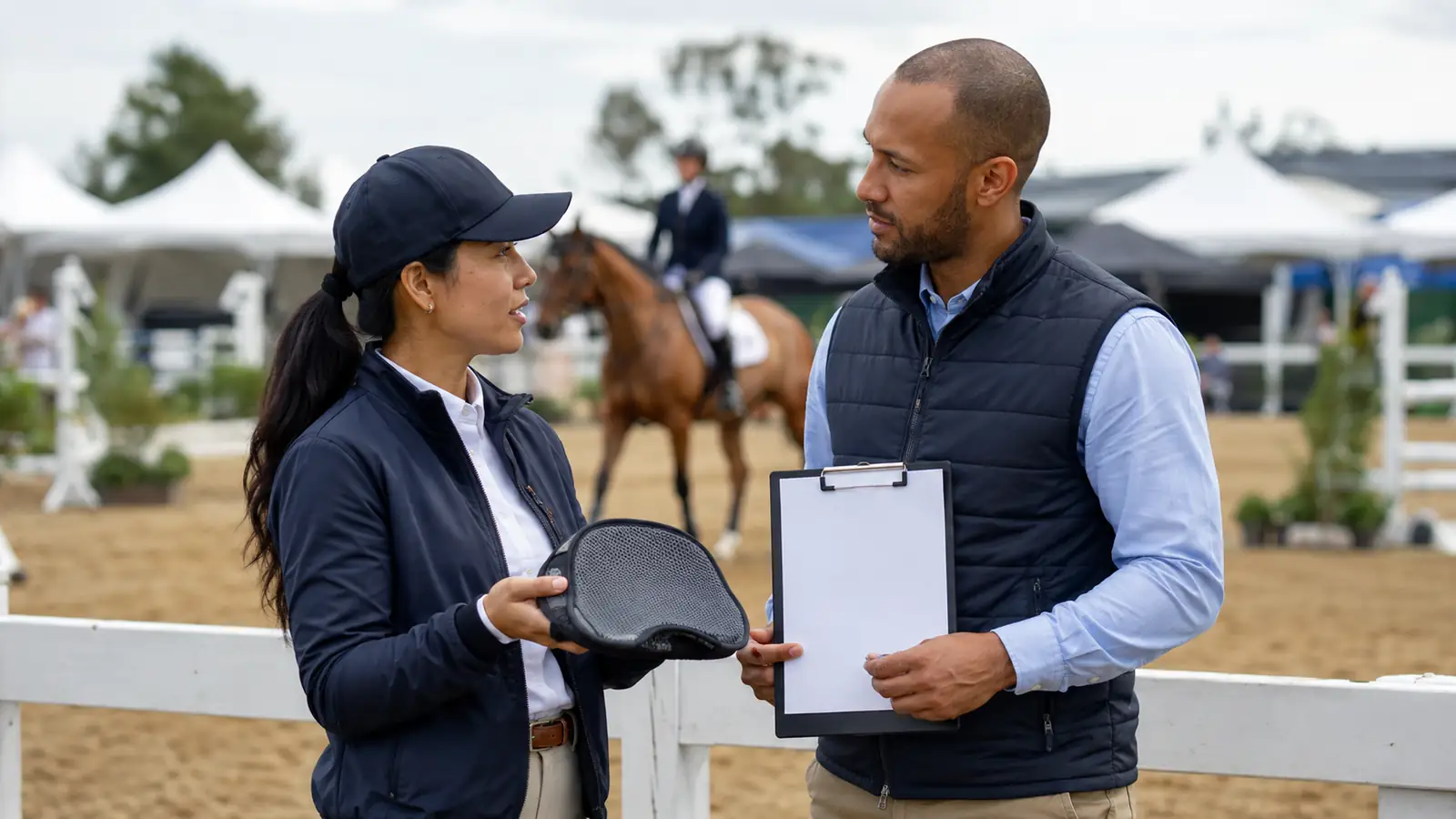
| Event fact | Most recent official information | Why it matters to a brand |
|---|---|---|
| Event identity | HITS Hudson Valley VIII / HITS Hudson Valley Championship Week | Use both names in your inquiry so HITS can route it correctly. |
| Most recent confirmed dates | September 2–6, 2026 | These dates describe the completed 2026 edition, not the next event. |
| Venue | HITS-on-the-Hudson, 454 Washington Avenue Ext, Saugerties, NY 12477 | This is an equestrian showground, not a convention-center expo hall. Ask for the exact commercial placement and access route. |
| Organizer | HITS, LLC | Vendor inventory and partnership rights must come from HITS, not from a booth supplier. |
| 2026 competition status | Premier / 6, CSI3*, with WCHR competition | The audience’s attention follows competition rings, schedules, riders, horses, and hospitality moments. |
| 2027 date | Not posted in the official pages reviewed on September 7, 2026 | Treat the next edition as unconfirmed until HITS publishes or supplies it. |
The official 2026 series page lists the dates, rating, and featured classes. An official Championship Week report describes the week as the end of the summer series and notes a full CSI3* division, a WCHR designation, four $25,000 hunter derbies, the Arion Sellier Equitation Classic, and the $300,000 ClipMyHorse.TV Hunter Classic Final. These facts establish the character of the event. They do not establish how many commercial visitors will pass a particular brand location.
Why does “exhibitor” mean something different at a horse show?
At a trade show, an exhibitor is normally a company that contracts a booth. At an equestrian event, “exhibitor” may refer to the people and horses participating in the competition. HITS also uses “Exhibitor Tent” for hospitality. Neither usage automatically gives a commercial brand display space.
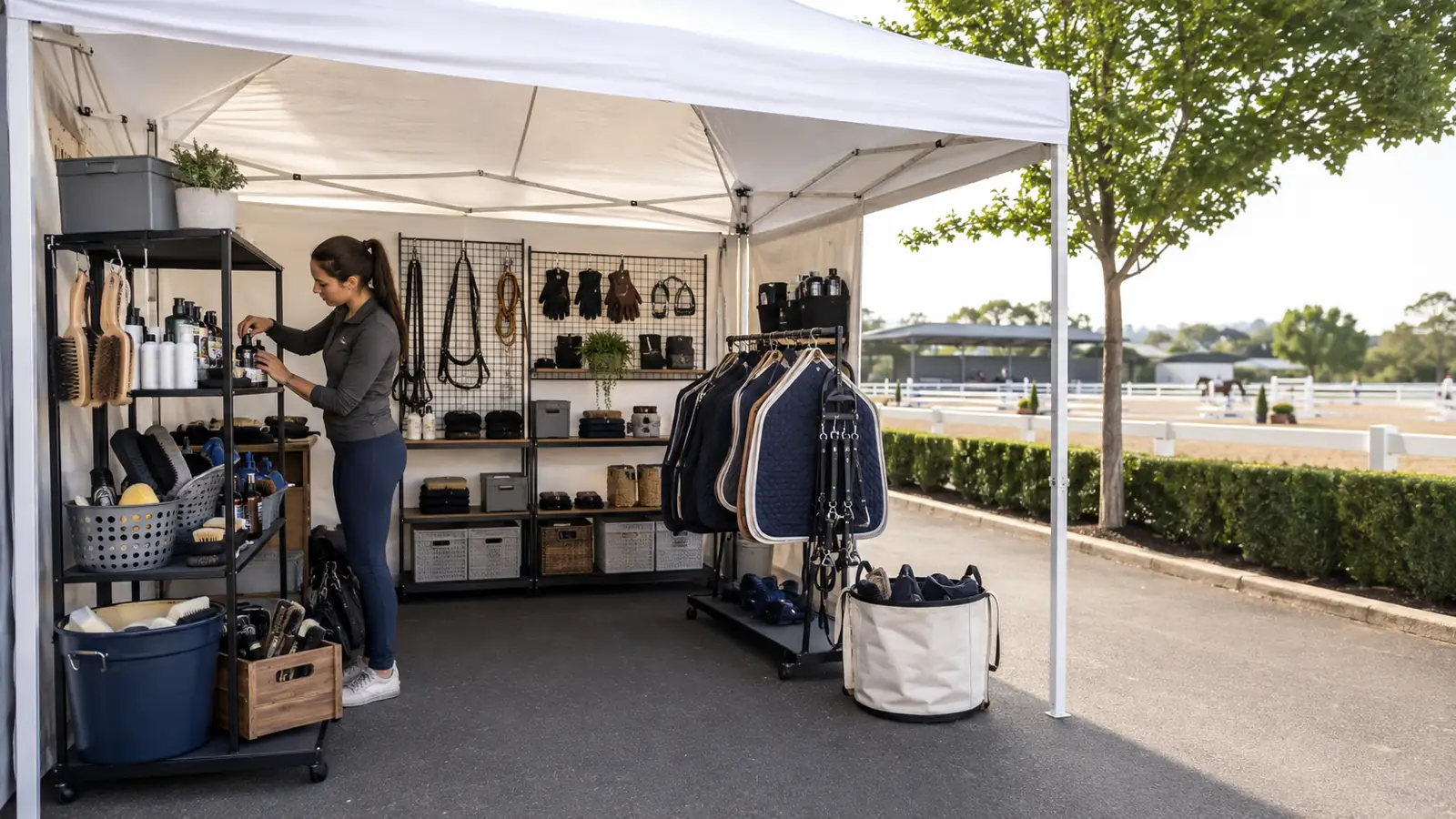
For a brand marketer, the useful commercial terms are vendor and partner or sponsor:
- A vendor inquiry concerns a place to present relevant products or services at a HITS venue.
- A partnership inquiry concerns rights and exposure that may combine competition sponsorship, signage, product display, hospitality, digital promotion, or another activation.
- A horse-show entry concerns the competition and belongs with the Horse Show Office, not the commercial display brief.
Use the role HITS assigns in writing. If your internal plan says “exhibitor booth” while the organizer’s proposal says “vendor space” or “sponsorship activation,” revise the brief to match the agreement. The role determines what you may do, where you may do it, and which benefits are included.
Is the HITS Championship audience a practical match for your brand?
HITS describes its vendor audience as ranging from people attending their first horse show to riders at the top level of the sport. The current Hudson Valley vendor list includes equestrian tack and apparel, mobile equine retail, horse vehicles, urgent-care services, and outdoor-living design. HITS also promotes partnerships for equestrian products and services as well as luxury consumer goods.
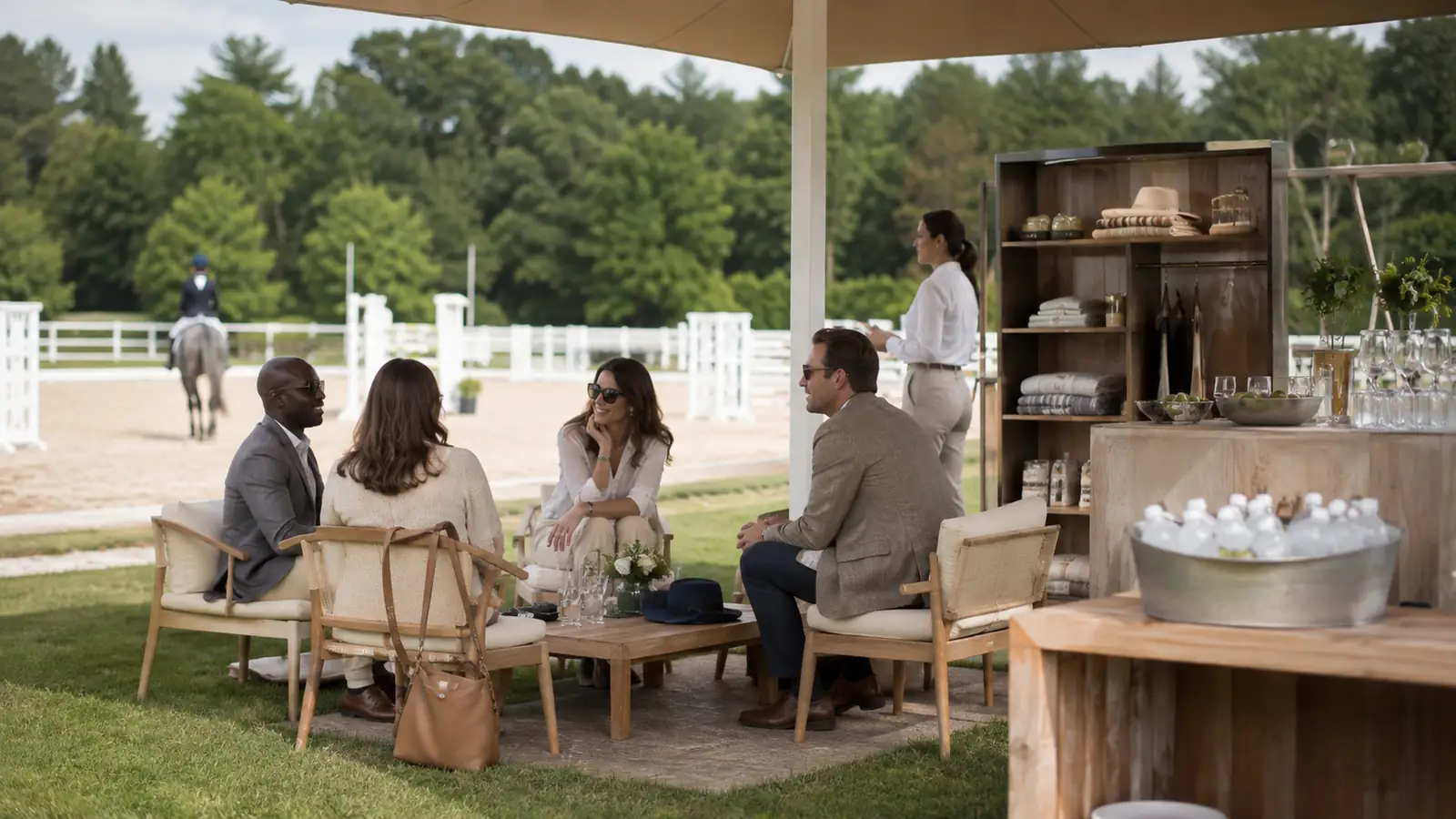
That creates a focused opportunity, not a guarantee of fit. Screen your offer against the reason people are at the show.
| Brand situation | Initial fit signal | What must still be proven |
|---|---|---|
| Your product is used by riders, horse owners, barns, trainers, or equestrian teams | Strong vendor signal | Current Hudson Valley availability, category acceptance, selling rights, and placement |
| Your service solves an on-site or recurring need for the equestrian community | Possible vendor signal | Whether HITS accepts the service, what can be delivered on site, and who carries operational responsibility |
| Your brand targets an equestrian or luxury-lifestyle audience but is not selling an equine product | Stronger sponsorship signal than vendor signal | Audience overlap, activation rights, package reach, exclusivity, hospitality, and measurement |
| You need mass B2B lead volume unrelated to horses, sport, or lifestyle | Weak signal | A clear audience connection that justifies the spend; without one, select a different event |
| You only want a logo on a structure with no audience action | Incomplete objective | What the placement should make a rider, owner, guest, or spectator do next |
Do not accept “affluent audience” as a complete business case. Ask which audience segment your package reaches, when that segment is present, and what interaction is permitted. A relevant 10-by-10 vendor space can outperform a larger activation if the smaller location reaches the right people and lets them take a meaningful next step.
Vendor or sponsorship: choose by the job the presence must do
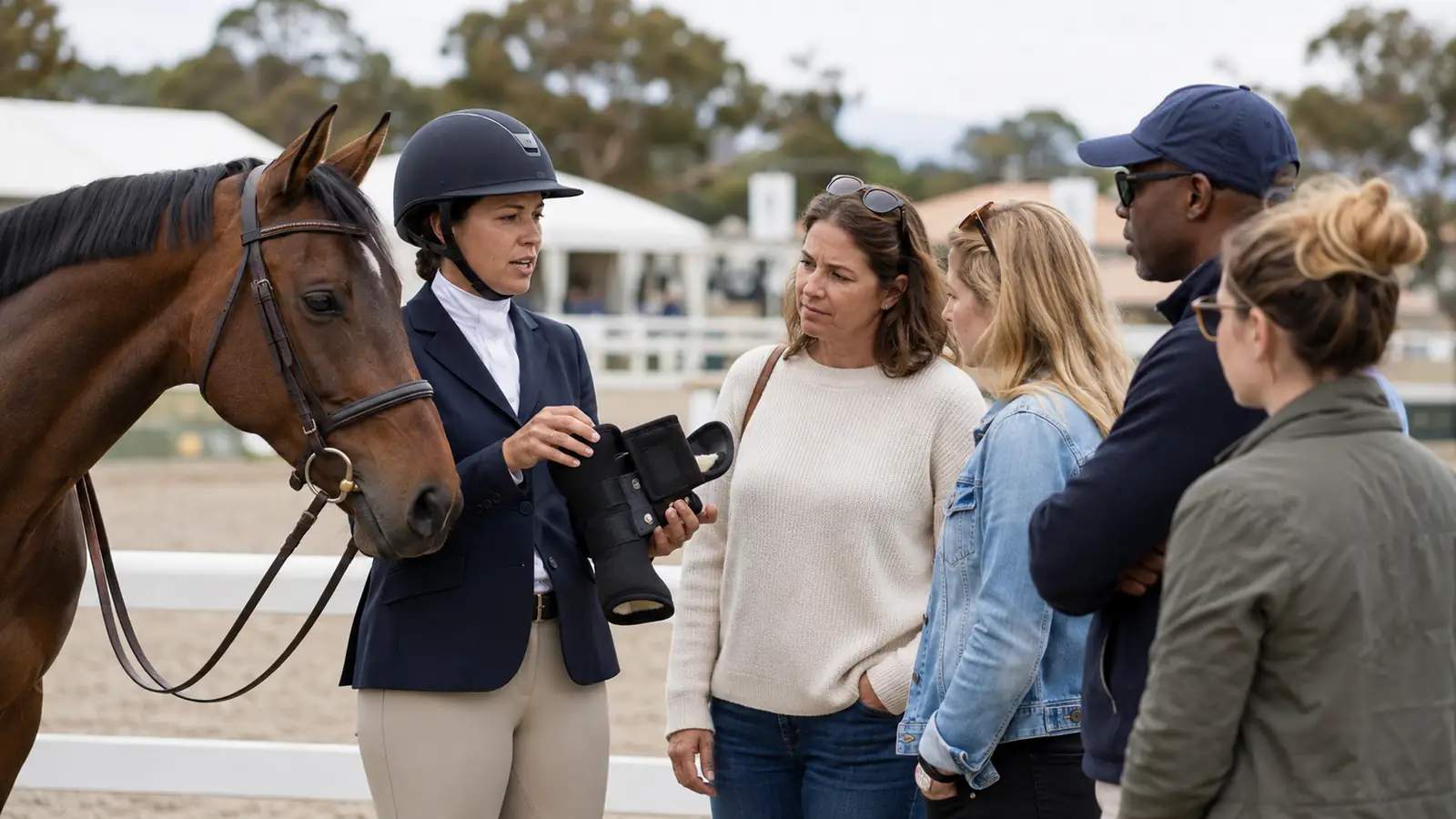
The official vendor and partnership materials describe different commercial tools. Choose the route by the customer action you need, not by which option sounds more prestigious.
| Decision | Vendor route | Partnership or sponsorship route |
|---|---|---|
| Primary job | Maintain a product or service presence for show customers | Build reach or association through rights, content, hospitality, or an activation |
| Official examples | Product display and a curated mix of equestrian and lifestyle goods or services | Competition naming rights, signage, PA recognition, product promotions, displays, hospitality, social media, and live-stream or marketing touchpoints |
| Best starting question | “Do you have current vendor availability for our category at this HITS Hudson Valley event?” | “Which current rights reach our target audience, and what on-site action can the package include?” |
| Main proof needed | Placement, operating days, sales/demo rules, utilities, storage, access, and vendor terms | Exact rights, dates, placements, content deliverables, hospitality scope, exclusivity, measurement, and activation terms |
| Common mistake | Treating a weekly vendor fee as permission to build or sell anything | Buying a logo package before defining the audience action and on-site delivery |
Choose the vendor route when the location itself must work
A vendor presence makes sense when people need to see, handle, try, discuss, or obtain a product or service during the show. Your operating plan matters as much as the display. Staff coverage, stock, payment rules, replenishment, secure storage, power, weather response, and overnight closure can determine whether the presence functions.
Do not assume “vendor” means a standard indoor booth. Ask HITS for a current location plan, footprint, frontage, surface, cover, access, included services, and restrictions. Then decide whether a simple retail setup, a demonstration point, a consultation area, or a more developed branded structure is justified.
Choose sponsorship when the rights create the value
Sponsorship is the better starting point when the brand wants to be associated with a competition, host customers, gain visibility beyond one physical location, or connect an on-site experience with media and hospitality. The 2026 HITS Sponsor Prospectus lists examples such as class or circuit naming, presentation opportunities, arena signage, public-address mentions, product displays, hospitality, and digital promotion.
Those are examples from a dated prospectus, not guaranteed rights for the next HITS Championship. Ask HITS to mark every included deliverable, excluded item, location, date, production responsibility, approval deadline, and measurement method in the current proposal. If the proposal includes an activation space, treat that space as one component of the sponsorship rather than assuming it operates like a trade-show booth.
Choose neither when the audience action is still vague
Pause if your plan depends on general visibility but cannot name the audience, the permitted interaction, or the follow-up action. The same applies if your category is not accepted, the available placement misses your target audience, or the package cannot support the demonstration or hospitality you need.
Declining one edition is better than funding a structure that has no clear job. You can revisit the event when HITS publishes the next schedule or offers a package that matches your audience and activation.
What does the 2026 Championship Week reveal about the on-site context?
The 2026 edition concentrated several forms of competition into five days. The official program included a full CSI3* division, WCHR competition, hunter derbies, an equitation championship, national jumper classes, and major finals. That schedule changes how a brand presence earns attention.
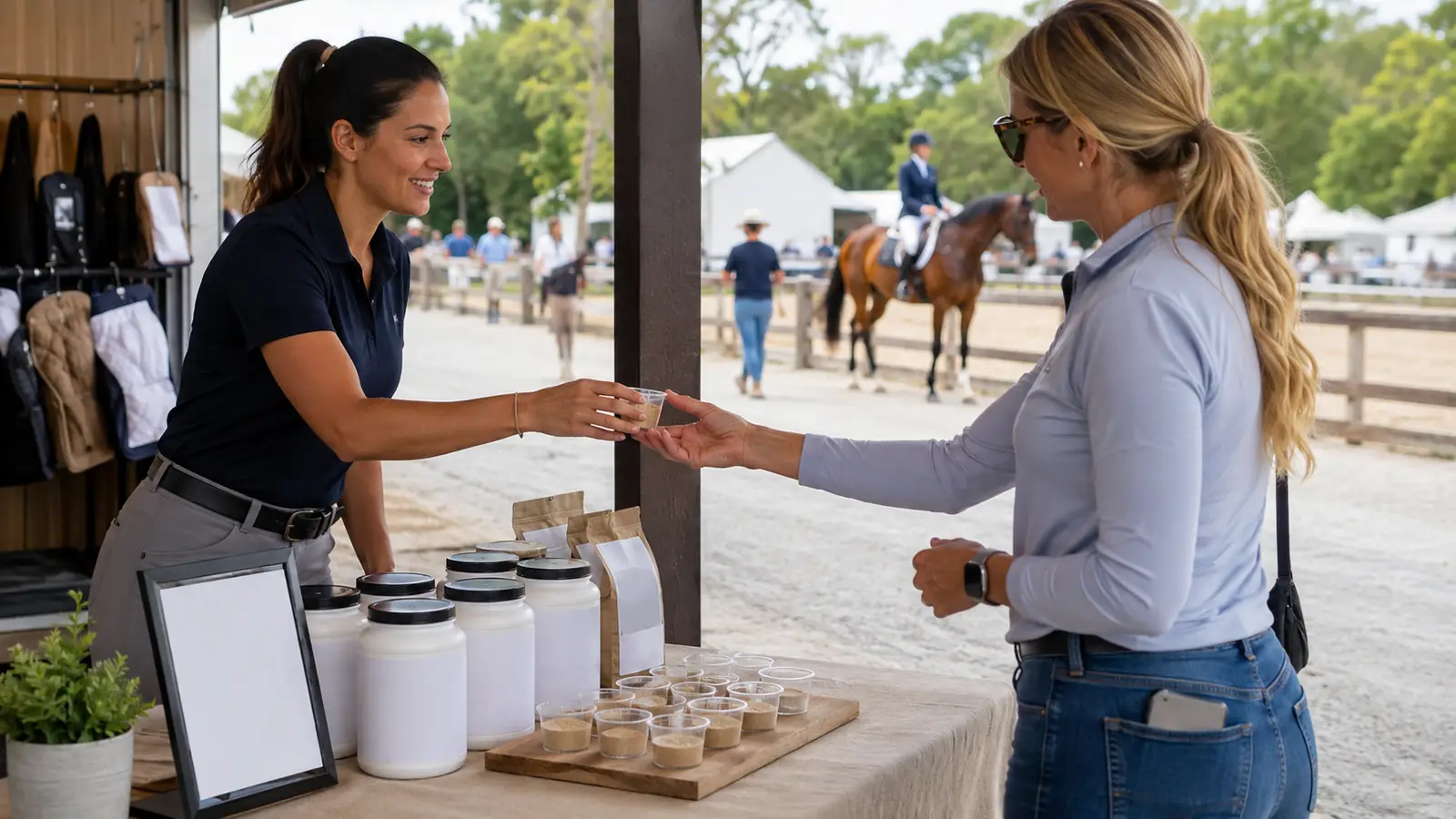
People do not move through the site like trade-show buyers walking every aisle. Their day is shaped by rides, class times, horse care, coaching, meetings, viewing, and hospitality. A commercial presence therefore needs a reason to be visited at a particular moment.
Use the current schedule to answer four design questions:
- When can your audience stop? Identify the classes, breaks, hospitality periods, and operating hours that create realistic dwell time.
- Why would they approach? Give the location one visible promise: a relevant product, useful service, booked conversation, hospitality benefit, or approved experience.
- What must happen quickly? Decide whether the first action is a product trial, purchase, consultation, scan, appointment, or guest check-in.
- What must happen away from the front edge? Put longer conversations, storage, staff items, and operational equipment where they do not block the visitor approach.
This is also why a larger footprint is not automatically better. If the organizer places a compact vendor location on a useful route and permits the action your audience wants, more square footage may only add cost and staffing. If a sponsorship requires hosted guests, a product experience, or scheduled presentations, a larger or differently configured space may be necessary—but only after the rights and location are confirmed.
How much event scale can you actually verify?
HITS publishes useful network-level numbers in its 2026 sponsor prospectus, including 70 weeks of hunter/jumper competition in 2025, 33,000 horses annually at HITS-managed hunter/jumper competitions, and 500,000 visitors over the prior 12 months. HITS clearly labels those figures as company-wide or HITS-managed competition statistics.

They are not the attendance for HITS Championship. Likewise, the official 2026 hunter report says 59 horse-and-rider combinations entered one national hunter derby, and the official CSI3* Grand Prix report lists 26 combinations from eight nationalities. Those figures describe competition fields, not the number of people available to visit a commercial display.
If scale affects your budget, ask HITS for event-specific information with the definition attached:
- unique people, registrations, credentialed participants, spectators, or visits;
- target year and comparable prior edition;
- rider, owner, trainer, guest, spectator, or local-community segments;
- the days and locations included in the count; and
- expected traffic or capacity for the exact vendor or activation area.
Until you have that information, build a scenario range rather than a single traffic forecast. Your business case can still use confirmed package deliverables, booked hospitality guests, scheduled appointments, transactions, qualified conversations, and permissioned follow-ups—measures you can control more directly than total venue attendance.
What should you ask HITS before requesting a display design?
Send one written inquiry that ties every answer to the target edition and location. Use this checklist:
- What is the official event name, date, and operating period for the next HITS Championship?
- Should our company apply as a vendor, sponsor/partner, or both?
- Is our product or service category accepted, and is category exclusivity already committed?
- What locations and footprints are available at HITS-on-the-Hudson, and what does each placement face?
- Is the agreement for Championship Week only, another weekly period, or a broader circuit?
- May we sell, sample, demonstrate, give away products, collect leads, schedule appointments, or host guests?
- What structure, branding, signage, sound, lighting, screen, furniture, and product-display rules apply?
- What power, connectivity, water, storage, waste, cleaning, security, and weather provisions are available or required?
- Who handles delivery, installation, access credentials, daily restocking, emergency response, dismantle, and removal?
- What insurance, permits, approvals, waivers, or vendor documents are required, and when are they due?
- Which marketing, hospitality, naming, signage, announcement, livestream, and content rights are included?
- What event-specific audience data and post-event reporting will HITS provide, and how is each metric defined?
Do not turn unanswered items into allowances in a rendering. Mark them as open decisions. A clean concept image cannot replace organizer approval for the space or activity.
Turn the organizer’s answers into an activation brief
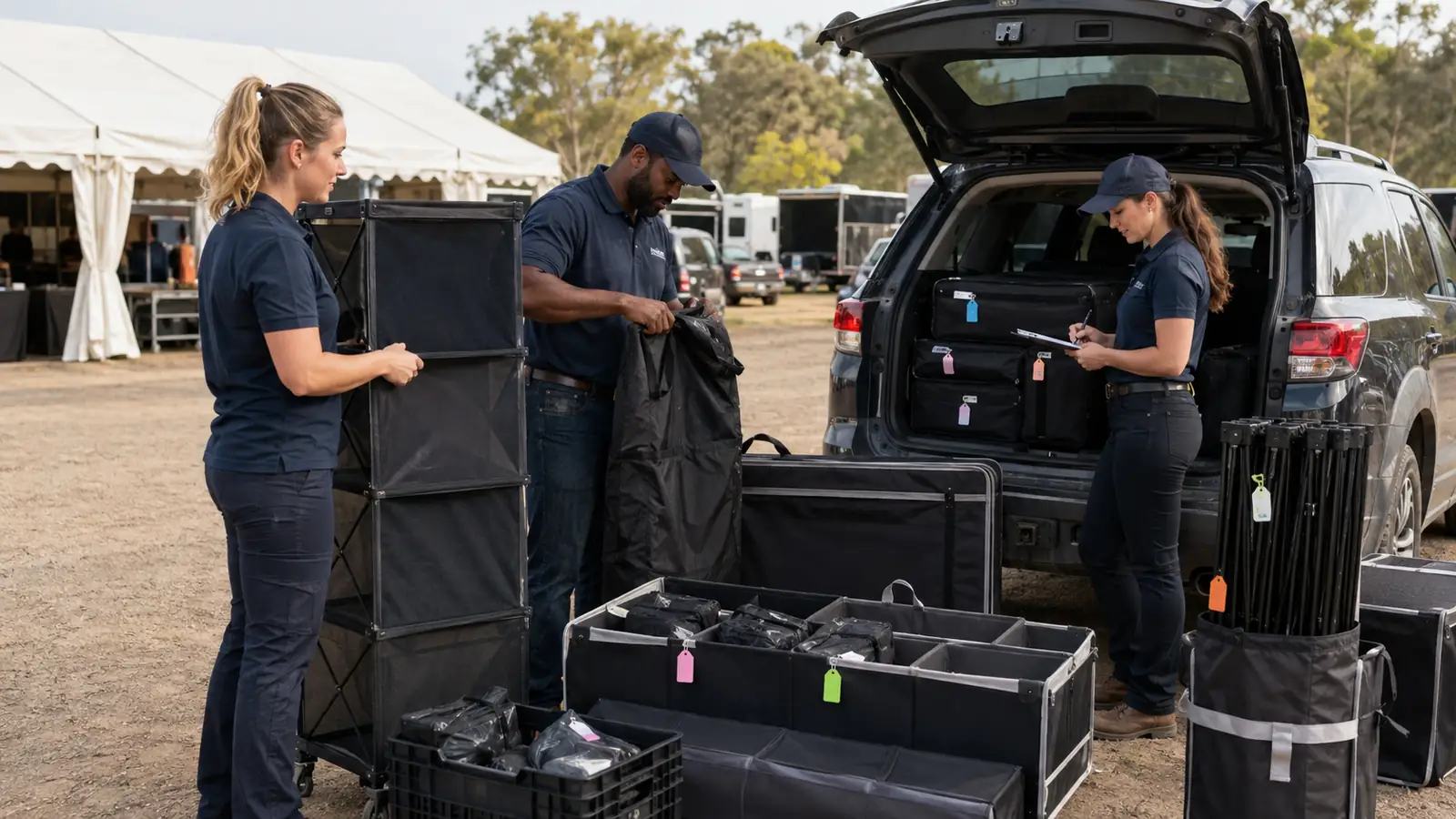
Once HITS responds, convert the proposal and rules into a short working brief before anyone prices the structure.
| Brief field | What to record | Decision it controls |
|---|---|---|
| Commercial role | Vendor, sponsor/partner, or combined package | Contract scope and approval route |
| Audience and moment | Exact audience segment, expected timing, and reason to stop | Message, staffing, and placement |
| Desired action | Purchase, trial, consultation, scan, meeting, hospitality, or another approved action | Layout and measurement |
| Location | Map, footprint, frontage, surface, nearby activity, access, and exposure | Form, orientation, visibility, and weather plan |
| Rights and restrictions | Sales, samples, giveaways, naming, signs, media, data capture, and category limits | Content and operating plan |
| Technical needs | Power, internet, equipment, storage, lighting, screens, water, waste, and security | Technical plan and service orders |
| Schedule and ownership | Delivery, setup, daily access, show hours, restocking, teardown, and responsible parties | Labor, freight, and staffing |
| Success evidence | Package deliverables, appointments, interactions, sales, qualified conversations, guest attendance, and follow-up | Budget decision and post-event review |
Your first design conversation should use that brief, not just the event name and a requested size. If a vendor agreement permits a straightforward product setup, keep the structure simple and put the budget into operations and staff. If a sponsorship includes a defined experience or hosted audience, design around that moment and the rights that support it.
Frequently asked questions
Can a non-equestrian brand sponsor HITS Championship?
Possibly. HITS says its partnership program extends from equestrian products and services to luxury consumer goods. That is an invitation to discuss fit, not an automatic acceptance. Before you ask for a package, prepare a one-page fit note naming the audience segment you want, why your offer is relevant to that segment, and the action you want HITS to permit. The response will tell you whether your idea belongs in a current partnership conversation or should stop before design spend.
Can a vendor sell products at HITS Championship?
Do not assume that every footprint carries the same sales rights. The 2026 prospectus describes vendor spaces but also includes a restriction attached to one listed display format, and it says pricing is subject to change. Ask HITS to mark five items separately in your current agreement: direct retail sales, order taking, samples or demonstrations, payment processing, and the party responsible for any required tax, insurance, or permit documentation. A general “vendor approved” email is not enough to settle those operating details.
Where should you verify the next HITS horse show schedule?
Start with the official HITS Hudson Valley series page and HITS calendar, then obtain written confirmation for the exact Championship edition in your proposal. A published competition date still does not confirm vendor inventory, sponsorship rights, setup access, or your operating period, so your commercial schedule needs a separate organizer confirmation.
Should our activation be portable or custom-built?
Choose after HITS confirms five variables: footprint, operating period, weather exposure, inventory or equipment load, and the approved audience action. A portable system usually fits a compact vendor presence that must open, close, and restock efficiently. A custom structure becomes easier to justify when your sponsorship includes hosted guests, a scheduled experience, substantial product display, or rights that must be visible from a defined route. If any of the five variables is still open, compare concepts only as provisional options.
How can we set a goal when single-event attendance is not published?
Base your first goal on measurable actions inside your agreement: hosted guests, scheduled meetings, completed demos, transactions, qualified conversations, opt-in contacts, or delivered media rights. Then separate your budget into participation rights, display production and logistics, on-site operations, and contingency. Set a go/no-go threshold using the actions you can count, and keep total-traffic assumptions as a range until HITS supplies an event-specific number and definition.
Final thoughts
Treat HITS Championship as a competition with commercial opportunities, not as an expo with automatic booth inventory. First confirm the next edition. Then ask HITS to classify your brand as a vendor, partner/sponsor, or a combined program and to document the space, rights, rules, schedule, and event-specific audience evidence.
Only after those answers are complete should you approve a display brief. After HITS confirms these inputs, KingExhibits can help you convert the approved footprint, audience action, and operating limits into a practical display brief. Send the current HITS proposal and site plan when you are ready to compare a restrained vendor setup with a sponsorship activation; we will keep unconfirmed rights outside the concept.