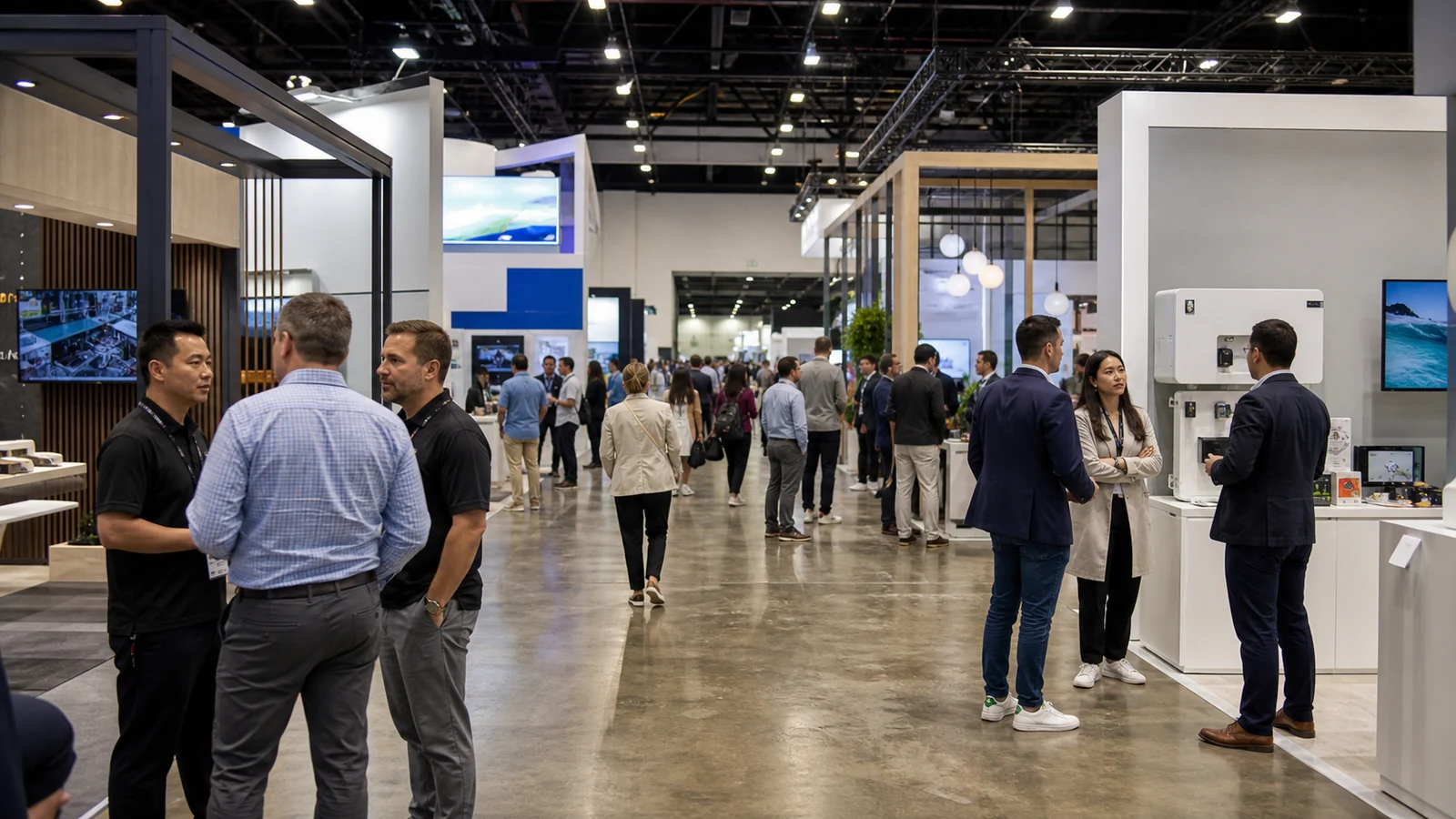
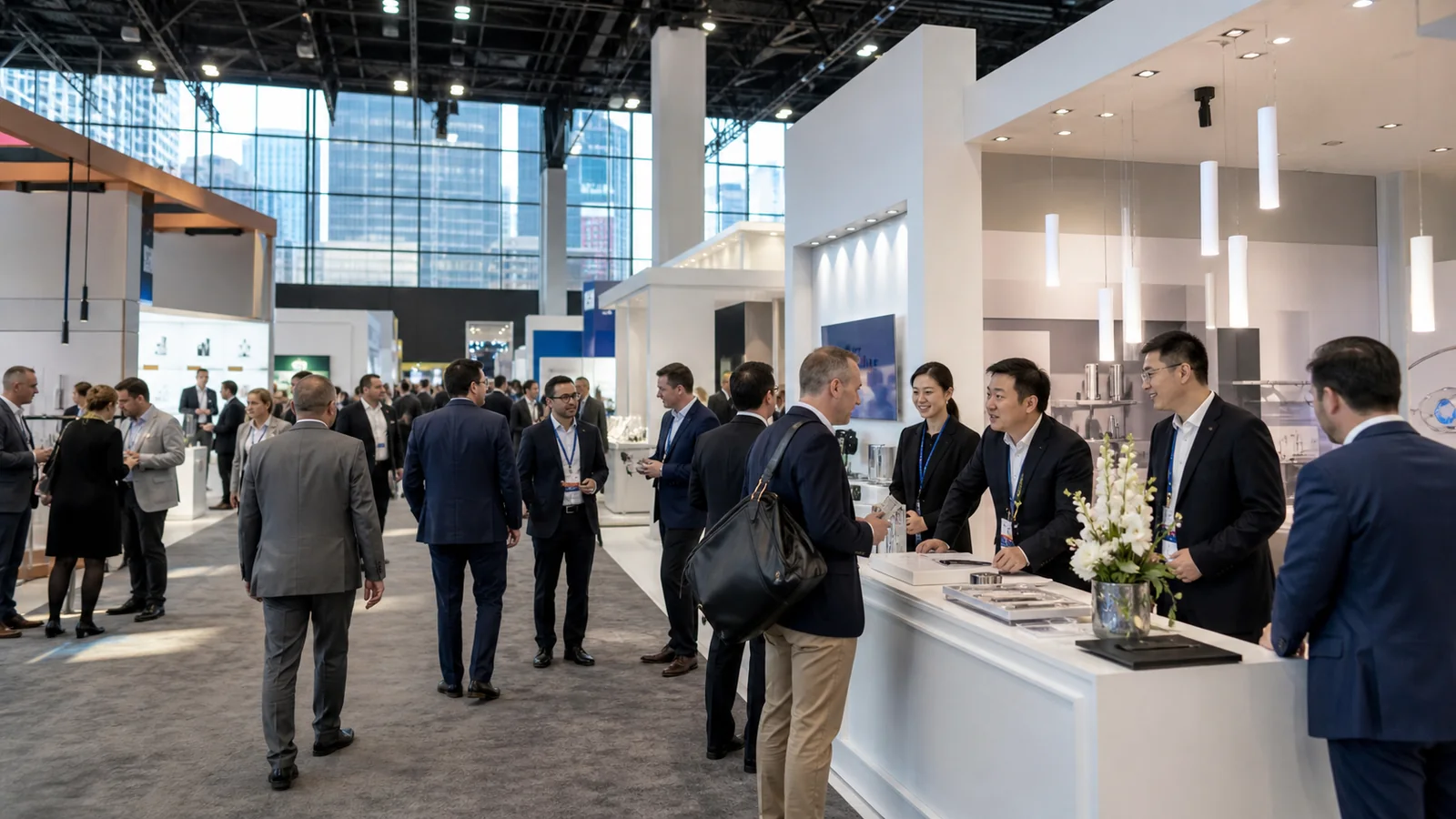
Companies comparing custom rental exhibits can be drawn to the rendering while important commercial questions remain unanswered. Which components are rented? What can change for the next show? Which services are included? A useful comparison starts with the structure, ownership, scope, and delivery responsibilities—not the appearance alone.

What Does a Custom Rental Exhibit Include?
A custom rental exhibit usually has four layers: a rented structural base, project-specific brand elements, a functional layout, and the services agreed for that show. The first three create the physical booth. The fourth determines how the approved design becomes a delivered exhibit.
The structural base may use reconfigurable rental systems, existing components, and project-specific fabricated parts. Graphics, signs, color hierarchy, and selected finishes then turn that base into a brand environment. The layout organizes entrances, product displays, meetings, storage, demonstrations, and staff movement around the purpose of the event.
Project services form a separate layer. A proposal may cover design development, technical review, graphics production, packing, freight coordination, installation, or show-site support, but “turnkey” has no fixed scope. What matters is whether the quote shows who handles each service and where third-party or official-contractor costs sit.
Ownership follows a different logic from customization. A booth can be highly tailored even when its main frame remains rental property. A useful component schedule groups the proposed items as:
- rental property that must be returned;
- purchased property that the exhibitor will own;
- consumable or show-specific items;
- client-owned items supplied for integration.
Once those categories are visible, reuse, storage, damage responsibility, and post-show handling become much easier to understand.
Standard Rental Kits vs Custom Rentals vs Owned Exhibits
The three options differ in design starting point, ownership, change capacity, and long-term responsibility. Price matters, but a low initial figure is not meaningful until all options use the same scope.
| Comparison point | Standard rental kit | Custom rental exhibit | Owned custom exhibit |
|---|---|---|---|
| Design starting point | Preconfigured structure | Rental system or inventory adapted around a project brief | Structure designed and purchased for continued use |
| Brand adjustment | Primarily graphics and limited configuration changes | Graphics, layout, functions, and selected fabricated elements can change | Usually offers the widest design control, subject to rules and engineering |
| Ownership | Main structure is normally returned | Mixed; ownership varies by component | Buyer owns the assets identified in the contract |
| Speed and complexity | Usually the simplest route | Depends on booth size, custom depth, and approval speed | Depends on design, engineering, fabrication, and approval requirements |
| Best fit | Straightforward needs, stable size, or a compressed schedule | A differentiated booth without taking ownership of the complete structure | Repeated, stable use where the company is prepared to manage the asset |
A hybrid plan is another possibility. A company might own core graphics, display features, or product interfaces while renting size-dependent structure for each event. This can be useful when brand elements stay stable but booth size changes. Future configurations still depend on whether those owned items remain compatible with the next rental structure.
The word “custom” alone tells you too little. The clearer comparison is between the actual components, design work, services, ownership, and post-show obligations.
What Can You Customize in a Rental Exhibit?
A better starting point for customization is the action visitors need to take: notice a product, understand a process, watch a demonstration, enter a meeting, or speak with staff. Once that action is clear, the layout and features can support it. Starting with a list of screens, lights, and furniture often creates cost without improving the visit.
Layout and Visitor Flow
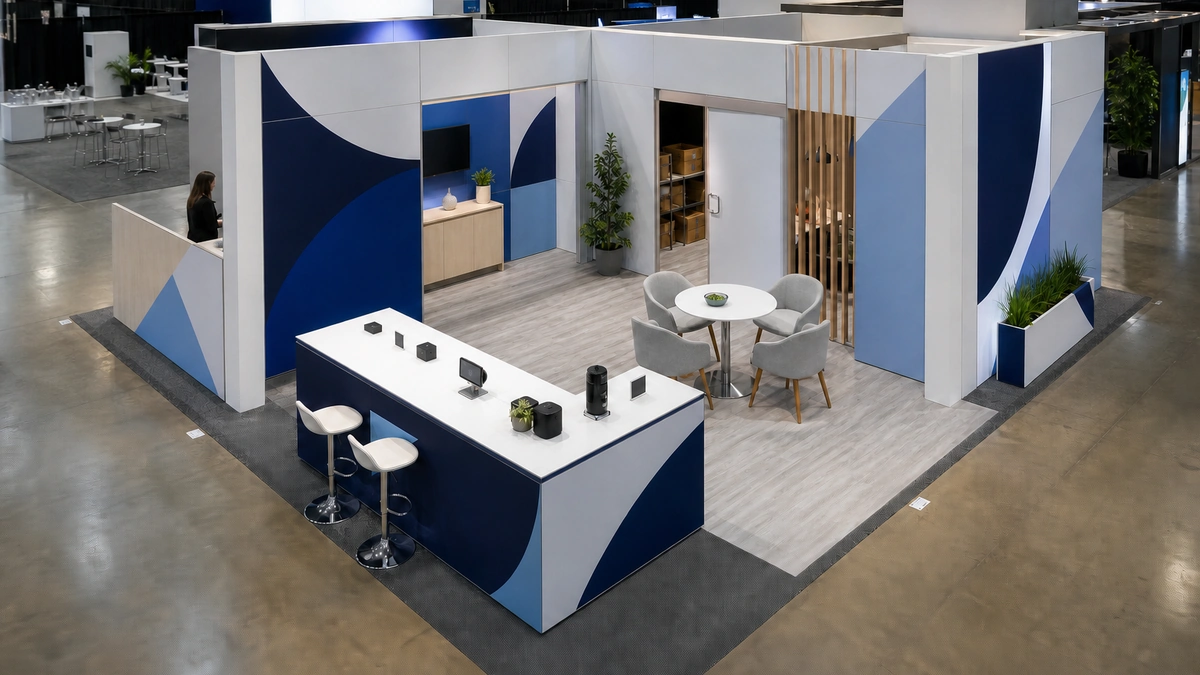
Entrances, open sides, focal points, meeting zones, storage, and staff paths can be arranged around the assigned space and exhibit type. An inline booth needs a different approach from a peninsula or island because visibility and access change with the number of open sides.
The current exhibitor manual and approved show documents control height, sightlines, hanging elements, fire requirements, and other restrictions. The IAEE display guidelines are useful general context, but they do not replace the rules for a specific event.
Graphics, Brand Hierarchy, and Finishes
Large graphics do not automatically create a clear brand experience. The primary message, supporting proof, product identification, and directional information need an order that works from the aisle. Each graphic also needs a known panel size, installation location, print version, owner, and post-show destination.
Finishes and colors can change the character of a rental structure. Yet the approved design still has to correspond to materials and connection details that can actually be built. Good booth design connects visual hierarchy to traffic, product display, and staff use.
Product Displays, AV, and Demonstration Interfaces
Start with what the demonstration must prove, then choose the equipment. A screen may need a mounting point, power, data, ventilation, cable routing, and a clear viewing distance. A physical product may add dimensions, weight, access, safety, and shipping requirements.
These details belong in the 3D design and engineering review, not in the margin of a rendering. Until the structure, venue rules, schedule, and responsibilities are known, specific AV, hanging, or load-bearing features remain project-dependent.
Storage, Meetings, Furniture, and Staff Operations
Storage and meeting functions consume floor area and change visitor flow. The right question is not whether the booth can contain a closet or meeting room, but what must be stored, how many people need privacy, and whether staff can operate without blocking the demonstration or aisle entrance.
Decide which functions are essential and which are optional before design begins. Late additions can change the floor plan, technical review, graphics, and quote at the same time.
| Show objective | Design question | Useful proof |
|---|---|---|
| Attract qualified aisle traffic | Viewing direction, message priority, open sides | Sightline views and graphic map |
| Demonstrate a product | Product data, operator position, power/data needs | Interface details and approved equipment list |
| Hold private discussions | Number of users, privacy level, meeting duration | Dimensioned plan and circulation check |
| Support staff throughout the day | Storage list, staff count, replenishment route | Storage allocation and operational plan |
When Does a Custom Rental Exhibit Make Sense?
A custom rental exhibit deserves serious consideration when the company wants project-specific design without purchasing the complete booth asset. It is especially relevant when the event calendar, space, market, or presentation changes enough that flexibility has practical value.
| Condition | Why a rental may help | What matters next |
|---|---|---|
| Testing a new show or market | Limits commitment to a full owned structure | Which graphics or custom parts can be retained |
| Booth sizes or open sides change | Rental structure can be configured for the current space | Inventory availability and redesign requirements |
| Shows overlap or run close together | Separate configurations may reduce asset conflicts | Production, freight, and on-site schedules for each event |
| An international team is exhibiting in the United States | A local exhibit services plan can reduce handoff complexity | Boundaries between design approval, U.S. production, freight, official services, and site work |
| Products or brand messaging change frequently | Graphics and selected functions can be revised by project | Which elements are reusable and which must be replaced |
| The company does not want long-term asset management | Main rental property returns after the event | Storage, maintenance, damage, and disposal terms for owned items |
The table also shows why frequency alone is a poor rent-versus-buy shortcut. Booth-size stability, concurrent events, reuse, freight, updates, storage, maintenance, and capital policy work together; there is no single rent-versus-buy formula for every exhibit program.
How to Compare Custom Rental Exhibit Quotes
Compare scopes before comparing totals. Two proposals can show a similar booth but assign different costs and responsibilities to the exhibit house, official contractors, the venue, and the exhibitor.
| Scope group | Questions the proposal should answer |
|---|---|
| Exhibit property | Rental structure, fabricated parts, graphics, flooring, furniture, lighting, and AV interfaces |
| Design and release | Concept work, revision rounds, technical review, release drawings, and artwork responsibilities |
| Production and proof | Fabrication, graphics, pre-build or critical-component checks, photo records, and packing labels |
| Logistics and show site | Outbound/return freight, advance warehouse or direct-to-show routing, material handling, installation and dismantling, and supervision |
| Official or third-party services | Electrical service, internet, rigging, cleaning, fire or engineering review, and other official services |
| Post-show | Dismantling, rental returns, storage of graphics or purchased parts, damage responsibility, and future reuse |
A simple four-column comparison—included, excluded, assumption, and responsible party—exposes differences that a total price or a “turnkey” label can hide. It also shows which costs remain variable because they depend on the final order, show rules, labor conditions, or official-contractor billing.
Totals become comparable only when they use the same design and operating assumptions. If one quote includes a pre-build, return freight, or on-site supervision and another does not, the gap is partly scope—not just price. The booth rental process and project management scope show where these handoffs can arise.
How Does a Custom Rental Exhibit Project Work?
A rental project usually moves from business requirements to production and show-site delivery. The sequence may be compressed for a standard kit or expanded for a larger, more engineered exhibit. In either case, a rendering approved for appearance is not automatically a production-ready file.
- Brief: The event, booth size and open sides, goals, products, budget range, schedule, and available brand files set the starting frame.
- Scope: The proposal separates rental, purchased, consumable, client-owned, included, excluded, and third-party items.
- Design: Layout, visitor flow, graphics, product interfaces, meeting space, storage, and staff operations come together around the brief.
- Technical review: Dimensions, materials, connections, graphics, equipment interfaces, and show requirements move from concept to buildable detail.
- Release: The current drawings, artwork, equipment information, and responsibilities become the agreed basis for production.
- Pre-build and packing: Depending on the scope, a full assembly or critical-component check can catch open issues before the shipment is packed and labeled.
- Show delivery: Freight, material handling, installation, official services, and site supervision come together at the venue.
- Closeout: Rental property returns to the provider, while retained items follow the agreed plan for storage, reuse, repair, or disposal.
A small rental kit and a large custom build do not need the same depth at every stage. What matters is that design, production, packing, and site teams are not working from conflicting versions.
How to Evaluate a Custom Rental Exhibit Provider
A portfolio shows what a provider has delivered before. It says less about whether the proposed components are available for the current dates, whether the graphics match the current files, or how show-site work will be divided. The better question is what the provider can show for this project.
Rental Structure and Current Condition
The proposed design should connect to an actual system or set of components. Ask where those parts will be prepared, what is expected to be newly fabricated, and how visible wear, missing hardware, or substitutions would be handled before shipment.
Proposal Scope and Responsibility
A fair comparison begins with the same project input and the same line-item matrix. A proposal can leave work outside the exhibit provider’s scope, but it should not leave the work ownerless. Someone still has to order it, pay for it, or carry it out—and a small unassigned task can still delay the project.
Pre-Build and Release Evidence
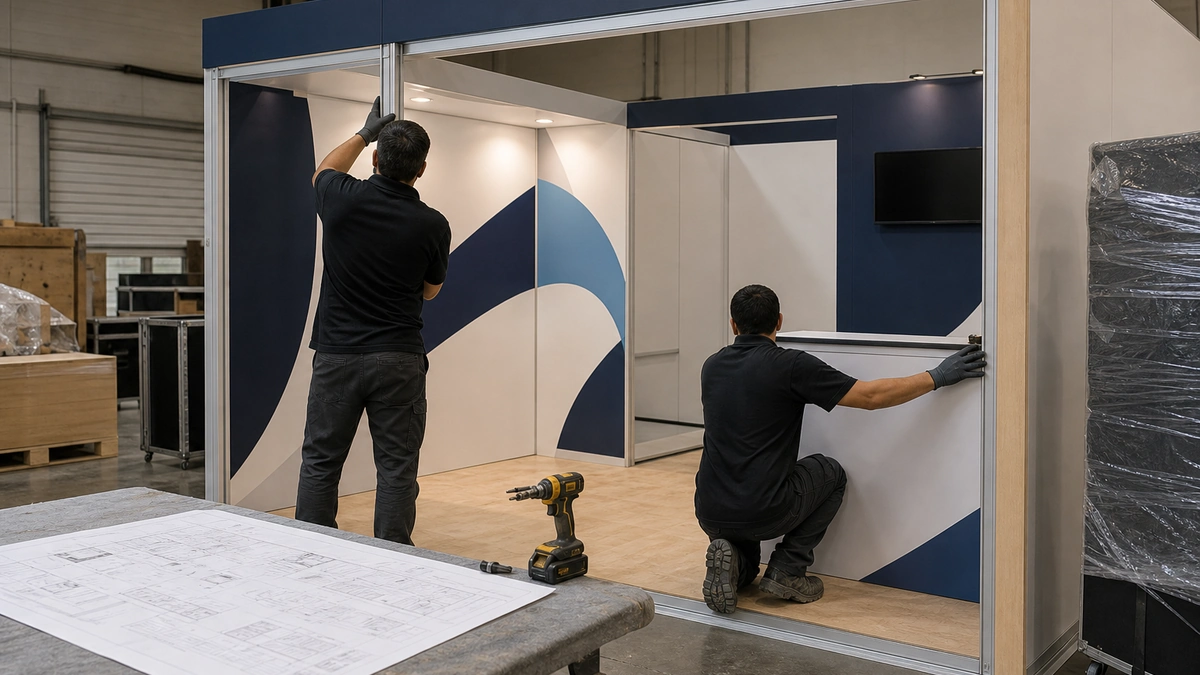
Pre-build can mean a complete assembly or a focused check of critical components, depending on the project. Useful evidence may be as simple as dated photographs, graphics placement, interface checks, open-item notes, and packing information tied to the current version. A pre-build review adds value when its depth matches the real project risk.
Show-Site and Post-Show Handoffs
Show-site work often crosses company boundaries. One party may book electricity, another may handle material movement, and another may supervise installation. The same clarity is needed after the show: rental assets go back, while exhibitor-owned pieces move to their agreed destination.
The strongest proposal is not automatically the one with the most services or the lowest total. It is the one that fits the show objective and lets you see what is being supplied, what remains uncertain, and who carries each part of the work.
Frequently Asked Questions
Do you own the graphics or custom parts after renting an exhibit?
Not necessarily. Ownership can differ by component, so graphics and fabricated pieces need their own contract terms instead of simply inheriting the terms for the rental frame.
Can a custom rental exhibit be reused at a different booth size?
Sometimes. A new footprint may reuse part of the structure or graphics, but a fresh layout is still needed because open sides, proportions, product interfaces, inventory, and show rules can change.
Does a rental quote include drayage, electrical service, and installation labor?
Not automatically. They may be included, estimated, coordinated, or billed separately, so the quote and current exhibitor manual need to show where each charge sits.
Can you integrate client-owned products or AV equipment into a rental booth?
It may be possible when the interface is planned early. Dimensions, weight, mounting, access, power, data, ventilation, and shipping details all affect how the product or AV equipment fits the booth.
How early should you start planning a custom rental exhibit?
There is no single lead time. Work backward from official show deadlines; deeper customization, slow approvals, unresolved product interfaces, pre-build work, and complex freight all add time compared with a standard kit using approved artwork.
Final Thoughts
A successful custom rental exhibit is not defined by how “custom” the rendering looks. It works when the structure, brand elements, functions, ownership, quote boundaries, and delivery responsibilities support the same show objective.
For a first look at the project, send KingExhibits the event, booth size and floor plan, target budget range, objectives, product or demonstration requirements, brand files, and any reference images. With those inputs, the team can flag gaps and discuss the next step without confusing an early concept with a released design.