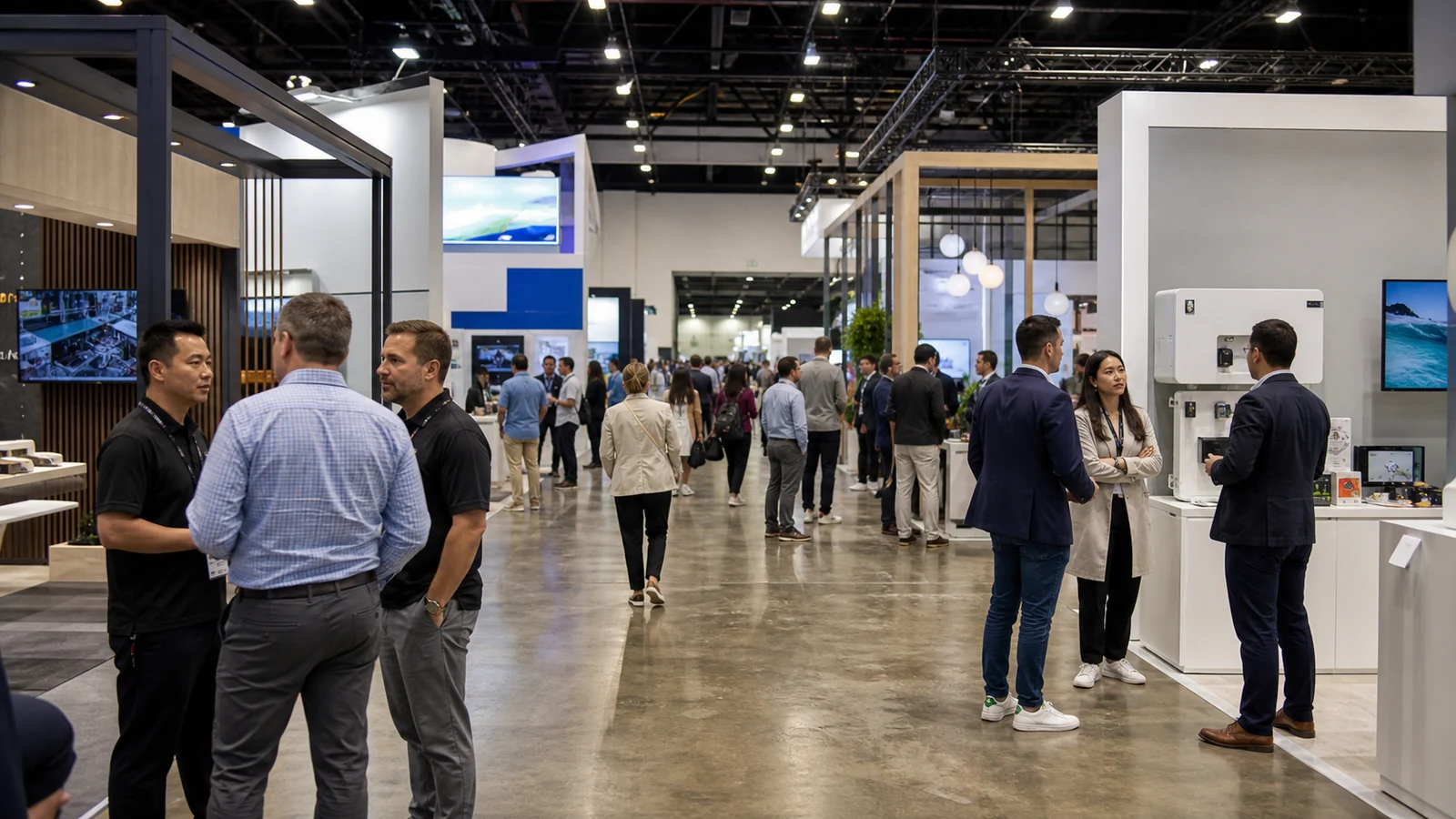
If you sell giftable products and are considering the Greater Cincinnati Holiday Market, start with one distinction: this is a ticketed consumer shopping event, not a trade-only wholesale expo. Your booth must support retail selling for three public days, not just introduce the brand and collect leads.
The 2026 event is scheduled for November 20–22 at First Financial Center, 525 Elm Street in downtown Cincinnati. Marketplace Events LLC produces and manages the show. This guide explains what the organizer currently publishes, which brands are likely to fit the format, what the listed booth price does and does not cover, and what you still need to confirm before signing.
What Is the Greater Cincinnati Holiday Market?
The Greater Cincinnati Holiday Market is a seasonal marketplace where visitors buy directly from participating vendors. Some official vendor materials shorten the name to Cincinnati Holiday Market, so the date and venue are the clearest way to identify the booking. For easier scanning, the current official directory categories can be grouped as follows:
| Editorial group | Official directory categories |
|---|---|
| Fashion, beauty, and jewelry | Accessories; Apparel; Beauty/Health/Body; Jewelry |
| Gifts, art, and holiday products | Art; Books; Children’s; Gifts & Gadgets; Holiday Decor |
| Food, home, pets, and services | Food; Home Décor; Pets; Services |
The three groups above are only an editorial summary; the labels in the right-hand column are the organizer’s directory categories. They show the range already presented to shoppers, but they do not guarantee that a business in a listed category will be accepted or sell well. A strong fit is usually a product that visitors can understand quickly, buy or order at the booth, and connect to gift-giving or holiday use. A business built around a long technical sale, distributor recruitment, or a product that cannot be demonstrated or purchased by consumers needs a clearer reason to choose this event.

The official event name is important because another Marketplace Events show operates in the same area. The Sharonville Holiday Market is scheduled for November 6–8, 2026, at the Sharonville Convention Center. The Greater Cincinnati Holiday Market follows on November 20–22 at First Financial Center. Treat them as separate bookings with separate contracts, venue instructions, booth availability, and operating schedules.
2026 Event Facts an Exhibitor Can Use
| Item | Current official information | What it means for your decision |
|---|---|---|
| Event | Greater Cincinnati Holiday Market | Use this exact event and venue on internal plans; do not mix it with Sharonville Holiday Market. |
| Dates | November 20–22, 2026 | Your team must be ready for three selling days plus earlier move-in and later move-out. |
| Venue | First Financial Center, 525 Elm Street, Cincinnati, OH 45202 | Confirm the current loading route, service orders, parking, and freight instructions before dispatch. |
| Organizer | Produced and managed by Marketplace Events LLC | Contracts, approvals, vendor-kit questions, and payments should follow current organizer documents. |
| Format | Ticketed public shopping event | Evaluate retail conversion, inventory, staffing, and transaction handling rather than wholesale-buyer leads alone. |
| Published exhibit-space rate | $12.99 per square foot | This is the space line, not a complete participation budget. |
| Published add-ons | $200 corner premium; $149 vendor listing; $100 first-time exhibitor package | Ask which lines apply to the exact space and contract you are offered. |
The organizer’s corporate show calendar, event pages, and ticket page agree on the November 20–22 dates. Some search-result titles on the event domain still display November 6–8, which belongs to the separate Sharonville event, and current official pages do not show identical Sunday hours in every location. Use the current contract and Vendor Kit—and obtain a written answer where they differ—before booking staff, delivery, or dismantling labor.
Is This Consumer Market a Good Fit for Your Brand?
The decision starts with the purchase that can happen at the booth. Write down the product, selling price, likely quantity per transaction, gross margin before show costs, space needed to display it, and the stock you can replenish. If you cannot make those numbers visible, an attendance claim or festive setting cannot complete the business case for you.
Next, compare the product with the way visitors will shop. A candle, packaged food, ornament, accessory, or small home item can be handled and understood quickly. Larger décor, personalized products, and services may still fit, but the booth needs a simple path from interest to order: a sample, clear options, delivery information, and a way to record the purchase accurately.
Finally, test whether your team can operate a retail space for the whole event. The Vendor Kit says booths are expected to remain staffed during published show hours. That means enough trained people for sales, payment, questions, breaks, restocking, and closing tasks. A visually attractive booth will not compensate for missing stock information or an unattended counter.
If your product sits outside the published categories, depends on a demonstration, or needs utilities that are not yet confirmed, it is worth checking those points with the exhibit sales consultant before you reserve space. A short written reply about product acceptance, demonstration approval, and utility needs can make the decision easier, especially when the directory category is broad. You can then compare that answer with the margin and inventory available for direct sales.

What Does the Published Booth Price Include?
The current booth-rates page lists exhibit space at $12.99 per square foot. If you are offered 100 square feet, the space line calculates to $1,299 before the corner premium, vendor-listing charge, first-time exhibitor package, or any other applicable costs. This example is arithmetic, not a quote or a statement that a particular footprint remains available.
The published vendor amenities package lists standard pipe and drape with an eight-foot back and three-foot side walls, a company identification sign, 24-hour security, vendor badges based on booth size, promotion, a show-guide listing if the contract reaches the organizer by its deadline, a website listing, and discounted admission tickets.
That package does not turn an empty space into a retail-ready display. The Vendor Kit says vendors provide their own tables, chairs, and other furnishings. It also requires floor covering, professional table treatment where tables are used, concealed inventory and personal items, and holiday decoration appropriate to the event. Facility services, utility details, decorator information, Wi-Fi information, and the move-in floor plan were still marked for later posting when this article was researched.
Build a working budget with separate lines for:
- contracted space and every applicable organizer fee;
- flooring, tables, counters, shelving, lighting, graphics, and holiday décor;
- electrical, internet, cleaning, or facility orders once confirmed;
- product inventory, packaging, shopping bags, payment equipment, and replenishment;
- freight or local delivery, parking, move-in labor, and move-out labor;
- staff travel, lodging, meals, and coverage for every show day;
- licenses, insurance, sampling, and other product-specific requirements;
- promotion before the show and follow-up after it.
Keep unknown items marked pending organizer confirmation. A blank service field is not the same as included, free, or unnecessary.

What Operating Rules Affect the Booth?
The 2026 Vendor Kit currently gives move-in windows from Tuesday, November 17, through Thursday, November 19. It lists move-out on Sunday evening, November 22, and Monday morning, November 23, with all exhibits removed by noon on Monday. Final exhibit-space payment is listed as due October 15. Verify those dates against your executed contract because the online kit says it is still being updated.
Several published rules affect the display itself:
- the booth must have floor covering;
- tables must be properly finished on visible sides, and stock or personal items must be out of sight;
- hanging signs over booths are not permitted;
- demonstrations, handouts, samples, and souvenirs must stay inside the rented exhibit area;
- side walls or structures visible to a neighboring booth must be finished;
- the page sets an eight-foot booth-height rule and separately requires approval for a sign attached to the back wall;
- vendors are expected to keep the booth staffed throughout published show hours.
Do not convert these summary points into fabrication dimensions. Send the current booth allocation, floor plan, Vendor Kit, service forms, and written approvals to whoever prepares the display. If a sign, wall, tent frame, light, sample station, or product demonstration falls outside a plain pipe-and-drape setup, ask the show team for written approval before production.
Direct retail sellers also need to treat tax and licensing as part of the show decision. The Vendor Kit says vendors selling directly on the show floor must have an Ohio sales-tax number and describes a state transient vendor’s license requirement. Confirm the license and filing obligations for your own business and sales model with the Ohio Department of Taxation or a qualified adviser; KingExhibits and the show organizer are not your tax authority.

What Should You Confirm Before You Sign?
Ask the show team for current written answers and documents for the exact booth being offered:
- Is your product and selling method accepted for this event?
- What booth sizes and locations remain available, and which open sides or premiums apply?
- What is the complete contract price, payment schedule, cancellation policy, and transfer or event-change language?
- Which pipe and drape, signs, badges, listings, tickets, and promotional items are included in your package?
- What flooring, furniture, storage, holiday décor, electrical service, internet, cleaning, and waste handling must you order or supply?
- Which loading entrance, delivery method, parking plan, move-in slot, and move-out deadline apply?
- What approvals apply to signs, walls, tent frames, lighting, demonstrations, food sampling, or products with fire or safety concerns?
- What licenses, tax numbers, certificates of insurance, or product documents must be on file?
- What current audience information is available, when was it collected, and how does it relate to your product category?
- Who is the organizer contact for contract, operations, and on-site approval questions?
The booth-rates page displays shopper statistics attributed to a 2018 Marketplace Events attendee survey. They are historical organizer research, not a forecast of 2026 results for your category. If audience evidence is important to your approval, ask for the definition, sample, event scope, and collection date behind any number you plan to use.

Plan the Booth Around the Retail Transaction
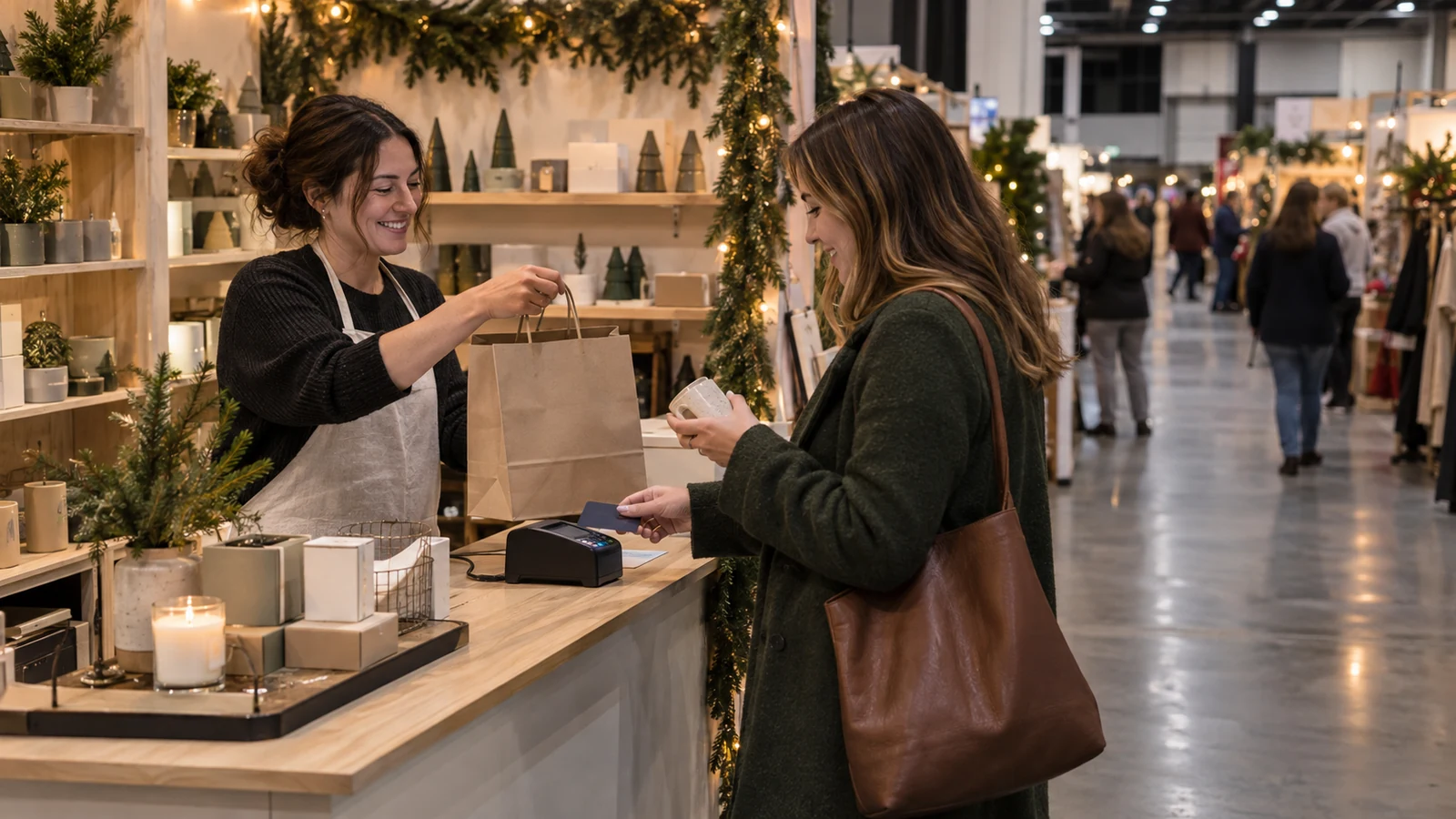
Once the event and contract pass your screening, plan the space around one complete customer path: notice the product, understand the gift or use case, inspect options, see the price, complete the purchase or order, and leave with the correct product or delivery information.
For each product group, record the display footprint, unit price, available variations, opening inventory, replenishment stock, packaging, and payment process. Decide where the transaction occurs without blocking the aisle or product display. Store backup stock out of sight but close enough that staff can replenish without leaving the booth unattended.
Use holiday decoration to support the merchandise rather than hide it. The organizer requires a festive presentation, but the customer still needs to see what is for sale, what it costs, and how to buy it. Test the booth at actual scale with the real shelves, table heights, packaging, signs, and staff positions before move-in.
FAQ
Final Thoughts
The Greater Cincinnati Holiday Market can be a credible retail event for a giftable consumer product, but the category list and space rate are only the first screen. The case is strongest when the buyer fit, full cost, stock plan, staffing, and current organizer rules work together.
If you would like a second set of eyes on the booth plan, send KingExhibits the booth size and a few basic requirements. We can help shape a practical U.S. display plan, while the event team confirms space and venue rules.