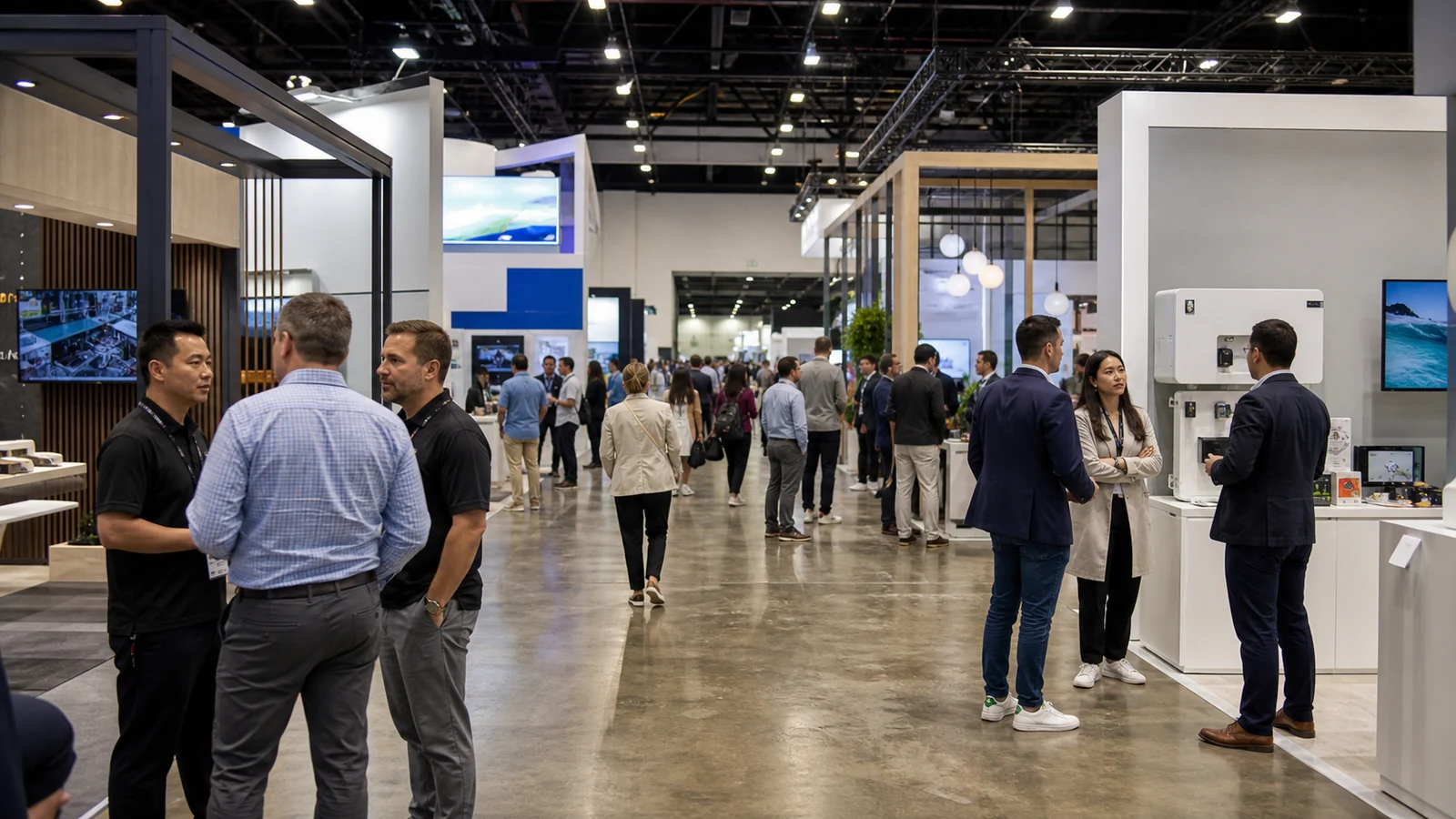
If your company makes ice-fishing gear and is considering the Arrowhead Ice Fishing & Winter Show, evaluate it first as a three-day consumer-sales opportunity. Visitors come to explore winter products, see how they work, and buy. The strongest exhibit plan therefore begins with a product story that an angler can understand quickly and a clear next action, such as a purchase, quote, or dealer appointment.
The 2026 Duluth ice fishing show is scheduled for December 11–13 at the Duluth Entertainment Convention Center in Duluth, Minnesota. Here is what the organizer currently publishes, how those facts affect an ice-fishing brand, and which details can be developed now while the final booth documents are still being collected.
What Is the Arrowhead Ice Fishing & Winter Show?
The Arrowhead Ice Fishing & Winter Show is an annual consumer event produced by Shamrock Productions. The organizer presents it as a three-day gathering for ice-fishing and winter-sports enthusiasts, with gear, accessories, sales activity, family entertainment, and educational features.
That positioning supports a consumer-show decision. For a commercial forecast, pair it with your own product margin and sales path, then ask the organizer for any current audience or category information available for 2026. Promotional audience language shows how the event is marketed; your product, offer, and follow-up process determine whether that audience can become useful business.
| Current 2026 fact | Published information | What it means for an exhibitor |
|---|---|---|
| Dates | December 11–13, 2026 | The event covers Friday, Saturday, and Sunday. |
| Public hours | Friday 12 p.m.–7 p.m.; Saturday 9 a.m.–7 p.m.; Sunday 10 a.m.–4 p.m. | The schedule provides 23 public hours, with the longest selling day on Saturday. |
| Venue | Duluth Entertainment Convention Center (DECC) | The show is indoors; the current floor plan will identify the assigned hall and booth conditions. |
| Address | 350 Harbor Drive, Duluth, MN 55802 | The public address identifies the venue; show instructions will provide the working routes for freight and crew. |
| Producer | Shamrock Productions | The producer manages the exhibitor application, space information, and show-specific rules. |
| Current status | 2026 event announced; exhibitor application available | Companies can begin an application and planning conversation while the contract confirms acceptance and assignment. |
The official name uses an ampersand: Arrowhead Ice Fishing & Winter Show. Searches that spell out AND still refer to this Duluth event. Keep it separate from the St. Paul Ice Fishing & Winter Sports Show and the Duluth Sports Show, because each event has its own dates, audience mix, contract, and floor plan.
Does the Consumer Show Format Fit Your Sales Goal?
A good candidate has three elements: a product relevant to winter consumers, proof that works in a busy public setting, and a next step the booth team can complete. Compact electronics, rods, shelter accessories, and winter clothing can often be shown at a counter or small demo station. Larger fish houses, trailers, vehicles, heaters, and fuel-related products may need more space and earlier approval for access, floor load, ventilation, batteries, fire safety, and live operation.
Choose one primary booth outcome before comparing space. It could be a retail transaction, a configuration choice, an installation quote, a dealer appointment, or a product trial followed by a traceable lead. Then match the exhibit to the proof that moves a visitor toward that outcome: a working sample, side-by-side result, fit chart, visible price, delivery answer, or a product specialist.
Dealer recruitment and private channel negotiations can still happen around a consumer show, but they need their own appointment plan. This keeps the public booth focused while giving distribution prospects a quieter path for a longer conversation.
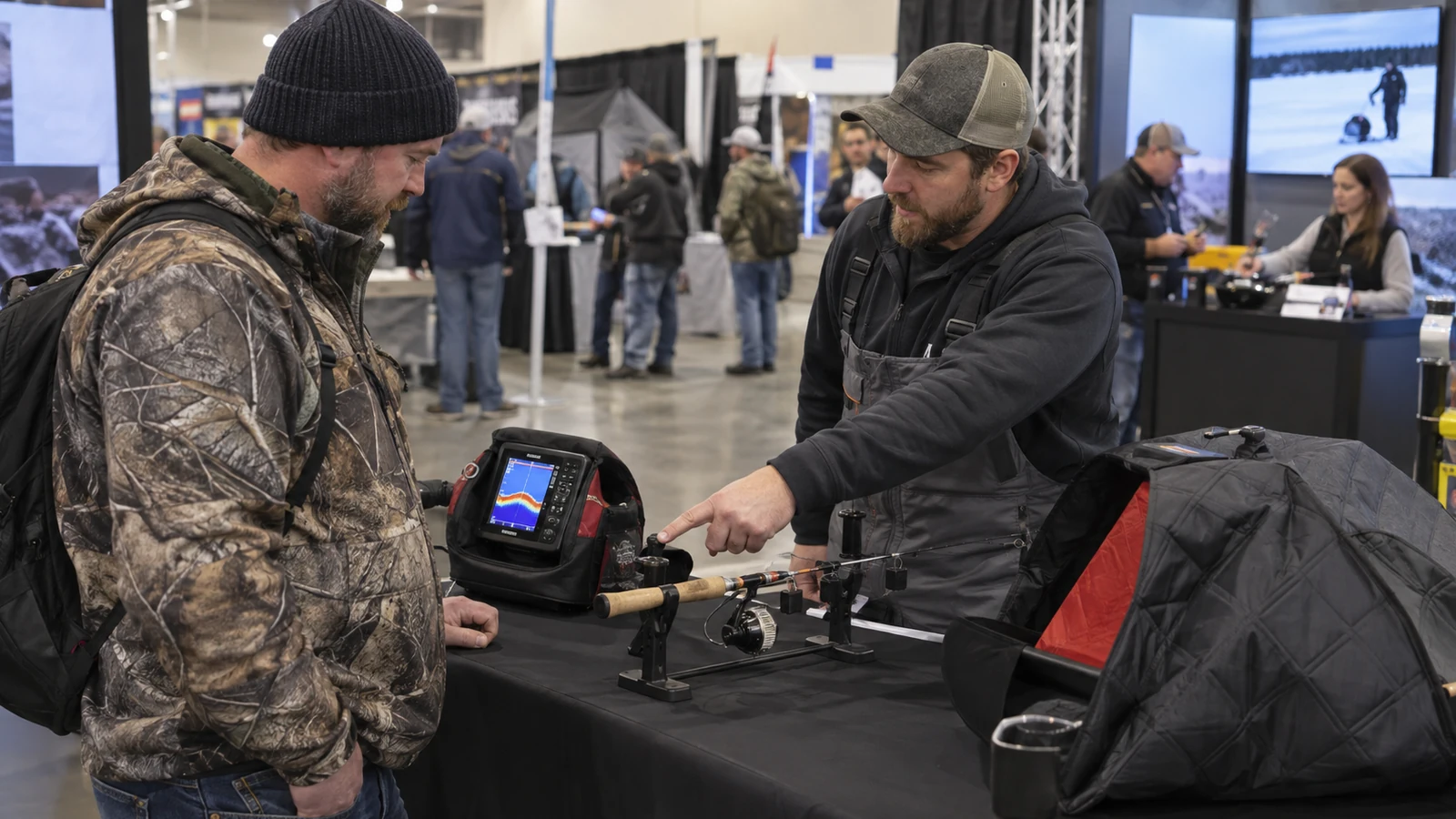
What Does the Organizer Publish for Exhibitors?
The current exhibitor application asks what the company will display, sell, or advertise and lets the applicant state an ideal size. Choices start at 8 by 10 feet and 10 by 10 feet, extend through several 20-, 30-, and 40-foot configurations, include 20 by 20 feet, and allow a request for more than 400 square feet.
These are useful planning options. An 8-by-10 concept can test a focused display, a 10-by-10 adds depth for storage or a small demonstration, and a larger configuration can support multiple product zones or oversized equipment. The contract and current floor plan will establish the size and location actually offered.
The public exhibitor information page directs companies to Shamrock Productions for current pricing and availability. It also links a 2026 exhibitor packet and floor plan. Request that current file from the show team and use it as the working source; a searchable 2025 rules document remains historical reference rather than authority for the 2026 booking.
The same page provides a DECC ordering route for furniture, carpeting, electricity, internet and phone service, and drayage or freight handling. Budget these as separate items until the quote identifies what the booth package includes. The page currently lists December 1, 2026 as the advance-rate deadline.
The official 2026 exhibitor list is scheduled to appear about one month before the show. Use the space offer and current floor plan for the first layout comparison, then use the published list later to refine product emphasis and neighboring-brand awareness.
What Does the Three-Day Schedule Require From Your Team?
The public schedule adds up to 23 hours: seven on Friday, ten on Saturday, and six on Sunday. Exhibitor access begins at 8 a.m. on Friday and Saturday and 9 a.m. on Sunday. The full move-in and freight schedule will come from the current exhibitor documents.
Saturday is the main staffing test. A ten-hour public day needs coverage for demonstrations, technical questions, purchases or lead capture, breaks, and closeout. A practical team plan assigns three functions—starting the conversation, answering the product-fit question, and completing the transaction or lead record—with cross-training for breaks and traffic peaks.
This schedule also affects storage. Products, packaging, literature, personal winter gear, and replacement stock need a defined place inside the final footprint so the visitor path remains clear throughout the weekend.
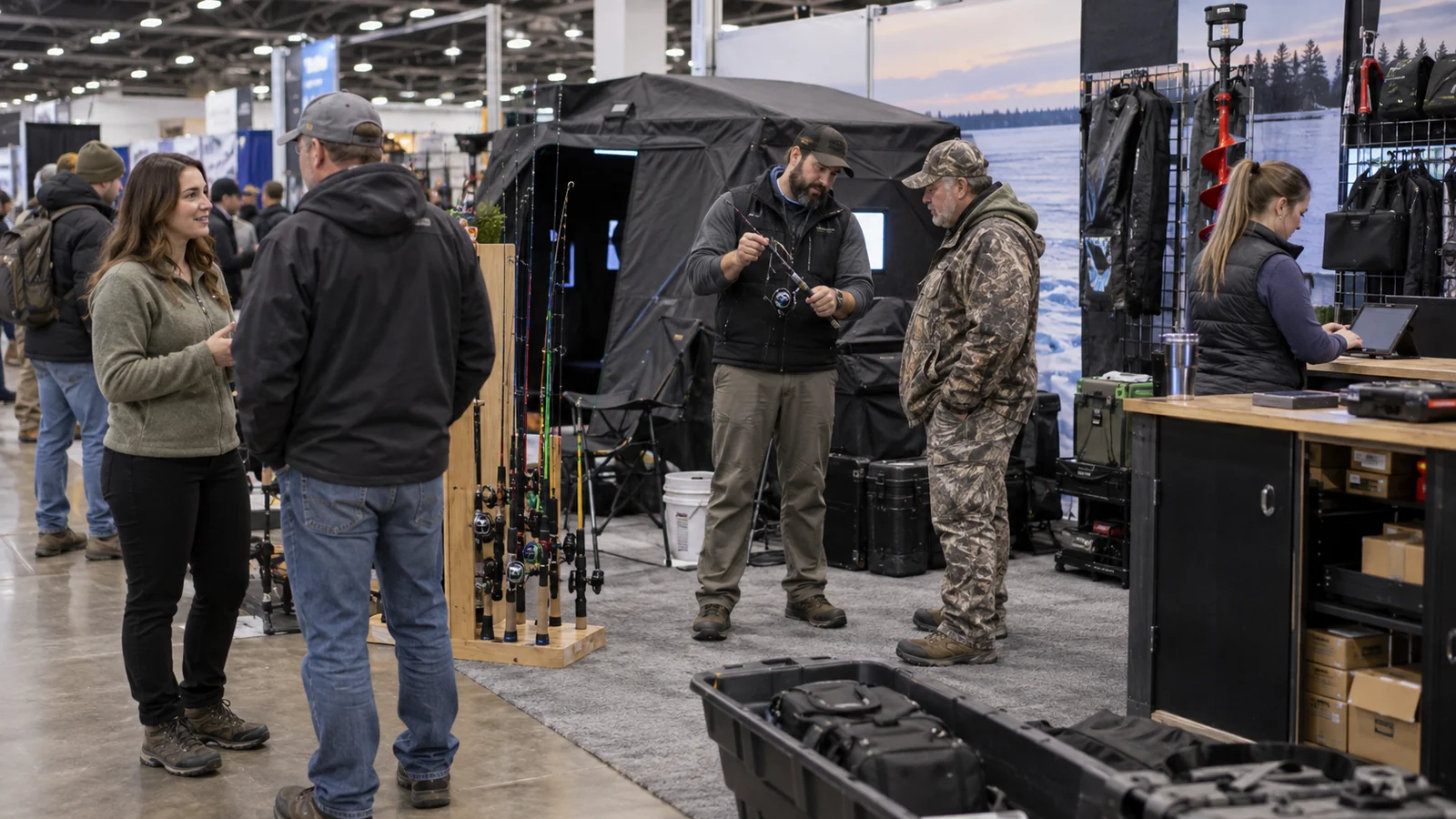
Which Information Shapes the Final Booth Decision?
Gather the remaining information in four groups rather than chasing isolated questions:
- Space and commercial terms: accepted product category, offered size and location, open sides, complete price, payment schedule, and cancellation terms.
- Build and operating limits: current contract, rules, floor plan, height and sign limits, power, and approvals for vehicles, batteries, heat, liquids, sound, or live demonstrations.
- Services and logistics: package inclusions, separately ordered venue services, freight route, loading access, trailer parking, storage, move-in, and dismantle.
- People and compliance: exhibitor credentials, insurance, Minnesota sales and tax responsibilities, product permits or compliance, and the timing of final event communications.
How Should an Ice-Fishing Brand Plan the Visitor Experience?
The most useful visitor path answers three questions in order: What does the product change? Does it fit the way I fish? What can I do next?
For electronics, the booth can make the screen, controls, mounting need, and use case easy to compare. For an accessory, the display can show the exact equipment, conditions, or dimensions it fits. A larger or customized product can lead to a configuration choice, local-delivery check, dealer appointment, or written quote.
Demonstration and transaction areas work best as separate but connected zones. The demo attracts attention; the sales point provides price, stock or delivery information, payment, and a receipt. A short follow-up form can capture the product, fishing conditions, budget range, timing, location, and agreed next step for visitors who need more time.
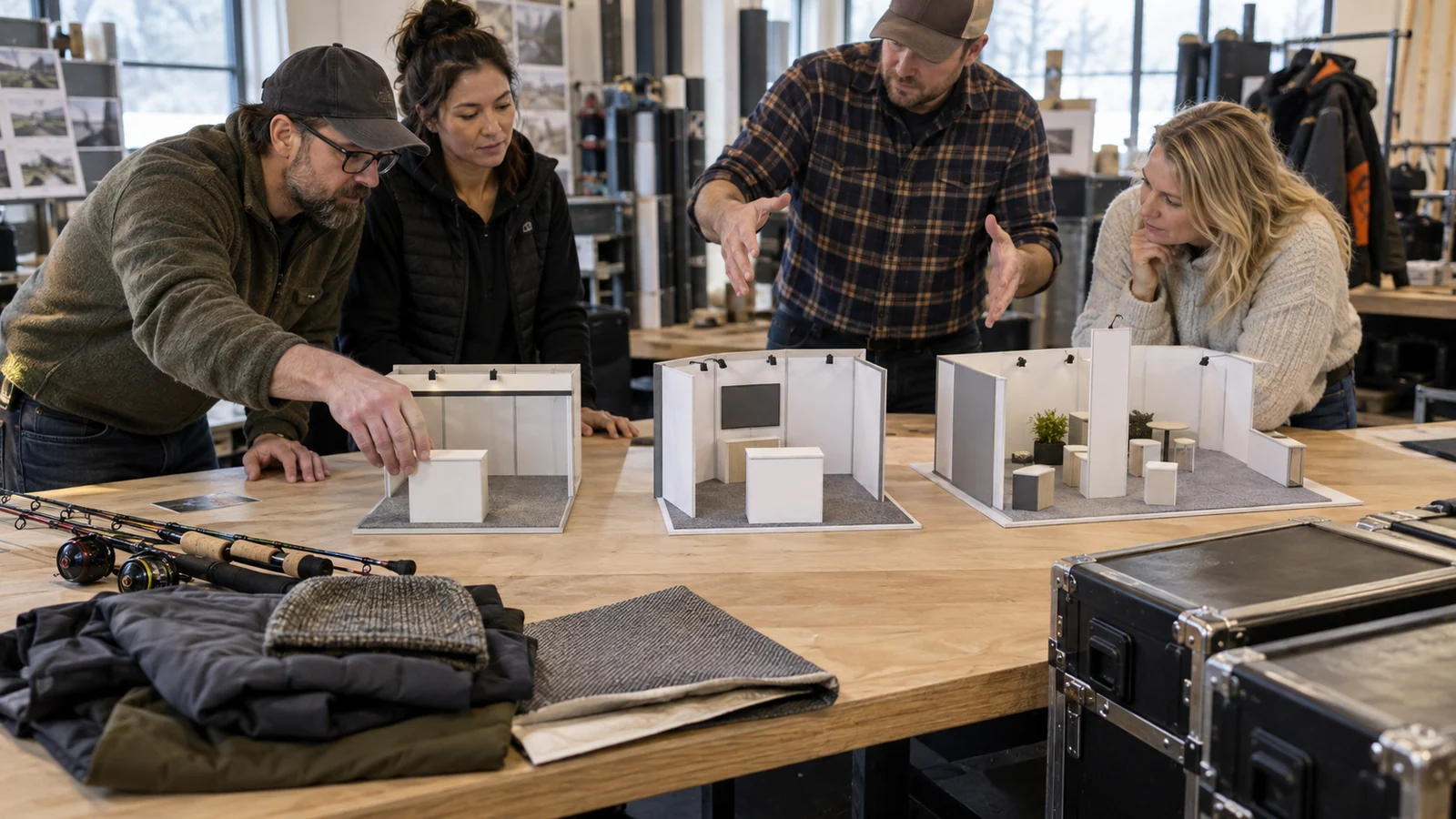
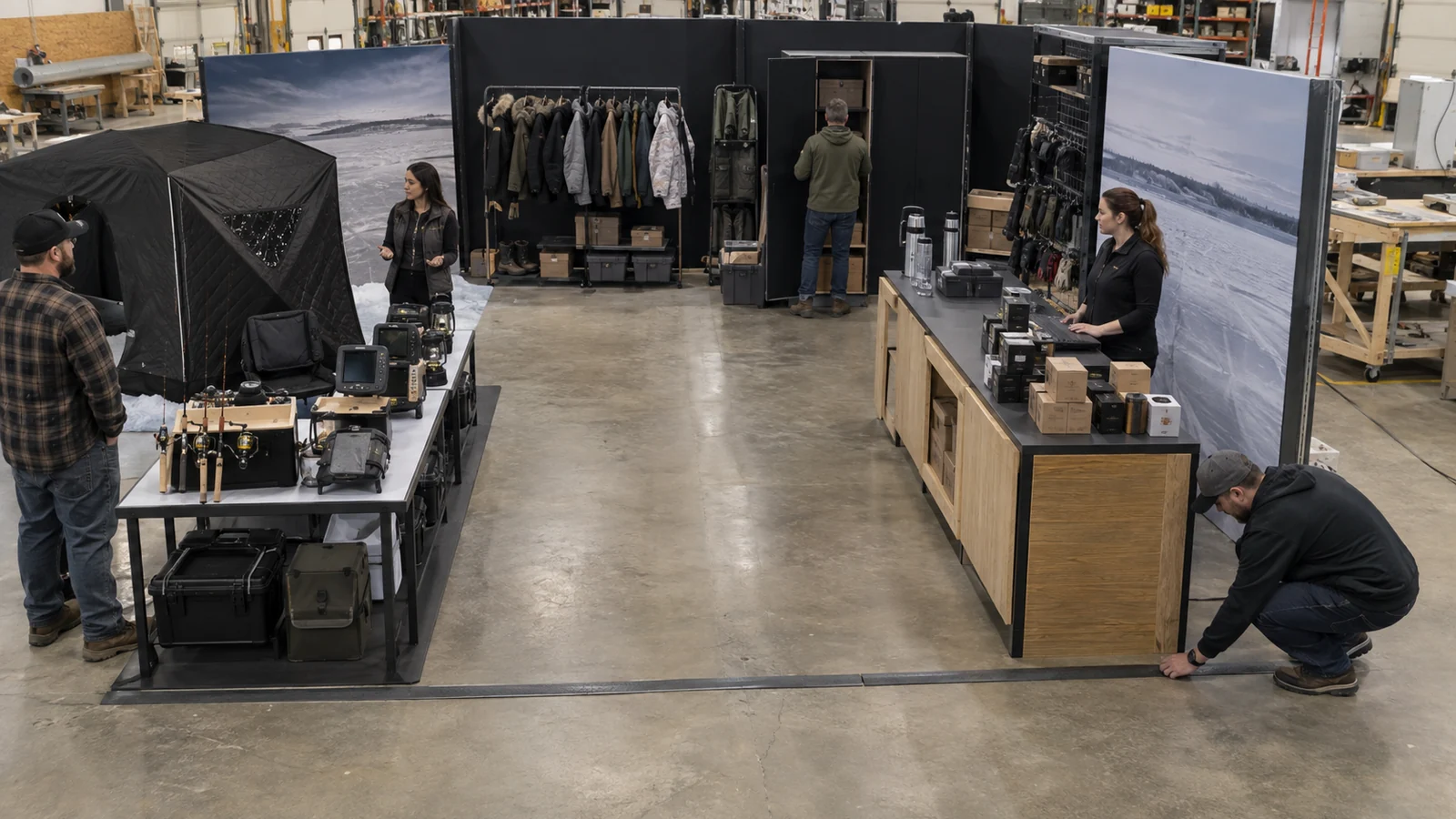
A full-scale test with the real product, tables, screens, packaging, winter clothing, staff positions, cables, and storage will show whether the proof is visible and whether people can move safely through the booth.
Frequently Asked Questions
Final Thoughts
Use the show’s consumer format, three-day schedule, and your sales path to decide whether the event can support one clear visitor action. Prepare the product type, desired visitor action, estimated area or budget, and any organizer material already available; then compare an 8-by-10, 10-by-10, or larger starting concept and identify the remaining inputs.
If you are preparing to exhibit at the Arrowhead Ice Fishing & Winter Show, KingExhibits can provide booth design and build services.