You need trade show giveaways that visitors have a reason to take home. Ordering another box of whatever carries the largest logo is an easy way to miss that goal. These 12 trade show giveaway ideas will help you compare useful items, reject weak samples, and plan the budget and booth handoff.
Everyday items visitors can use at the show
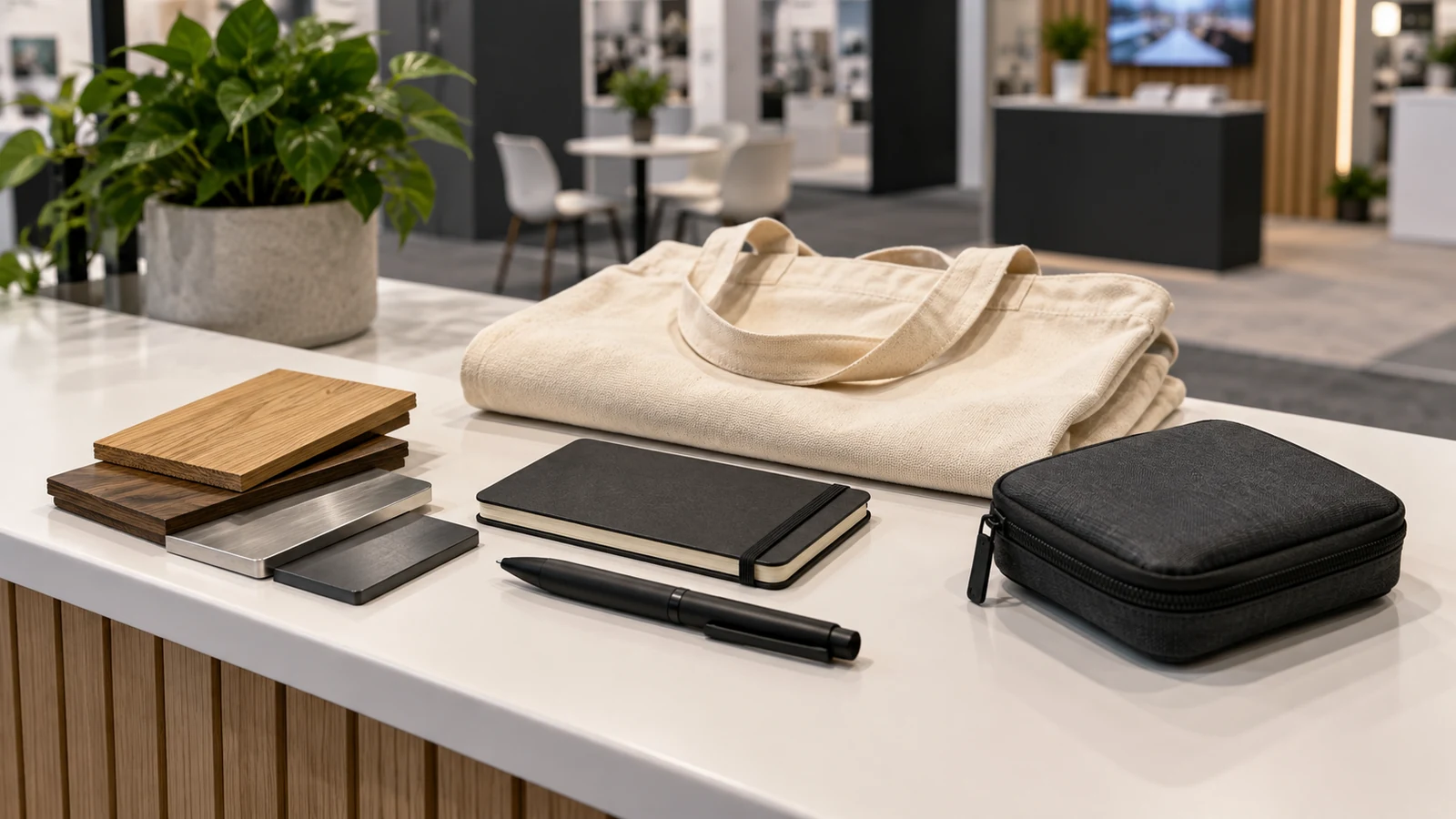
1. A pen that writes comfortably
A pen is a sensible starting point when you need a compact handout for visitors taking notes during meetings. The useful distinction is in the writing, not the number of extra functions. A smooth refill and a comfortable grip matter more than a barrel covered with tiny contact details.
Try the sample on ordinary paper and the notebook you plan to bring. Check whether the clip holds and whether the ink smears. Keep your company name readable, with a short web address if space permits. If the print only looks good enlarged on a screen, simplify it before approval.
2. A pocket notebook
A small notebook gives visitors somewhere to record product names and questions while moving between booths. Choose a size that fits a jacket pocket or the bag your audience normally carries. Thick gift boxes add bulk without helping someone take notes.
Open a sample flat and write close to the binding. Thin paper that lets ink show through can make both sides difficult to use. For a technical audience, consider grid pages; for a mixed audience, simple ruled pages are easier to understand. A useful inside-cover contact line leaves the writing pages free.
3. A tote bag with comfortable handles
A tote earns its place when visitors are collecting catalogs or sample packs. That makes handle comfort and usable capacity more valuable than an unusually large print area. Load the sample with the materials you expect people to carry, then walk with it.
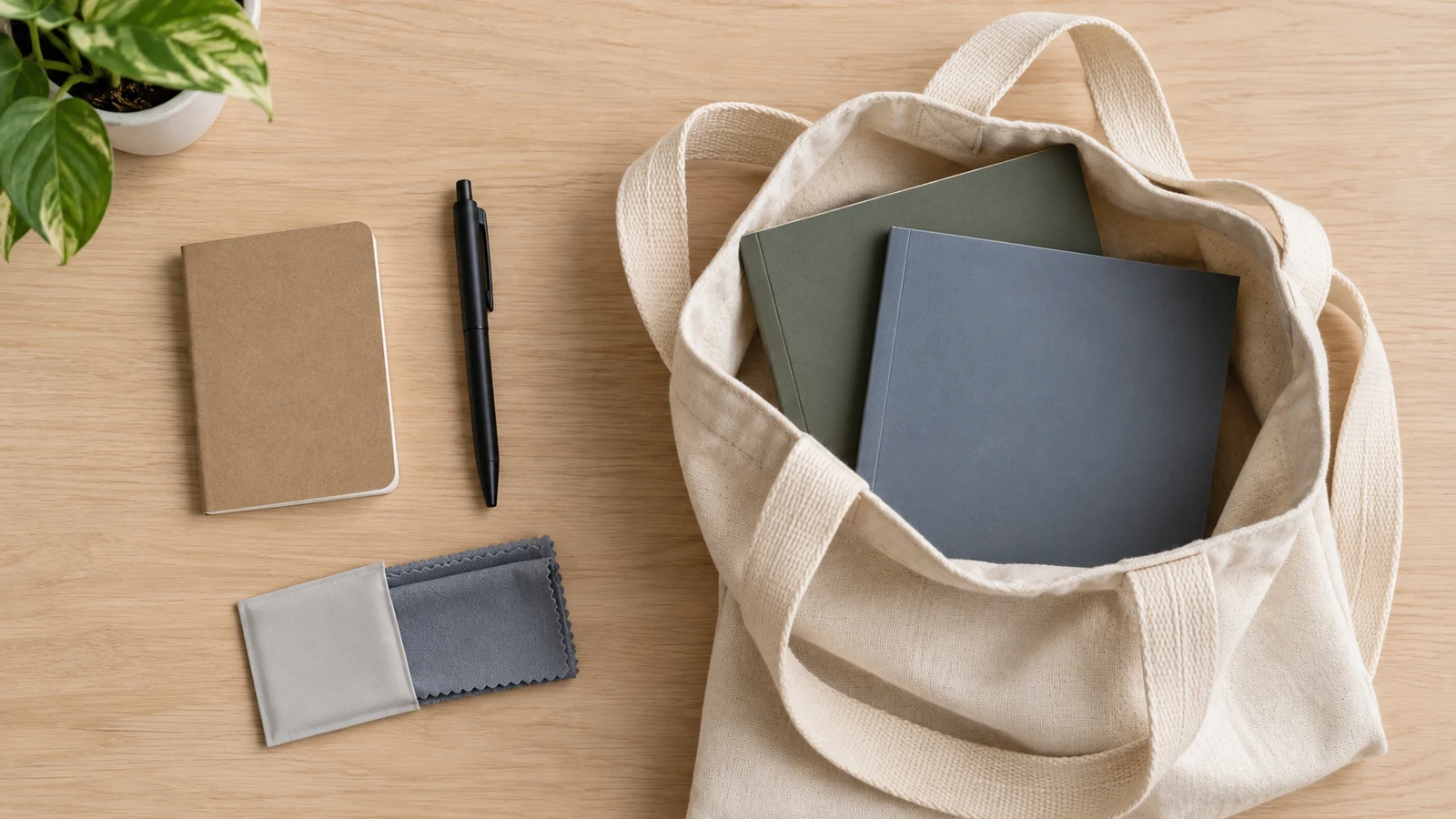
Check the seams, the handle attachment and whether the bag folds down for travel. If the event already provides a good bag, a second basic tote may add little. In that case, choose a smaller item unless your bag offers a clear improvement, such as a closure that keeps contents together.
4. A microfiber cleaning cloth in a sleeve
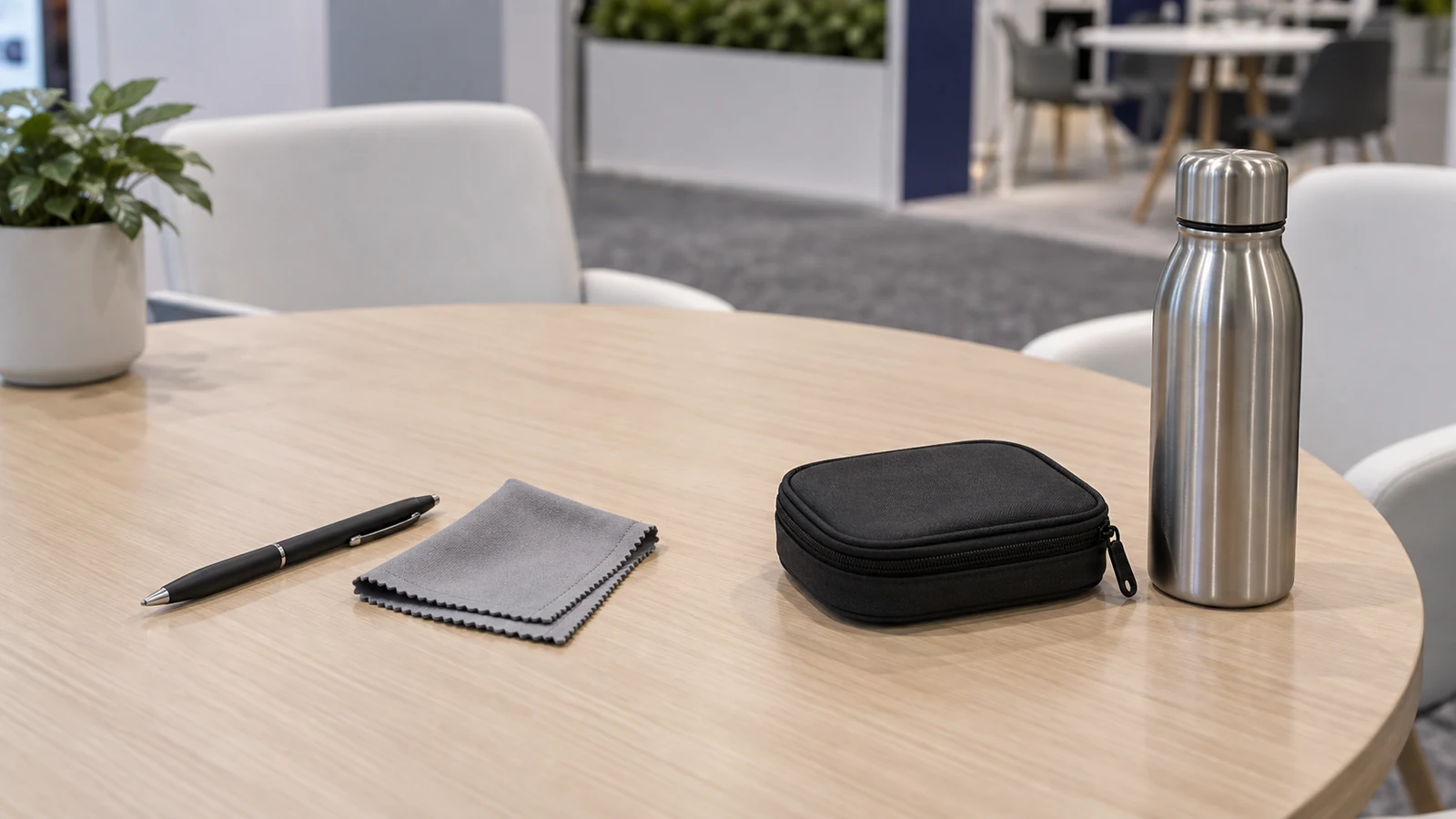
A cleaning cloth can fit a booth where visitors spend time looking at screens or inspecting samples. It takes little room in a pocket, and the sleeve gives you somewhere to put readable branding without covering the working surface.
Ask the supplier which surfaces the cloth is intended for and how to clean it. Avoid promising that it is suitable for every lens or coated display. Test an approved sample on a suitable surface and check for lint or color transfer. Reject a sample if you cannot establish what it can safely clean.
Useful gifts for the desk and the trip home
5. A folding phone stand
A compact stand lets a visitor prop up a phone beside a laptop after the event. It also gives you a useful demonstration at the booth: put a phone in it and show how the angle adjusts.
Test it with a phone case fitted, in both portrait and landscape positions. Check that a charging cable can connect without lifting the phone out of the cradle. A stand that folds flat is easier to pack than a rigid desktop ornament. Choose a stable base over a clever mechanism that needs explaining each time.
6. A zippered cable pouch
A small pouch can hold a charging cable and adapter without requiring you to guess which connector each visitor uses. It is a practical option for people who travel with a laptop, particularly when you want a gift that remains useful beyond the exhibition hall.
Put an actual adapter inside the sample before choosing the dimensions. An attractive pouch that only holds a thin cable may be less useful than its product photo suggests. Open and close the zipper repeatedly, check the lining and keep the branding modest enough for everyday use. Do not buy empty volume: an oversized organizer takes luggage space even when half full.
7. A reusable bottle or insulated tumbler
Drinkware makes sense for visitors who will use it at work, but it is a substantial object to carry around a show. For a small set of scheduled meetings, you can ask in advance whether guests would prefer a bottle or another item.
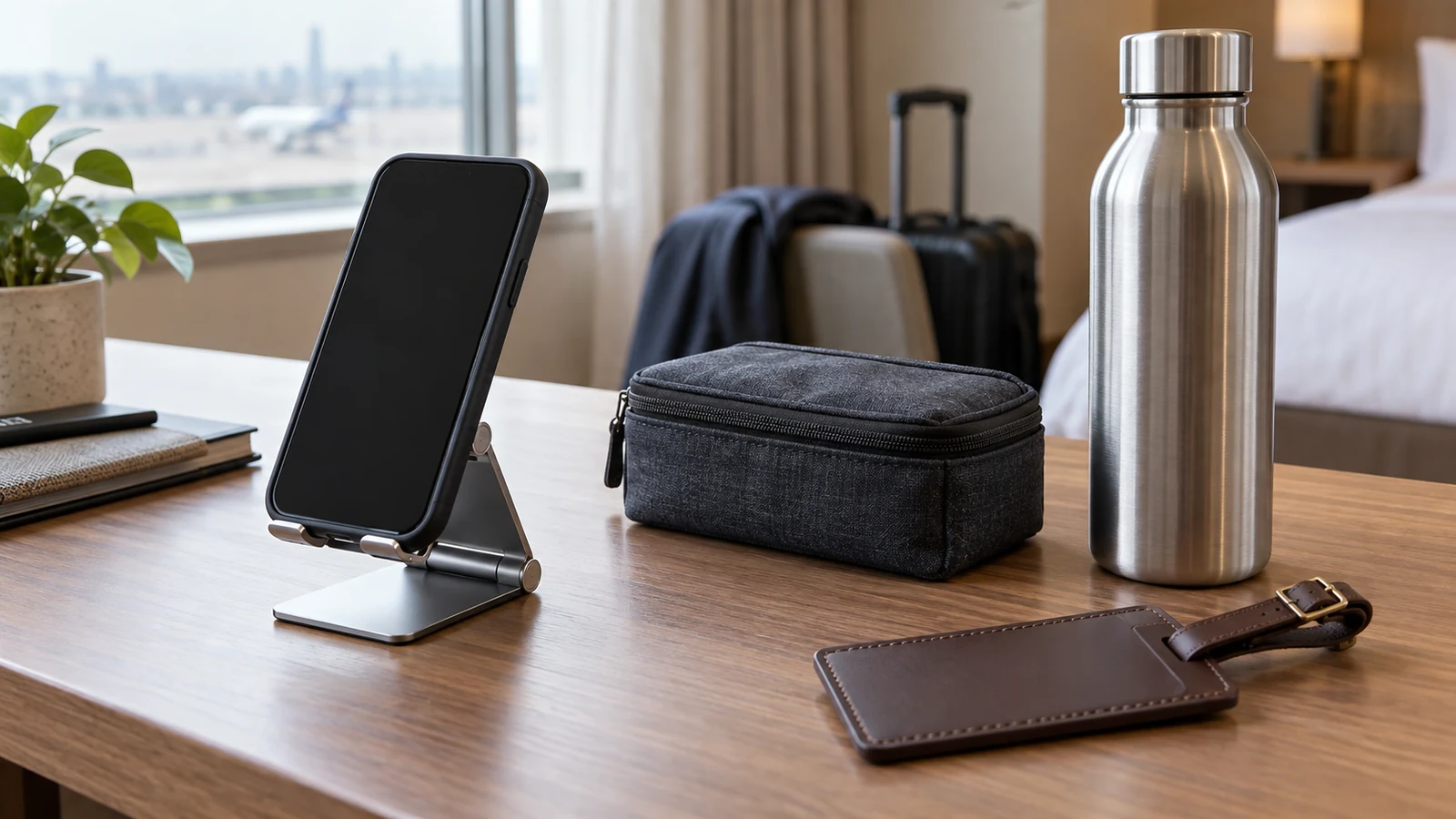
Choose the lid for the actual use. A screw-cap bottle and an open sipping lid solve different problems; do not describe either as leakproof without checking the specific model. Test the closure and look at how easily the interior can be cleaned. Confirm the supplier’s care instructions before printing any dishwasher-safe claim. Avoid a dated event slogan if you want the item to be useful at later shows too.
8. A compact power bank
A power bank is worth considering when your visitors rely on phones throughout the day. Check the sample’s output and connector compatibility with the devices you expect people to use. Ask for the model’s safety documentation and clear capacity labeling; a capacity number alone does not establish product quality.
This choice adds a travel condition. Under current FAA guidance, power banks belong in carry-on baggage, and airlines may impose stricter limits. The passenger allowance is for personal use, not a suitcase of batteries for distribution. Arrange suitable commercial transport with your supplier for booth stock, and give recipients the product instructions and a reminder to check their airline. FAA battery guidance.
9. A luggage tag with a covered address card
A luggage tag fits an audience that travels between plants, customer offices and trade shows. The connection is easy to explain without inventing a gimmick around your product.
Look for a secure attachment and a flap that covers the contact card. Attach it to a bag handle and check that the strap fastens securely and the contact card stays in place. A recognizable color can help someone identify a bag, while a large logo on both sides may leave too little space for the tag’s real purpose. Offer a simple option that works on a carry-on as well as checked luggage.
Giveaways with more personality or a product connection
10. Socks with a restrained custom pattern
Socks give you room for a playful brand reference without asking visitors to wear a large chest logo. A small repeated motif related to your product can be more usable than an entire sales message knitted around the ankle.
Sizing is the tradeoff. Check the actual size range and label the packs clearly so staff can offer a choice quickly. Wash a sample according to its instructions and examine the fit and pattern afterward. If you cannot manage size choices at the booth, a pouch or cloth is simpler. Socks work best when you are comfortable letting visitors decide whether the style suits them.
11. Sealed mints or a small packaged snack
An individually packaged mint or snack offers something visitors can use during the show without adding another permanent object to their bag. It can suit a quick welcome while your team is between longer conversations.
Keep the original ingredients and allergen information visible. Ask the organizer about food distribution before ordering, and check storage conditions and shelf life. Choose packaging that staff can hand over cleanly, with somewhere nearby for wrappers. With disposable packaging, you are offering an immediate welcome rather than an object someone will keep on a desk. Keep the branding readable, but do not expect the same use after the show as a notebook or pouch.
12. A labeled sample of your own material or finish
When the product can be represented safely in a small sample, that sample may be more relevant than unrelated merchandise. A finish swatch or compact material comparison lets a visitor revisit what you discussed with colleagues after the show.
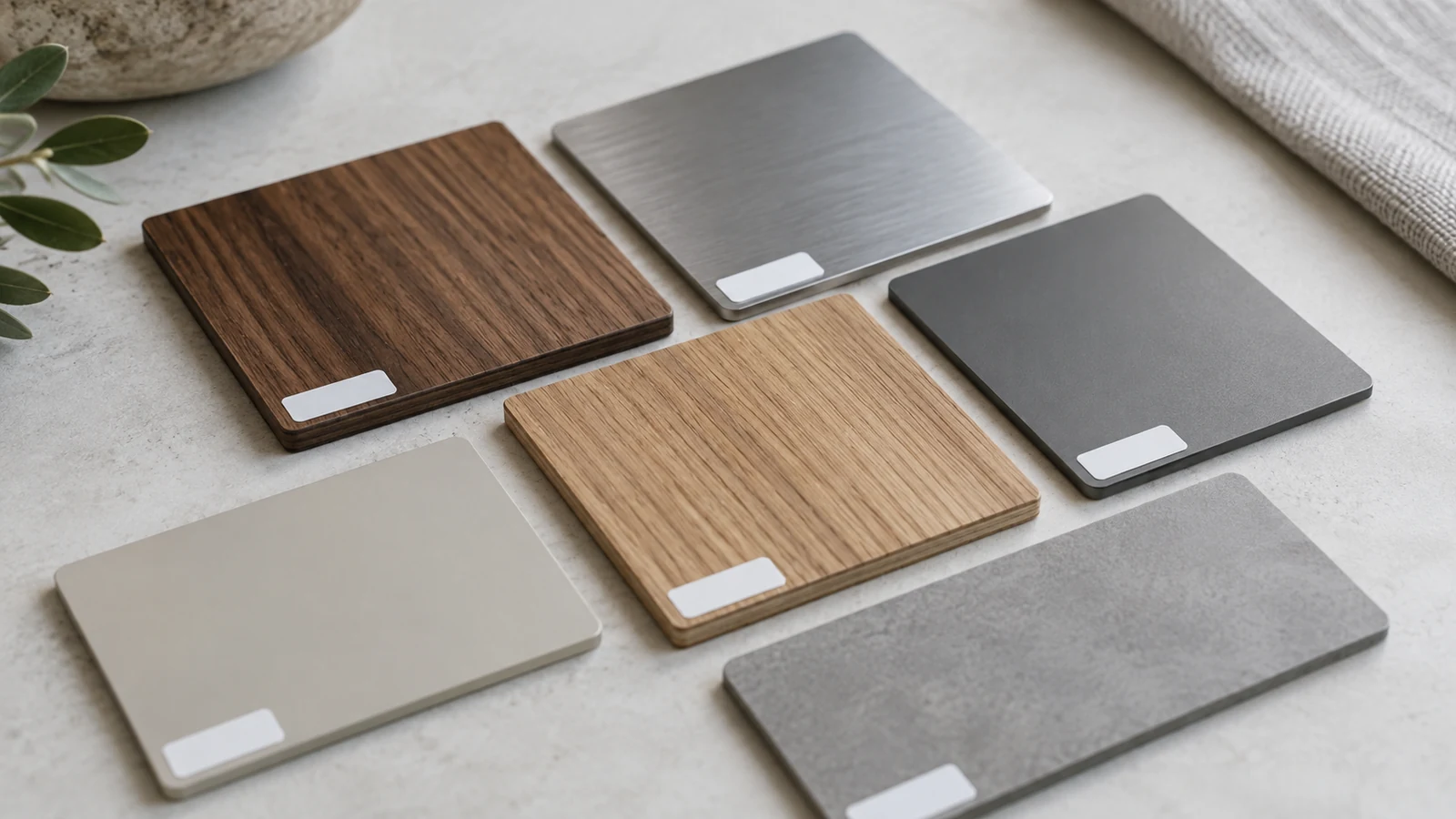
Label exactly what the sample represents, with a product code and a route to the matching specification. Avoid a decorative piece that cannot be traced back to anything you sell. For example, a surface finish sample helps compare appearance; it does not prove the performance of a finished assembly. Keep sharp, fragile or heavy samples in a display and arrange a suitable follow-up sample instead of handing them out casually.
Build a budget around the delivered cost
Ask for a quote for your trade show swag that separates item costs from decoration, setup and sample charges. Include packaging and delivery, and check whether tax or show-site handling will be billed separately. A low advertised unit price is not enough to tell you what the order will cost.
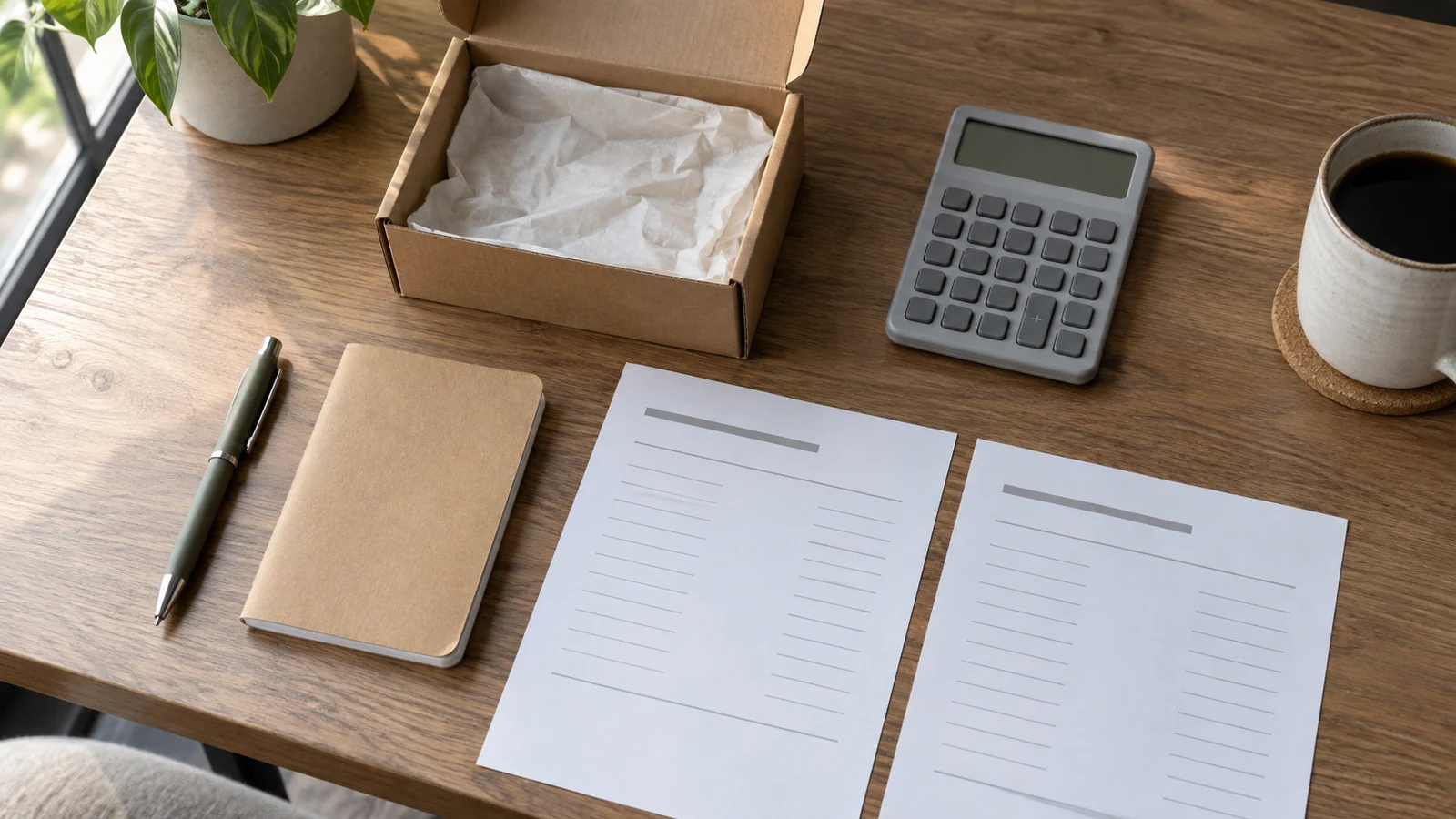
Compare simple and more elaborate decoration at the same quantity first. Then ask what changes at a larger quantity: the total spend, not just the price per piece. If the larger order costs more than your budget or leaves you with items you have no plan to distribute, the volume discount has not solved your problem.
For illustration only, a $1,200 giveaway budget with $200 set aside for shared setup and delivery leaves $1,000 for 250 items, or $4 per item including its decoration. These are planning numbers, not supplier prices. Any additional charges must come out of that allowance before you choose the item.
When money is tight, request quotes for a simply printed pen and a cleaning cloth before adding a more elaborate gift. Inspect a sample and approve the decoration proof before placing a bulk order. A smaller order of something usable can be preferable to a larger order chosen only for its low unit price.
If you are comparing eco-friendly trade show giveaways, ask what any price premium buys. A recycled-paper notebook needs a clear description of its paper; recycled packaging alone says nothing about the notebook inside. The FTC advises against broad, unqualified environmental claims. Request supporting details before putting a green claim beside your logo. FTC guidance on environmental claims.
Which giveaway is right for your booth?
For quick conversations, choose a pen or cleaning cloth
When staff usually answer one question before moving to the next visitor, choose a gift that needs little explanation. Pens and cloths avoid the size choices that come with socks. Save items requiring a preference or a longer demonstration for a different type of visit.
For scheduled meetings, offer a more personal choice
A pouch or bottle can fit a planned meeting where you already know who is coming. Ask about preferences before you commit to the order. You can pair a compact handout with a separate meeting gift, but buying two categories is useful only if your team has a clear use for both.
When the discussion depends on your product, choose a relevant sample
If a prospect needs colleagues to evaluate a material or finish, offer the sample that matches the option you discussed. Sending every available variation creates work for the recipient. A pen can remain the general handout while selected samples go to visitors with a specific product question.
When most visitors fly home, keep the choice easy to pack
A folding stand or luggage tag is a sensible shortlist when baggage space matters. Choose a power bank only if your team can take responsibility for the battery shipping arrangements and recipient instructions discussed above. If that work has no owner, select an item without a battery.
How can KingExhibits build giveaways into your booth plan?
Plan the giveaway handoff alongside the demonstration
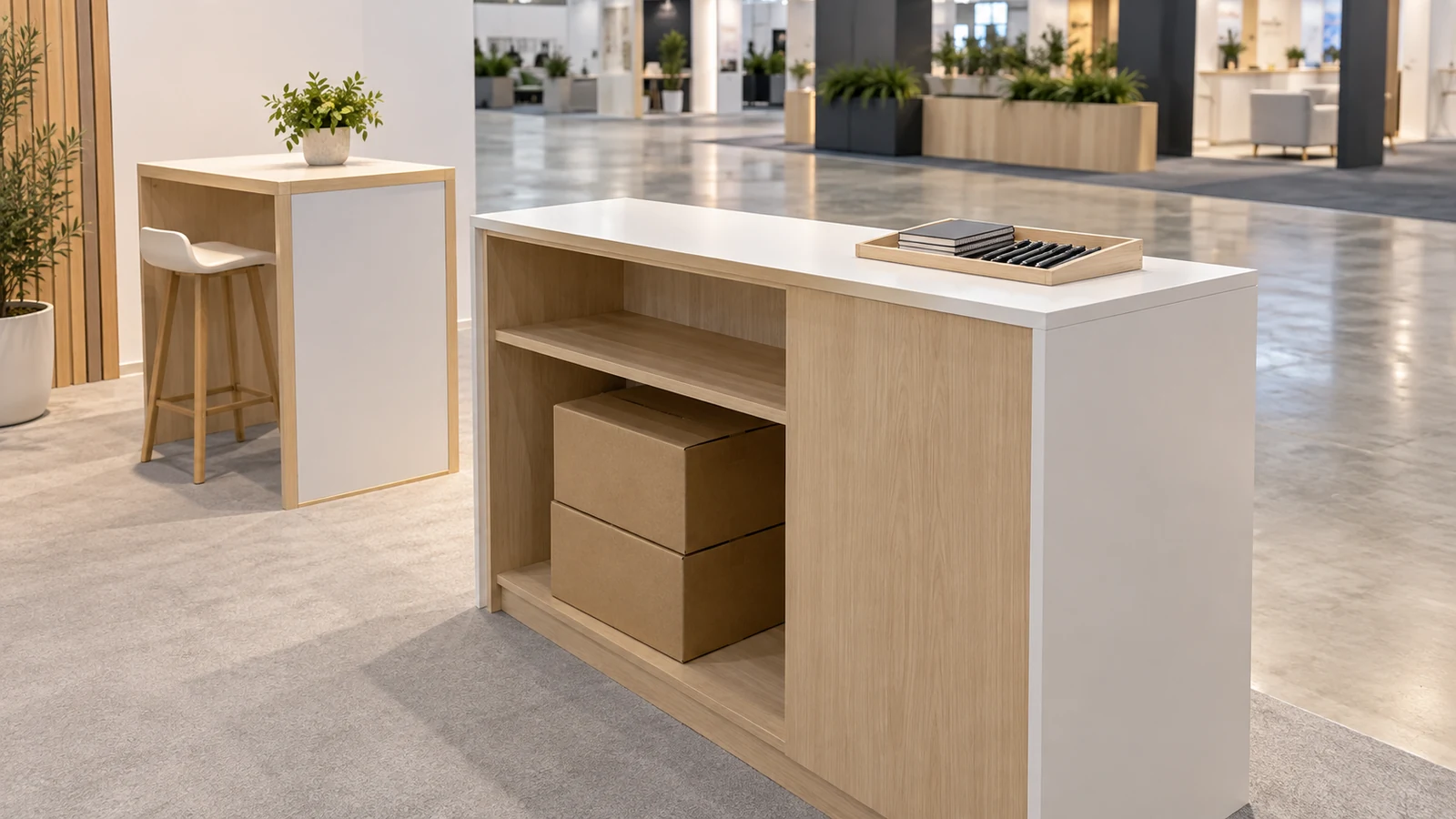
KingExhibits connects booth design with fabrication and installation, so giveaway positions can be included in a buildable layout. Share your chosen item’s dimensions, packaging and quantity. We can plan space for displayed samples and a collection point that helps keep gift handoffs clear of the demonstration area.
Make stored stock accessible to your team
Our custom fabrication and rental options let you consider storage when choosing the booth. We can work through where cartons will sit and how staff will replenish the display during the show. Confirm the storage capacity and included fittings in the approved design and quote, so your team knows what space is available.
Keep the setup details with one project team
We connect graphics, transport and installation through one project plan and check key assembly and graphic details before delivery. The agreed giveaway display surfaces and stock locations can be included in that plan, giving your staff a layout to follow when setting up the handout area.
FAQ
How many giveaways should you order for a trade show?
Use your expected booth conversations and planned meetings, not the event’s total attendance. Count the people your staffed booth can realistically speak with during open hours, then assign quantities to the items you intend to offer. At a repeat show, use last year’s distribution and leftover count to adjust the order; at a first show, record both so the next decision has a basis.
What if the show is too close for custom production?
Ask for an in-stock item with a confirmed decoration schedule and delivery date to your receiving address. Approving artwork and shipping take time in addition to making the item. If the available schedule leaves no room to receive and inspect it, simplify the decoration or use a stocked item with a separate printed card. Do not substitute a promised dispatch date for arrival before your team leaves.
Can you offer something useful without a physical gift?
Yes. For example, a downloadable comparison sheet can give visitors a place to record the samples they saw, matching product codes and questions to resolve with their team. It helps them continue the discussion instead of repeating your brochure. Let visitors preview what they will receive and offer a direct way to save it. Someone whose employer restricts gifts should still be able to get product information and speak with your team.
Should you put a QR code on the giveaway?
Use one when the destination helps the visitor continue the conversation, such as a relevant product comparison or sample request page. Keep your company name and a short web address readable too. Test the code on the actual decorated item with a phone: a curved surface or a very small print area may make it awkward to scan. Check that the destination opens cleanly on mobile.
Can you reuse leftover giveaways at the next show?
Check that the branding and product details are still current, then inspect the stored items. A date-free pen or pouch may remain suitable if its condition is good. Food needs a separate check of shelf life and storage conditions; a product sample needs a valid code and matching specification. Do not send a sealed carton straight to the next show without checking what is inside.
Final Thoughts
Once you choose a giveaway, settle the item order and the booth storage plan together. Your team should know both what they are handing out and where the stock will go before the show opens.