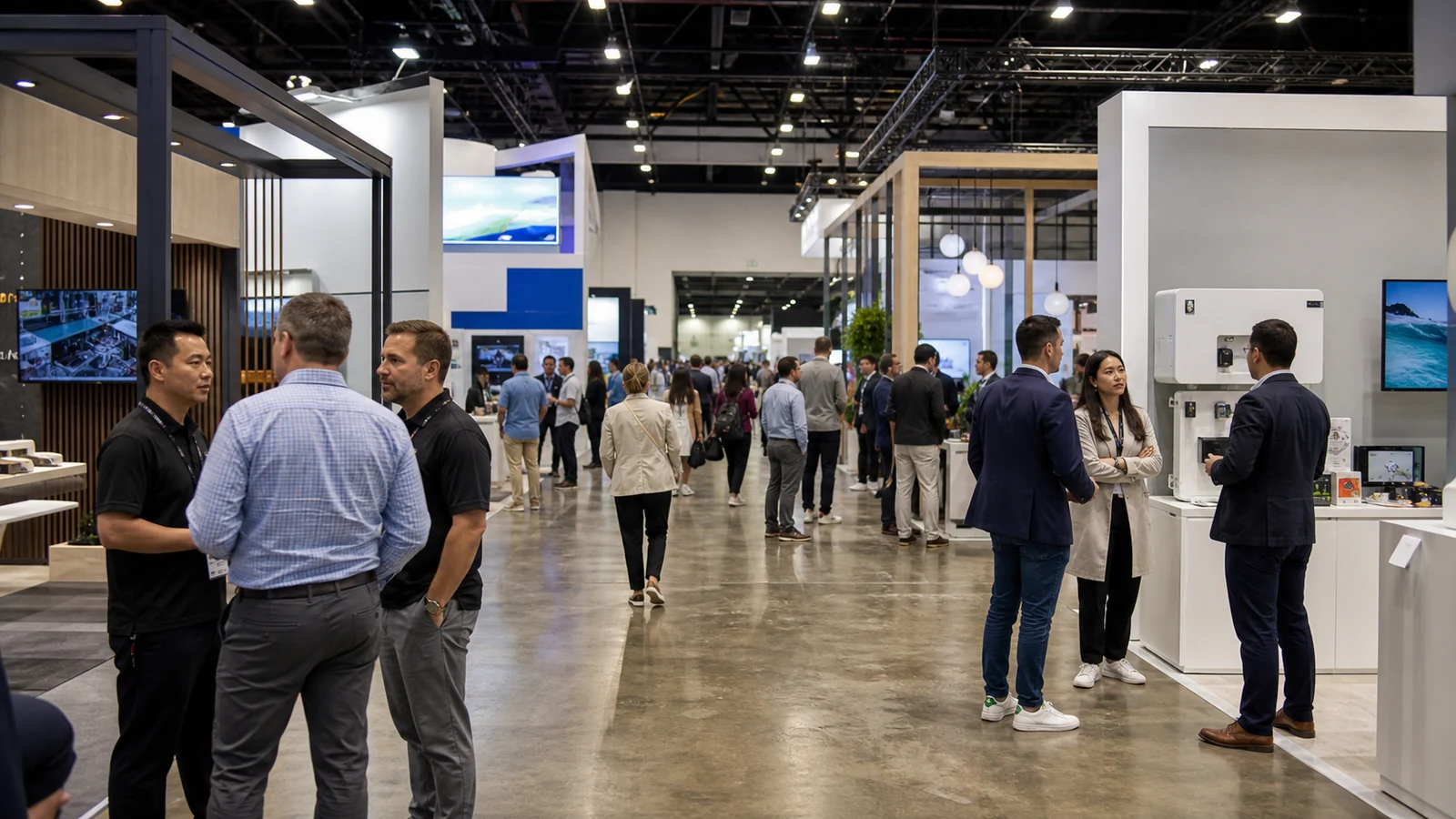
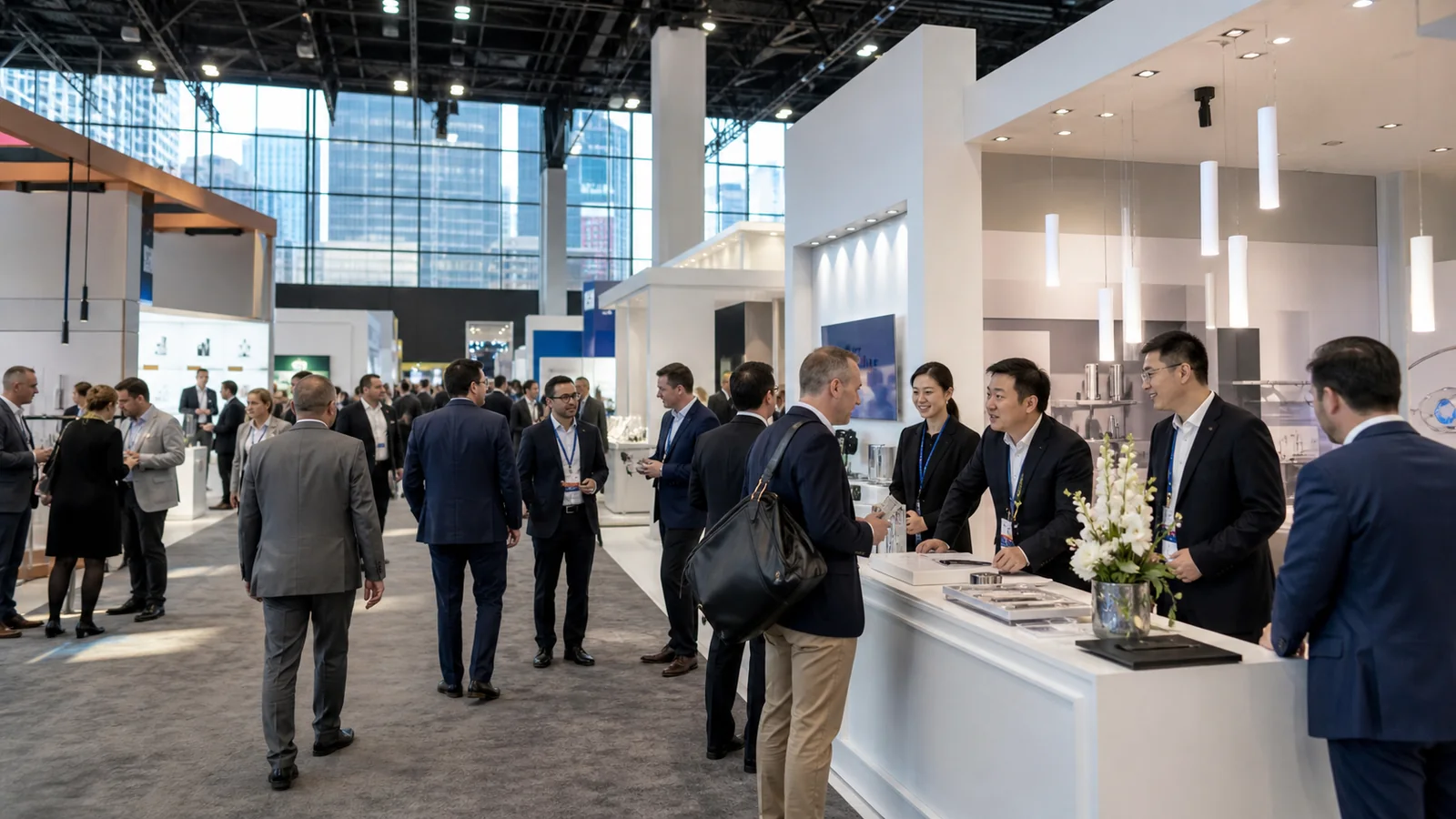
Before you reserve floor space at the Indianapolis Fall Boat & RV Show, you need to decide whether three days of consumer selling fit your offer and whether your products can be moved, powered, staffed, and sold inside the assigned space. The costly mistake is approving a display before the organizer has confirmed your category, building, space type, price, and operating requirements.
The event is built around consumers comparing and buying new, used, and year-end model boats and RVs—not technical sessions or scheduled meetings with professional buyers. It can suit a dealer, manufacturer, accessory supplier, or service company when your team can connect the offer to a purchase or ownership decision and move each qualified visitor toward a real next step. If you mainly need private distributor meetings, engineering discussions, or a national industry audience, it is a weaker fit. This guide helps you make that call, confirm the 2026 event facts, and identify the documents you need before you commit to the display.
Start with the kind of sale this show is built to support
The official Indianapolis Fall Boat & RV Show site leads with boats, RVs, savings, and the chance for consumers to view and buy. That tells you more about the opportunity than the broad label “trade show.” The likely customer arrives to compare units, features, prices, and financing rather than to attend an industry education program.
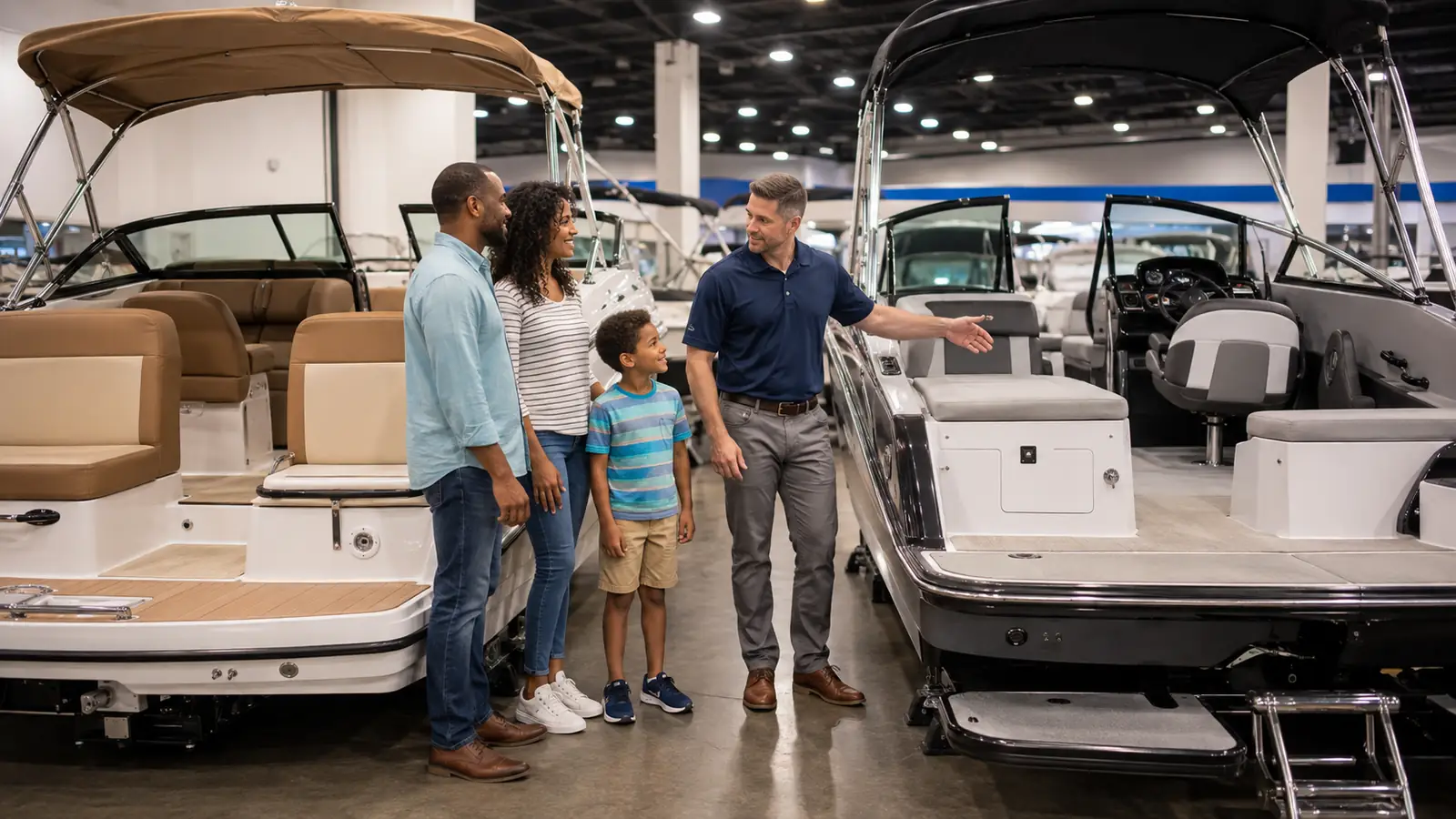
Your exhibit therefore needs a clear sales path. A visitor should be able to identify the type of boat or RV, understand the few differences that matter to that purchase, see who can answer detailed questions, and know what happens if the unit is not bought on the spot. An attractive structure can support that path, but it cannot replace inventory information, trained sales staff, financing or dealership coordination, and a defined follow-up process.
This also changes how you judge traffic. A crowd around a large unit is not automatically useful. The stronger signal is whether your team is having the right conversations, recording the model and use case each visitor cares about, and assigning a next action before the person leaves.
Decide whether your offer belongs on this floor
The clearest fit is a dealer or manufacturer with boats, RVs, or closely related inventory that consumers can inspect and discuss at the show. The organizer's exhibitor inquiry form asks companies to describe their products or services and choose areas such as boating, fishing, RVs, and travel and tourism. That is an invitation to request information, not automatic acceptance.
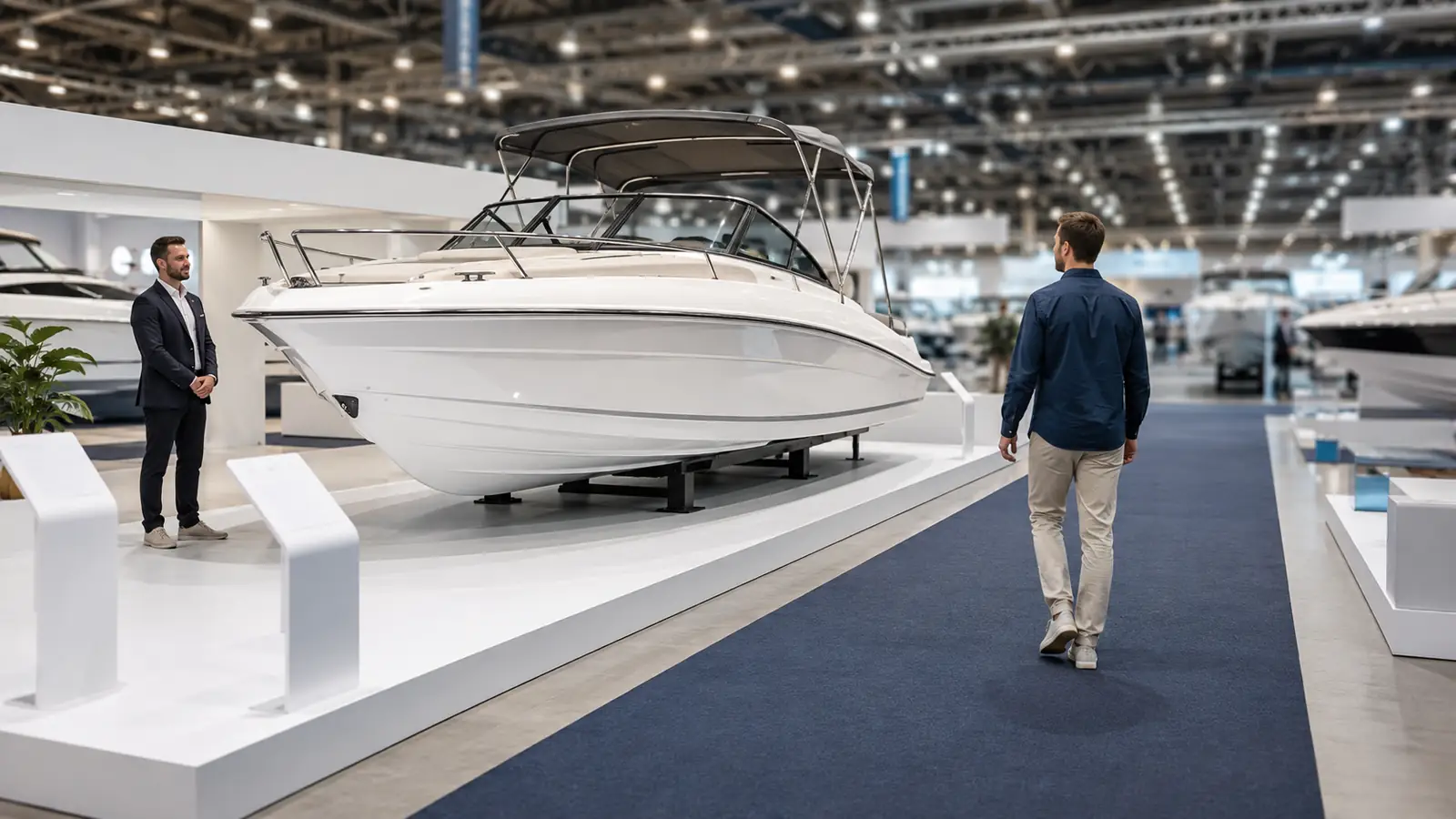
An accessory, service, destination, or finance company may still have a reason to participate, but it should ask a harder question: will visitors understand why this offer belongs next to the vehicles they came to compare? A marine electronics supplier may have a product demonstration that fits naturally. A general business service with no visible connection to boating or RV ownership may struggle to earn attention, even if booth space is available.
Before you request space, write one sentence that connects your offer to the visitor's purchase or ownership decision. Then define the action you want at the exhibit: inspect a unit, compare two models, book a dealership visit, request a quote, complete a financing conversation, or schedule a product installation. If that action remains vague, pause before discussing booth finishes.
What is confirmed for the 2026 show?
The event's current public schedule is specific. Recheck these details immediately before booking travel, shipping, or labor because event information can change.
| Item | Confirmed 2026 information | What you should do with it |
|---|---|---|
| Public show dates | September 25–27, 2026 | Build staffing and follow-up coverage around all three days. |
| Public hours | Friday and Saturday, 10:00 a.m.–8:00 p.m.; Sunday, 10:00 a.m.–5:00 p.m. | Plan breaks and shift changes without leaving the display uncovered. |
| Venue | Indiana State Fairgrounds, 1202 E. 38th Street, Indianapolis, IN 46205 | Use the assigned building and booth number, not the street address alone, on every shipment and crew instruction. |
| Organizer | Renfro Productions & Management, Inc. | Obtain application, space, approval, and show-rule answers from the organizer. |
| Event positioning | Consumer show for new, used, and year-end model boats and RVs | Measure fit by consumer sales conversations, not by conference-session access. |
There is one location detail worth resolving in writing. The official show site and the current 2026 Exhibitor Resource Guide identify the Indiana State Fairgrounds' Fall Creek Pavilion. The venue's event calendar lists both Champions Pavilion and Fall Creek Pavilion. Your agreement, assigned space, and current floor plan should settle which building and receiving route apply to your exhibit.
As of September 7, 2026, the event website's exhibitor and manufacturer sections still said to check back for the 2026 lists. Do not use a prior-year list to judge current competitive density or imply that a brand is confirmed. Ask the organizer for the current floor plan and accepted-exhibitor information that it is willing to share.
Request the commercial terms before you design the display
The organizer provides a route to request exhibitor information and an application, but the public sources reviewed for this article did not publish the current booth rate, deposit, cancellation terms, category restrictions, or a complete list of space inclusions. Those are commercial inputs, not details to estimate from a photograph or an older event page.
Ask for a written package that answers:
- whether your company and product category are eligible;
- whether you are being offered booth space, bulk space, or another display arrangement;
- the exact dimensions, open sides, location, and neighboring uses of the proposed space;
- the space fee, deposit schedule, cancellation terms, and what the fee includes;
- which furnishings, signs, power, internet, cleaning, material handling, and parking items are included or ordered separately;
- insurance wording, due dates, move-in route, vehicle access, and exhibitor credentials; and
- the current floor plan, exhibitor guide, decorator instructions, electrical form, and technology form.
Do not release fabrication from the sales brochure alone. A floor-plan image can show available shapes, but only your executed agreement and assignment establish the space your team can use.
Let the exhibit type control the layout
A row of boats or RVs is not a scaled-up version of a conventional product booth. The exhibit must allow each unit to enter, reach its assigned position, remain compliant during show days, and leave in the required sequence. Visitors also need room to compare without blocking the aisle or trapping a sales conversation inside the display.

For boat and RV inventory
Start with a unit schedule rather than a decoration list. Record each unit's overall length, width, height, weight, hitch or tongue condition, entry-door side, slide-outs or awnings that may be displayed, steps, battery and fuel configuration, and the order in which it must enter and leave. Confirm every operational display condition with show management before treating it as part of the presentation.
Next, mark the sales zone around the inventory. A visitor looking at a boat needs a clear way to compare the hull, interior, controls, and intended use. An RV shopper may want to enter the unit, discuss sleeping or storage needs, and return to a sales desk. The space around the product is where these conversations happen; filling it with generic walls or furniture can make a large display harder to sell from.
For accessories and services
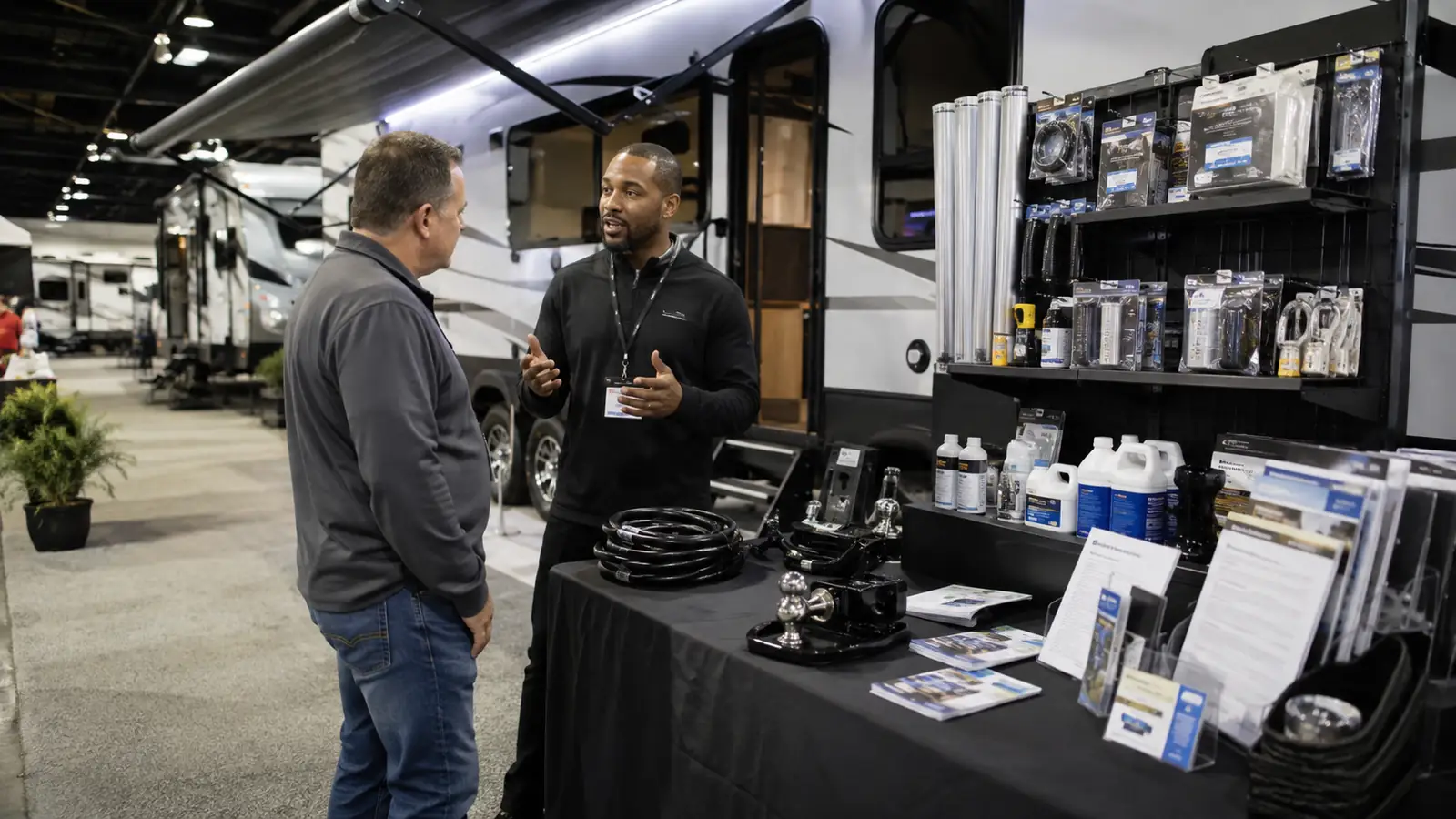
A conventional booth has a different job. Put the application or ownership problem first, then show the product or service solving it. A working demonstration, fitment example, booking station, or short comparison may be more useful than a broad lifestyle scene.
The current exhibitor guide sets a specific boundary for linear booths: displays and signs are limited to 8 feet in height and may not project more than 4 feet from the background. Decorations cannot obstruct neighboring exhibits or extend into aisles. Confirm the rule for your assigned space type before approving walls, signs, lighting, or demonstration equipment.
Build move-in backward from the product you are bringing
The 2026 Exhibitor Resource Guide separates bulk-space and booth-space move-in. That distinction matters because a vehicle display and an accessory booth may have different arrival paths and setup work.
| Activity | Current 2026 window |
|---|---|
| Bulk-space move-in | Wednesday, September 23, 8:00 a.m.–8:00 p.m.; Thursday, September 24, 8:00 a.m.–8:00 p.m. |
| Booth-space move-in | Thursday, September 24, noon–8:00 p.m.; Friday, September 25, 8:00–9:30 a.m. |
| Public show | Friday, September 25, 10:00 a.m.–8:00 p.m.; Saturday, September 26, 10:00 a.m.–8:00 p.m.; Sunday, September 27, 10:00 a.m.–5:00 p.m. |
| Move-out | Sunday, September 27, 5:01–9:00 p.m.; Monday, September 28, 7:00–9:00 a.m. |
The guide prohibits dismantling before the official Sunday close. If you need a carrier, driver, forklift, or specialist crew for move-out, confirm that team's availability for the actual release sequence rather than booking against the public closing time alone.
Vehicle and watercraft preparation is also part of the exhibit plan. The current guide requires less than one-quarter tank of gasoline, a locked, taped, or sealed fuel cap, and removal and taping of both battery connections after move-in until move-out. LP tanks must be removed from trailers, mobile homes, and other vehicles that use them. Treat those steps as controlled handoffs: assign who completes each item, who verifies it, and where the removed equipment will be stored.
Empty box trucks and empty boat or cargo trailers are directed to parking north of the racetrack. Include that destination in the driver's instructions so an empty trailer does not become a last-minute obstruction near an occupied building.
Know which party owns each order
Several organizations touch this event. Putting every task under “the show” makes missed orders more likely. The current guide assigns the work this way:

| Party | Current role in the guide | What remains yours to manage |
|---|---|---|
| Renfro Productions | Show management, space and event rules, exhibitor check-in and approvals | Application, agreement, balance, current instructions, staffing, and approval records |
| Fern Exposition & Event Services | Official show decorator; furnishings/services, forklift arrangements, identification sign, and optional booth cleaning | Order selection, timing, drawing, payment, and on-site confirmation |
| Indiana State Fairgrounds | Internet, Wi-Fi, and telephone services | Device count, transaction workflow, bandwidth need, order, and backup plan |
| ERMCO | Additional electrical service | Equipment load list, outlet locations, order, and confirmation number |
| Your company | Display, products, insurance, staff, shipping information, and compliance | One named owner for each task and a final move-in packet |
The guide says show management furnishes one 500-watt outlet per 10 feet of booth space and directs additional electrical needs to ERMCO. Do not treat that basic provision as an equipment plan. List every screen, charger, computer, appliance, light, and sales device, then confirm the service and outlet locations that support the actual layout.
The insurance requirement also needs an owner. The 2026 guide calls for a certificate of liability insurance with a $2 million general aggregate and $1 million per occurrence, coverage through setup and teardown, and specified additional-insured wording. Give the current organizer language to your insurance provider instead of reconstructing it from memory.
Run the three days as a retail sales operation
Friday and Saturday each have ten public hours. The guide requires every exhibit to remain staffed during all public hours. A single team working every hour without a shift plan will lose energy at the same time serious visitors expect useful answers.

Build the roster around roles rather than headcount alone. Decide who qualifies the visitor, who can discuss the unit or product in depth, who handles financing or dealership actions, who records follow-up, and who covers breaks. If one person holds two roles, show that in the schedule.
Use a short lead record designed for this event. Capture the product or model, intended use, purchase timing, location, main concern, and agreed next action. That is more useful than a badge scan with no context. At the end of each day, assign every open conversation to a person and a date so Sunday leads do not sit untouched after move-out.
Make a go, pause, or clarify decision
Proceed when you can answer all of these questions with a document or named owner:
- Does a consumer sales show fit the way this offer is bought?
- Has the organizer confirmed that your company and category can participate?
- Do you have the proposed space type, dimensions, building, location, price, and inclusions in writing?
- Can the selected units or displays enter, operate as approved, and leave within the current schedule?
- Are insurance, electrical, internet, decorator, forklift, parking, and shipping tasks assigned?
- Can your team staff every public hour and record a useful next action for each qualified visitor?
Pause if the answer to the first question is no, or if your team is relying on unconfirmed audience assumptions to justify the expense. Request clarification when the fit is plausible but the agreement, building, floor plan, space inclusions, vehicle route, or current exhibitor information is missing. That distinction prevents a temporary information gap from becoming an expensive design change.
Frequently Asked Questions
How many exhibitor credentials come with the space?
The current guide assigns six credentials to an 8-by-10-foot or 10-by-10-foot booth and one additional credential for each additional booth space. A 400-square-foot bulk space also receives six credentials, with one additional credential for each additional 600 square feet. Confirm your allocation against the executed agreement before finalizing the roster.
Can an exhibitor bring a pet or live animal?
Not without prior permission from show management. The current guide makes an exception for service or guide dogs. If an animal is part of a demonstration rather than a service animal, describe the purpose and handling plan and obtain written approval before making it part of the exhibit.
Can you run a drawing or giveaway at the booth?
The current guide requires show-management authorization before opening day. It also asks exhibitors to provide product-liability insurance for a handout, drawing, or giveaway when that coverage is required. Submit the promotion and its terms early enough to receive a written answer.
Should you rely on ordinary Wi-Fi for financing, checkout, or lead capture?
The current technology order form separates shared and dedicated hardline services and also lists on-site wireless options. Match the connection to the number of devices and the work you must perform, then prepare a fallback for any transaction or lead process that cannot stop when a device or connection fails.
Does 24-hour event security replace your own booth protection?
No. The guide says security is provided during setup, show days, and teardown, but it also says the organizer cannot be responsible for missing items. Cover merchandise, rope off the display after closing, control keys and devices, and decide who checks the space at opening and close.
Final Thoughts
The Indianapolis Fall Boat & RV Show is easiest to evaluate when you treat it as a three-day consumer sales environment, not a generic trade-show appearance. First prove that the audience and sales action fit your offer. Then obtain the current agreement, assigned building and space, floor plan, vehicle list, service orders, and staffing plan. If those pieces agree, you have a project that can move into design. If they do not, the next useful step is clarification—not fabrication.
Talk with KingExhibits after you have the current agreement and floor plan, and use that conversation to test whether your proposed display matches the confirmed space, utilities, product list, and staffing plan. Keep the discussion tied to those verified inputs before fabrication begins.