
There is no single trade show uniform. Your best choice depends on your role, the formality of your audience, and whether you are walking the floor, working a booth, speaking, or entering a setup area. For most show days, start with clean, well-fitting business-casual or smart-casual clothing, then adjust it to the event.
| Situation | Recommended starting point |
|---|---|
| General attendee | Smart casual or business casual |
| Booth staff | Coordinated business casual |
| Speaker or panelist | Follow the speaker brief; otherwise choose a polished version of the audience’s expected dress level |
| Setup or teardown | Workwear and the PPE required by the current manual |
Use the table as a quick starting point, then check the event guidance and your actual schedule before you pack.
Trade Show Outfit Examples by Role
Use these combinations as packing baselines, then adjust them to the published dress code, your industry, and your schedule.
| Role or setting | Practical outfit example |
|---|---|
| General attendee | Button-down or knit top + tailored trousers + loafers or clean professional sneakers + light blazer |
| Booth staff | Branded polo or button-down + coordinated trousers + supportive closed-toe shoes + shared outer layer |
| Executive meeting | Dress shirt or blouse + tailored trousers or midi skirt + structured jacket + loafers or flats |
| Speaker | Camera-friendly solid top + secure place for a microphone pack + tailored bottom + stable, quiet footwear |
| Creative or technology show | Polished knit or branded shirt + chinos or tailored trousers + minimal sneakers |
| Industrial show | Branded work shirt or polo + durable trousers + closed-toe footwear; add required PPE in work zones |
| Evening reception | Show-day base outfit upgraded with a jacket, dressier shoe, or restrained accessory |
The same person may need different clothes for move-in, a full show day, a presentation, and dinner. Pack by role and situation instead of expecting one outfit to work everywhere.
How Do Smart Casual, Business Casual, and Formal Attire Differ?
| Dress level | Typical pieces | Suitable setting | Avoid |
|---|---|---|---|
| Smart casual | Clean knit or polo, chinos, simple dress, polished sneakers | Creative, technology, or relaxed event | Gymwear, damaged denim, loud graphics |
| Business casual | Button-down or blouse, tailored trousers, blazer, loafers or flats | Most B2B trade shows | Clothing that looks too casual or restricts movement |
| Business professional | Suit or tailored separates, structured layer, formal shoes | Finance, legal, executive meetings, formal speaking | Casual branded apparel when the room expects a suit |
| Work or setup attire | Work shirt, durable trousers, closed-toe or safety footwear, required PPE | Move-in and teardown | Show-day dress shoes, sandals, loose accessories |
If the organizer gives no guidance, check recent official event photos and consider who you need to meet. Business casual is a practical default for many B2B show floors, but it is not a universal rule.
What Can Men and Women Wear at a Trade Show?
Common men’s trade show attire includes a polo or button-down with chinos or tailored trousers, plus a blazer, loafers, or minimal sneakers when the event permits them. Common women’s trade show outfit options include a blouse or knit top with tailored trousers, a midi skirt, a simple dress, or a professional jumpsuit, finished with a blazer, flats, loafers, or low boots.
These are options, not gender rules. Anyone can choose the pieces that suit their style and body. Judge the final combination by four practical tests: does it match the event’s formality, stay comfortable for the schedule, meet safety rules, and support your company’s visual identity?
Build a Show-Day Outfit for Walking, Standing, and Conversation
Build the outfit around four practical decisions:
- Shoes: use a broken-in, supportive pair that matches the event. Minimal sneakers may work at relaxed shows; closed-toe shoes are the safer show-floor default. Do not test new heels, boots, or dress shoes on day one.
- Fit and fabric: choose breathable, wrinkle-resistant pieces that let you reach, sit, bend, and demonstrate without adjustment. Test the complete outfit with your badge, belt, jacket, and bag.
- Layers: carry a blazer, cardigan, overshirt, or light jacket for temperature changes. Booth staff should keep the outer layer within the team’s visual system.
- Essentials: use pockets or a small hands-free bag for your phone, badge, pen, and a few cards. Keep the badge visible, limit distracting patterns or fragrance, and carry a spare top and a small care kit.
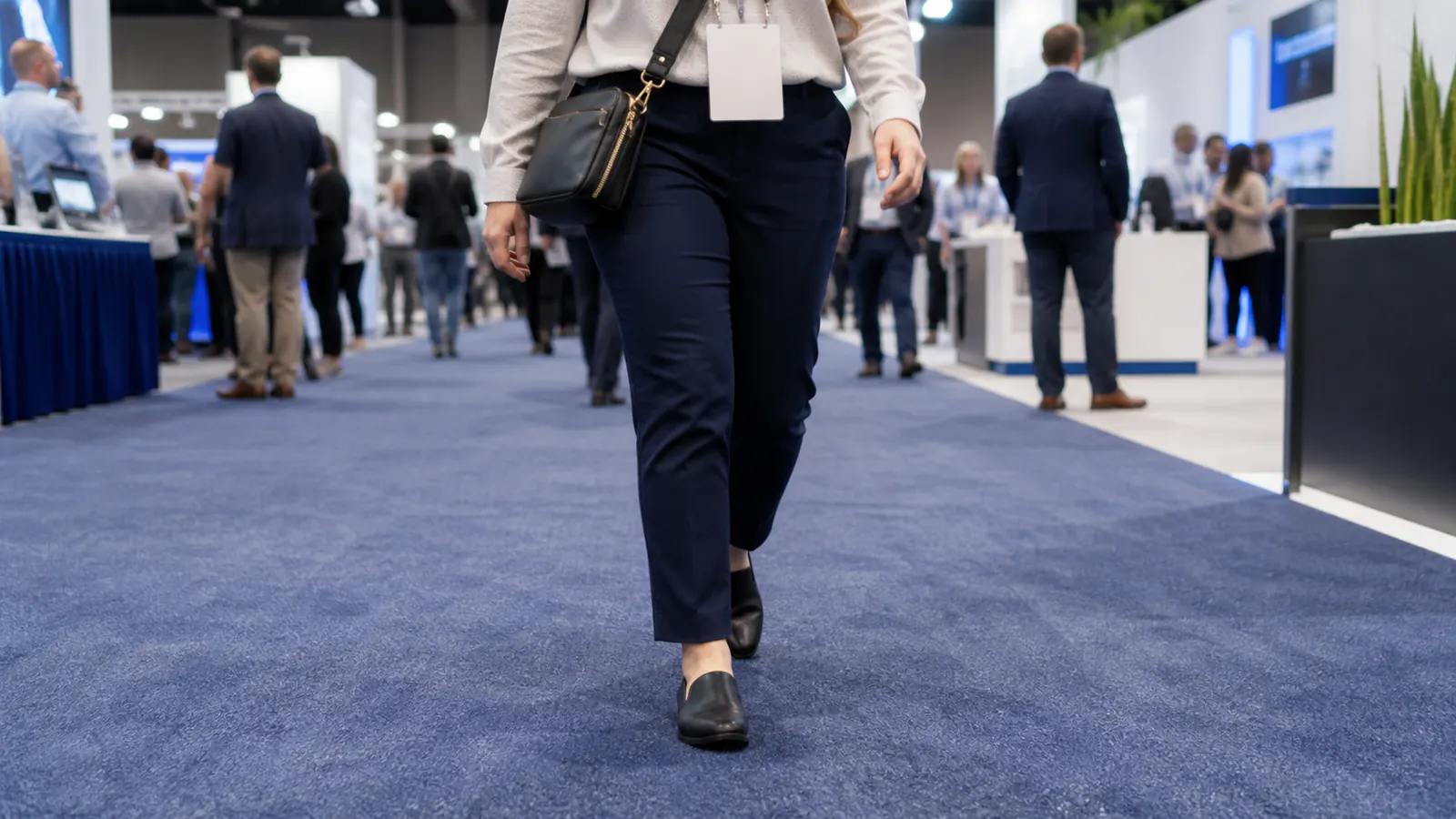
Adjust for Climate and Venue Conditions
Outdoor weather and indoor venue conditions can be very different. Las Vegas may be hot outside while the hall is heavily air-conditioned; Chicago needs different travel layers by season; New York meetings may feel more formal than the walk between halls; Orlando’s humidity makes breathable fabrics useful. These are planning examples, not fixed dress codes.
Use a removable outer layer, keep travel clothes separate from show-floor clothes, and plan for the longest part of your day. Check the venue, schedule, and weather forecast shortly before departure.

What Should Attendees Wear?
As an attendee, you need to walk farther and carry more than most booth staff. You usually do not need a suit unless your industry, meetings, or invitation calls for one. Choose a base outfit that stays presentable after hours of walking, then carry one light layer for meetings or evening networking.
Company-logo clothing is optional. Wear it when you want to be identifiable as a representative; skip it when you are attending in a neutral research or buying role. Use a compact backpack or structured crossbody only if it keeps your hands free and does not hit people or displays in busy aisles. Carry digital materials where possible and limit printed literature to what you can manage without becoming tired or disorganized.
What Should Speakers Wear?
Follow the organizer’s speaker brief before applying a general rule. If none is provided, wear a polished version of the audience’s expected dress level. Solid or low-contrast patterns are easier to manage on camera than tight stripes or distracting graphics.
Confirm where the lavalier microphone and transmitter pack will attach. Avoid jewelry, fabric, or loose accessories that can rub against the microphone. For a seated panel, check how the outfit looks and moves while seated; for a standing talk, make sure your shoes and clothing remain stable during gestures and movement. The EOS Conference speaker guide is one event-specific example that asks speakers to plan clothing around the microphone; your own organizer’s brief controls.
What Should You Wear After the Show?
You may not need a complete change for a networking reception or customer dinner. Start with a show-day base that can be upgraded with a structured jacket, dressier shoe, or restrained accessory. A casual reception and a formal awards dinner are not the same: check the invitation rather than assuming “after hours” means casual.
If your day runs from the show floor directly into dinner, keep the evening layer and small care kit accessible. The Lands’ End trade show attire guide also treats after-hours networking as a separate packing decision, which supports planning the transition before travel.
Coordinate Booth Staff Without Turning Everyone Into a Costume
Visitors should be able to identify your team without guessing. Choose one shared cue—a branded top, jacket, color family, or clear name mark—while allowing different cuts or shoes for greeters, demonstrators, and meeting staff.
Collect sizes early, test one decorated sample for fit and movement, and choose easy-care fabric. Pack one clean base top per show day, at least one backup top per person, and one or two adaptable outer layers for the event. If a full uniform is outside budget, agree on a color family and formality level instead.
Check the clothing against the actual booth: staff should not disappear into a same-color background wall; badges should not cover the only logo; patterns should not compete with LED screens or graphics. Use an outer layer, name badge, or color accent to distinguish roles. For demonstrations, make sure cuffs, jewelry, and loose parts cannot interfere with the product.

Treat Setup and Teardown as a Work Zone
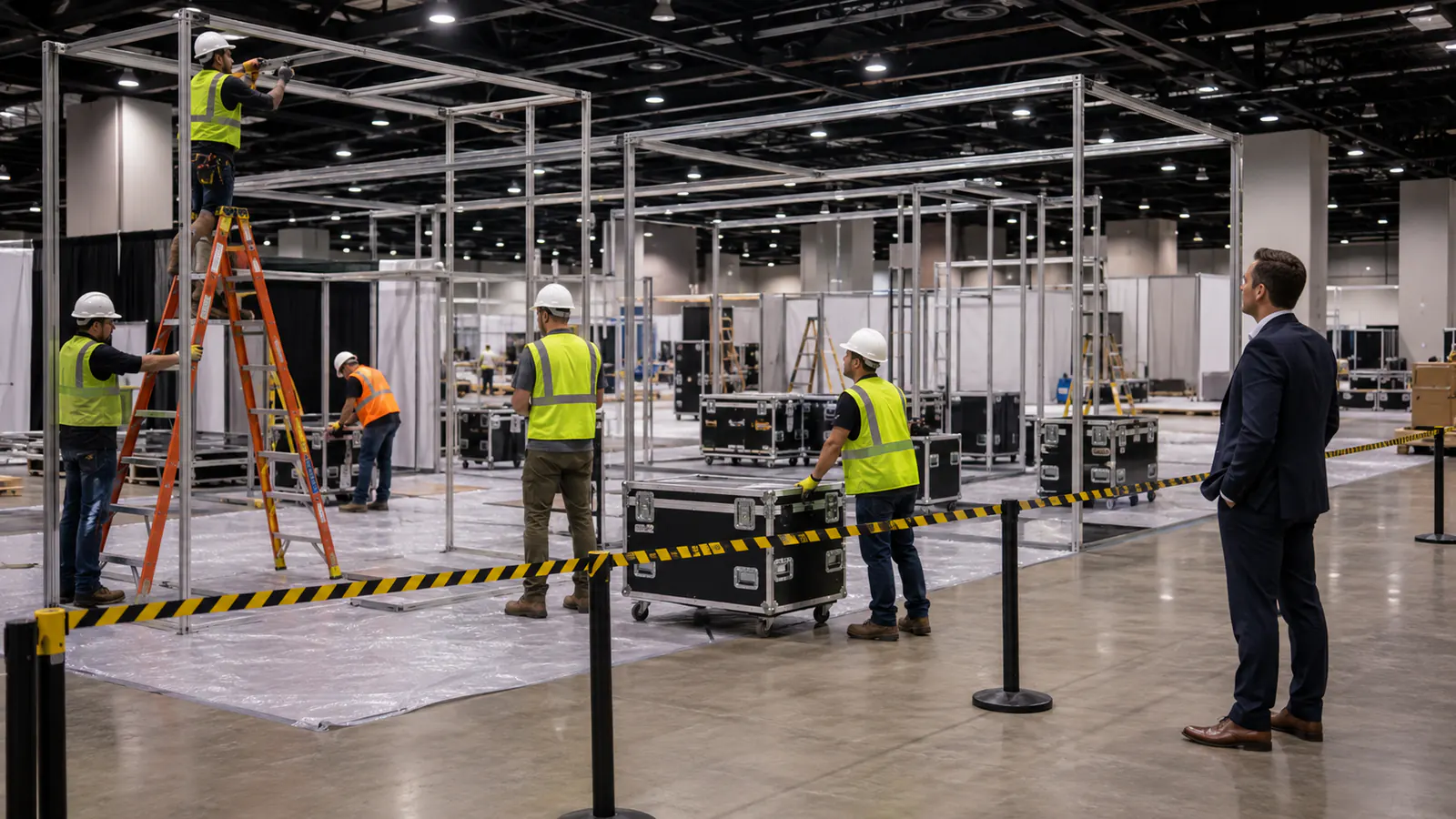
Your show, venue, and work area may require different clothing from show days. Check the current exhibitor manual before entering move-in or teardown. One event’s PPE rule cannot be generalized to another.
Confirm:
- whether exhibitors may enter the hall during the relevant work period;
- whether closed-toe or safety footwear, a vest, hard hat, or other PPE is required;
- whether your role allows the task you plan to perform.
The World Workplace exhibitor FAQ distinguishes setup-day clothing from show-day attire, while CMPX health and safety guidance requires protective footwear and high-visibility equipment during move-in and move-out. These are event-specific examples. Pack setup clothing separately, and do not perform a construction task without the required authorization, training, and protection.
Use a Short Do-and-Don’t Check Before You Leave
Before travel, confirm seven items for each person: role/day, dress level, shoes tested, layer, badge and phone storage, backup top, and setup PPE/manual checked. If any field is blank, assign someone to resolve it.
Avoid wrinkled or restrictive clothing, brand-new shoes, ripped denim, gymwear, loud graphics, heavy fragrance, unrelated logos, and any setup-area footwear or accessory that conflicts with the current manual.
FAQ
Can you wear jeans to a trade show?
Sometimes. Dark, clean, undamaged jeans can work at a relaxed technology, creative, or outdoor-industry show when recent event photos support that level. Pair them with a polished top and structured layer. Choose trousers instead for finance, legal, executive, or formal meeting schedules.
Do you need a suit or tie at a trade show?
Not for most business-casual show floors. Wear a suit or tie when the invitation, your industry, or a scheduled executive meeting expects it. If you pack one, make it a deliberate option for a specific appointment rather than an all-day default.
Should attendees wear company-logo clothing?
Wear a company logo when you want prospects and partners to identify your employer quickly. Neutral clothing may be better when you are researching suppliers or attending independently. Never wear another exhibitor’s promotional shirt while representing your own company.
Is a backpack professional at a trade show?
A compact, clean backpack can be practical when you need a laptop, but keep it light and close to your body in crowded aisles. A structured crossbody or slim tote may suit more formal meetings. Avoid an oversized bag that bumps displays or makes handshakes awkward.
How many outfits should you pack for a multi-day trade show?
Pack one complete show-floor base outfit for each day, at least one spare top, one or two adaptable outer layers, and shoes you have already tested. Add separate clothing only for setup, a formal dinner, or another event with a different dress code.

Final Thoughts
Choose trade show clothing by role, schedule, event formality, comfort, and safety. Staff clothing is one part of the booth’s visual and operational system, but KingExhibits does not need to select or source your apparel to design around it.
KingExhibits can plan circulation, demonstration zones, storage, counters, and staff positions so your team remains visible and comfortable throughout the show. Send us your floor plan, staff count, demonstration requirements, and meeting needs to discuss a booth layout that supports how your team actually works.