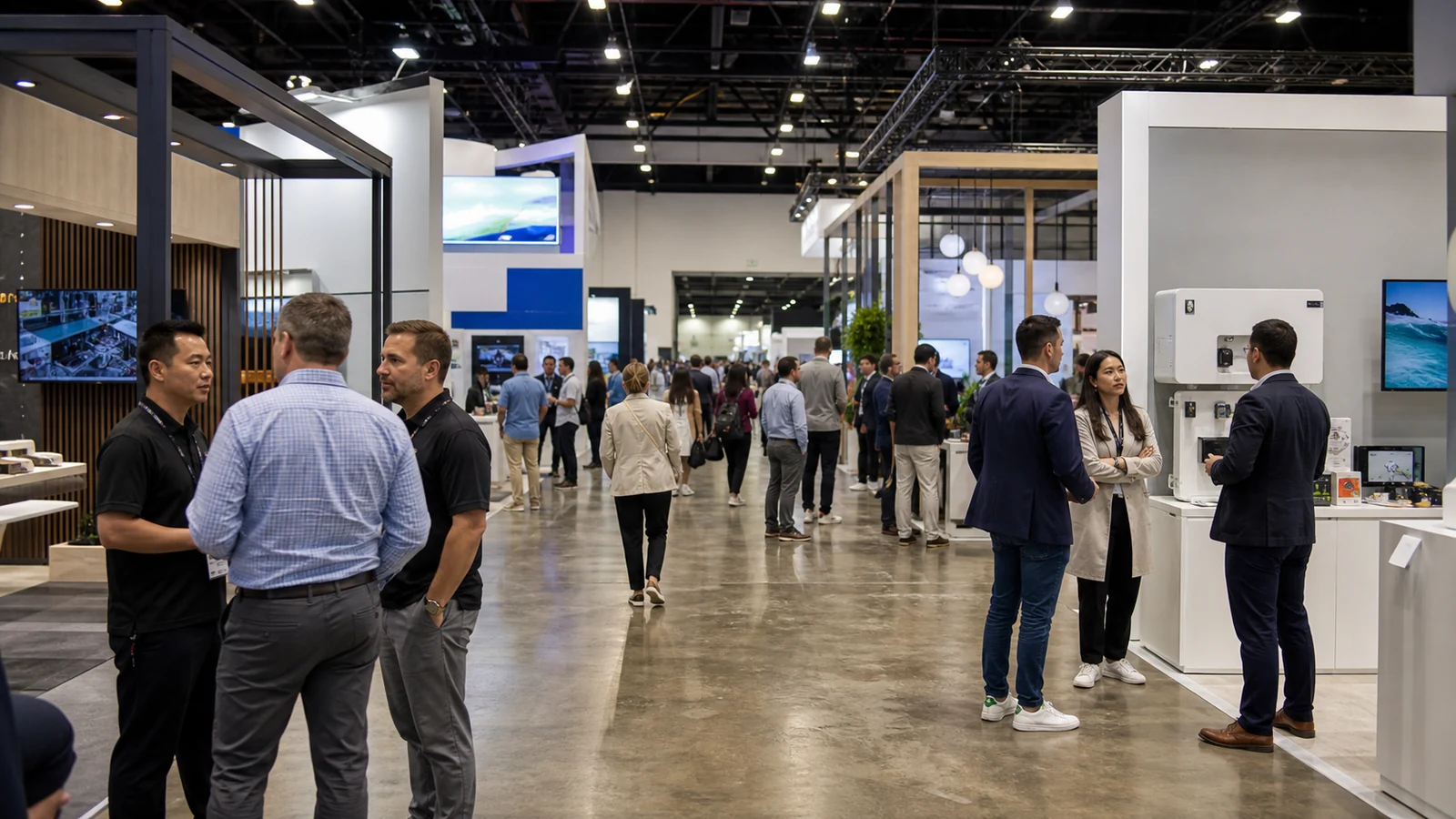
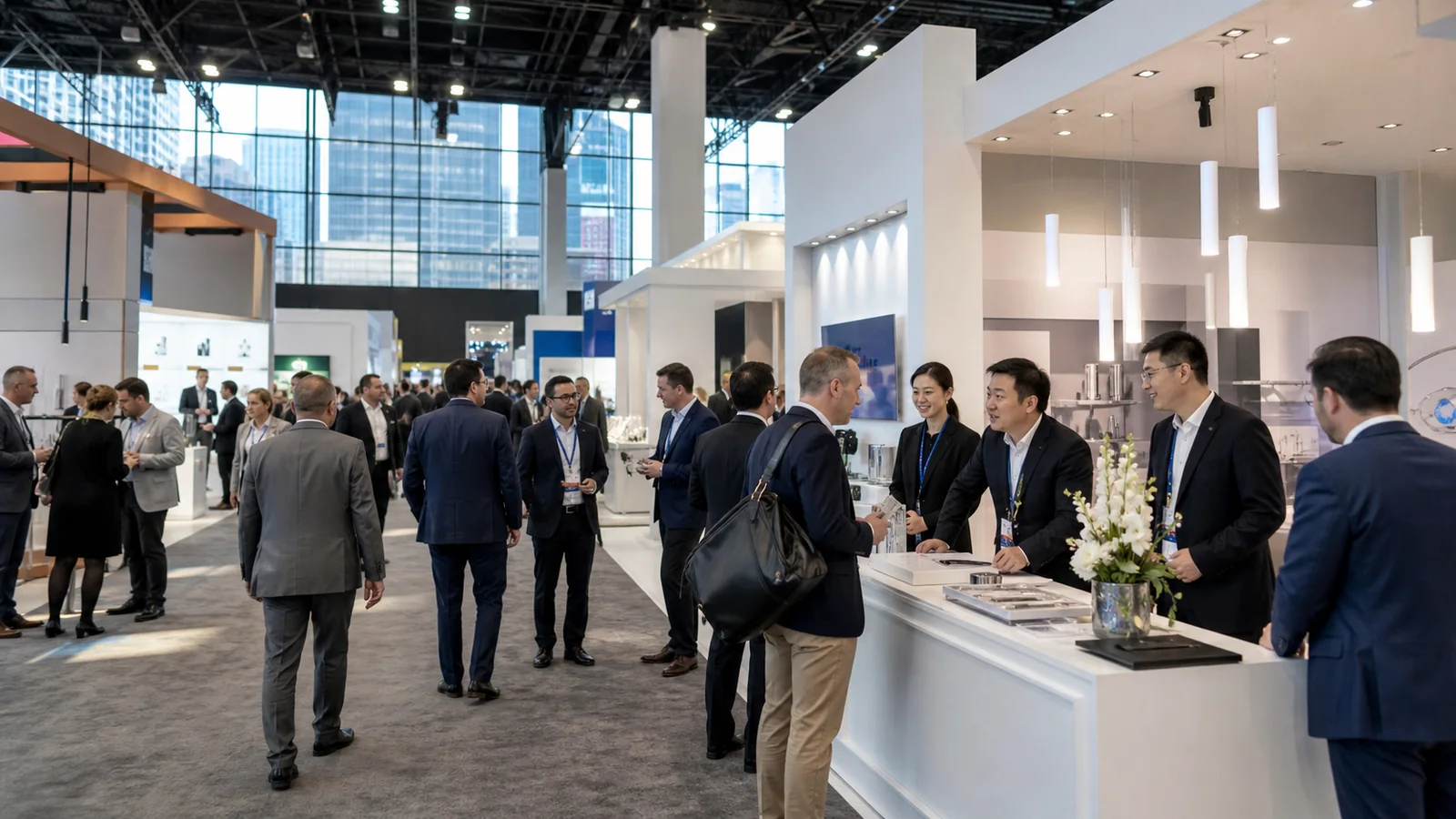
If your experiential marketing brief says only “make the booth interactive,” the design team still does not know what to build. A touchscreen, game, product demo, or hospitality bar can all be interactive, but they create very different buyer conversations.
For a B2B trade show, start with the buyer's decision: what should the right person understand, try, compare, or explain before leaving the booth? This guide helps you turn that answer into a workable experience—one that supports the buying decision instead of merely keeping people occupied.
Define the experience by what the buyer does
An experience is not a theme, a screen, or a crowd. It is a sequence of actions and responses.
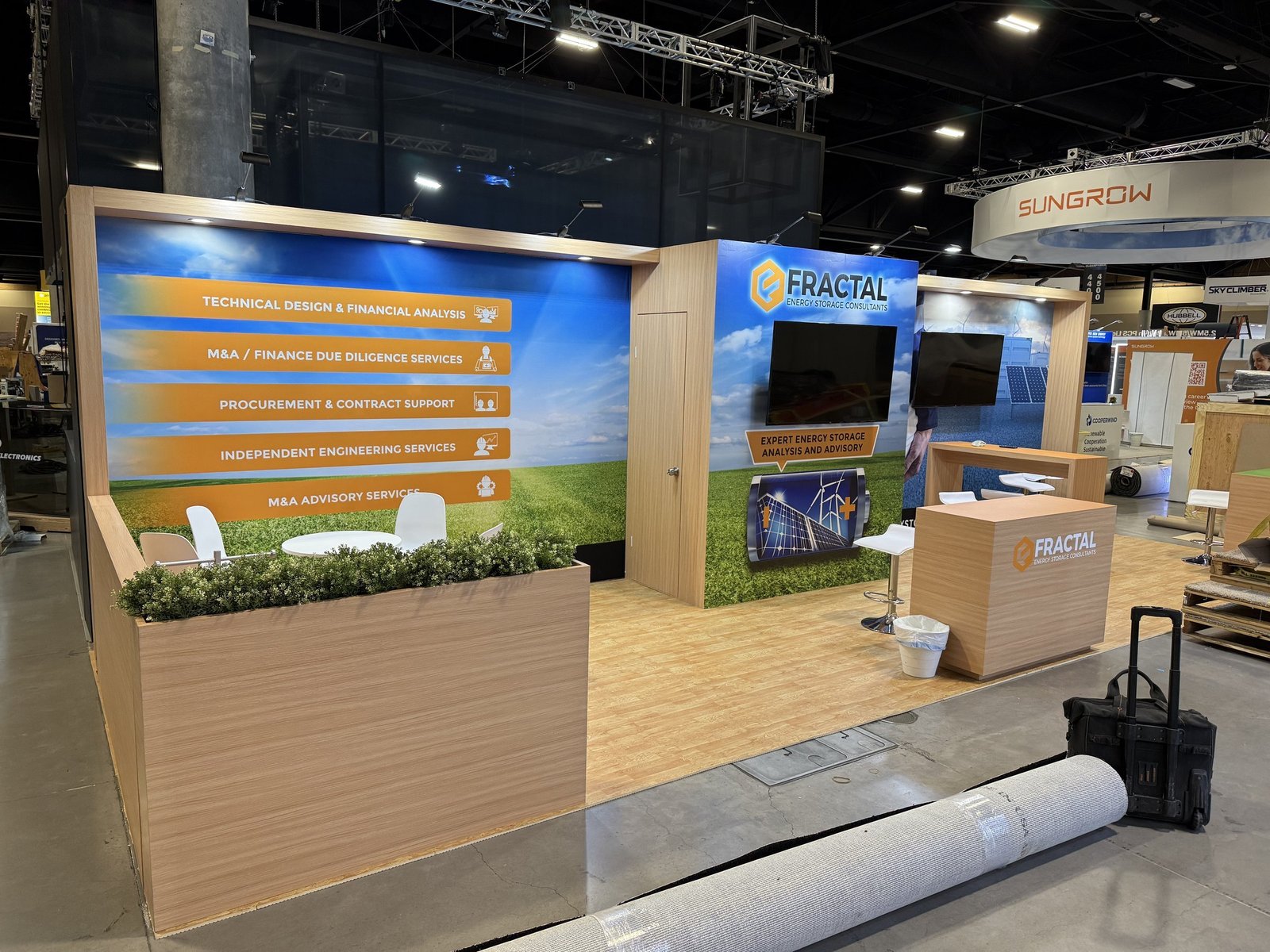
A useful trade show experience may let a buyer:
- bring a sample and see how it behaves under a stated test;
- choose an operating condition and compare the resulting output;
- configure a product for a real application;
- diagnose a familiar process problem with a specialist;
- handle two materials and explain which condition matters;
- map a current workflow and identify where time or risk enters;
- see a machine changeover rather than hear a claim about speed;
- review a drawing and leave with the next engineering question defined.
The activity does not need to be theatrical. It needs to change what the buyer knows or what your team knows about the buyer.
Write the experience in one sentence:
The buyer will do this, so they can understand or decide this, and our team can take this next step.
If the sentence ends after “do this,” you have an activity but no commercial purpose. If it begins with “we want to show,” rewrite it from the buyer's point of view.
Choose one buyer behavior before choosing a format
The buyer behavior should solve a specific barrier in the sales process.
| Sales barrier | Useful buyer behavior | Evidence created |
|---|---|---|
| The product looks similar to alternatives | Compare samples or outputs under the same condition | A visible difference and the condition behind it |
| The solution feels too complex | Build or select a configuration around a real use case | A configuration record and missing requirements |
| The performance claim is hard to trust | Set a variable and watch a controlled demonstration | Test condition, result, and limitation |
| The buyer cannot explain the internal problem | Map the current process with a specialist | A shared problem statement and affected step |
| Several stakeholders care about different outcomes | Choose a role and follow the relevant decision path | Role-specific questions and content |
| The project seems risky | Walk through implementation, service, or changeover decisions | Named risks, owners, and next review |
Do not ask one experience to solve every barrier. A five-minute technical comparison should not also collect a survey, tell the company history, run a contest, qualify six fields, and produce social content. Choose the main job and let the rest support it.
Start with a moment the buyer already recognizes
The fastest way into a B2B experience is a familiar decision or problem. You do not need a fictional universe when the customer's own work already contains tension.
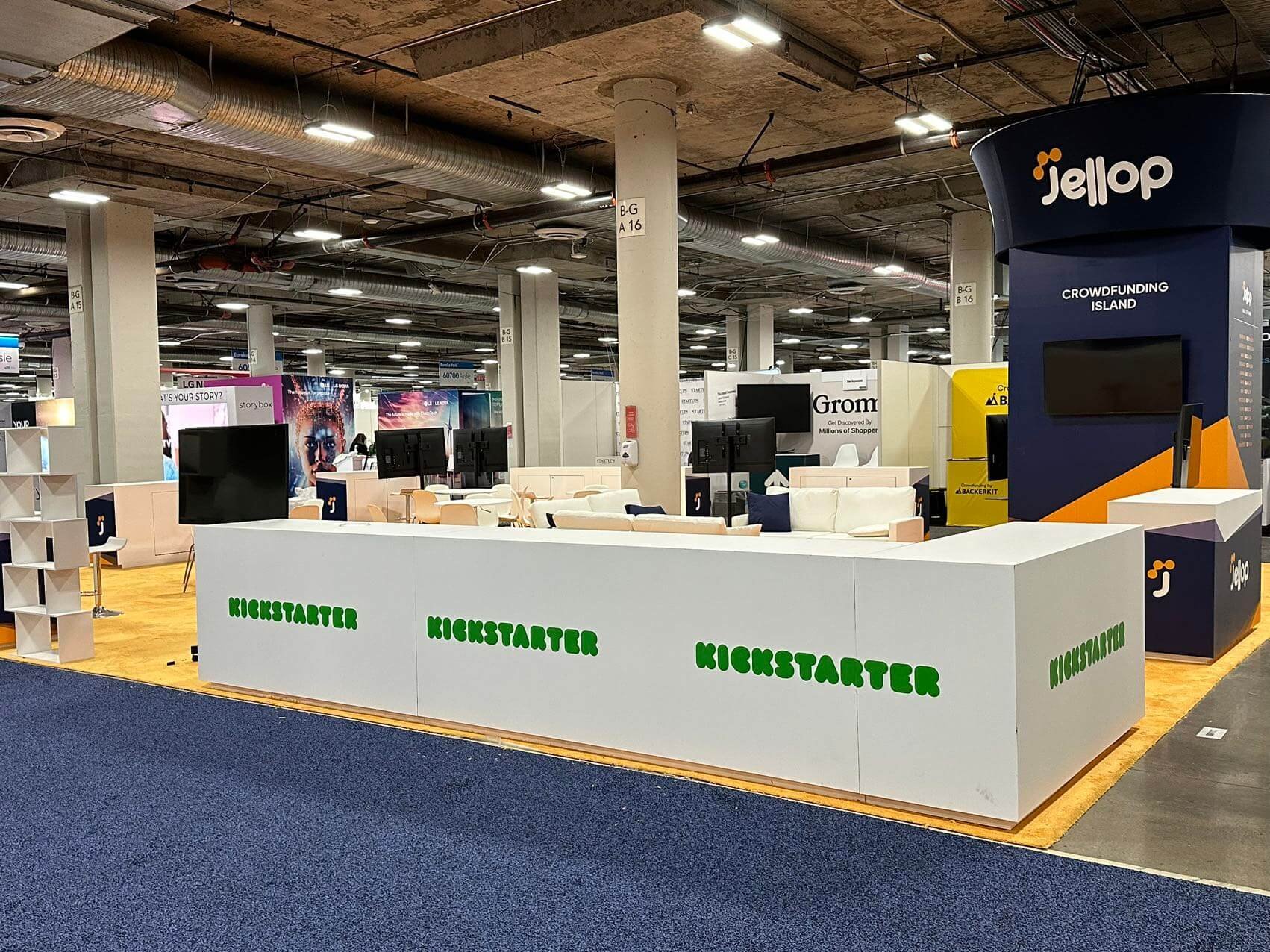
For an equipment buyer, the moment might be a changeover, cleaning step, quality failure, operator adjustment, or throughput constraint. For a materials buyer, it might be exposure to heat, moisture, abrasion, chemicals, or repeated handling. For a software buyer, it might be an approval delay, data handoff, duplicate task, or exception nobody owns.
Make that moment visible at the booth edge. Use the product, sample, question, physical contrast, or short statement that lets the right person recognize themselves. Avoid a high-level claim such as “Transforming the Future of Manufacturing.” It gives almost any visitor permission to keep walking because it does not name a situation they own.
Recognition is the entry point. The full explanation can happen after the visitor chooses to engage.
Build a beginning, middle, and next step
Treat the experience as a short buyer journey, not an isolated feature.
Beginning: earn the first action
The visitor needs to understand what can be done, how long it takes, and whether it is meant for them. A clear invitation might be:
- “Bring your film sample. We will compare the seal under the same test condition.”
- “Choose your current changeover time and see which steps the new setup removes.”
- “Show us where approval stalls. We will map the handoff with you.”
Staff should be able to explain the first action in one breath. If a greeter needs a sixty-second script before the activity begins, the experience is not clear enough from the aisle.
Middle: let the buyer affect the result
Participation matters when the buyer's input changes what happens. Let them choose the sample, operating variable, application, role, sequence, or problem. Then show what the choice changes.
Do not create a false sense of control. If every selection produces the same animation or prewritten recommendation, people will notice. Be honest about what is a live demonstration, what is a simulation, and what is an illustrative scenario.
Next step: preserve the value created
End with a result the buyer can use: a comparison sheet, configuration summary, annotated photo, test request, meeting, sample plan, or clearly stated technical question. The booth staff should record the same context so the follow-up continues the work rather than starting over.
The exit is part of the experience. A visitor who learns something useful and then receives a generic “thanks for stopping by” email sees the disconnect immediately.
Choose the proof method that fits the buying question
The format should follow the evidence you need.
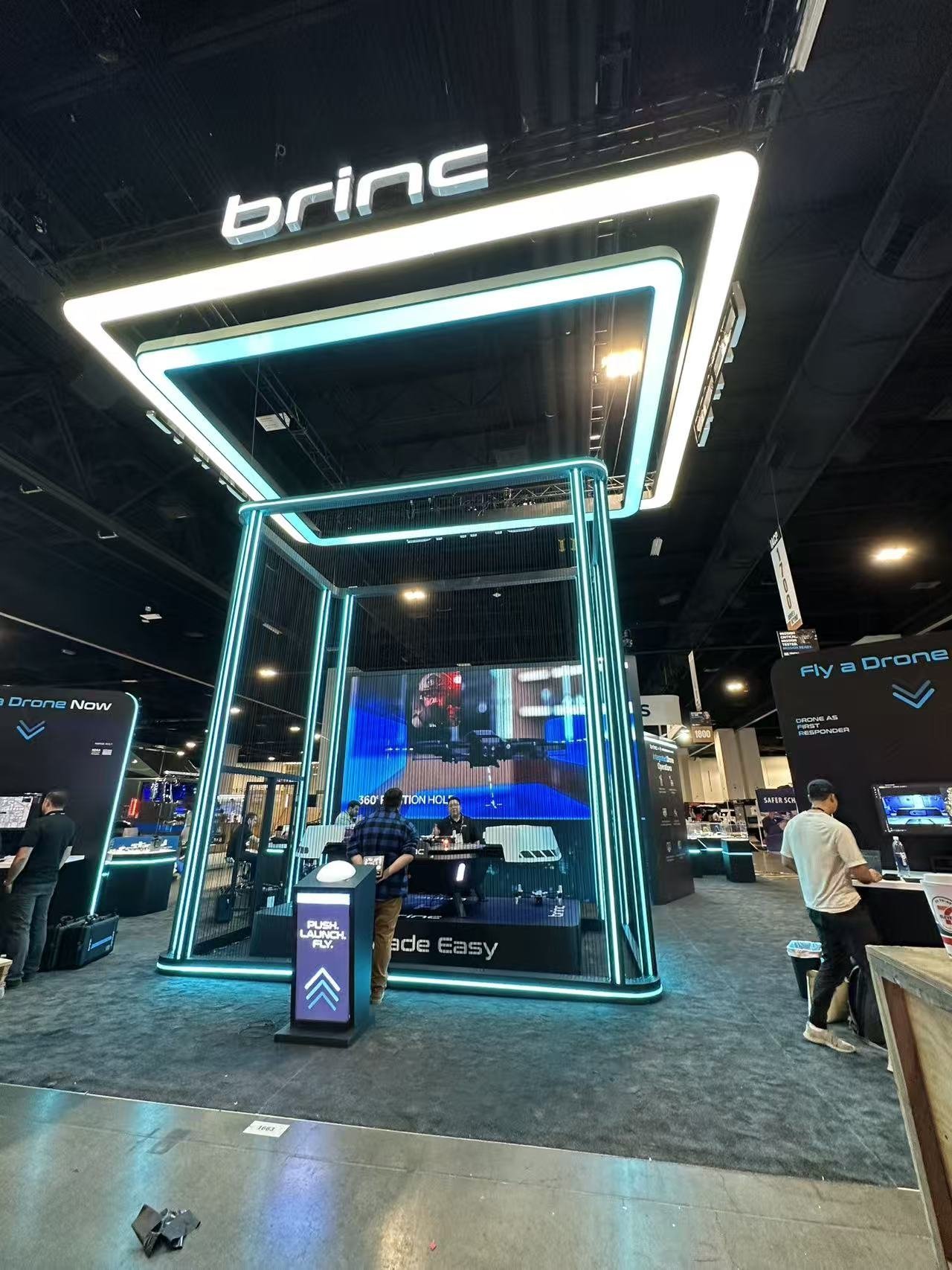
Live product demonstration
Use a live demo when operation, handling, output, sound, speed, changeover, or visible performance matters. State the test conditions and show the limits. Plan reset time, consumables, waste, guarding, staff competence, utilities, and a fallback if the equipment cannot run.
A demonstration is not automatically experiential. If one employee performs a memorized routine while everyone watches from a distance, it may still be a presentation. Give the buyer a meaningful choice or question that changes the demonstration when safe and practical.
Guided comparison
Use a side-by-side comparison when buyers struggle to see the difference between materials, finishes, components, or outputs. Keep conditions fair and label them. If your preferred sample receives special preparation while the alternative does not, you have created a sales trick rather than useful proof.
Let visitors handle, inspect, or evaluate only when doing so is safe and the result can be interpreted without misleading them. A sample comparison should lead to the application conditions that require further review.
Configuration experience
Use configuration when the product varies by size, feature, environment, compliance requirement, process, or integration. Ask for a few inputs, show the tradeoffs, and save the result.
Do not present the output as a final engineering or commercial recommendation if it has not gone through the company's normal review. The useful result may be a prepared set of questions for the next call, not an instant quote.
Diagnostic conversation
Some of the best B2B experiences need no device. A specialist can guide the buyer through a process map, failure sample, drawing, or application tree. The buyer explains the current condition; the specialist identifies what must be measured or tested next.
This works when staff are trained to listen and record. It fails when the “diagnostic” becomes a disguised product pitch before the buyer finishes describing the problem.
Simulation or digital model
Use a simulation when the real process is too large, dangerous, slow, expensive, or invisible to reproduce on the floor. Clearly label the assumptions. Let the buyer change inputs that matter, then connect the output to a real-world validation step.
High visual quality cannot rescue a model that answers the wrong question. Start with the decision, data, and explanation; choose the screen, projection, headset, or physical control afterward.
Design the booth around participation, observation, and conversation
An experience consumes space in more ways than its equipment footprint.
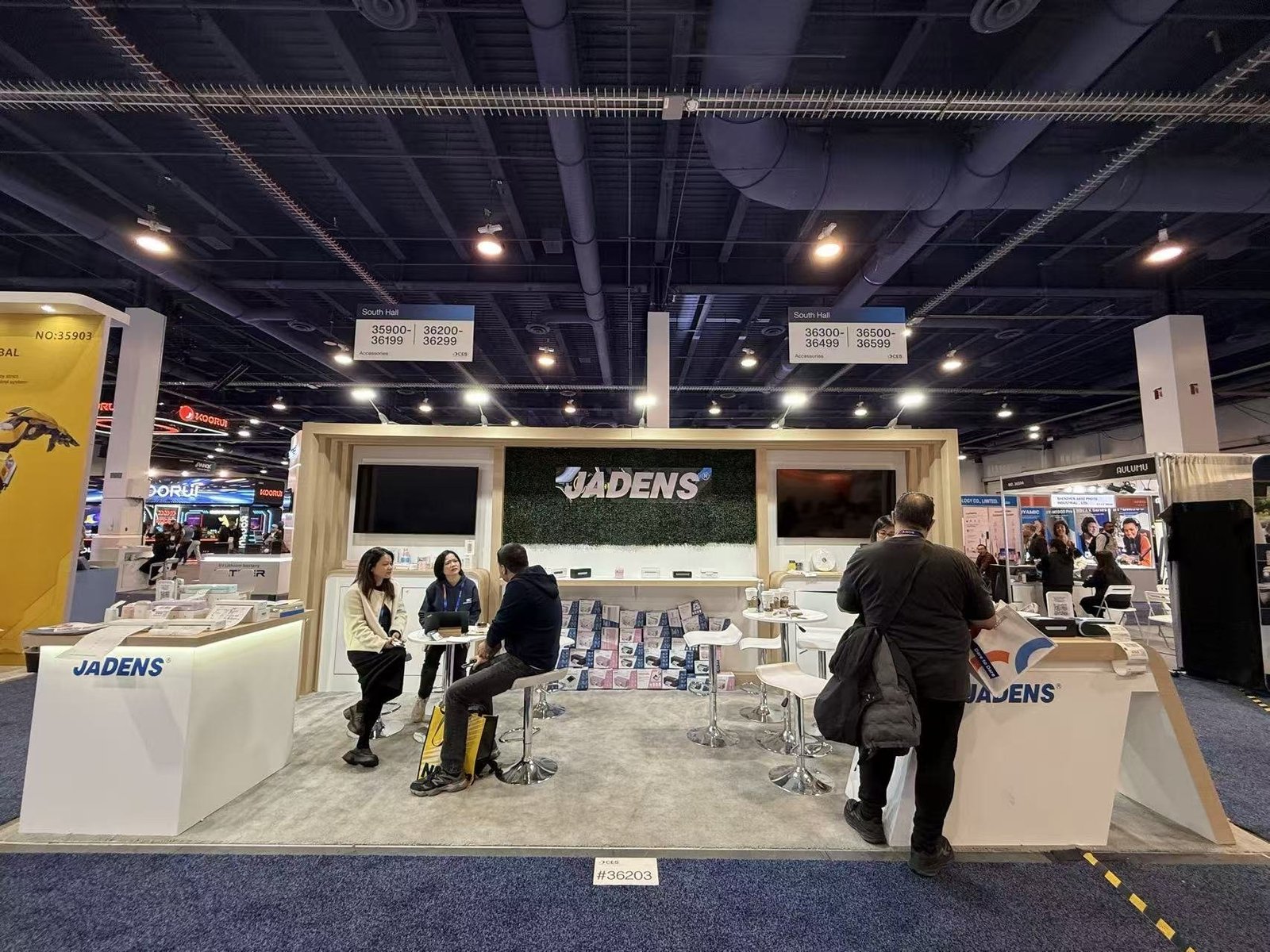
Map five zones:
- Recognition: the aisle view that tells the right visitor why the experience is relevant.
- Orientation: the place where staff explain the activity, wait time, and safety conditions.
- Participation: the working area for the buyer, specialist, equipment, and inputs.
- Observation: a place for colleagues or waiting visitors to see without blocking the aisle.
- Continuation: a quieter place to discuss the result, capture context, or book the next action.
Add the invisible space: queue, wheelchair turning, staff movement, doors, storage access, cable paths, waste, product replenishment, cleaning, and emergency clearance. A rendering that shows only the activity at its quietest moment is not an operating plan.
Test the layout at peak use. Put real people in the footprint, including the person operating the demo and the person recording the result. If a participant blocks the headline, a queue enters the aisle, or a cabinet cannot open, change the plan before production.
Make staff part of the designed experience
The same build can feel helpful or awkward depending on the team operating it.
Assign specific roles:
- opener who recognizes likely participants and sets expectations;
- guide who explains the activity without overtalking;
- technical specialist who can interpret the result and state limits;
- flow owner who manages waiting, resets, and staff breaks;
- record owner who captures the buyer's input, result, and next action;
- backup person who can safely stop or recover the experience when something fails.
Train with realistic visitors, not only the perfect script. Include a qualified buyer in a hurry, a group with different roles, a person who wants to watch first, a visitor outside the target market, a failed device, a missing specialist, and a result that does not favor the expected product.
Staff need permission to say, “This test does not answer that question,” or “We need your application engineer involved.” A confident limit builds more trust than a forced answer.
Capture the buyer's input and result, not just identity
If the experience reveals application information, the lead record should preserve it. A badge scan without context breaks the experience at the moment sales receives the lead.
Useful fields may include:
- activity or proof method used;
- buyer's sample, application, role, or selected condition;
- result observed or configuration created;
- question the result answered;
- issue that remains unresolved;
- material or action promised;
- responsible owner and expected time;
- permission or communication preference required by the approved process.
Ask only for information that affects the experience or follow-up. Do not interrupt a useful technical exchange with a long form designed for every possible campaign. Staff can complete structured fields after the conversation if the buyer's own words are preserved.
Use technology only when it changes the experience
Technology earns its place when it helps the buyer do something that would otherwise be difficult: reveal an internal process, compare complex variables, see inside equipment, configure many options, collaborate with a remote expert, or save a personalized result.
It does not earn space merely because the marketing team owns a touchscreen. Before approving any device, answer:
- What buyer action does it enable?
- What information goes in and what useful result comes out?
- Can a visitor understand it without a staff tutorial?
- What happens when the network, login, sensor, or screen fails?
- Who resets, cleans, charges, and monitors it?
- Can the same goal be achieved more clearly with a physical sample or person?
Plan an offline path. A printed comparison, local copy of the model, sample board, or manual capture form can preserve the conversation when a digital layer fails.
Protect access, safety, and trust
Participation should not exclude people who cannot stand for long periods, reach a control, hear audio, distinguish a color, read small text, wear a headset, or safely handle the product. Offer equivalent ways to understand the result where practical: seated access, captions, physical controls, high-contrast instructions, staff-guided alternatives, or a non-headset display.
Review moving equipment, heat, liquids, chemicals, lasers, food, samples, platforms, dark spaces, cables, and crowd behavior with the show's required safety and approval process. A disclaimer does not replace guarding, supervision, or an approved operating plan.
If the experience collects personal, application, image, audio, or behavioral data, explain the exchange and follow your approved privacy process. Do not hide data collection inside a game or badge scan. Trust lost during the activity cannot be repaired by a polished follow-up.
Measure progress in the buying conversation
In experiential trade show marketing, crowd size and dwell time may describe activity, but they do not prove useful buyer progress. Choose measures that follow the experience design: When the interaction requires a built booth environment rather than a standalone activity, review experiential trade show booth options against the visitor task.
- relevant visitors invited to participate;
- qualified participants who completed the key action;
- comparisons, configurations, or diagnostic records created;
- technical questions identified;
- samples, tests, reviews, or meetings agreed;
- named accounts that participated;
- promised results delivered on time;
- sales acceptance and progression under the company's normal definitions;
- participants lost because of queue, failure, confusion, access, or missing staff.
Measure the loss points as seriously as the wins. If target buyers watch but do not participate, the invitation may feel risky or unclear. If they participate but no context reaches sales, fix capture. If the follow-up occurs but ignores the result, fix the handoff.
Do not give a prize drawing credit for every person who approached the booth. Keep general traffic, activity participation, qualified conversation, and sales progress as separate stages.
Write a brief that suppliers can actually build
An experiential marketing brief should include:
- the one primary buyer and the problem they recognize;
- the action the buyer takes;
- the result or evidence created;
- the next sales action;
- expected duration and peak throughput;
- staff roles and required expertise;
- equipment, samples, consumables, utilities, and data inputs;
- reset, cleaning, storage, and waste requirements;
- access, safety, privacy, and show-approval conditions;
- offline fallback and stop conditions;
- lead fields and follow-up output;
- test plan and owner.
Avoid asking separate suppliers to invent these answers independently. If the agency designs a story, the exhibit partner designs a structure, the product team brings a machine, and sales builds the follow-up without a shared operating brief, the gaps will appear on the show floor.
Test the full handoff, not just the device
Run the experience with people who were not involved in creating it. Give them a realistic buyer role and a time limit. Observe without explaining what they are supposed to notice.

Test from the aisle through follow-up:
- Can the right person recognize relevance?
- Do they know how to begin?
- Does their input change the experience?
- Can they understand the result and its limits?
- Can staff capture it while keeping the conversation natural?
- Does the promised output reach the correct owner?
- Can that owner write a relevant follow-up without asking what happened?
- Can the team recover when one component fails?
Repair the first point where context disappears. A perfect screen test is not a successful rehearsal if nobody knows who sends the result afterward.
Frequently Asked Questions
Does experiential marketing require a large trade show booth?
No. A 10-by-10 booth can support a focused comparison, configuration, sample review, or guided diagnostic conversation. The scope must match the space: short participation, controlled waiting, minimal equipment, and a clear place for the next conversation.
Should every visitor be allowed to participate?
Set a fair and visible participation rule based on capacity, safety, relevance, and event requirements. During busy periods, offer a shorter preview or appointment option rather than pretending everyone can complete a five-minute activity immediately.
Can we reuse the same experience at different trade shows?
You can reuse the core proof when the buyer problem and physical conditions remain valid. Recheck audience, message, language, hall rules, utilities, staffing, and follow-up for each show. Reuse the mechanism; do not assume the context is identical.
How early should the experience be defined?
Define the buyer action and operating requirements before the booth scope is frozen. Anything involving machinery, rigging, utilities, custom software, data integration, specialist staffing, or formal approval needs enough time for drawings, orders, testing, and a fallback.
What if the experience attracts people who are not target buyers?
Do not blame the crowd first. Check whether the aisle message promises entertainment instead of relevance, whether the activity can be seen without entering, and whether staff have a respectful qualification path. Separate general participants from qualified conversations in the report.
Make the experience useful even when nobody posts it
Before approving the idea, remove the camera, giveaway, and crowd from the rendering. Ask whether the right buyer would still learn something, contribute useful context, and accept a sensible next step.
If the answer is yes, you have the basis of an experiential trade show program. Then the booth, media, technology, and hospitality can strengthen it. If the answer is no, return to the buyer's decision before spending more on the format. Connect the chosen experience to the trade show booth design process while layout, utilities, staffing, and approvals can still change.