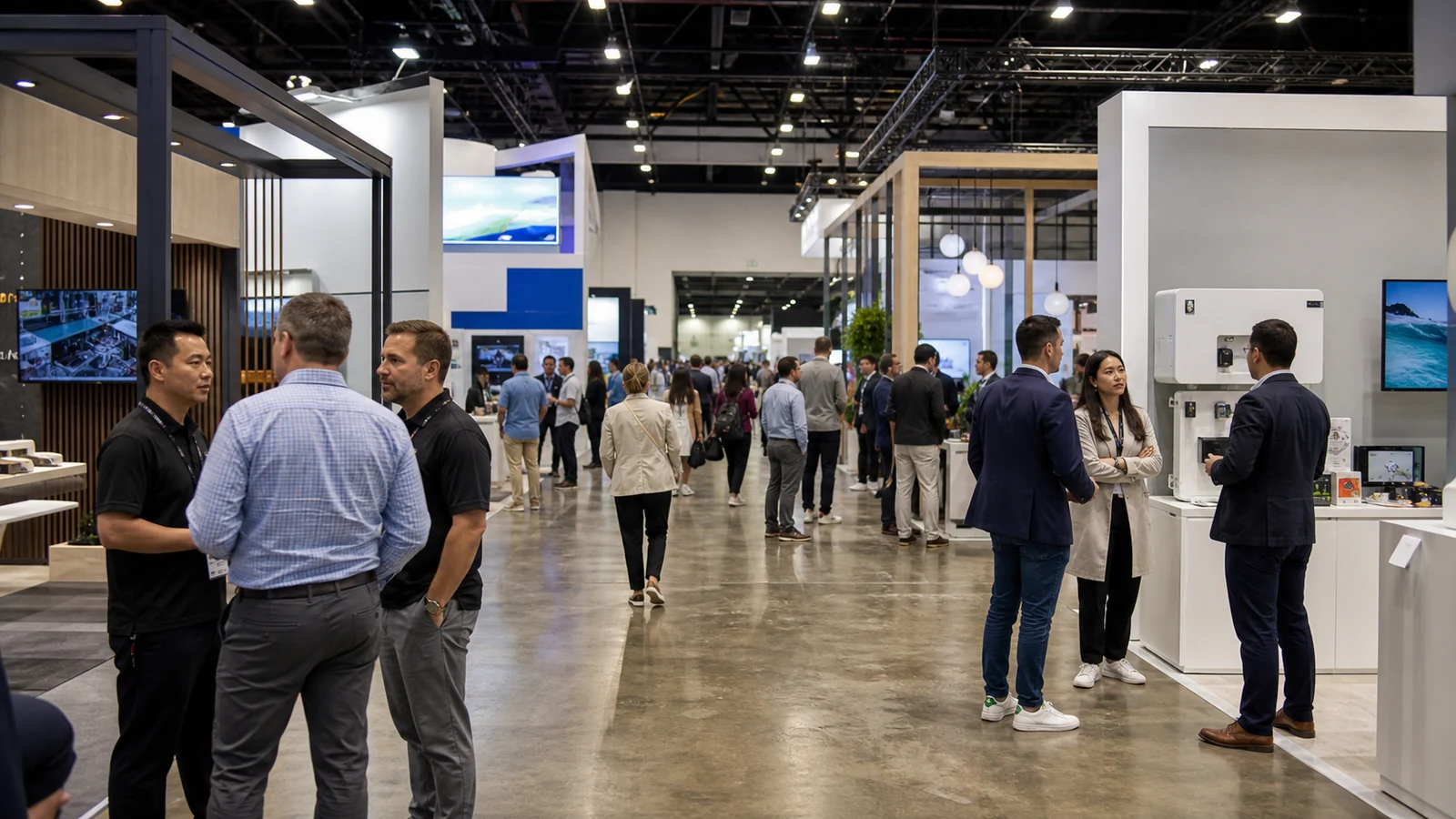
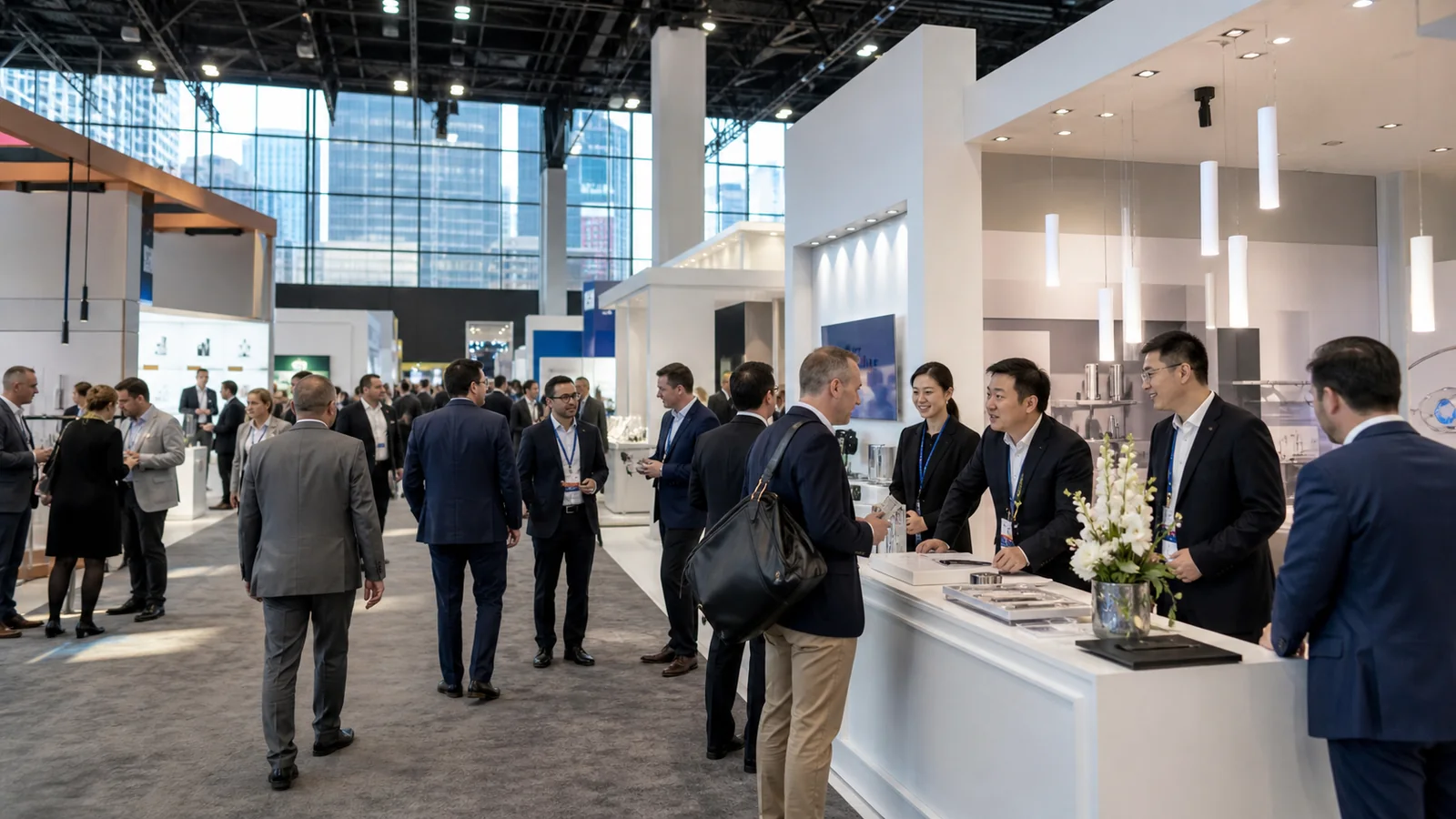
NeoCon in Chicago is a commercial interiors trade show. If you are deciding whether to take a product there, start with a harder question than booth size: can a designer or specifier understand where the product fits, verify what you claim, and move it into a live project? This guide gives you the current 2027 show facts, a go-or-no-go test, and a practical way to decide what to display, which documents to bring, who must attend, and how to follow up.
The 2027 event at a glance
| Item | 2027 information |
|---|---|
| Event | NeoCon |
| Dates | June 13-16, 2027 |
| Preview Day | Sunday, June 13, 12:00 p.m.-4:00 p.m. |
| Main show hours | Monday, June 14, 9:00 a.m.-5:00 p.m.; Tuesday, June 15, 9:00 a.m.-5:00 p.m.; Wednesday, June 16, 9:00 a.m.-3:00 p.m. |
| Venue | The Mart, Chicago |
| Address | 222 Merchandise Mart Plaza, Chicago, Illinois 60654 |
| Core product categories | Acoustics and Privacy; Flooring; Furniture; Interior Products and Solutions; Lighting; Outdoor; Technology; Textiles |
| Markets represented | Workplace and Corporate; Healthcare; Higher Education; Hospitality; Retail; Government and Institutional; Public Spaces |
The table is enough to reserve the show dates and start travel planning. It does not tell you when freight can arrive, when installers may work, or which services are included in a booth. The detailed 2027 exhibitor manual and service schedule are not yet available, so confirm those items before you commit labor, shipping, demonstrations, or private events.

Before spending on a display, compare your strongest application with the official product categories and markets above. If you cannot name one listed market sector where the product solves a real project problem, a visit may be more useful than an exhibit. NeoCon's planning page says attendee registration opens in February and names onPeak as the only hotel provider endorsed by NeoCon for 2027. Those travel details are current; they are not a substitute for an exhibitor contract.
Decide whose project decision you need to move
NeoCon serves commercial interiors, where a product rarely moves from first look to purchase through one person. Design interest may come first, followed by a documentation review, a dealer's availability check, and the client's questions about maintenance. These are stages in one buying path, not four audiences you should address with four unrelated messages.
Choose the project decision your exhibit should advance. It might be permission to send a sample for an active project, an invitation to a specification review, or an introduction to the dealer who can quote the work. Pick one primary outcome. A goal such as "increase awareness" will not tell your team what to show or what to record.
Then speak with someone who already works on the kind of project you want. Ask which detail would make the product worth a stop, which document would be checked next, and what usually prevents a new overseas brand from progressing. If your team still cannot name the market sector, project stage, and next action, the audience fit is too broad to justify a large launch.
Decide whether your product is ready to be specified in the United States
The strongest NeoCon conversation begins before the event, when your product, technical, sales, and supply teams agree on what can be shown and supported. Put their answers on one working sheet:

- Which model, finish, construction, and installation method will be displayed?
- Which current document supports each performance or environmental claim?
- What can the U.S. team quote, sample, ship, install, replace, and service now?
- Who will answer when a field condition falls outside the standard configuration?
Bring the dimensions, finish options, configuration limits, installation method, care instructions, warranty terms, and current availability that apply to the exact units on display. When performance matters, connect the test method and result to the tested thickness, assembly, substrate, adhesive, power supply, or other relevant condition. A component certificate does not automatically cover the finished product beside it.
For an overseas supplier, the U.S. delivery path is part of the product decision. Be ready to say where samples ship from, which finishes are stocked or made to order, who supports installation, and how replacement parts are handled. If the channel is still being built, separate what is active now from what is planned. Do not turn an unconfirmed lead time, service response, certification, or warranty into booth copy.
If this sheet still contains guesses, fix the evidence or narrow the product selection before designing the display. A larger stand will only make the gaps easier to see.
Show the product in a commercial condition, not a showroom fantasy
At The Mart, visitors move between finished environments, individual products, temporary exhibits, and permanent showrooms. Choose one commercial use condition for your launch and let the product answer the questions that condition creates.
Let visitors sit in and adjust seating rather than view it behind a barrier. Give flooring enough area to reveal pattern repeat, transitions, edge treatment, and the effect of traffic and light. For acoustics, lighting, textiles, or connected products, expose the construction or run a real task so the visitor can understand installation, controls, cleaning, access, and limits. You do not need to demonstrate every feature; answer the question that would otherwise stop the buyer from taking the next step.
Place a short identification card beside the display with the product name, intended use, configuration being shown, one supported fact, and a route to current documents. Keep samples and technical sheets within reach. Visitors should not have to wait for a salesperson or scan a code simply to learn what the product is.
Use a room setting only when it makes the application clearer. If the scenery draws more attention than the launch, remove it. When the important mechanism is hidden, a cutaway, removable section, working model, or short guided demonstration will do more work than another lifestyle graphic.
Plan for The Mart as a vertical destination
NeoCon is not a single flat convention hall. The Mart combines permanent showrooms with temporary opportunities, including the 7th Floor Exhibit Hall promoted to current exhibitors. Your location therefore affects appointment timing, wayfinding, booth scope, and the amount of effort required to earn a visit.

The current exhibit page lists a package per 100 square feet, approximately 10 by 10 feet, with white hard walls, gray carpet tile, a 120-volt 150-watt outlet, LED lighting, a booth sign, exhibitor Wi-Fi, and an exhibitor listing and profile. Treat that list as a starting point. The signed 2027 contract and service documents must decide what is included, what can be changed, and what costs extra.
Before design release, get four groups of answers in writing: the price, payment, and cancellation terms; the exact location, package, and boundaries; labor, insurance, freight, move-in, and move-out rules; and the authorized registration, lead-capture, event, and service-ordering process. Do not borrow an electrical allowance, floor plan, vendor, or deadline from the 2026 resource page.
Make each invitation easy to act on. Include the floor, showroom or booth number, a nearby landmark, the person hosting the meeting, and the product question worth the trip. When the 2027 exhibitor profile opens, complete the official NeoCon Exhibitor Directory entry rather than relying on a social post to explain where you are.
Build one product story that a specifier can retell
Commercial interiors launches often arrive with a theme, designer biography, material story, and long feature list. Most visitors will carry only one useful sentence into the next meeting. Write that sentence before you approve the graphics:
Use this sentence: "For this type of space, the product solves this project problem by working in this specific way, within these limits."
Now prove the sentence. If flexibility is the point, let the visitor make the adjustment and show where the range ends. Support a sustainability statement with the relevant material record, disclosure, repair plan, or take-back condition. Keep health language within the observable or tested result; a design intention is not a clinical outcome.
State one trade-off as clearly as the benefit. Extra configuration may require more decisions; a pale finish may need a defined cleaning method; a connected product may introduce power, network, update, or IT approval work. This helps the visitor place the product in the right project instead of discovering the limitation after the show.
Prepare a 20-second reason to stop and a two-minute explanation that ends with the agreed next action. Discuss technical details with the relevant sample, drawing, or test document in front of both people. Remove any headline claim your team cannot support in that conversation.
Organize samples and documents around a live project
A sample has to remain useful after it leaves your hand. Label each piece with the product family, color or finish code, key construction, contact route, and a stable location for current documents. If the label separates from the sample, the follow-up record should still identify what was given.

Before handing over a large set, ask what space is being designed, where the project sits in the selection process, and which decision is still unresolved. Send the sample that answers that question, then record who owns the next reply and when it is due. Material-library sample requests need a different follow-up from mock-up requests tied to active projects.
Use QR codes for current specification sheets, BIM or CAD files, environmental documents, installation guides, or sample requests. Test every destination on a phone and keep it live after the event. Printed product identification and a contact route remain necessary when a visitor cannot or does not want to scan.
Staff the exhibit for design and specification conversations
Put a person's name beside four responsibilities before the team travels: product demonstration, technical proof, U.S. price and availability, and follow-up ownership. Several responsibilities may sit with the same person, but every visitor question needs a clear handoff.
Rehearse the conversations that could expose a gap. What happens when the displayed finish is not stocked, the test report covers a different construction, or a dealer needs an answer the product manager cannot give? Agree on honest language, the person who will verify the answer, and the time by which the visitor will hear back.
Teach staff to separate praise from project intent. "I love this" opens a conversation; it does not qualify the opportunity. Ask what project or material library the visitor has in mind, when selection happens, and what would allow the product to move forward. Record that next step instead of assigning a hot, warm, or cold label.
The current exhibitor resource page names XPress Leads for active badge scanning in 2026 and SmartZone towers for passive capture in permanent showrooms. That does not confirm the vendor, price, device, or availability for 2027. Ask NeoCon which tools are authorized for the new edition, what data they capture, and how records can be exported and handled with consent. Do not buy a third-party "NeoCon attendee list"; the organizer says it does not sell or share those lists and calls such offers fraudulent.
Make the exhibit decision before committing the build
Answer these questions before you ask for a booth design:

- Can you name the official NeoCon market sector and project use that fit the launch?
- Does physical evaluation or a live demonstration change the buyer's decision?
- Are the displayed claims supported for the exact product configuration?
- Can your U.S. route supply samples, quotations, installation help, and replacements?
- Does every meaningful conversation have an owner and a next action?
When one answer is no, decide whether the gap can be closed before the show. When several answers are no, attend first. Use the visit to watch how relevant brands present products across The Mart, ask what evidence project teams request, and identify the channel partners or technical work you need before exhibiting.
If the answers are yes, request the current opportunity, contract, location, package, payment and cancellation terms, service manual, insurance requirements, freight route, approved vendors, event rules, and 2027 deadlines from the official exhibitor sales team. Do not authorize the final build until those documents agree with the design and budget.
Frequently asked questions
Can we book travel before the 2027 exhibitor manual is published
Yes, but separate travel facts from booth operations. NeoCon has published the June 13-16 dates, says registration opens in February, and identifies onPeak as its only endorsed hotel provider for 2027. Check the booking terms before paying. Wait for the current exhibitor documents before fixing freight, labor, installation, or event schedules.
What should we prepare for the 2027 Exhibitor Directory
Prepare the assets, but wait for 2027 access before entering them. The 2026 resource page says the company profile fed the official NeoCon Exhibitor Directory and accepted a logo, product images, videos, and events; it also used filters such as certifications, country, and events. Review those materials now, remove expired claims, and confirm the 2027 fields and login route when NeoCon issues them.
How should an overseas exhibitor plan sample shipping
Do not guess an arrival date from the 2026 page. Ask for the 2027 freight instructions, receiving address, advance-warehouse and direct-to-show windows, labeling rules, material-handling charges, and dock appointment process. Add customs clearance and a local backup for the most important demonstration item before you promise an opening-day setup.
Should the display show a price
Show budget guidance only when your U.S. sales team can explain the configuration, quantity, freight, installation, tax, and validity assumptions behind it. Otherwise, give the visitor a clear route and deadline for a project-specific quote. An unsupported low figure attracts the wrong conversation and creates a correction later.
Who owns follow-up when a dealer is involved
Name the owner before the visitor leaves. Your product team should confirm the technical answer, the dealer should own the local quotation or account relationship, and the marketing lead should make sure the promised sample or document reaches the right person. Put all three names and the next date in one record so the lead is not handed off without accountability.
Final thoughts
Your NeoCon decision should not begin with stand size. It should begin with whether one target buyer can experience the product, verify the claim, and carry it into a real project. Use the official 2027 facts to confirm the opportunity. If the documents, live demonstration, U.S. supply route, or follow-up owners are still not ready, attend first and finish that work before paying for a larger stage.