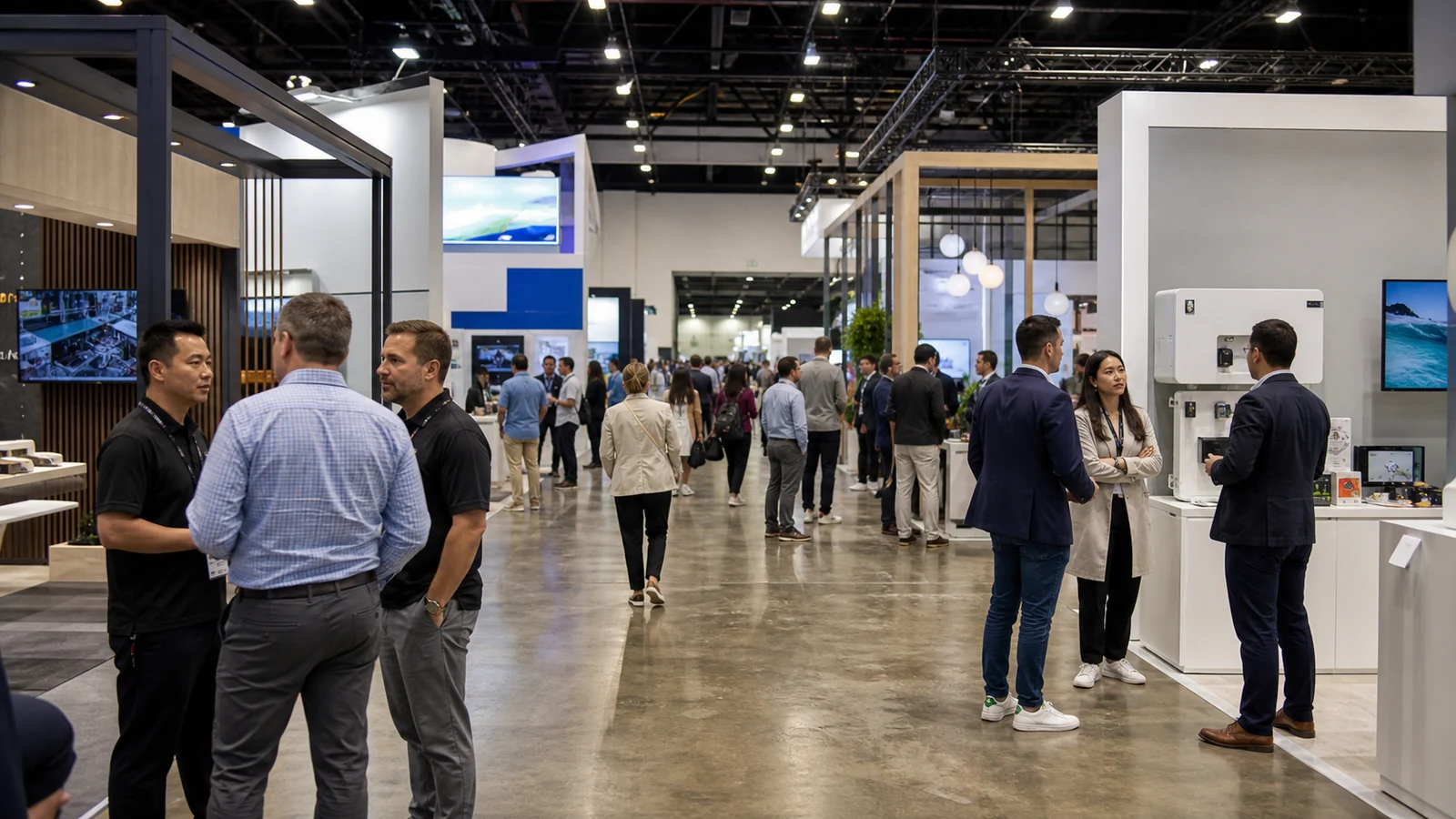
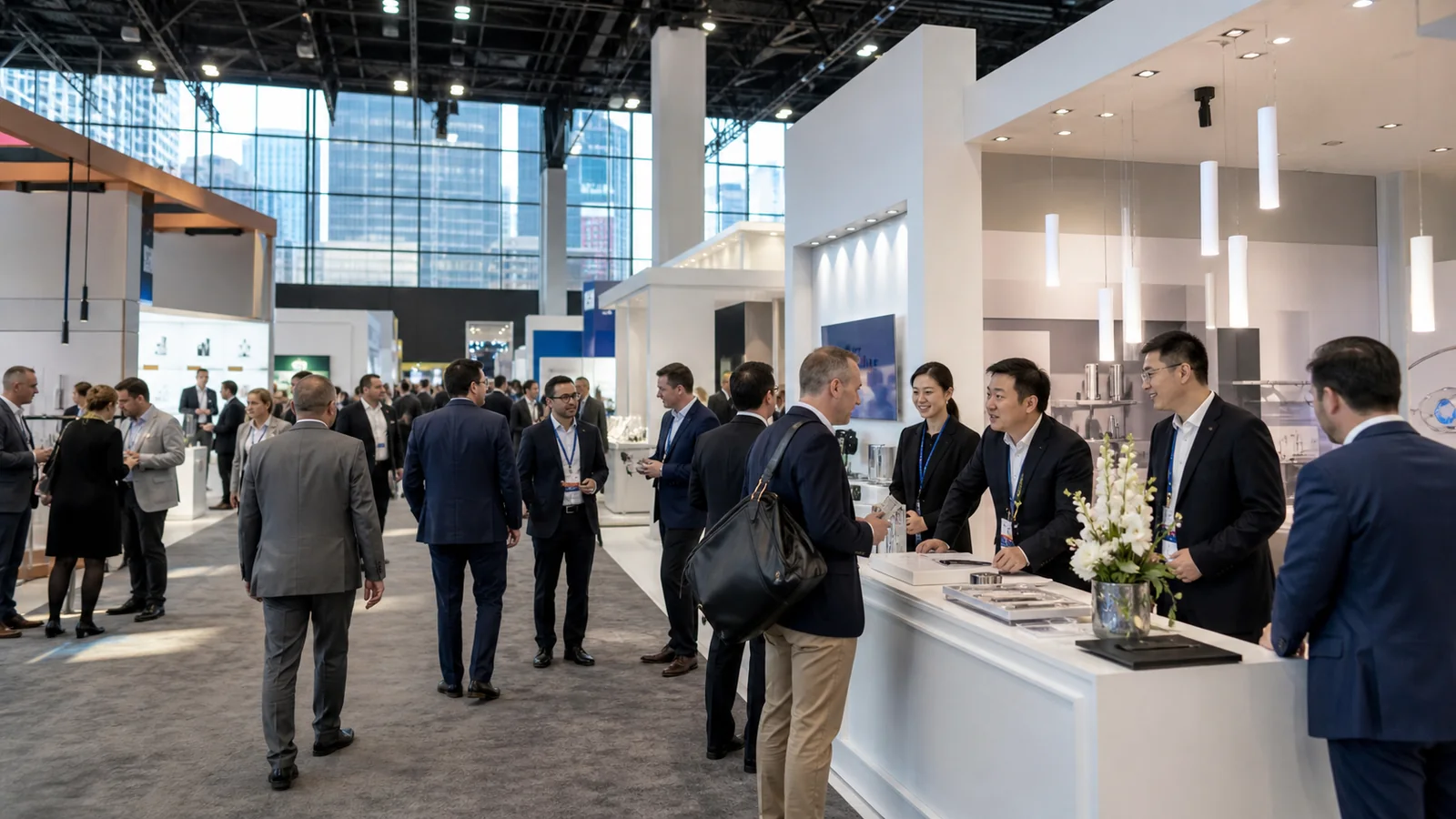
If you are considering World of Asphalt, the useful question is not whether asphalt contractors attend. It is whether your booth can help a contractor judge how your product changes production, paving, maintenance, safety, or fleet performance. The 2027 show runs with AGG1 in New Orleans, so you may also meet aggregate producers and material-handling teams. This guide helps you decide whom to target, what to demonstrate, and what must be settled before heavy equipment ships.
The 2027 show at a glance
| Item | 2027 information |
|---|---|
| Dates | March 15–17, 2027 |
| Hours | Monday–Tuesday, 9:00 a.m.–5:00 p.m.; Wednesday, 9:00 a.m.–2:00 p.m. |
| Venue | Ernest N. Morial Convention Center |
| City | New Orleans, Louisiana |
| Co-located event | NSSGA's AGG1 Aggregates Academy & Expo |
| World of Asphalt owners | NAPA, AEM, and NSSGA |
| Main product scope | Asphalt production, paving, maintenance, aggregates, earthmoving, technology, safety, tools, and infrastructure maintenance |
| Standard installation period | March 12–14, 2027; stands complete by 5:00 p.m. March 14 |
| Standard dismantling period | Begins after 2:00 p.m. March 17 and continues through noon March 19 |
The rules set official exhibition hours and standard installation windows, but your target move-in time comes from the official contractor. Treat that target as a freight appointment, not a suggestion. Confirm the latest service manual, assigned time, equipment route, labor orders, and storage plan before dispatch.

Understand what the AGG1 co-location changes
World of Asphalt focuses on asphalt production, paving, pavement maintenance, traffic safety, business operations, and related equipment. AGG1 adds the quarry, crushing, screening, conveying, and aggregates side of the material chain. They share an exposition period, but they remain separately defined shows with different industry eligibility.
That overlap can be useful when your product sits between the plant, stockpile, truck, paver, roller, and finished road. A conveyor component, telematics platform, scale system, wear part, dust-control solution, or material-handling machine may interest more than one operation. It does not follow that the same message works for everyone.
Choose the operating handoff your product improves. Does it protect mix consistency from production to placement? Reduce queueing at the plant? Give the paving crew usable temperature or location data? Cut a maintenance task that holds up the fleet? A clear handoff is more credible than claiming to optimize the entire road-building process.
Target one contractor decision first
Official audience material includes contractors, producers, dealers, distributors, public agencies, engineers, owners, fleet and project managers, operators, and field teams. For a manufacturer entering the U.S. market, the best primary audience is usually not “the asphalt industry.” It is the person who owns one operational decision.

An owner or senior executive may judge return, support coverage, financing risk, and supplier stability. A fleet manager looks at uptime, parts, diagnostics, service access, and operator acceptance. A project manager wants dependable production, schedule control, documentation, and fewer surprises on the job. An operator notices visibility, controls, setup, cleaning, safety, and the steps that marketing material often ignores.
Write one meeting question before designing the exhibit. For example: Can a paving contractor determine whether this machine will reduce a specific crew delay? Can a plant manager compare wear life and change-out time? Can a fleet manager see how a fault is diagnosed and who supplies the part? If the booth cannot support one such decision in five minutes, adding more machines will not fix it.
Demonstrate a job, not a machine pose
Large equipment naturally attracts attention, but a parked machine can still leave the buyer with no reason to change suppliers. Build the demonstration around a real job sequence: setup, operation, adjustment, cleaning, inspection, maintenance, transport, or recovery from a common fault.
Show the operator's touchpoints and the manager's evidence together. A control improvement should be visible at the interface, then supported with the operating condition, response time, tolerance, alarm logic, or work step it changes. A wear component should show material, location, removal method, service interval assumptions, inspection point, and the conditions behind any life comparison.
Video is useful when heat, noise, motion, material flow, emissions, or floor rules prevent a live process. Use real footage from a named type of operation and label simulated screens or accelerated sequences. Keep a physical sample, cutaway, interface, or service task in the booth so the conversation does not become a looped promotional video.
Do not publish fuel savings, production gains, service-life multiples, or payback periods without conditions. State the machine, material, operating range, test period, baseline, and excluded variables. Contractors know that haul distance, mix, weather, crew practice, grade, maintenance, and utilization can change the result.
Make equipment fit and service support easy to verify
A U.S. buyer considering an unfamiliar manufacturer will often test support risk before product ambition. Prepare the dimensions, operating weight, transport configuration, axle or trailer assumptions, power or fuel needs, compatible carriers or plants, attachment interface, hydraulic and electrical requirements, setup time, and normal maintenance access.

Then show the support path. Identify stocked wear items, recommended spares, diagnostic access, service-document language, training format, warranty boundaries, response ownership, and the person who handles a machine-down case. If a distributor provides local service, distinguish what the distributor stocks and repairs from what still depends on the factory.
Avoid using “nationwide service” as a headline unless the network and response scope can be demonstrated. A smaller but real support footprint, with named coverage and an escalation path, is more useful than a large claim the buyer cannot test.
Plan the booth around the equipment route
For heavy exhibits, booth design starts with how the machine enters, sits, operates, and leaves. Obtain the assigned target move-in, door and dock limits, floor-loading confirmation, rigging process, marshaling instructions, empty-crate plan, and official labor requirements before finalizing the layout.
Mark service clearances and moving envelopes on the floor plan. Visitors should not stand inside a pinch point or block the operator's sightline. Keep hoses, cables, steps, samples, screens, and opened service panels within the contracted space and away from the aisle. If a component must be removed during the demo, provide a stable handling method rather than asking staff to improvise.
The official rules recognize designated demonstration areas, but that does not give an exhibitor permission to run any machine or process. Submit motion, sound, emissions, batteries, fuel, fluids, compressed air, heat, dust, lifting, or outdoor-use plans to show management and the approved service providers. The final operational boundary must come from written approval.
Check eligibility before a distributor-led exhibit
World of Asphalt exhibitors must manufacture relevant equipment, components, or parts, or provide asphalt-industry services. The 2027 rules give distributors, rental companies, and product-support providers specific limits: product or product literature may be shown with written permission from an exhibiting OEM, or when the company is the sole U.S. master distributor for a non-U.S. manufacturer.

This matters to an overseas manufacturer that wants a dealer to “handle the booth.” Confirm whose company signs the exhibit contract, whose name appears in the directory, which brands and machines may be displayed, and who supplies the written permission. Do not ship on the assumption that a dealer relationship automatically makes every product eligible.
The rules also bar used equipment displayed for resale. An OEM may use historical equipment as background, and remanufactured equipment is allowed only where the OEM offers remanufacturing as a service. If used, remanufactured, partner-branded, or shared equipment is central to the plan, obtain written acceptance before committing freight.
Use the three show days differently
Monday and Tuesday are full days; Wednesday closes at 2:00 p.m. Put your hardest technical and commercial conversations into protected appointments early in the show. Leave accessible demonstration windows for operators and field managers who want to see the machine without sitting through a company presentation.
Qualify each serious conversation by operation, current process, equipment population, application, material, production or maintenance problem, buying role, replacement timing, service location, and next proof required. A badge scan is not a qualified equipment opportunity.
At the end of each day, compare questions with the booth promise. If visitors repeatedly ask whether the machine fits their transport or plant configuration, the fit information is buried. If they like the concept but stop at service coverage, your support evidence is incomplete. Fix the explanation before the next morning instead of collecting the same objection for three days.
Decide whether to exhibit or attend first
Exhibit when you have a defined U.S. contractor segment, a product that solves one visible operating problem, evidence with stated conditions, and a credible parts and service path. The show is especially relevant when buyers need to inspect scale, access, controls, maintenance, or component fit in person.

Attend first when product eligibility is unclear, the U.S. distributor arrangement is unfinished, the machine cannot be supported after the sale, or the team still describes value with broad efficiency claims. Use a visitor trip to compare how contractors question established suppliers, where World of Asphalt ends and AGG1 begins, and which proof turns a machine discussion into a next step.
Record more than booth ideas. For each relevant exhibitor, note the buyer addressed, job performed, proof shown, fit information, service promise, unresolved question, and follow-up document. That turns the visit into a market decision rather than a photo collection.
Frequently asked questions
What should be included in a post-show equipment quotation
Tie the quote to the exact model, configuration, attachment, delivery point, freight basis, installation, training, warranty, commissioning, and applicable taxes or exclusions discussed. State which performance assumptions came from the buyer and which still require a site review. A machine price without the operating and support scope is not a comparable offer.
When is a cutaway better than shipping the complete machine
Use a cutaway when the buyer's decision depends on wear surfaces, access, adjustment, material path, or service time rather than the full machine operating. It can lower freight and create a clearer technical conversation. Ship the complete unit only when scale, controls, access, transport configuration, or a live task materially changes the evaluation.
What should a U.S. service partner be able to prove
Ask which models and regions it covers, who performs field work, what parts it stocks, how technicians are trained, how a machine-down case is escalated, and which response commitments are contractual. Put the partner's actual responsibility in the follow-up record. A logo and phone number do not establish support coverage.
How should you respond when a contractor's material differs from the demo condition
Explain the material, mix, temperature, moisture, gradation, load, and operating method behind the result shown. Record the buyer's condition and identify what must be recalculated or tested. Do not extend a production, wear, fuel, or quality claim to a different material simply because the machine model is the same.
What should a field trial agreement define
Name the machine and configuration, site, material, crew, test period, baseline, success measure, data owner, safety responsibility, support plan, and what happens after the trial. Agree on who supplies transport, fuel, wear items, operators, and repairs. A handshake promise to “try it on a job” leaves both sides measuring different outcomes.
Final thoughts
World of Asphalt is valuable when your product can survive an operational conversation. Pick one contractor decision, show the work rather than a parked machine, state the conditions behind every performance claim, and make U.S. fit and support easy to verify. If eligibility, distribution, or after-sales coverage is still uncertain, attend first and resolve those gaps before paying to move heavy equipment.