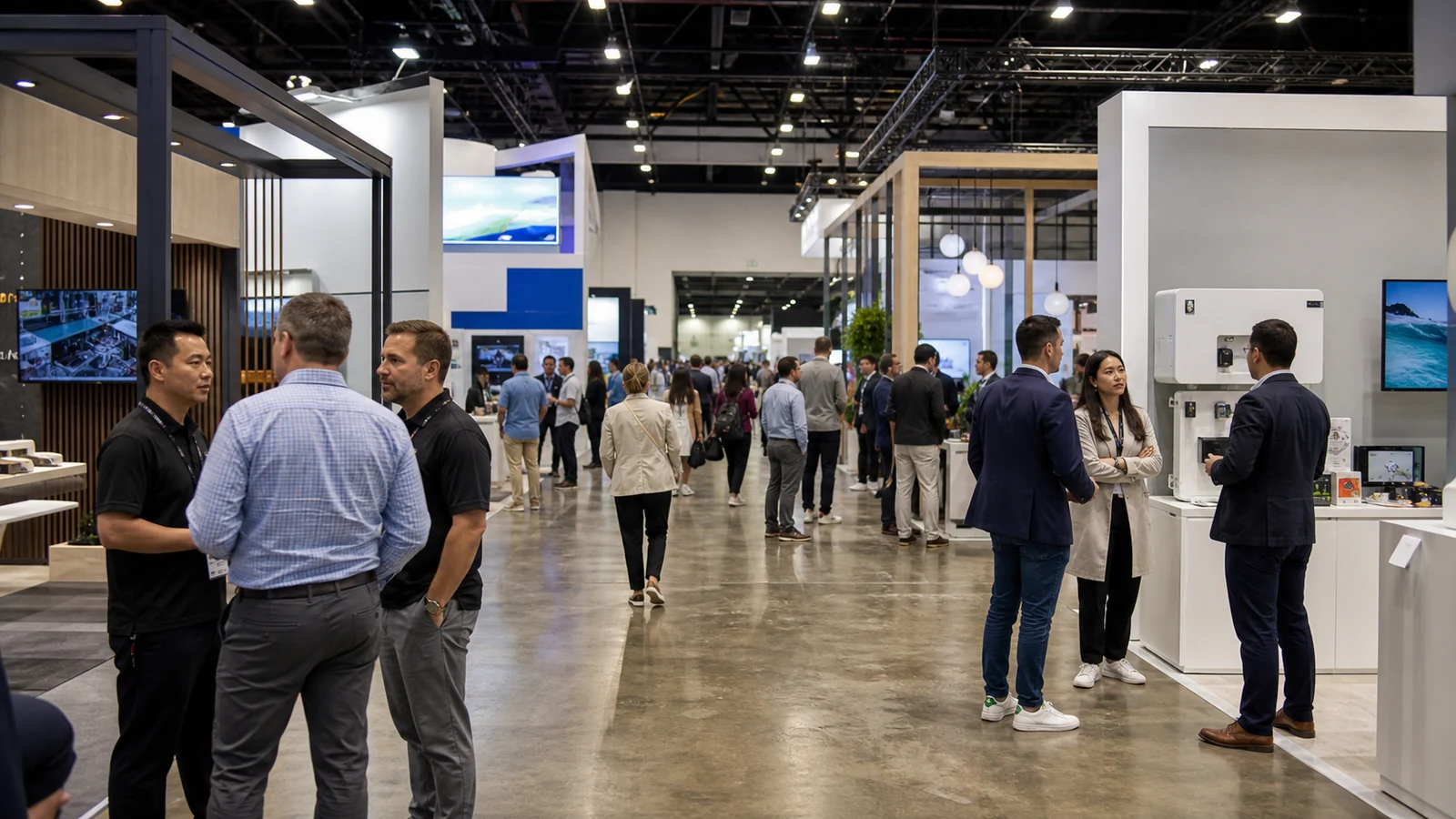
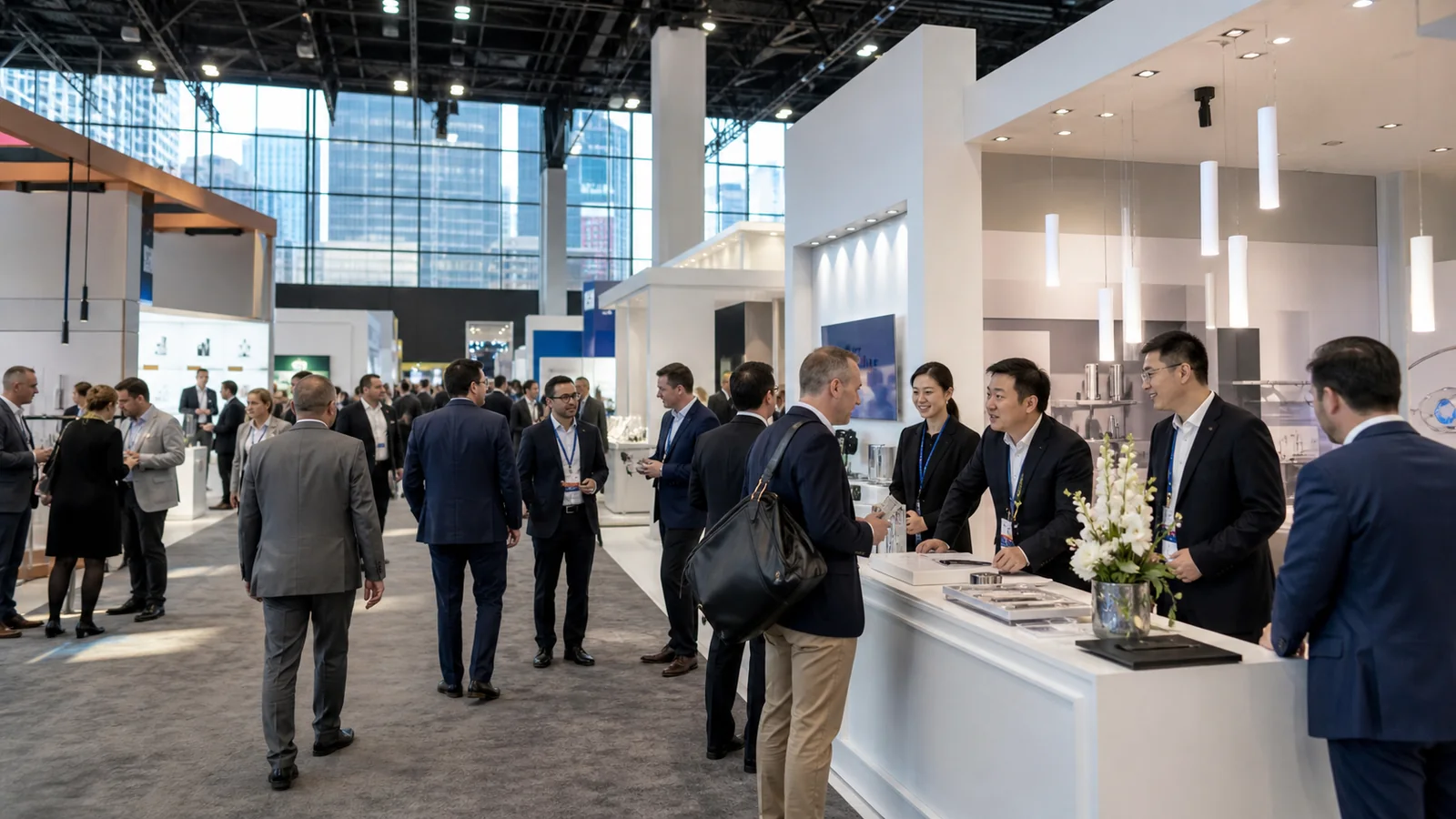
If you are searching for LightFair International in 2027, the event you need to evaluate is Light + Intelligent Building North America. The organizers describe it as a new platform, not a simple rebrand: it carries forward key LightFair strengths while adding controls, automation, software, and building-system integration. This guide explains the 2027 schedule, who the event is for, and how an exhibitor should present a product that must work inside a connected building.
The 2027 event at a glance
| Item | 2027 information |
|---|---|
| Current official event | Light + Intelligent Building North America |
| Relationship to LightFair | New event carrying forward selected LightFair assets and community partnerships |
| Full event dates | March 15–18, 2027 |
| Education-only opening | Monday, March 15 |
| Exhibition opens | Tuesday, March 16 |
| Venue | Las Vegas Convention Center, Central Hall |
| City | Las Vegas, Nevada |
| Main floor sectors | Lighting, Building Technology, Accessories/Components |
| Owners/producer | Messe Frankfurt Inc., IES, and IALD |
The official exhibitor FAQ separates the education-only first day from the exhibition opening. Confirm final expo hours, move-in, and service deadlines in the current exhibitor documents before travel and freight are booked.

How the new event relates to LightFair
LightFair built a North American community around lighting design, products, education, specifiers, agents, and distributors. The new event keeps IES and IALD as partners and preserves design, education, and specifier engagement, but expands the subject beyond luminaires.
The 2027 platform is designed to show how lighting, sensors, controls, software, electrical systems, automation, and building operations work together. Official materials emphasize systems integration, secure controls, commissioning, analytics, efficiency, and real-world performance.
That distinction matters. A previous LightFair booth may have succeeded by presenting the form, light quality, distribution, and application of a luminaire. Those points still matter, but a connected product may now face questions about protocols, control behavior, cybersecurity, commissioning, data ownership, service, and interoperability.
Who you need to reach
The event names architects, lighting designers, specifiers, engineers, integrators, manufacturers, distributors, contractors, facility managers, developers, and building owners among its audiences. The launch announcement also includes IT/OT teams and utilities in the broader building-technology ecosystem.

Do not turn that list into one message. Choose the person whose approval moves your sale forward. A lighting designer may first judge visual performance, application, glare, form, and control intent. An electrical engineer needs electrical and system facts. An integrator needs interfaces, protocols, configuration, fault behavior, and support. A facility team cares about operation, maintenance, data, training, and lifecycle consequences.
Write the primary meeting question before the booth is designed. For example: Can the specifier approve this family for a hospitality project? Can the integrator connect this control without a custom workaround? Can the facility team replace or service the product without locking the building into one supplier?
Choose the right floor sector
The exhibition is divided into Lighting, Building Technology, and Accessories/Components. Choose the sector based on what the buyer must evaluate, not only what your company calls itself.
Lighting includes architectural, decorative, exterior, commercial, and specialty luminaires. Building Technology includes lighting controls, building automation, energy management, integrated security, communications, monitoring, HVAC controls, smart cabling, and system integration. Accessories/Components includes drivers, power supplies, LEDs, optics, sensors, connectors, circuit boards, heat sinks, wires, controls, and other elements inside the system.
A component supplier can be relevant to both fixture manufacturers and system designers, but the booth still needs one primary path. A driver manufacturer speaking mainly to luminaire OEMs should make electrical performance, dimming behavior, reliability, thermal limits, form factor, compliance status, and supply support easy to compare. A building-control platform speaking to integrators needs a different proof set.
Ask for the current floor plan, nearby exhibitors, and feature zones before selecting space. Being placed in the technically correct sector is useful; being near buyers solving the same problem is better.
Show performance, not a wall of specifications
Technical buyers need specifications, but a dense table does not explain why the product belongs in a project. Start with the application and the decision it improves. Then show the few measurements, tests, and system behaviors that prove the claim.
For a luminaire, that may include distribution, output, efficacy, color quality, consistency, glare control, optical options, thermal management, lifetime assumptions, mounting, controls, and maintenance. For a sensor or control, it may include coverage, latency, configuration, fail-safe behavior, network requirements, integration, updates, and commissioning.
Keep claims inside the evidence. “Human-centric,” “smart,” “secure,” “sustainable,” and “interoperable” are not self-proving. State what the product does, under which test or operating condition, with which system, and what remains the responsibility of the designer, integrator, or operator.
Prove integration at the level you actually support
The new event is explicitly built around connected environments, so compatibility statements will receive attention. Separate four different levels: a published interface, tested compatibility, a supported integration, and a completed project. They are not the same.

If a product uses an industry protocol, show the supported version, functions, required gateway, tested devices, configuration steps, and known limits. If an API or cloud service is involved, be ready to discuss authentication, permissions, updates, data storage, offline behavior, and who supports failures.
Do not stage a perfect demo that hides the commissioning work. Show how devices are discovered, addressed, grouped, updated, reset, and diagnosed. If the full system cannot run reliably on show-floor connectivity, use a controlled local network and a recorded backup, then explain which conditions are simulated.
Design the booth around three proof moments
The Lighting sector will have a darkened area, but the entire hall will not be blacked out. Test luminaires under the conditions you can control. Use shielding, a viewing box, a small mockup, or measured comparisons when ambient light would make a live claim misleading.
Build the visit around three short proof moments. First, let the aisle message identify the application and buyer. Second, let a physical or interactive demonstration show the visual or system difference. Third, give the interested visitor the technical evidence and next project step.
Avoid showing every finish, wattage, sensor, gateway, and dashboard on one wall. Organize the family by project decision: application, performance tier, control option, installation condition, or system role. Keep detailed schedules and files searchable at the meeting table.
If the demonstration requires power, data, rigging, special darkness, water, heat, haze, or wireless coordination, disclose it when contracting space and order approved services. The exhibit-space package includes pipe, drape, an identification sign, and three badges per 100 square feet; carpet is not included and floor covering is required. Reconfirm all inclusions in the signed contract.
Prepare separate material for specifiers and integrators
A single corporate brochure rarely serves both audiences. Give specifiers product families, photometric files, dimensions, finishes, distributions, mounting, control options, certifications, warranty terms, and specification support. Make current IES files, BIM/Revit objects, drawings, and installation information easy to retrieve where applicable.

Give integrators a system view: topology, supported protocols, gateways, device limits, network needs, configuration, commissioning steps, monitoring, update policy, failure modes, and technical-support ownership. If another vendor completes part of the integration, name that dependency.
Use a short project intake form during serious conversations. Capture project type, role, design stage, region, required standard, control platform, quantity or scale, specification date, construction date, and next document. A badge scan cannot preserve a systems conversation.
Use four days with two different purposes
March 15 is education only. Use it to learn how designers, engineers, and building teams describe current problems before the exhibition opens. Do not treat conference attendance as passive time; record the terms, standards, integration concerns, and project outcomes that buyers actually discuss.
From March 16, protect appointments with the accounts that fit your primary decision. Leave time for cross-disciplinary visitors, because the value of the new format is that a luminaire, control, component, and building-system professional may approach the same problem from different sides.
At the end of each day, review where the explanation failed. If visitors ask whether the product works with a system you claim to support, the compatibility proof is too vague. If designers like the effect but cannot obtain specification files, the next step is blocked. Fix the material before the following day.
When you should attend before exhibiting
Attend first if your plan still assumes the old LightFair format, if your product sits between two sectors, or if integration claims have not been tested. Use the new event to observe who owns the decision and what evidence survives a conversation between design, engineering, commissioning, and operations.

Compare exhibitors and sessions using a project-based sheet: application, decision-maker, system role, required protocol, proof offered, installation dependency, service owner, and next project document. The goal is not to copy a booth. It is to understand what the new audience treats as credible.
Exhibit when the product fits one primary buyer decision, the team can demonstrate its role without exaggeration, and technical follow-up is ready. A beautiful dark-space display can attract attention, but it cannot answer an integration question by itself.
Frequently asked questions
What proves that a control product is compatible with another system
Name the tested product versions, protocol or interface, required gateway, supported functions, configuration method, and test date. Distinguish a completed integration from a published API, a planned connection, or a partner discussion. A row of logos does not tell an integrator what will work on the project.
How can visitors compare light quality when the hall affects the result
Create a small controlled comparison with the same surfaces, distance, aiming, dimming level, and viewing position. State any ambient light that remains and keep the relevant photometric data beside the sample. If the condition cannot be controlled, present the display as an application example rather than a precise side-by-side test.
What should a specifier receive after a product demonstration
Send the exact product family and configuration shown, current photometric and technical files, dimensions, mounting and control options, certification scope, warranty terms, and the answer promised at the booth. Restate the project application and next review date so the files remain connected to a real specification decision.
How should an exhibitor discuss an unreleased software or firmware feature
Show the current version first, then label the planned function and its dependency. Do not let a future feature appear in a compatibility table as if it were available. Record the buyer's use case and decision timing, and confirm any roadmap response with the product owner after the show.
When is a private meeting area worth the booth space
Use one when project drawings, integration architecture, commercial terms, or a ten-minute technical review cannot be handled beside the live display. If most conversations can end with a scheduled follow-up, keep the booth open and use the space for clearer samples. Privacy should support a defined meeting, not become an empty room.
Final thoughts
LightFair's legacy matters, but the 2027 opportunity is the new Light + Intelligent Building North America. Choose the buyer and system decision first, place the exhibit in the right sector, and prove only the performance and integration you genuinely support. If your team still describes the product in isolation, attend first and learn how the lighting and building-technology audience now evaluates a complete result.