The dates may already be on your calendar, but a BIO exhibit plan cannot begin with booth graphics. You first need to know which part of the event your company is joining, where your meetings will happen, and which 2027 rules are still pending. This guide separates confirmed information from the decisions that must wait.
BIO International Convention 2027 at a Glance
| Item | Confirmed information | What it means for an exhibitor |
|---|---|---|
| Dates | June 7–10, 2027 | Use these four days as the fixed center of your project schedule, but do not infer move-in or move-out dates yet. |
| City | Philadelphia, Pennsylvania | Travel, housing, shipping and local labor planning can begin at a preliminary level. |
| Venue | Pennsylvania Convention Center, 1101 Arch Street | Venue service and work-rule research should use the PCC as the location layer. |
| Organizer | Biotechnology Innovation Organization (BIO) | Exhibiting, registration, Partnering and program questions belong to BIO or the official provider named by BIO. |
| Detailed exhibitor schedule | Not publicly confirmed for 2027 as of September 7, 2026 | Do not copy the 2026 exhibition hours or installation schedule into a 2027 production plan. |
BIO's future-dates page confirms June 7–10 in Philadelphia. The Pennsylvania Convention Center event calendar confirms the same dates and identifies the venue.

Understand the Event Before Choosing Your Participation Route
BIO International Convention is not simply an equipment exhibition with a conference attached. BIO describes it as a gathering for the full biotechnology ecosystem, bringing together professionals from public pharmaceutical companies, biotechnology startups, academia, nonprofit organizations and government. Researchers, business-development teams and investors are also part of that audience.
The organizer currently describes the convention as an event for about 20,000 industry leaders. Treat that figure as BIO's general scale statement, not as a forecast of 2027 attendance or the number of people who will pass your booth.
For an exhibiting company, four event functions must remain distinct:
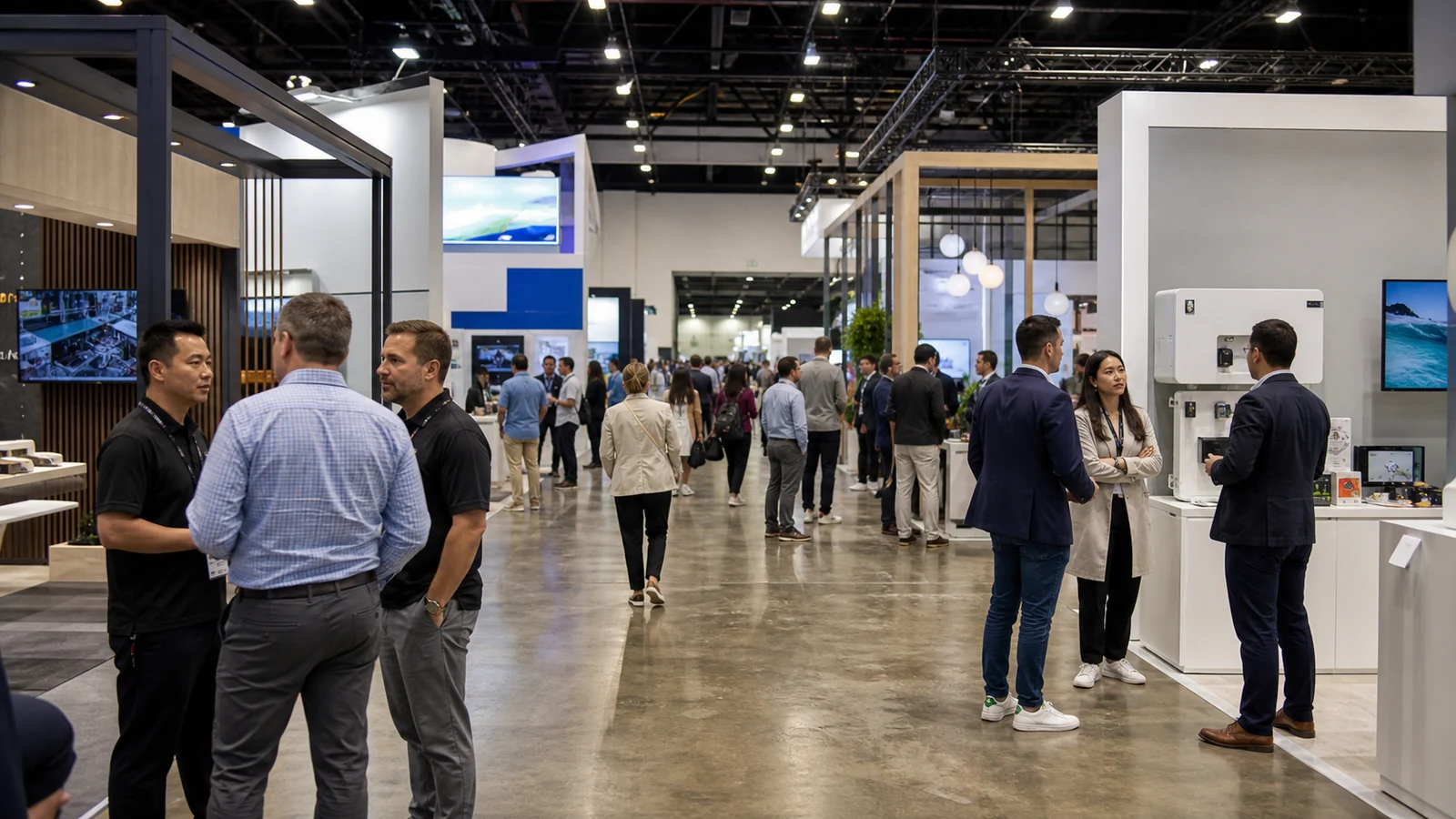
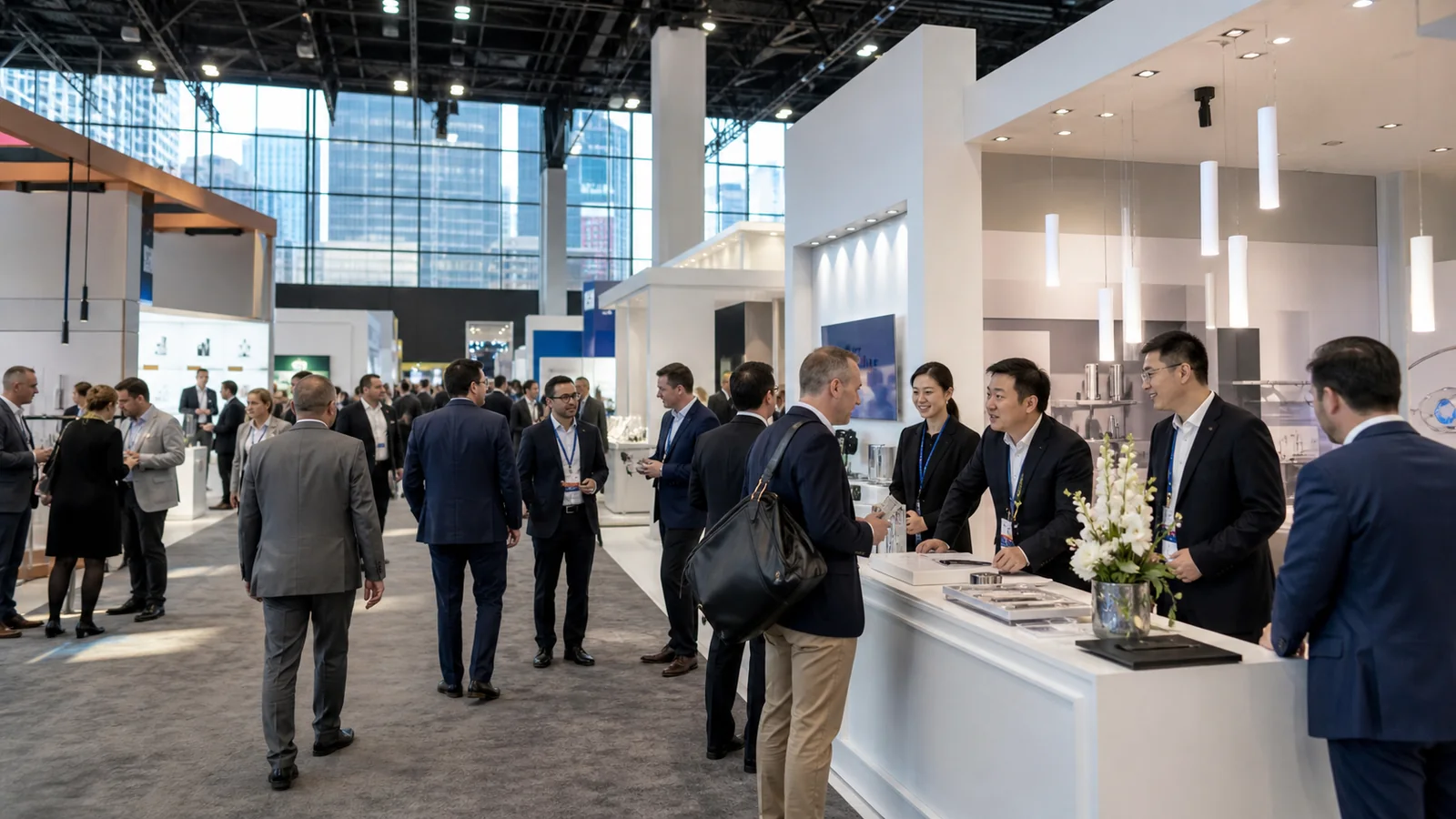
- The Exhibition is the show floor where exhibitors and pavilions present companies, regions, technologies and services.
- BIO Partnering™ is the organizer's meeting-request and scheduling system. Some meetings occur in the Business Forum, while eligible exhibitors may arrange meetings at approved points in their booths.
- Company Presentations and startup programs offer separate ways to present a company or pipeline. They are not automatically included because a company has exhibit space.
- The conference program contains education, panels and other programmed content. Access depends on the registration package and current rules.
Main exhibitor categories and attendee groups
The public 2027 exhibitor roster is not yet available. BIO's event description and its current official exhibition directory show the types of organizations that make up the show floor:
| Exhibitor category | People the company may need to reach |
|---|---|
| Therapeutic biotechnology and pharmaceutical companies | Business-development leaders, investors, research partners and service providers |
| CROs, CDMOs, laboratories and clinical-development services | Biotech and pharma teams outsourcing development, testing or manufacturing work |
| Bioprocess, research tools, laboratory technology and engineering providers | Scientists, technical operations, process-development and manufacturing teams |
| Diagnostics, medical devices, digital health and bioinformatics companies | Strategic partners, researchers, investors and commercialization teams |
| Universities, research institutes, tech-transfer offices and incubators | Licensees, funders, corporate partners and startup founders |
| Government, economic-development groups and regional or national pavilions | Companies considering expansion, investment, research links or regional partnerships |
| Finance, legal, regulatory, consulting and other industry services | Founders, executives and deal teams that need specialist support |
These are planning categories, not a claim that any organization has registered for 2027. Check the official 2027 directory when BIO publishes it.
This distinction changes the first planning conversation. A company that needs a full calendar of private business-development meetings has a different space and badge problem from a supplier that mainly wants product discovery on the show floor. A regional delegation has another route again: it may participate through a pavilion rather than contract an independent exhibit.
Decide What Kind of Presence Your Company Needs
Begin with the business interaction, not the booth size. Your internal team should name the people it wants to meet and what should happen during those conversations.

An independent exhibit
An independent exhibit gives one company control over its message, meeting area and staff schedule. It is the stronger route when your company needs a clear standalone identity or plans to host booth-based meetings. It also places the full planning burden on your team: space contracting, booth approval, registration, service orders, shipping and on-site responsibility must all connect.
A place within a pavilion
Country and regional pavilions are a visible part of BIO. A pavilion can give a smaller company a shared base and connect it with a delegation program. The tradeoff is control. Confirm who holds the exhibit contract, who assigns badges, how the company is listed, whether booth Partnering is available, and which design decisions belong to the pavilion organizer.
A presentation or startup program
If your main task is to explain a pipeline or investment case, a Company Presentation or startup route may be more important than an elaborate display. These are separate application and registration decisions. Do not assume that buying exhibit space secures a presentation slot, or that selection for a program supplies a booth.
Attending without exhibiting
A team focused on learning or meetings may decide it does not need exhibit space. That decision should follow a comparison of access, scheduled-meeting needs, visibility and staffing—not a belief that every serious participant must have a booth.
BIO's 2026 FAQ explains that exhibit space was allocated through a priority-point process. Returning exhibitors received priority, while new exhibitors could enter later or join a waitlist by contacting the exhibits team. That process is useful context, but 2027 availability and contracting instructions still need to come from the current BIO sales communication.
Treat Partnering as a Separate Operating Plan
At BIO, the meeting calendar can shape the booth more than general aisle traffic. The official 2026 information distinguishes the BIO Business Forum from Exhibitor Booth Partnering. The Business Forum is a separate meeting area with its own badge-access rules. Exhibitor Booth Partnering places scheduled meetings at designated meeting points inside eligible exhibits or pavilions.

The 2027 account prices, ratios, opening date, badge rules and meeting-point limits are not yet confirmed publicly. Even so, your team can settle the questions that will determine the space brief:
- Which staff need access to the Business Forum?
- Which meetings should happen in the booth?
- How many conversations may run at the same time?
- Does a discussion require acoustic separation or only a seated table?
- Who remains available for walk-up visitors while meetings are in progress?
- Where will a guest wait if the previous appointment runs late?
These answers should reach the booth planner before a floor plan is approved. Adding chairs after Partnering opens can obstruct circulation or create a meeting point that is visible but unusable.
Separate Confirmed Facts from 2027 TBA Details
As of September 7, 2026, the public sources confirm the dates, city and venue. They do not yet provide a complete 2027 exhibitor manual, service kit or move-in schedule. The correct response is not to pause all planning. It is to separate stable decisions from controlled details.
| Workstream | What you can decide now | What must be verified in 2027 documents |
|---|---|---|
| Participation | Independent exhibit, pavilion inquiry, presentation application or attendee-only option | Availability, eligibility, contract terms and current fees |
| Audience | Priority company types and job roles | Current exhibitor directory, program and participating-company list |
| Booth function | Product explanation, scheduled meetings, demonstrations or regional representation | Approved floor plan, booth location and organizer restrictions |
| Staffing | Roles needed for meetings and floor coverage | Badge types, allotments, access hours and registration deadlines |
| Structure | Preliminary footprint, meeting capacity and display needs | Height, sightline, canopy, multi-level, rigging and approval rules |
| Services | Preliminary power, internet, plumbing, compressed air, AV and catering needs | Official providers, order forms, rates and discount deadlines |
| Logistics | Shipment inventory, origin, weights and handling assumptions | Advance warehouse, direct-to-show instructions, labels and target move-in |
| On-site schedule | Internal travel and staffing assumptions | Exhibition hours, setup windows, empty-container deadline and move-out |
The 2026 official Exhibitor Basics deck shows why this separation matters. That edition had its own deadlines for display approval, Exhibitor Appointed Contractor registration, service discounts, advance freight and targeted move-in. It also had size-based installation windows. Those details were specific to San Diego and 2026. They are a checklist of document types to expect, not dates to reuse.
Know Which Exhibitor Documents Control the Work
After a company contracts exhibit space, BIO provides access to an Exhibitor Resource Center. The current official information says the center holds forms and lets BIO International Convention exhibitors maintain their company profile and product categories. For the 2026 edition, it also connected exhibitors to decorating, shipping, material handling and venue-service forms.

When the 2027 Exhibitor Resource Center and exhibitor manual become available, assign an owner to each layer rather than forwarding one large packet to every vendor.
BIO contract and participation rules
Confirm the legal exhibitor name, space, payment dates, badge allotment, cancellation terms, insurance, directory listing and any restrictions on sharing the exhibit. Pavilion participants should also confirm who registers each participating company.
Exhibit design and approval rules
Read the rules before freezing drawings. Look for maximum heights, sightline limits, hanging signs, enclosed or covered areas, multi-level structures, fire-safety documentation, accessibility and the display-approval process. A design that fits the purchased footprint can still require revision.
Exhibitor Appointed Contractor requirements
BIO's 2026 FAQ allowed an exhibitor to use an outside booth contractor if that contractor was registered for the build. For 2027, verify the current EAC procedure, insurance wording, submission portal and deadline before mobilizing a contractor.
Official services and venue services
Do not treat one vendor as the source for every order. The prior BIO resource flow separated decorator and material-handling forms from venue services and auxiliary providers. The Pennsylvania Convention Center currently lists electrical, plumbing, compressed air, internet, telecommunications and AV among its exhibitor-service areas. The 2027 BIO kit must identify which services are ordered through the venue, a general service contractor or another official provider.
Freight and material handling
The shipping destination alone is not enough. The 2027 freight instructions should state whether a shipment goes to an advance warehouse or directly to the venue, the receiving dates, label format, target move-in assignment and material-handling terms. Build the shipment list by crate, weight and required delivery sequence so the on-site team can recognize a missing piece before installation stalls.
Move-in and move-out schedule
BIO has previously used targeted installation periods based on the approved floor plan and exhibit size. Wait for the 2027 schedule before booking crews and final transport. Your internal run sheet should include the structure-complete time, aisle-clear or empty-container deadline, light-setup period, show close and earliest permitted dismantling time once BIO publishes them.
Add the Pennsylvania Convention Center Layer
BIO's event manual will remain the primary event-specific source, but the venue has its own service and work-rule layer. The PCC exhibitor pages provide current information about online service ordering and link to exhibitor work rules.

The venue's published FAQ describes work that exhibitors' full-time employees may perform and when show labor is involved. It also addresses personally owned equipment, rented AV, lighting and cords. Those venue statements are useful for early scoping, but they do not replace the 2027 BIO manual, a contractor's obligations or an on-site ruling. Where the documents differ, ask BIO or the responsible PCC department for a written answer tied to the exact exhibit and equipment.
For a biotech exhibit, this early service review is especially useful when a demonstration needs stable internet, dedicated electrical loads, plumbing, compressed air or rented AV. Submit actual equipment specifications. A generic request for “power and Wi-Fi” does not tell the provider how many circuits, wired connections or installation points the booth requires.
Plan the Booth Around the Conversation You Need
BIO attracts companies and professionals from across therapeutics, research, manufacturing, technology, investment, public policy and industry services. That range does not mean one exhibit should try to speak to everyone.
Choose one primary visitor and one next step. A clinical-stage biotech seeking partners may need a concise pipeline story and a quiet place for scheduled conversations. A contract development or manufacturing provider may need to make its technical scope and development stage clear within seconds. A laboratory technology company may need a controlled demonstration and a fast way to qualify applications. A regional pavilion must help visitors understand both the region and the individual companies inside it.
Translate that choice into visible elements:
- one headline that says what the organization contributes;
- a short proof structure that avoids unsupported scientific or commercial claims;
- a meeting layout that matches the Partnering plan;
- a demonstration method that can operate under current venue and safety rules;
- a follow-up method linked to the conversation, not only a badge scan.
Scientific claims, product status and regulatory language require internal review by the exhibitor's qualified legal, medical or regulatory team. A booth designer can improve hierarchy and legibility, but should not decide whether a therapeutic claim is permissible.
Use a Single Exhibitor Readiness Checklist
Before the 2027 service kit is available:

- name the participation route and contract owner;
- define the primary visitor and the action you want after the conversation;
- estimate booth-based meetings and simultaneous meeting capacity;
- list demonstrations, equipment and service loads;
- assign owners for exhibit sales, registration, Partnering, design, freight and on-site operations;
- record every unconfirmed assumption in a TBA log.
After BIO releases the 2027 documents:
- replace every TBA with the official answer and source link;
- reconcile the contract, floor plan, manual and venue rules;
- submit drawings and EAC documents by the current deadlines;
- order services through the provider named for each scope;
- register booth staff under the access level they actually need;
- confirm Partnering accounts and meeting points;
- issue approved shipping labels and the target move-in schedule;
- brief the on-site team on setup, show hours and dismantling restrictions.
Keep the confirmation number, approved drawing, service order and named owner together. Mark an order complete only after it has been accepted for this exhibit and this event.
Frequently Asked Questions
Where will BIO International Convention 2027 take place?
BIO 2027 is scheduled for June 7–10, 2027, in Philadelphia, Pennsylvania. The Pennsylvania Convention Center lists the event on its official calendar, so that is the confirmed venue. BIO has not yet published the complete 2027 exhibitor schedule or hall assignment in the public materials reviewed on September 7, 2026.
Is the Exhibition the same as the conference program?
No. They are parts of the same convention, but they serve different functions and may require different credentials. The Exhibition is the show floor. The conference program contains education and programmed sessions. BIO Partnering also has distinct meeting locations and access conditions. Review the 2027 registration packages before assigning badges.
How does a new company apply to exhibit at BIO?
BIO currently explains that it uses a priority-point process, giving current exhibitors earlier space-selection priority. New exhibitors may receive a later selection opportunity or join a waitlist by contacting the exhibits team. Ask BIO for the current 2027 availability and contract process; do not rely on a prior edition's sales calendar.
Are 2027 booth prices and Partnering fees available yet?
They were not available in the public official sources reviewed for this article on September 7, 2026. Request the current prospectus or sales information from BIO and verify what the price includes. Prior-year exhibit or Partnering rates should not be used as 2027 quotations.
Can an exhibitor use an outside booth contractor?
BIO's 2026 FAQ said an exhibiting company could choose an outside contractor and register that contractor for booth construction. The 2027 EAC rules, insurance documents and deadline have not yet been published in the sources reviewed here. Confirm all three before authorizing work.
Which deadline should an exhibitor watch first?
The first controlling deadline depends on the exhibit. A multi-level or covered design may face an early drawing-review date; an outside contractor may have a separate registration deadline; freight and venue services follow their own calendars. Once the 2027 kit is released, sort deadlines by dependency rather than date alone: contract, approved design, contractor authorization, service orders, shipping and installation.
Final Thoughts
BIO 2027 has a confirmed date and venue, but the operational rules are still developing. Use the available time to decide how your company will participate, who it needs to meet and what the space must support. Then rebuild the schedule from the official 2027 contract, manual and service kit when they appear. That keeps early planning useful without turning last year's rules into this year's mistakes.