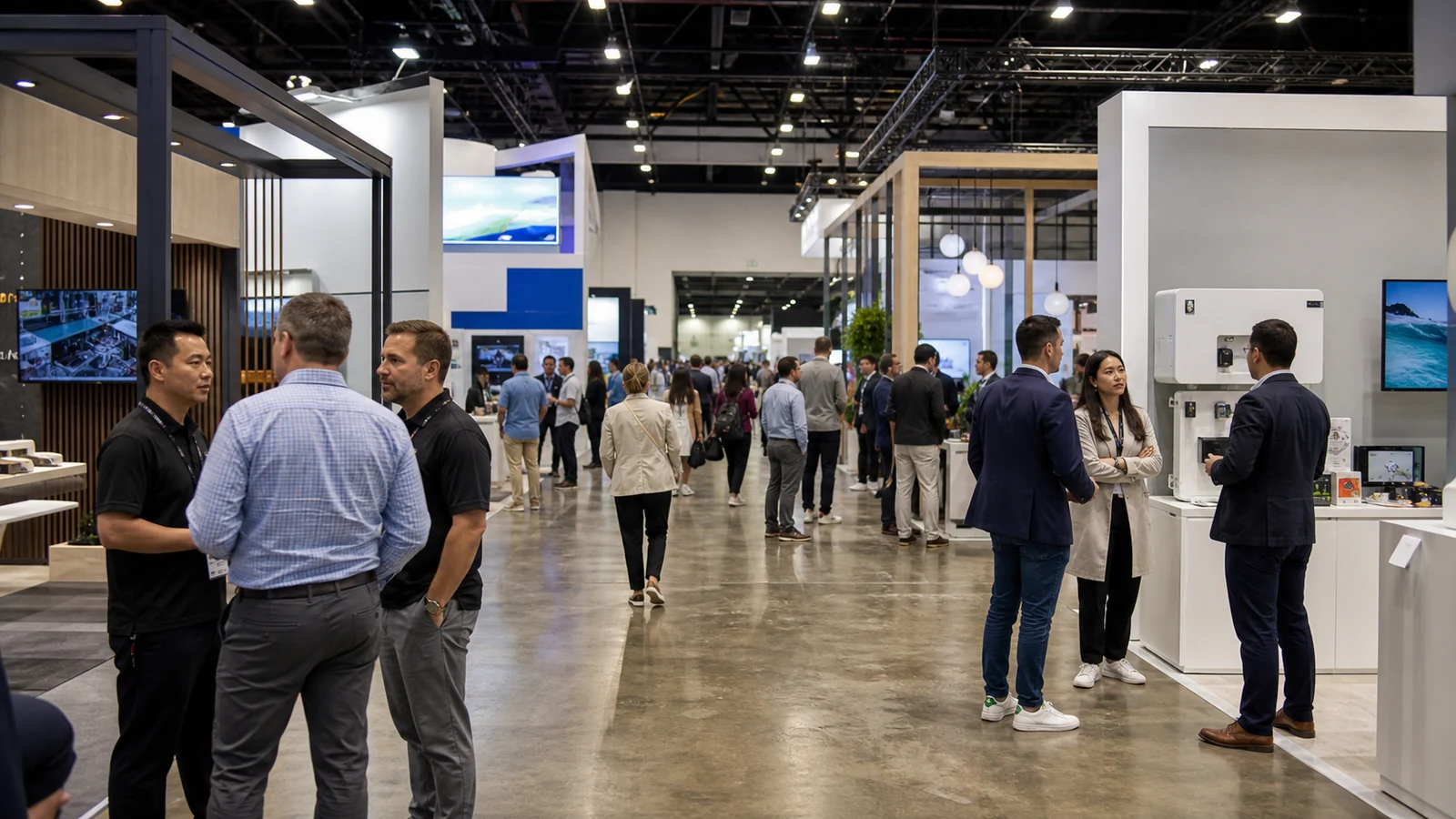
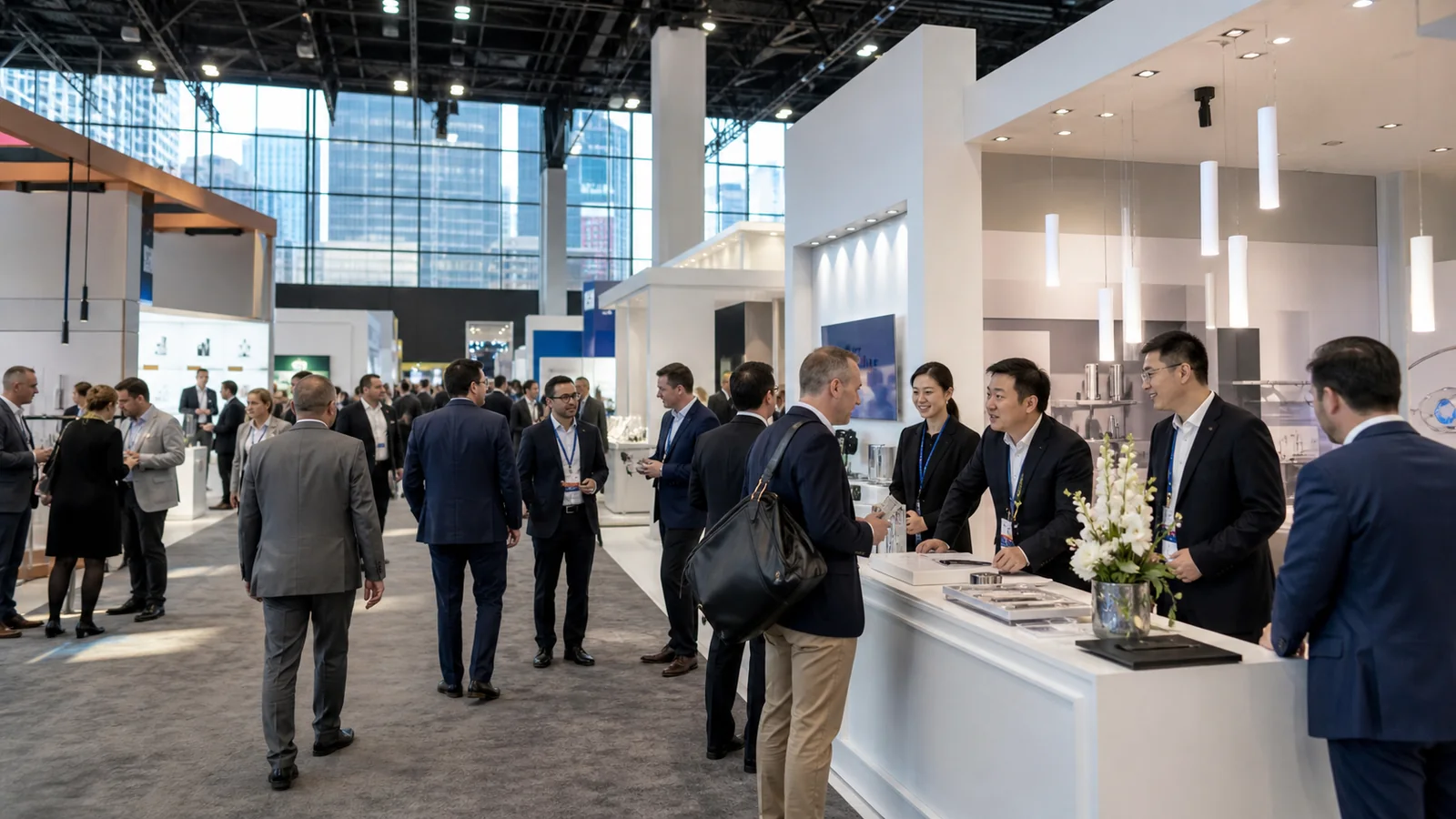
The hardest part of exhibiting at the National Restaurant Association Show is not choosing a backdrop. It is deciding exactly what a foodservice operator should taste, inspect, or test—and then proving that the booth, utilities, approvals, and delivery plan can support that experience. This guide takes you from show fit to a workable 2027 exhibitor brief.
Confirm the 2027 show facts first
| Item | Confirmed information |
|---|---|
| Show | National Restaurant Association Show |
| Dates | May 22–25, 2027 |
| Venue | McCormick Place, Chicago, Illinois |
| Exhibit halls | South Hall, North Hall, and Lakeside Center |
| Exhibit hall hours | May 22–24: 9:30 a.m.–5:00 p.m.; May 25: 9:30 a.m.–3:00 p.m. |
| Organizer's current 2027 forecast | More than 2,000 exhibitors across more than 900 product categories |
The dates, venue, halls, and exhibit hall hours are published on the official exhibitor FAQ and 2027 booth sales page. The hours above are visitor-facing exhibit hours. They are not move-in or move-out appointments.
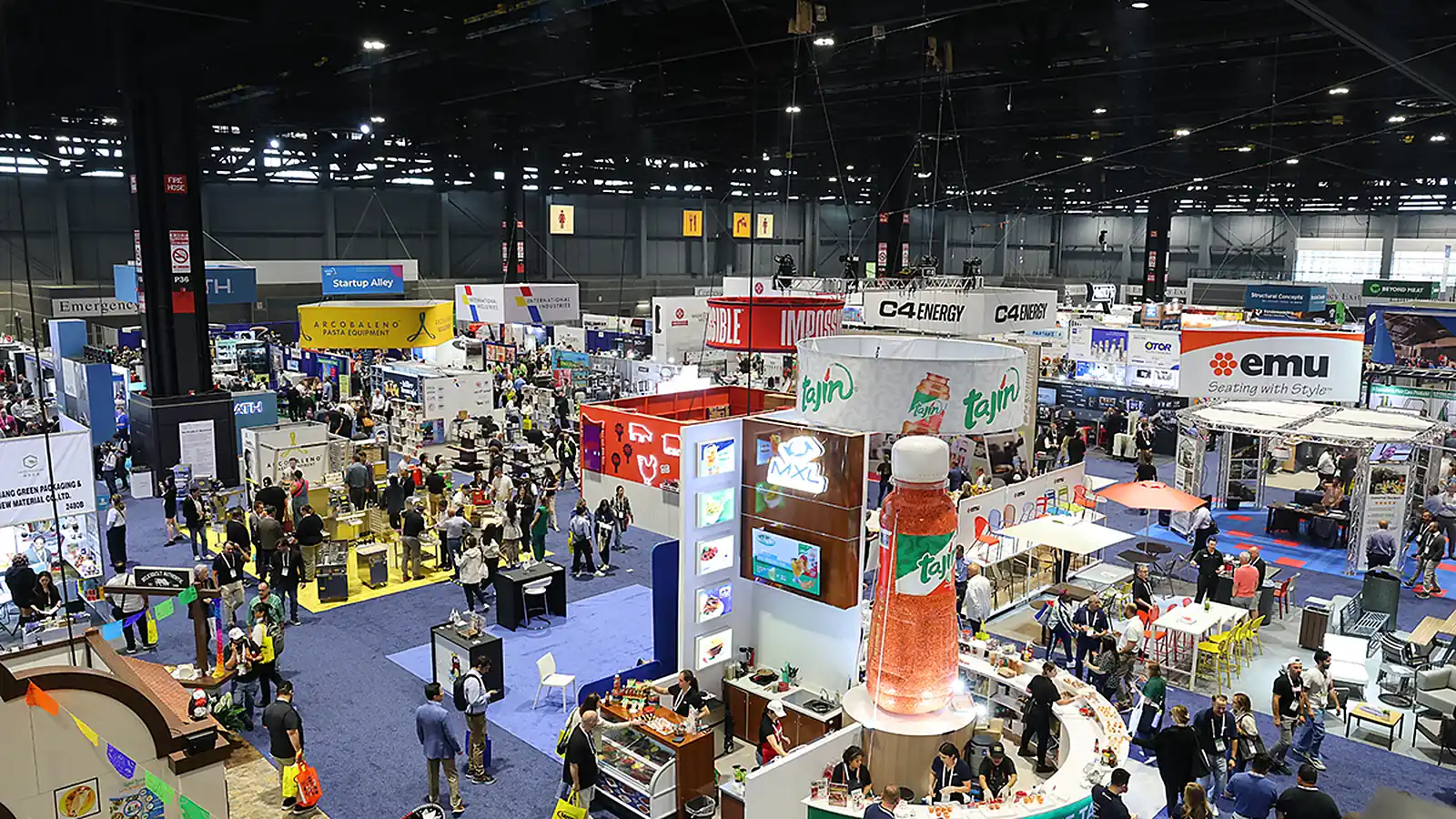
The organizer describes the event as an annual marketplace for restaurant, foodservice, and hospitality professionals. Food, beverage, equipment, technology, tableware, sanitation, packaging, and related services all sit within the show's broad product scope. The official 2027 attendee page says it expects more than 2,000 exhibitors in over 900 categories; those are forward-looking figures, not final attendance results.
For scale, the organizer reported that the 2026 edition drew more than 55,000 foodservice professionals and approximately 2,300 exhibiting companies across 720,000 square feet. That report helps you understand the density of the marketplace, but it should not be presented as a 2027 outcome. A large floor rewards a specific product story because visitors cannot evaluate every supplier in every hall.
Decide whether your buyer actually attends
For a company comparing U.S. restaurant trade shows, audience fit matters more than total floor size. This show is trade-only, and its audience reaches beyond restaurant owners and chefs. Official attendee information includes commercial chain and independent operators, noncommercial foodservice, lodging, retail, dealers and distributors, manufacturers, and suppliers. Noncommercial foodservice can include schools, healthcare facilities, corporate dining, military dining, senior living, concessions, and airlines.
That breadth is useful only when your team can name the operating decision behind the product. A new ingredient may need menu-development and distribution conversations. A combi oven may need culinary, operations, facilities, and dealer input. A point-of-sale product may need an operator to understand how it changes service at the counter or in the kitchen. “Foodservice buyers” is therefore too broad for a useful booth brief.
Write one target conversation before you reserve space:
We need a multi-unit restaurant operator responsible for kitchen throughput to compare our equipment under a realistic service task.
If you cannot complete that sentence without listing four unrelated buyer groups, the exhibit will likely become a product catalog. Narrow the first conversation; other qualified visitors can still enter through it.
The show is less suitable when the product has no clear foodservice use, cannot be legally demonstrated or sampled, or needs a confidential technical evaluation that a busy show floor cannot support. In that case, a meeting program or a different industry event may be more productive than a larger booth.
Choose the right part of the marketplace
The general show floor covers a wide range of restaurant and hospitality products. The official 2027 sales page also lists four focused destinations with their own qualification rules:

| Area | Intended product fit | Current qualification signal |
|---|---|---|
| The Beverage Room | Beer, wine, spirits, mixers, garnishes, drinkware, bar equipment, and bar technology | At least 50% of displayed products must meet the pavilion qualifications |
| Organic & Natural Pavilion | Organic or natural food and beverage products | Food and beverage only; at least 50% of displayed products must qualify |
| TECH Pavilion | Software, apps, kiosks, touchscreens, printers, internet services, and other foodservice technology | At least 50% of displayed products must meet the pavilion qualifications |
| Global Food Expo | International food and beverage companies | The exhibitor must be an international company offering food or beverage products and commit to authentic, high-quality international cuisine |
Do not choose a pavilion only because its aisle traffic sounds attractive. A focused area sets an expectation before the visitor reaches the booth. If half of your display needs an explanation for why it belongs there, the general floor may give you a more honest product story.
For food and beverage companies entering the United States, the Global Food Expo may create a clearer sourcing context. It does not remove responsibility for product admissibility, labeling, food safety, sampling approval, or customs handling. Pavilion acceptance and product compliance are different decisions owned by different parties.
Apply through the official 2027 route
The official Become an Exhibitor page links to the 2027 floor plan and booking system. It also provides the show sales contact for companies that need to discuss space or pavilion fit. Use that route rather than responding to a company that claims it can sell show space or attendee data.
The current 2027 page publishes the following booth-space schedule:
- $48 per square foot for booths of 800 square feet or more.
- $49 per square foot for booths of 799 square feet or less.
- $375 for each exposed corner.
The same page says a 50% payment is due when booking until February 1, after which 100% is due. The page does not print a year beside that February 1 reference, so confirm the date in your 2027 contract before using it as a cash-flow deadline.
These figures are space charges, not a finished exhibit budget. The exhibitor FAQ says the account balance shown for the organizer covers booth space and the branding package, while contractor balances are separate. Electricity, plumbing, gas, material handling, shipping, refrigerated storage, labor, furnishings, carpet, and other services may therefore sit outside the space number.
The current booth inclusion list covers drape and side rails for eligible linear booths, a company-and-booth-number sign for 100-square-foot exhibitors, general overhead lighting, sanitary dishwashing facilities, badge and customer-invite allocations tied to space, and a listing in The Show To Go. Island and peninsula booths have different drape conditions. “General overhead lighting” is not power for your oven, refrigerator, screen, kiosk, or demo equipment.
Build the exhibit around what the visitor must do
Restaurant-show exhibits usually fall into three operating patterns. Choosing one primary pattern will expose the real requirements earlier.

A tasting is a controlled service operation
A tasting booth needs more than samples on a counter. Work backward from the serving moment: where finished samples wait, how temperature is held, who portions them, where utensils and waste go, how allergens are communicated, and how the next batch moves without crossing the visitor queue.
Your tasting should answer a buyer question. If the product is a sauce, for example, tasting five flavors may be less useful than showing one application that reveals labor savings, menu versatility, or consistency. The sampling flow should make that comparison easy without turning the aisle into a line.
An equipment demonstration is a utility and safety plan
An equipment booth needs a written operating state, not just equipment dimensions. Record voltage, amperage, plug or hard-wire needs, water inlet, drain, natural gas, ventilation, heat output, clearance, startup time, cleaning cycle, consumables, noise, and what happens if the machine cannot run.
Then define what the operator will see. A ten-minute cycle that proves one result can be more valuable than continuous motion with no visible decision point. If the machine uses food, connect the equipment schedule to the sampling and sanitation plan; do not let the booth designer and culinary team maintain separate assumptions.
A technology demo is a recognizable restaurant workflow
Technology exhibitors should avoid a screen tour. Put the product inside one task a restaurant operator already understands, such as taking an order, routing it to production, managing a table, forecasting labor, or reconciling a payment. Use test data and a reset method that keeps the demo available throughout the day.
The show also includes a TECH Pavilion, but location does not make a product relevant. The visitor should be able to see the restaurant problem and the changed action within a few minutes.
Treat sampling and cooking approval as design inputs
The official exhibitor FAQ says the 2027 food-and-beverage sampling forms will become available when the service kit launches in January. Alcohol sampling also requires a permission form and Show Management approval. As of September 7, 2026, the public pages do not state a confirmed 2027 submission deadline. Do not copy an older year's deadline into the project schedule.
The same FAQ currently states that cooking or heating appliances must be powered by electricity or natural gas, be UL listed or approved, and be adequately ventilated. It also calls for a listed 2-A:10-B:C ABC-type extinguisher in such exhibits. Propane, butane, charcoal, and other listed fire-hazardous materials are prohibited at McCormick Place.
The FAQ further says exhibitors may supply only their own products; other food and beverage must be purchased through OVG Hospitality. Further details are expected with the January service information. Before approving counters, storage, or a preparation area, your team should therefore confirm:
- what product will be served and whether it needs organizer approval;
- whether the product will be cooked, heated, mixed, poured, or served as packaged;
- the holding temperature and replenishment method;
- the exact water, drain, power, gas, ice, refrigeration, handwashing, and waste needs;
- which items may be supplied by the exhibitor and which must come from the venue provider.
These answers belong on the booth plan. If they live only with the culinary team, the drawing can be approved internally while the actual service remains impossible.
Check utilities against the assigned booth
McCormick Place floor ports in the South, North, and Lakeside halls can provide access to electricity, water and drain, and natural gas. The Booth Essentials page instructs exhibitors to use the legend on the official floor-plan PDFs to identify ports within a booth.

A port shown somewhere in the hall is not the same as a port inside your space. If the booth lacks direct access, the official page says service may be drawn from a neighboring exhibit or dropped from overhead; service cannot be brought in from an aisle. That can change cable or pipe routes, raised-floor needs, equipment orientation, labor, and cost.
Mark every connection on one plan and give it an owner. The equipment schedule, culinary plan, and exhibit drawing should use the same location and service value. A refrigerator described only as “standard power” or a sink described only as “water needed” is not ready to order.
Use the dashboard and two service kits as the project record
Once contracted, the Exhibitor Dashboard becomes the show-specific account record. The official FAQ says it contains invoices, the contract, payment access, a custom checklist, required forms, and the tools for completing the Show To Go profile. The primary contact can add separate users, so finance, marketing, operations, and exhibit partners do not need to share one password.

The organizer's Show Service Kit and Freeman's service kit serve different practical roles. The show kit brings together regulations, sampling information, required forms, shipping guidance, and official providers. Freeman is named as the 2027 general services contractor for furnishings, display labor, electrical, plumbing, carpet, material handling, shipping, rental exhibits, and refrigerated or freezer storage.
There is an important date trap on the public service-kit page. Although the page labels Freeman as the contractor for the 2027 Show, it currently displays an April 13, 2026 discount deadline. That date belongs to the prior cycle and should not be used for a 2027 purchase plan. Read the deadline inside the current Freeman kit or dashboard before approving orders.
The same caution applies to design regulations. The current Booth Essentials page links to design rules, but your team should verify the year printed inside the downloaded file. Do not release an island, peninsula, hanging sign, canopy, ceiling, or multi-level concept against a prior-year PDF.
Do not invent move-in, shipping, or move-out dates
The public 2027 exhibitor pages confirm the show dates, but they do not yet provide a reliable public schedule for each booth's target move-in, advance-warehouse window, direct-to-show deliveries, or move-out. Those details should come from the current Freeman kit, shipping labels, assigned target schedule, and final move-out bulletin.
Build the logistics record around the assigned booth:
| Decision | Current source to use | What to lock |
|---|---|---|
| Advance warehouse or direct shipment | 2027 Freeman shipping instructions | Eligible freight, address, receiving window, labels, and late conditions |
| Target move-in | Booth-specific Freeman schedule | Arrival day, labor call, crate sequence, equipment access, and utility readiness |
| Perishable or refrigerated product | Current official provider and shipping instructions | Temperature range, storage booking, custody transfer, delivery to booth, and onsite receiver |
| Exhibitor-appointed contractor | 2027 show kit and dashboard form | Approval, insurance, credentials, and access conditions |
| Move-out | Final show instructions and bulletin | Dismantle start, carrier check-in, paperwork, product disposition, and forced-shipment conditions |
International exhibitors should give their customs broker and freight forwarder the current product documents and temperature requirements early. That does not produce a guaranteed clearance date. Perishable product should never be scheduled on the assumption that customs, refrigerated storage, dock delivery, and an operating booth refrigerator will line up without written confirmation.
Prepare the directory before visitors plan their route
The Show To Go is the event's official year-round digital marketplace, directory, floor plan, and planning platform. The exhibitor FAQ says promotion of the 2027 platform begins with attendee registration in September 2026 and continues through the show.

Complete the profile for the buyer you named at the start. Use the product category that matches the operator's task, a plain description of what the product changes, and supporting material that can be evaluated after the show. A broad slogan makes the company harder to find in a directory with hundreds of categories.
Do not buy a “National Restaurant Association Show attendee list” from an unsolicited vendor. The organizer warns that it does not sell its attendee database and advises exhibitors to identify providers using the 2027 Official Service Provider seal.
Separate the expo floor from education
The exhibit halls are the marketplace where visitors compare suppliers, taste products, inspect equipment, and see demonstrations. On-floor programming and culinary or beverage demonstrations may also happen within that environment.
The organizer separately describes an Expo + Education option with 30 operator-led education sessions, along with keynote and featured programming. Those sessions are not the same thing as exhibit-floor traffic, and the full 2027 lineup should be checked when the current schedule is released. Staff who attend education need a coverage plan; a compelling session does not pause booth conversations.
Release the booth only after these gates are closed
| Gate | Evidence required before release |
|---|---|
| Market fit | One target operator role, one operating problem, and one product decision the booth will support |
| Space and area | Signed 2027 contract, booth number, hall, booth type, pavilion acceptance if applicable, and current floor plan |
| Product experience | Tasting, equipment, or technology-demo sequence with owner, duration, reset, sanitation, and fallback |
| Sampling and fire safety | Current 2027 forms, approvals, appliance list, ventilation, extinguisher, and prohibited-material check |
| Utilities | Equipment-level schedule and marked placement plan tied to the assigned booth's ports |
| Design | Current-year design regulations and required plan approvals |
| Freight | Current labels, receiving route, target move-in, storage, onsite receiver, and move-out plan |
| Providers | Orders and approvals verified through the dashboard, show kit, or current official provider list |
| Digital listing | Show To Go profile built around the same target operator and product decision |
If one of these rows still depends on “we used last year's information,” keep that part of the project open. You can develop concepts in parallel, but irreversible fabrication, shipping, and service orders should use the current show record.

Frequently asked questions
Is the National Restaurant Association Show open to the public?
No. The official attendee FAQ describes it as a trade-only event for people affiliated with restaurant, foodservice, lodging, retail foodservice, dealer/distributor, manufacturing, and related industry operations. Registrants may need business identification. Build your exhibit for professional evaluation rather than consumer sampling alone.
Can an international food company apply for the Global Food Expo?
The current 2027 sales page says Global Food Expo is for international companies offering food or beverage products and committed to presenting authentic, high-quality international cuisine. That is an initial fit test, not an acceptance decision. Confirm eligibility with show sales and keep import, labeling, sampling, and food-safety workstreams separate from pavilion approval.
Does the booth-space price include electricity, plumbing, labor, and shipping?
The published rate is for booth space. The organizer lists some inclusions, such as eligible drape, general overhead lighting, certain signage, badge and invite allocations, sanitary dishwashing facilities, and the online listing. Contractor services and utilities are handled separately. Price your required services from current orders tied to the assigned booth.
When are the 2027 sampling and Freeman deadlines?
As of September 7, 2026, the public exhibitor FAQ says sampling forms will arrive with the January service kit but does not give a confirmed 2027 submission deadline. The public service-kit page still displays a Freeman deadline from 2026. Use the 2027 dashboard and Freeman kit; do not carry either old deadline into the schedule.
Where do I find my move-in time?
Use the target move-in information assigned through the current Freeman service kit and exhibitor account. The public show dates are not freight appointments. Your booth number, hall, shipment method, equipment sequence, and storage needs should all be resolved against that assigned schedule.
Is the 2027 exhibitor list available?
As of September 7, 2026, the public Show To Go directory returned by search still displays the 2026 show. Do not treat those companies as confirmed 2027 exhibitors. Use the official 2027 floor plan for current space planning, then check the directory again after the organizer updates it for the new cycle.
Should booth staff attend the education program?
Attend when a session directly improves a target buyer conversation or market decision, but treat it as a separate staff assignment. The organizer distinguishes on-floor programming from its Expo + Education sessions. Confirm badge access and the 2027 schedule, then preserve enough trained coverage for the booth.
Turn the show record into one exhibitor brief
A useful National Restaurant Association Show brief should let another person see the same project you see: the operator being served, the product decision, the assigned space, the tasting or demo sequence, every utility, each approval, and the freight path. It should also show what is still waiting for a 2027 document.
Before exhibit design moves into production, assemble the signed show record, current floor plan, product and equipment list, sampling method, refrigeration and sanitation needs, marked utility plan, latest deadlines, and target move-in route. That package gives the exhibit team something concrete to solve without turning an unconfirmed show rule into a promise.