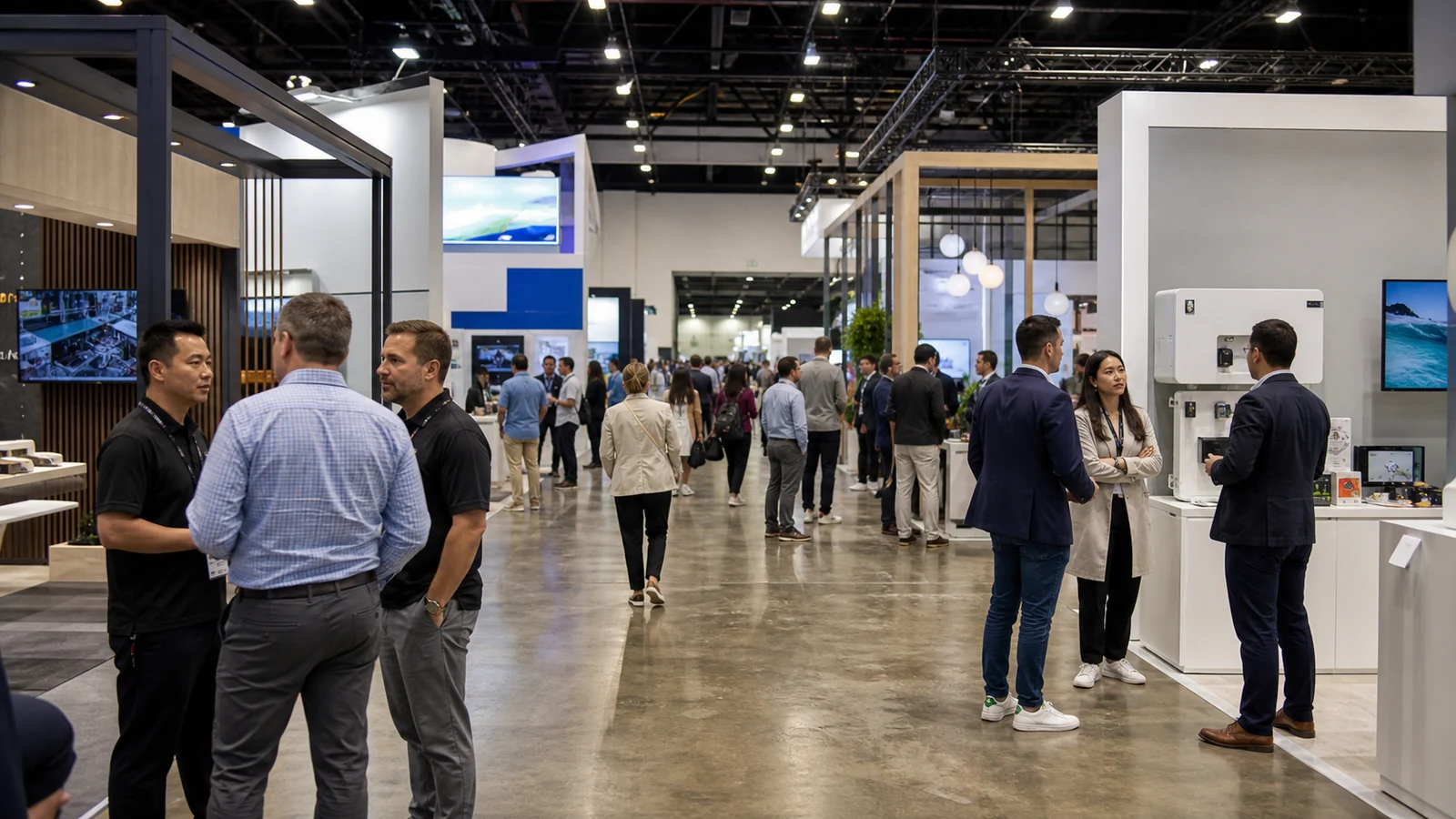
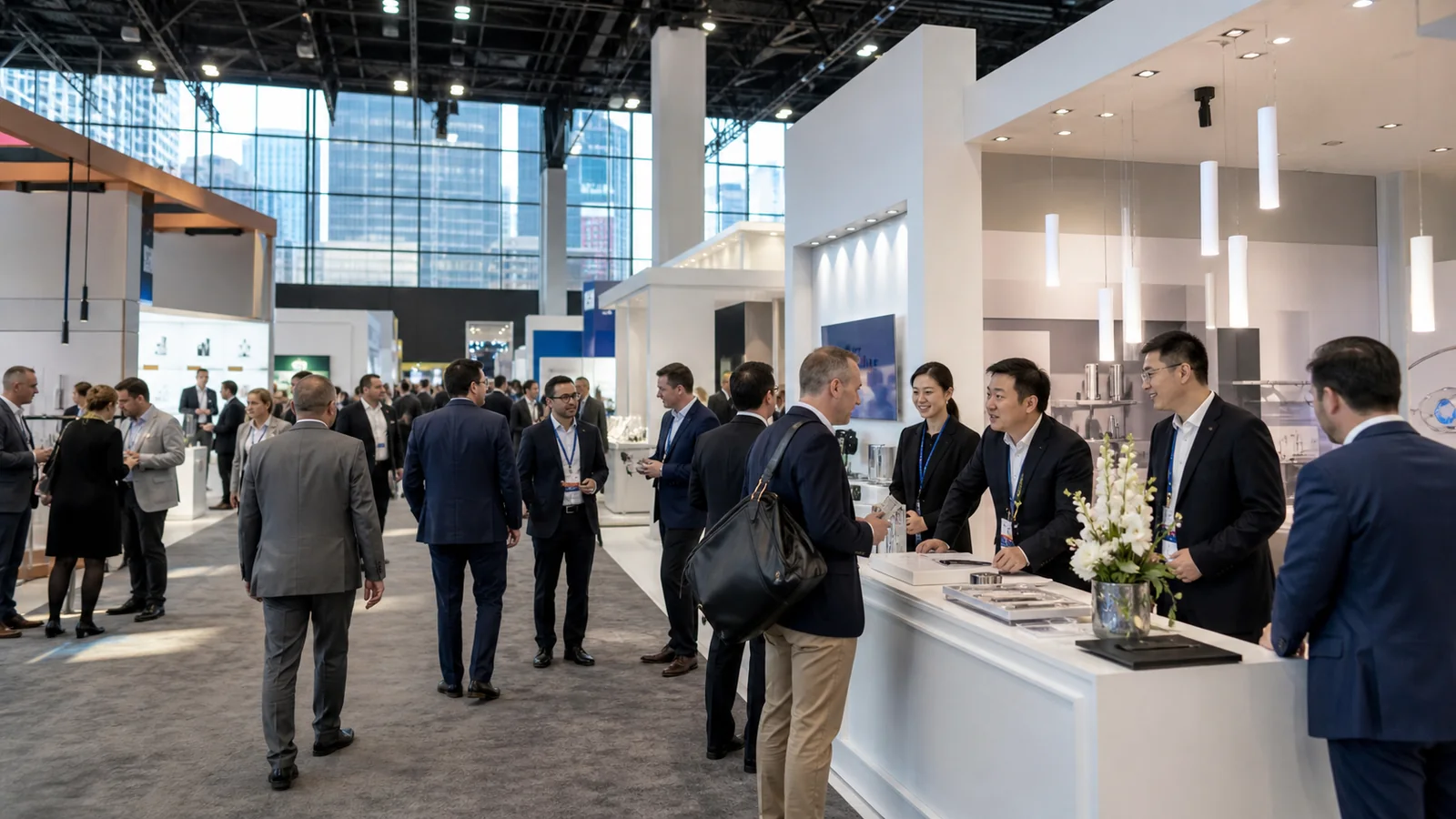
If an organizer invites you to join a trade show pavilion, your first question is probably practical: what are you actually getting, and will the shared format support the way you need to show your products? In most B2B events, a pavilion is a coordinated exhibit area where several companies appear under a country, industry, startup, regional, or theme identity. It is not automatically a ready-to-use booth.
This guide separates the pavilion format from the commercial package. You will see what a pavilion usually means, how the cost is built, how it compares with an independent booth, and how to test the space, brand rules, lead handling, and build scope before you commit.
What Is a Trade Show Pavilion?
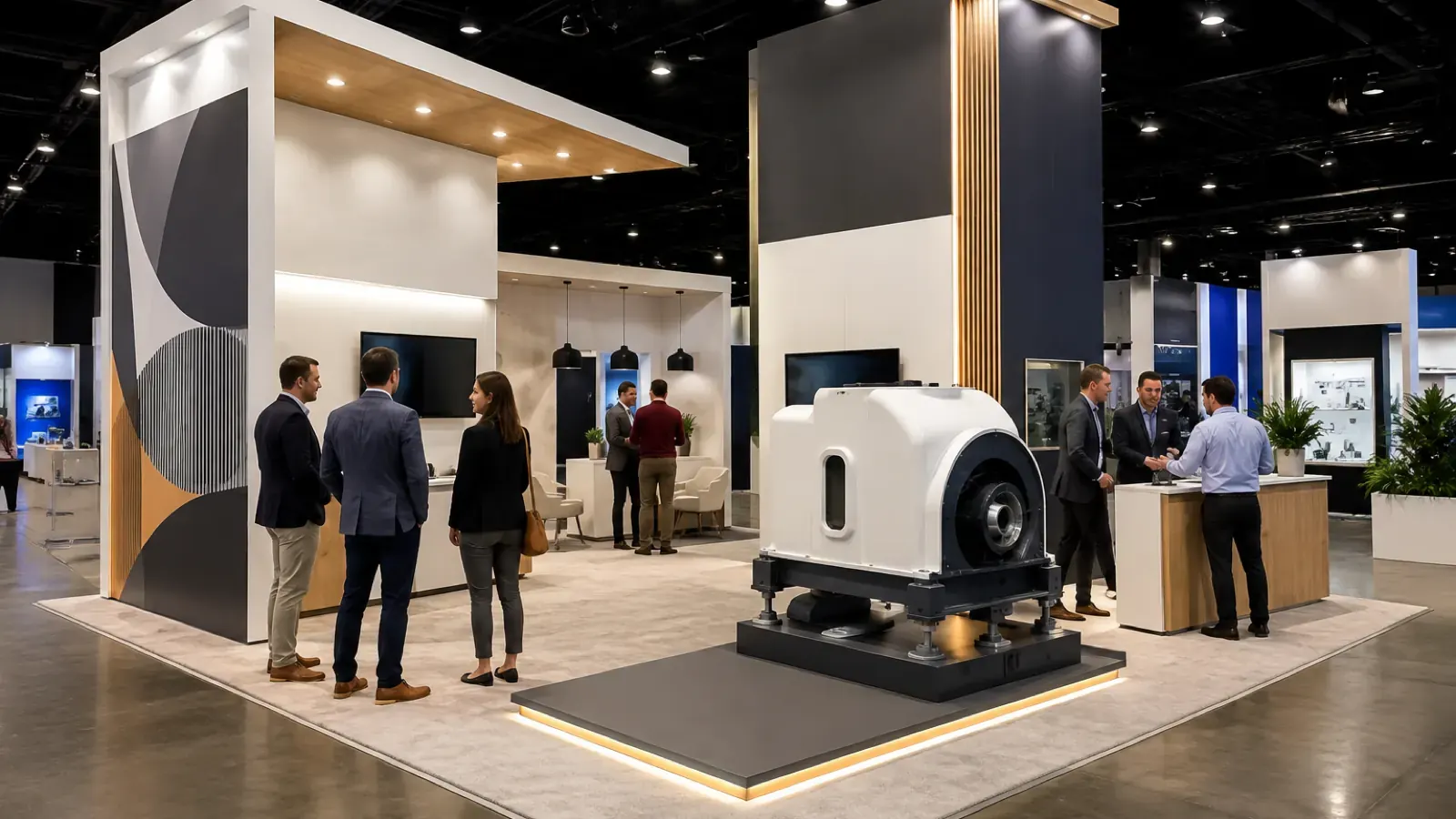
A trade show pavilion is a coordinated exhibit area for multiple exhibitors presented under an umbrella identity. Each company normally keeps an individual display area, while some branding, reception, meeting space, visitor services, or logistics may be shared.
The organizer may be a government or export agency, an industry association, a show organizer, or a business delegation. That organizing identity explains the pavilion’s purpose; it does not tell you exactly what your package includes.
Three distinctions prevent common planning mistakes:
- Pavilion vs. hall: a hall is the venue area. A pavilion is a coordinated program or exhibit zone inside a venue.
- Pavilion vs. independent booth: a pavilion coordinates several exhibitors under shared rules. An independent booth is planned around one company’s identity and functions.
- Pavilion vs. fixed structure: “pavilion” does not guarantee one universal size, construction system, or service bundle.
If your invitation only says “pavilion” but does not show your footprint, open sides, shared-service list, and decision owners, treat those items as open scope. Do not approve artwork or assume construction is included until the current program documents say so.
What Does a Pavilion Usually Include?
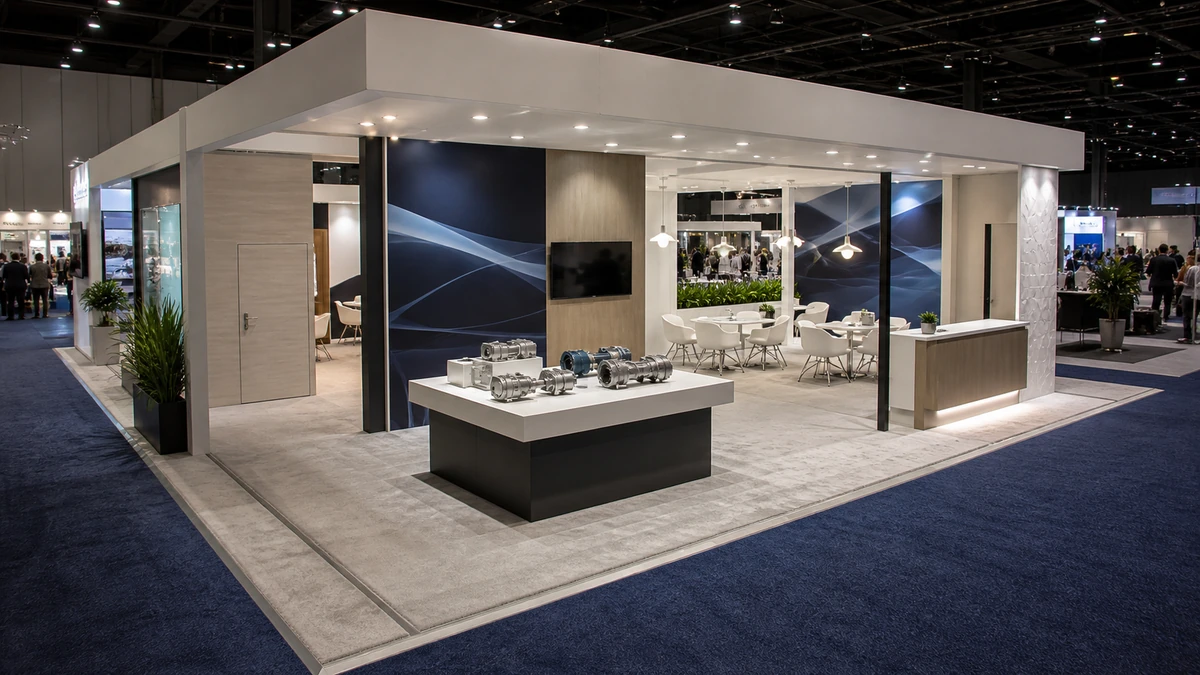
The exact package varies. A shared pavilion may combine the following layers, but you should treat them as questions to resolve rather than automatic inclusions.
| Shared element | What it affects for you |
|---|---|
| Umbrella branding and wayfinding | Your company name and product story must remain readable within common colors, logos, and sightline rules |
| Reception or information point | Visitors may enter through a common welcome point; your route and lead handoff need to be clear |
| Lounge or shared meeting area | You may gain a meeting option, but privacy, hours, furniture, and reservations can limit its use |
| Individual exhibitor pod or zone | Product placement, demonstration reach, staff positions, and storage depend on the real boundary |
| Utilities and technology | “AV available” is not a specification; device, connection, labor, and testing still need an owner |
| Logistics coordination | Shared receiving or labor may stop at a defined handoff, leaving your shipment or return route open |
Some official trade-event programs also coordinate buyer introductions, briefings, receptions, or pavilion lounges. That is an example of a program benefit, not a universal pavilion definition. The ITA Trade Event Partnership shows why organizer eligibility, services, and costs must be read from the specific program.
What Are the Typical Pavilion Cost Components?
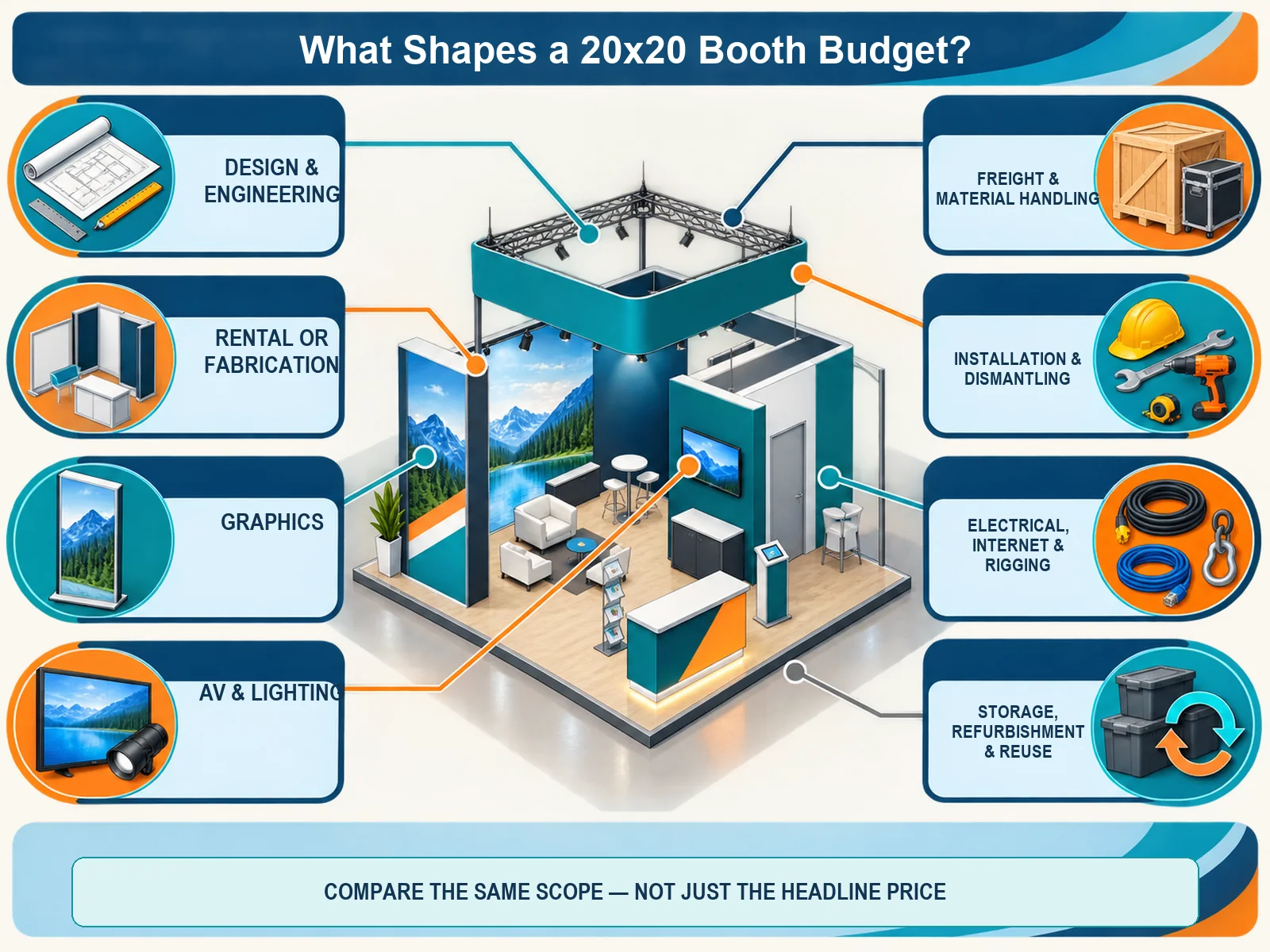
Pavilion pricing is usually a bundle of program, space, physical, service, and show-site costs. There is no responsible universal price because programs use different footprints, inclusions, currencies, and labor arrangements. Use this table to ask what is included, who pays, and whether the amount is one-time or show-specific.
| Cost component | What to ask before comparing quotes |
|---|---|
| Program or participation fee | Does it cover enrollment, promotion, eligibility review, or shared management? |
| Space or pod fee | Is the floor space included, and what are the exact dimensions, open sides, and location? |
| Design and construction | Is the shared structure designed and built, or are you receiving a design brief only? Is there a separate design fee? |
| Graphics | Are artwork production, installation, replacement, translations, and color proofs included? |
| Furniture and AV | Which items are included, rented, or supplied by you? Who tests them? |
| Utilities | Are power, internet, lighting, cleaning, waste, or rigging ordered centrally or separately? |
| Freight and material handling | Who receives, marshals, unloads, stores, and returns your materials? |
| Installation and dismantling | Does the price include labor, supervision, overtime, and the return handoff? |
| Shared-service fee | Are reception, lounge, translation, meeting reservations, or common events charged to each exhibitor? |
| Additional meeting or storage fee | What triggers an extra charge, and can the space be reserved in advance? |
Special equipment, an enlarged pod, extra graphics, private meeting space, or late changes can create additional charges. Compare the complete scope—space, design/build, graphics, furniture, AV, utilities, freight, labor, shared services, and dismantling—rather than comparing only a headline participation fee.
Pavilion vs. Independent Booth: Which Format Fits Your Exhibit?
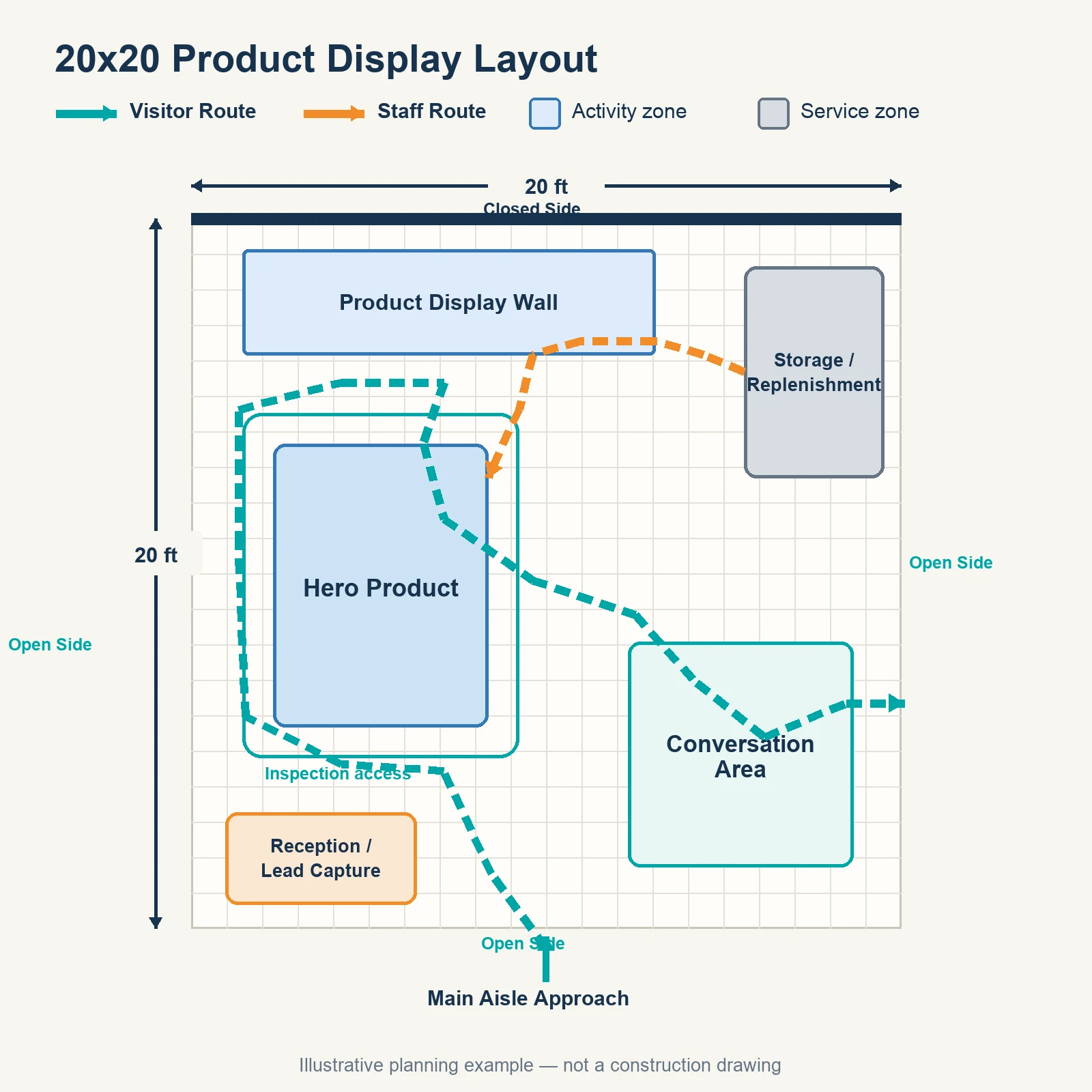
Neither format is automatically better. The right choice is the one that lets your exhibit perform its most important visitor tasks within the available rules, cost scope, and responsibility split.
| Decision area | Shared pavilion | Independent booth |
|---|---|---|
| Brand control | Umbrella identity sets some visual and approval rules | You control the identity, message hierarchy, and approval path |
| Space and functions | A defined pod or zone with shared circulation and public areas | Space is planned around your products, visitor flow, meetings, and storage |
| Meetings | Shared rooms may be available, subject to reservations and privacy limits | You can design dedicated meeting areas and access rules |
| Demonstrations and storage | Best when the product story is focused and equipment is manageable within the pod | Better for several demonstrations, heavy equipment, replenishment, or substantial storage |
| Services | Some reception, lounge, utilities, or coordination may be shared | You specify services, but you also own more coordination decisions |
| Coordination | One pavilion approval chain can simplify alignment, but adds shared dependencies | Fewer shared stakeholders, but your team coordinates the full scope |
| Repeat use | Useful for a consistent presence within the same program | More controllable across changing shows and brand environments |
When Does a Pavilion Fit Your Exhibit?
A pavilion may fit when your product story is focused, your team can work in a defined zone, you use light samples or short conversations, and shared identity or reception helps you reach visitors.
When Does an Independent Booth Fit Better?
An independent booth may fit better when you show several product lines, need continuous demonstrations, require private meetings or substantial storage, handle large or utility-intensive equipment, or need full control of the visitor path and brand environment.
What Is the Fast Decision Rule?
List your non-negotiable functions: for example, a working demo, private meeting, replenishment storage, or an independent entrance. If two or more cannot fit the pavilion’s rules, compare an independent booth using the same cost and responsibility map.
Can You Score the Format Before Requesting a Quote?
Use this quick screen. Give one point to the column that describes your situation, then investigate the format with the higher score; two or more independent-booth points should trigger a full comparison rather than an automatic pavilion booking.
| Question | Pavilion point | Independent-booth point |
|---|---|---|
| Is one focused product story enough? | Yes | No, several stories must run together |
| Can your demo fit inside a defined pod? | Yes | No, it needs dedicated structure or utilities |
| Can meetings use a shared room or open conversation area? | Yes | No, privacy or simultaneous meetings are essential |
| Can you work under common graphics and approval rules? | Yes | No, brand control is non-negotiable |
| Can shared lead routing and storage rules support your team? | Yes | No, you need independent data and operational control |
Which Pavilion Type Are You Joining?
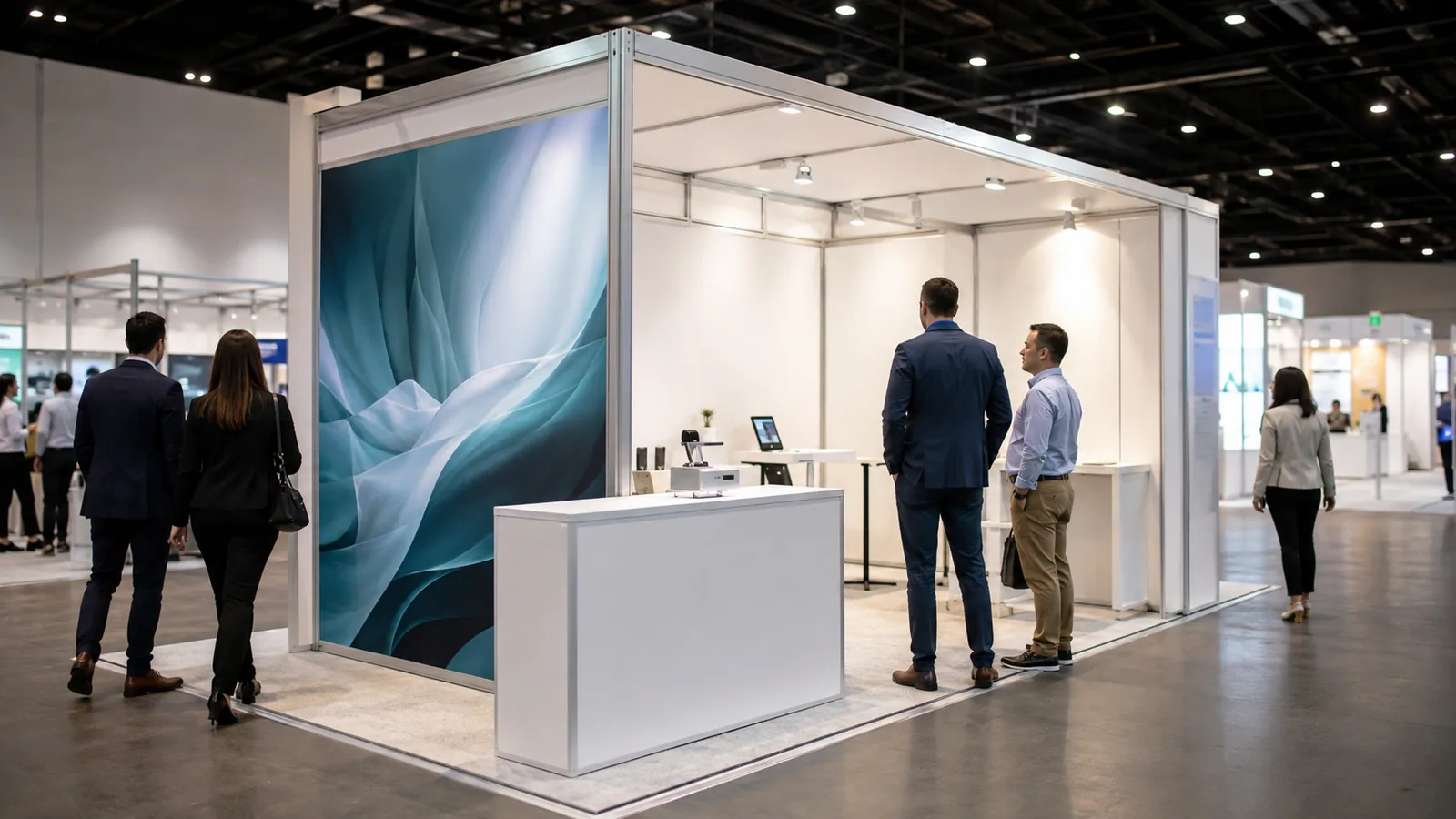
The organizing identity changes the purpose, audience, shared services, and limits you should expect. The details below are planning patterns, not guarantees for every program.
| Pavilion type | Typical purpose and audience | Shared-service pattern to check | Common limit |
|---|---|---|---|
| Country or national | Concentrated export, regional, or national visibility for companies meeting international buyers | Umbrella branding, reception, hospitality, translation, or official programming may be coordinated | Eligibility, logo hierarchy, and message approval can be centralized |
| Industry or sector | Supply-chain or solution grouping for professional buyers in one field | Sector zoning, shared presentations, and cross-company wayfinding may shape the route | Neighboring products can compete for attention or demonstration time |
| Startup or innovation | Compact discovery, investor, media, or early-buyer conversations for emerging companies | Standard pods, short demos, shared power, and limited storage are common questions | A product that needs staff, equipment, or space beyond the pod may be constrained |
| Theme, regional, or delegation | A common story or organized group presence for a region, mission, or event theme | Common events, delegation reception, meeting rules, and approval chain | Your product may become unclear if the shared story dominates your message |
Use the scope checklist below to verify actual dimensions, eligibility, and service terms for the program you are joining.
How Can You Prevent Brand Conflicts in a Shared Pavilion?
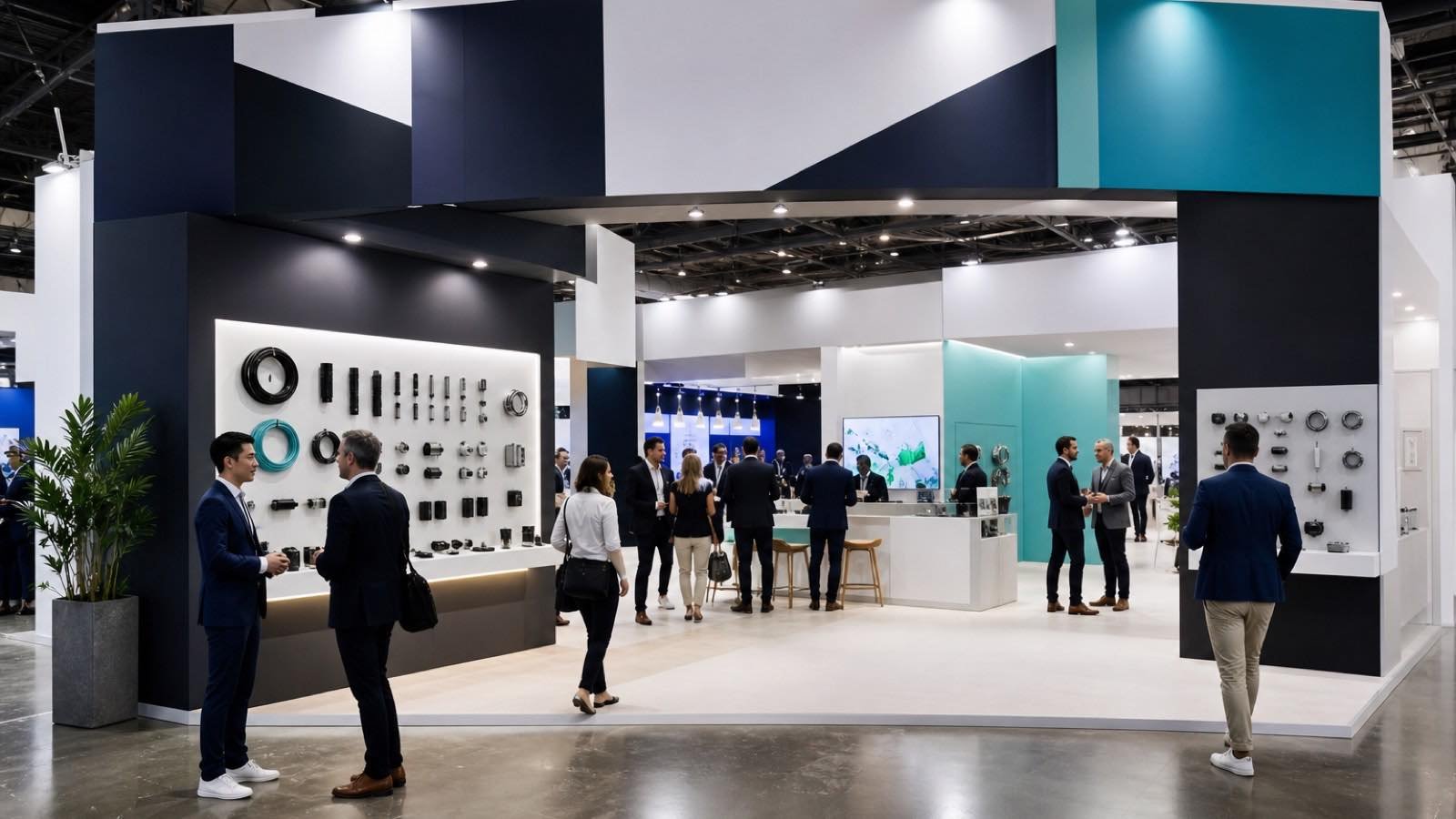
Shared identity creates visibility, but it can also create friction between the pavilion message and your own brand. The risk is not only aesthetic; it can change whether a visitor knows which company to approach.
Watch for:
- common colors that reduce contrast with your approved brand palette;
- a company name that is readable close up but disappears from the aisle;
- inconsistent product naming, languages, or claims across neighboring pods;
- a shared reception that captures visitors without a clear handoff to your team;
- adjacent companies whose products or demonstrations compete for the same sightline; and
- graphics arriving in different sizes, styles, or file versions.
Ask for one graphic template, one naming convention, one approval deadline, and a sightline review from the aisle. Keep the umbrella message at the public level, then give each company a consistent, readable zone for its product, proof point, and next action.
How Do You Plan Your Space Inside a Shared Pavilion?
Start with the shared boundary, then fit your visitor tasks inside it:
- Lock the real footprint. Record the hall, location, dimensions, open sides, height limits, neighboring exhibitors, columns, and setbacks.
- List product and equipment inputs. Add dimensions, weights, handling needs, demonstration behavior, replenishment, power, network, heat, and noise requirements.
- Separate public and private functions. Decide where a visitor first stops, where a demonstration occurs, where staff stand, and how confidential conversations work if there is no private room.
- Map the identity layers. Show the pavilion name, your company name, product names, disclaimers, and approval path in one hierarchy.
- Test visitor flow. Check whether reception sends visitors to your zone, whether neighboring pods block sightlines, and whether a queue spills into shared circulation.
Do this before choosing finishes. A clean rendering cannot solve a missing storage boundary, an inaccessible power point, or a reception process that never routes a visitor to your team.
Pavilion Scope Confirmation Checklist
Use one checklist instead of repeating the same questions in separate design, quote, and logistics conversations. Build it from the invitation, participation agreement, quotation, floor plan, and current exhibitor manual.
- Program: organizer, pavilion manager, builder, show-service contractor, eligibility, registration, payment, cancellation, and change terms.
- Space: exact footprint, location, open sides, height, dates, handover times, neighbors, storage boundary, and any additional meeting area.
- Brand: umbrella rules, individual logo size, graphics template, languages, claims/disclaimers, approval owner, and artwork deadline.
- Build and display: structure, finishes, furniture, lighting, AV, power, internet, rigging, product loads, and testing responsibility.
- Logistics: freight receiving, drayage, material handling, installation labor, dismantling, waste, storage, return shipping, and on-site contact.
- Commercial scope: program fee, space/pod fee, design fee, construction, graphics, shared services, special equipment, overtime, taxes, and change-order rules.
- Leads and privacy: reception handoff, badge scanning, lead ownership, consent, cross-company sharing, export rights, retention, and post-show cleanup.
For each line, mark included, coordinated, by exhibitor, excluded, or still open. Ask who supplies it, who pays, when it must be ordered, and what happens if it is unavailable. If a service is not written in the current project documents, treat it as unconfirmed.
How Are Leads and On-Site Responsibilities Managed?
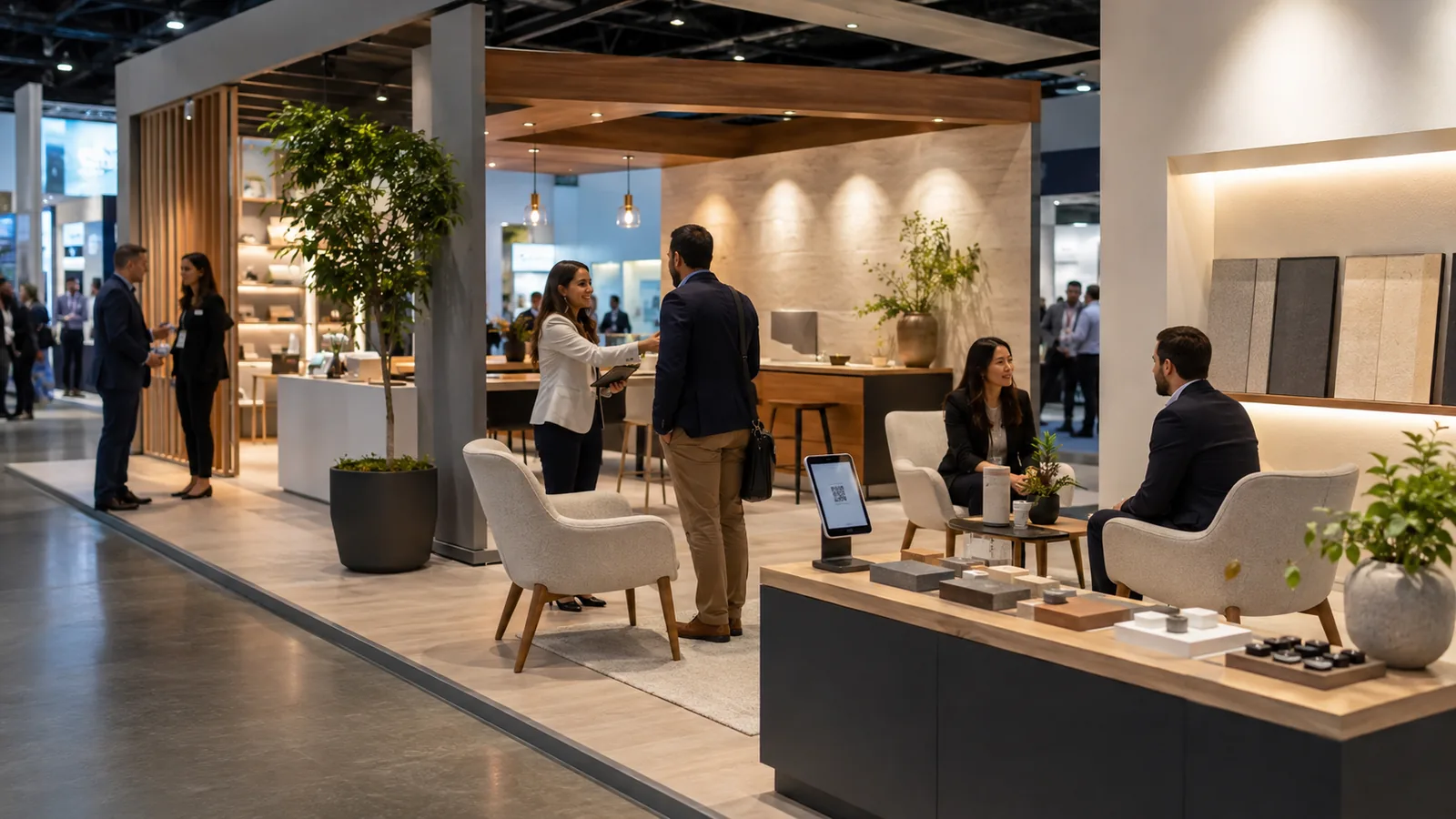
A shared pavilion can generate useful traffic, but shared traffic is not the same as shared lead ownership. Agree on the handoff before the show opens.
Confirm:
- whether reception staff only welcome visitors or also qualify and route them;
- which team scans a badge and which company owns the record;
- how a visitor interested in several exhibitors gives consent to data sharing;
- whether pavilion presentations or lounge conversations create a shared lead pool;
- who exports, deduplicates, secures, and deletes data after the show; and
- who covers a missed handoff when a staff member is away from the pod.
Give staff a simple routing rule: identify the visitor’s topic, ask permission before sharing details, record the responsible company, and set the next action before the conversation ends. Keep shared-program metrics separate from your company’s own qualified conversations so the numbers do not blur together.
When Is a Pavilion the Wrong Fit?
A pavilion may be the wrong format when its shared rules prevent your exhibit from doing its core job. Warning signs include custom architecture, large or heavy equipment, simultaneous demonstrations and private meetings, substantial storage, an independent visitor path, strict global brand standards, or a repeatable multi-show environment.
This is a function test, not a “bigger is better” rule. If the two-function decision rule above fails, ask whether the program can change the scope. If it cannot, compare an independent booth using the same cost, schedule, and responsibility map.
How Can KingExhibits Help With a Pavilion Brief?
KingExhibits’ useful role in a pavilion project is to connect your shared-program rules to a buildable exhibit scope. The practical advantage is not a generic promise of “full service”; it is having one brief that a design, fabrication or rental, graphics, logistics, installation, and dismantling discussion can use consistently.
You can provide the pavilion manual, floor plan, pod boundary, product dimensions and weights, visitor action, meeting and storage needs, brand files, technology inputs, and delivery window. KingExhibits can then help organize display zones, graphics, lighting, rental or custom elements, and the handoffs that still belong to the organizer or show contractor. The final scope remains subject to your program documents and confirmed responsibilities.
If you need a pavilion design or build conversation, send the program name, exact zone, participating-company rules, product list, primary visitor action, lead process, and current manual status. That gives both sides something concrete to review before a quote or drawing is treated as final.
Frequently Asked Questions
Is a pavilion the same as a trade show booth?
No. A booth is the space and presentation for one exhibitor; a pavilion is the coordinated program or zone that may contain several exhibitor spaces under shared rules. One pavilion can contain many individual booths or pods.
How much does a trade show pavilion cost?
There is no reliable universal price. Your total may combine a participation or program fee, space/pod, design, construction, graphics, furniture, AV, utilities, freight, material handling, labor, shared services, storage, and dismantling. Request an itemized scope and identify which amounts recur at the next show.
Who pays for shared pavilion services?
The organizer may collect a bundled fee, allocate costs among exhibitors, or leave some services to each company. Ask for the allocation method and payment owner for reception, lounge, translation, utilities, graphics, freight, and lead systems rather than assuming “shared” means free.
How are leads handled in a shared pavilion?
Reception or program staff may welcome visitors, but the company that scans, qualifies, and follows up is a separate decision. Agree on consent, ownership, cross-company sharing, export rights, retention, and post-show cleanup before you let a shared system collect your visitors’ data.
When should you choose an independent booth instead?
Choose the independent route for comparison when two or more non-negotiable functions—such as a working demo, private meeting, heavy equipment, storage, or independent visitor path—cannot fit the pavilion rules. Compare full scope and responsibility, not only the space fee.
Final Thoughts
A trade show pavilion is a shared exhibit format, not a universal construction package. It can work when your story is focused and shared identity or services support your visitor goals. An independent booth is more suitable when your product, demonstrations, meetings, storage, lead process, or brand rules need control the shared format cannot provide.
KingExhibits can help turn your pavilion rules, product inputs, and visitor goals into a clear design, fabrication or rental, graphics, logistics, installation, and dismantling scope. Send the program documents, exact zone, product list, and primary visitor action so the first discussion starts with facts—not assumptions.