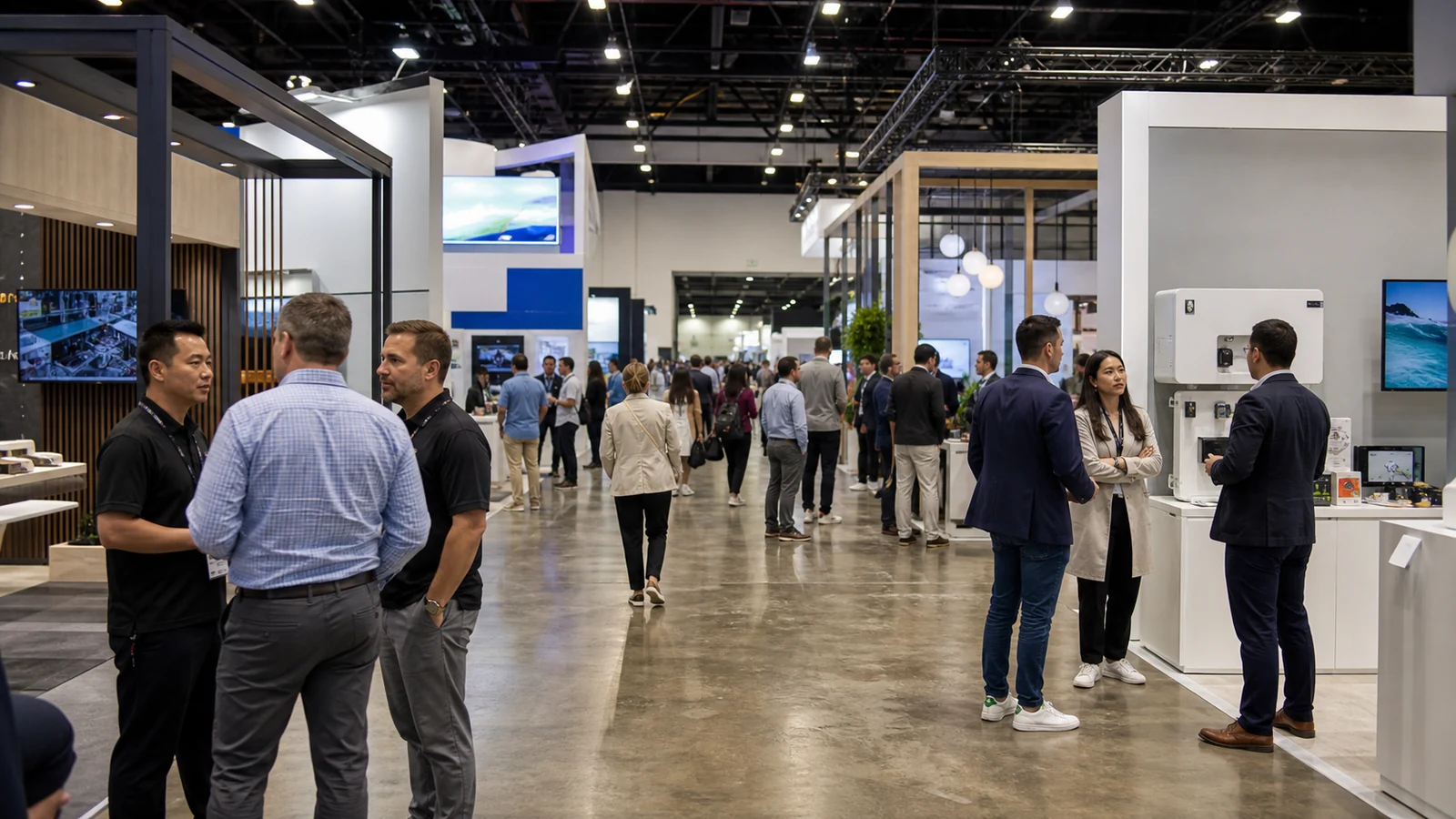
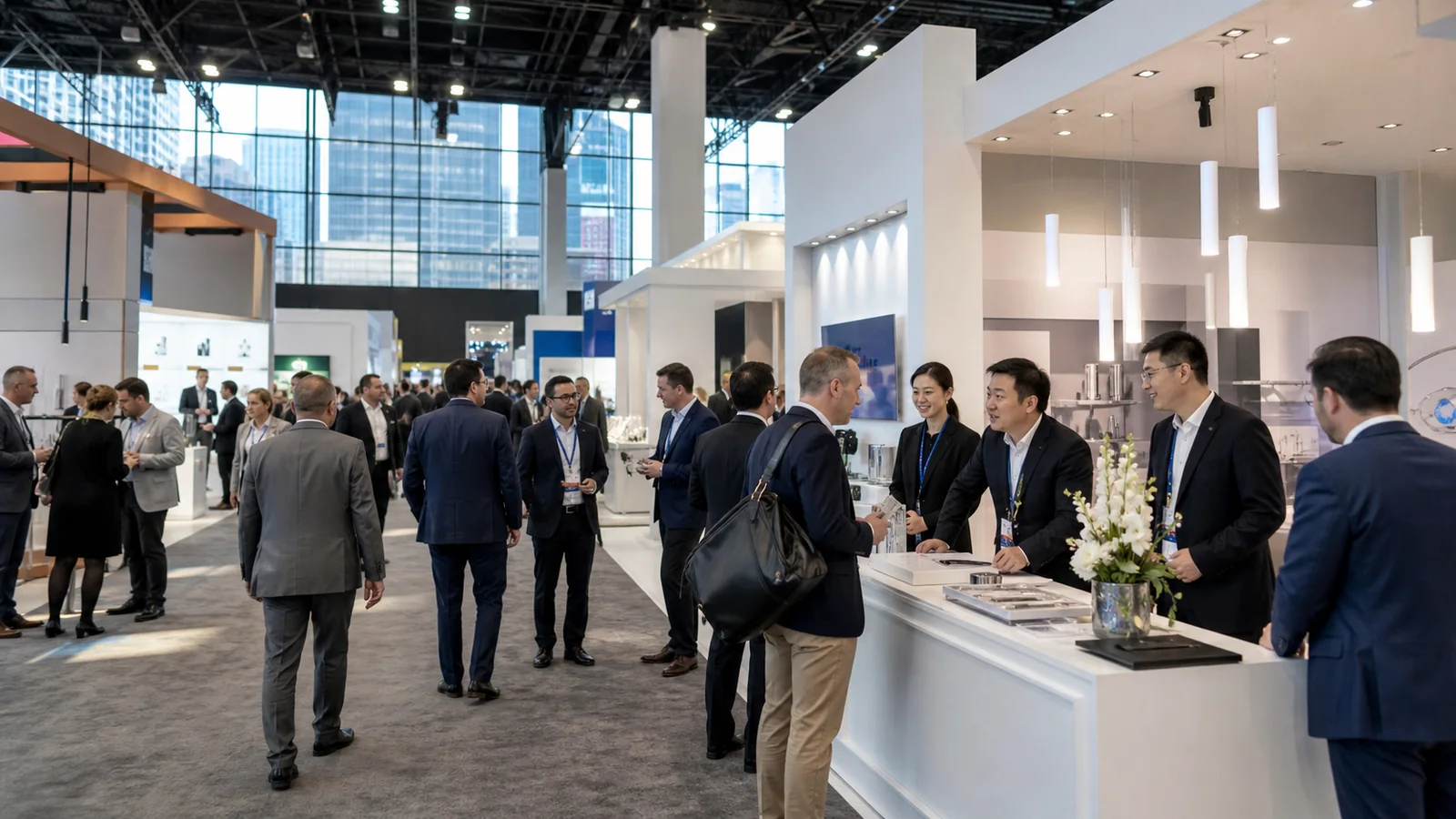
International exhibiting in the U.S. is a chain of coordinated handoffs. The show manual, booth design, packed shipment, customs entry, venue services, staff plan, and outbound closeout all depend on one another. A late handoff can change the design, add a cost, delay customs clearance, or leave you without a workable installation window.
This guide helps you control those cross-border decisions. It does not replace the current Exhibitor Services Manual (ESM), the named venue’s rules, a customs broker’s advice, or official travel guidance. Those sources control the show you actually attend.
Start With the Show Manual and Participation Route
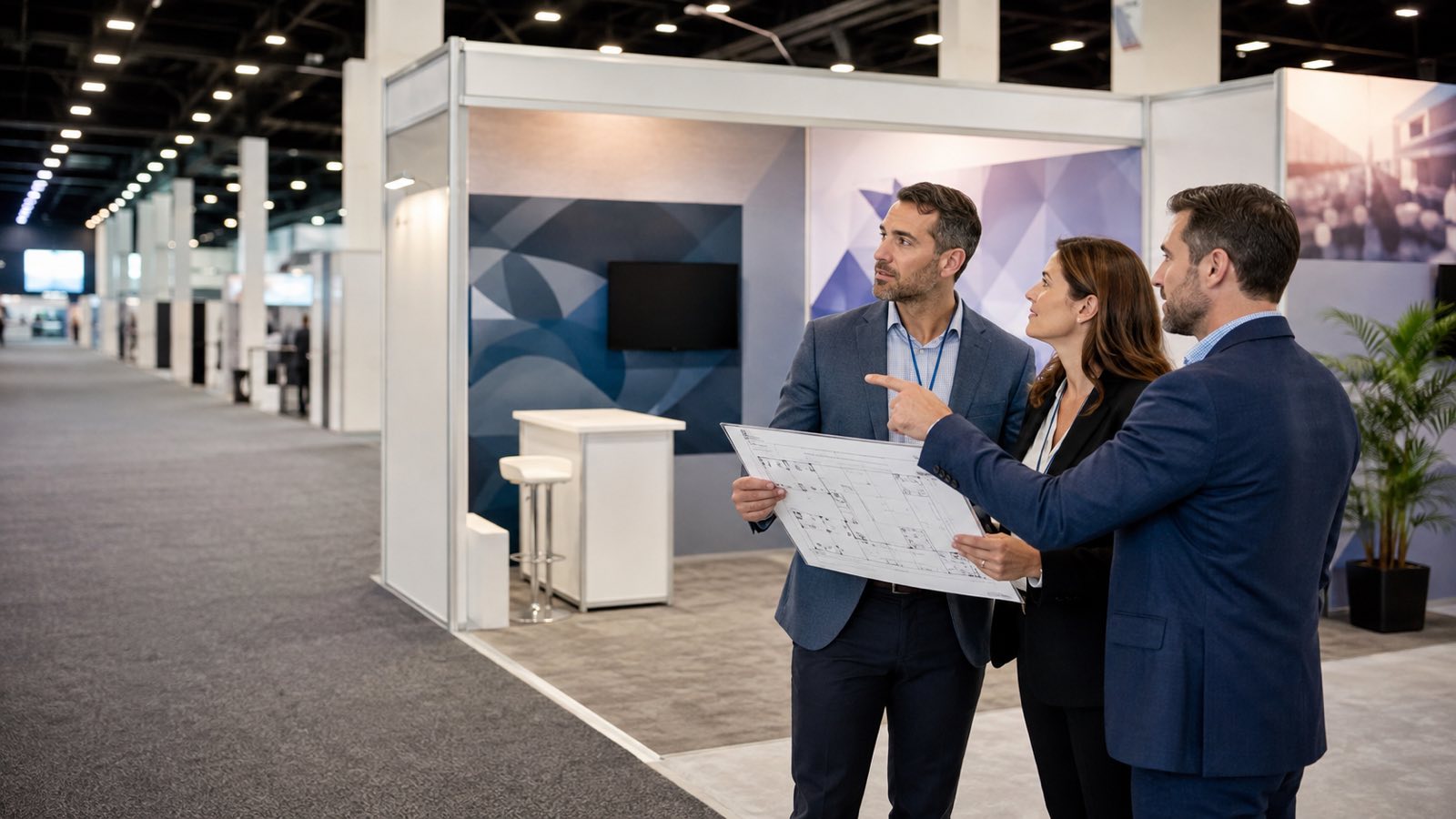
Before anyone draws the booth, confirm the exact show, your participation route, the venue, and the current Exhibitor Services Manual (ESM or Exhibitor Kit). The contract, floor plan, manual, and venue instructions define what you may design, ship, order, and install.
Confirm the route, contract entity, venue, and official contacts
Check whether you are exhibiting, sponsoring, joining a country or industry pavilion, co-exhibiting, or attending only. A pavilion or co-exhibit can change the contract entity, graphics approvals, badge process, freight contact, and service-order path. Record the organizer, venue, booth number, show dates, move-in and move-out dates, invoicing entity, official contractor, and service platform in one project file.
Do not brief a booth partner from a marketing page alone. Request the current manual and floor plan, note their issue date, and keep a copy of each revision. If the organizer changes a rule, you should be able to see which drawing, order, or shipment decision is affected.
Extract the manual rules that can invalidate a design
Look for booth dimensions, open sides, sightlines, height and hanging-sign approvals, fire and safety documentation, insurance, utilities, labor procedures, freight receiving windows, lead-retrieval requirements, and discount deadlines. Some services may be exclusive to the venue or official contractor; an Exhibitor Appointed Contractor (EAC) may be allowed for other work only if the show permits it.
Create the first handoff record
Name the overseas approver, organizer, General Services Contractor (GSC), EAC, exhibit partner, freight forwarder, customs broker, and U.S.-hours contact. Put every deadline in both your home time zone and the show’s local time. The project owner should track the schedule, while each specialist owns the confirmation only that specialist can issue.
The manual handoff affects design and schedule first. A late height rule, labor form, or service deadline can force a redraw, re-order, or missed move-in window.
Build a Booth Brief That Can Be Shipped and Installed
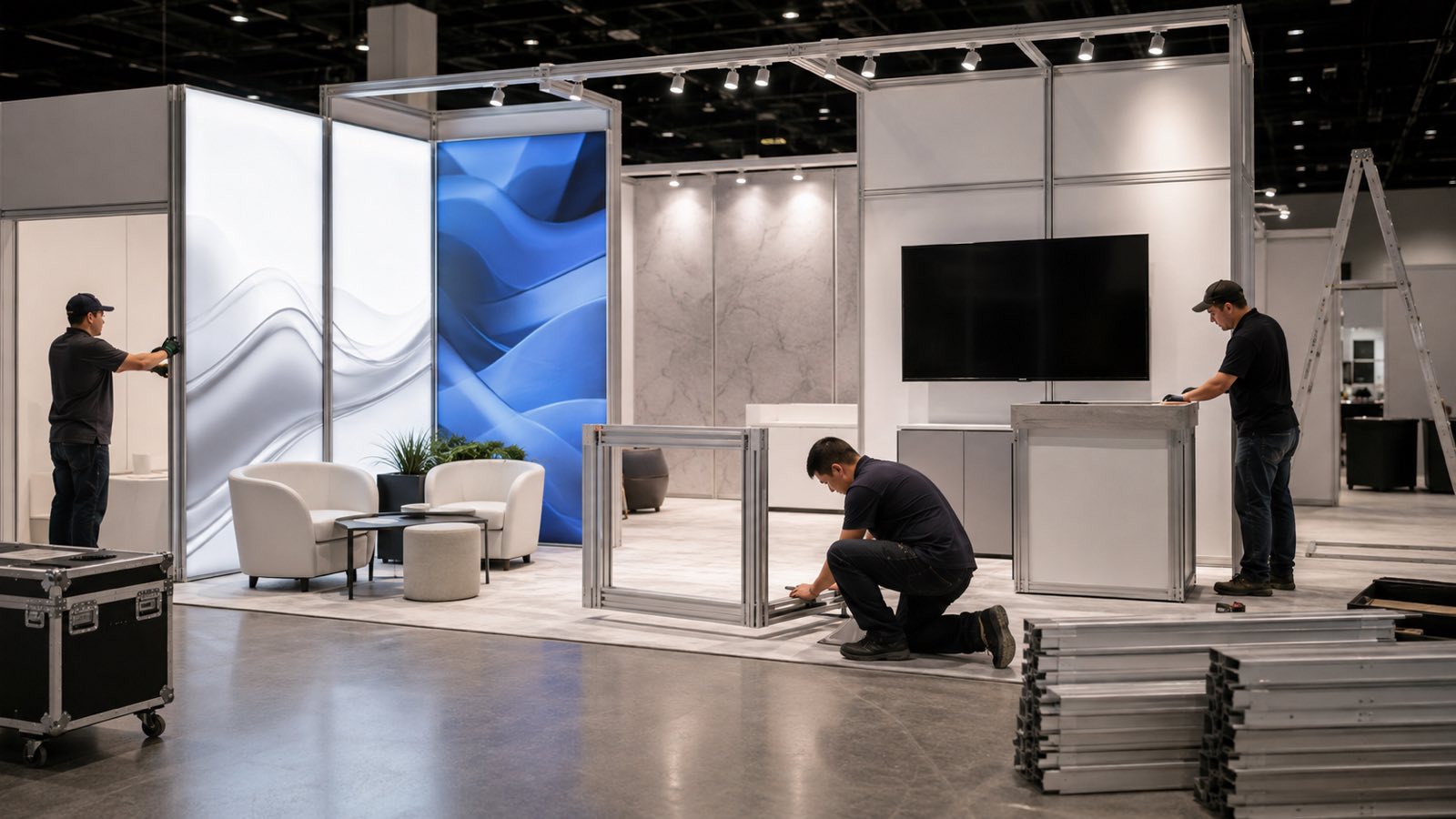
A booth brief is ready when visitor purpose, space, utilities, product data, and packed-shipment data connect. A rendering without those inputs is not yet a build or freight plan.
Define the visitor action before the visual feature
Choose the main action you want to make easy: a live demonstration, sample comparison, application explanation, scheduled meeting, or distributor conversation. Then state the booth size, open sides, neighboring constraints, storage, meeting seats, display height, accessibility needs, and staff positions.
Your brief should explain what visitors need to understand in the first few seconds and what they should do next. That decision sets the sightlines, demo location, graphics hierarchy, and open floor you need. A second feature is not useful if it blocks the first action.
Add product, utility, and safety inputs
List each product or demo unit with dimensions and gross weight, plus power, voltage and plug requirements, internet, water, compressed air, ventilation, heat, noise, batteries, or other operating needs. Add hanging-sign details, flooring, the fire/safety documents named in the manual, secure sample storage, spare parts, and accessibility requirements where they apply.
Food, cosmetics, medical devices, batteries, chemicals, wireless equipment, and other regulated products may require checks with a responsible agency. Do not assume that a display sample follows the same path as a giveaway or a product sold in the U.S.
Add packaging and return data
Provide crate or pallet dimensions, piece count, packed weight, declared value, labels, consignee, return destination, and the intended state of each item: re-exported, consumed, given away, sold, or left in the United States. Use packed dimensions and weight rather than only the product data sheet.
Separate design decisions from show-service orders
Write down what your exhibit partner designs, fabricates, packs, and hands over, versus what must be ordered from the GSC or venue provider. Electrical, internet, rigging, cleaning, AV, flooring, furniture, waste, lead retrieval, and freight handling may sit with different providers.
The brief handoff changes the build, packaging, and freight cost together. Missing packed data turns a visual approval into a later scope change.
Classify Your Goods Before Choosing an Import Route
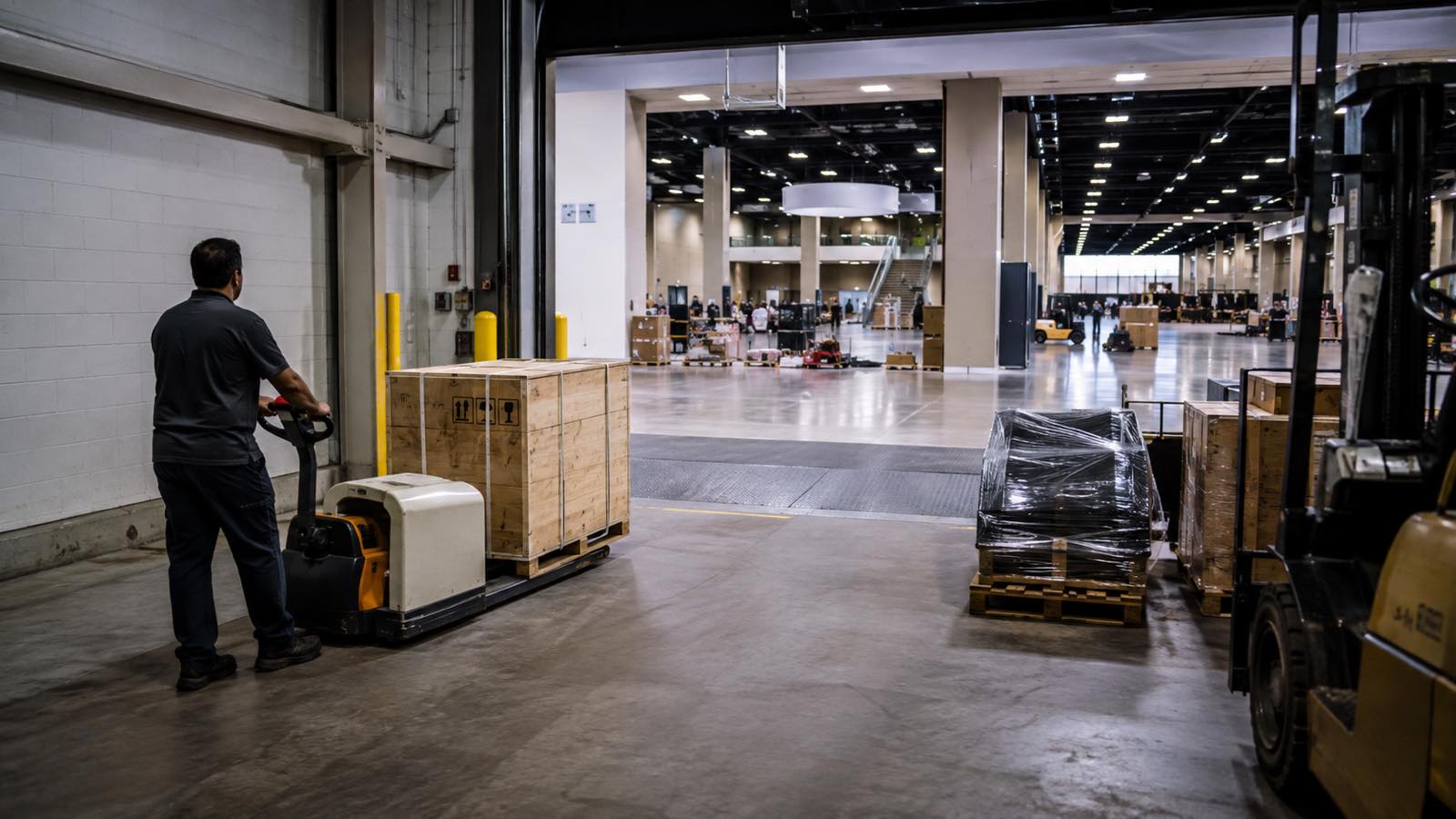
Separate goods by intended use and final destination before a broker chooses the customs entry. This is the point where your product display plan becomes a customs and cost plan.
Split the shipment into decision categories
Use separate lines for booth structure and graphics, professional or demonstration equipment, commercial samples, consumables and giveaways, goods for sale or permanent entry, and regulated products. Keep the event confirmation, proof of exhibiting, item values, packing list, transport documents, and classification together.
The U.S. Customs and Border Protection trade-show guidance recommends event documentation, exhibitor confirmation, item values, applicable classification, and checks with the agency that regulates the product. Use that as a preparation list; your broker and the responsible agency determine the actual entry requirements.
Assign the customs-closeout owner before shipment
Name the person who will reconcile item counts, damage or loss, consumed or sold items, re-export records, and broker instructions after the show. If goods are missing, sold, consumed, or not properly discharged, the applicable entry can create a claim or duty/tax exposure. Your internal owner must know which records the broker needs and when.
Classification changes the display quantity, paperwork, customs exposure, and return schedule. A giveaway mixed into a re-export shipment can undermine the route you planned.
ATA Carnet vs. TIB vs. Normal Entry

The best route depends on eligibility, intended use, re-export, and which goods will remain in the U.S. No route is a universal “duty-free” shortcut.
| Route | Suitable for | Main limitation | Best used when |
|---|---|---|---|
| ATA Carnet | Eligible professional equipment, commercial samples, and exhibition goods that will be re-exported | Items must be listed, controlled, and generally re-exported; consumables, giveaways, and goods intended for sale are not blanket Carnet items | Equipment and display property will return home or continue to another Carnet destination |
| Temporary Importation Under Bond (TIB) | Eligible temporary imports under a formal bond and CBP process | Requires a bond, formal compliance, and broker-controlled conditions; eligibility depends on the goods and applicable HTSUS provision | A Carnet is unavailable, unsuitable, or a different temporary-entry treatment fits better |
| Normal entry | Giveaways, consumables, goods sold, or goods left in the U.S. | Duties/taxes and permanent-entry compliance may apply | Goods will remain, be consumed, be distributed, or be sold in the U.S. |
What a Carnet does and does not solve?
Trade.gov’s ATA Carnet guidance describes the Carnet as one temporary-import option alongside TIB and other procedures. It can simplify eligible temporary movement, but it does not remove the need for required permits or licenses, and it is not designed for goods that will be sold or consumed. Follow the issuing association’s instructions and present the document to the relevant customs authorities.
Who owns discharge and what happens when goods change state?
The Carnet holder or appointed broker tracks the document and customs endorsements. Your project owner reconciles the physical goods with the document: what returned, what was damaged, what was consumed, what was sold, and what moved to another destination. A discrepancy can lead to a claim, duties, taxes, or penalties under the applicable procedure, so do not leave this task to an unassigned “after the show” owner.
The import-route handoff changes what you can display, what you can give away, the paperwork burden, and the date by which goods must leave or be regularized.
Advance Warehouse vs. Direct-to-Show Delivery
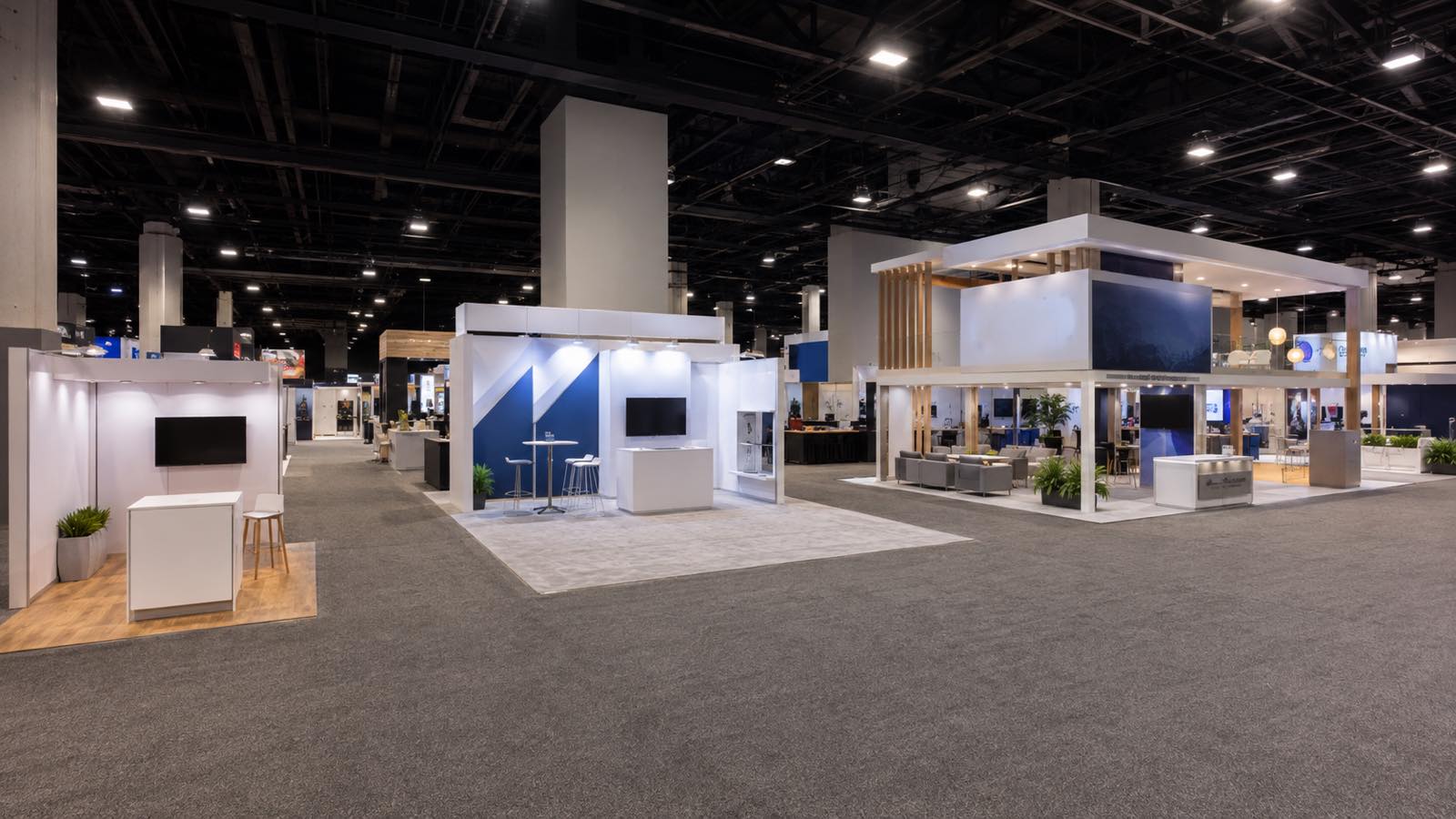
Choose the delivery route after comparing the show’s receiving window, customs-release timing, storage and handling, carrier reliability, and recovery time before move-in.
Advance warehouse
An advance warehouse provides an earlier receiving window and adds a warehouse-to-venue handoff. Verify the warehouse address, cutoff, labels, piece count, certified weight, storage terms, and transfer schedule. Ask who confirms receipt and how a customs or carrier delay is escalated.
Direct-to-show
Direct-to-show delivery uses the designated move-in window and can leave less recovery time if a flight, customs release, or carrier appointment slips. Verify the appointment, marshaling or receiving instructions, consignee, carrier, and fallback plan before the shipment leaves your country.
Build the outbound route at the same time
Record the outbound destination, labels, Material Handling Agreement (MHA) or Bill of Lading (BOL) process, empty-crate return, storage or next-show destination, and temporary-entry closeout before inbound freight moves. Do not assume the inbound provider will automatically manage the outbound route.
The delivery-route handoff changes packaging, buffer time, material-handling exposure, and whether the booth is physically available for installation.
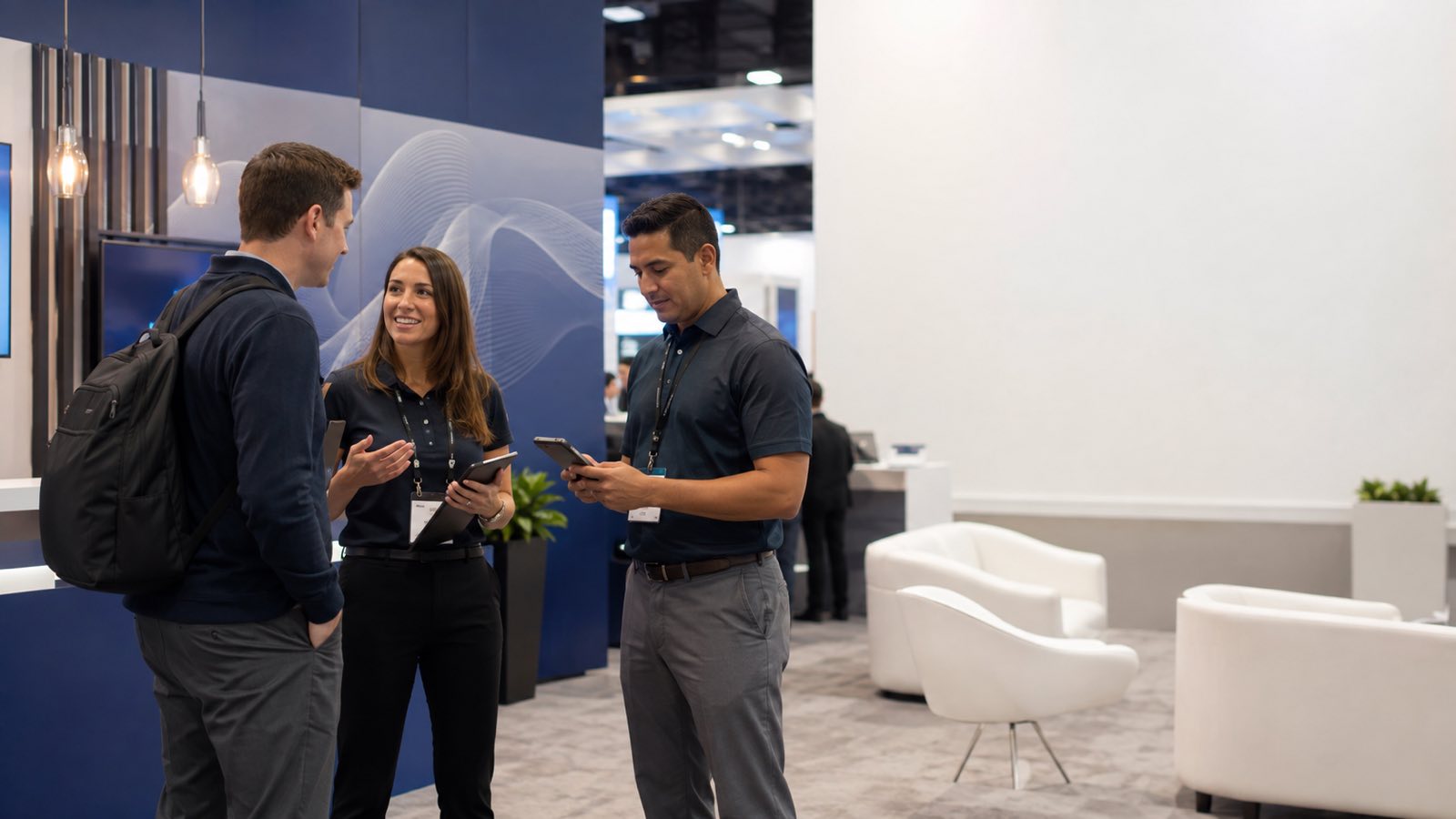
Prepare Your Team for Travel and On-Site Operations
Travel eligibility, time-zone coverage, and staff roles must be planned as one operating system. Confirm official travel requirements before you book non-refundable travel.
Check the correct business-travel route
The U.S. Department of State business-visa guidance says that temporary business travel generally uses a visitor visa unless the traveler qualifies for the Visa Waiver Program; attending a business convention or conference is one listed example. Your nationality, passport, purpose, and current instructions determine the route. An invitation does not guarantee admission.
Create a time-zone and escalation plan
Show every deadline in your home time and U.S. local time. Assign a contact who can answer during venue working hours for freight, GSC, and service issues. Prepare a payment method, phone or eSIM, offline files, badge records, and a contact tree that still works if one person is unreachable.
Train for useful conversations and clean lead handoff
Give the team a one-sentence value explanation, demo sequence, qualifying questions, note fields, promised next step, and named owner/date for follow-up. Test the badge scanner or other capture method before opening. Your booth team is another handoff: the visitor’s context must reach the person who follows up.
The people handoff changes on-site service capacity and lead quality. A delayed approval or unreachable contact can become a missed installation, a weak demo, or an unworked lead.
Use an International Trade Show Timeline
The timeline below is a planning framework, not a universal deadline. Replace each band with the dates in your show manual, contract, customs plan, and travel instructions.
| Planning point | Decisions and outputs | Handoff that must close |
|---|---|---|
| 6–9 months before | Confirm show/route, space, budget, partner and project owner | Organizer ↔ project owner |
| 4–6 months before | Review ESM, approve concept, classify goods, start visa/customs questions | Design ↔ manual ↔ broker |
| 2–4 months before | Freeze drawings, graphics and utilities; choose entry route; reserve freight and labor | Design ↔ production ↔ GSC/forwarder |
| 6–10 weeks before | Pack, verify values/weights, submit documents, book freight and outreach | Production ↔ customs ↔ carrier |
| 2–4 weeks before | Confirm customs release, badges, labor, delivery appointment and backups | Broker/carrier ↔ GSC/EAC ↔ on-site owner |
| Move-in/opening | Inspect freight, installation, utilities, graphics, safety and staff readiness | GSC/EAC ↔ opening owner |
| After show | Reconcile outbound freight, Carnet/TIB/entry closeout and lead export | On-site owner ↔ carrier/broker ↔ follow-up owner |
The timeline handoff changes which options remain available. A late customs or graphics decision can remove the buffer needed for freight, labor, repair, or a compliant re-export.
Verify the Booth Before Opening and Close Out Properly
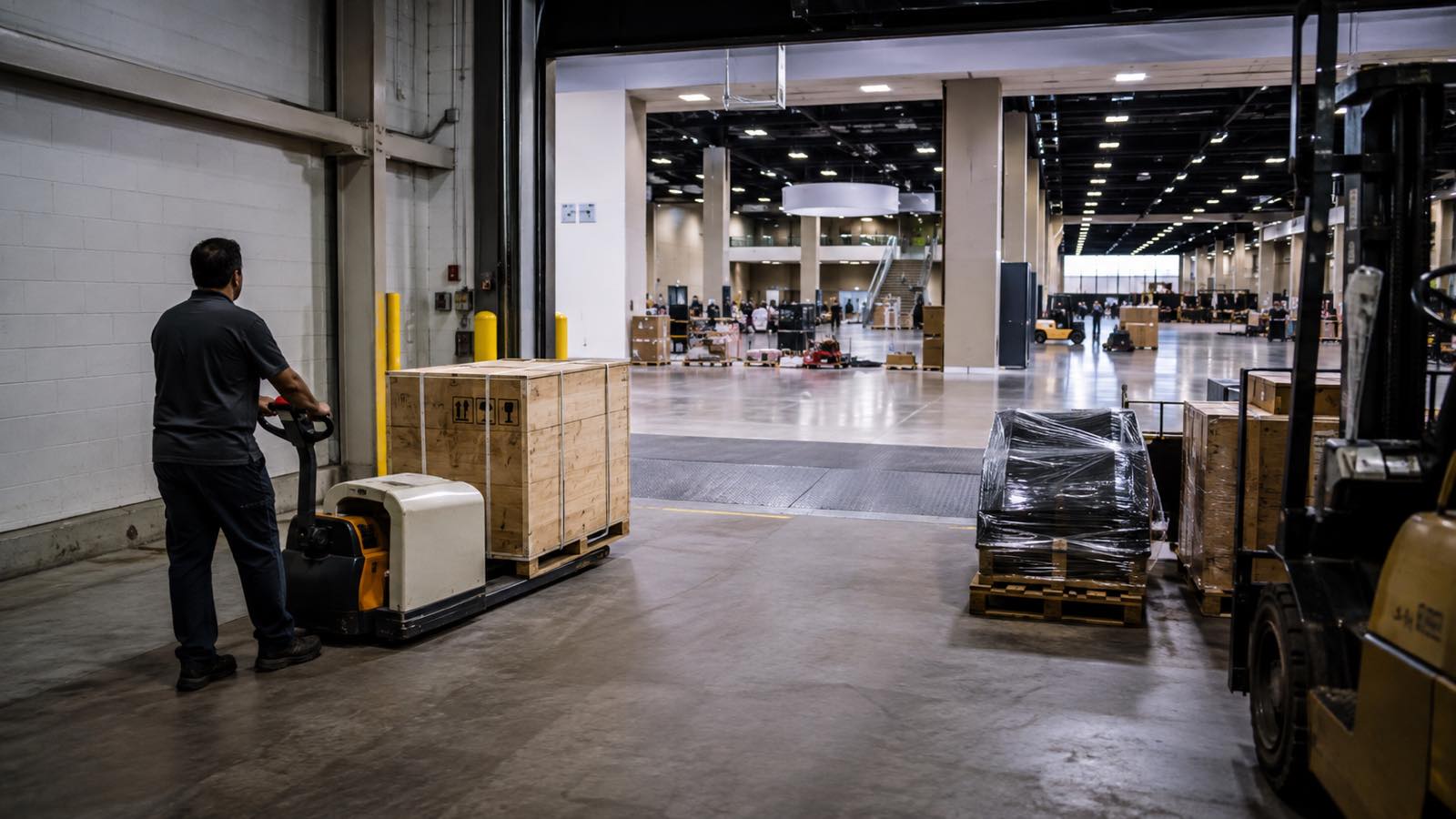
Readiness is proven by closed handoffs and records, not by an attractive walkthrough alone.
Move-in and opening checklist
- delivery condition, graphics, height and hanging-sign approval;
- flooring, utilities, AV, voltage/plug compatibility and demo noise/safety;
- sample storage, fire/safety documents, accessibility and signage;
- spare parts, emergency repair contact and lead-retrieval test;
- staff walk-through, opening owner and issue-escalation path.
For every problem, record the owner, promised fix, deadline, and closure evidence.
During-show operating checks
Keep the service contact, emergency repair route, backup media, chargers/adapters, lead-retrieval export process, and promised follow-up visible to the team. If a demo changes, check the utility, safety, noise, and product classification impact before improvising.
Closeout checklist
- outbound labels, MHA/BOL, carrier acceptance and empty-crate return;
- temporary-entry or Carnet discharge steps and item reconciliation;
- leftover samples, storage or next-show destination;
- lead export, notes, owner, and next-step date.
Opening and closeout handoffs change delivery proof and customs exposure. A booth that opens successfully can still carry an unresolved outbound or temporary-entry risk.
How to Evaluate a U.S. Booth Partner
Evaluate a partner on cross-border coordination evidence and named responsibility, not only on renderings or a “full-service” label.
When local U.S. execution matters
Local execution matters more when the show has exclusive services, approved or union labor, strict receiving windows, on-site inspections, heavy demonstrations, regulated products, or little recovery time. Someone must be able to respond during the venue’s working hours and close a physical issue on the floor.
When overseas design plus U.S. execution can work
The model can work when drawings, packed data, service orders, customs route, and local handoff are frozen early and the U.S. execution owner is named. It fails when design, freight, and venue responsibilities are left between time zones or when nobody owns the final inspection.
What the quote and responsibility matrix must show?
Require design and engineering, fabrication or rental, graphics, packing, freight, customs interface, GSC/EAC orders, installation and dismantling, emergency contact, storage, outbound handling, deadlines, and exclusions. Ask for venue-specific evidence where possible. A portfolio image shows appearance; it does not prove current service coverage at your show.
Send a decision-ready brief
Include the show, venue, dates, booth configuration, ESM and floor plan, visitor goal, products and demos, utilities, packed dimensions, weights and values, shipping origin and return plan, budget range, support needed, and decision deadline.
Partner selection is the final coordination handoff. The right partner reduces ambiguity between design, venue, freight, customs, and on-site execution without promising control over another provider’s work.
Frequently Asked Questions
What documents do you need to exhibit products at a U.S. trade show?
Prepare event and exhibitor confirmation, a commercial invoice or item values, packing list, transport documents, product classification, and any permits or agency records that apply. Your broker, carrier, show and product regulator may request additional documents, so confirm the list before shipping.
Can you bring trade show giveaways into the United States under an ATA Carnet?
There is no blanket Carnet treatment for giveaways. Items intended to be consumed or given away may need a different entry or documentation path from equipment and display property that will return home. Separate the categories and ask your broker to confirm the treatment.
Who is responsible for customs closeout after a U.S. trade show?
The Carnet holder or entry filer and appointed broker manage the customs document and endorsements. Your internal project owner must reconcile the physical goods, damage, consumption, sale, re-export, and final destination with those records. Assign both owners before the shipment moves.
Can a foreign company exhibit at a U.S. trade show without a U.S. subsidiary?
There is no universal requirement that every foreign company create a U.S. subsidiary first. The show may still require a particular contract entity, tax record, payment method, customs filer, insurance form, or EAC arrangement. Confirm the participation and invoicing route with the organizer before paying.
What should a U.S. booth quote include for an international exhibitor?
It should show the design/build scope, packed dimensions and weights, freight and material-handling basis, customs interface, GSC/EAC orders, labor, utilities, deadlines, exclusions, emergency contact, outbound handling, and closeout owner. This lets you compare proposals on the same handoffs instead of comparing renderings only.
Final Thoughts
Your U.S. exhibit is only as reliable as its least-defined handoff. Start with the current manual, classify the goods, connect the booth brief to packed data, map exclusive services, assign travel and on-site owners, and plan the outbound closeout before the first crate moves.
KingExhibits can review a decision-ready brief containing the show and venue, ESM and floor plan, booth size, visitor goal, product and utility data, packed weights and values, shipping origin and return plan, budget range, and deadline. That information creates a useful scope conversation; a vague request for “a booth quote” usually does not.