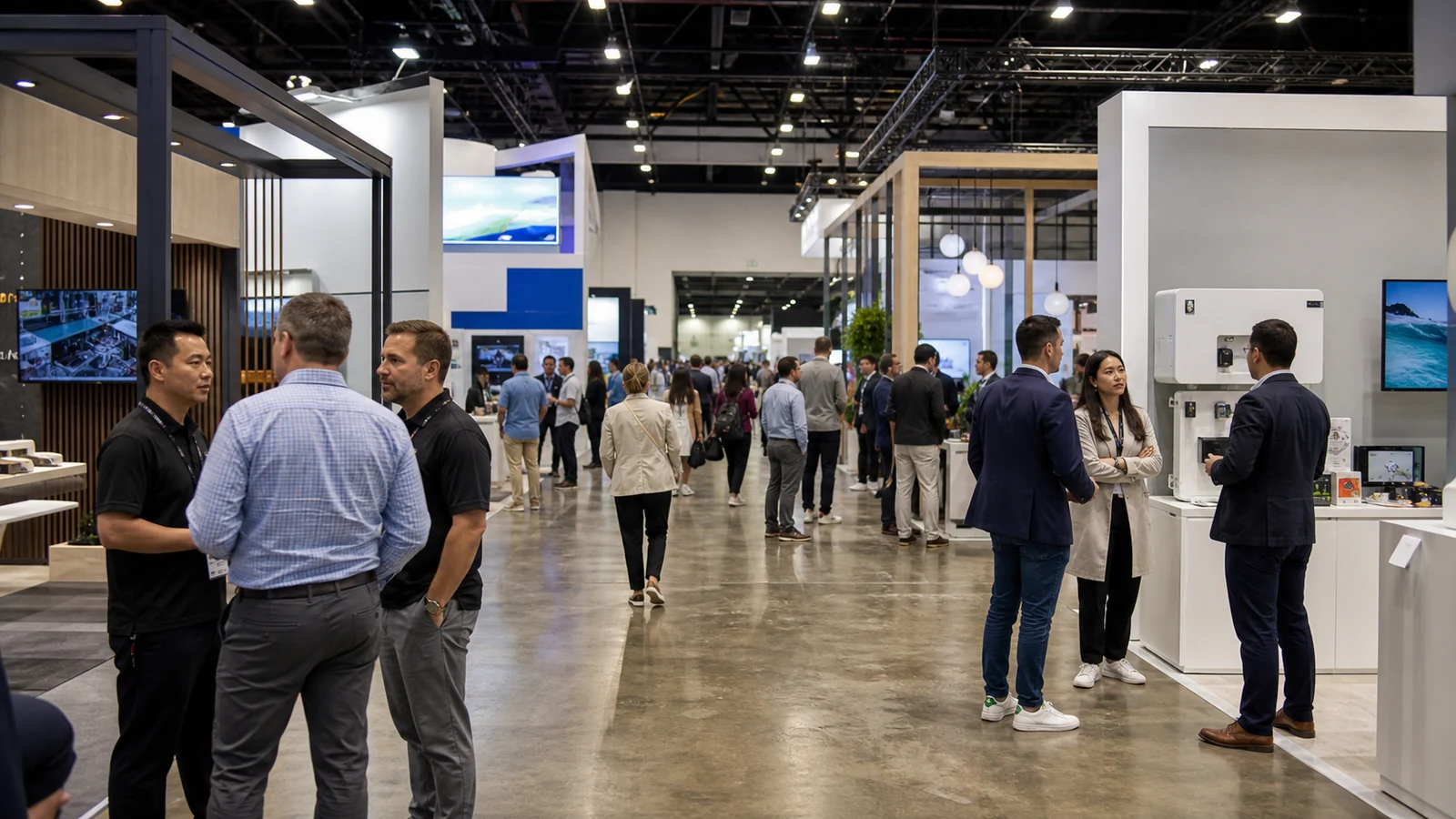
“Las Vegas Convention Center” is not a precise onsite instruction. West, North, Central, and South Halls form a large campus, and a delivery door, service desk, hotel route, or meeting point that works for one hall may be inconvenient for another.
If this is your first exhibit at LVCC, confirm your exact hall, booth, show contractor, and service channels before you approve the booth plan. The venue name gets your team to the campus; the hall-level plan gets the exhibit built.
Last verified: September 6, 2026. Provider assignments, entrances, event access, and service rules can change; recheck the current show manual and LVCC pages.
Record the Exact Hall, Entrance, and Booth
Start with the current show manual and floor plan. Record the event, hall, booth number, nearest aisle, public entrance, freight access, registration point, service desk, staff meeting point, and organizer contact.
Add the address or driver instruction specified for exhibitor freight. Do not send a carrier to the public venue address and assume they will find the right dock. LVCC publishes freight and roll-up-door information, while the event manual controls show-specific target dates, marshaling, labels, and receiving.
Give this hall record to the booth builder, carrier, staff, product team, and anyone delivering locally. A screenshot with a pin but no hall name is not enough.
Match Each Service to the Right Order Channel
Your order path may involve the organizer, general service contractor, LVCC/LVCVA, and venue partners. Do not put every request into one email.
Use the current manual to map:
| Need | First place to verify |
|---|---|
| Booth rules, deadlines, badges, event approvals | show organizer/manual |
| Freight, material handling, labor, furniture, show forms | designated general service contractor |
| Facility policies and EAC permit conditions | LVCC/LVCVA and show manual |
| Internet, telephone, wireless and data | current LVCC provider information |
| Catering and food service | current exclusive provider listed by LVCC |
| Electrical, plumbing, rigging, cleaning, AV | current event manual and named providers |
The official LVCC page currently lists Cox Business as the exclusive telephone, internet, wireless, and data-network provider, and Sodexo as the exclusive food-and-beverage provider. Provider assignments can change; verify again for your event.
Treat Internet as a Demonstration Input
If your product demo, lead capture, video call, software, or payment process requires connectivity, define what it needs before ordering. State wired or wireless service, bandwidth, device count, security, upload use, static IP or port needs, and the booth location of the connection.

Order through the current show/venue channel and put the network location on the approved plan. Test the real application onsite. Keep local content and an offline lead method in case an external service fails even when the venue connection is working.
Send Freight to the Correct Hall and Receiving Process
Confirm advance-warehouse and direct-to-show options, accepted freight, target date, marshaling instructions, driver route, certified weight tickets, labels, and outbound process. Machinery, oversized items, vehicles, or special handling may require additional coordination. Use the trade show logistics and shipping guide for the full route comparison and return-freight process.
Your LVCC plan must show which hall receives the shipment, who meets it at the booth, and what can be installed before the product arrives. Put utilities below flooring, structure, rigging, products, graphics, AV, and final test into a workable sequence. The crew instructions belong in the installation and dismantling guide.
LVCC can host several activities at once. A nearby event or simultaneous move-in may affect traffic and access even when your own schedule is unchanged. Build time for driver communication and onsite walking rather than treating arrival at the property as arrival at the booth.
Plan Staff Movement Before Travel Is Booked
The official campus information connects West Hall with North/Central/South via the LVCC Loop, and notes that a West-to-existing-campus walk can take much longer than the Loop trip. Operating conditions and event access still need current verification.

Choose hotels, ride-share drop points, staff call times, and meal breaks using your hall entrance—not a general map search. Give staff a daily route and a meeting point that does not depend on “by the front doors.”
If team members have customer meetings in other halls, allow transfer time and provide a map. A product specialist cannot cover two simultaneous appointments at opposite ends of the campus simply because both are “at LVCC.”
Confirm EAC and Worker Access Early
If you use an exhibitor-appointed contractor, confirm the organizer’s notice, insurance, approval, and credential process, plus any LVCC permit requirements. The official LVCC page directs service contractors and display houses to the manual and provides an EAC permit application.
Give each company the booth, hall, work dates, responsible onsite lead, and proof of approval. Do not wait until move-in to discover that a crew member or subcontractor is missing a required credential.
Locate the Service Desks for Your Hall
Before opening, walk from the public entrance to the booth and then locate the organizer, freight, labor, electrical, network, rigging, and cleaning desks that serve your show. Save the order number and contact beside each service. This short walk prevents the onsite lead from crossing the campus for a desk that serves a different hall or event.

Frequently Asked Questions
Should staff rides and booth freight use the same LVCC address?
No. Staff need the current public entrance or approved drop point for their hall; freight needs the event’s designated receiving route, dates, labels, and often a marshaling process. Put the two instructions in separate messages so a driver cannot mistake one for the other.
Can our team rely on the Vegas Loop during every move-in and show hour?
Not without checking the current event access and operating schedule. Treat the Loop as one transport option, then keep a walking route and enough transfer time for periods when the station or service is unavailable to your team.
What if a utility or network drop appears in the wrong booth location?
Do not cover it with flooring or build around it. Compare the installed location with the approved drawing and order confirmation, photograph the mismatch, and contact the responsible service desk while the area is still accessible.
What should the backup onsite lead have?
An offline copy of the hall plan, booth drawings, service orders, freight status, contractor approvals, contacts, and spending authority. A backup lead without the current file can be present in the hall and still be unable to solve anything.
Use the Exact Hall in Every Decision
The practical unit of planning at LVCC is not “Las Vegas.” It is your specific booth inside a specific hall, connected to specific providers and access routes.
Build one hall record, map each service to its real owner, and give freight and staff directions that end at the booth. That preparation matters more than memorizing the size of the convention center.